What to Plant in Bare Garden Spots for Summer Coverage
Bare spots after spring bulbs? Match annuals and perennials to your light, prep the soil, and plant these fast fillers for full coverage by early summer.
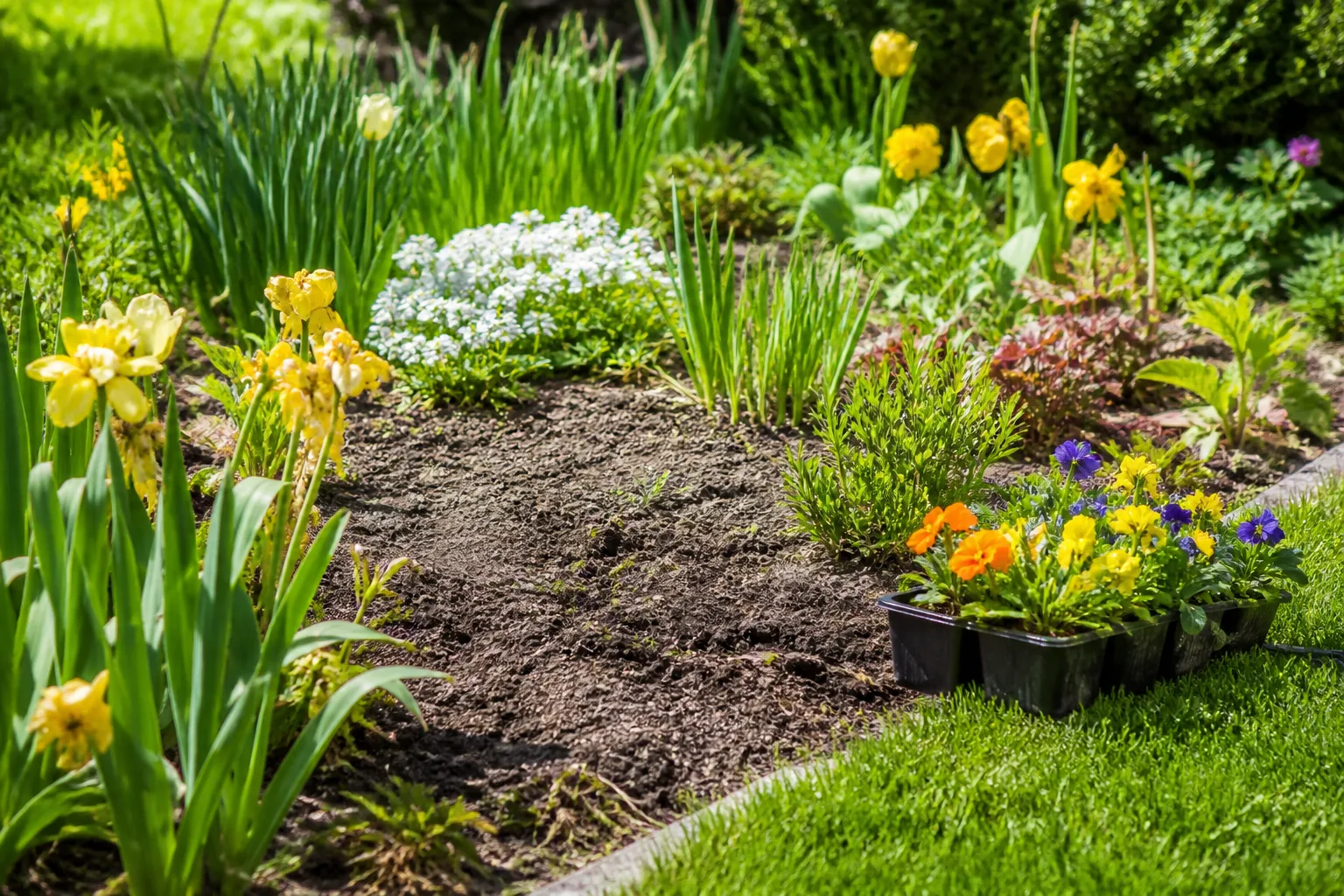
That patch of exposed soil between fading tulip foliage and your July daylilies is not a design flaw — it is a timing problem. Spring bulbs finish, summer perennials are still waking up, and anything you lost to frost heave, rabbit browsing, or a bad transplant leaves the bed looking half-finished. The fix is not one magic plant. It is matching fast fillers to your light, deciding whether you need one-season color or multi-year structure, and spacing plants so they knit together instead of sitting like lonely plugs on a mulch donut.
This guide walks through why gaps appear in late spring, how to choose between annuals and perennials, which twelve proven fillers perform in sun or shade, and the prep and spacing rules that turn a bare spot into full coverage by early summer.
Why Bare Garden Spots Appear in Late Spring
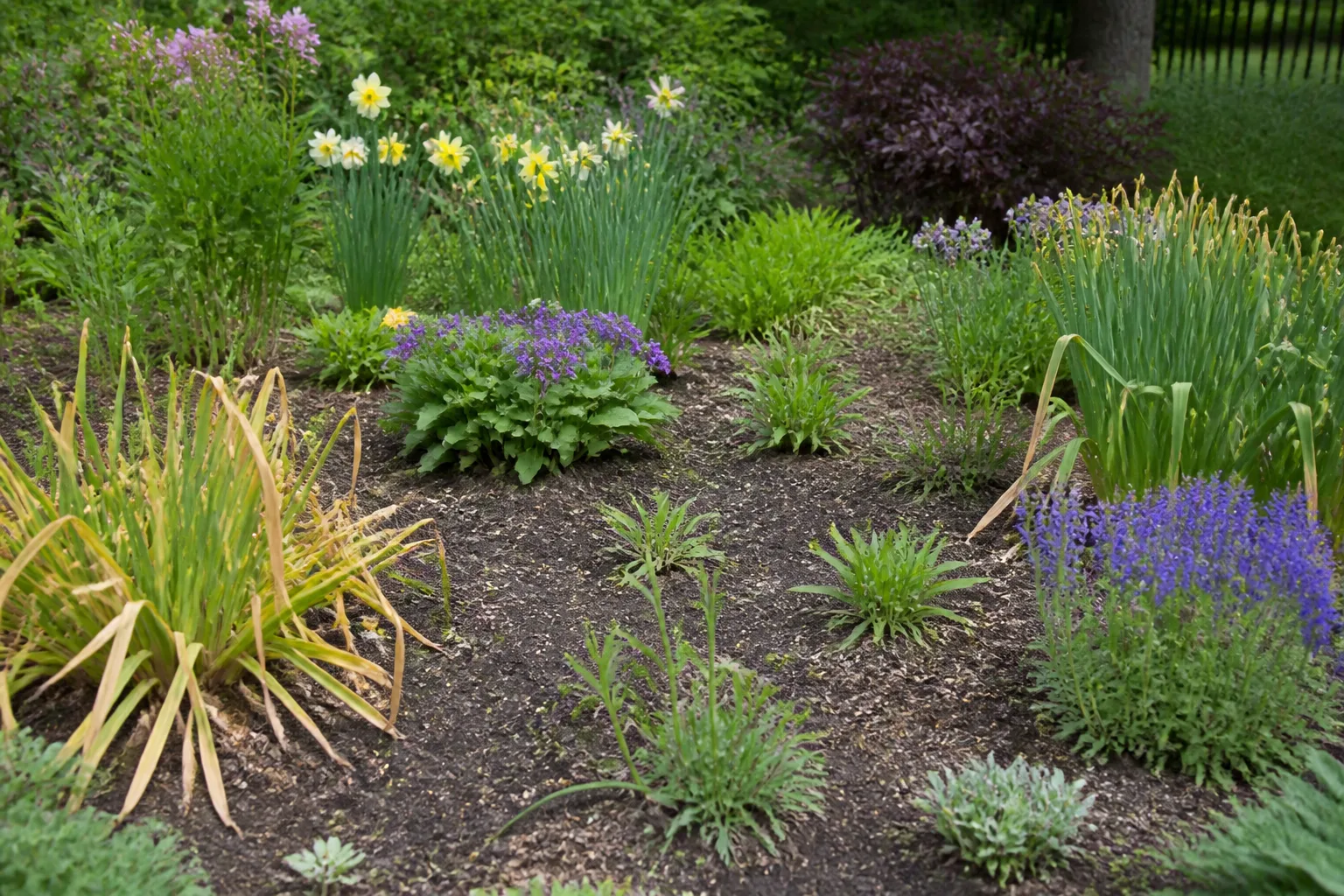
The spring-to-summer bloom gap
Most mixed borders hit a visual low point in late April through June in temperate climates. Early bulbs — crocus, daffodils, tulips — have finished flowering and their foliage is yellowing. Summer stars like coneflowers, black-eyed Susans, and many ornamental grasses are still building root mass underground. Epic Gardening describes this as the moment fast-growing annuals and quick perennials earn their keep: they cover soil and add color while established plants catch up.
If your bare spot sits exactly where bulbs were, you have two choices. Plant a temporary annual that finishes the season and comes out in fall, or tuck a low perennial that will coexist with next year’s bulb show. Do not plant a tall, wide shrub in a bulb pocket unless you are redesigning that section entirely.
Underperforming plants and empty soil
Gaps also appear when last year’s plants did not return. Winter kill, vole damage, dry shade under a new tree canopy, or soil compaction after construction can all leave holes. Sometimes the “gap” is simply slow establishment: a first-year perennial often looks modest while it builds roots. Gardening Know How notes that choosing vigorous spreaders — catmint, coreopsis, bee balm — knits a young border together faster than planting only slow, long-lived specimens everywhere.
Before you shop, ask whether the spot failed because of conditions (too dry, too shady, poor drainage) or timing (normal spring lull). Fix drainage or shade issues first; no filler thrives in a spot that killed the last resident.
Annuals vs. Perennials: Which Fix Fits Your Gap?
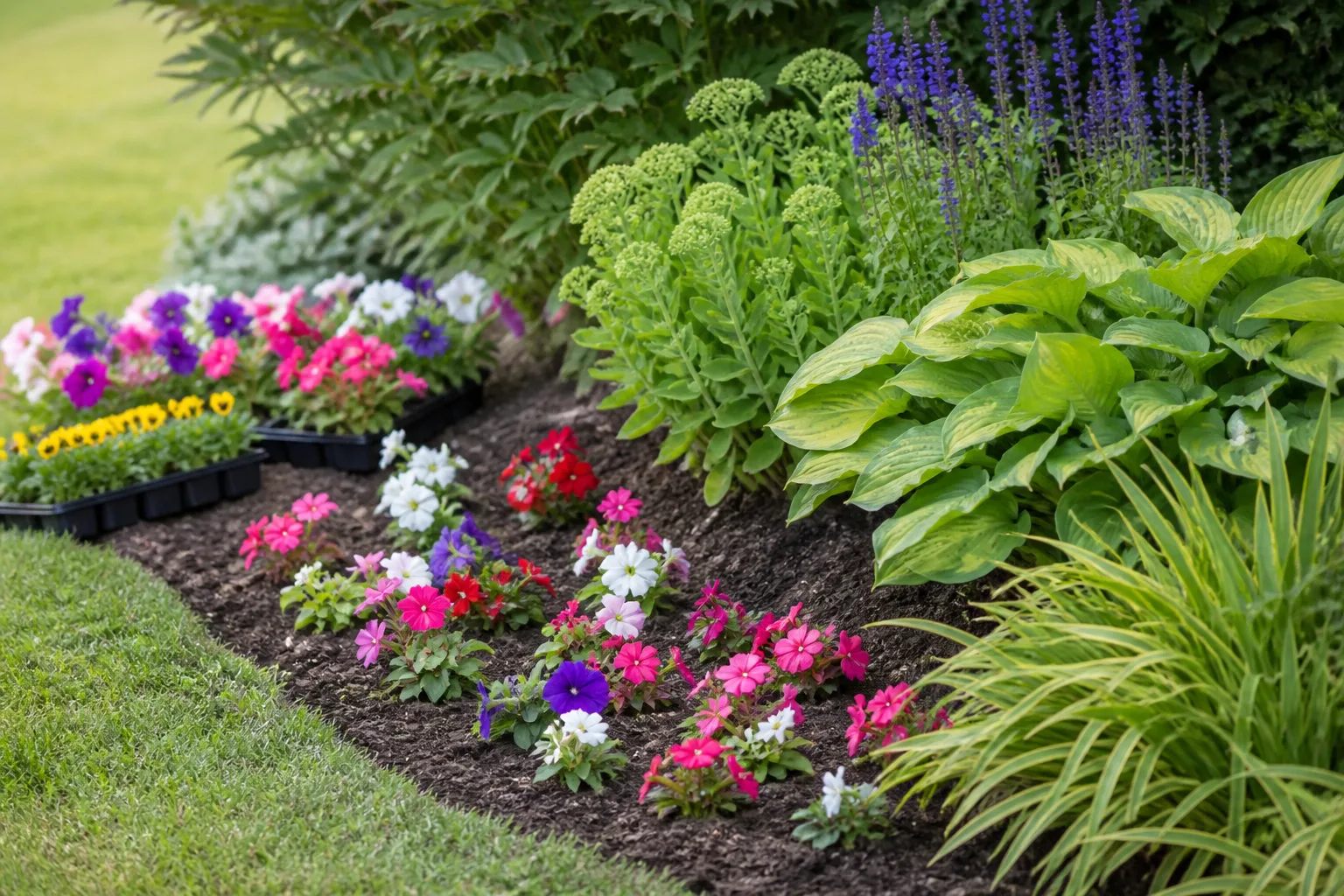
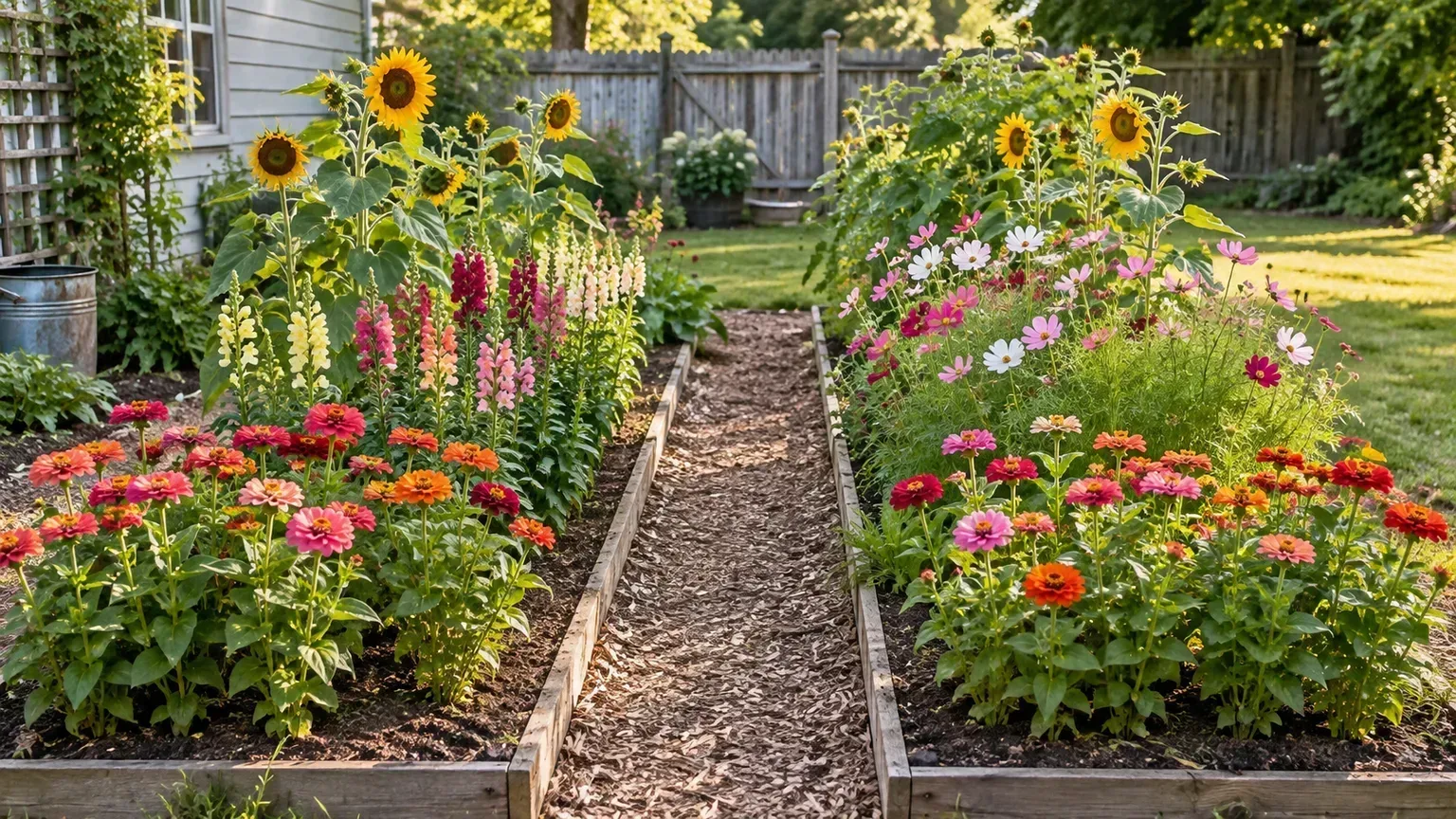
Annuals (and tender plants grown as annuals) are the fastest route to full coverage. They put energy into leaves and flowers now, not next year. Buy blooming flats from a nursery and you can have color within days. Sow seed and many heat-lovers — zinnias, cosmos, nasturtiums — flower in roughly 60 to 80 days, per Epic Gardening and common seed-packet ranges. For a gap you need covered by early summer, nursery starts beat seed unless you are still before your last frost date with six or more weeks of mild weather ahead.
Perennials cost more upfront but return yearly. They are the right choice when the bare spot is permanent — under a tree edge, along a walkway, between shrubs — and you want structure, not just a seasonal bandage. Fast perennials like catmint and hostas can double or triple in size in one good season when soil and light suit them. Mix both: perennials for the bones, annuals for the instant carpet.
If you are filling gaps while redesigning a bed, see our fast-growing groundcovers guide for low, spreading options that behave differently from upright bedding annuals.
Read the Light Before You Shop
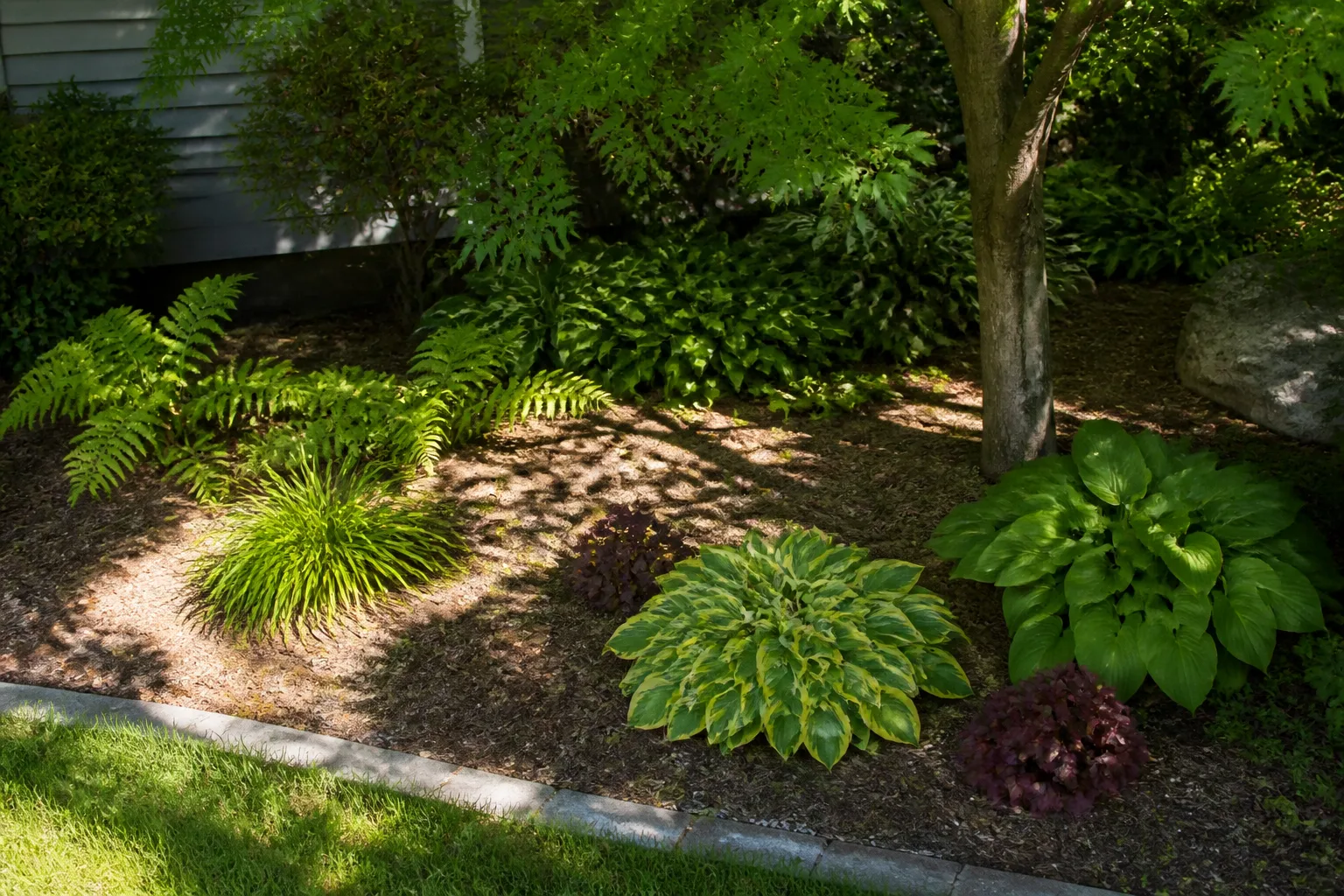
Garden centers are full of color in spring, and it is easy to grab whatever is blooming without reading the tag. That is how impatiens bake in afternoon sun and petunias stall in deep shade.
Full sun means six or more hours of direct light. Petunias, lantana, nasturtiums, wax begonias (in cooler climates), and catmint belong here.
Part shade is three to six hours of sun, often morning sun with afternoon protection. Coleus, violas, sweet alyssum, and many hostas thrive here.
Shade is less than three hours of direct sun. Impatiens, wax begonias, coleus, and hostas are your core team. Avoid petunias and lantana unless the spot gets meaningful midday light.
When in doubt, watch the spot for one full sunny day and note when direct light hits and leaves. A bed that looks “shady” at 4 p.m. may be full sun until 2 p.m.
Prep the Spot So Fill-In Plants Actually Spread
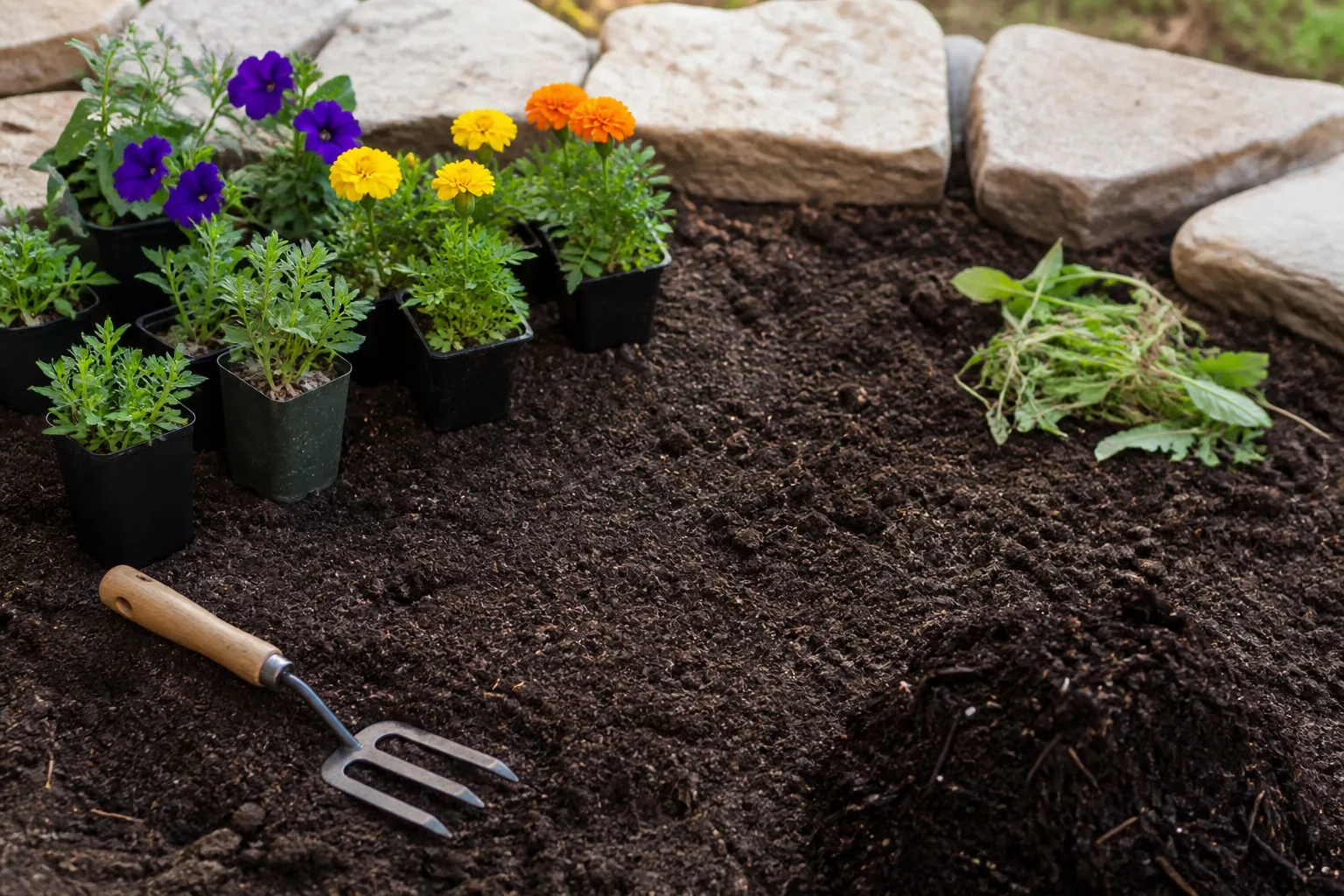
Fast plants still need a hospitable landing pad. Skipping prep is why many fillers stall at six inches wide while weeds race ahead.
Pull weeds and roots, not just tops. Chickweed, henbit, and quackgrass will outcompete young annuals in bare soil.
Loosen the top 6 to 8 inches with a fork if the soil is compacted. You do not need a full bed renovation — just break crust so new roots penetrate.
Amend lightly if the soil is pure sand or heavy clay. A thin layer of compost worked into the loosened zone improves water holding without creating a “bathtub” layer.
Plant at the same depth the plant sat in its pot. Buried crowns rot; exposed roots dry out.
Water in thoroughly at planting, then keep soil evenly moist for two weeks while roots establish. Penn State Extension emphasizes that young annuals are vulnerable to drying and drowning alike; consistent moisture matters more than a rigid calendar schedule early on.
If you are starting from seed for later gaps, our how to start seeds indoors guide covers timing from your last frost date — useful for petunias and other slow-from-seed annuals you want ready as plugs.
Full-Sun Annuals for Fast Coverage by Early Summer
These are the workhorses when you need a solid mat in a sunny border, container edge, or post-bulb pocket.
Petunias and wave-type spillers
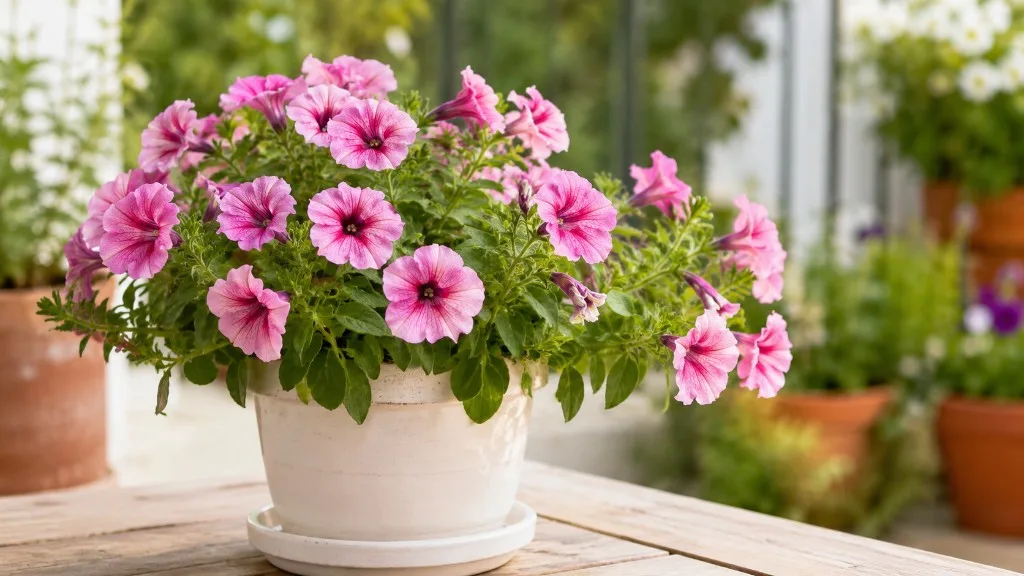
Petunias are among the fastest ways to turn bare soil into a flower carpet from nursery flats. Mounding and trailing types — including Wave, Supertunia, and similar series — can spread 2 to 3 feet wide in a good season when fed and watered regularly. Epic Gardening recommends cutting back leggy stems in midsummer for a fresh flush; the same pinch helps if you plant late and plants stretch before branching.
Plant after your average last frost date in full sun. Space 10 to 12 inches apart for quick fill; tighter spacing looks full faster but increases disease risk in humid summers. Pinch tips once at planting if plants are tall and floppy — it delays first bloom by a week but builds a bushier mat.
Nasturtiums and lantana for heat gardens
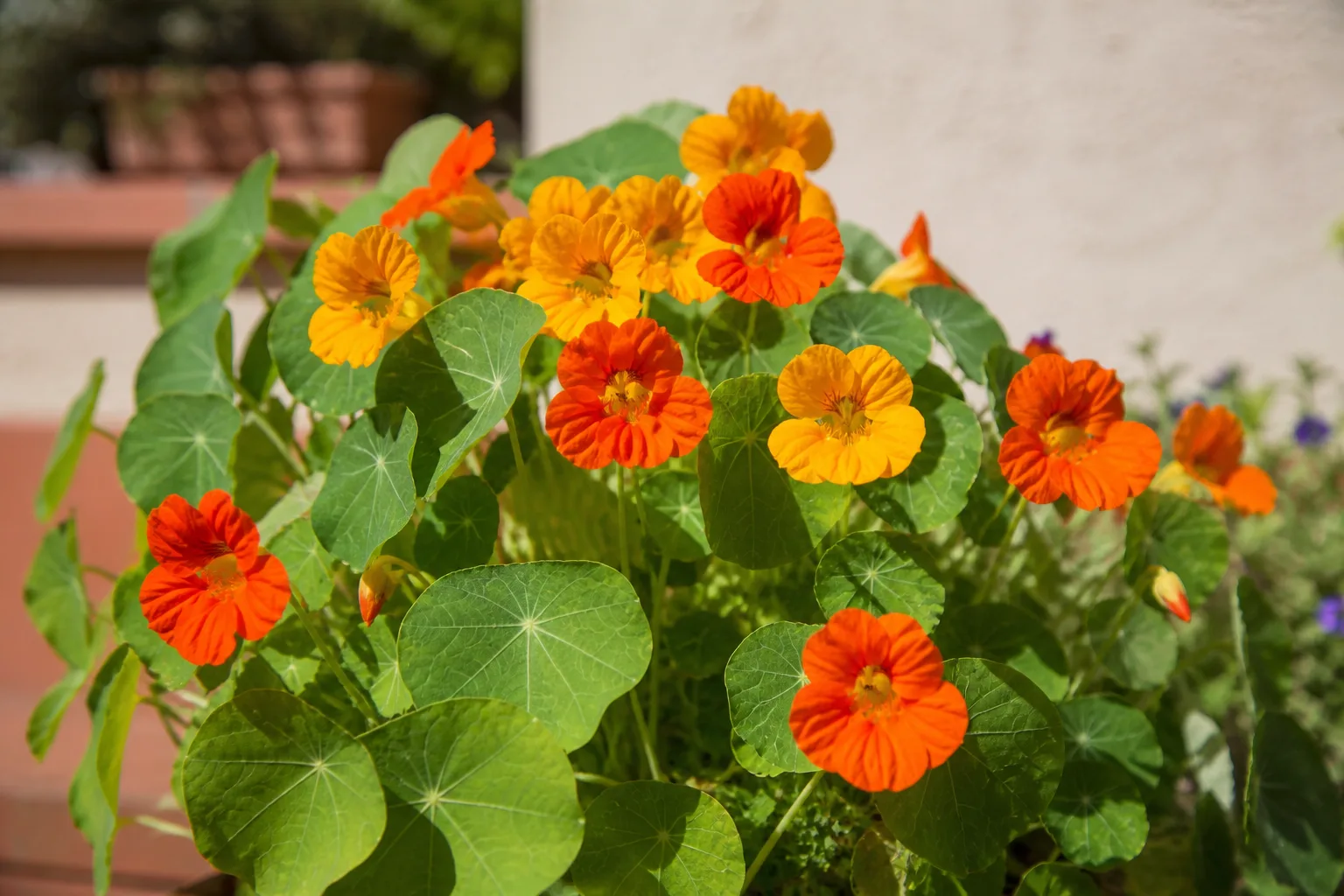
Nasturtiums (Tropaeolum spp.) sprawl 1 to 3 feet with rounded leaves and warm-toned flowers. They germinate quickly when sown direct in late spring and often bloom within 60 to 80 days. They prefer average soil — too much fertilizer pushes leaves over flowers. Many gardeners tuck them beside vegetables; flowers and leaves are edible, and the planting tradition of pest diversion is long-standing, though results vary by pest pressure and year.
Lantana (Lantana camara) is a heat-loving sprawler for the warmest spots. In frost-free climates it behaves as a woody perennial; elsewhere treat it as an annual. Give it full sun, warm nights, and room to branch. Weekly growth of an inch or more is common once established. Prune lightly to encourage sideways spread rather than one long stem.
Part-Shade and Cool-Season Fillers
Not every bare spot bakes in afternoon sun. North-facing beds, areas under deciduous trees that leaf out in May, and spaces between shrubs often need cool-season or shade-tolerant fillers.
Sweet alyssum, violas, and Johnny jump-ups
Sweet alyssum (Lobularia maritima) forms a low, honey-scented mat 3 to 10 inches tall, spreading 12 to 18 inches. It shines in morning sun with afternoon shade or bright part shade. Plant it at the front of borders and let it spill over edges. It often self-sows lightly; leave a few flower stalks if you want free volunteers next year — a pattern similar to other self-seeding flowers that reduce replanting work.
Violas and Johnny jump-ups (Viola tricolor and related pansy types) bridge cool and warm seasons. They tolerate light frost and keep blooming in part sun through late spring. In hot summers they may pause; shear back, keep moist, and many revive in fall. At 4 to 10 inches tall they are ideal filler plugs between taller perennials still waking up.
Impatiens and wax begonias in low light
Impatiens (Impatiens walleriana) are classic shade annuals for mass color. From nursery packs they grow to roughly 20 inches tall and wide with steady bloom if soil stays moist and light is bright shade, not cave-dark. Space 8 to 10 inches in beds for a solid ribbon by early summer. Note: in humid regions, impatiens downy mildew has reduced reliance on this species; New Guinea impatiens and begonias are common substitutes where disease pressure is high.
Wax begonias (Begonia semperflorens) handle a wider range — full sun in cool northern summers, part shade in the South. Their waxy leaves resist drought better than impatiens once established. Mounded types fill 6 to 24 inches depending on cultivar. They need little deadheading and work well as low ribbons along shaded paths.
Foliage Fillers That Cover Soil While Flowers Catch Up
Sometimes you need texture and coverage more than nonstop blooms. Foliage-first plants hide soil while neighboring perennials size up.
Coleus for instant color in part shade
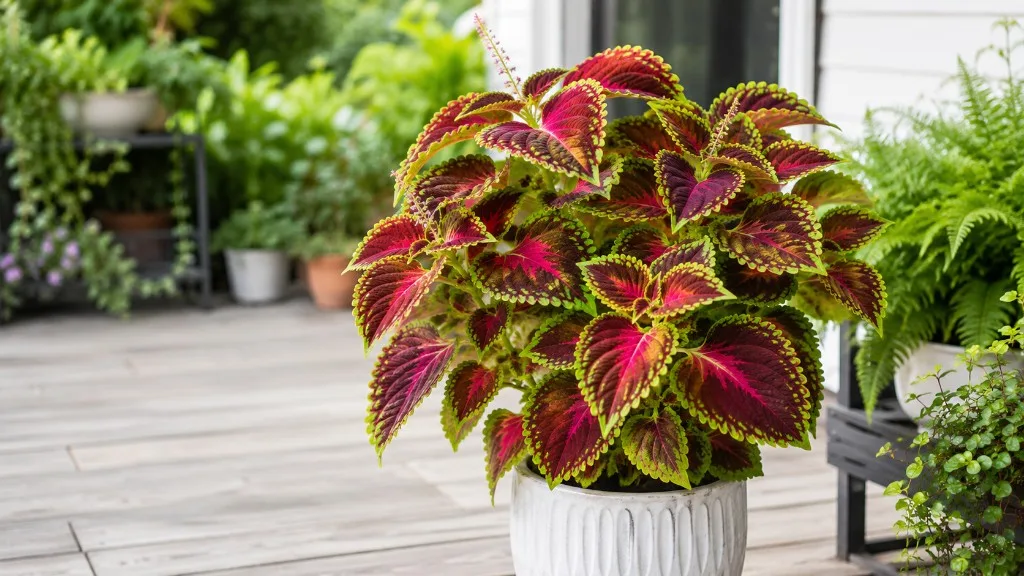
Coleus (Coleus scutellarioides) delivers leaf color from burgundy to lime without waiting on buds. In warm soil it can add 1½ inches of growth per week. Plant in moist, well-drained soil with morning sun and afternoon shade in hot climates; full part shade works in the South. Pinch flower spikes to keep energy in leaves. Coleus is tender — it dies with frost — but that makes it a perfect one-season bandage over bare spring soil.
Hostas for lasting shade structure
Hostas (Hosta spp.) are perennials, not annuals, but they belong on this list because they fill shade gaps faster than most people expect. A single division can double or triple by late summer in rich, moist shade. Miniatures suit rock-edge gaps; giants need five-foot circles. Foliage emerges early spring and holds until frost, giving you a green placeholder even when blooms are sparse. Divide and replant extras into other bare pockets — free coverage from one purchase.
Match cultivar to light: blue-leaved types want more shade; gold and variegated forms often tolerate more sun if soil stays moist.
Perennials That Bridge the Gap and Come Back
When the bare spot is not temporary, anchor it with perennials that grow quickly and bloom in the spring-to-summer window.
Catmint, foxglove, and iris
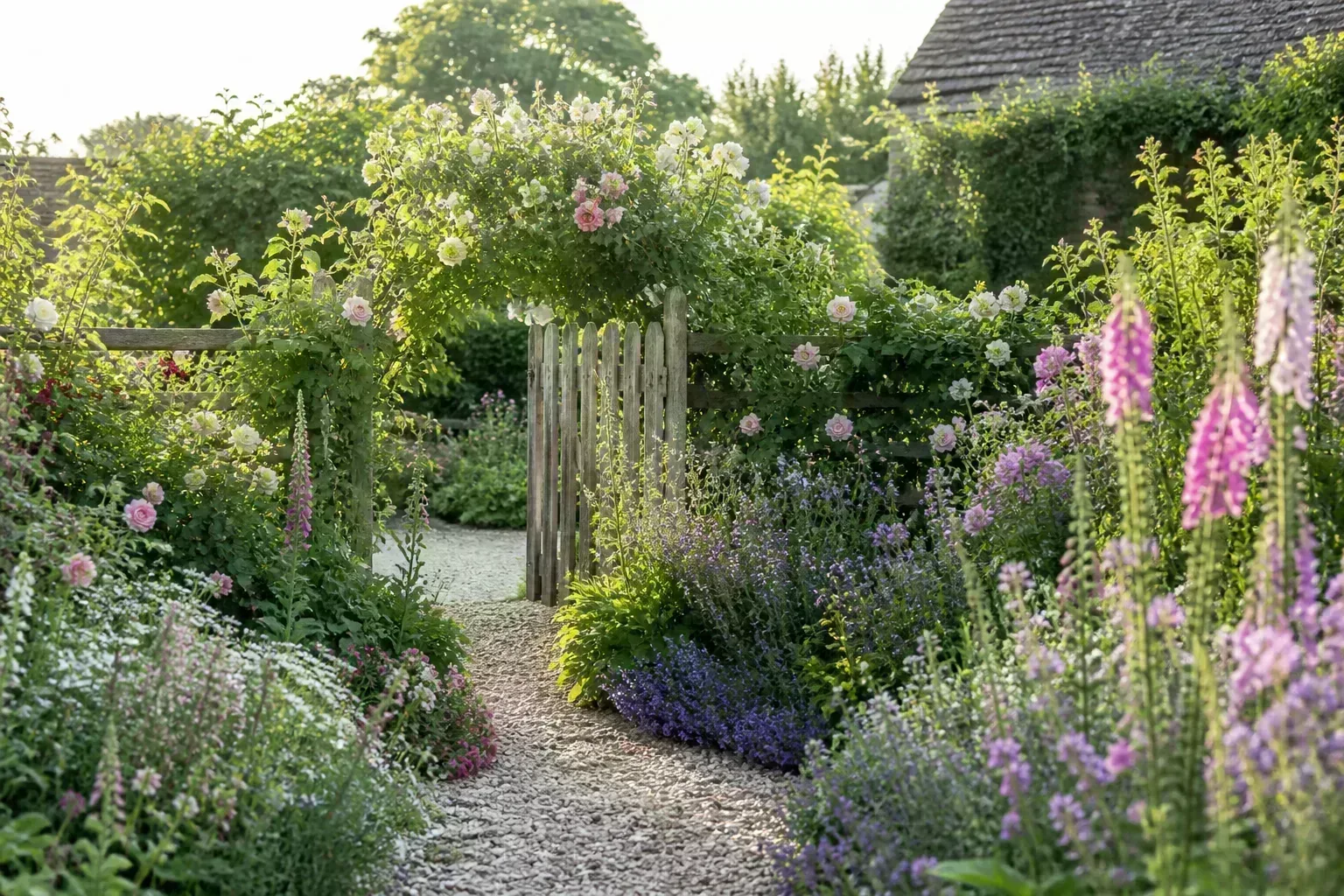
Catmint (Nepeta spp.) forms a soft, gray-green mound to about 2 feet with spikes of blue-purple flowers from late spring through summer if sheared after first bloom. Full sun and well-drained soil suit it. It pairs cleanly with roses, salvia, and ornamental grasses. Gardening Know How lists nepeta among perennials that establish fast enough to matter in young borders.
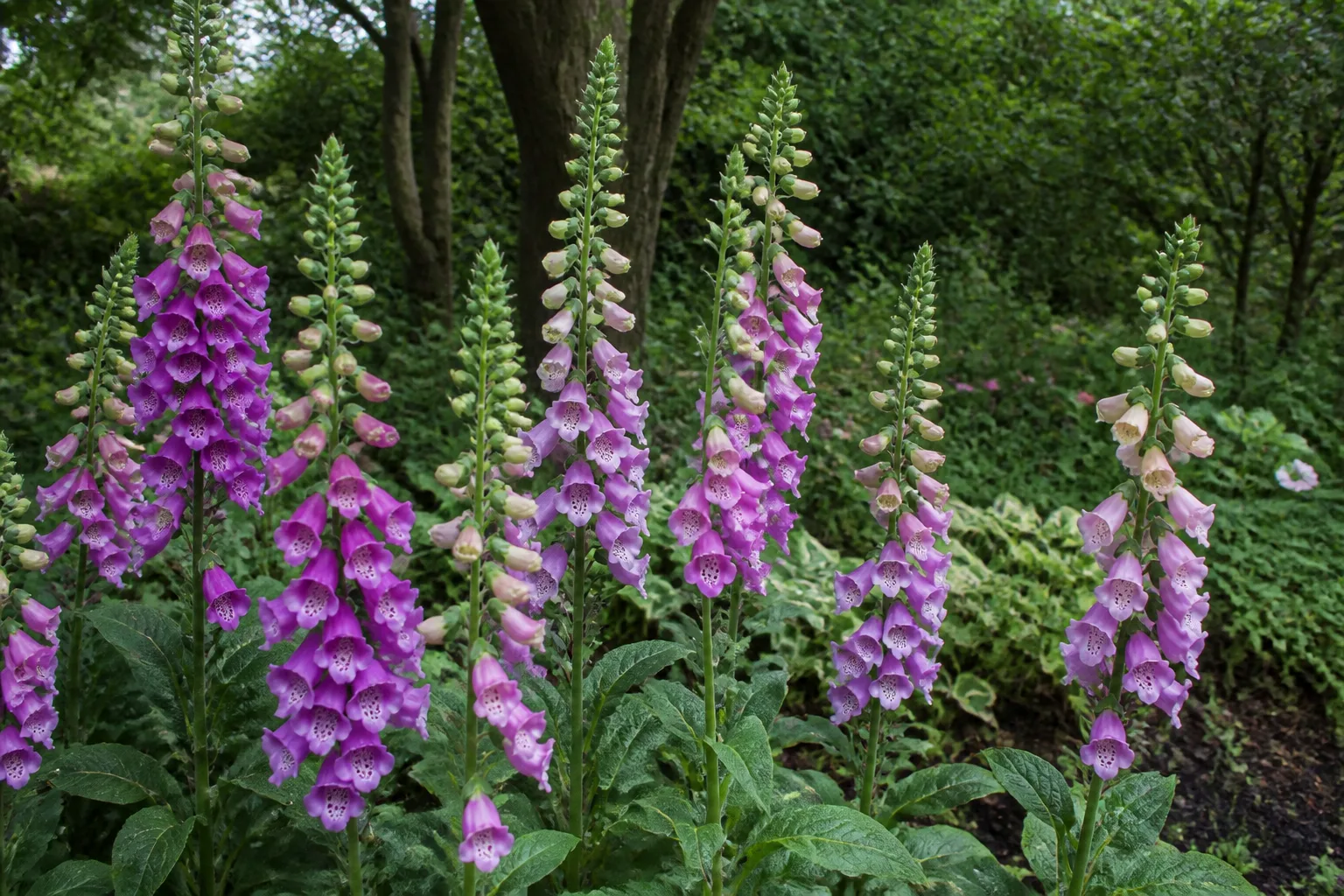
Foxglove (Digitalis purpurea) adds vertical drama where bare soil sits at the back of a border. Common foxglove is a biennial — rosette year one, flowers year two — though many garden-center plants are treated or hybridized for first-year bloom. Buy plants with buds showing if you need spikes this season. Full sun to part shade. Important safety note: all parts contain cardiac glycosides toxic to humans and pets if ingested. Plant away from pet runs and toddler play areas, and wear gloves when handling extensively.
Bearded iris (Iris germanica) is a moderate spreader via rhizome division. Each healthy clump adds several new fans per year. Spring bloom bridges the bulb-to-summer gap, and swordlike foliage holds space afterward. Plant rhizomes shallow with tops exposed in full sun. Divide crowded clumps in late summer and use the extras to fill new holes — one of the cheapest ways to propagate coverage.
Spacing, Water, and Feed for a Solid Mat
Coverage speed is mostly spacing + water, not brand names.
Bedding annuals for fast fill: 6 to 8 inches for small types (alyssum, violas), 8 to 12 inches for impatiens and wax begonias, 10 to 14 inches for petunias and coleus. Closer spacing looks full three to four weeks sooner but needs good air flow.
Water: First two weeks, keep root zones evenly moist — daily checks in heat. After establishment, deep watering two to three times weekly beats light daily sprinkles.
Feed: Colorado State University Extension notes that annuals in display beds benefit from regular fertility because they cannot store reserves like perennials. A balanced slow-release fertilizer at planting plus a liquid feed every two to three weeks through midsummer supports continuous bloom on heavy feeders like petunias. Go easy on nasturtiums and native-leaning fillers; excess nitrogen reduces flowers.
Timeline expectation: From nursery flats planted at proper spacing in late spring, expect a visually solid mat in three to six weeks in good weather. Seed-sown fillers need an additional month unless you started indoors.
Mistakes That Leave Holes Visible All Season
Planting for today’s hole size, not July’s spread. A 4-inch pot looks lost in a 2-foot gap. Either use more plugs at tighter spacing or accept a thin look until August.
Ignoring light mismatch. Shade annuals in sun scorch; sun lovers in shade stretch and bloom poorly. Re-read tags.
Skipping weed competition. Mulch after planting, not before soil is cleared. Weeds win races on bare earth.
Choosing slow perennials for a one-season emergency. Peonies and hellebores are wonderful — they are not gap bandages for a May bare patch.
Forgetting frost. Petunias, coleus, lantana, impatiens, and basil-tender fillers die or stall if set out too early. Harden off greenhouse plants and wait for stable night temperatures above 50°F (10°C) for tropical tenders.
Over-fertilizing sprawlers. You get leaves, not flowers. Match feed to plant type.
If you want seed-started color for later gaps, browse easiest flowers to grow from seed for forgiving options once this round of flats is in the ground.
Conclusion
Bare garden spots in late spring are normal — they mark the handoff between early bloomers and summer performers, plus any real losses your bed suffered over winter. Cover them fast by reading the light, prepping soil, and choosing annuals for speed or perennials for permanence. In full sun, petunias, nasturtiums, and lantana knit beds quickly from flats. In part shade and shade, sweet alyssum, violas, impatiens, wax begonias, coleus, and hostas hide soil while neighbors catch up. Catmint, foxglove, and iris add height and return yearly where the gap is not going away.
Plant at spacing that matches your patience — tighter for early-summer fullness, looser for long-term health. Water consistently at first, feed heavy bloomers modestly, and fix weeds before they outrun your new plants. Do that, and the patch that embarrassed you in May can read as intentional by June.