5 Natural Ways to Keep Stink Bugs Out of Your Home
Keep brown marmorated stink bugs out naturally: exclusion timing, amber bulbs, yard cleanup, food-grade DE, and fruit removal—without crushing bugs indoors.
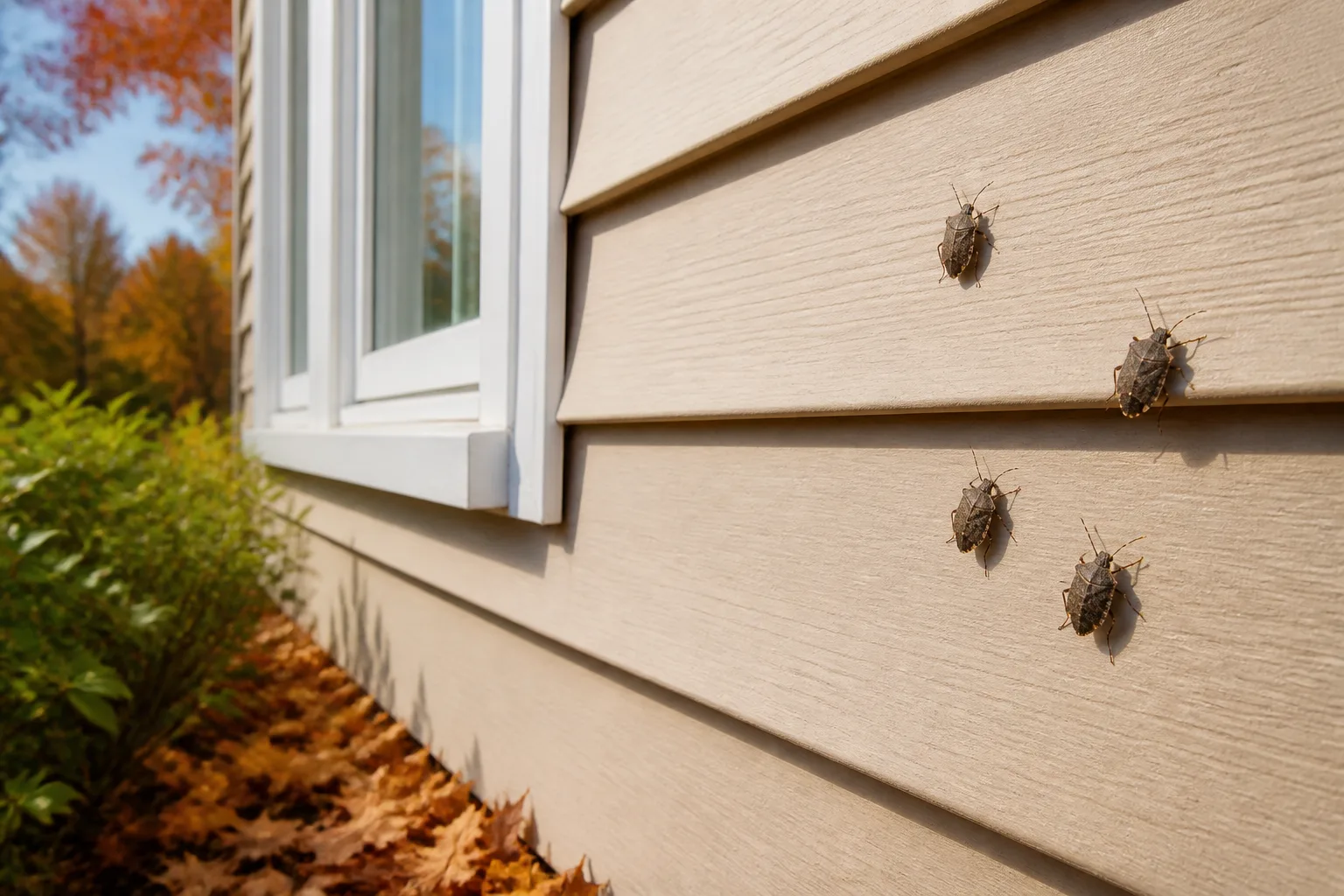
A cluster of shield-shaped insects on your sunny siding is not random bad luck. Brown marmorated stink bugs are looking for a dry, protected place to spend winter—and your house has cracks, warmth, and light cues that read like an open invitation. The good news is that the most reliable controls are physical: seal the routes, change the habitat, and manage light and food sources before the September rush. Sprays inside rarely solve a fall invasion; exclusion and yard discipline do.
These five natural solutions work together. Sealing alone fails if overgrown branches bridge to the roofline. Amber bulbs help, but not if torn screens stay unfixed. Treat this as a seasonal home-maintenance project, not a single product purchase.
Why Stink Bugs Pick Your House in Fall
Stink bugs do not move indoors to eat your pantry. Unlike ants or pantry moths, brown marmorated stink bugs (BMSB) enter buildings as overwintering shelter when outdoor temperatures drop. They are not structural pests—they do not chew wood or wire—but they aggregate in large numbers, release a sharp odor when disturbed, and can stain fabrics if crushed.
Brown Marmorated Stink Bug Basics
The species most homeowners battle is the brown marmorated stink bug, an invasive insect now widespread across much of North America. Adults are shield-shaped, about 17 mm (two-thirds of an inch) long, mottled brown, with lighter bands on the antennae and dark bands on the wing edges (Penn State Extension). They do not bite people or pets, but they damage fruits and vegetables outdoors with piercing-sucking mouthparts.
Life cycle drives the calendar. Adults emerge in spring, feed and mate through summer, then search for overwintering sites from September through October (Penn State Extension). On warm autumn afternoons they gather on south- and west-facing walls, then slip through gaps around windows, doors, siding joints, utility penetrations, and attic vents. Once inside wall voids or attics, they stay dormant until spring warmth wakes them—often the bugs you find indoors in February or March.
Crushing one releases an aggregation pheromone that can draw more bugs to the same area. That is why indoor control emphasizes capture without squashing, not frantic swatting.
The Timing Mistake That Traps Bugs Indoors
The most expensive error is sealing the house during peak fall invasion while bugs are already inside. NC State Extension warns that heavy “bug-proofing” in fall, winter, or early spring can trap stink bugs indoors instead of keeping them out. Let survivors exit on their own in spring, then complete exclusion repairs in late spring through summer before the next late-August congregation.
If you are reading this in October and bugs are already marching in, prioritize gentle removal indoors and exterior light management now, and schedule full sealing for next summer. Partial repairs still help—fix the screen you open daily—but save the whole-house caulk campaign for the off-season.
Solution 1: Seal Cracks, Gaps, and Entry Points
Mechanical exclusion is the single best method to keep stink bugs out, according to Penn State Extension. No essential oil, dryer sheet, or broadcast spray replaces a gap that stays open 24 hours a day.
Where to Look First
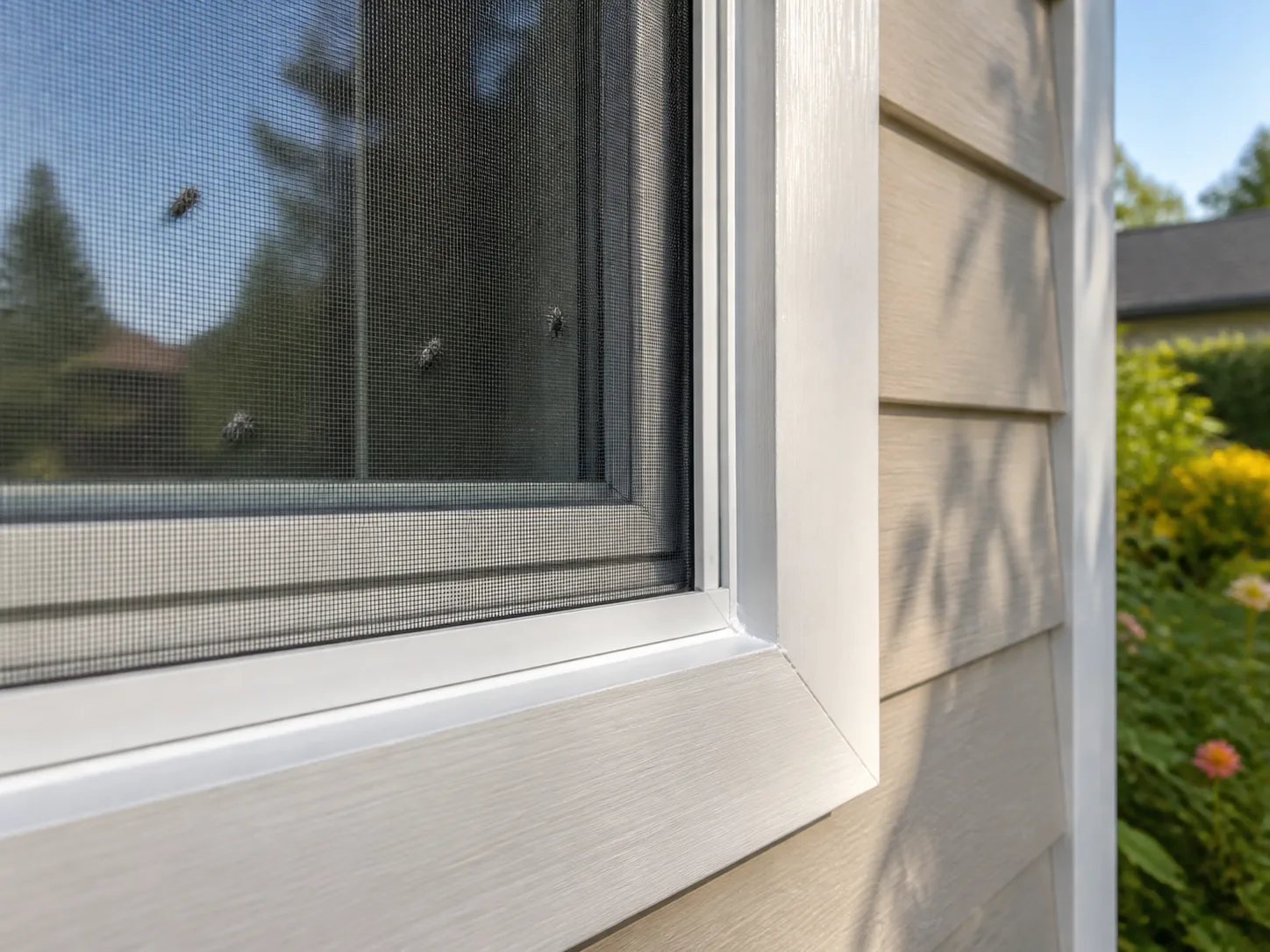
Adults can pass through openings as small as 3 × 7 millimeters—roughly the thickness of a dime on its edge (NC State Extension). Walk the exterior on a sunny fall afternoon and note where bugs cluster; those warm walls are your priority list.
Check these zones systematically:
- Windows and doors: torn screens, worn weatherstripping, missing door sweeps, gaps at frame corners
- Siding and trim: joints at fascia, soffits, corner boards, and where different materials meet
- Utility penetrations: gaps around hose bibs, gas lines, AC refrigerant lines, and cable entries
- Roofline: unscreened attic louvers, gable vents, chimney flashing, and loose shingles
- Foundation: cracks in mortar, gaps under steps, and where the sill meets masonry
Inside, bugs often emerge from cracks under baseboards, around window trim, ceiling fixtures, and exhaust fans after they have already hidden in voids (Penn State Extension). Sealing those interior escape routes reduces living-room appearances even when attic populations exist.
Materials That Actually Block Insects
Use good-quality silicone or silicone-latex caulk on narrow cracks and trim joints. For larger gaps around pipes or irregular openings, low-expansion foam followed by trim or caulk creates a cleaner finish. Steel wool plus caulk is worth the extra step around utility entries where rodents might also exploit the same hole.
Repair or replace damaged window and door screens before fall. A screen patch kit fixes pinholes; a torn lower corner needs full mesh replacement. Add door sweeps where you can see daylight under exterior doors.
Extension sources emphasize durability over speed: a rushed bead that peels in winter recreates the same entry point next September. Work on dry surfaces above 50°F when possible, tool the bead smooth, and prioritize routes on walls where you have actually seen bugs resting.
Solution 2: Trim Plants, Clear Yard Clutter, and Reset Outdoor Habitat
Stink bugs feed and reproduce outdoors all summer. The yard around your foundation is either a buffer zone or a launching pad onto the siding.

Branches, Shrubs, and the Bridge Problem
Tree limbs and tall shrubs that touch the house give insects a direct path from canopy to attic vents and upper-story windows. Trim branches so nothing contacts siding or roof edges. Keep foundation plantings pulled back from walls—aim for at least 12 to 18 inches of air space so you can inspect the sill line and so bugs are not hiding in moist mulch right against entry points.
Rake fallen leaves away from porch corners, deck stairs, and garage thresholds. Overgrown weeds along fences and unused garden beds hold moisture and shelter nymphs. Gardening Know How notes that removing weeds and debris near the garden is one of the first cultural steps because stink bugs use that cover before moving to structures.
Firewood, Leaf Piles, and Cardboard
Firewood stacks, cardboard boxes, and construction lumber leaned against the house are classic overwintering furniture. Store firewood at least 20 feet from the foundation and off the ground on a rack or pallets so air circulates underneath. Move unused lumber and bins away from exterior walls before September.
If you compost, keep active bins away from doorways and window wells. A lid that seals and regular turning reduces the fermenting fruit smell that can pull insects from the garden toward the kitchen wall.
Solution 3: Change Outdoor Lighting Before They Arrive
Many occasional invaders, including stink bugs, are positively phototactic—they fly toward bright light at night. A white LED porch flood above the front door can concentrate bugs on the wall beneath it, exactly where door weatherstripping is weakest.

Yellow and Amber Bulbs Versus White LEDs
Swap bright white porch, deck, and security bulbs for yellow, amber, or “bug light” bulbs on fixtures you do not need for security identification. These wavelengths attract fewer flying insects than cool-white LEDs while still providing enough light to navigate steps. Turn off non-essential floodlights during peak fall weeks if safety allows.
Motion-sensor fixtures help: light when you need it, dark when you do not. On multi-bulb fixtures, change only the bulbs facing the yard while keeping a brighter white lamp on the driveway if required for visibility.
Indoor Light Leaking Through Windows
Bugs respond to indoor light shining through bare windows at night. Pull shades or blinds on ground-floor rooms during peak invasion weeks, especially on the south and west sides where afternoon sun warmed the wall. If you work late in a home office with a bright desk lamp near a window, add a sheer curtain—small change, fewer insects tapping the glass.
This is a reduction strategy, not elimination. Combine lighting changes with sealing and yard cleanup; alone, bulbs will not close a 5 mm gap under the siding.
Solution 4: Use Food-Grade Diatomaceous Earth With Realistic Expectations
Food-grade diatomaceous earth (DE) is a natural powder made from fossilized algae. It abrades the waxy cuticle of small insects and causes dehydration. Pest professionals and extension educators sometimes recommend it along window sills, door thresholds, and foundation perimeters as a low-toxicity supplement to sealing—not a substitute for caulk.
Where to Apply (and Where Not To)
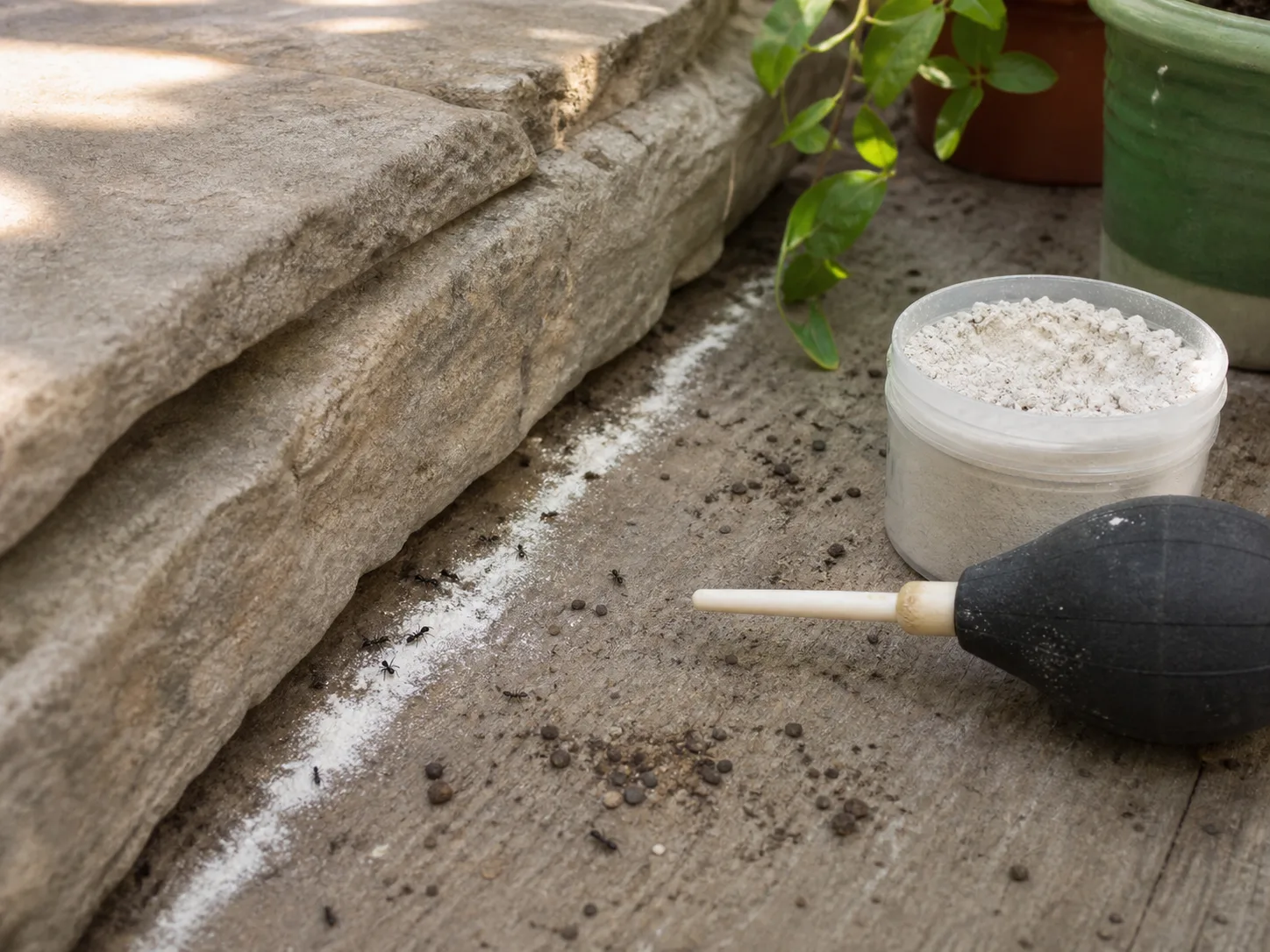
Apply a thin, barely visible dust line where bugs walk, not a thick pile. Useful exterior targets include sill plates, garage door tracks, and junctions where siding meets foundation—always after you have sealed the larger gaps. Indoors, a light dust in dry, inaccessible cracks (behind trim you have not yet sealed) may intercept wandering adults.
DE fails when it gets wet: rain, irrigation, and mopping deactivate it within hours. Reapply only on dry days after rain, and expect to refresh frequently on exposed exterior ledges. It will not kill bugs hiding inside insulated wall voids because they never cross the treated surface.
Does it kill stink bugs on contact? Yes, when they walk through a dry, undisturbed layer—but BMSB’s size and fall invasion pressure mean DE alone rarely ends an infestation. Think of it as backup armor on routes you have already narrowed with screens and sweeps.
Safety Limits Around Pets and Lungs
NPIC classifies food-grade DE as low toxicity to humans and pets when used as directed, but inhaling fine dust irritates lungs. Wear a dust mask during application, keep pets away until the powder settles, and avoid broadcasting it across open floors where children crawl. Pool-filter DE is not interchangeable—it is heat-treated and more hazardous to breathe.
Never apply DE to food-prep counters, pet bowls, or bedding. If you need indoor capture instead of dust, use the removal methods below.
Solution 5: Remove Fallen Fruit and Garden Food Sources
Outdoors, stink bugs feed on a wide menu: tomatoes, peppers, apples, peaches, corn, beans, and berries (NC State Extension). Feeding damage looks like yellow or brown stippling, dimpling, or corky spots on fruit—not ragged chewing holes. A yard full of ripening produce and fermenting drops supports larger populations that eventually look for winter housing nearby.
Orchard and Vegetable Garden Cleanup
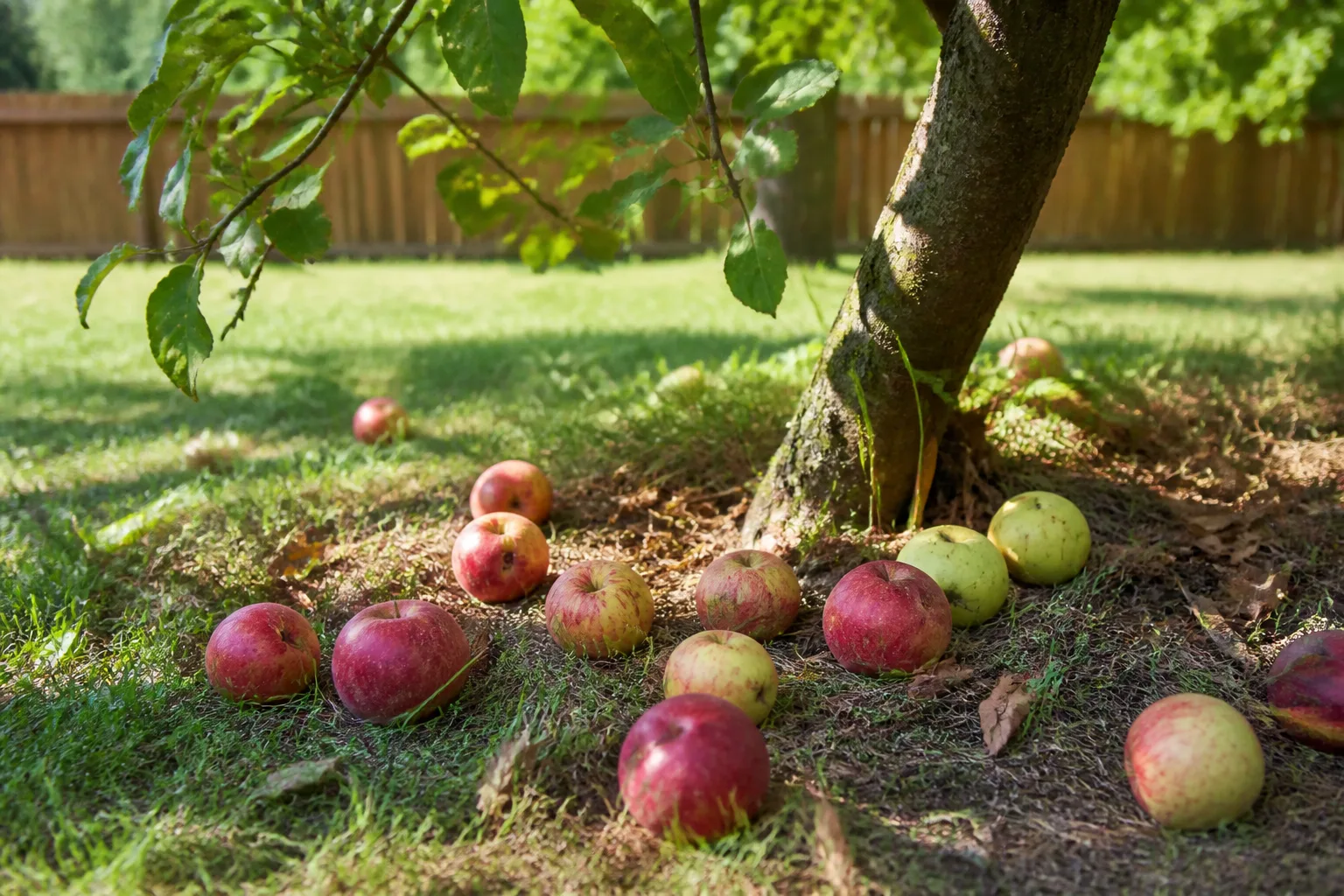
Pick fruit as it ripens and collect drops at least twice a week during late summer and fall. Compost fermenting apples against the foundation is an open invitation. Prune low branches that lay fruit on the ground, and remove finished vegetable plants promptly after harvest.
In the edible garden, kaolin clay sprays (a mineral barrier) can reduce egg-laying on leaves when applied before pressure builds; they require thorough coverage and wash off in rain (Gardening Know How). That is garden-scale IPM, not an indoor fix—but fewer bugs in the tomatoes means fewer bugs on the back door in October.
Indoor Fruit Bowls and Compost Buckets
A bowl of bananas on the counter will not cause a fall invasion by itself—BMSB entered seeking shelter, not your kitchen fruit. Still, indoor produce and compost pails can keep individual bugs active instead of settling quietly. Store ripe fruit in the refrigerator during peak weeks, use a lidded compost bin, and wipe sticky counters at night.
What to Do With Stink Bugs Already Inside
Prevention next year does not help the bug walking across your curtain today. Do not crush it. Squashing releases odor and aggregation scent that makes the room worse.
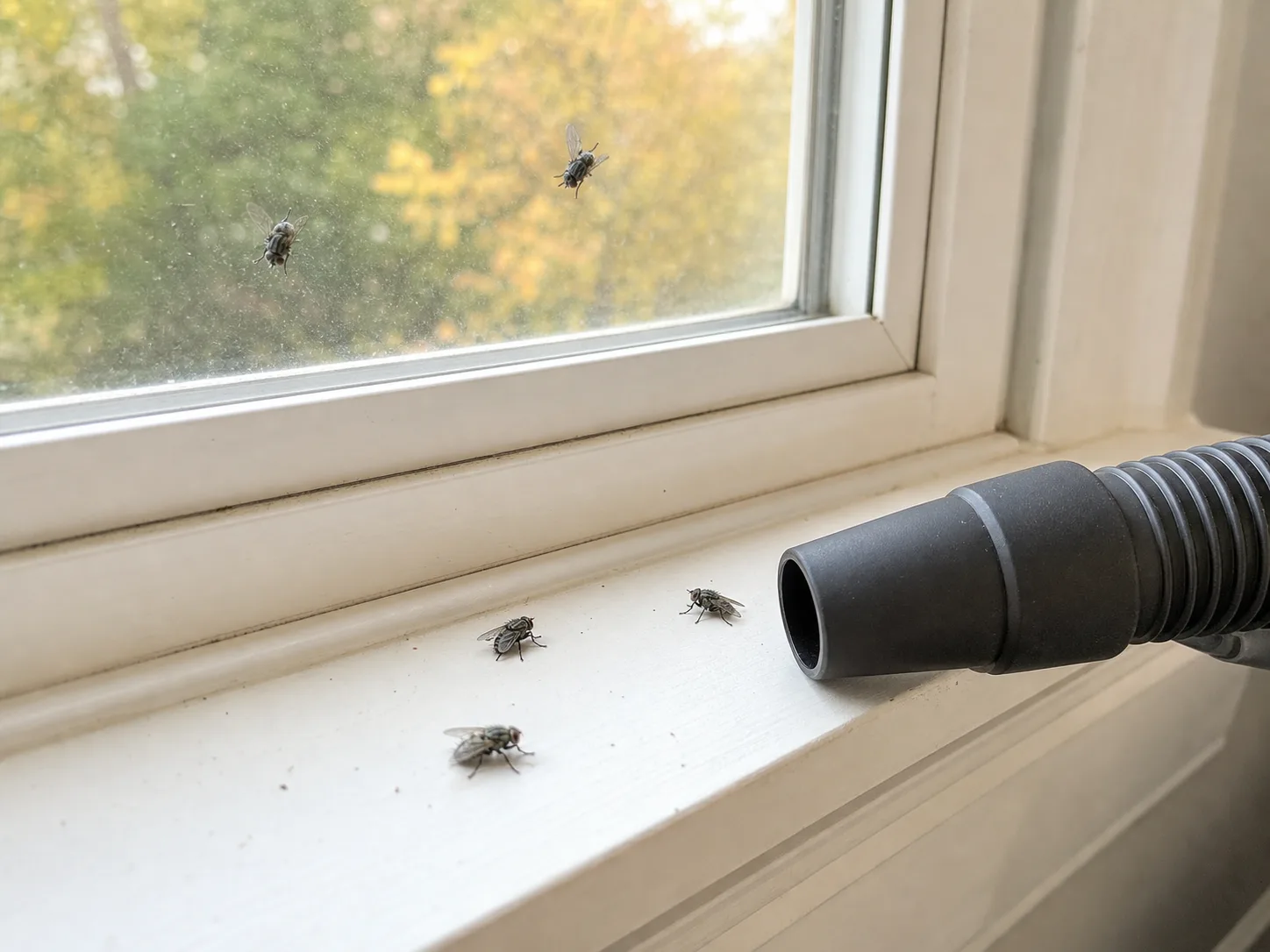
The Vacuum, Jar, and Soapy-Water Methods
NC State Extension recommends these capture approaches:
- Jar or cup method: Slip a container over the bug, slide stiff paper underneath, and transfer it to soapy water to drown it—or freeze the sealed container overnight.
- Dedicated vacuum: A handheld vacuum reserved for bugs works for large gatherings. Empty the canister immediately into a sealed bag; vacuums can smell like stink bugs for weeks if bugs sit inside.
- Soapy water dish: A wide pan of soapy water beneath a light trap can catch some individuals, though it is slower than direct capture.
Do not live-release captured bugs outdoors in fall—they often re-enter the same structure. Freezing or soapy water disposal is the practical choice.
Avoid broad indoor insecticide fogging. Penn State Extension notes that sprays often miss mobile bugs, new arrivals continue from outside, and large numbers of dead BMSB in voids can attract carpet beetles and other secondary pests (NC State Extension).
What Does Not Work as a Long-Term Fix
Some popular tips recycle on social media every September. Here is the honest split:
- Essential oil sprays and scented pouches may briefly repel an exposed bug but do not seal gaps or stop mass fall movement. Peppermint and similar oils are covered in depth in our guide on whether peppermint oil repels stink bugs—useful as a short-term nudge, not structural control.
- Dryer sheets rubbed on screens produce a weak, short-lived scent at best; torn mesh still admits insects.
- Indoor “bug bombs” scatter bugs deeper into voids without addressing exterior entry.
- Ultrasonic plug-in repellers lack consistent evidence for stink-bug exclusion in peer-reviewed pest-management literature.
If a tactic does not change light, habitat, food, or physical access, treat it as optional—not the plan.
When Natural Methods Are Not Enough
Call a licensed pest control operator when:
- Hundreds of bugs appear daily despite sealed common entries
- You find persistent indoor activity every winter year after year in the same rooms (possible hidden void colony)
- Garden or orchard damage is commercially significant and cultural controls failed
- You need exterior residual treatment timed to pre-congregation weeks and are not comfortable applying labeled products yourself
Exterior insecticides applied in late summer to early fall just before congregation can offer short-term relief when complete sealing is impossible on old masonry or multi-unit buildings (Penn State Extension). Sunlight breaks down residues quickly—often within days to a week—so timing and professional application matter more than brand hype.
Your Fall Prevention Checklist
Use this sequence so work happens in the right season:
This week (bugs already showing up): Capture indoor insects without crushing; switch porch bulbs to amber where safe; pull shades at night; remove fallen fruit near doors; patch the most-used torn screen.
Next summer (before late August): Full exterior seal audit; replace door sweeps and weatherstripping; screen attic vents; trim branches off the roofline; relocate firewood and clutter; light DE on dry sill routes if desired.
Ongoing: Refrigerate ripe counter fruit in peak weeks; keep compost lidded; monitor garden crops for stippling damage and remove weeds along the foundation.
Never in mid-invasion fall: Do not seal the entire house shut while thousands of bugs are already inside wall voids—wait until spring exit, then seal.
Conclusion
Keeping stink bugs away naturally is mostly home carpentry and yard discipline, timed to their overwintering calendar. Seal gaps the size of a dime, break plant bridges to the roofline, swap harsh white lights for amber on porches, use food-grade DE only as dry backup on bug walkways, and starve outdoor populations by picking up fruit. Capture indoor stragglers with a jar or dedicated vacuum without squashing them.
No single “natural” product delivers a permanent force field. The homeowners who see the biggest drop year over year are the ones who excluded in summer and treated fall as removal-and-light-management season—not panic spraying. Start with the gap you saw daylight through last October; fix that first.



