Does Peppermint Oil Keep Stink Bugs Out? What Works
Peppermint oil may discourage stink bugs briefly, but sealing gaps and safe removal work better. Learn the recipe, limits, timing, and pet precautions.

Peppermint oil may make a few exposed stink bugs turn away, but it is not a reliable way to seal a house or end an infestation. The scent is volatile, so it fades; a bug can wait, move around the treated spot, or enter through a different gap. Peppermint oil is best treated as a temporary deterrent, not a pest-control barrier.
If stink bugs are appearing at windows or gathering on a sunny wall, the lasting answer is usually physical exclusion: tight screens, sealed cracks, and protected openings. Remove the bugs already inside without crushing them, then look for the route they are using. That sequence addresses the reason they are there instead of repeatedly covering the same area with fragrance.
The short answer: a temporary nudge, not a barrier
Peppermint has a strong aroma because its essential oil contains highly concentrated volatile compounds. A strong smell can make a treated surface less appealing to some insects, and peppermint oil is commonly used as a short-term household repellent. Practical guidance from Family Handyman describes that kind of use as temporary and recommends testing treated surfaces rather than assuming every material will tolerate the oil.
That is different from proving that peppermint oil keeps brown marmorated stink bugs out of a building. A scent does not close a 3-millimeter gap, repair a torn screen, or stop insects that are already tucked into siding, trim, or an attic edge. It also does not prevent a new group from arriving when the weather and light cues change.
Use the oil only for a narrow job: discourage insects from a particular, accessible surface while you correct the entry point. If the bugs keep returning after two or three cautious applications, stop treating the scent as the solution and move to exclusion or professional advice.
Think of it as a temporary “please do not use this edge” signal. It is useful only when you can observe the route and make the underlying repair; a blind spray around the entire home creates more exposure without giving you better information.
First identify the stink bug you are dealing with
“Stink bug” describes a group of shield-shaped insects, not one single species. Some are native and relatively minor garden visitors; others can damage fruit and vegetables or gather in large numbers on buildings. Identification matters before you decide whether a household repellent is even the right response.
Brown marmorated stink bugs are especially likely to become a fall house nuisance. They spend the cold season protected in buildings and other sheltered spaces, then return outdoors in spring. Purdue Extension explains that adults seek cracks and crevices around windows, doors, siding, utility pipes, chimneys, and fascia as temperatures drop.
How to recognize a brown marmorated stink bug
Look for an adult that is roughly one-half to three-quarters of an inch long, shield-shaped, and mottled gray-brown. Pale bands on the last two antennal segments and alternating light and dark marks along the exposed edge of the abdomen are useful clues. Penn State Extension also notes the pale bands on the antennae and the dark bands in the membranous part of the wings.
Do not rely on smell alone. The odor is a defensive response and can be produced by several stink-bug species when they are disturbed. If you need certainty, collect one without crushing it, photograph it from above, and send the image to a local Extension office or pest professional.
Lookalikes can change the recommendation. Brown, gray, or green shield-shaped insects may be beneficial predators, harmless native species, or crop-feeding pests. A close photo of the back, antennae, and abdominal edge is more useful than a description such as “small brown bug.” Identification also helps you avoid applying a household oil where the real issue is a beneficial insect visiting a plant.
The brown marmorated stink bug can be a serious crop pest, but it does not reproduce inside a home, chew the structure, or establish a breeding colony in the wall. That is reassuring, but it does not make a large seasonal invasion harmless: the insects can be noisy, persistent, and difficult to remove without triggering their odor.
Why peppermint oil can repel without solving the problem
Stink bugs navigate with a mix of temperature, light, shelter, and chemical cues. A peppermint-smelling surface may be unpleasant enough to change the last step of that decision, but the insect still has the larger motivation to find a protected overwintering site. If an untreated crack is nearby, the bug has an easy alternative.
Essential oils also evaporate. Warm sun, airflow, rain, washing, and an absorbent surface can all shorten the time that a noticeable scent remains. There is no dependable household rule such as “one spray lasts a week,” because the answer changes with the surface, concentration, weather, ventilation, and the formulation used.
That is why peppermint oil can seem to work in a test at a windowsill and fail at the whole house. The treated strip may be avoided for a while, while the actual entry gap remains open. A repellent can redirect a problem; exclusion changes the route.
Another common mistake is spraying the insects directly and assuming that a natural product is therefore an insecticide. A homemade oil-and-water mixture is not automatically a validated killing treatment. If you need a pesticide, use only a product registered and labeled for the specific site and pest in your area, and follow the label exactly.
What the research can—and cannot—tell you
Essential-oil research is real, but it is easy to overread. Laboratory studies may measure whether a particular oil, dose, or vapor keeps insects away under controlled conditions. That can show biological potential without proving that a diluted household spray will protect a house through a rainy autumn.
For example, research has examined essential oils as spatial repellents for the brown marmorated stink bug, including the peer-reviewed work summarized in the Journal of Applied Entomology. Other experiments test different oils and concentrations altogether. A recent laboratory study of six plant oils found that activity varied by oil and dose and specifically called for further field research; it did not test peppermint, so it cannot be used to claim a peppermint result. See the 2026 study record for that limitation.
The practical conclusion is modest: peppermint oil is plausible as a short-lived scent deterrent, but the evidence does not support promising it as a durable exterior barrier, a treatment for hidden insects, or a replacement for sealing. Treat the research as a reason to test carefully, not a reason to skip the rest of the control plan.
If you still want to try peppermint oil indoors
Use it after cleaning and inspection, not instead of those steps. First remove food residue, locate the likely route, and decide whether the treated surface is away from food preparation, children’s hands, pet bedding, and places where anyone may rub their skin or eyes.
A conservative spray recipe
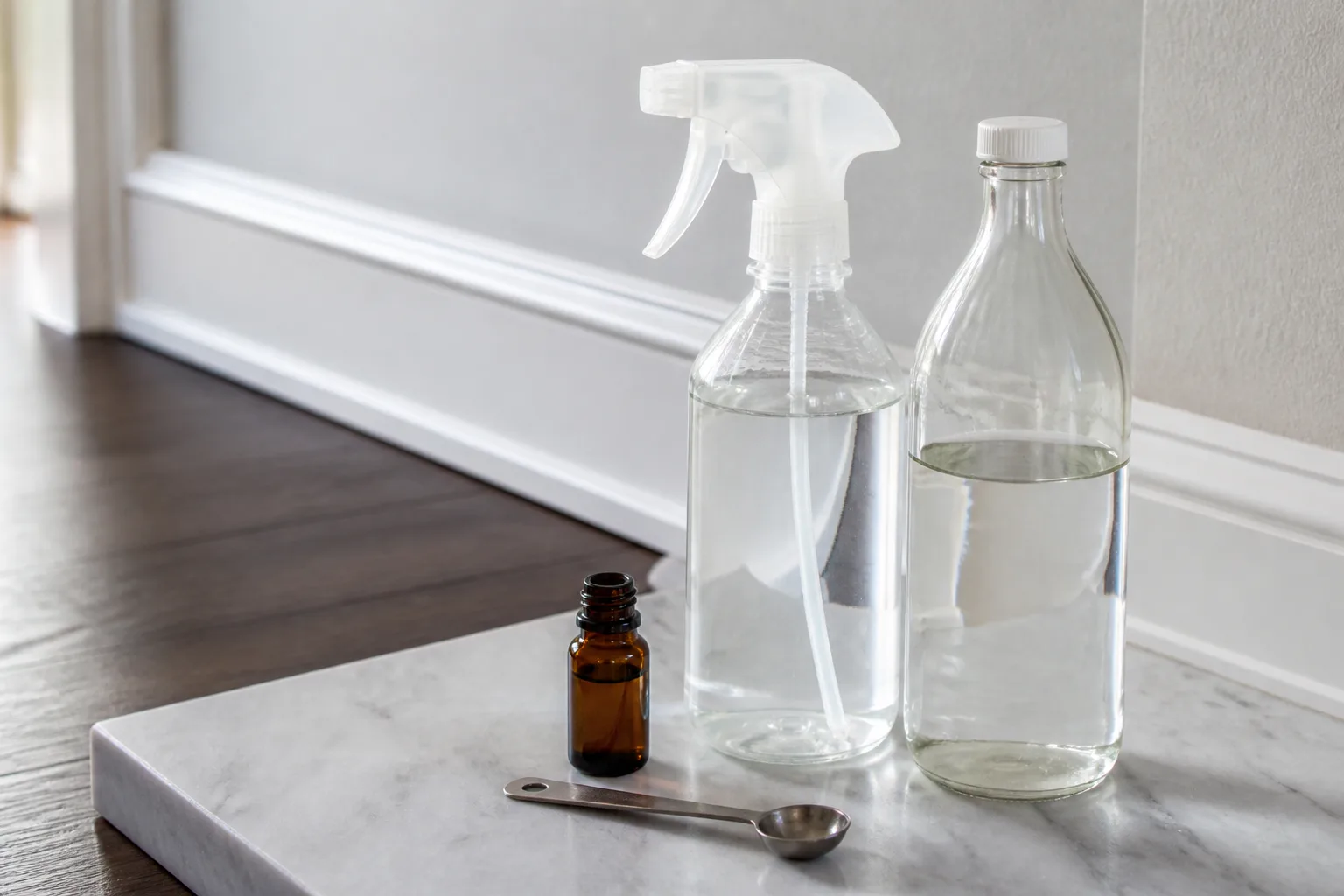
For a small trial, combine 10 to 15 drops of pure peppermint essential oil, 1 cup of water, and 1 teaspoon of plain dish soap in a labeled spray bottle. The soap helps the oil disperse for the moment, but the mixture will still separate; shake it before each use and make only a small amount.
This is a cautious household deterrent recipe, not a guaranteed stink-bug pesticide. Apply a single light mist to a non-porous, non-food-contact test area first. Wait for it to dry and check for discoloration, dulling, tackiness, or damage before treating a larger section. Never spray a mixture containing essential oil on food, cutting boards, dishes, pet bowls, or a surface that a child may mouth.
Where to apply it—and where not to
If you use the spray, keep the application narrow: a window frame, the dry interior edge of a doorway, or a baseboard near a suspected route. Do not saturate the area, spray into electrical openings, or mist an entire room. Ventilate the space and keep the bottle secured when you are done.
Refresh only when the scent has faded and only after checking whether the bugs are still using that route. If you need to reapply every day, the oil is not solving the underlying problem. Switch your effort to weatherstripping, caulk, screens, and a careful inspection of the exterior.
Do not use peppermint oil as a substitute for a pet-safe plan. NCCIH warns that essential oils are highly concentrated and can cause skin irritation; menthol should not be applied to the faces of infants or young children. Pet Poison Helpline notes that essential-oil exposures can affect animals, with cats and birds presenting particular concerns. Keep the bottle and wet surfaces inaccessible, and skip the spray if a pet can lick, brush against, or inhale the treated area.
Make the outside of your house less inviting
Exclusion has a better chance of lasting because it removes the physical route instead of competing with the insect’s senses. Begin with the side of the house where bugs gather, especially a warm, sunny wall or a window that receives afternoon light.
Seal the small gaps that matter
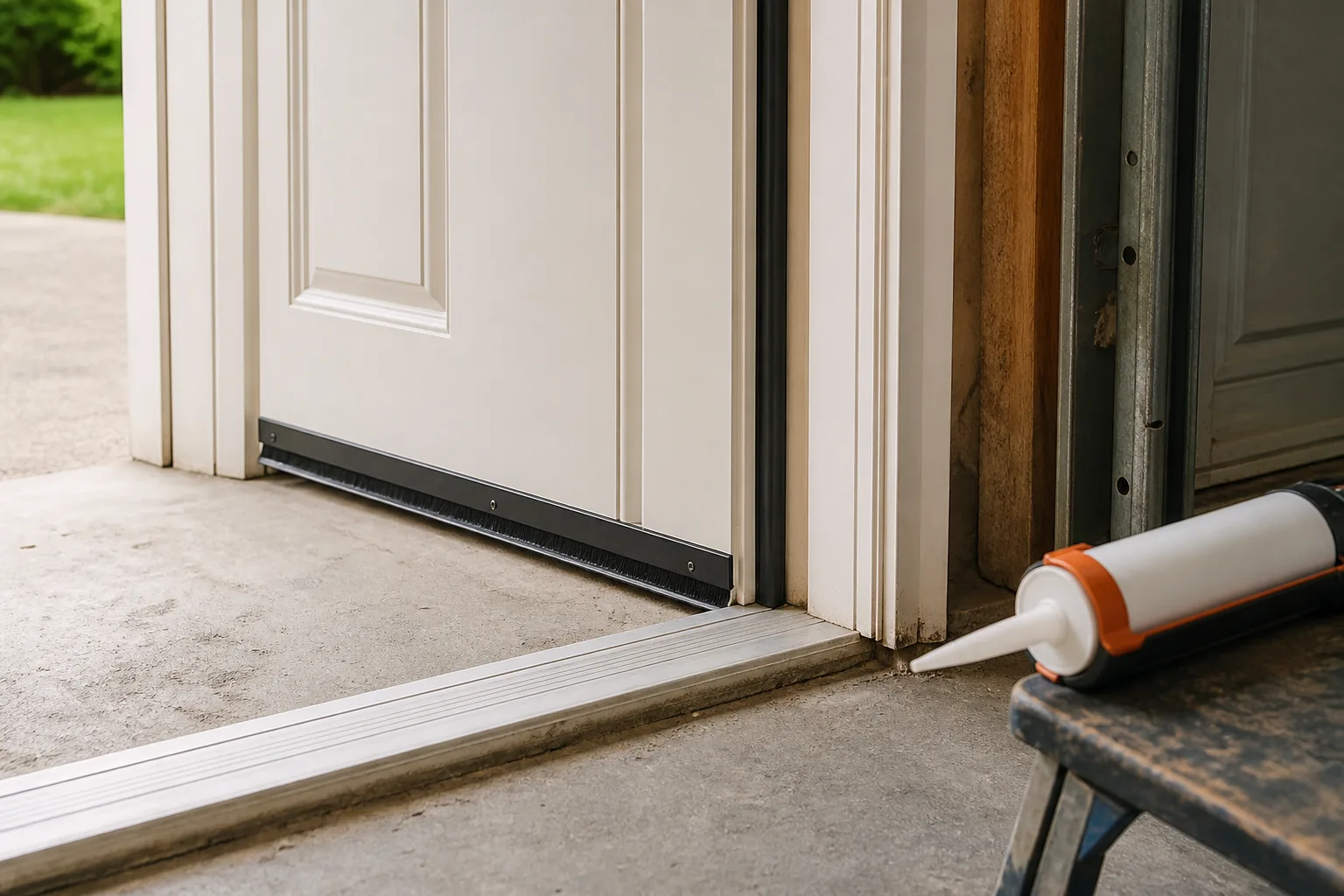
Inspect window and door screens for tears and make sure each frame closes tightly. Check weatherstripping, door sweeps, vents, utility lines, siding seams, the area behind trim, chimney edges, attic vents, and the foundation line. NC State Extension notes that brown marmorated stink bugs can pass through surprisingly small openings, so a gap that looks insignificant to you may be enough for an adult or nymph.
Use the appropriate repair for the opening: weatherstripping for a moving door or window, fine screen for ventilation, exterior-grade caulk for a stable seam, and compatible foam where a deeper void needs filling. Do not seal a drain, weep hole, or required ventilation opening without understanding its purpose. A pest professional can help when the suspected route is behind siding, around a chimney, or in an inaccessible roofline.
Timing matters. If adults are already clustered inside a wall, sealing every exit in late fall can trap them indoors and push them toward living spaces. NC State Extension recommends allowing overwintering bugs a chance to leave in spring, then completing exclusion before the next late-summer and fall return. In colder regions, use local Extension timing rather than a calendar date copied from another climate.
Reduce light and shelter cues
Stink bugs are drawn to bright, warm building surfaces. Close shades at night when practical, repair bright exterior lights that are not needed, and consider warmer or less attractive lighting near entrances. Keep vegetation, stacked boards, and debris from pressing against the foundation and siding, while avoiding unnecessary removal of habitat that supports beneficial garden life.
This is not a reason to make the yard bare. It is a way to give the house a clean inspection zone. Trim plants back enough to see the foundation, move stored materials away from walls, and remove weeds or overgrowth that create a protected bridge to windows and doors.
When stink bugs are already inside
Finding a few indoors does not mean they are breeding in the room. They likely entered before the opening was noticed or emerged from a sheltered void as indoor temperatures changed. Focus on removal and route-finding rather than spraying the whole room.
Remove them without releasing the odor
Do not crush, squeeze, or swat a stink bug against skin. The defensive secretion is the source of the smell, and Penn State Extension reports that sensitive people can develop irritation or dermatitis after contact.
The simplest method is to place a jar or cup beneath the insect and slide stiff paper underneath it. Then either drop it into soapy water or close the container and place it in a freezer, following local guidance for disposal. A dedicated handheld vacuum can also work; empty it promptly into a sealed bag or container so the odor does not linger in the machine. Do not carry a live bug to another part of the house or release it outdoors if it is an invasive species.
At night, a lamp positioned over a shallow pan of soapy water may help draw wandering adults away from the room’s edges. Keep the setup stable and away from children and pets. This is a collection method, not a replacement for finding the opening.
If you are seeing only one or two adults, remove them and mark the location with a piece of painter’s tape. Check that spot from the outside in daylight. Repeated sightings in the same area are useful evidence: they can point to a loose screen, a trim seam, or a vent that needs attention. A quick note of the room, time, wall orientation, and weather can reveal whether the activity is tied to a sunny exterior surface or an indoor emergence point.
Why indoor foggers and wall-void sprays disappoint
Foggers may kill insects that are exposed at the time, but they do not seal the building. More adults can emerge later from wall voids, attics, or trim, and the label, ventilation, and fire-safety requirements create risks that are not justified for a few visible bugs. Penn State Extension specifically cautions against treating wall voids and attics as a long-term answer.
Do not inject an unapproved spray into a crack just because the crack is where you saw a bug disappear. You can contaminate a living area, damage materials, or drive insects deeper without addressing how they entered. If there are large numbers, a persistent odor, or insects emerging from many inaccessible locations, get a licensed professional to inspect the structure and explain the treatment plan.
Protect garden plants without relying on scent
A house invasion and a garden infestation need different tactics. In the garden, stink bugs feed by piercing plant tissue and can mark or deform tomatoes, peppers, beans, okra, corn, and fruit. Gardening Know How recommends starting with sanitation, reducing hiding places, monitoring plants, and considering physical or biological approaches before reaching for pesticides.
Peppermint spray is a poor stand-alone garden strategy because rain and sunlight reduce persistence, and an oil that irritates a pest may also affect leaves, flowers, pollinators, or beneficial insects. Never assume that a household essential-oil recipe is safe for an edible crop. Test any labeled garden product on the crop and follow its harvest interval, application rate, and pollinator precautions.
Walk plants regularly, especially along fruit clusters and the undersides of leaves. Remove egg masses or insects where practical, use row cover on suitable crops, and keep the garden free of dense debris that provides daytime shelter. If damage is increasing, contact your local Extension office for identification and a crop-specific integrated pest-management recommendation. A garden repellent should not create a larger problem for pollinators or predatory insects.
Inspect fruit for pale feeding spots, corky patches, or misshapen growth rather than waiting for whole leaves to wilt. Stink bugs can damage marketable produce without leaving the dramatic chewing holes associated with caterpillars. Photograph the insect and the plant symptom together, because the same mark can have several causes and a treatment chosen from a guessed identification may do more harm than good.
A seasonal prevention calendar
The most useful schedule follows the insect’s behavior rather than the date on a spray bottle:
- Spring: Watch sunny walls, windows, and attic edges for adults leaving shelter. Capture visible insects, note where they appear, and repair obvious damage once they have dispersed.
- Late spring and summer: Monitor garden plants and fruit. Keep screens intact, maintain door sweeps, and clear the inspection strip along the foundation.
- Before late summer and early fall: Finish caulking, weatherstripping, screen repair, and vent checks before adults begin searching for overwintering sites. This is the main prevention window.
- Fall: Reduce unnecessary light near entrances, remove congregating adults without crushing them, and record the exact side of the building where activity is highest. Peppermint oil, if used at all, belongs here only as a temporary supplement while repairs are underway.
- Winter: Avoid opening walls or fogging rooms for ordinary overwintering activity. Capture visible bugs, monitor emergence points, and plan the next exclusion repairs for spring.
Weather shifts can move this schedule earlier or later. Local Extension guidance is more useful than a universal “stink-bug month,” especially if your region has mild winters or a different dominant species.
When to call a pest professional
Call for an inspection when bugs are entering from inaccessible construction, appearing in several rooms, returning despite completed exclusion, or causing a serious garden loss. Professional help is also sensible when someone in the household is highly sensitive to insect secretions, when pets could contact essential oils, or when you are considering a pesticide application around doors, windows, or edible plants.
Ask what species was identified, where the entry points are, which repairs are recommended, and whether the proposed product is labeled for the exact site. A useful plan should explain monitoring and exclusion, not just promise a perimeter spray. The National Pest Management Association’s pest guide also recommends sealing cracks, repairing screens, vacuuming carefully, and using a licensed professional for significant infestations.
Conclusion
So, does peppermint oil keep stink bugs out? It may briefly discourage a few exposed insects, but it will not reliably protect a house or control the source of a seasonal invasion. Use a small, cautious application only as a temporary scent cue, and stop if frequent reapplication becomes necessary.
The durable plan is straightforward: identify the insect, remove indoor visitors without crushing them, find the route, seal the right gaps before fall, and monitor the garden separately. That approach is less fragrant than a spray-only fix, but it is far more likely to keep stink bugs from coming back.



