Low-Maintenance Full Sun Plants for Hot Gardens
Fourteen low-maintenance full sun plants for blazing beds—plus establishment rules, spread warnings, and which picks fit borders, slopes, and pollinator patches.
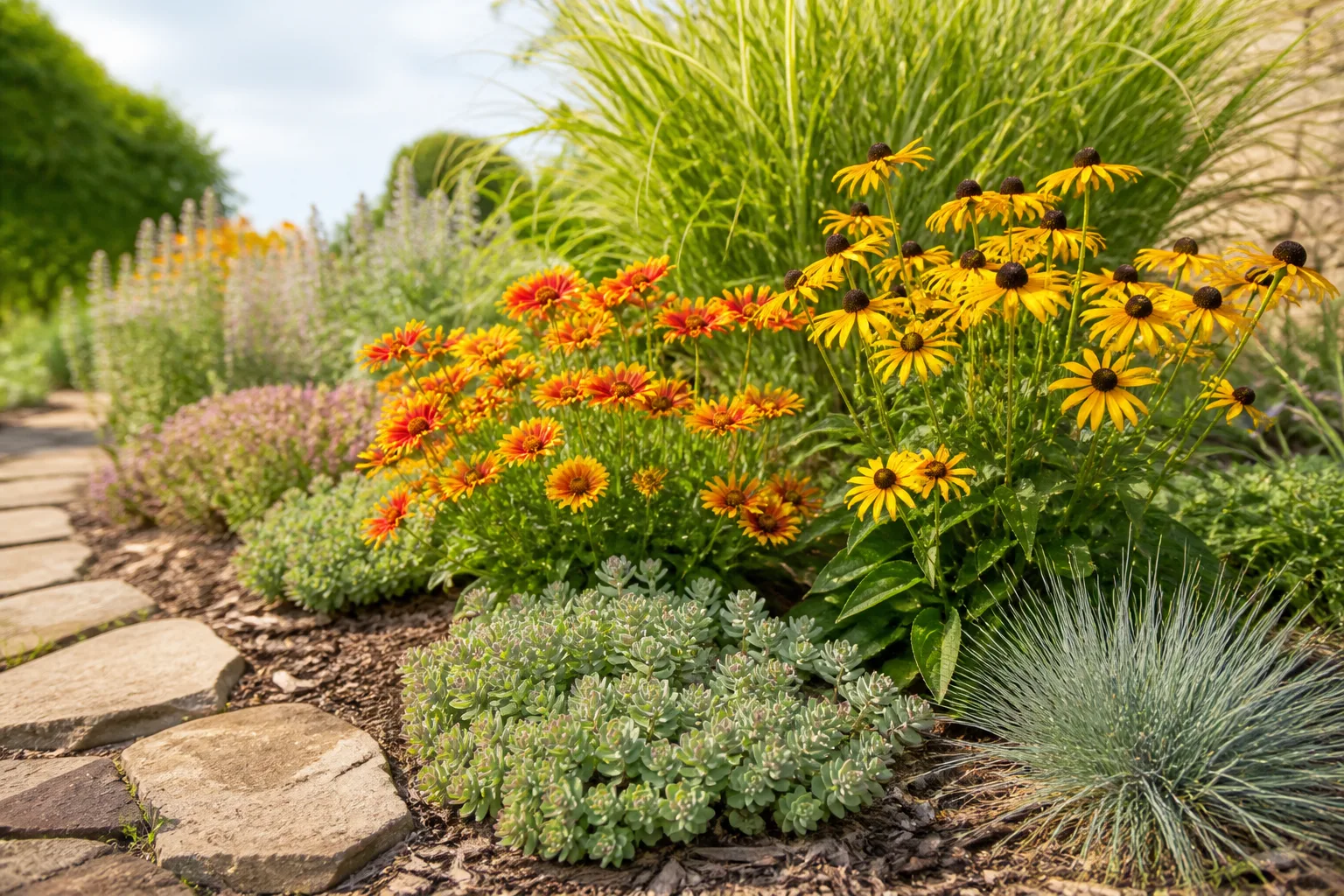
The sunniest bed in your yard is not empty because you lack a green thumb. It is empty because most plants marketed as “easy” were never built for six or more hours of direct light, sharp drainage, and soil that bakes by afternoon. Low-maintenance full sun plants are the ones that stop asking for rescue once their roots reach depth—usually after one full growing season, sometimes two.
This list covers fourteen proven picks: fast annuals for instant color, perennials that shrug off heat, ground covers for slopes and strips, and a few structural plants for height and foliage. Every entry includes zones, realistic water needs, spread warnings, and a honest skip this if note so you do not repeat the two failures that kill most sunny beds—under-watering new transplants and planting aggressive spreaders in tight spaces.
What “Low Maintenance” Actually Means in a Full-Sun Bed
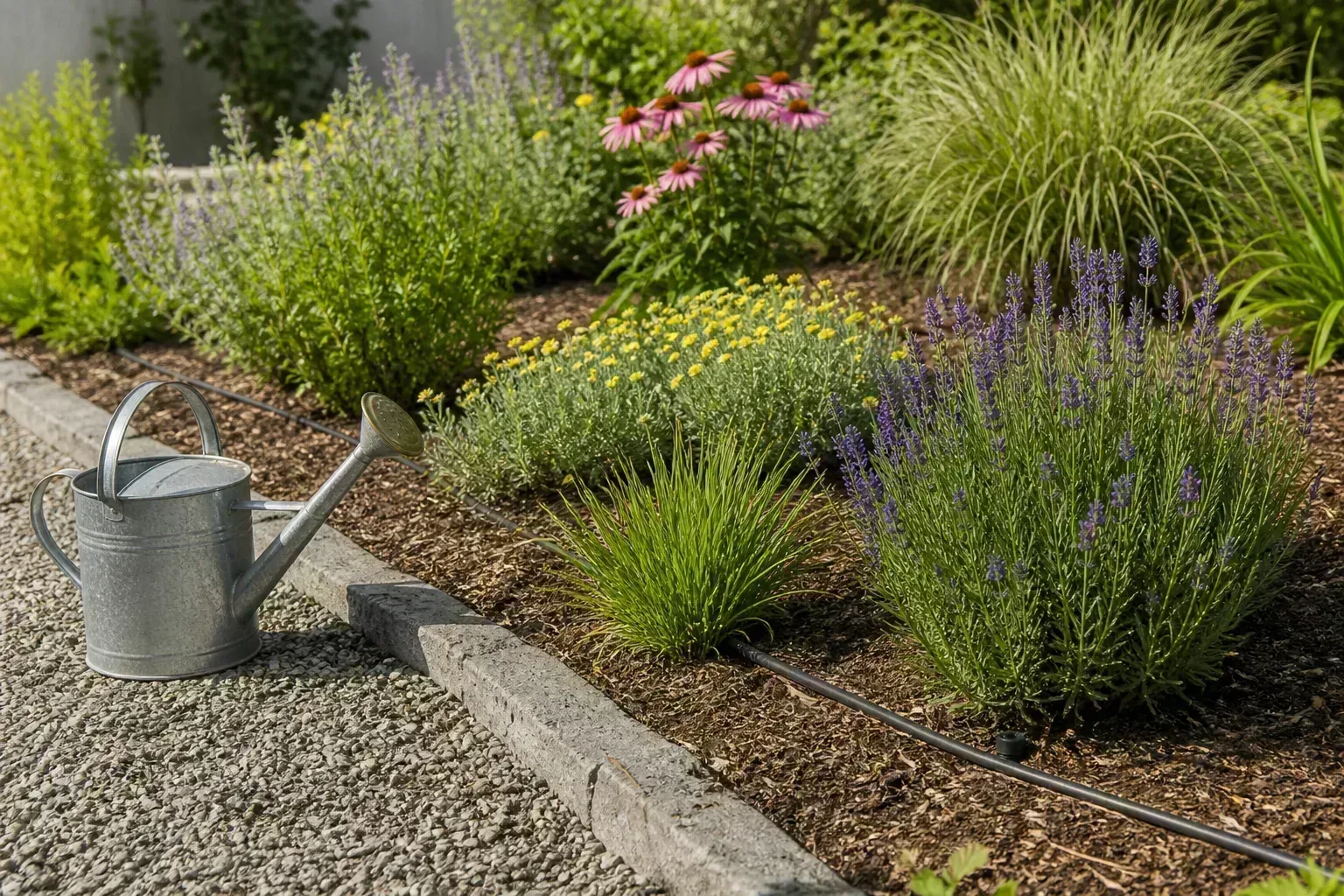
Low maintenance does not mean zero work. The RHS low-maintenance gardening guide is clear: no garden is maintenance-free, but many chores have a lower-input alternative. In full sun, that means choosing plants whose mature size fits the space, whose water needs match your soil once established, and whose disease pressure stays low when you give them airflow and drainage.
Full-sun lovers share a few traits. They photosynthesize heavily, so they need light to bloom and stay compact. Many develop deeper or more efficient root systems that access moisture below the surface. Several tolerate lean soil better than heavy feeding. What they do not share is drought tolerance on planting day.
The One-Year Establishment Rule Nobody Mentions
Drought tolerant describes mature plants—not six-inch nursery pots dropped into July heat. Through the first growing season, aim for about one inch of water per week from rain plus irrigation combined. Water deeply and less often; morning irrigation cuts evaporation. Mulch two to three inches deep, keeping mulch off crowns, to hold moisture while roots expand.
Fall planting in warm soil can shorten establishment if you still have six to eight weeks before hard frost. Spring planting before heat arrives is safer in hot climates. If you must plant in midsummer, check soil moisture twice weekly and accept that bloom may wait until next year. For more perennial picks with the same establishment logic, see our guide to easy-care drought-tolerant perennials.
Signs a new plant is still thirsty: leaves stay limp after sunset, edges brown progressively, or growth stalls for weeks. Worry less about afternoon wilting that recovers by evening—that is normal on hot days. If soil stays damp but stems rot at the base, you have a drainage problem, not a drought problem.
How to Confirm You Have True Full Sun (Not Just “Bright Shade”)
Full sun means six or more hours of direct sunlight on the planting area during the growing season. Walk the bed at mid-morning and again in late afternoon. Note roof overhangs, fences, and trees that shrink the light window by midsummer. A spot that reads “bright” under deciduous trees in spring may be part shade by July.
Also note heat reflection off walls and pavement, which raises effective stress beyond what a zone map suggests. South-facing foundation beds and driveway edges dry faster and run hotter than open lawn. Match plants to both light and heat, not just the prettiest catalog photo.
Pick the Right Plant for the Job—Not Just the Prettiest Bloom
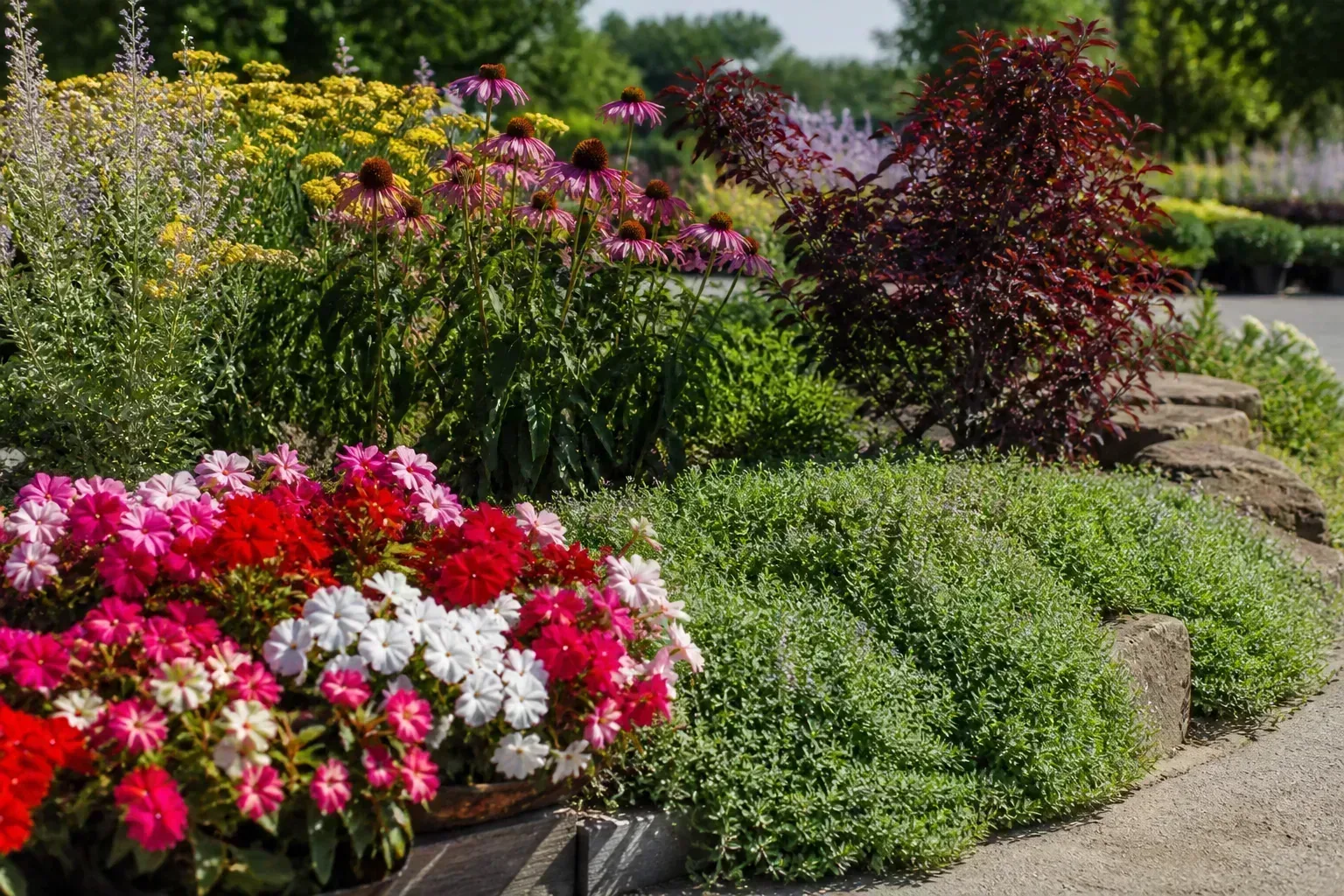
Before you buy, label the job your hot spot needs to do:
- Fast annual color for containers, cutting gardens, or filling gaps this season
- Perennial backbone for borders that return yearly with modest deadheading
- Ground cover for slopes, strips between pavers, or replacing bare baked soil
- Structure from shrubs, bold foliage, or vertical accent plants
A plant that excels at one job often fails at another. Cosmos belongs in an annual border, not a narrow foundation strip where self-seeding becomes weeding. Creeping juniper solves erosion on a slope; it will look lost as a single dot in a perennial bed.
Annual Color vs Perennial Backbone vs Ground Cover vs Structure
Annuals (cosmos, marigolds, zinnias) deliver the fastest payoff and die with frost—low commitment, higher replanting. Perennials (gaillardia, rudbeckia, yarrow, Russian sage) cost more upfront but build the border over time; watch spread on yarrow and self-seeding on rudbeckia. Ground covers (yellow alyssum, snow-in-summer, creeping juniper) reduce weeding once filled in but need weed-free establishment. Structure plants (purple leaf sand cherry, canna, aloe) add height and foliage; canna and aloe need zone awareness.
If your front yard is the canvas, pair this list with low-maintenance front yard landscaping ideas for edging, mulch, and bed layout before you shop.
Annual Flowers for Fast Color With Minimal Fuss
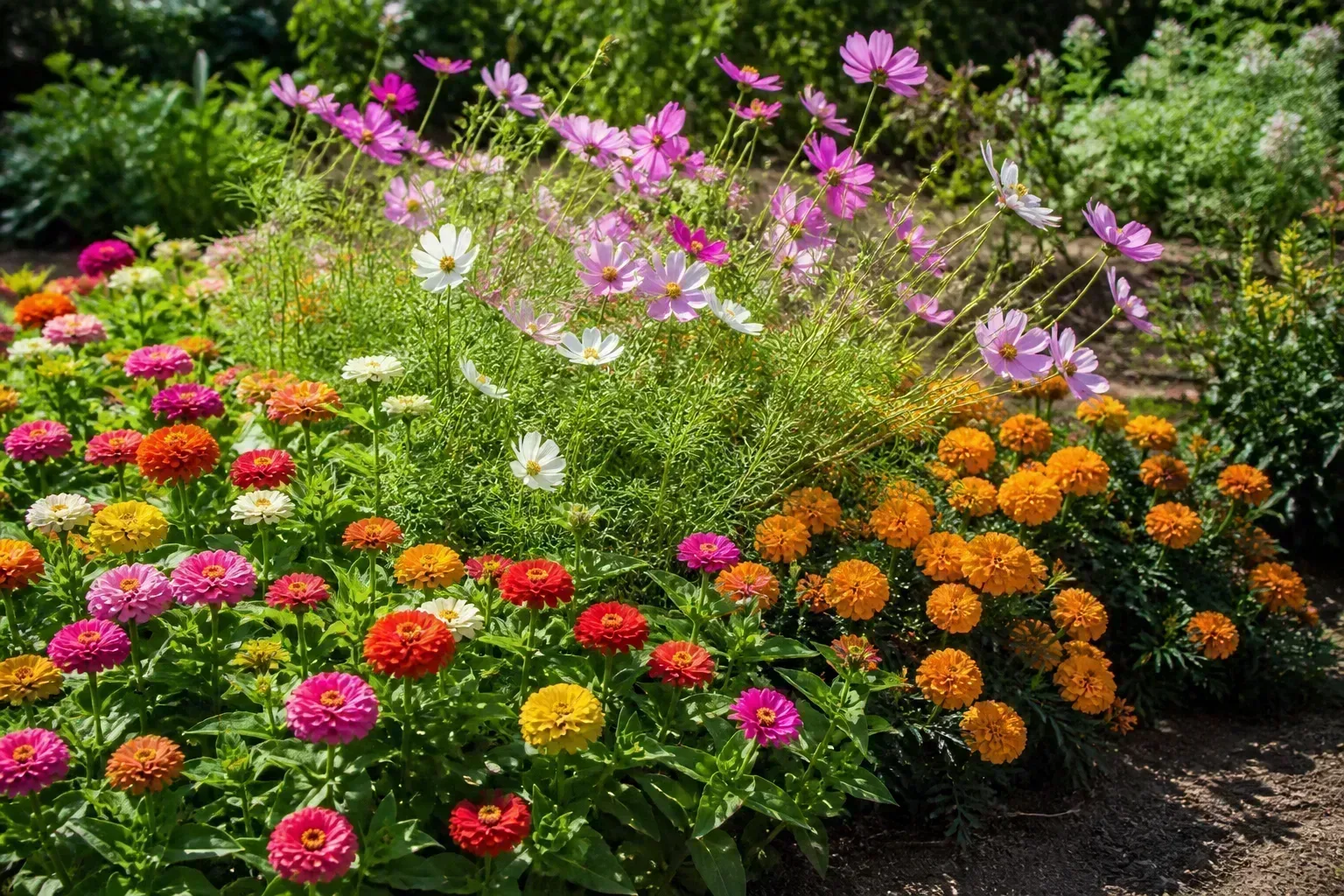
Annuals are the right tool when you want color this year without redesigning the whole bed. All three below need full sun to stay compact and floriferous. Partial shade produces tall, floppy stems and fewer blooms.
Cosmos
Cosmos (Cosmos bipinnatus and allies) is the classic cottage-garden annual for hot, lean soil. Ferny foliage and daisy-like flowers on wiry stems sway in summer breezes. Colors run pink, white, red, orange, and bicolor mixes. USDA zones 2–11 as an annual; plants often self-seed where winters are mild or seed drops on bare soil.
Sow directly after last frost or start indoors four to six weeks ahead. Cosmos tolerates poor soil—too much nitrogen produces leaves over flowers. Water while seedlings establish; mature plants handle dry spells. Deadheading extends bloom but is optional if you welcome volunteers. Skip cosmos if you need a tight, formal edge that cannot tolerate self-seeders or if your bed stays soggy after rain.
Marigolds
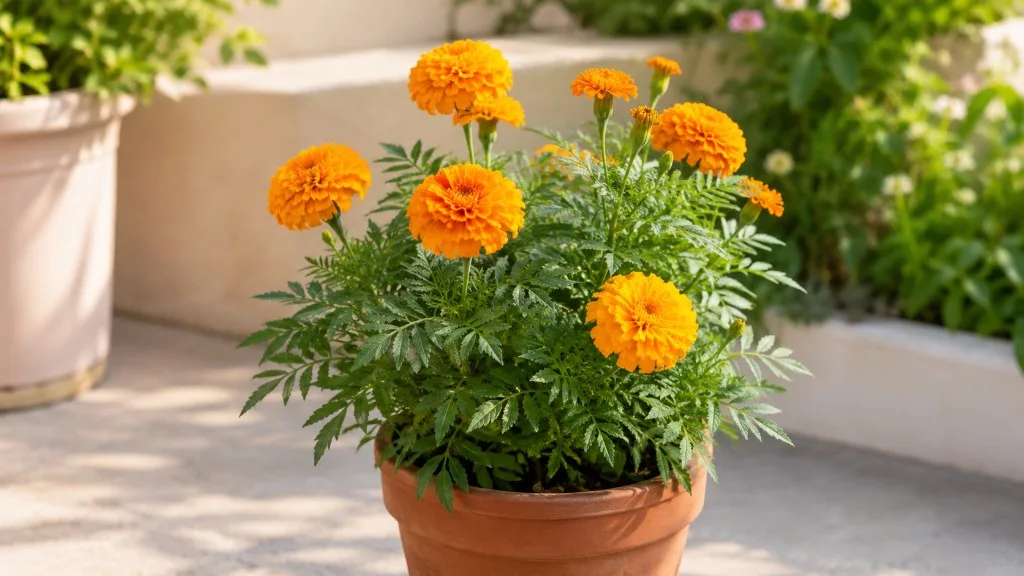
Marigolds (Tagetes spp.) are heat champions with ruffled blooms in orange, yellow, red, and bicolor forms. French and African types bring different heights—read the label for mature size. Zones 2–11 as annuals. They tolerate average garden soil and are widely used in vegetable gardens as companion plants, though pest-control claims vary by pest and study.
Water weekly while young; established plants become drought tolerant in deep beds. Powdery mildew can appear in humid, crowded plantings—space for airflow. Skip marigolds in constantly wet clay or deep shade; they will mildew and stall. For a sunny cutting patch, marigolds and zinnias pair well with cosmos for staggered height.
Zinnias
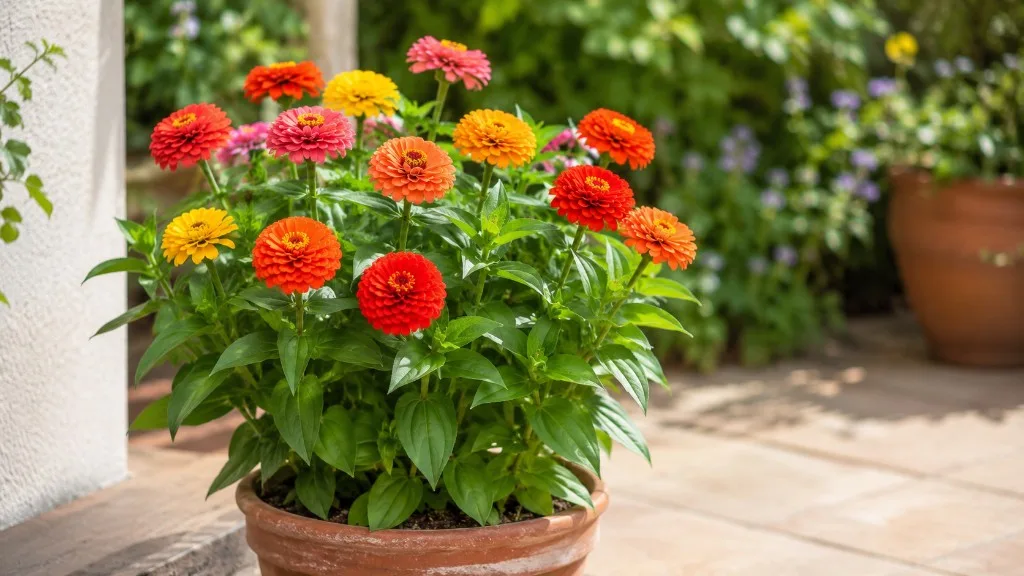
Zinnias reward full sun with the densest color on this list. The more light they receive, the stronger the pigment—pale, stretched plants in “bright” shade are telling you the truth about your bed. Zones 2–11 as annuals. Clemson HGIC recommends full sun, well-drained soil, and spacing for airflow to limit powdery mildew.
Choose series for your climate: Profusion and Zahara resist mildew better than old doubles in humid regions. Water at soil level in the morning; wet foliage overnight invites disease. Deadhead tall cutting types for continuous bloom; landscape series need less fuss. For depth on series choice and mildew prevention, see our zinnia care guide. Skip zinnias in humid shade or if you refuse to thin seedlings—crowded zinnias are mildew factories.
Tough Perennials That Handle Heat After Roots Settle
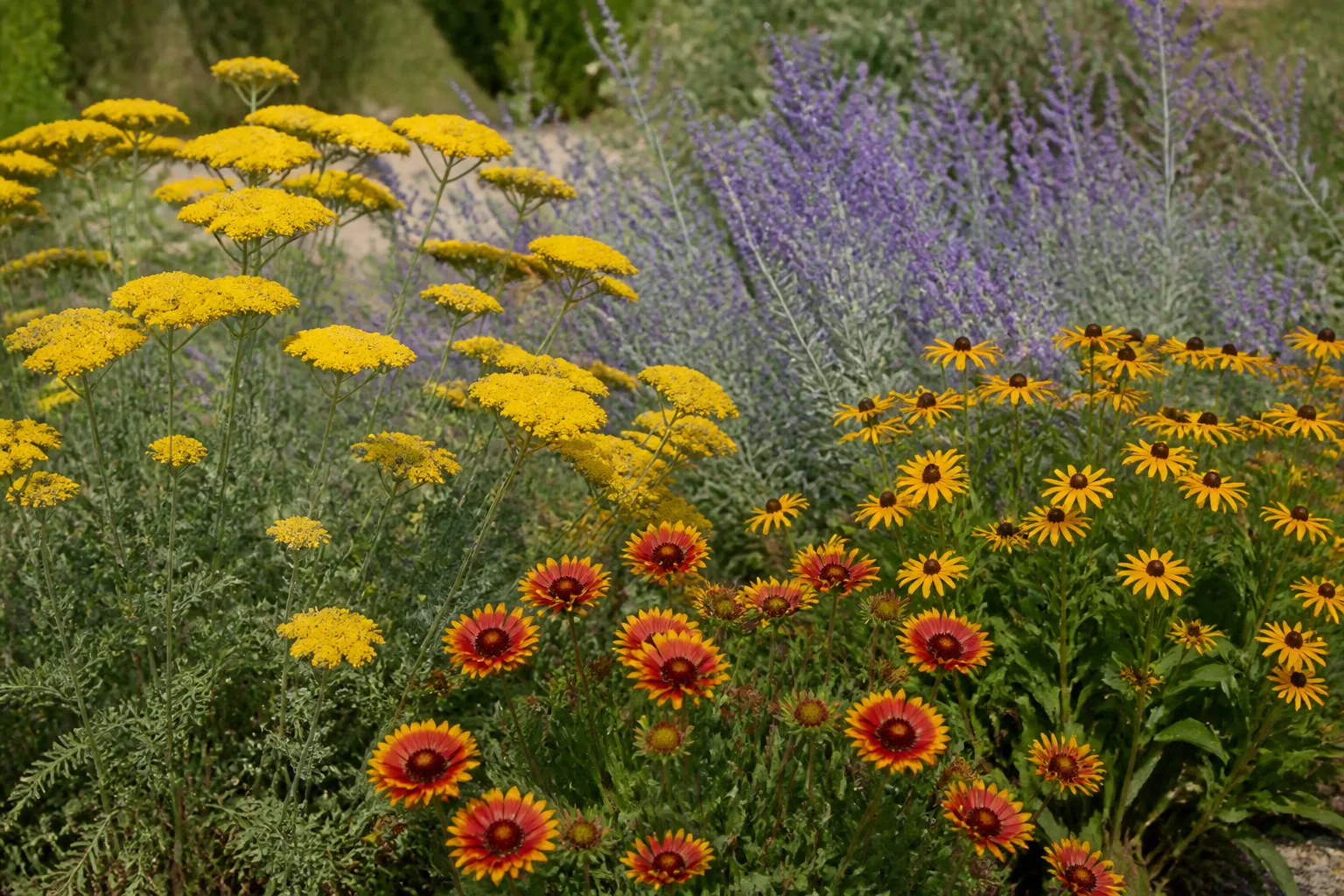
These four anchor sunny borders across much of North America. They share establishment watering needs, then ask for little beyond optional deadheading and occasional division.
Blanket Flower (Gaillardia)
Blanket flower (Gaillardia spp.) delivers red, orange, and yellow daisy blooms with long flowering seasons and excellent heat tolerance. NC State Extension notes Gaillardia aristata for zones 3–8, full sun, and well-drained soil—wet winter soil is a common killer.
Plant in spring or early fall. Deadhead spent blooms to encourage rebloom; some gardeners cut back lightly midsummer if plants look tired. Short-lived cultivars may decline after a few years—division or replacement is normal, not failure. Skip gaillardia in heavy clay that stays wet in winter unless you raise the bed.
Black-Eyed Susan (Rudbeckia)
Black-eyed Susan (Rudbeckia hirta and cultivars) brings gold petals and dark centers from midsummer into fall. Missouri Botanical Garden data for Rudbeckia fulgida var. sullivantii ‘Goldsturm’ cites zones 3–9, full sun to light shade, and tolerance of drought and clay once established—verify your species, as annual R. hirta behaves differently from perennial clumps.
First-season watering matters; mature plants handle dry August beds. Seedheads feed goldfinches if left standing. Self-seeding can be a feature or a chore in formal beds. Skip rudbeckia only if you need a sterile, non-spreading ground cover in a two-foot-wide strip—in tight spaces, choose juniper or alyssum instead.
Yarrow
Yarrow (Achillea millefolium and hybrids) adds flat-topped flower clusters and fine foliage that contrasts with bold leaves. Zones 3–9 for many cultivars; full sun and well-drained soil are essential. NC State Extension warns that common yarrow spreads by rhizomes and seed and can become weedy—cultivars like ‘Moonshine’ and the Tutti Frutti series spread less aggressively than species forms.
Underwatering beats overwatering once established; floppy stems often mean too much nitrogen or shade. Divide every few years to renew bloom. Skip common yarrow in small formal borders where spread is unacceptable; use a clumping gaillardia or dwarf rudbeckia instead.
Russian Sage
Russian sage (Perovskia atriplicifolia or Salvia yangii) offers airy spikes of lavender-blue flowers on silvery stems—a lavender look-alike with wider zone range and less fuss about humidity. NC State Extension lists zones 5–9, full sun, and dry to medium moisture with excellent drainage. Stems may die back to the ground in hard winters and resprout late—do not declare the plant dead in April.
Cut back to about 12 inches in early spring before new growth. Russian sage hates wet feet and rich, heavily fertilized soil. Compared to lavender: Russian sage tolerates colder winters and heavier soil in the right drainage; English lavender wants sharper drainage and milder winters. Skip Russian sage in zone 4 without reliable snow cover or in beds that collect winter puddles.
Ground Covers for Bare, Baked Soil
Hot strips along driveways, slopes, and rock gardens need plants that hug the ground and exclude weeds once established. These three fill that role with different textures and zone ranges.
Yellow Alyssum (Basket-of-Gold)
Yellow alyssum (Aurinia saxatilis, formerly Alyssum saxatile) carpets slopes with golden spring bloom and gray-green foliage. Zones 3–7 as a perennial; treat as a short-lived perennial or annual in hotter climates where summer humidity shortens its life. Full sun and sharp drainage are non-negotiable—think rock garden, not bog.
Shear lightly after bloom to keep compact. Skip basket-of-gold in humid southern summers if you need year-round evergreen cover; creeping juniper or sedum may serve better.
Snow-in-Summer
Snow-in-summer (Cerastium tomentosum) spreads a mat of silvery leaves topped with white summer flowers. It prefers full sun, lean, gritty soil, and zones 3–8. Too much fertility or moisture produces weak, floppy growth and rot.
Excellent between stepping stones and on dry banks. Invasive tendencies vary by region—contain with edging if you border lawn. Skip snow-in-summer in rich, irrigated foundation beds where automatic sprinklers keep soil constantly moist.
Creeping Juniper
Creeping juniper (Juniperus horizontalis and cultivars) is the evergreen workhorse for sunny slopes and erosion control. Blue-green or green foliage, zones 3–9, full sun. Water consistently the first year; established plants tolerate drought and need little beyond occasional weed removal until the mat closes.
Choose cultivars by spread: ‘Blue Rug’ stays low and wide; ‘Wiltonii’ forms a denser carpet. Junipers need airflow—do not plant them against a wall where moisture traps. Skip creeping juniper if you dislike prickly texture along barefoot paths or if the site stays shaded more than half the day.
Pollinator and Wildlife Value Worth Planning For
Common Milkweed
Common milkweed (Asclepias syriaca) is the monarch host plant gardeners reach for when they want ecological impact in full sun. NC State Extension describes zones 3–9, full sun, and dry to medium soil. Pink fragrant flower clusters attract bees and butterflies; seed pods add late-season interest.
The trade-off is spread. Milkweed runs by rhizomes and self-seeds. Plant it in a meadow patch, back border, or dedicated pollinator bed—not a 18-inch foundation ring. Skip milkweed in small formal gardens unless you commit to yearly seedling removal; a less aggressive native like butterfly weed (Asclepias tuberosa) may fit tighter spaces.
Shrubs and Foliage Plants for Structure
Purple Leaf Sand Cherry
Purple leaf sand cherry (Prunus × cistena) is a small deciduous shrub with burgundy leaves and pink spring flowers. Zones 2–8, full sun for best foliage color—shade washes the purple to green. Expect 8–10 feet tall and wide unless you prune; read that as a foundation plant only if you will maintain size.
Water regularly the first two years; established plants tolerate periodic drought. Short-lived (often 10–15 years) like many prunus hybrids—plan for replacement. Skip sand cherry under low eaves where mature height blocks windows, or if you need evergreen structure year-round.
Canna Lily
Canna lilies deliver tropical leaves and summer flowers in hot beds. Zones 7–10 (sometimes 6 with mulch) for in-ground culture; dig rhizomes in colder zones or treat as annuals. Full sun fuels bloom and bold foliage; partial sun yields fewer flowers.
Unlike most of this list, cannas want consistent moisture—not boggy, but never bone dry. They are higher maintenance than gaillardia or juniper but lower than daily-deadheading annuals in the same spot. Skip cannas on dry slopes without irrigation or in small pots that dry twice a day.
Aloe Vera
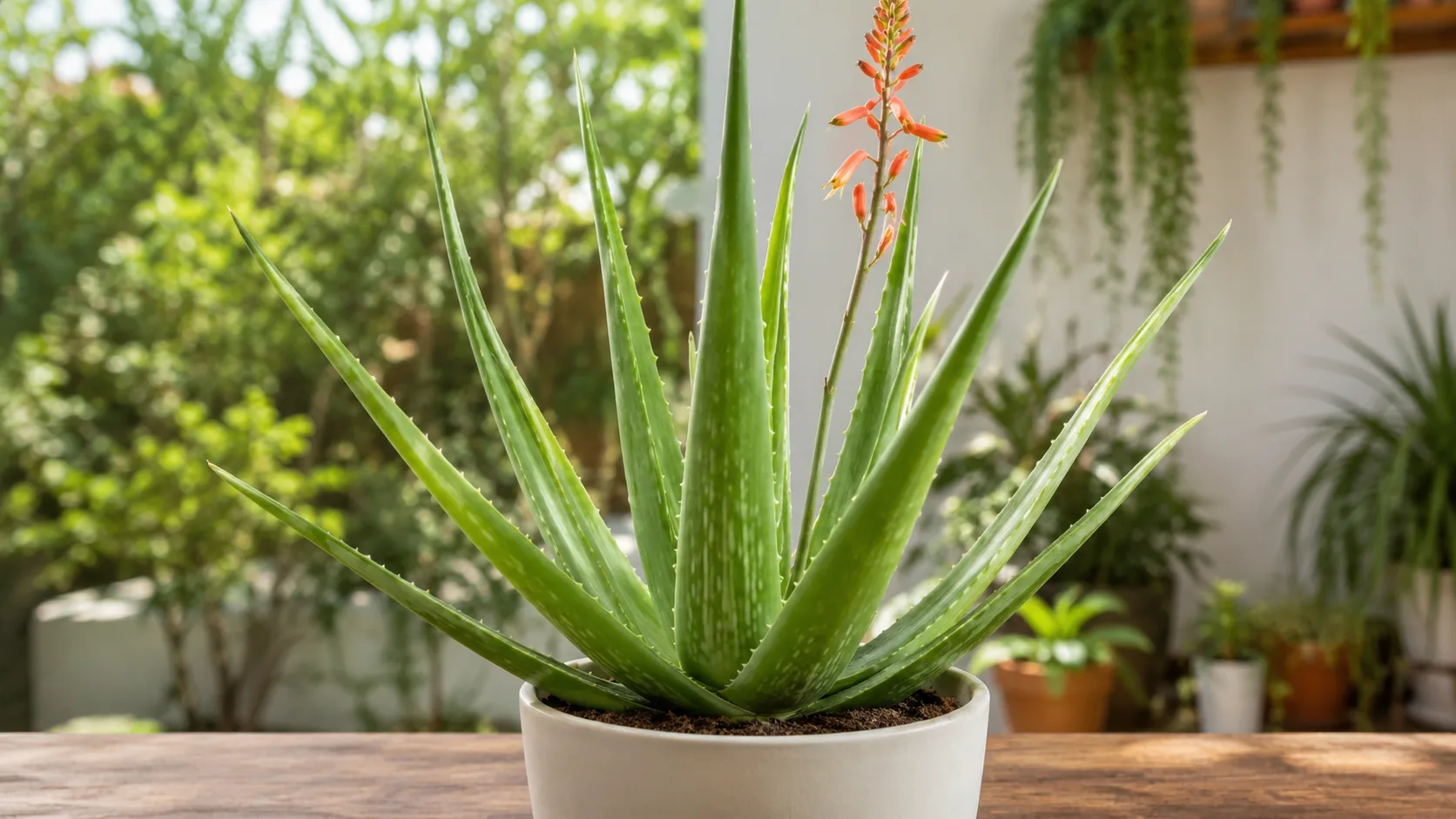
Aloe vera is the succulent outlier: spiky rosettes for zones 10–12 outdoors year-round. In colder regions, grow in pots and move before frost, or treat as a summer patio plant. Full sun builds compact rosettes; intense reflected heat may scorch leaves—afternoon shade in desert climates can help.
Water deeply, then let soil dry completely; winter dormancy needs almost no water. NC State Extension notes overwatering as the primary killer. For troubleshooting brown leaves, see aloe vera care. Skip outdoor aloe north of zone 9 unless you accept container culture.
Conclusion
The hottest, shadiest-free corners of your garden do not need constant babysitting—they need the right low-maintenance full sun plants matched to the job, honest first-year watering, and respect for spread habits. Use annuals when you want instant color, perennials for returning structure, ground covers for slopes and strips, and shrubs or bold foliage when height matters.
Audit light and drainage before you shop. Commit to the establishment-year watering rule. Then pick three to five plants from this list that fit your zone and maintenance budget—not all fourteen. A focused bed that thrives beats a crowded catalog of mismatched survivors, and that is how you stop fighting the sun and start working with it.



