Low-Maintenance Front Yard Landscaping Ideas
Low-maintenance front yard landscaping ideas for sun, shade, and small budgets—plus edging, mulch, and plant picks that stay neat with less work.
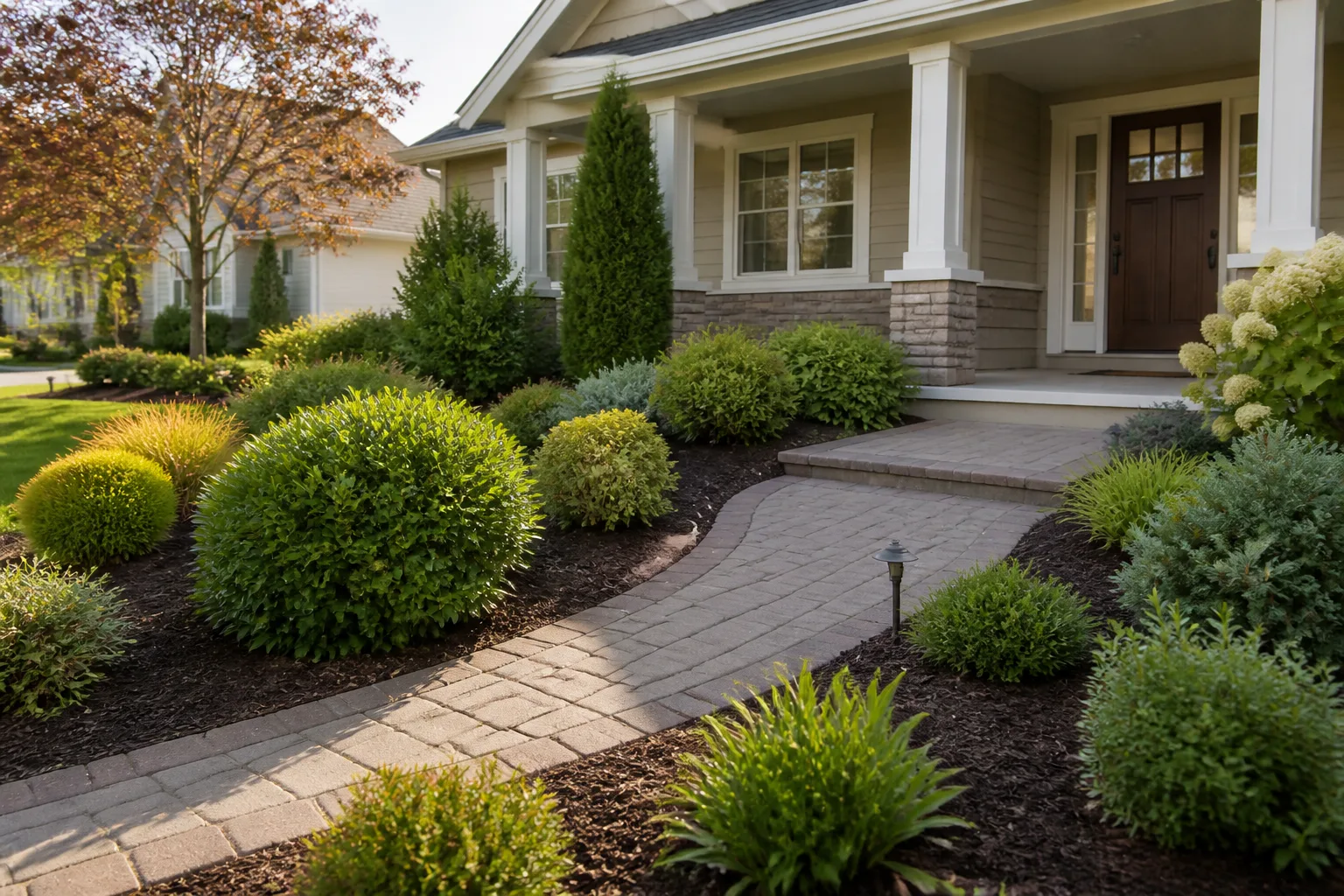
Your front yard is the first thing neighbors, guests, and buyers see—and the first place maintenance mistakes become public. The goal is not a magazine cover that needs weekly editing. It is a front yard that looks intentional from the curb while fitting the time you actually have.
Low maintenance does not mean zero work. The RHS low-maintenance gardening guide is clear on that point: every garden needs some input, but most chores have a lower-effort alternative. The ideas below assume you will spend a little time on structure once, then choose plants and features that do not fight your climate, soil, or foot traffic.
What low maintenance actually means for your front yard
A low-maintenance front yard is a system, not a plant list. It has clean edges that keep grass out of beds, mulch or ground cover that suppresses weeds, and plants whose mature size fits the space without constant resizing. It also accepts a slightly looser lawn or seasonal containers instead of demanding perfect turf year-round.
The honest maintenance budget test
Before you buy anything, decide how many hours per month you will realistically spend outside. Two hours a month favors evergreen structure, ground covers, and minimal lawn. Six hours allows flowering shrubs, window boxes, and a small amount of deadheading. Ten hours still is not enough for a formal rose garden, a thirsty lawn in a drought zone, and unstaked perennials along a narrow walk—unless you hire help.
Write that number down. Every idea below includes a maintenance fit note so you can match ambition to reality. If an idea fails your budget, skip it even if the photo is gorgeous.
Audit your site before spending a dollar
Most “easy” front yards fail because plants were chosen for color, not conditions. A sun-loving hydrangea under a porch overhang will look sickly within a season. Creeping sedum in a soggy low spot will rot. Fifteen minutes of observation beats fifteen bags of mulch placed in the wrong bed.
Map sun, soil, drainage, and foot traffic
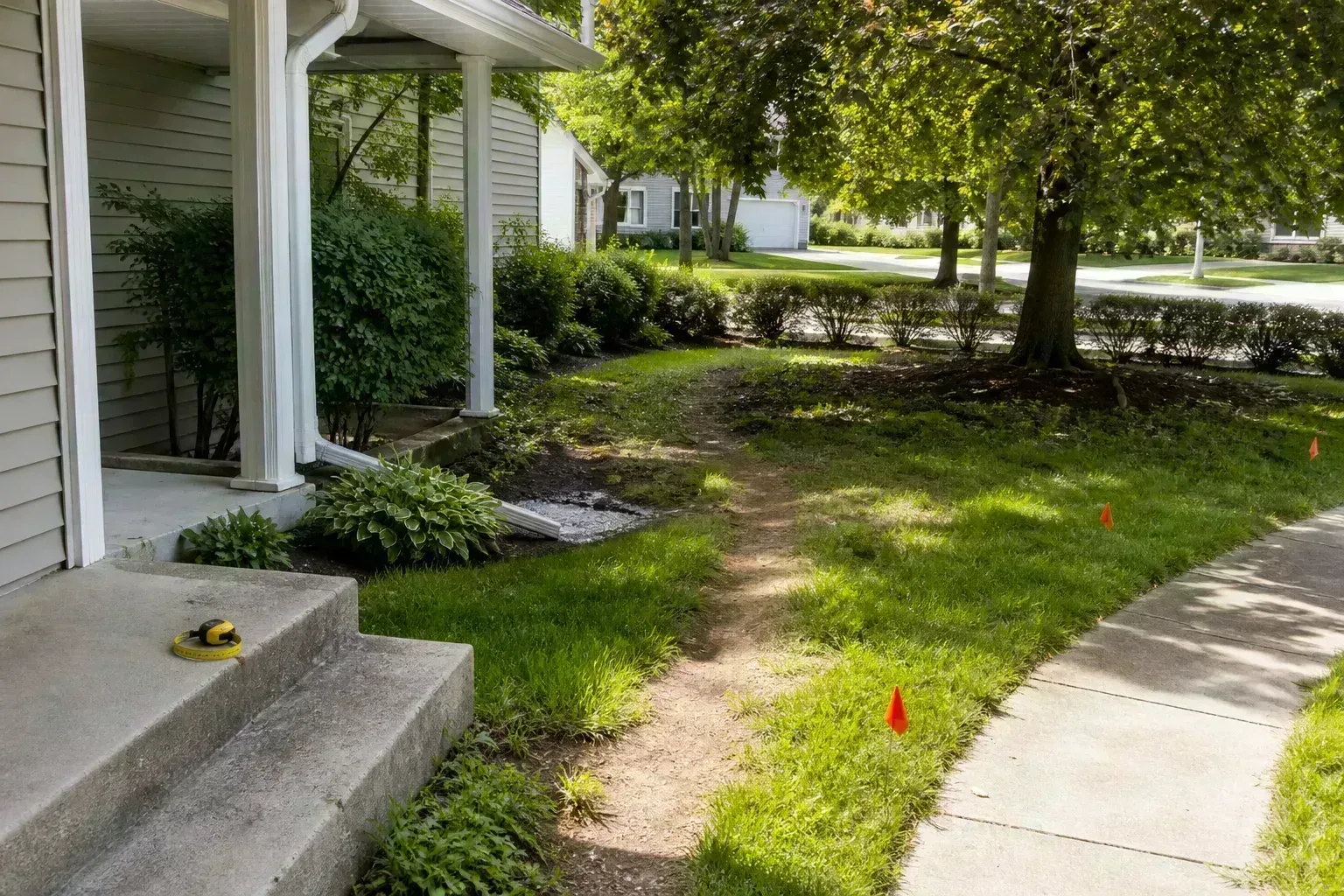
Walk the front yard at mid-morning and again in late afternoon. Label zones as full sun (six or more hours of direct light), part shade, or deep shade under trees and eaves. Note where roof runoff pools, where dogs cut corners, and where snow gets piled in winter—those paths need tough plants or hardscape, not delicate perennials.
Dig a test hole after rain. Water that sits for hours signals poor drainage; fix grading or choose wet-tolerant plants before shopping. Dusty soil a day later suggests drought stress unless you add mulch and irrigation for the establishment year. Penn State Extension’s native landscaping overview makes a useful filter here: plants adapted to your region typically need fewer inputs once established and support pollinators along the front walk.
Finally, measure the viewing angle. Foundation beds seen from the street need layered heights—tall back, short front. Narrow strips beside driveways need plants that stay under the car door swing. The RHS front garden design guide recommends balancing hard surfacing with planting so runoff soaks in rather than racing to the storm drain.
Build the low-care backbone first
Planting comes second. Edging and mulch are what keep a front yard from dissolving into a weedy blur between mowings. Install the backbone before you fall in love with a flowering tree at the garden center.
Edging, mulch, and strategic lawn reduction
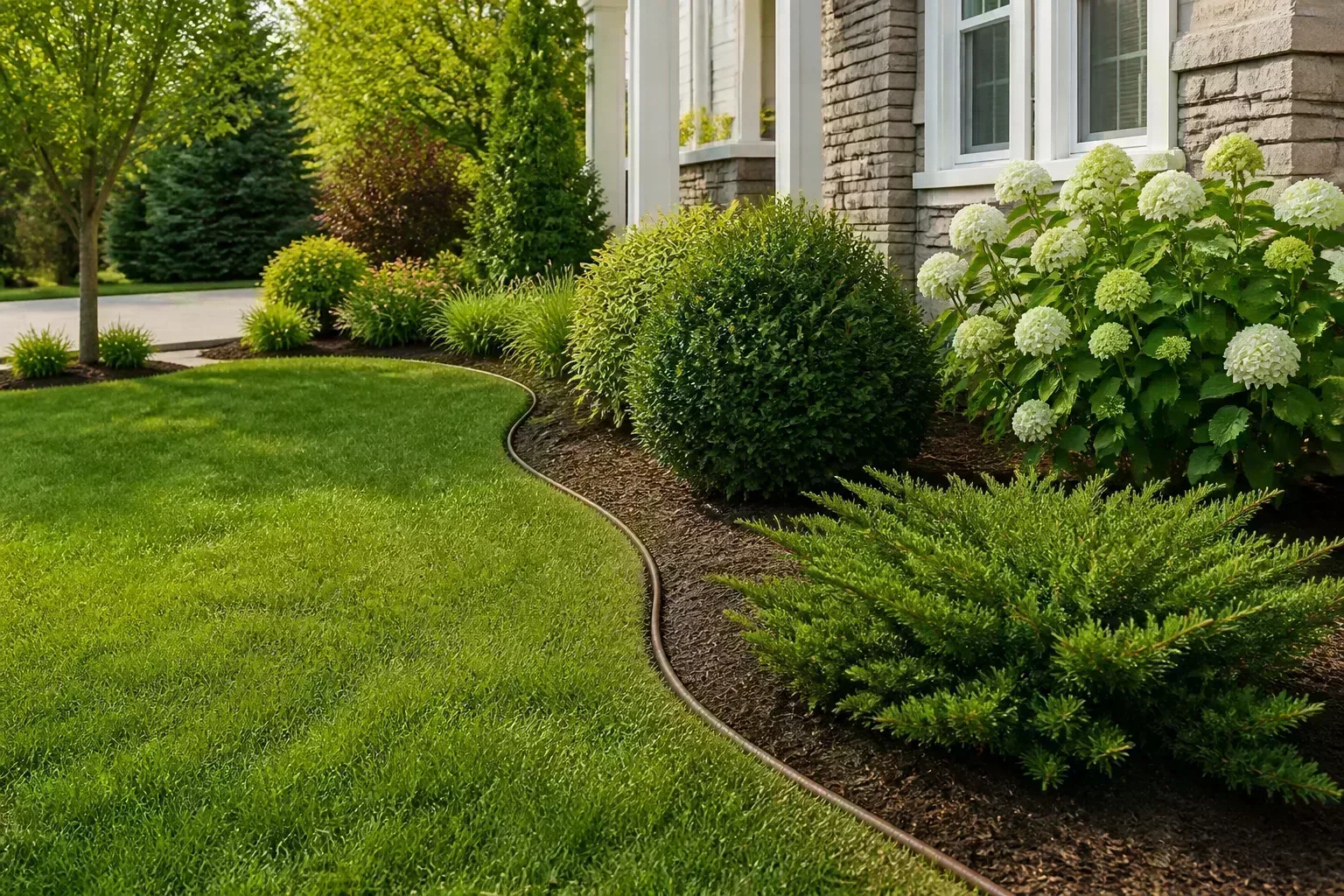
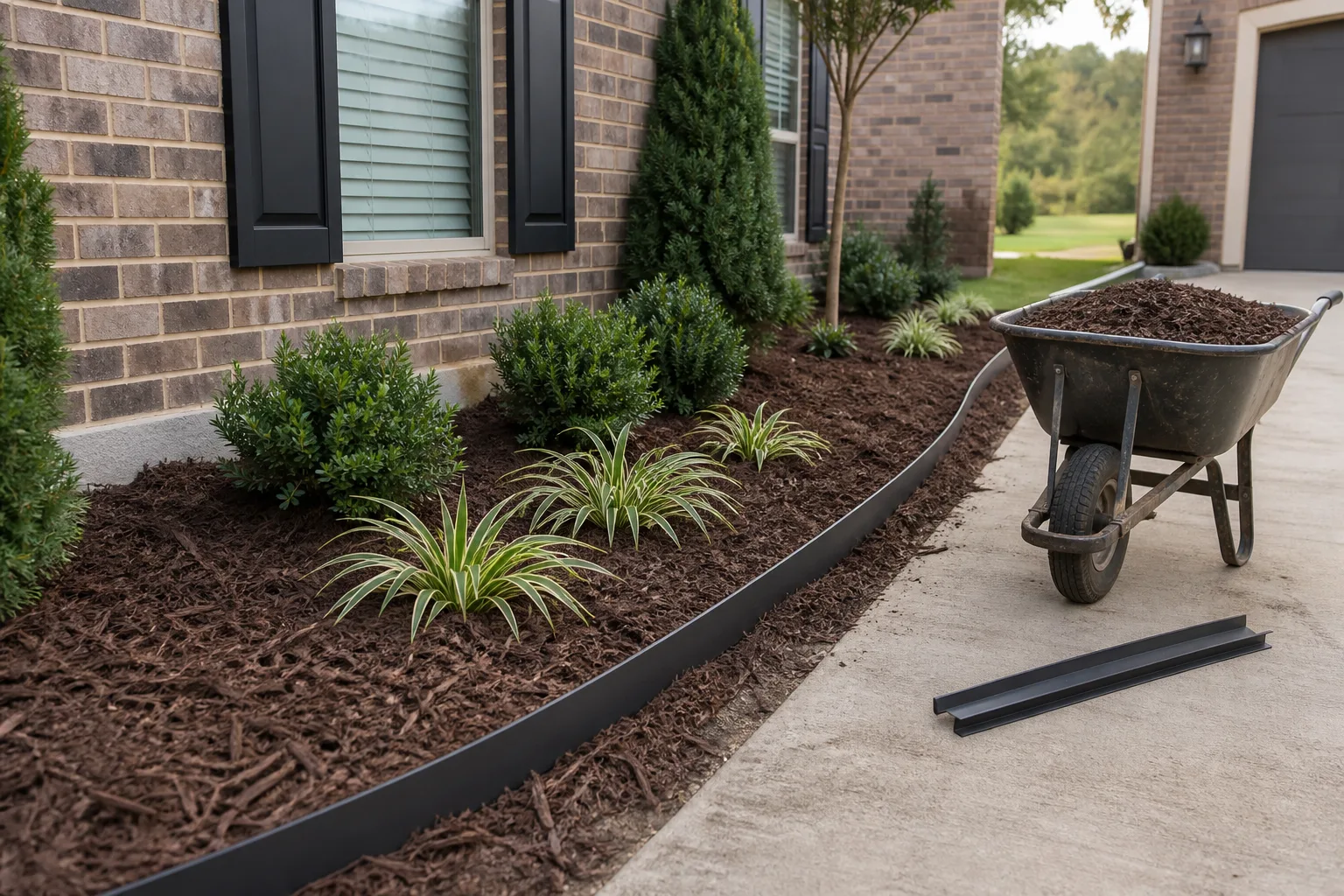
Edging separates lawn, soil, and paths. A maintained soil trench is free but needs refreshing twice a season. Brick, stone, or steel edging costs more upfront but saves string-trimming time along driveways and walks. Our brick edging ideas guide covers mowing-friendly heights and curves that read clean from the street.
Mulch belongs on every planted bed. Aim for 5–7 cm (2–3 in) of shredded bark or compost, kept a few centimeters clear of stems to avoid rot. Mulch cuts weeds, holds soil moisture, and makes even young plantings look finished. Refresh it once a year in spring rather than chasing individual weeds all summer.
Lawn reduction is often the biggest maintenance win. The RHS ten low-maintenance garden tips note that a small patch of turf can take more work per square metre than generous borders with ground cover—especially when you factor in mower storage, edging, and irrigation. Replace skinny side strips with gravel and drought-tolerant plants, widen foundation beds, or swap front turf for clover or sedum where foot traffic is light. Keep grass only where you actually walk or play.
If you repave, choose permeable materials where local rules allow. The RHS permeable paving advice explains that impermeable surfaces can sharply increase rainwater runoff compared with planted or permeable areas—a real issue in heavy storm regions.
Japanese maple and other sculptural focal trees
A single well-placed Japanese maple (Acer palmatum) can carry a front yard through four seasons: lacey spring leaves, summer shade, autumn color, and winter branch architecture. Most cultivars stay under 7.5 m (25 ft), and many remain shrub-sized, which suits mailboxes, corners, and offset front entries.
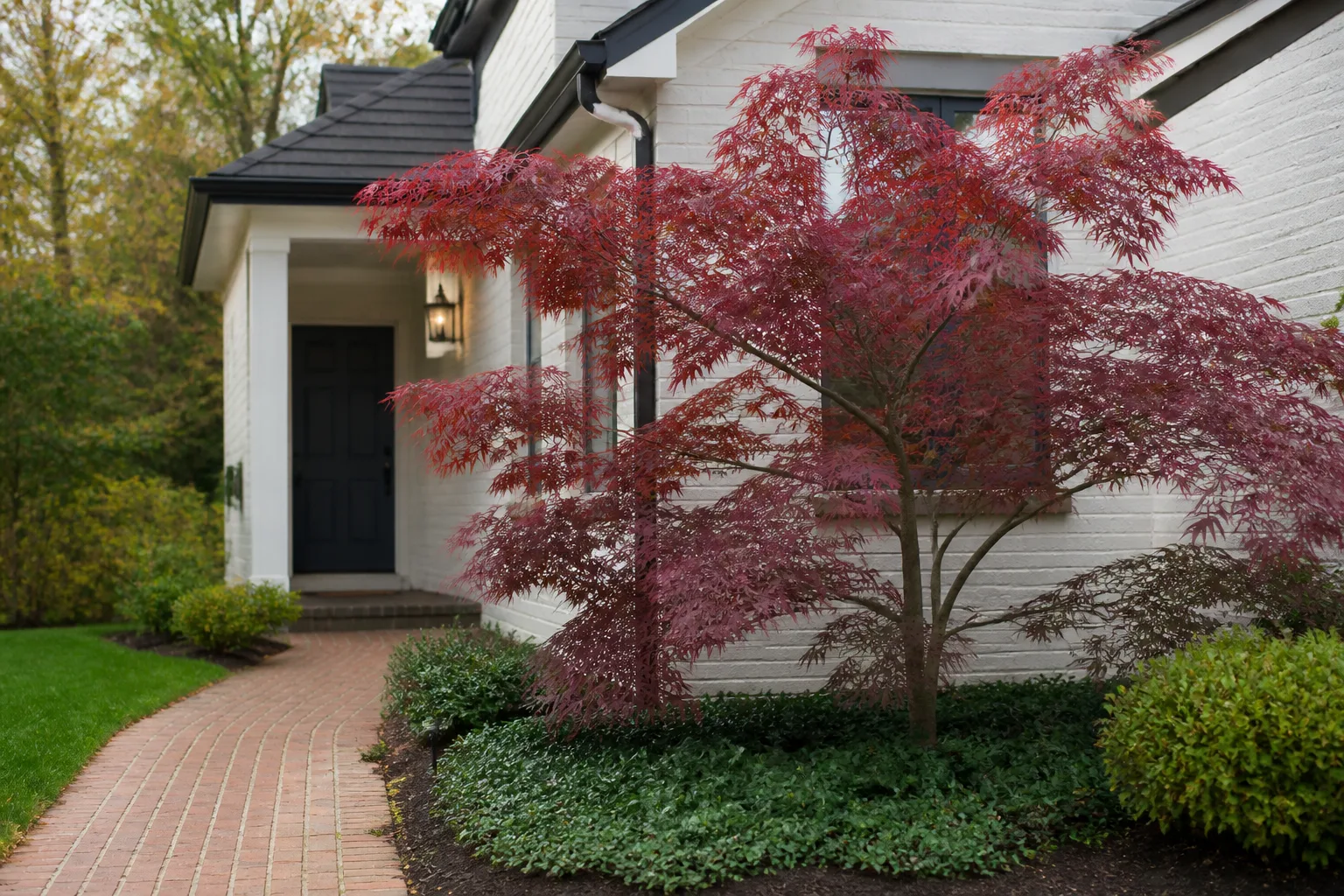
Site it where roots will not buckle paving and where afternoon sun will not scorch delicate leaves in hot climates. Underplant with shade-tolerant ground cover rather than a ring of annuals that need replanting. Maintenance fit: seasonal leaf cleanup; minimal pruning beyond removing dead wood. One focal tree often outperforms three small shrubs that all need separate shaping.
Flowering accent trees for spring curb appeal
If you want spring drama without a large shade tree, consider Eastern redbud, serviceberry, or a compact crabapple with good disease resistance. These bloom early, stay proportionate to suburban lots, and many offer fall fruit or color for wildlife.
Place flowering accents off-center rather than blocking the front door sightline. Match mature spread to the bed— a 6 m (20 ft) tree two metres from the house will eventually mean ladder pruning or regret. Maintenance fit: light shaping after bloom; rake spent petals once; choose fire-blight-resistant crabapples in humid regions to avoid spray schedules.
Compact fruit trees—dwarf apple, cherry, or persimmon on size-controlling rootstock—add the same spring blossom with summer or fall harvest. Espalier forms against a sunny wall keep width in check. Expect netting or sharing with birds if you want clean fruit; many homeowners grow them chiefly for seasonal show. One well-pruned fruit tree often delivers more street appeal per square metre than a bed of annuals that need replanting twice a year.
Shade solutions: hostas, heuchera, and green tapestries
North-facing foundations and tree-canopied front yards are perfect for foliage-first planting that never depends on deadheading. Giant hostas fill wide shady beds with bold leaves; divide clumps every three to four years if they outgrow the space or develop a doughnut centre.
Heuchera (coral bells) add burgundy, lime, and silver leaves that persist when flowers fade. Mix hostas, heucheras, ferns, and creeping juniper for a green tapestry with texture instead of constant colour swaps. Our low-maintenance garden border ideas walk through spacing and edging for exactly this kind of bed.
Maintenance fit: spring cleanup of old leaves; slug monitoring in wet years; deer protection if hostas are on the menu—swap to epimedium or hellebores where browsing is heavy. Shade beds fail when trees are ignored; raise canopy slowly over time if limbs scrape the roof.
Large hydrangeas and evergreen structure shrubs
Panicle hydrangeas and oakleaf hydrangeas deliver months of bloom and handsome foliage with less fuss than bigleaf types that wilt in afternoon sun. Look for cultivars sized to your bed—some panicles stay at 1.2 m (4 ft), others reach 3 m (10 ft) without pruning.
Pair one large hydrangea with evergreen backbone shrubs—inkberry holly, dwarf juniper, or compact arborvitae—for winter structure. The RHS front-garden planting lists favour tough shrubs that do not need cosseting when matched to exposure.
Maintenance fit: remove spent panicle heads in late winter if you want tidy stems; oakleaf types need little beyond removing damaged wood. See our low-maintenance shrubs for front yards for cultivar-level size notes.
Boxwood hedges and simple shrub-plus-groundcover beds
Boxwood remains the classic low hedge for formal curb appeal—if your climate suits it. Low hedges frame walks and hide foundation lines without blocking windows when you choose dwarf cultivars. In boxwood-blight regions, consider substitutes such as Japanese holly or inkberry with similar density.
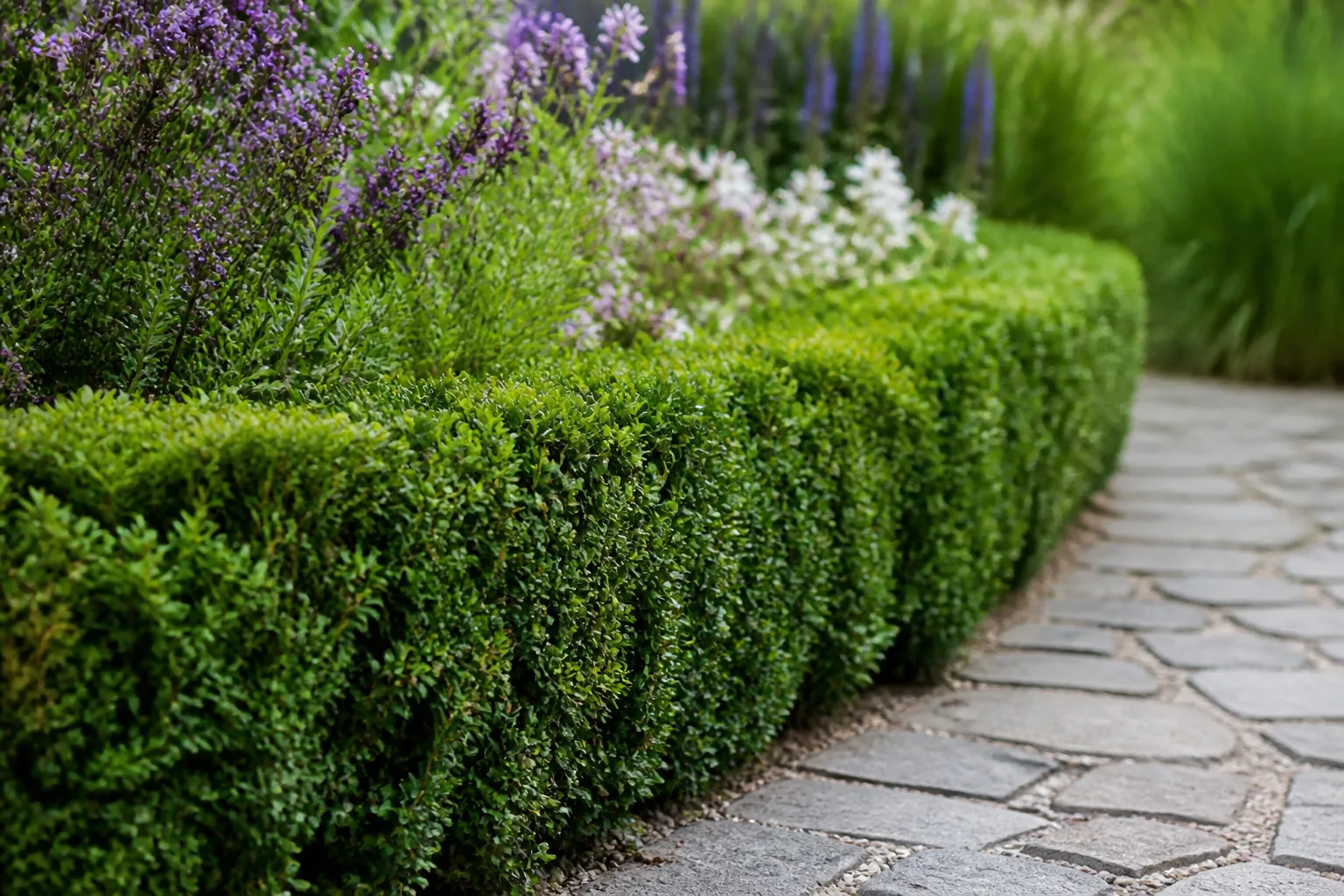
A simpler combo than a full hedge: one variegated dogwood or ninebark with cranesbill geraniums as ground cover. Spring flowers, summer foliage, and one pruning session beat a dozen fussy perennials. Maintenance fit: hedge trim once or twice a year for formal lines; natural cultivars may need no shearing. Always plant at mature width spacing—crowded boxwood becomes a disease magnet.
Climbing roses and cascading plants on walls
Climbing roses on a fence, gate, or arbor create vertical interest without widening the bed. Choose repeat-blooming, disease-resistant cultivars such as New Dawn or Zephirine Drouhin in humid areas to avoid weekly fungicide routines. Train canes horizontally early; that encourages more flowers along the length.
On retaining walls with sun, let creeping phlox, creeping sedum, or campanula spill over the edge. These need no deadheading to look intentional from the street. The RHS climber guidance notes that wall shrubs and self-clinging climbers also insulate façades—useful on west-facing walls that bake in summer.
Maintenance fit: tie new rose growth a few times in spring; cut back phlox stems after bloom if you want a tighter carpet. Avoid thorny climbers on narrow paths beside mail carriers and package deliveries.
Window boxes and seasonal front-door displays
Window boxes concentrate colour at eye level near the entry—high impact per plant. Use a liner, lightweight potting mix, and slow-release fertilizer rather than heavy garden soil that stresses brackets. In shade, rely on coleus, begonia, and ivy; in sun, geraniums, trailing verbena, and ornamental kale for cool seasons.
Treat boxes as seasonal, not permanent. Swap cool-season kale and pansies for heat-tolerant scaevola in summer, then mums or evergreen cuttings in fall. Two refreshes a year beat nursing the same root-bound annual through a heat wave. Maintenance fit: water daily in hot weeks; five minutes of deadheading on weekends keeps boxes sharp.
Seasonal displays beyond boxes work the same way: a single large planter by the steps, a pair of pots flanking the garage, or a hay-bale-and-mum vignette in autumn. Repeat one plant form in odd numbers (three pots, five pumpkins) so the display reads designed rather than cluttered. Store faux decor indoors; weathered plastic reads cheap faster than a simple planting would.
Caladiums and other no-deadhead summer color
Caladiums light up shady front borders with pink, white, and red leaves—no flowers to deadhead. Plant tubers after soil warms, or buy pre-started pots for instant fill. They collapse at first frost; treat them as summer jewellery in frost zones, or dig tubers if you enjoy storage projects.
In sunnier beds, salvia, lantana, and ornamental grasses carry colour with little grooming once established. The key is massing one or two species rather than mixing ten singles that all peak at different weeks. Maintenance fit: caladiums need consistent moisture; drought-tolerant lantana suits parking-strip heat.
Clover lawns and low-care ground covers
White clover mixed into thin turf fixes nitrogen, stays green in light drought, and feeds pollinators when allowed to bloom. It tolerates foot traffic better than many ground covers once established. Expect bees when flowers appear; skip clover right next to bare feet entries if allergies are a concern.
Where grass will not grow, use creeping thyme, sedum, or ajuga in sun, and sweet woodruff or pachysandra in shade. Our landscaper ground cover favourites compare spread rates and edging needs. Maintenance fit: clover lawns need occasional mowing to keep height even; pure ground-cover mats need weeding until they knit, then almost nothing.
Rock gardens, rain gardens, and small water features
A simple rock garden with drought-tolerant sedum, sempervivum, and dwarf conifers handles reflected heat from driveways and sidewalks. Keep the design low and wide—tall rock piles behind a short walk look unstable and collect leaves.
If downspouts create a persistent damp zone, a rain garden—a shallow depression planted with wet-tolerant natives—handles stormwater better than repeatedly replacing drowned turf. Size it to your roof area and local guidance; overflow should sheet away from the foundation. Sedges, iris, and Joe-Pye weed are common choices in mid-Atlantic and Midwest rain gardens; match species to your extension district list rather than copying a photo from another climate.
Fountain basins and recirculating bubblers add sound without koi-pond filtration. Skip complex plumbing until you know you will refill and clean the reservoir monthly. A dry creek bed of river stone can suggest water movement with zero pump maintenance. Maintenance fit: rock gardens need annual leaf blow-out; rain gardens need weeding in year one; fountains need water top-offs and winter shutdown in freeze zones.
Flagstone paths through gravel mulch tie rock gardens to the entry without a full patio install. Keep joints wide enough for thyme or moss if you want softness; tight mortar reads formal but cracks in freeze-thaw zones. Our hide common yard eyesores guide covers how utility boxes and AC units can disappear behind low planting without blocking service access.
Container evergreens and a shady front-yard seat
Not every front yard has soil. Containers of dwarf spruce, upright boxwood, or trailing euonymus flanking a door provide year-round structure on pavers or porch landings. Use frost-proof pots one size larger than the rootball, elevate on pot feet, and water until drainage runs clear—evergreens in pots desiccate faster than plants in ground.
Smaller evergreen perennials in pots—carex, liriope, or wintergreen—add texture without tree-sized commitment. Mix heights in a trio: one upright, one mounding, one trailing. Replace one pot each year if a plant fails rather than redesigning the whole grouping.
If mature trees shade the front, add a bench or bistro set rather than fighting for turf. Shade seating turns a pass-through yard into usable space. Pair with hostas or ferns in surrounding beds for a cohesive vignette. Maintenance fit: container evergreens need winter protection in cold zones; refresh topdressing compost each spring.
Seasonal upkeep calendar (front yard)
Spring: refresh mulch, sharpen bed edges, divide overcrowded hostas, prune dead hydrangea wood, plant caladiums and window boxes after last frost. Summer: deep-water new plantings weekly; deadhead roses and boxes if you want tidy form; mow clover or grass higher in heat. Fall: plant trees and shrubs, swap window boxes, rake leaves off evergreen ground covers. Winter: protect containers, avoid salt pile-up on yews and boxwood, plan next year’s backbone fixes.
Conclusion
A front yard that stops people in their tracks is usually a front yard with a clear structure: defined edges, mulch or ground cover doing weed duty, one strong focal point, and plants chosen for your actual sun and soil. Start with the backbone, pick two or three ideas from this list that match your maintenance budget, and add seasonal colour only where you will enjoy tending it.
Done well, front-yard landscaping pays back in daily satisfaction—not just resale. Buyers notice an cared-for entry, and the RHS green front garden guide notes environmental benefits from planting too: cooler air near the house, cleaner runoff, and habitat along the street. You do not need eighteen features at once. You need the right few, installed once, with conditions on your side.



