How to Grow and Care for Oakleaf Hydrangea
Oakleaf hydrangea (Hydrangea quercifolia) offers white summer panicles, fall foliage, and exfoliating bark. Learn site selection, pruning timing, cultivars, and winter protection.
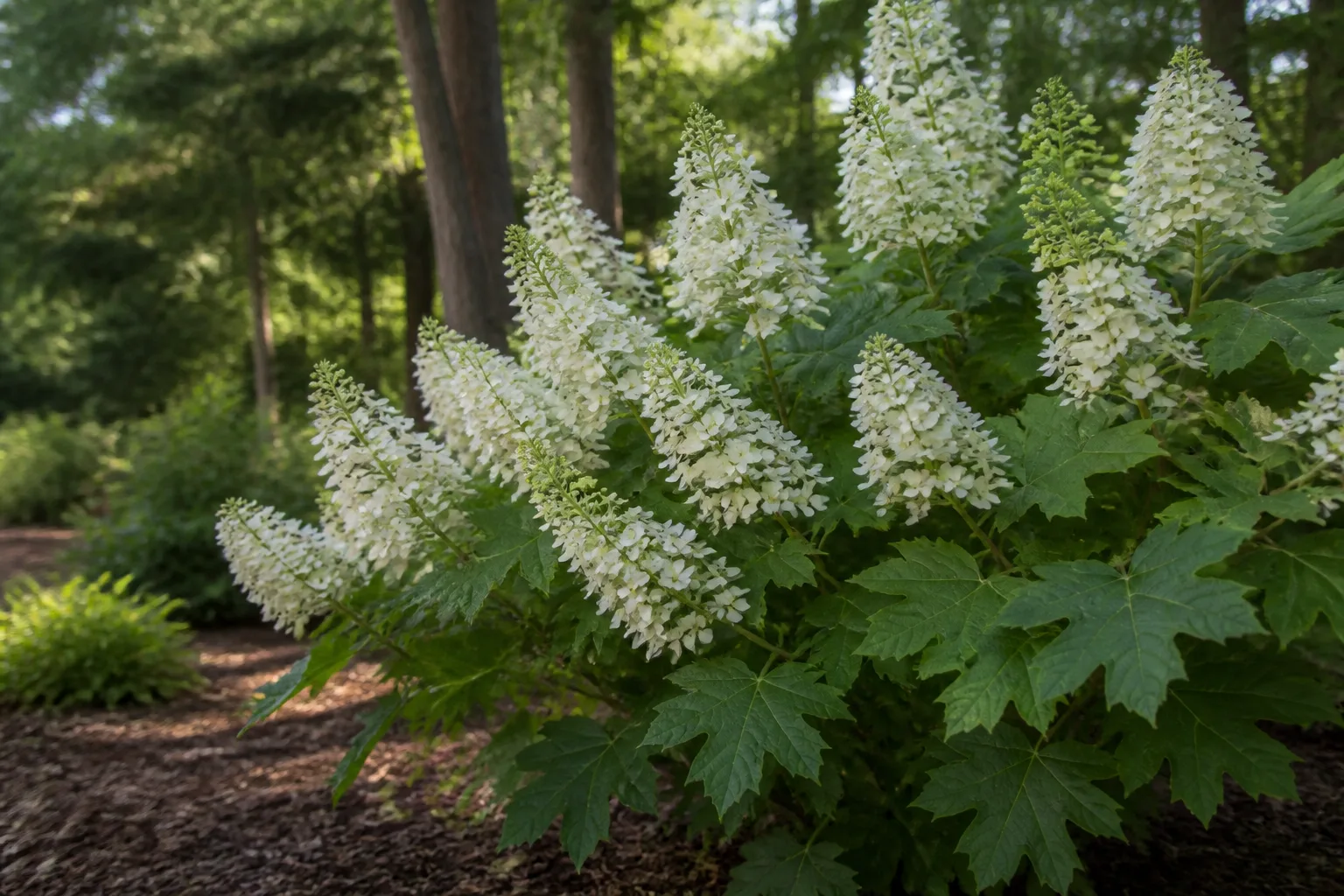
Oakleaf hydrangea (Hydrangea quercifolia) is the hydrangea you plant when you want more than a June flower photo. Native to moist woods and stream banks across the southeastern United States, this deciduous shrub delivers cone-shaped white panicles in late spring, a long fade through pink and tan, wine-to-bronze fall foliage, and cinnamon exfoliating bark that still looks good after leaves drop. The catch is timing: oakleaf hydrangea blooms on old wood, so a well-intentioned spring haircut or an unprotected late freeze can erase an entire summer of flowers.
That single rule — protect last year’s stems and prune only after bloom — organizes every other decision in this guide, from where you dig the hole to which cultivar fits a foundation bed versus an open woodland edge.
Why Oakleaf Hydrangea Belongs in a Four-Season Border
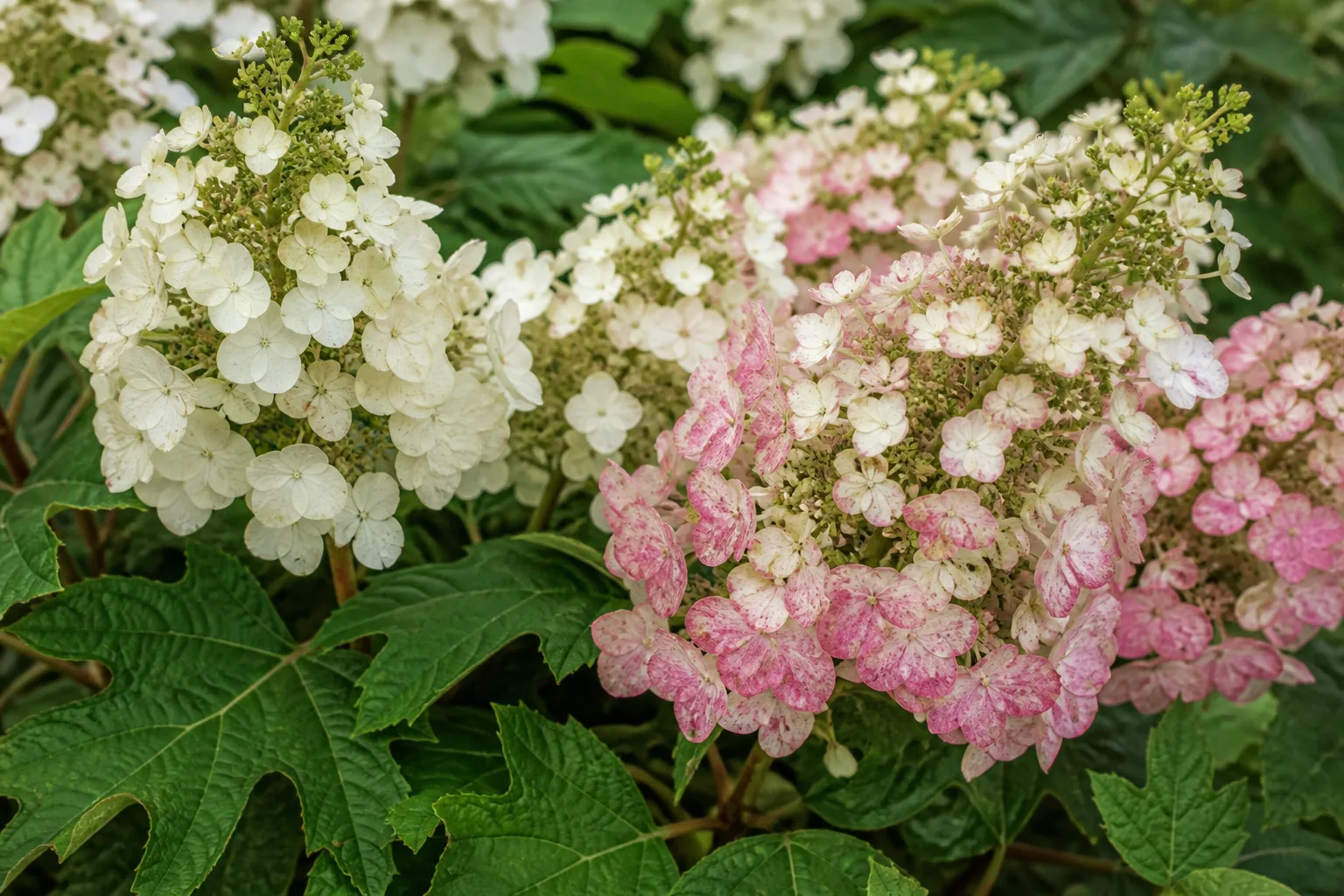
Most garden hydrangeas are grown for one moment: mophead color in July or panicle cones in August. Oakleaf hydrangea stretches the calendar. NC State Extension describes showy pyramidal panicles that open creamy white in May and June, fade to pink, then tan through summer, while large lobed leaves turn orange, purple, or burgundy in fall (NC State Extension: Hydrangea quercifolia). Mature stems develop papery, exfoliating bark that adds winter texture without any pruning required.
Unlike bigleaf hydrangea (H. macrophylla), flower color on oakleaf is not controlled by soil pH. White panicles age to pink or rose through natural pigment change, not aluminum availability. Unlike panicle hydrangea (H. paniculata), oakleaf will not rebloom on new wood after a hard winter cut — it sets its flower buds on stems produced the previous summer. Understanding that difference keeps you from copying panicle pruning habits that work on ‘Limelight’ but fail on ‘Snow Queen.’
For a deeper comparison across hydrangea groups, see our top hydrangea varieties guide.
Oakleaf Hydrangea at a Glance
| Feature | Details |
|---|---|
| Common names | Oakleaf hydrangea, oak-leaf hydrangea |
| Botanical name | Hydrangea quercifolia |
| Type | Deciduous multi-stemmed shrub |
| Mature size | 4–8 ft tall, 4–10 ft wide (cultivars vary) |
| Growth rate | Slow (~1–2 ft per year) |
| Sun | Full sun to partial shade |
| Soil | Organically rich, moist, well-drained |
| Soil pH | Slightly acidic to neutral (roughly 5.0–7.0); does not change bloom color |
| Bloom time | Late spring through summer (single flush) |
| Flower color | White aging to pink, tan, or rose |
| Hardiness | USDA zones 5a–9b |
| Native range | Southeastern United States |
| Bloom wood | Old wood (previous season’s stems) |
| Toxicity | Low severity if ingested; toxic to pets per ASPCA genus listing |
Quick ID: deeply lobed leaves resembling oak foliage, opposite arrangement, fuzzy young growth, and upright pyramidal flower clusters 4–12 inches long. The species can reach 8 feet, but dozens of compact cultivars now fit smaller beds without yearly shearing.
Choose the Right Site: Light, Soil, and Spacing
Site selection is the highest-leverage decision. Oakleaf hydrangea tolerates a wider light range than bigleaf types, but sun and soil moisture must agree. A plant in hot afternoon sun without consistent water will scorch; a plant in deep shade will grow but bloom lightly and may show weaker fall color.
Morning Sun and Afternoon Shade by Climate
In its native understory habitat, oakleaf hydrangea receives dappled light through tall trees. Translate that to the garden with morning sun and afternoon shade in zones 7–9, especially where summer afternoons exceed 90°F. In cooler zones 5–6, many plants handle full sun (six or more hours) if soil stays evenly moist and mulched. NC State lists full sun to partial shade as acceptable cultural conditions (NC State Extension: Hydrangea quercifolia).
A practical test: if nearby bigleaf hydrangeas scorch by 2 p.m., your oakleaf will appreciate the same eastern exposure or high shade from deciduous trees. If you are under open sky in Minnesota or Maine, full sun often produces the strongest fall foliage — provided roots never dry out during bud formation in late summer.
Soil Texture, pH, and Drainage
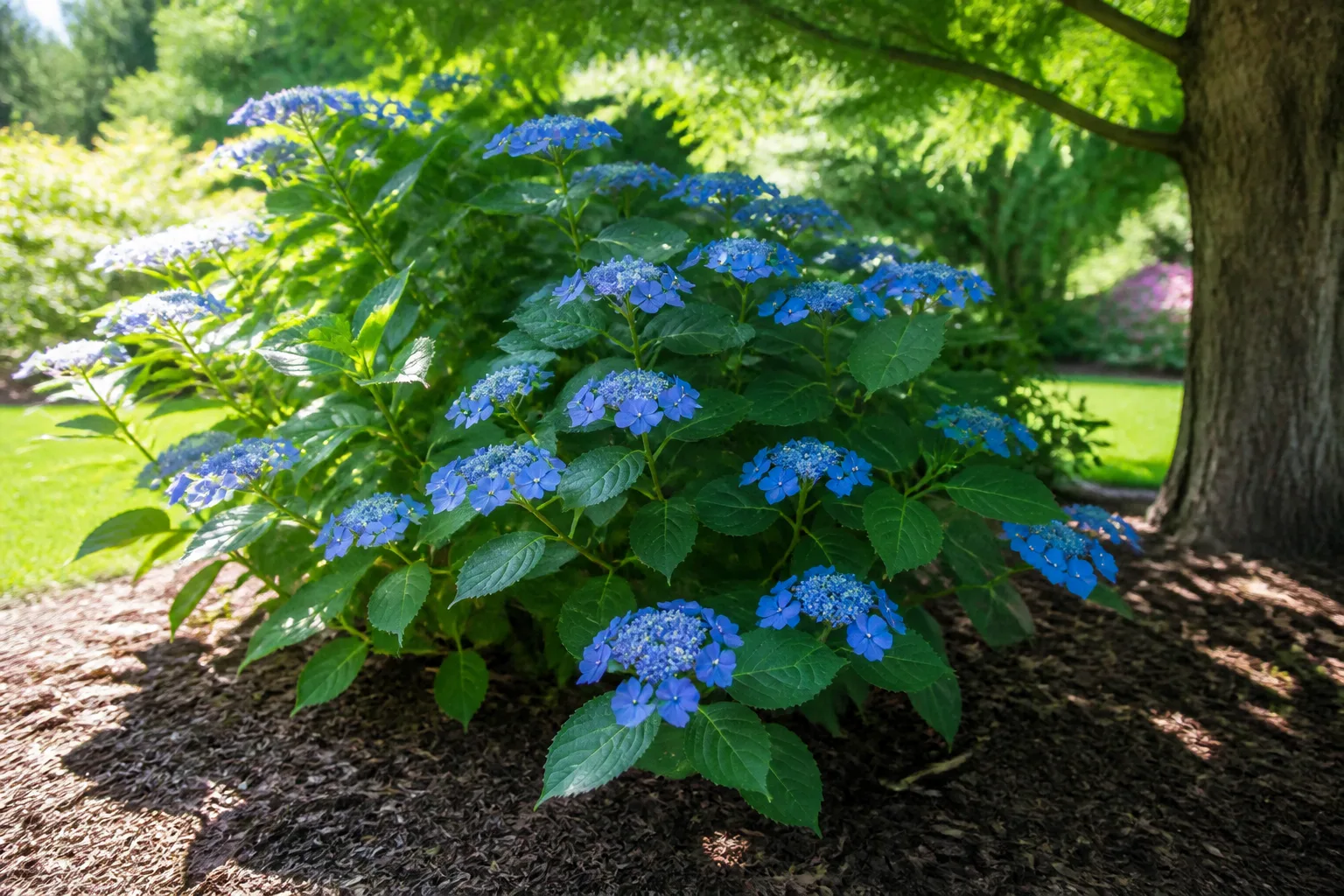
Oakleaf hydrangea wants high organic matter, good drainage, and consistent moisture. Sandy loam amended with compost is ideal; heavy clay needs raised planting or broad amendment so winter wet does not rot roots. Slightly acidic soil (roughly 5.0–6.5) supports nutrient uptake, but unlike bigleaf hydrangea you are not managing pH for flower color.
Spacing: allow mature width plus air circulation. Standard cultivars need 6–8 feet between centers; compact types such as ‘Pee Wee’ or ‘Ruby Slippers’ can go 4–5 feet apart. Our hydrangea spacing guide walks through label-based spacing when mature size is unclear.
How to Plant Oakleaf Hydrangea
Plant in early spring after frost or early fall while soil is still warm and air heat has moderated. Summer planting is possible with daily watering, but spring and fall reduce transplant stress on slow-growing roots.
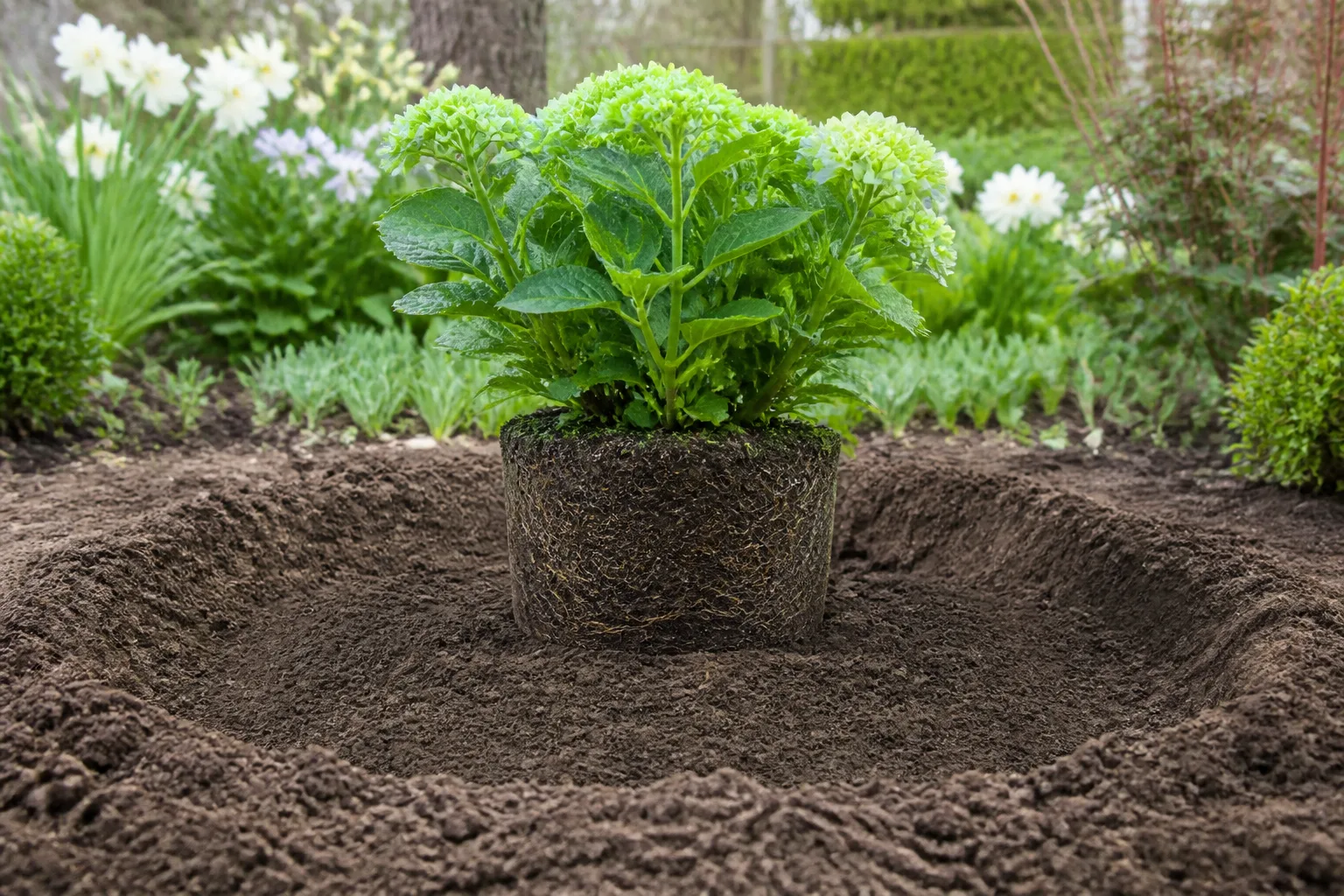
Dig a hole two to three times wider than the root ball and only as deep as the container soil line. Set the plant so the top of the root ball sits level with or slightly above grade — burying the crown invites rot. Tease circling roots outward, backfill with native soil mixed with compost, water deeply, and apply 2–3 inches of shredded bark mulch over the root zone while keeping mulch off the stems.
Oakleaf hydrangea rarely needs staking. If a heavy-flowered cultivar like ‘Snowflake’ flops after rain, use loose ties to a short stake for one season while the wood lignifies rather than shearing the plant mid-summer.
Watering and Mulching Through the Seasons
Year one: water deeply two to three times per week if rain provides less than 1 inch. The goal is evenly moist — not soggy — soil through the entire root zone. Years two and three: taper to weekly deep soakings during dry spells. Established plants: NC State tags the species as drought tolerant once rooted, but flower size and fall color suffer if soil dries completely during July and August (NC State Extension: Hydrangea quercifolia).
Mulch is not decorative here; it is infrastructure. A 2–3 inch layer of pine bark, shredded leaves, or arborist chips cools roots, slows evaporation, and feeds soil biology as it breaks down. Refresh mulch in spring, pulling it back slightly from the base to discourage bark rot.
Signs of underwatering include wilted leaves that do not recover overnight, brown leaf edges, and smaller panicles. Signs of overwatering include yellowing lower leaves, blackened crowns, and persistent sogginess — oakleaf hydrangea will not tolerate standing water.
Fertilizer: When to Feed and When to Skip
Established oakleaf hydrangea in decent soil often needs no fertilizer. Overfeeding — especially high-nitrogen lawn fertilizer drifting into shrub beds — pushes leafy growth at the expense of buds. If a soil test shows low phosphorus or potassium and pale foliage, apply a balanced slow-release shrub fertilizer in early spring before budbreak, following label rates.
Alkaline soils in the upper Midwest may benefit from occasional acidifying amendments if a test shows pH above 7.0, not for bloom color but for general nutrient availability. Never guess with aluminum sulfate the way you might for bigleaf blue flowers; oakleaf color is genetic.
Skip fertilizer entirely in the first planting year unless a soil test documents a clear deficiency. Compost mulch usually supplies enough gentle nutrition for slow-growing wood.
Best Oakleaf Hydrangea Cultivars by Garden Size
Species plants are handsome but large. Modern breeding from the U.S. National Arboretum and commercial programs has produced compact forms with stronger flower color and sturdier stems. Match cultivar to mature width, not first-year container size.
| Cultivar | Approx. size | Flower notes | Best for |
|---|---|---|---|
| ’Pee Wee’ | 3–4 ft × 4–5 ft | Short squat panicles; purple-red fall | Small borders, entry beds |
| ’Munchkin’ | ~3 ft | Compact; semi-dwarf Arboretum introduction | Low hedges, foundation corners |
| ’Ruby Slippers’ | 3–4 ft | White panicles aging deep ruby red | Color-focused small gardens |
| Gatsby Glow Ball® | 3–4 ft | Rounded white panicles; compact | Tight spaces, containers (short-term) |
| ‘Snow Queen’ | ~6 ft | Large erect panicles; zone 5 hardy | Specimen, cold climates |
| ’Snowflake’ | 6–8 ft | Double sterile flowers; very showy, may flop | Large beds where scale is welcome |
| ’Alice’ | 8–12 ft | Massive panicles; bronze-red fall | Back of border, woodland edge |
| ’Little Honey’ | ~4 ft | Chartreuse spring foliage; red fall | Foliage contrast in part shade |
| ’Gatsby Pink’ | 6–8 ft | White aging pink; dark red fall | Mid-border color sequence |
‘Snow Queen’ remains the benchmark for cold hardiness and upright panicles in zone 5. ‘Ruby Slippers’ and ‘Munchkin’ solve the common complaint that oakleaf hydrangea outgrows foundation plantings within five years. ‘Snowflake’ is spectacular but heavy — plan for support or accept arching stems after storms.
Pruning Oakleaf Hydrangea Without Losing Next Year’s Blooms
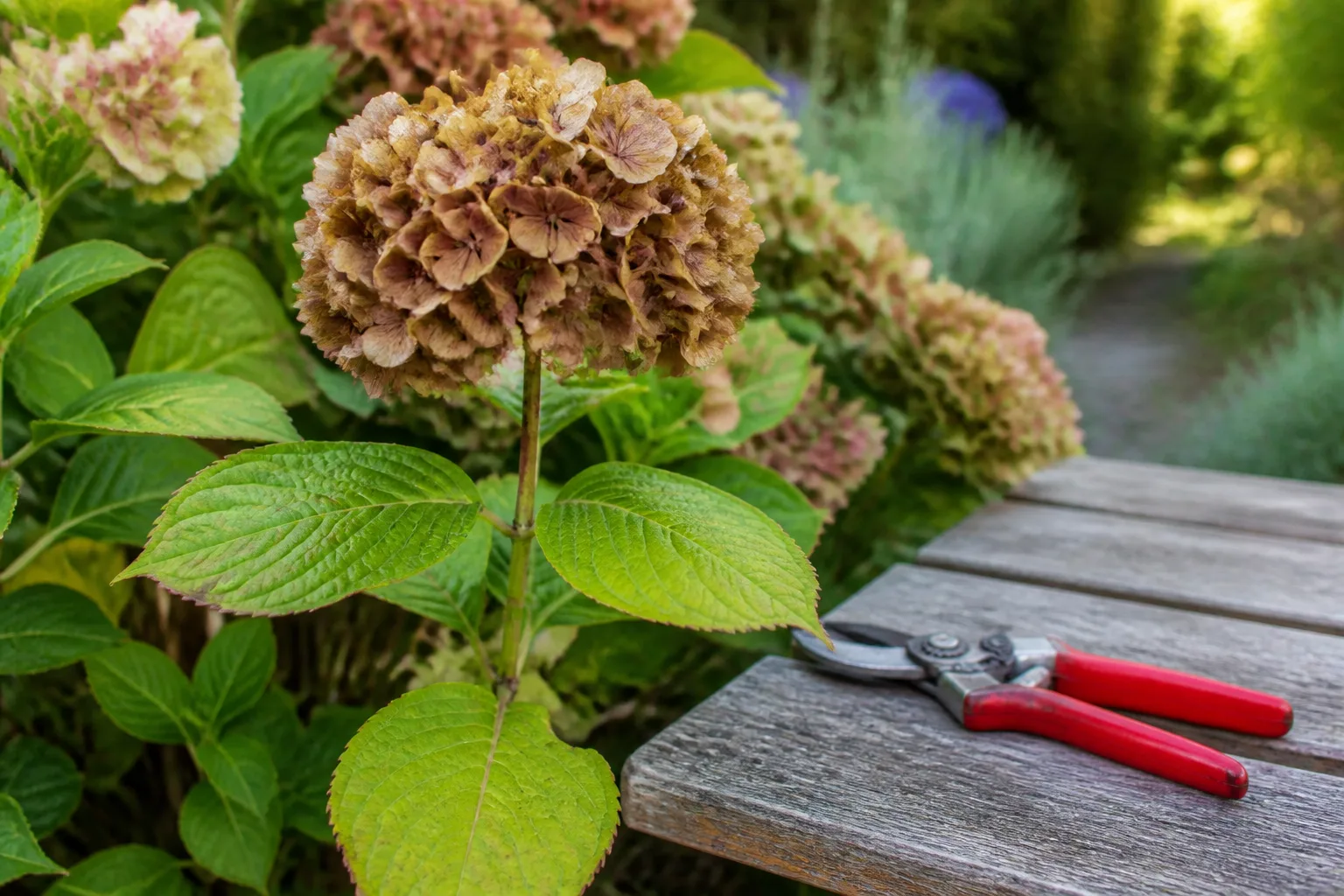
Oakleaf hydrangea blooms on old wood: flower buds form on stems that grew the previous summer, usually by early fall. Prune at the wrong time and you remove next year’s display. The safe window is immediately after flowers fade, typically late July or August in most climates. As a hard rule, finish structural pruning before September so you do not disturb developing buds.
What to cut:
- Dead, damaged, or diseased wood — any time
- Crossing branches that rub bark — after bloom
- One or two of the oldest stems at ground level every few years for renewal
- Suckers emerging beyond the desired footprint — as needed
What to avoid:
- Spring hard pruning “to tidy up” — this is the most common bloom killer
- Shearing into a ball — destroys the natural vase shape and removes buds
- Late-fall or winter resizing except removing clearly dead canes
For hydrangea pruning across species, our when to prune hydrangeas guide explains old-wood versus new-wood rules in more detail. Fall renovators should also read shrubs to prune in fall — oakleaf belongs on the do not hard-prune in fall list.
Propagating from Cuttings and Managing Suckers
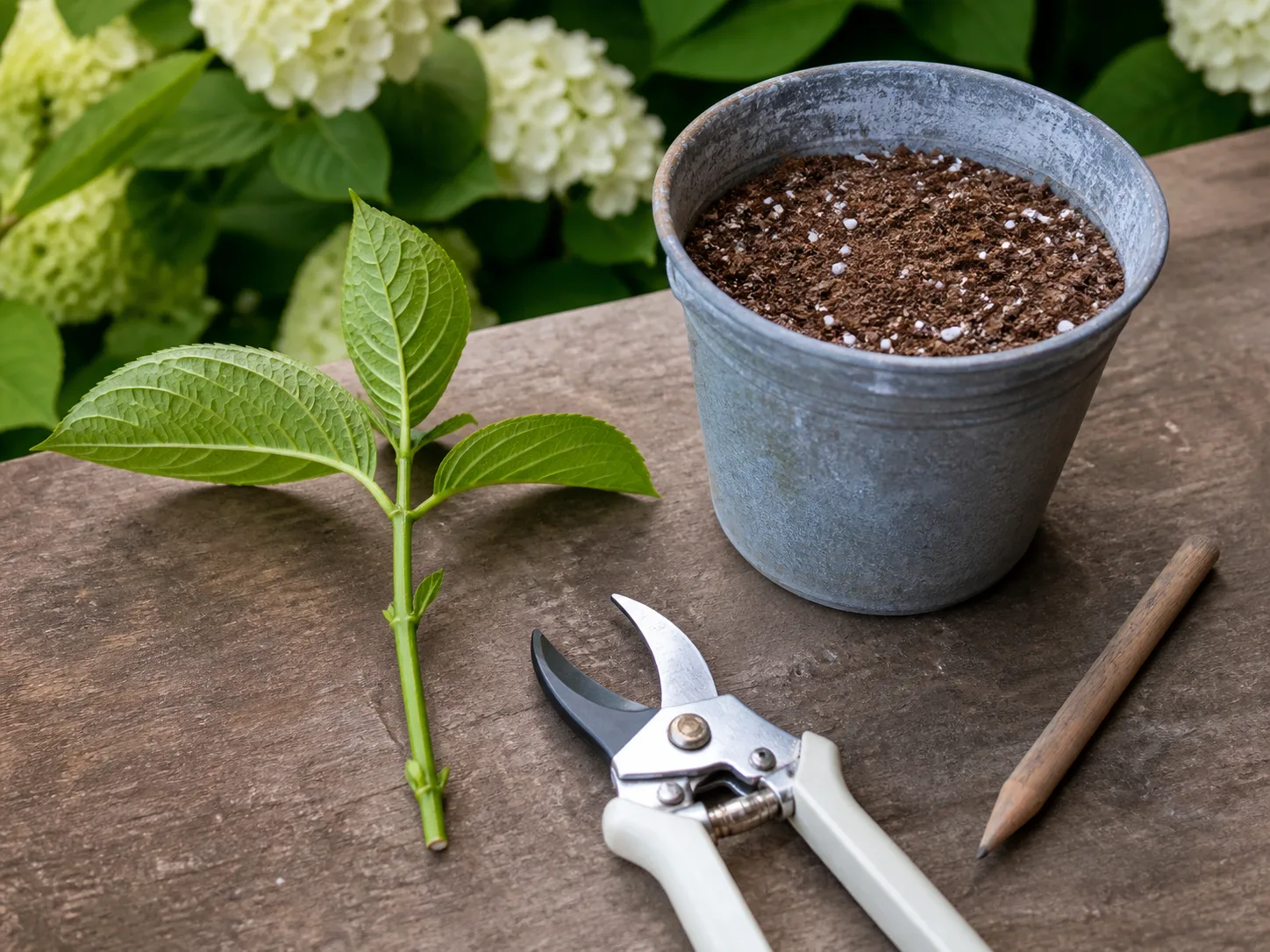
Oakleaf hydrangea spreads slowly by underground suckers and can be propagated by softwood cuttings taken in late spring or early summer. Seed propagation of named cultivars does not produce true-to-type plants; cuttings are the home-gardener route.
Softwood cutting steps:
- Take 4–6 inch non-flowering tips with at least one node.
- Remove lower leaves; dip cut end in rooting hormone.
- Insert in moist, sterile potting mix; cover with a loose humidity tent.
- Keep bright indirect light and even moisture.
- Tug-test gently after 8–12 weeks; transplant when roots hold soil.
Oakleaf also layers easily: bend a low branch to the ground, wound the underside, pin it in moist soil while still attached to the parent, and sever after roots form. Check patent restrictions before propagating trademarked cultivars. Our how to propagate hydrangeas guide covers water versus soil rooting in more depth.
Remove unwanted suckers with a sharp spade slice to the parent root if the shrub is spreading into lawn or paths. Leaving a few suckers can fill a mass planting over time.
Winter Protection in Zones 5 and 6
Flower buds are vulnerable to late spring frosts and extreme winter cold at the northern edge of hardiness. Young plants in zone 5 benefit from:
- A burlap windbreak on the north or west side, not tight plastic wrap
- Mulch over the root zone after ground freezes — not piled against stems
- Anti-desiccant spray only as a supplement, not a substitute for siting
Avoid wrapping so tightly that rodents nest inside. In spring, wait to prune until you can distinguish dead from live wood — scratch bark on questionable stems; green cambium means wait, brown and dry means cut back to healthy tissue.
Established plants in zone 6 usually bloom reliably without wraps if sited with afternoon shade and consistent summer moisture during bud set. A sudden April freeze after a warm March can still brown buds; there is no cure except patience for the following year.
Pests, Diseases, and No-Bloom Troubleshooting
NC State reports no significant pest or disease problems on oakleaf hydrangea, with occasional aphids, spider mites, leaf blight, and powdery mildew (NC State Extension: Hydrangea quercifolia). Most issues trace to culture, not chemistry.
Powdery mildew appears as white coating on leaves in humid, crowded plantings. Increase air flow, avoid overhead irrigation, and remove heavily infected leaves after bloom. Aphids cluster on new growth; a strong water spray or insecticidal soap usually suffices.
No-bloom checklist — work in this order:
- Age: plants under three years may bloom lightly while building wood.
- Pruning timing: spring or fall hard cuts remove buds.
- Winter injury: browned stem tips in zone 5 — wait and prune dead wood only.
- Light: fewer than four hours of direct sun reduces flower count.
- Nitrogen: excess lawn fertilizer produces leaves, not panicles.
- Drought stress during July when buds initiate for next year.
For disease photos and species-specific notes, see our hydrangea diseases guide.
Bloom Timing, Deadheading, and Fall Color
Oakleaf hydrangea produces one main flush per year — not the repeat cycles of reblooming bigleaf cultivars. Panicles open white in late May through June, then slowly age through pink, rose, green, or tan depending on cultivar and weather. The display can last months on the plant because sterile flowers persist and dry attractively.
Deadheading is optional. Removing spent panicles before August can tidy the shrub but is not required for rebloom. If you deadhead, cut just below the flower cluster, not into old wood below the first strong buds. Stop cosmetic cutting by late July in northern gardens where next year’s buds form early.
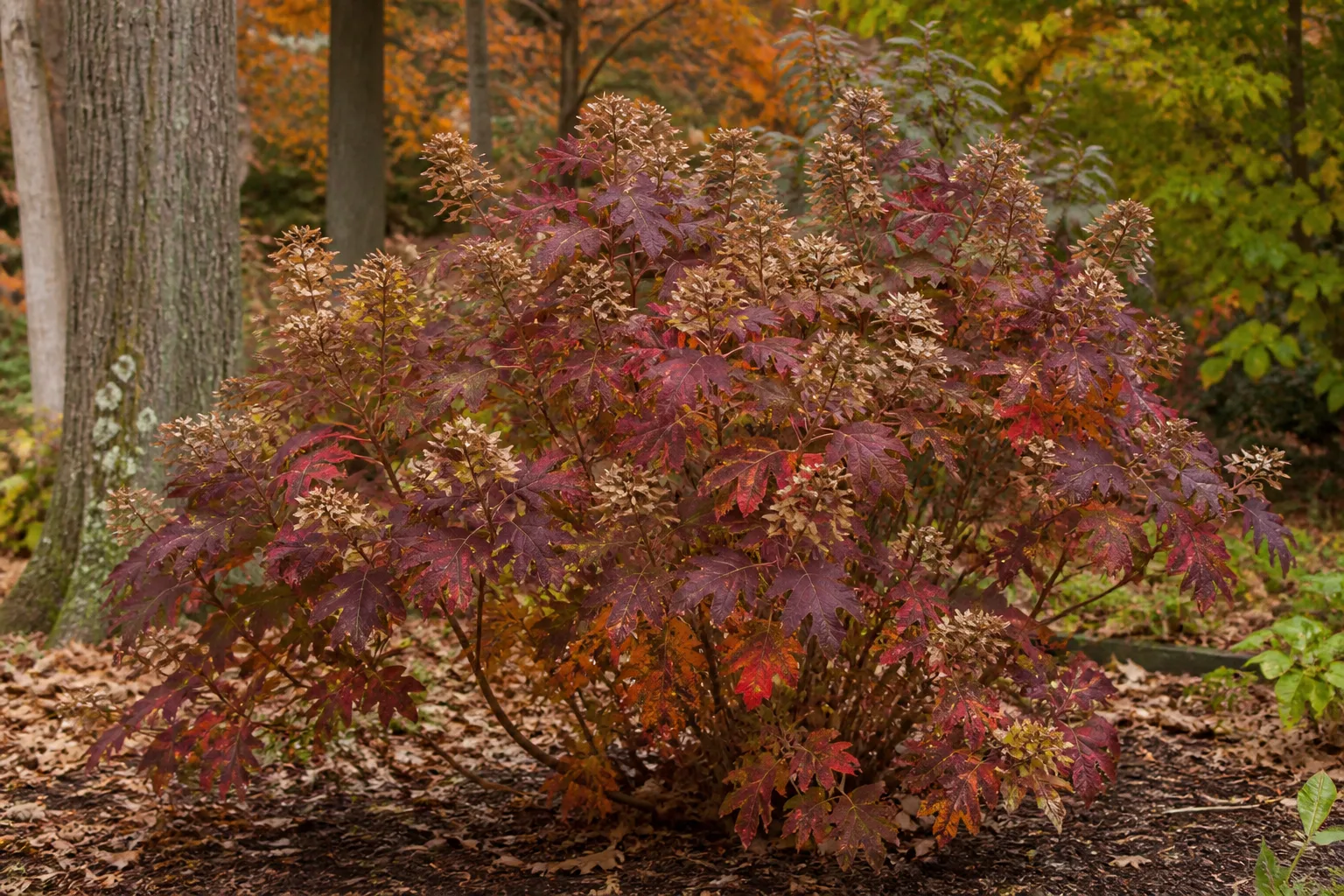
Fall foliage is a major reason to grow the species. Leaves turn wine, orange, mahogany, or burgundy — often all on one plant as nights cool. Full sun in northern climates intensifies color; extreme shade can mute it. Leave dried panicles standing for winter interest and bird foraging unless heavy snow load risks stem breakage.
Why Oakleaf Hydrangea Rarely Thrives in Containers
Oakleaf hydrangea develops a fibrous, spreading root system that resents the restricted volume of decorative pots. Container culture demands daily watering in summer, winter freeze protection for roots, and frequent repotting as the slow-growing shrub still outpaces a 15-gallon pot within a few years.
Short-term display in a large planter is possible for compact cultivars like ‘Pee Wee’ or Gatsby Glow Ball®, but permanent container growing is a poor substitute for in-ground planting. If patio color is the goal, bigleaf or panicle hydrangeas tolerate pots better. Our growing hydrangeas in pots guide compares species honestly.
Wildlife Value and Toxicity for Pets and Children
Oakleaf hydrangea supports pollinators when fertile flowers open along panicle tips. Butterflies and native bees visit nectar-rich blooms; songbirds eat seeds from dried capsules in fall (NC State Extension: Hydrangea quercifolia). The shrub fits pollinator gardens, woodland edges, and rain-garden margins where soil drains between rain events.
Toxicity: NC State classifies the plant as low severity poison to humans, with nausea, stomach pain, and vomiting if significant quantities of leaves, bark, or flowers are ingested (NC State Extension: Hydrangea quercifolia). The ASPCA lists hydrangeas as toxic to dogs, cats, and horses, with cyanogenic glycoside as the toxic principle and typical signs of vomiting, depression, and diarrhea (ASPCA: Hydrangea). Serious cyanide intoxication is rare in pets, but keep curious chewers away and call your veterinarian or poison control if ingestion is suspected.
Conclusion
Oakleaf hydrangea rewards gardeners who think in years, not weekends. Give it morning sun or dappled light, soil that holds moisture without staying waterlogged, and mulch that keeps roots cool. Prune only after the white panicles fade, choose a cultivar that matches your real estate, and protect young buds at the cold end of zone 5. Do that and you get a native shrub with summer flowers, autumn foliage, winter bark, and decades of low-maintenance presence — without chasing the rebloom promises that belong to other hydrangea species.



