Understanding Soil pH: Here's What Every Gardener Needs to Know
Learn what soil pH measures, how to test a garden bed, which plants need different ranges, and how to amend gradually without locking out nutrients.
A soil pH reading is useful when you are planning a bed, diagnosing a repeated growing problem, or deciding whether an amendment belongs in your cart. It is not a score that tells you whether soil is “good,” and it does not name a fertilizer by itself.
The safest sequence is to identify the plants you want to grow, test the soil they will root into, and follow a crop-specific recommendation from a soil-testing lab. If the result already fits the planting, leave the pH alone. If it does not, the report—not a generic chart or symptom guess—should guide the correction.
Soil pH describes root-zone chemistry, not fertility
Soil pH describes how acidic or alkaline the soil solution is around roots. A laboratory or home test reports a number, but that number is only one part of soil fertility: it does not tell you by itself whether the bed has enough nitrogen, phosphorus, potassium, calcium, magnesium, or organic matter. A soil can contain plenty of a nutrient and still make it hard for roots to access, or it can have the right pH but be short of that nutrient.
Think of pH as a condition that influences nutrient behavior rather than a nutrient that plants consume. It affects which chemical forms of nutrients stay dissolved, how readily they move through soil water to roots, and how soil organisms break down organic matter. That is why a soil test that reports both pH and nutrients is more useful than pH alone, especially if a plant is struggling. Penn State Extension’s soil-testing overview describes soil tests as measurements of plant-available nutrients and acidity used to guide lime and fertilizer decisions.
Read the pH scale before reacting
The familiar soil pH scale runs from 0 to 14: below 7 is acidic, 7 is neutral, and above 7 is alkaline. Real garden soils usually fall in a narrower band than the theoretical scale, and a reading near neutral is not automatically the best result for every plant. “Acidic” and “alkaline” are descriptions, not judgments; each can be the right environment for plants adapted to it.
| Approximate reading | Plain-language description | What it may mean in a garden |
|---|---|---|
| Below 5.5 | Strongly acidic for many cultivated plants | Some acid-adapted plants do well; other crops may have reduced nutrient access or root stress |
| 5.5–6.5 | Acidic to mildly acidic | A common range for many vegetables and ornamentals, depending on crop and region |
| 6.5–7.0 | Slightly acidic to neutral | Often suitable for a broad mix of garden plants |
| Above 7.0 | Alkaline | Some plants thrive; iron and other micronutrients may become less available as pH rises |
These bands are a reading aid, not amendment instructions. A lab may use a crop-specific target that differs from a broad gardening chart, and different labs can use different procedures. A plant list should therefore answer “what range suits this crop?” while the local soil report answers “what should I do in this particular bed?”
One pH unit is a tenfold change
The pH scale is logarithmic, not a ruler with evenly spaced steps. A soil at pH 5.5 has roughly ten times the hydrogen-ion activity of one at pH 6.5, so moving a reading by one whole number is chemically significant; it does not follow that doubling lime or sulfur produces twice the pH change. Iowa State Extension explains the tenfold relationship and why soil pH can be difficult to shift substantially. Iowa State’s soil pH guide
A small change in the reported number can still be meaningful, but it does not tell you how much amendment the soil needs. The number reflects active acidity in the soil solution; soil particles and organic matter can hold additional acidity or alkalinity that resists change. Two beds with the same pH may therefore need very different amounts of lime, or may be poor candidates for a correction at all.
Why pH changes nutrient availability
Roots take up nutrients from soil water, and pH changes how soluble some nutrients are and how strongly they bind to soil minerals. Soil organisms are part of the same system: microbial activity helps release nutrients as organic material decomposes, and very acidic or alkaline conditions can change the activity of those organisms. The result is not a simple “nutrients are present” versus “nutrients are missing” split; the usable supply depends on soil chemistry, biology, moisture, and the plant’s adaptations. University of New Hampshire Extension’s overview of soil pH and plant growth summarizes these linked effects.
Very acidic soil changes nutrient access and metal activity
In strongly acidic soil, phosphorus can become less available, while aluminum and manganese may become more soluble and reach levels that injure roots. Calcium and magnesium can also be depleted or become harder to maintain, and microbial processes may slow. The threshold where those effects matter varies with soil type and plant, so a reading below a broad “ideal” range is a reason to consult the soil report—not an automatic order to apply lime. Colorado State University Extension’s soil pH guide explains that nutrient availability, free lime, irrigation water, and regional soil conditions all influence management.
Acid-adapted plants are an important exception. Blueberries, azaleas, rhododendrons, and similar plants are not failing simply because their soil is below neutral; lower pH is part of the conditions they use. For those plants, liming to make the bed “normal” can reduce the availability of iron and other nutrients they need.
Alkaline soil can limit iron and other nutrients
In alkaline soil, iron, manganese, zinc, and some other micronutrients can become less soluble and harder for roots to absorb. New leaves that turn yellow between green veins can be one clue to iron chlorosis, but the same appearance can result from waterlogged roots, damaged roots, cold soil, or other problems. pH is one possible cause, not a diagnosis; a test and a look at drainage and root health are needed before treating.
Alkalinity may come from the mineral material the soil formed from, carbonate-rich (“free lime”) soil, or sometimes irrigation water. In such places, a pH change may be temporary or impractical because the soil has a large reserve of carbonate that neutralizes added acid. The lesson is to distinguish a reading from the reason behind it: a high number alone does not tell you whether sulfur can solve it.
Choose a target for the plant and bed
Most common vegetables and many landscape plants tolerate a mildly acidic to near-neutral range, often somewhere around pH 6 to 7. The exact target is crop- and region-specific, not a universal 6.5. Potatoes and blueberries, for example, can prefer more acidic conditions than many vegetables; blueberries are commonly grown around pH 4.5 to 5.5, while many garden crops do well nearer 6 to 7. New Hampshire Extension gives both ranges and notes that local soils vary.
| Growing situation | Common pH range | How to use the range |
|---|---|---|
| Many vegetables and cultivated ornamentals | About 6.0–6.8 | A useful starting range, but the crop-specific soil-test target takes priority. |
| Blueberries and rhododendrons | About 4.5–5.5 | These acid-adapted plants can struggle if a bed is limed toward neutral. |
Treat these figures as orientation, not a prescription. Plant needs vary, and the lab recommendation for the crop and soil you actually have is the number to use.
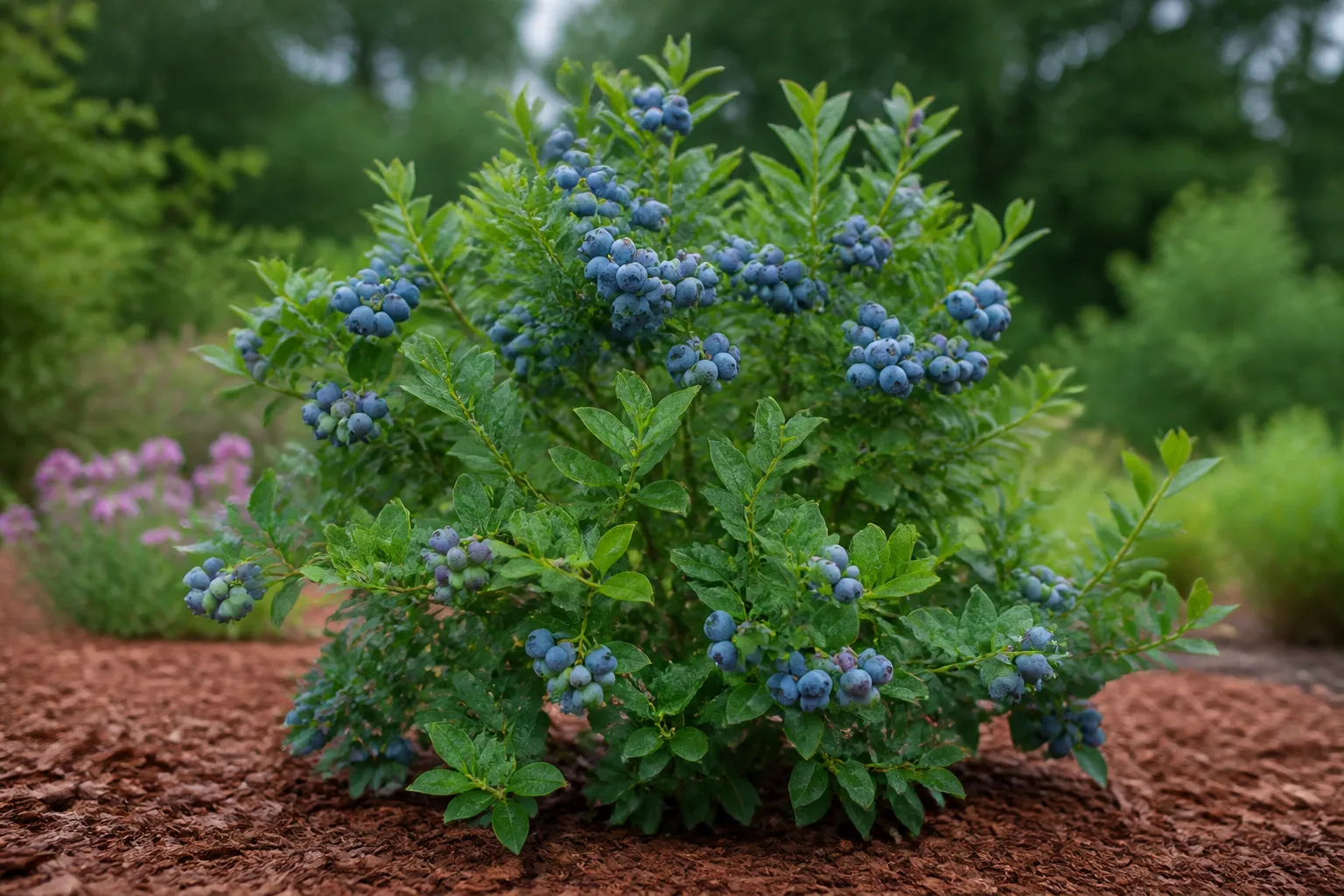
Use the target for the actual crop, not the plant category on a label. A bed intended for tomatoes, greens, and beans may have a different recommendation than one for blueberries. If a mixed planting includes plants with opposite pH preferences, separating them into different beds or containers is usually more manageable than trying to find a number that compromises each root zone.
The expected size and life of the planting matter too. It may be reasonable to correct a new vegetable bed before planting if the lab recommends it. For a mature tree or shrub whose roots extend widely, trying to change the pH across the entire root zone can be slow and disruptive. If the plant is otherwise healthy, choose a more suitable species for a future planting rather than turning the whole landscape into a soil-chemistry project. Working with the plants that suit your soil can also save repeated amendments and wasted effort, as BBC Gardeners’ World explains.
Test the actual growing area
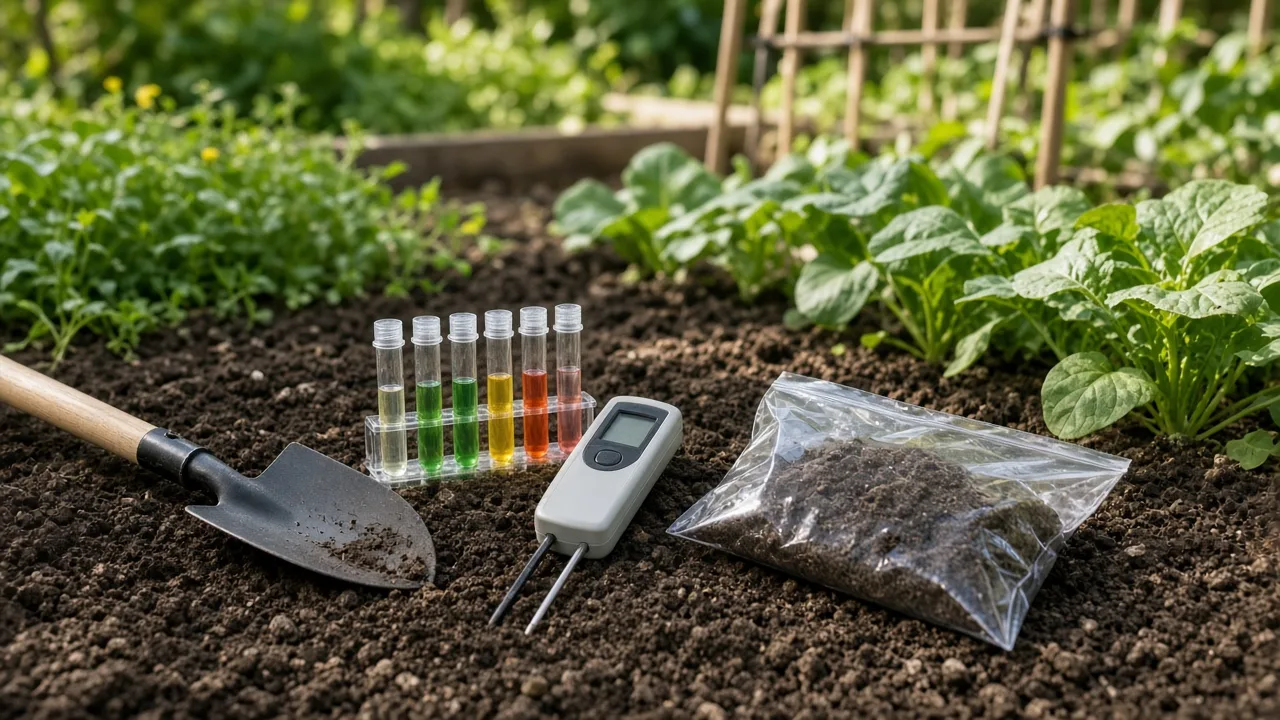
Test soil before adding lime, sulfur, wood ash, or a product marketed for acid-loving plants. A home pH kit or meter can help screen for a broad difference, but it cannot usually calculate a safe amendment rate or explain whether nutrients are also out of balance. A lab test can measure pH and selected nutrients and, depending on the region and test package, provide a lime requirement or buffer result. Ask the lab what information it needs and tell it what you plan to grow; its recommendation is tied to its method and crop assumptions.
Build a representative composite sample
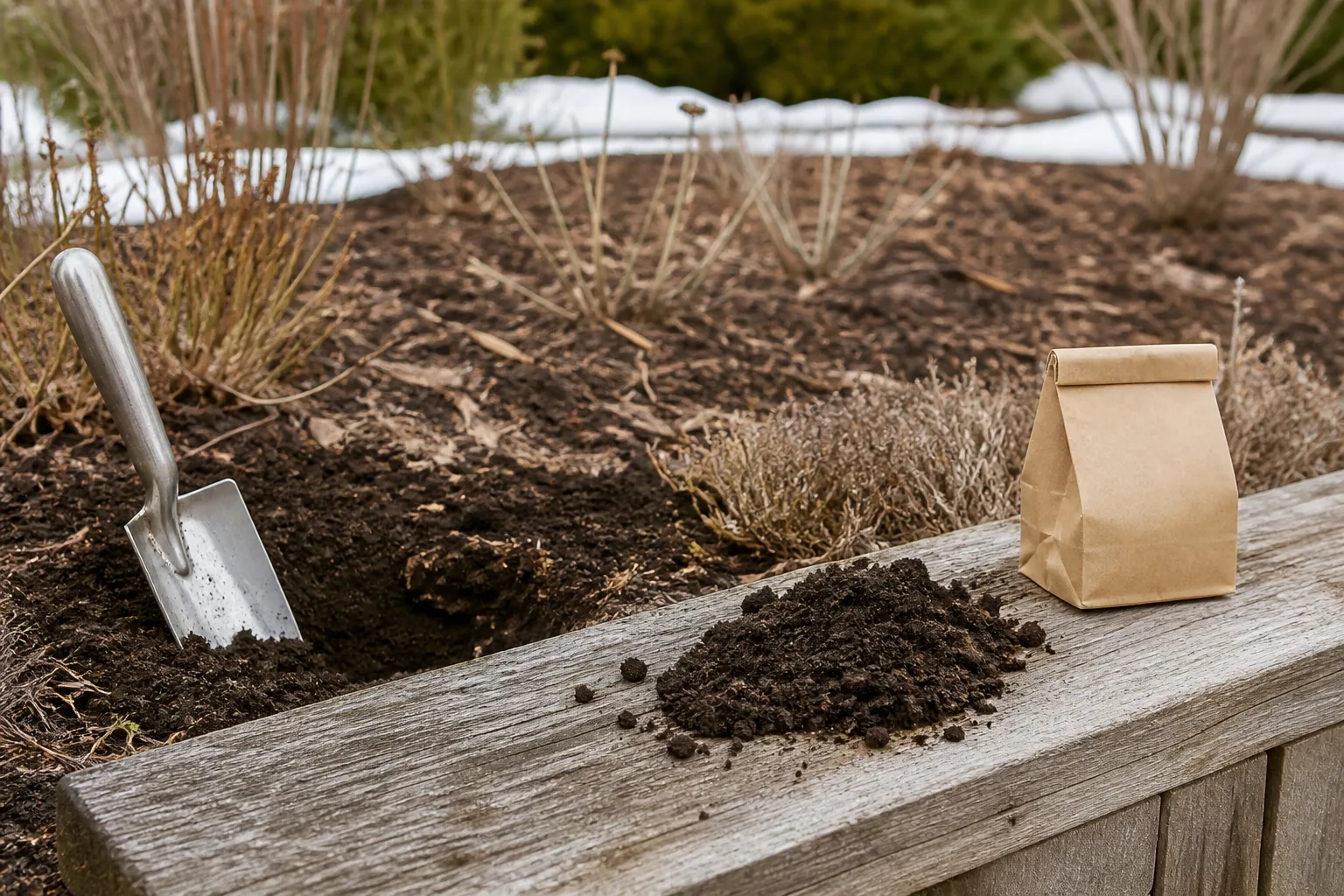
A useful report starts with a sample that represents the root zone you want to understand. For one uniform garden bed, collect multiple small cores from different spots, mix them in a clean plastic bucket, and submit the amount the lab requests. Penn State’s garden directions use 8 to 10 random cores and a 6- to 8-inch depth, while another lab may specify a different depth; follow the instructions for the service you use. Penn State Extension’s soil-testing instructions
Keep areas with different soil, drainage, past amendments, or plant use separate. Do not combine a lawn with a vegetable bed, or average a sick patch into healthy soil if you need to understand the sick patch. Avoid obvious fertilizer bands, compost piles, spilled amendments, surface mulch, and spots where water collects; clean tools and containers help prevent contamination.
If the bed is large, new, or uneven, more than one sample may be useful. For containers and potting mixes, use a test service that accepts those materials and follow its collection directions; a garden-bed sampling depth or target is not automatically appropriate for a small pot. If a recent application of fertilizer, lime, sulfur, manure, or compost might affect the result, tell the lab or wait for the interval it recommends.
Choose a lab when an amendment is on the table
A home test is useful for a quick check when the result is not being used to calculate a substantial correction. Low-cost color kits, probe meters, and strips vary in quality and can be thrown off by an unrepresentative sample, uncalibrated meter, or inconsistent soil-to-water ratio; inexpensive kits can be especially unreliable in alkaline soil. A small difference between two readings may be measurement noise rather than a real change in the bed. Colorado State University Extension
When you are deciding whether to apply lime or sulfur, choose a state or university Extension lab or a reputable regional laboratory. Ask whether its standard garden test includes nutrient analysis and whether it can recommend lime or sulfur for the plant you name. Some lab methods include a buffer test or another measure of reserve acidity; others give rates based on a regional procedure. Those numbers are not always interchangeable across labs, so use the rate on the report rather than copying an online chart built for another soil.
Read the soil report beyond its pH number
Find three items on the report: the measured pH, the crop or target pH used for the recommendation, and the lime or sulfur rate—if the lab recommends one. Then check the units and area: a rate may be stated per 1,000 square feet, per acre, or for a specified incorporation depth. A report that gives only pH is not a complete dose calculation; contact the lab or local Extension office before buying amendment.
The reason is buffering. Clay, organic matter, and soil mineral surfaces hold acidity or alkalinity and resist change; sandy soil with little organic matter may move more readily. The same pH can therefore correspond to different lime requirements. Colorado State Extension describes buffer pH, texture, cation-exchange capacity, and organic matter as factors labs use to estimate lime needs. Colorado State’s guide to changing soil pH
Also read the nutrient section before choosing a material. If a soil needs lime and is low in magnesium, dolomitic lime may fit the report; if magnesium is already adequate, adding more may not help. If pH is acceptable but a nutrient is low, a targeted nutrient recommendation may be more appropriate than changing pH. Do not add a whole suite of amendments because one line on the report looks unfamiliar; the lab can explain the recommendation and its units.
Decide whether to amend or plant for the soil you have
If the pH falls within the crop’s recommended range and the plants grow well, do nothing to pH. Continue normal soil care and test periodically or when a growing problem gives you a reason. Repeated lime or sulfur applications without a test are a common route to overcorrection; they can push the bed past the point where nutrients are available to the plants you wanted to help.
If your soil is naturally alkaline because it contains free lime or sits over chalk or limestone, lowering the whole bed may be costly, slow, or ineffective. Colorado State Extension notes that free lime can neutralize acidifying materials and make major pH changes impractical. A quick screening clue is fizzing when vinegar touches a spoonful of dry soil that contains carbonate; this does not measure pH or calculate a sulfur rate, so use it only as a reason to ask a soil lab about free lime. In that setting, grow plants adapted to the soil, or isolate acid-loving plants in a container or purpose-built raised bed with a suitable growing medium. The same principle applies to strongly acidic native ground: a separate bed may be easier than changing a large area. Colorado State University Extension
Water source and repeated management can move pH over time. Irrigation water with substantial carbonate can maintain alkalinity; some fertilizers can gradually acidify soil. Those influences do not justify a correction by themselves, but they help explain why a one-time amendment may not hold. If a pH has repeatedly returned to its former range, ask a local lab or Extension specialist whether the underlying soil or water is driving the result.
Raise pH only when a test calls for lime
When the soil is more acidic than the target and the lab recommends a correction, agricultural limestone is the standard way to raise pH. It neutralizes acidity gradually; it is not an all-purpose fertilizer and does not replace missing nitrogen, phosphorus, or potassium. Choose a product whose label matches the lab’s recommendation and use its neutralizing value and application directions, because fineness and product quality affect how much is needed and how quickly it reacts.
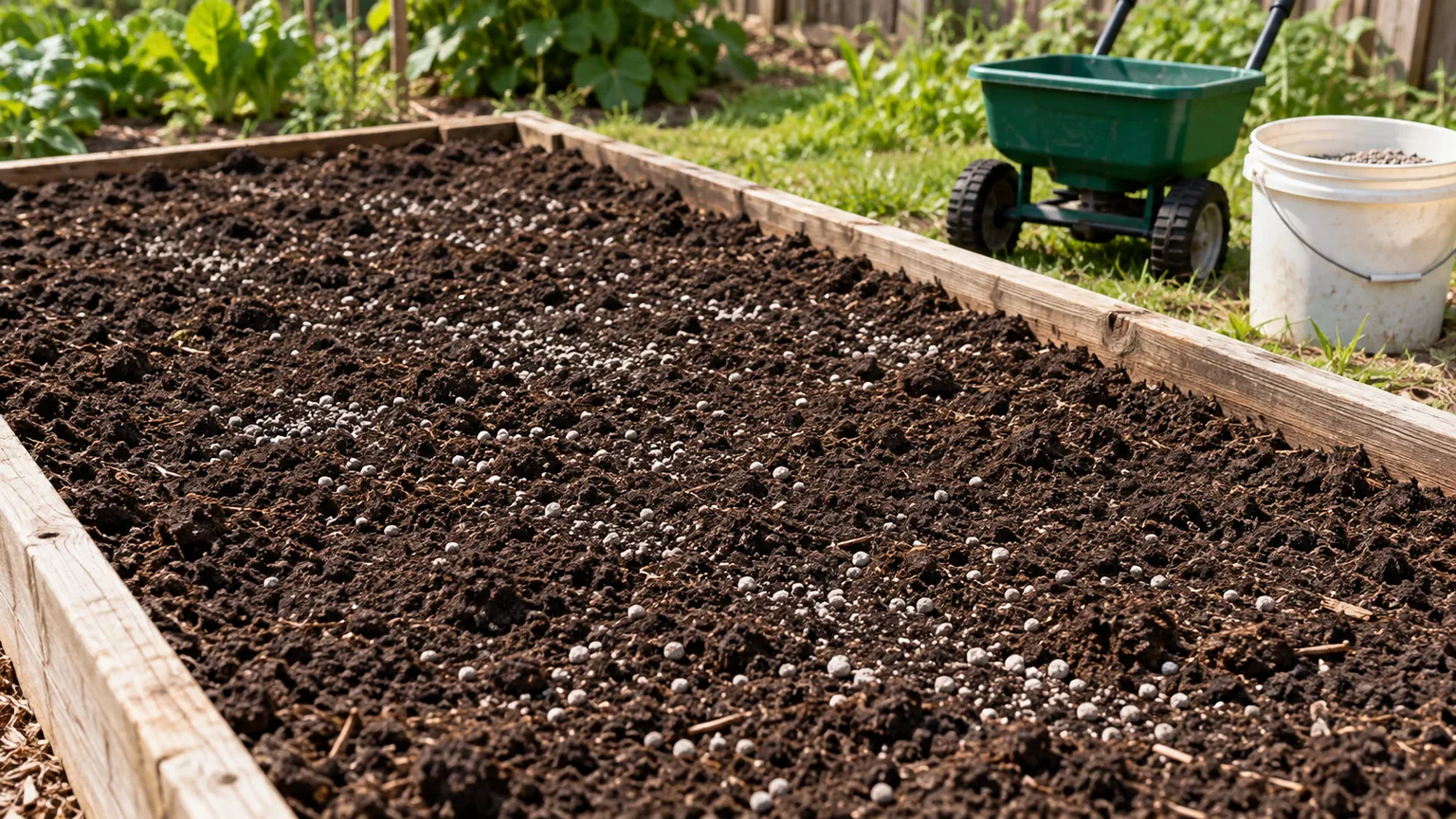
Apply before planting when possible, over the measured area, and incorporate it to the depth specified by the lab. Surface-applied lime on an established bed moves slowly, so do not dig through active roots to force a quick result. If the lab’s rate is too large for safe incorporation around existing plants, ask whether it should be split into smaller applications over time. Keep the product off leaves and follow its label for handling, spreading, and watering.
Match calcitic or dolomitic lime to the report
Calcitic lime supplies calcium carbonate; dolomitic lime supplies calcium and magnesium carbonate. Choose between them based on the soil test’s magnesium result, not on a general belief that one is better. Excess magnesium can upset the balance with calcium in some soils, while a confirmed magnesium shortage may make dolomitic lime useful. Colorado State Extension explains that both are common liming materials but magnesium should be checked before choosing dolomitic lime.
Pelletized lime is easier to handle and spread evenly in many small gardens; finely ground limestone has more surface area and can react faster when incorporated. A pellet is a form of limestone, not an instant pH fix. Avoid substituting hydrated lime or quicklime for ordinary garden limestone: those more reactive materials are not routine home-garden alternatives and can be hazardous to handle. The local test report and product label should determine the material and rate.
Lower pH with sulfur only when the soil can respond
Elemental sulfur is commonly used to lower pH in soils that are not dominated by free lime. Soil microorganisms oxidize sulfur into acidic compounds, so the response depends on temperature, moisture, oxygen, and biological activity. Expect a gradual change over months rather than a same-week result, and retest on the interval recommended by the lab. Iowa State Extension notes that sulfur needs suitable soil conditions and time to react; established plantings also limit how deeply it can be incorporated. Iowa State’s amendment guide
Do not choose a sulfur rate from the pH alone. The needed amount depends on texture, buffer capacity, target plant, amendment purity, and incorporation depth. A sandy raised bed and a clay-rich ground bed can require different rates even if the readings match. If the lab does not give a sulfur recommendation, contact it or an Extension office instead of applying a generic recipe.
Aluminum sulfate can produce a faster pH shift, but it adds soluble aluminum, which can injure roots; it is not a safe shortcut to use casually. Acid-forming fertilizers may shift pH gradually as a side effect, but fertilizer should be applied to meet the plant’s nutrient needs, not overloaded to force a number. In naturally alkaline or carbonate-rich soil, repeatedly adding acidifying material can waste money without changing the root zone for long. Choose acid-tolerant plants or a separate container bed when the soil cannot be changed reliably.
Do not substitute gypsum for sulfur when the goal is to lower pH. Gypsum supplies calcium and sulfur but does not acidify soil; an amendment that contains sulfur is not necessarily an acidifying amendment. Colorado State’s guide to changing soil pH
Know why popular fixes do not reliably change pH
Coffee grounds are useful compost material but are not a dependable acidifier for a garden bed. Used grounds differ from fresh coffee, and Penn State Extension reports that spent coffee grounds are close to neutral and will not reliably acidify soil around blueberries or other acid-loving plants. Penn State’s coffee-ground fact check If a soil test calls for a lower pH, use the specified amendment rather than relying on a kitchen scrap.
Pine needles make useful mulch, but their acidity does not translate into a meaningful pH change in the underlying garden soil as they decompose. Oregon State Extension explains that microbes neutralize the needles as they break down; their value is moisture conservation and weed suppression, not a substitute for sulfur. Oregon State Extension’s gardening-myth guide
Compost and organic matter can improve soil structure, water handling, and biological activity, but neither is a precise pH control. Their pH and nutrient content vary, and repeated heavy applications can add more phosphorus or salts than a bed needs. Wood ash can raise pH and add minerals, but its strength is variable, so treat it like a liming material and use it only when a test supports it. “Natural” does not mean predictable or harmless when the soil does not need the change.
Retest gradually and watch for overcorrection
A pH amendment needs time to react, and a test taken too soon can mislead you. For lime or sulfur, follow the lab’s retest interval; depending on product and conditions, the response may take months. The Royal Horticultural Society cautions that tests taken within about three months of lime, fertilizer, or organic matter applications may give misleading results. RHS soil pH and testing guidance
Retest the same defined area with the same lab method when possible. Keep the sample depth and collection pattern consistent, note the date and material applied, and compare like with like. Do not apply another full rate because the first check did not show the target immediately; a high buffer capacity, cool soil, surface-only application, or carbonate source may be slowing the change.
Watch the plant as well as the number. If new growth yellows after a pH adjustment, verify the pH and nutrient report, then check watering, drainage, root injury, and recent fertilizer use. A plant may need an iron or other nutrient treatment while the soil correction takes effect, but that decision should follow a diagnosis and product label. Treating symptoms repeatedly without finding the cause can create excess nutrients or salts.
A correction can overshoot. If soil becomes too alkaline, iron and manganese may become harder to absorb; if it becomes too acidic, some nutrients can be depleted and aluminum or manganese may become more active. Stop adding amendments when the crop target is reached, and do not try to hit a “perfect” 7.0 simply because it is the scale’s neutral point.
Conclusion
Soil pH matters because it changes the conditions roots and soil organisms work in, especially the forms and availability of nutrients. But a pH reading is a starting clue, not a complete diagnosis or an amendment rate.
Test the bed you plan to plant, name the crop on the lab form, and follow the report’s target and lime or sulfur recommendation. If the soil already suits the plants—or its natural chemistry makes a large correction unrealistic—choose plants that fit the site or create a separate growing space. A measured, gradual response protects the garden better than chasing a number.