How to Grow and Care for Climbing Hydrangea
Learn how to grow and care for climbing hydrangea with the right support, light, water, pruning timing, winter care, and bloom troubleshooting.
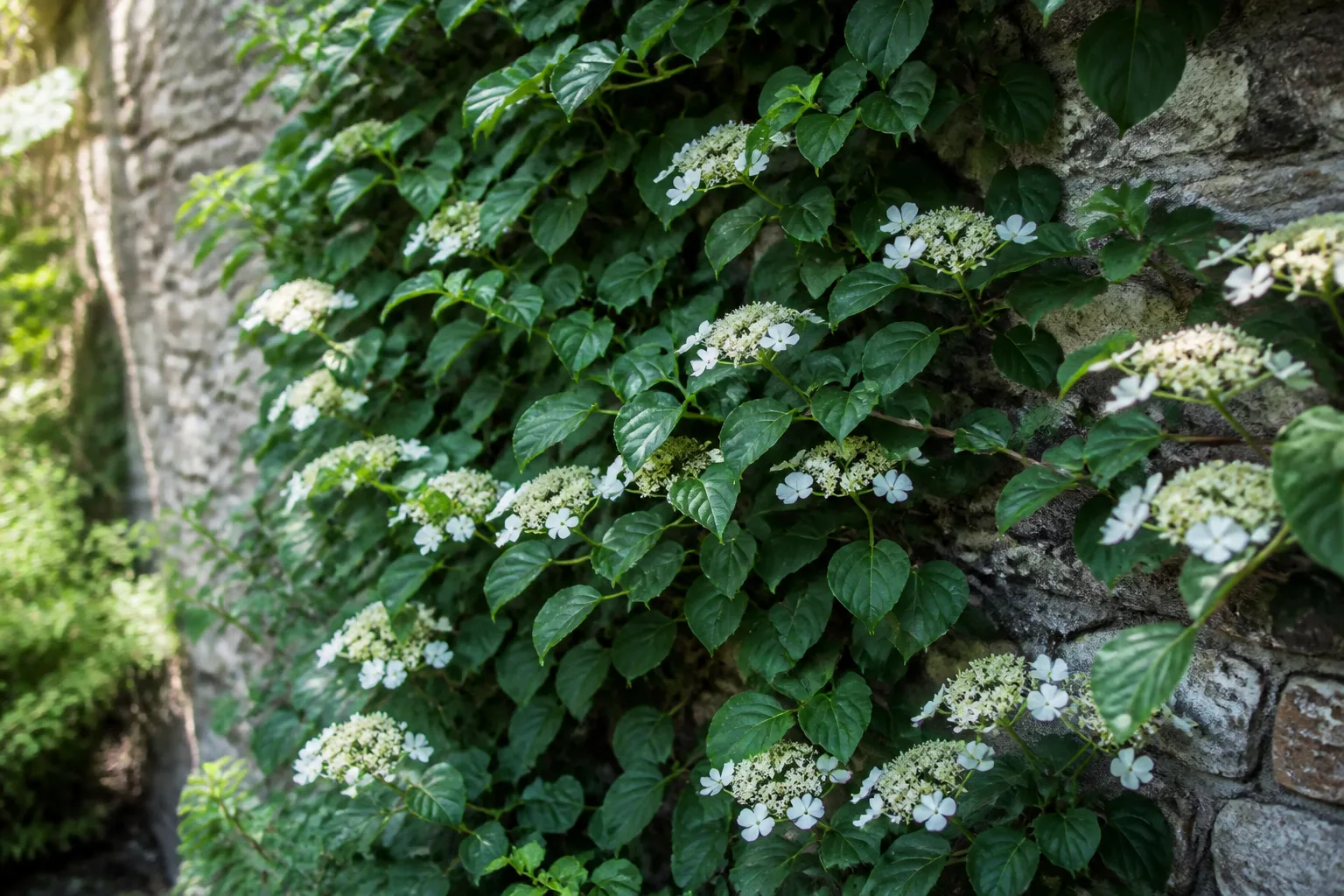
Climbing hydrangea (Hydrangea anomala subsp. petiolaris) is a slow starter with a long memory. It may spend its first seasons building roots and short side shoots, then eventually become a substantial woody vine with peeling bark, glossy foliage, and broad white flower clusters. The best results come from planning for its mature weight and old-wood flowering before you put it beside a wall or fence.
This is a deciduous vine for gardeners who can wait. It is generally hardy in USDA Zones 4–8, tolerates more shade than many flowering vines, and can climb with aerial rootlets on rough surfaces. Those strengths do not make it careless-proof: a dry root zone, a weak trellis, late frost, or a badly timed pruning session can set it back for a full season.
Climbing hydrangea at a glance
| Care factor | Practical target | Why it matters |
|---|---|---|
| Habit | Woody, deciduous vine | Plan for permanent stems and seasonal leaf drop |
| Mature size | About 30–50 feet tall and 5–6 feet wide when supported | The vine becomes heavy, even if it begins as a small pot |
| Light | Full sun to part shade; more protection in hot climates | More light usually improves flowering, but heat increases water demand |
| Soil | Rich, evenly moist, well-drained soil | Drying and waterlogging are both stressful |
| Water | Roughly 1 inch weekly, adjusted for rain and heat | Consistency matters most during establishment and bud development |
| Blooming | Usually late spring into summer on older wood | Pruning after flowering protects the next crop of buds |
| Support | Strong trellis, fence, arbor, or suitable rough masonry | A mature vine can overload a flimsy support |
| Hardiness | Commonly Zones 4–8 | Young plants still need protection from abrupt exposure |
| Pets | Toxic if eaten by dogs, cats, or horses | Keep fallen leaves and reachable foliage away from animals |
The botanical name matters when shopping. A plant sold simply as “hydrangea vine” may be a different species or a false hydrangea vine with a different growth habit. Look for Hydrangea anomala or the subspecies name petiolaris on the tag, especially if you need a true climber rather than a shrub.
Choose the site before you buy the plant
Start with the destination, not the nursery pot. A climbing hydrangea can be maintained as a groundcover or shrub for a while, but its natural design is vertical. Give it a permanent route upward and enough room for side branches to widen without covering windows, vents, roof edges, or neighboring plants.
Match light to your climate
In a mild or cool climate, morning sun and afternoon shade is a dependable compromise. A site with several hours of sun can produce stronger flowering, while filtered light can keep leaves from scorching. In a hot, dry region, protect the vine from the harshest afternoon rays and pay close attention to soil moisture; full sun is only an advantage when roots can keep pace with leaf demand.
Deep shade is not the same as useful shade. The vine may survive under a dense canopy or on a north-facing wall, but flowering can be sparse and growth can stretch toward the nearest light. If blooms are your main goal, choose bright shade or part sun rather than the darkest corner of the yard.
Decide whether the structure can carry the vine
Young stems feel light; established vines do not. A mature climbing hydrangea can load a trellis with wet foliage, flowerheads, and snow. Use a trellis or wire system anchored independently of fragile siding, with fasteners strong enough for the span and room for the stem diameter to increase.
Rough brick, stone, or sound wood may allow aerial rootlets to grip. Painted surfaces, delicate shingles, loose mortar, and structures that need frequent repainting deserve more caution. The rootlets are not the same as the penetrating roots of some invasive vines, but removing an established vine can still pull paint, trap moisture, hide cracks, and make repairs difficult. A freestanding support gives you the most control.
Prepare soil and plant it correctly
Plant in late spring after the ground is workable and the most damaging frost risk has passed. Early autumn can work in mild areas if the plant has enough time to root before hard freezes, but a small nursery plant should not be pushed into a cold, exposed site just to meet a calendar date.
Loosen a planting area at least twice the width of the root ball. Blend compost into poor soil without turning the hole into a pocket of rich, soggy mix. Set the crown at the same level it occupied in the pot, backfill gently, water until the root zone is saturated, and add a 2- to 3-inch mulch layer that stops short of the stem.
Do not bury the trunk-like base to compensate for a leaning plant. Instead, angle or stake the support, settle the soil, and let new shoots find the structure gradually. Deep planting can suffocate the crown, while a mulch mound against the stem encourages persistent wetness and decay.
Water through the slow establishment years
Water deeply enough to wet the full root ball, then check the soil before watering again. The surface can look dry while the lower root zone remains wet, particularly in clay or beside a downspout. A finger test is useful in a small planting; a wooden dowel or moisture probe helps when the vine sits in a broad bed.
During the first growing season, inspect every few days during hot or windy weather. Once the plant is established, aim for steady moisture rather than a fixed daily schedule. A mature vine may tolerate a short dry spell, but repeated drought while buds are forming can reduce flower quality and cause leaf edges to brown.
If leaves wilt in the morning even though the soil is wet, stop adding water and check drainage, roots, and nearby irrigation. Wilting is not always thirst. Constant saturation can limit oxygen around roots, leading to yellowing, weak growth, and a decline that looks like drought.
Feed lightly and mulch with purpose
Climbing hydrangea is not a plant that needs a heavy fertilizer program. In fertile soil, compost and a stable mulch layer may be enough. If growth is weak and leaves are pale after the plant is established, use a balanced fertilizer in spring at less than the maximum label rate, then observe the new growth before feeding again.
Avoid high-nitrogen feeding that produces a lot of soft foliage and few flowers. More leaves also mean more weight on the support and more humidity inside a dense canopy. Apply fertilizer to moist soil, keep granules away from the crown, and do not feed late in the season when tender growth would be exposed to winter damage.
Mulch is more useful as a moisture buffer than as decoration. Replenish it when it thins, keep it a few inches from woody stems, and use a coarse organic material that does not form a water-shedding mat. Mulch cannot correct compacted soil or a leaking gutter; it only gives a well-drained root zone a steadier moisture curve.
Train a young vine without fighting its growth habit
Guide flexible shoots toward the support while they are young. Tie them loosely with soft, degradable ties or horticultural tape, leaving space for expansion. Aim for several evenly spaced main stems rather than forcing every branch into a tight grid.
The vine may pause after planting, and that is not a cue to keep bending or cutting it. Check that the root ball is moist, the support is accessible, and the stems are not being rubbed by wire. Once aerial rootlets take hold, the plant will do more of the climbing work; your job becomes directing traffic away from gutters, windows, and vulnerable joints.
Prune climbing hydrangea without removing next year’s flowers
The safest major pruning window is immediately after flowering, usually in late spring or summer depending on climate. The plant flowers on older wood, so a hard cut in fall, winter, or early spring can remove the stems carrying the next season’s buds.
Begin with dead, broken, crossing, or dangerously placed wood. Then shorten long side shoots to keep paths, gutters, windows, and rooflines clear. Preserve the strongest framework and avoid shearing the entire vine into a flat hedge; repeated indiscriminate trimming creates dense outer growth and weak interior stems.
Newly planted vines usually need almost no pruning beyond damage removal and gentle training. Wait until the plant has established and you can see its permanent route. If it has outgrown the structure, reduce it over more than one session when possible. Removing a very large percentage of the canopy at once can expose the support, shock the roots, and delay flowering.
Understand the bloom timeline
The slow juvenile phase is the feature most likely to test your patience. A healthy plant may spend three to five years establishing before it flowers reliably, especially after transplanting or in shade. Leaf growth without flowers during that period does not automatically indicate a problem.
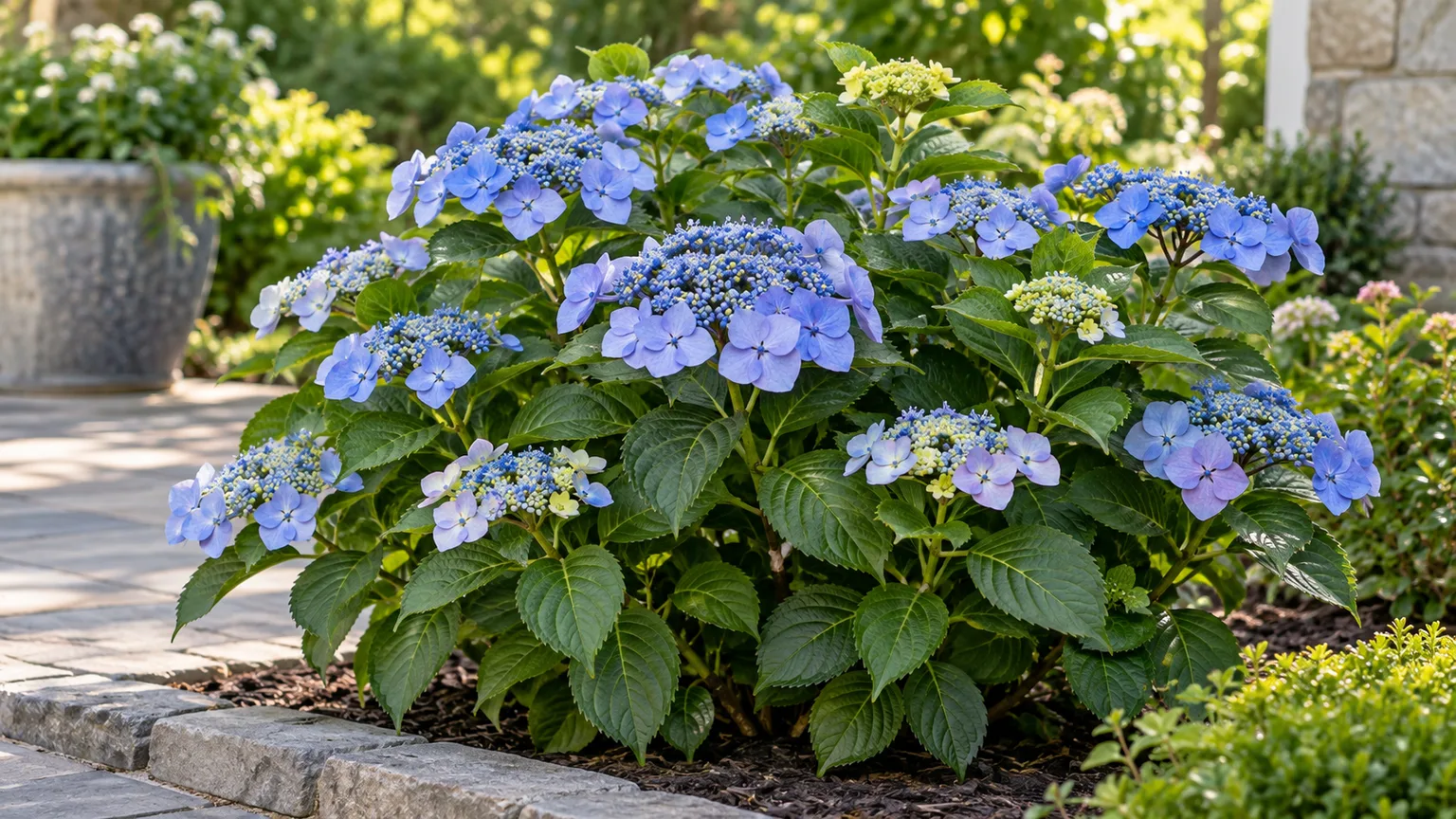
Once mature, the vine produces lace-cap-like clusters of white to cream flowers, often with a noticeable fragrance. Flowering usually begins in late spring or summer and can continue for weeks. In autumn, foliage may yellow before falling, and the peeling bark and branching structure add winter interest.
If a mature vine has healthy leaves but no flowers, check pruning first. A cut made before bud break may have removed old wood. Next check light, late frost, drought during bud development, excess nitrogen, and the plant’s age. Do not respond by adding fertilizer repeatedly; the missing factor is often timing or patience rather than food.
Propagate from cuttings
Softwood cuttings are the most practical home method. In late spring or early summer, choose a healthy, nonflowering shoot that is still flexible but beginning to firm. Use clean pruners to take a 3- to 5-inch cutting just below a leaf node, remove the lower leaves, and keep the top pair.
Insert the cutting into a moist, airy mix such as potting soil amended with perlite. A small pot with drainage is easier to manage than a deep tray. Cover it with a clear bag or propagation dome supported above the leaves, place it in bright indirect light, and keep the mix evenly moist rather than saturated.
Rooting may take several weeks. Tug very gently only after you see fresh growth or resistance; frequent checking damages new roots. Acclimate a rooted cutting to outdoor conditions over several days, then plant it in a protected bed or grow it on until the root system fills the pot. Label the cutting with its parent plant and date so you can distinguish slow rooting from a failed attempt.
Use seed only when patience is part of the plan
Seed propagation is possible but less predictable and much slower than cuttings. Sow fresh seed on the surface of a moist, fine-textured medium because light can help germination. Keep the container bright and evenly moist, and expect seedlings to be delicate.
Seed-grown plants may vary in vigor and flowering traits, and they need time before they become useful landscape vines. Choose seed if you enjoy the experiment or want many plants; choose a cutting or nursery plant when you need a known form and a faster route to a finished support.
Protect the vine through winter
Before the ground freezes, water thoroughly if autumn has been dry. A hydrated root system enters dormancy with a better buffer against winter desiccation, especially where wind strips moisture from exposed soil. Top up mulch after the soil cools, but do not pile it against the base.
Young plants in cold, windy sites may need a temporary windbreak. Do not wrap the entire vine tightly in plastic, which can trap moisture and cause abrasion. The most useful protection is usually a good planting site, an intact mulch layer, and a support that keeps brittle stems from whipping in winter storms.
Late frost is a special risk because it can damage swelling buds even when the vine itself survives. If a hard freeze is forecast after warm weather has started bud break, cover a small plant with breathable frost fabric and remove it after temperatures rise. Do not prune frost damage immediately; wait until new growth shows which wood is alive.
Diagnose leaves, roots, pests, and disease
Climbing hydrangea is generally resilient, but dense foliage and inconsistent moisture create familiar problems. Aphids may gather on tender growth, scale can appear on older stems, and spider mites are more likely in hot, dry conditions. Start by confirming the pest and washing small colonies from sturdy foliage; use a labeled treatment only when monitoring shows the problem is expanding.
Powdery mildew looks like a pale coating, while leaf spot creates discrete lesions that can enlarge in wet, crowded conditions. Improve air movement, water at the soil line, remove badly fallen debris, and avoid crowding the plant against a structure. Do not assume every mark needs a spray; old cosmetic damage is different from a rapidly spreading disease that is defoliating the vine.
When foliage is healthy but flowers are missing
Use a sequence rather than a fertilizer guess. First confirm that the plant is old enough to bloom. Then review pruning dates, hours of usable light, spring frost, drought, and the amount of nitrogen applied. If the vine was recently moved, give it a season or two to re-establish before making several changes at once.
When a wall, gutter, or tree is at risk
Inspect the route twice each year: once when leaves are present and again after they fall. Redirect shoots before they enter gutters or wrap around cables. Keep the vine away from vents and roof edges, and look behind dense growth for cracks, loose boards, trapped leaves, or damp patches.
On a mature tree, keep the vine from covering the trunk flare or entering branches that cannot bear additional weight. A climbing hydrangea can share a large, sound tree, but it should not become an excuse to ignore tree health or hide a structural defect.
Choose cultivars and plan for pet safety
Named selections can change the look without changing the basic care plan. ‘Miranda’ is valued for yellow-and-green variegated leaves but may need brighter filtered light to keep its pattern strong. ‘Silver Lining’ has silvery variegation and is usually happiest where afternoon heat is moderated. ‘Flying Saucer’ is noted for broad, showy flower clusters.
Variegated forms often grow more slowly than green-leaved plants because they have less chlorophyll-producing tissue. That is not a defect, but it means you should be even more careful about deep shade, drought, and aggressive pruning. Buy the cultivar for the site you have, not for a leaf color that the site cannot support.
Hydrangeas contain compounds that can cause digestive upset and other toxicity signs if pets consume enough plant material. Dogs, cats, and horses should not be allowed to chew foliage, stems, or flowers. Choose a support outside a pet run, remove fallen material from accessible paths, and contact a veterinarian or a poison-control service if ingestion occurs.
Pet safety also affects pruning and cleanup. Wear gloves if the plant irritates your skin, keep cuttings out of compost piles that pets can investigate, and do not leave a bucket of trimmings beside a kennel or grazing area.
Seasonal care calendar
Late winter: Inspect ties, trellis anchors, gutters, and damaged wood. Avoid major pruning unless you are removing an immediate hazard.
Spring: Check soil moisture as growth begins, refresh mulch, and watch swelling buds after late frosts. Plant new vines after severe cold has passed.
Late spring to summer: Water consistently, train flexible shoots, enjoy the flowers, and prune just after flowering. Take softwood cuttings when shoots are suitable.
Late summer: Stop heavy feeding, continue monitoring for drought and mites, and make selective cuts before shoots become awkward or enter structures.
Autumn: Water during dry spells, remove diseased fallen leaves, inspect the support, and prepare young plants for wind and cold. Avoid a cosmetic haircut that removes next year’s flower wood.
Conclusion
Climbing hydrangea rewards a gardener who plans for the plant it will become, not the small vine in the nursery container. Give it rich but well-drained soil, steady moisture, bright shade or moderate sun, and a support built for mature weight. Let the first years be about roots and structure, then prune after flowering so old wood can carry the next season’s display.
The most important care decision happens before planting: choose a route that can be inspected, repaired, and maintained. With that constraint handled, the vine’s slow start becomes an advantage—you have time to guide it, strengthen the support, and build a healthy framework before the flowers and foliage take over.