35 Garden Trellis Ideas for Flowers and Vegetables
Explore 35 garden trellis ideas for vegetables, flowers, privacy, and small spaces, plus tips for matching supports to plants and anchoring them securely.
A trellis can do three jobs at once: hold a plant upright, free up ground space, and give a garden a strong vertical line. The best design depends less on whether you like rustic bamboo or crisp black metal than on what the plant does as it grows, how heavy its mature canopy and fruit will be, and whether the site catches wind.
That makes “best trellis” a matching problem. A light net that suits peas may sag beneath a mature cucumber vine; a dense privacy screen may be handsome but shade a vegetable bed; a wall climber may need wires to twine around rather than a solid panel. The 35 ideas below range from quick seasonal supports to permanent landscape features, with practical notes to help you choose a structure that will still work after the plants fill it.
Choose a trellis by its job and the plant
Start with the plant label or seed packet. Pole beans and peas use tendrils or twining stems to grab narrow supports. Cucumbers also climb readily, while tomatoes usually need you to tie or weave their stems onto a support. Clematis and climbing roses are better described as scrambling plants: you guide and tie their stems rather than expecting them to cling unaided. Some vines attach themselves to surfaces with roots or adhesive pads; these may not need a trellis, but their spread and contact with buildings still deserve attention.
Then decide what you want the structure to do. For edible crops, harvest access and fruit clearance matter as much as appearance. For privacy, a freestanding trellis can soften a view, but the screen must resist wind. For a container, the trellis needs a base or anchoring arrangement that will not tip when the plant catches a gust. A support that looks delicate and open in spring can become a heavy sail once dense foliage covers it.
Match the structure to how the plant climbs
Plants do not all climb in the same way. Tendril climbers need a grid, mesh, or thin horizontal and vertical lines they can grasp. Twining stems need rails, wire, or poles they can wind around. Tomatoes, roses, and many ornamental scramblers need gentle ties, clips, or a stake-and-weave frame. Extension publications from Virginia Tech and Wisconsin Horticulture distinguish trellising from staking and caging, and describe ways to guide plants as they grow.
Do not choose a fine decorative lattice for a plant that needs broad access to a structural member, or a sparse cable system for a tendril that cannot bridge the gaps. Conversely, a fine net is overkill for a climbing rose if you can train its long canes onto horizontal wires. Match opening size and support shape to the way you will guide the plant, not simply to the way the empty trellis looks.
Size the support for weight, access, and weather
Consider the full plant, not only its young stem. A small cucumber can become a leafy vine carrying multiple fruits; a climbing rose accumulates woody canes; wet foliage adds weight to an ornamental screen. Large hanging fruits may need individual slings even when the vine itself is well supported. The structure should also leave room to reach both sides for pruning and picking, or be shallow enough that you can see into it.
Height is not one-size-fits-all. A short support can be ideal for dwarf peas, while vigorous pole beans or indeterminate tomatoes may outgrow a low panel. Choose a height that suits the cultivar and that you can safely reach for maintenance; avoid building a tall structure just because a trellis is often pictured at head height. On exposed sites, use a lower, more open structure or stronger posts and bracing. A highly leafed-over panel catches more wind than its bare frame does.
35 garden trellis ideas, grouped by use
The ideas below are not interchangeable plans or load ratings. Use them as starting points, then scale the posts, fasteners, and mesh to the plant and location. In particular, do not assume an unanchored panel, planter, or decorative arch is stable just because it feels sturdy before the vines grow.
Edible crops and compact beds
Savvy Gardening’s cucumber trellis examples compare upright panels, A-frames, twine, and netting in a real vegetable garden. The useful takeaway is not that one design is universally best; it is that your crop, wind exposure, and access for picking should drive the choice.
-
Cattle-panel arch over a path. Bend a rigid livestock panel into a simple arch between two garden beds and train pole beans, peas, or cucumbers up the sides. It turns a narrow walkway into productive growing space and keeps both sides reachable. Secure the panel to stout supports; do not leave its ends loose in soil.
-
A-frame panel over a single bed. Join two wire panels at the top to make a walk-under or lean-in A-frame. Grow a crop on each face and harvest from either side. The triangular shape is naturally useful in a row garden, but brace the feet and keep the center clear enough to pass without snagging sleeves or leaves.
-
Cattle-panel tunnel between beds. A longer tunnel creates a shaded passage as foliage fills in. It is especially useful when the garden already has two parallel beds, because the beds can anchor the sides. Leave enough headroom for the mature plant and enough clearance for a wheelbarrow or bucket; inspect fasteners where the panel curves.
-
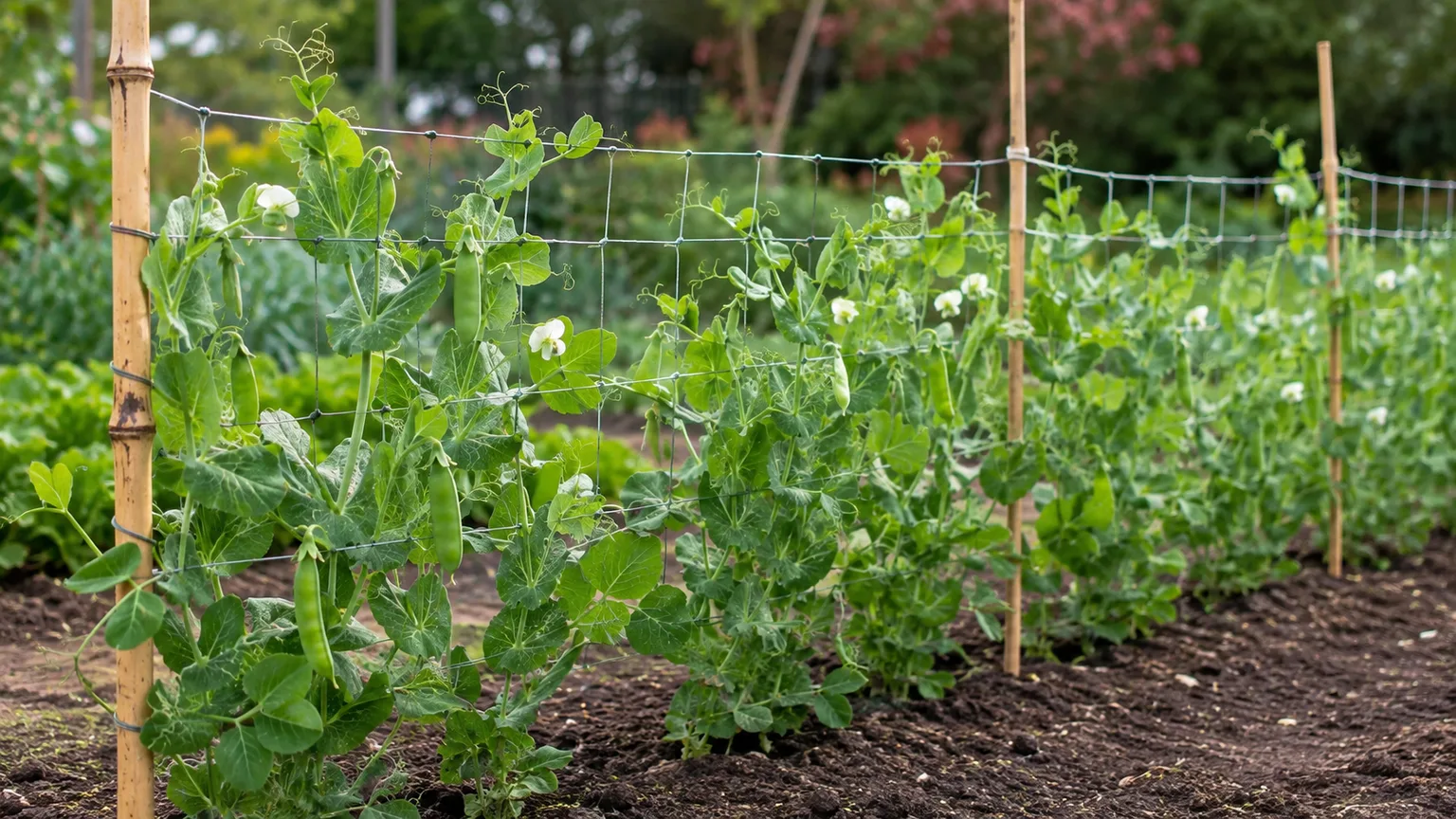
Flat welded-wire row trellis. Set a rigid wire panel between posts along a row for peas, pole beans, or cucumbers. The flat face is easy to seed on one side and inspect from the other. Pick a grid large enough to reach through for harvest, and keep the bottom of the panel accessible for weeding.
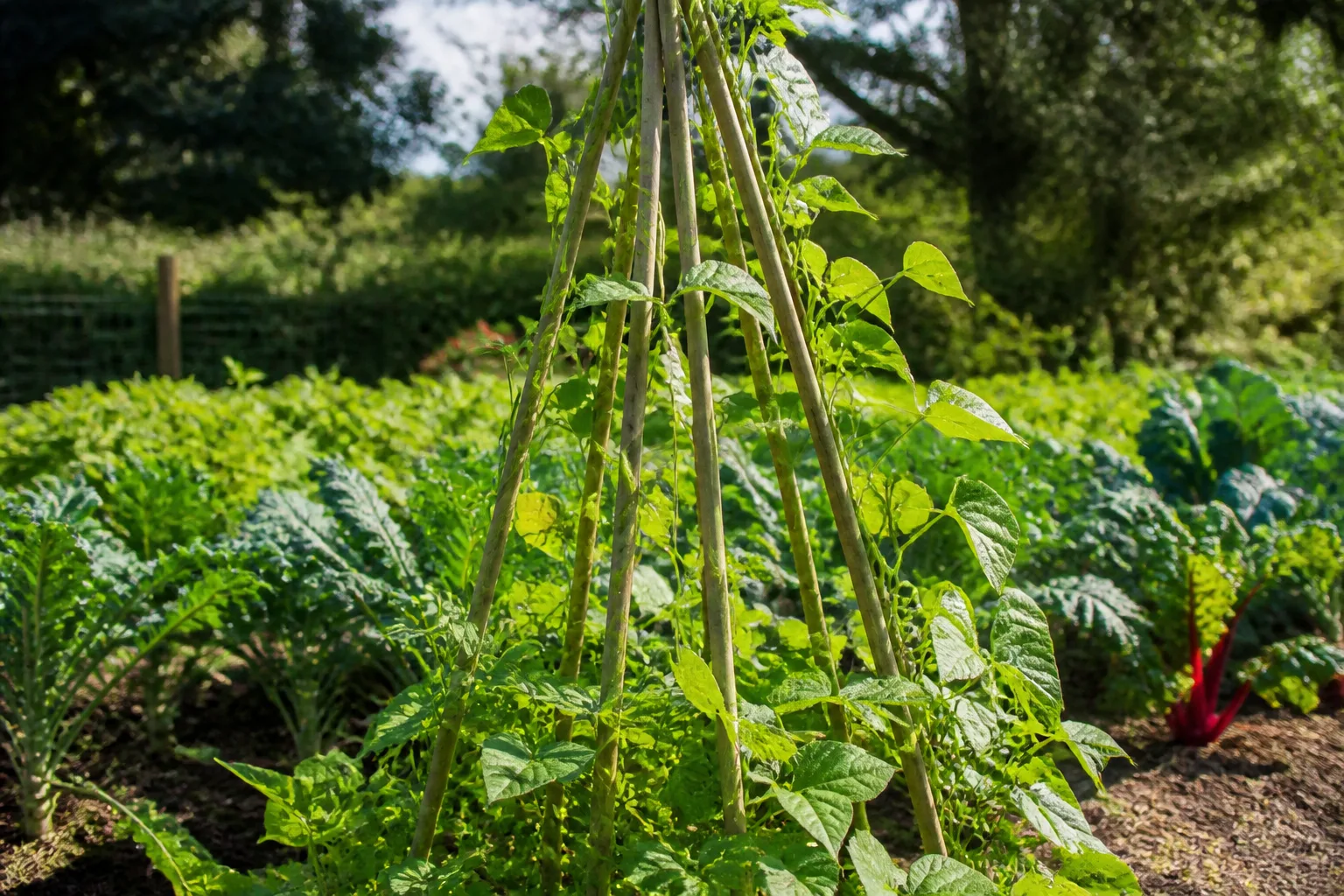
- Bamboo teepee for pole beans. Gather several long bamboo canes at the top and spread their feet around a small bed, tying the apex securely. Beans climb the individual poles, and the open center can shelter a shade-tolerant low crop early in the season. Use canes long enough for the chosen bean, and anchor their feet where children or pets will not knock them loose.
-
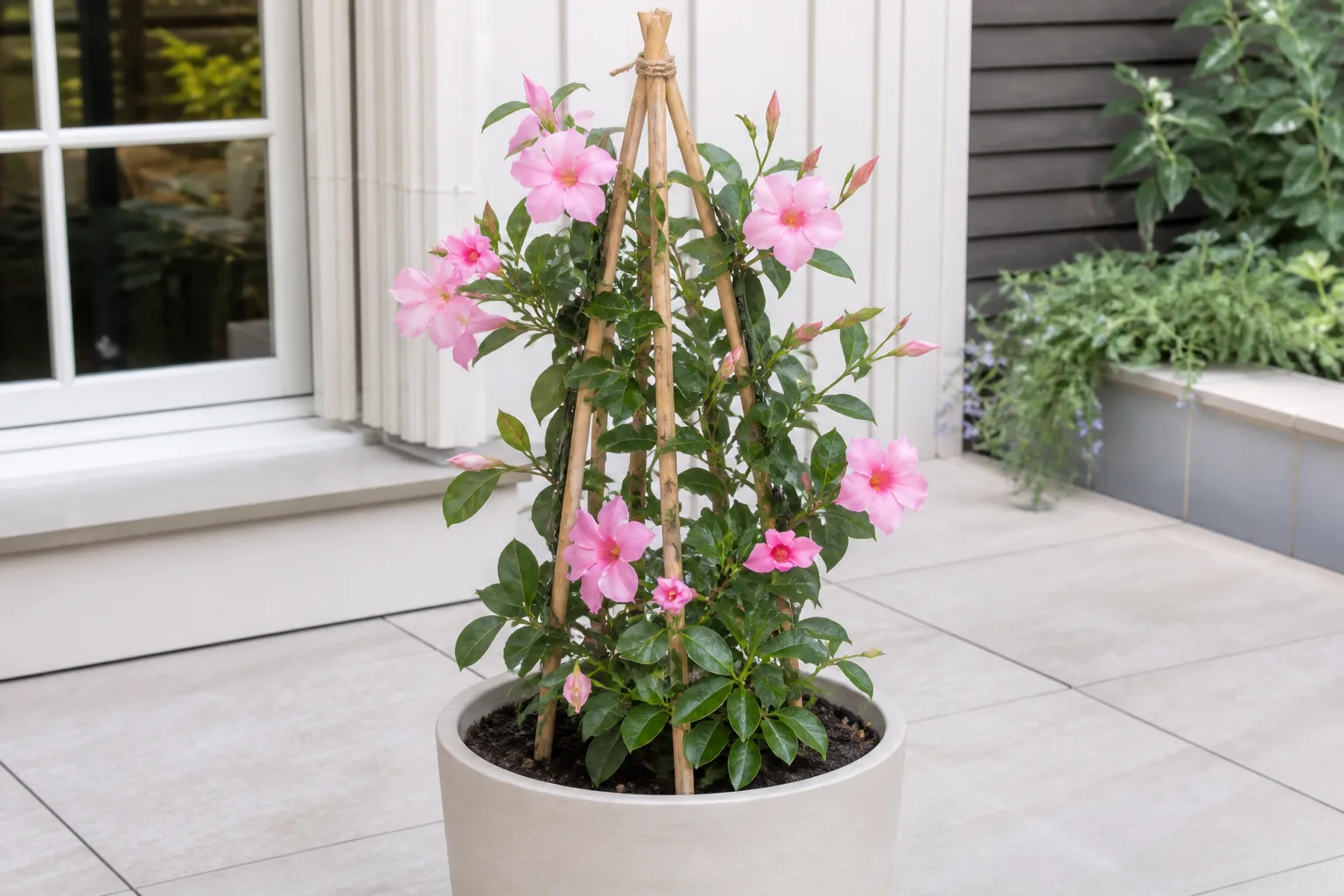
Bamboo tripod for peas or flowers. Three or four poles make a smaller, less enclosing support than a teepee. Add horizontal twine or short branches if the plant needs more places to grip. This works well in a container or a corner bed, but a narrow tripod is best for lighter crops rather than a dense, heavy squash vine.
-
Twig-and-branch tripod. Save straight prunings or gather fallen branches and weave smaller twigs between three stout legs. Peas can catch the branchlets without a separate net, giving a natural look and a quick seasonal setup. Choose clean, sound wood without sharp ends at face height, and replace the structure when weathering makes the legs weak.
-
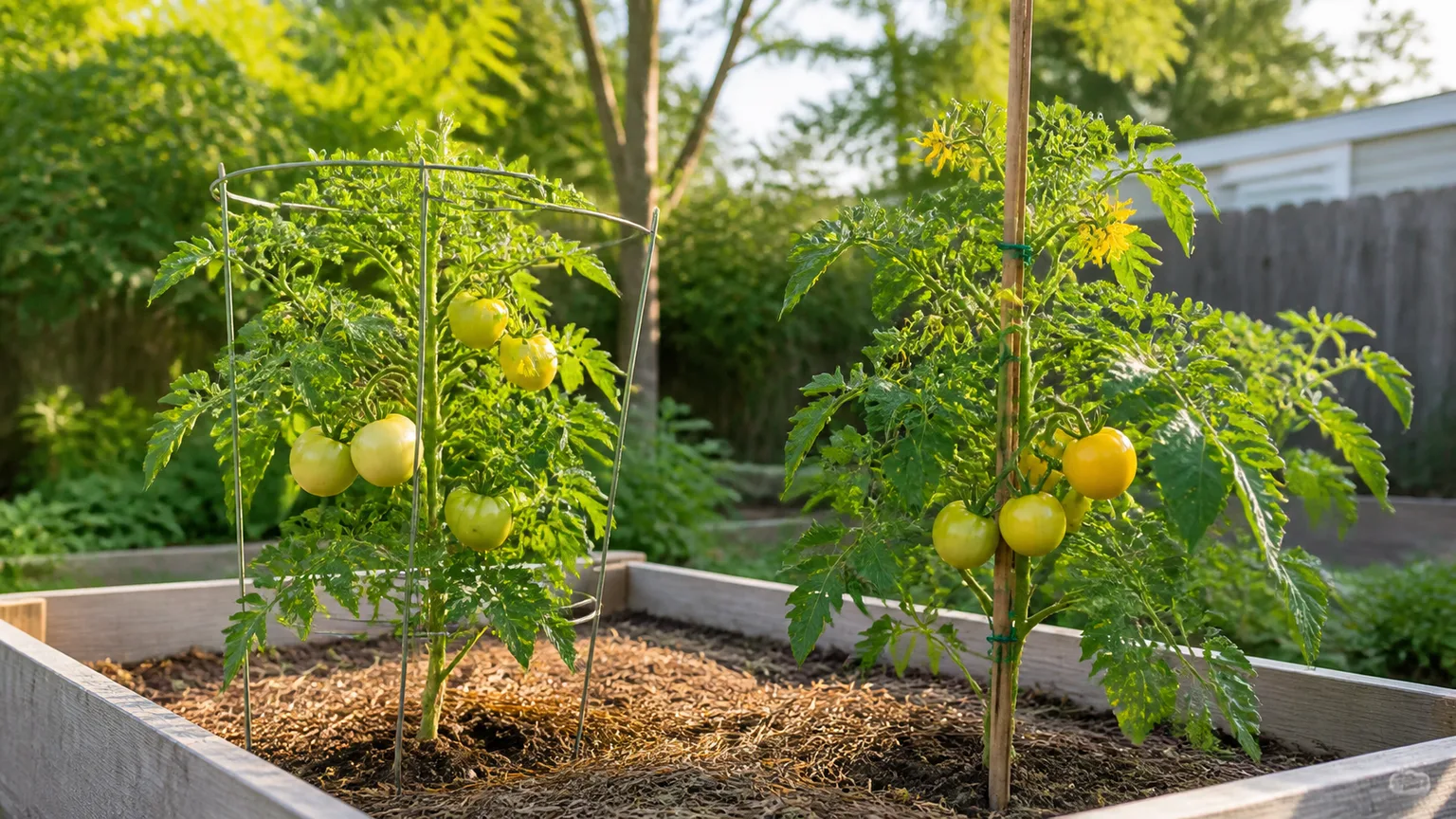
Stake-and-weave tomato row. Drive stakes along the row and weave garden twine from stake to stake on either side of the plants as they grow. This supports tomato stems between the lines rather than relying on a tiny stake at each plant. Use durable twine and repeat the weave before stems lean; soft, stretched line can let the row slump.
-
Vertical drop-string frame. Run a sturdy horizontal wire between end posts and lower individual strings to plants such as trained tomatoes. The method keeps each stem in a narrow plane and makes pruning visible. Use a strong top wire and clips or loose ties; a lightweight string alone is not a safe overhead support for a loaded vine.
-
Nylon netting on a simple frame. Stretch garden netting between two posts or over a wooden rectangle for peas and lighter vining crops. It is quick to install and easy to remove at the end of the season. Avoid flimsy netting that tears, sags, or traps fruit, and secure every edge so stems do not push behind the support.
-
Wire tomato cage made from livestock fencing. Roll a rigid wire panel into a broad cylinder and secure it to the ground with stakes. This is a cage rather than a flat trellis, but it gives sprawling tomato plants several faces to lean against. Choose openings that allow hand access, and install the cage while the plant is small so you do not force branches through later.
-
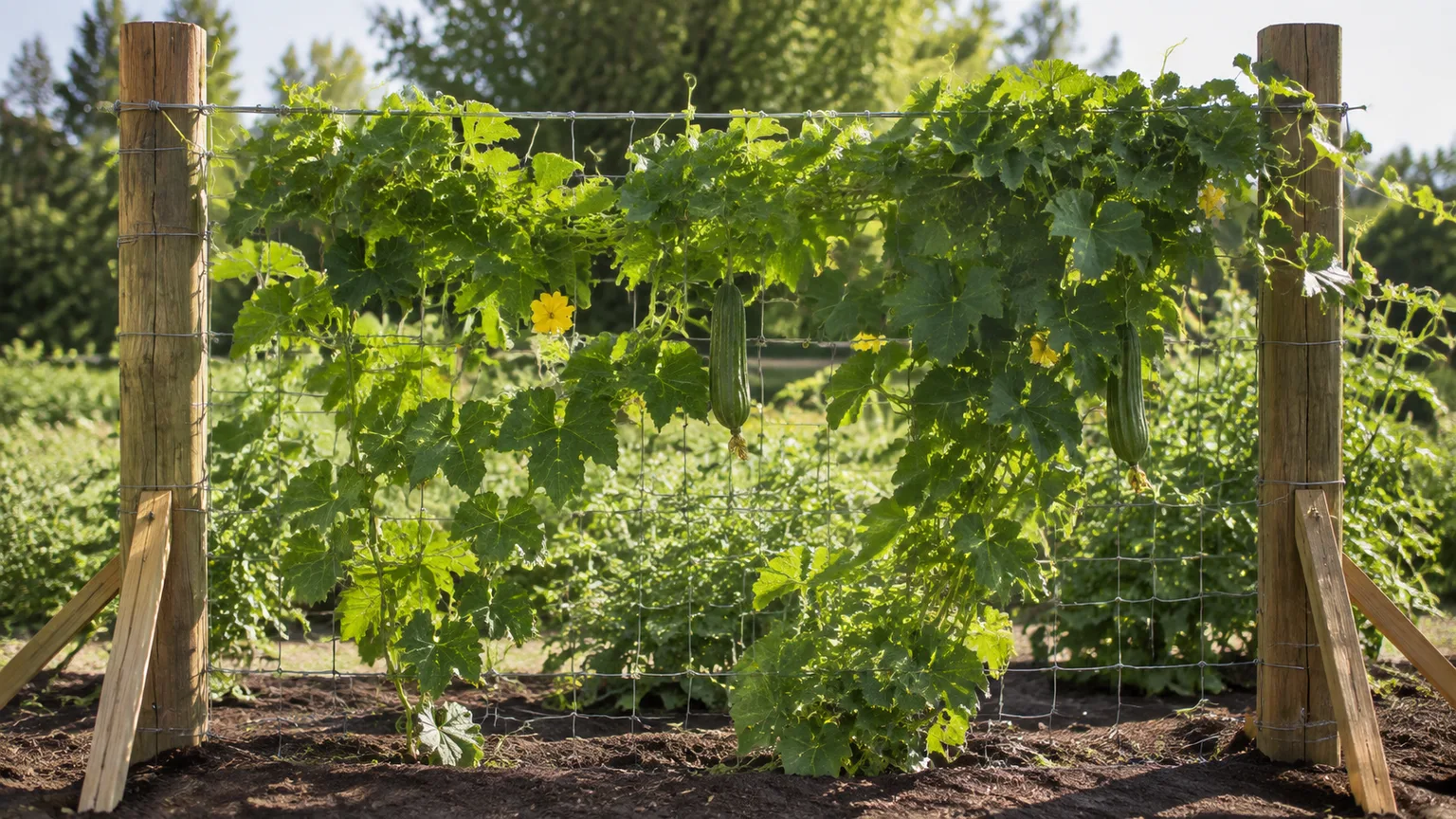
Raised-bed end trellis. Mount a panel on the short end of a raised bed, where it will use vertical space without shading the entire planting area. It suits a modest cucumber, pea, or bean planting and can frame the bed as a garden feature. Attach it to sound bed framing, not to thin decorative trim that may split under load.
-
Removable bed-top frame. Build a light frame that hooks over the bed edges and holds removable mesh or twine. At season’s end, lift the whole support out for cleaning and crop rotation. Keep it low enough to manage without climbing into the bed, and make the anchors snug so the frame cannot rock as vines pull on it.
-
Planter-box trellis. Pair a deep planter with a vertical panel fixed to its back. This is handy on a patio where there is no garden soil for posts. The container must be heavy and wide enough for the mature plant and trellis; a lightweight box can tip once a large vine catches wind. Add drainage and plan for regular watering.
- Small squash arch with fruit slings. A strong arch can lift a compact squash or mini pumpkin vine over a path, but the plant’s tendrils do not make heavy fruit weight disappear. Support large fruits in breathable mesh or fabric slings tied to the frame, and check them as they enlarge. Keep the arch low enough to inspect every fruit.
Screens, fences, and small-space privacy
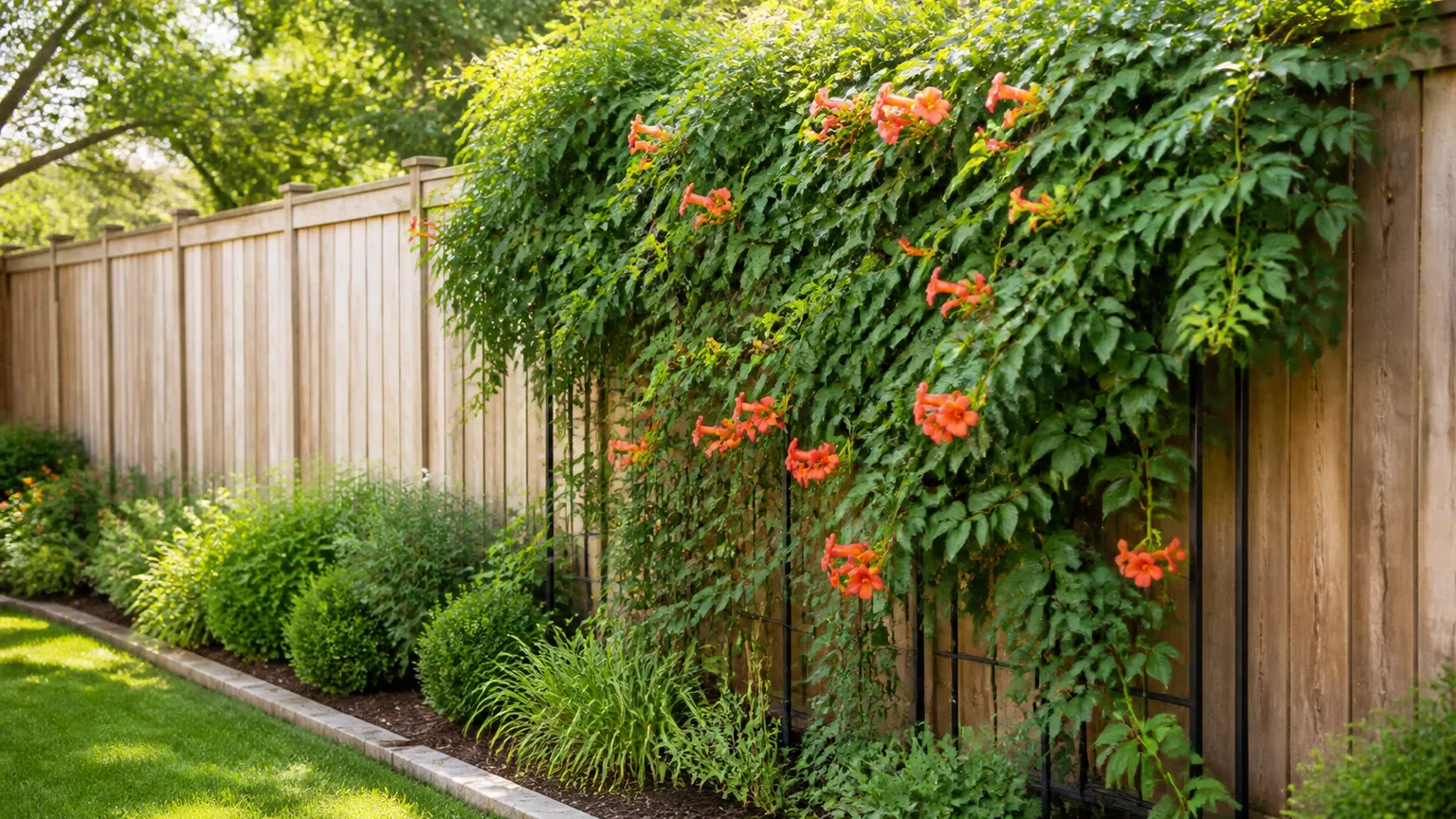
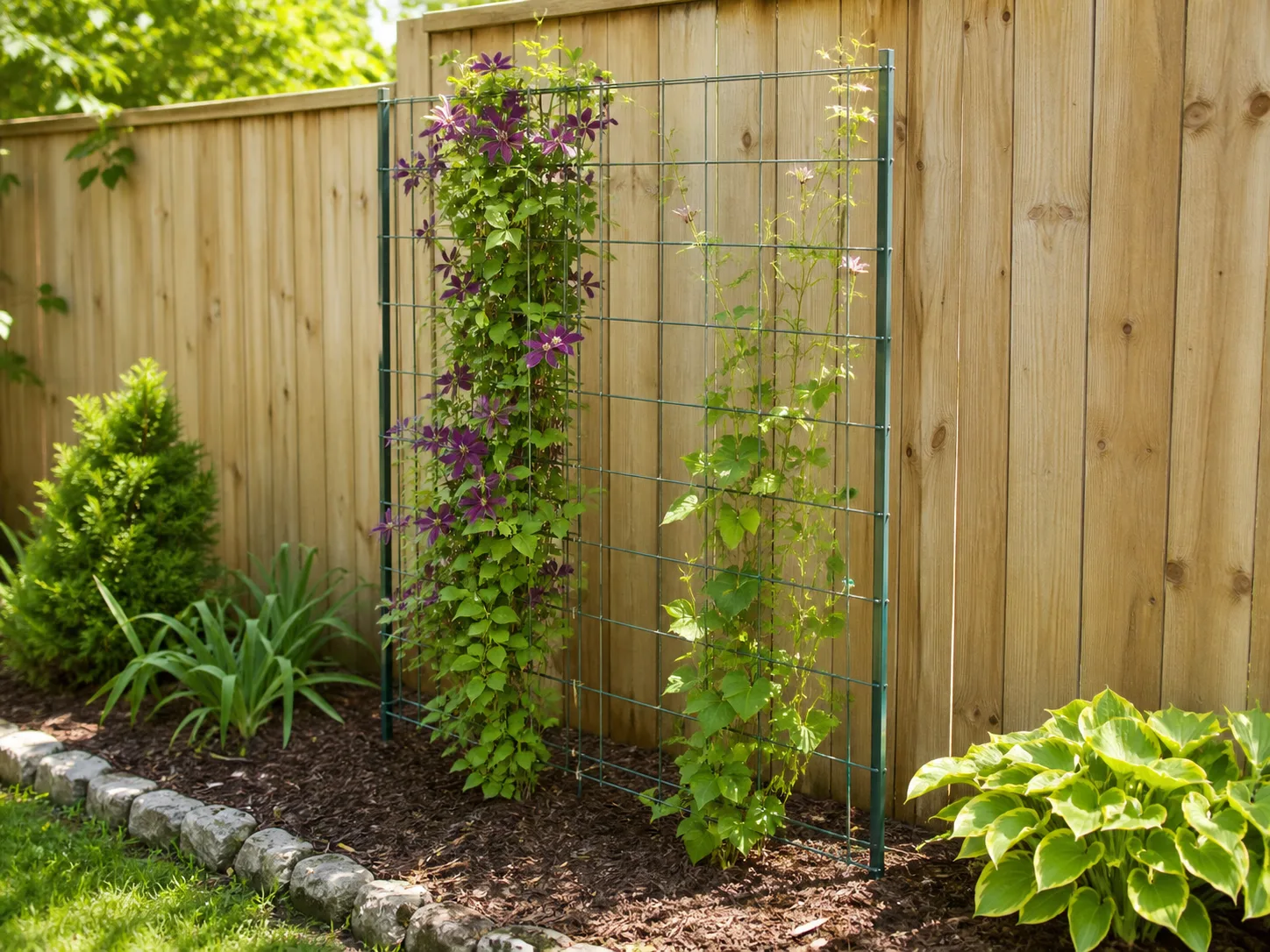
- Fence-mounted grid with a stand-off. Fasten wire or wood lattice to sound fence posts with spacers so foliage has air behind it and you can inspect the fence. Use a plant that fits the light and width of the strip. A trellis adds wind-catching surface, so a weak fence or loose pickets are not a safe anchor.
-
Tensioned cable panel. Run horizontal wires between strong end posts or masonry anchors to train grapes, fruit, or ornamental climbers in a clean, minimal pattern. Cable systems can be nearly invisible before planting and easy to prune around. They require proper tensioning hardware and anchors; thin garden wire pulled taut between screws is not a substitute.
-
Planter-backed privacy screen. Attach a trellis to one or more substantial outdoor planters to create a movable screen around a seating area. It can soften a neighbor-facing patio without drilling into a wall. The planters need enough ballast and drainage, and “movable” becomes relative when the soil is wet and the vine is mature.
-
Pair of planters with a connecting panel. Place two heavy containers on either side of a small patio opening and span a panel between them. Let a light annual vine cover the grid for seasonal privacy. Keep the walkway clear and check that the panel cannot lever a container over if someone brushes against the leaves.
-
Folding zigzag screen. Link three narrow wood-lattice panels with outdoor hinges so they stand in a zigzag. The folded footprint is easy to store and the angled layout is less likely to topple than a single unsupported slab. Secure it if children, pets, or high winds are common, and use it for light climbers rather than woody vines.
-
Expandable lattice against a boundary. A store-bought or DIY accordion lattice can widen across a fence or patio wall as needed. It works for light annual climbers and lets you adjust the span without cutting a custom frame. Fully extend it only where its edges can be fastened; an unsecured lattice can collapse inward under a heavy canopy.
-
Modern vertical-slat screen. Set narrow slats with even gaps in a framed panel for a contemporary look. A twining vine can wind around the slats, while a scrambler can be tied in. Use outdoor-rated fasteners and enough gap for airflow and pruning; solid boards block light and can turn the screen into a sail.
-
Chevron-pattern panel. Arrange slats in a V pattern inside a sturdy rectangular frame. It gives a traditional lattice a graphic focal point while leaving climbing routes through the panel. The angled pieces take more measuring and fastening than a plain grid, so build it flat, square it before tightening joints, and seal or paint it with an exterior product.
-
Diamond lattice with a flowering vine. A diagonal grid gives a wall, fence, or garden boundary a softer pattern than straight bars. It is a natural match for clematis or annual flowering climbers that need frequent tie-ins. Leave the lower edge open for watering and pruning, and choose a grid you can reach through to remove spent stems.
-
Window-frame trellis with wire mesh. Reuse a sound old window frame as a decorative border and attach galvanized or coated mesh across the opening. It suits light annual vines and adds a found-object look to a fence. Remove glass, check for splintering and old coatings, and brace the frame; a salvaged object is not automatically weatherproof or structurally sound.
Arches, walls, and landscape features
-
Walk-through garden arch. Place a freestanding arch at an entrance or over a path and train a light, appropriately sized climber along its sides. It creates a destination without enclosing the whole yard. Anchor both legs according to the manufacturer or design, and keep the crown open enough to avoid a dense, heavy mass overhead.
-
Arbor gate at a garden threshold. Add trellis sides to a simple gate or arbor so climbing plants frame the way into a vegetable or flower garden. Use it as a transition rather than a load-bearing fence. Make sure the gate still swings freely after planting and that mature stems will not snag visitors or block latches.
-
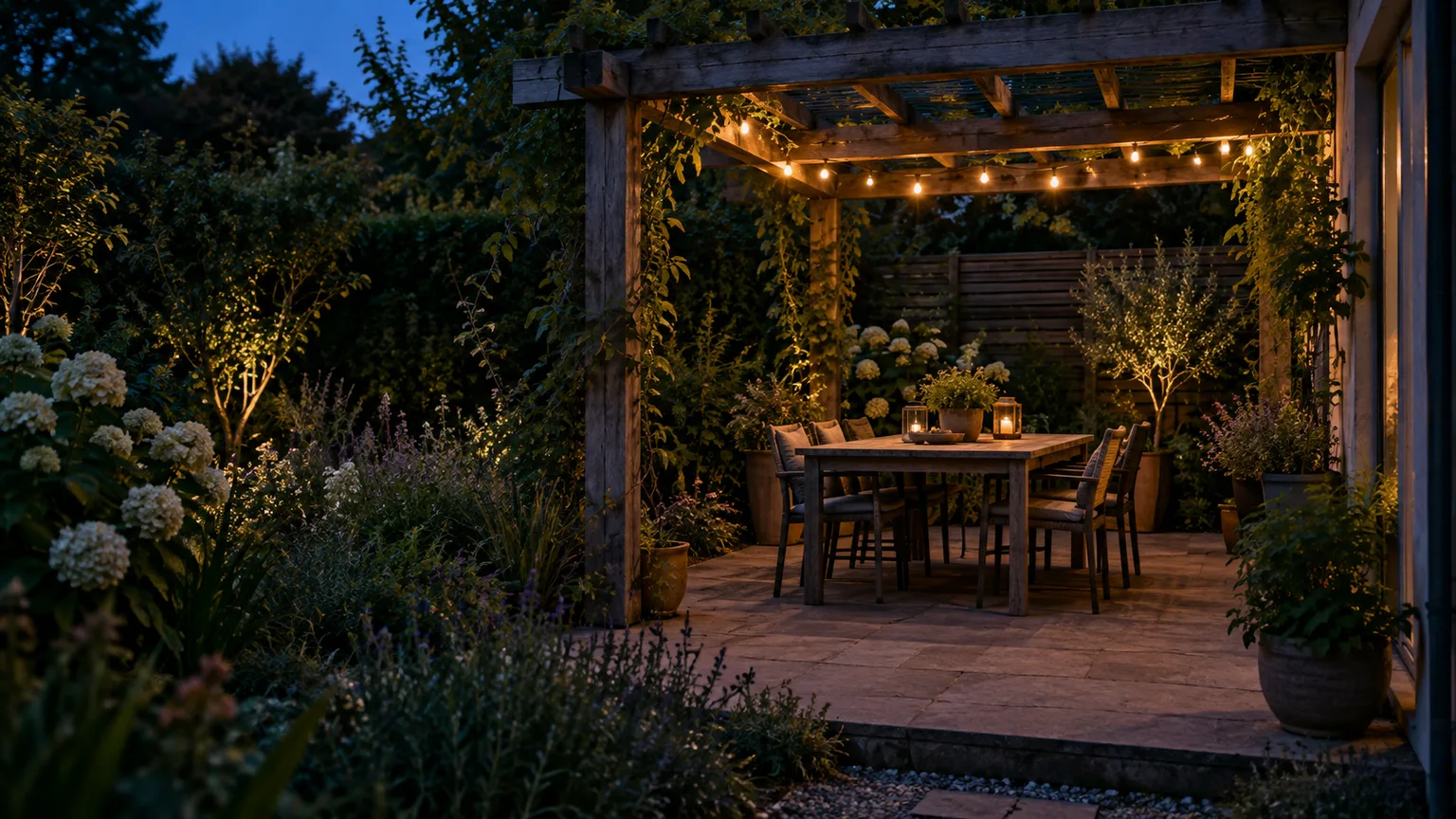
Pergola with planted side panels. Let a pergola provide overhead shade while one or two trellis panels carry vines on the sides. It combines seating and vertical planting without asking a small panel to do everything. Use a plant with manageable vigor; woody climbers add weight, maintenance, and shade, and the pergola itself must be designed for the intended load.
-
Fan-trained fruit tree on wires. Stretch horizontal wires between sturdy posts or on a properly anchored wall frame, then train a fruit tree’s branches into a fan. It keeps a small tree in a shallow plane and makes pruning deliberate. This is a long-term system, not a quick seasonal trellis; choose a suitable fruit and follow its pruning requirements.
-
Espalier frame for apples or pears. Use several horizontal wires on posts to train a fruit tree into a tiered shape. It can fit a narrow boundary and makes the tree’s structure easy to inspect. Start with a young tree and expect repeated training and pruning over years; wires and posts need periodic tension and strength checks as branches mature.
-
Metal fan trellis for clematis. A fan-shaped panel draws flower stems outward from a compact base, creating a broad display without a square screen. Place the plant where its roots can stay cool and the upper growth can reach the light it needs. Tie new stems loosely to the bars; do not bend brittle growth sharply just to fill the fan.
-
Climbing-rose panel with horizontal rails. Install a strong, open panel or wires that let you train long rose canes sideways as well as upward. Horizontal training can distribute flowering growth across the frame rather than leaving blooms only at the top. Use gloves when tying thorny stems, and do not rely on a lightweight decorative trellis for a mature woody rose.
Reclaimed and decorative supports
-
Weathered ladder as a rustic support. A sound wooden ladder can become a narrow climbing frame for a light annual vine in a cottage-style bed. Fix its feet and top so it cannot rotate or fall; never leave it positioned as if it were safe for climbing. Inspect old wood closely, since rot and loose rungs are common reasons to choose another object.
-
Obelisk as a vertical focal point. A four-sided obelisk draws the eye upward in a bed or large container and supports a compact climber on several faces. Set it firmly before planting so you do not damage roots later. Use it for a plant that fits its footprint; a vigorous vine can swallow a narrow obelisk and hide its shape.
-
Painted or stained feature trellis. Make a plain wood frame stand out with an exterior finish that echoes a fence, door, or planter. A dark panel can recede behind flowers; a restrained accent color can make a bare winter structure part of the design. Let coatings cure as directed, keep edible leaves away from wet paint, and inspect the finish annually.
Pick materials that will last outdoors
The most useful comparison is not “wood versus metal” in the abstract. Ask whether the material holds a bend, resists weather in your climate, can be repaired, and gives the plant a safe surface to grip. Untreated bamboo is inexpensive and easy to cut, but it can split or decay with repeated outdoor exposure. Wood is easy to customize and can be replaced piece by piece; choose sound lumber and exterior-rated joinery for a permanent frame.
Metal panels handle heavy vegetable growth well when they are properly supported, but edges and cut ends should be smooth or capped. Mesh with small holes may prevent a hand from reaching through and can trap enlarging fruit. University of Wisconsin Extension describes rigid fencing with openings that allow access and notes that heavier fruits such as melons may need individual support; the vine’s main framework still needs to be strong. Its trellising guidance is useful for deciding when a stake, cage, or larger panel suits the crop.
Wood, bamboo, and natural materials
Use bamboo poles, saplings, willow, or twigs for temporary supports, lighter crops, and informal garden designs. A tripod or woven branch structure needs firm feet and a secure apex; tying the top alone does not stop its legs from spreading. For wood lattice, a frame around the panel helps prevent twisting. Keep untreated natural supports away from constant soil moisture when possible, and replace them if they soften, split, or loosen.
Decorative trellises can be repainted or stained, but the finish does not repair a weak joint. On an edible bed, choose exterior finishes according to label directions and allow them to cure fully before foliage or fruit rests against them. For structures attached to fences or masonry, check the supporting surface, fastener capacity, and property permissions before drilling. The Gardeners’ World guide to planting against garden walls also cautions that self-clinging vines need management around roofs and façades; a support should make inspection and pruning easier, not hide a problem.
Wire, panels, netting, and metal
Rigid livestock or welded-wire panels are reusable and useful for tunnels, flat beds, and cages. They are heavy enough that the posts and fasteners matter as much as the panel. Nylon netting is easier to store and can fit a short season, but it must be taut and well attached; remove it when not in use so it does not sag, tangle, or become a nuisance to wildlife.
For compact crops, start with a grid that offers a route for tendrils and lets your hand pass through. Virginia Tech’s vertical-gardening publication gives a general example of fencing openings no larger than four inches, while also discussing how material should be strong enough for the plant and fruit; that is a planning reference, not a guarantee that every crop fits every panel. A peer-reviewed review of small-scale vertical greening systems likewise treats a planted wall as a system whose support, attachment, irrigation, maintenance, and intended use belong in the design decision.
Install and train a trellis that stays useful
Before buying or cutting material, sketch the bed, walkway, and mature plant on paper. Mark the sun direction, where you will stand to pick, and whether foliage will shade a neighboring row. Put the trellis in place before direct sowing or transplanting when possible; adding a support later is more likely to disturb roots and force stems into awkward positions.
Anchor for the real site
Check the ground and wind first. A freestanding structure in loose soil, a windy corner, or a container needs a stronger anchoring plan than a short panel tucked behind a sheltered bed. Virginia Tech’s extension examples set support posts roughly 18 to 24 inches into the ground, but that dimension is not an engineering specification for every trellis, soil, or wind exposure. Follow the plan or manufacturer’s directions for the structure you build, add diagonal bracing where needed, and test for wobble before planting.
If installation requires digging, request utility marking first. The 811 service says to contact the local center before digging and wait until the utilities have responded and marked buried lines. This matters even for a garden project: long stakes and post holes can reach beyond the shallow surface soil. When attaching a trellis to a fence or wall, anchor to a sound structural member rather than siding or a loose board, leave a gap where airflow and inspection are needed, and get permission before drilling into a shared boundary.
Guide stems without constricting them
At planting, point the first growth toward the support and use soft ties, clips, or loose figure-eight loops to guide stems. Do not cinch a tie around a growing stem; it can constrict the plant as its diameter increases. Add support gradually rather than trying to weave a long, brittle stem through a tight grid after it has hardened.
Check the trellis while you water. Reattach a loose tie, lift a cucumber or squash fruit that is resting against a sharp edge, and add a sling before weight bends a vine. An arch or privacy panel is most useful when you can see both sides and reach the base; leave an access route for picking and pruning instead of filling every gap with foliage. Trellising may improve air movement and make produce easier to find, but it does not guarantee larger yields or prevent disease. Crop choice, weather, watering, and care still matter. Wisconsin Extension and Utah State University Extension describe the practical space and access benefits while treating support choice as part of overall garden management.
Maintain the structure through the season
Inspect joints and anchors after strong wind and whenever a loaded vine begins to lean. Tighten a loose connection before the canopy gets heavier, replace a frayed line, and remove stems that have wrapped around a gate hinge or become difficult to harvest. Do not pull hard on a plant that has entwined itself through fine mesh; cut the mesh away at cleanup rather than tearing the vine apart.
At the end of a crop, remove plant debris according to the crop’s health, clean reusable panels, and store light supports out of weather if practical. Some gardeners leave durable frames in place, while others remove them to reduce winter wear or rotate the crop location. A permanent structure can stay put while annual crops move around it, but avoid planting the same susceptible crop in the same spot season after season. For ornamental vines, prune to the plant’s needs and preserve access to fasteners so you can repair the frame before the next growing season.
The best trellis is one you can inspect, maintain, and adapt. If you are unsure, start with a modest panel that suits one season’s crop, observe how the plant uses it, and scale up only when its weight and growth pattern justify a larger structure.
Conclusion
Choose the trellis after you know the plant, the support’s job, and the conditions at the site. A bean teepee, cattle-panel arch, cable-trained fruit tree, and patio privacy screen can all be good ideas, but only when their structure fits the plant and the wind, load, access, and maintenance the design creates. Match the climbing method to the support, anchor the frame before planting, and leave room to harvest and inspect it. That combination makes a trellis both a useful garden tool and a feature you will want to keep.