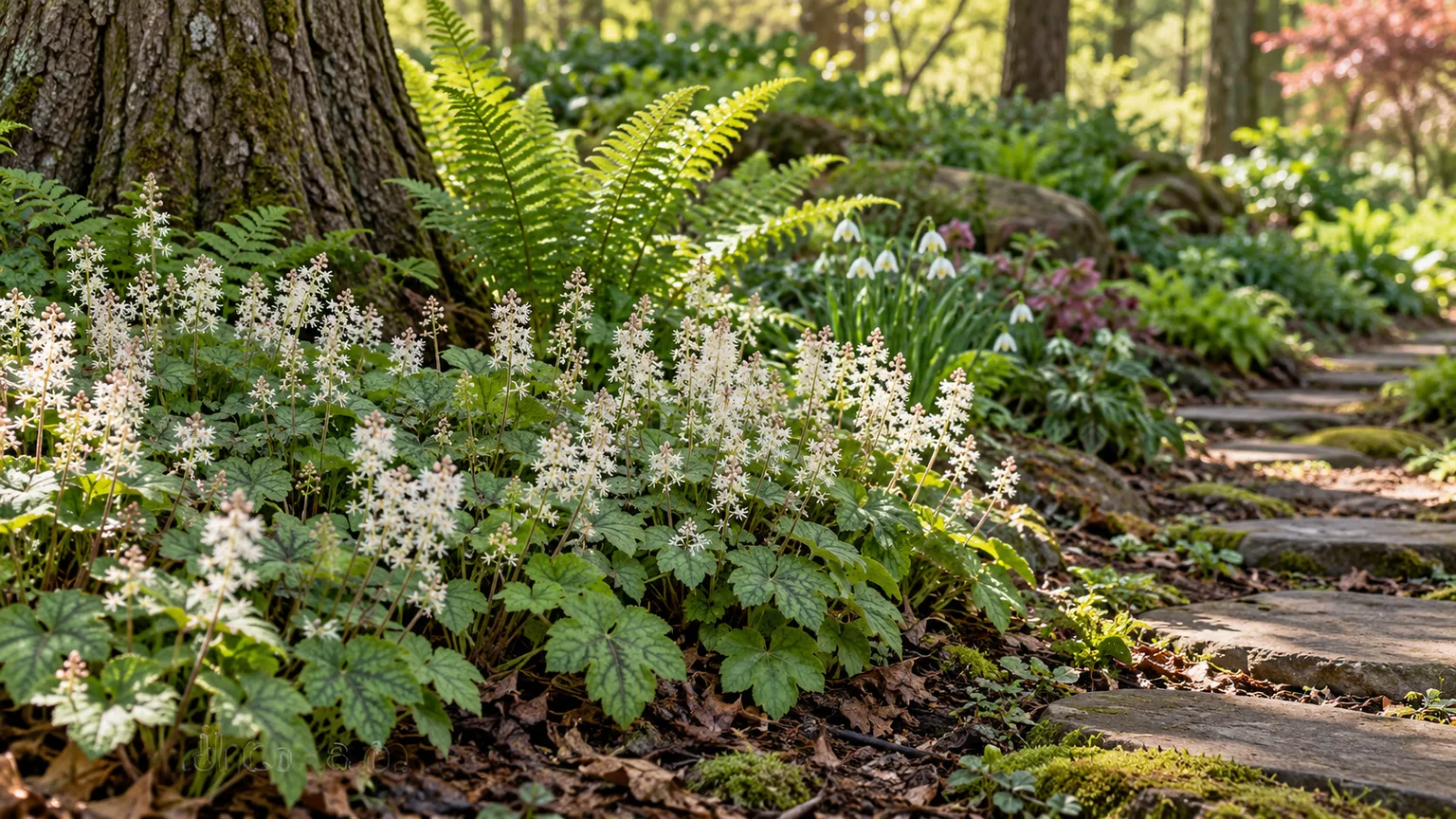
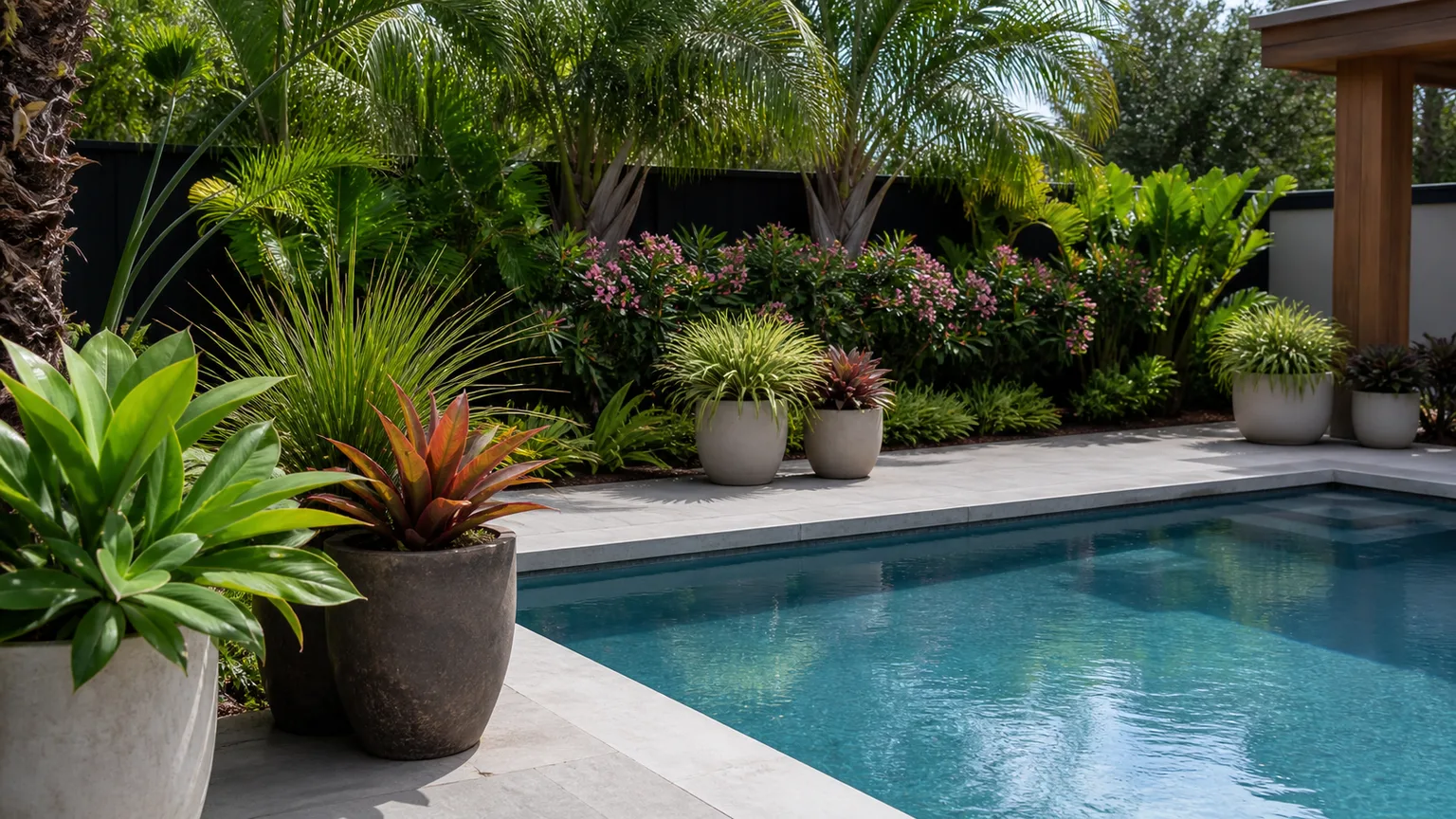
57 Garden Decor Ideas for Every Garden and Outdoor Space
Explore 57 garden decor ideas for yards, patios, and small gardens, with tips for focal points, paths, planters, lighting, and weather-ready materials.
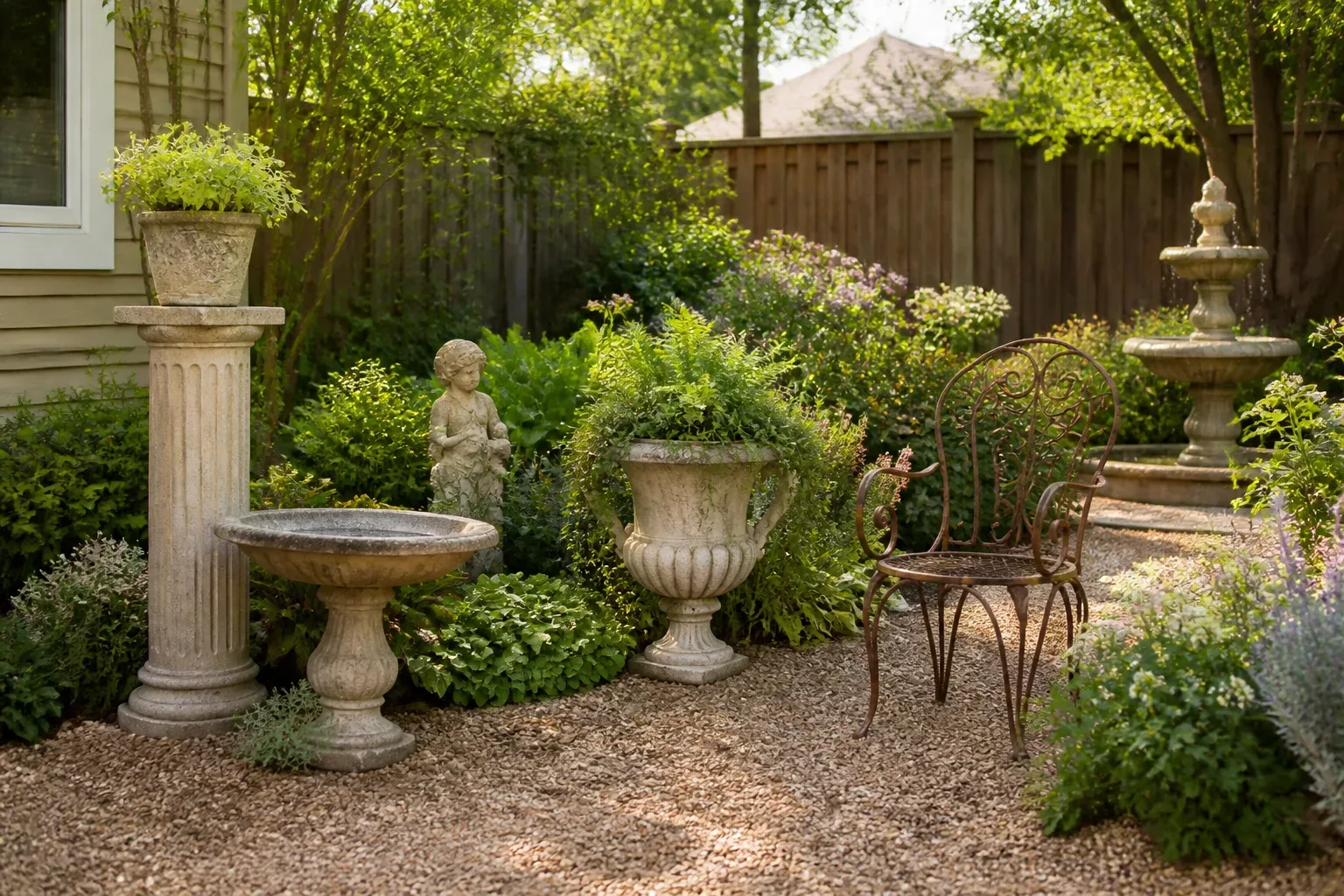
Garden decor works best when it gives a space a job: a bench invites a pause, a path suggests where to walk, and a well-placed pot draws the eye toward a view. The goal is not to fill every bare patch. A few pieces that repeat the house’s materials or colors will usually look more intentional than a collection of unrelated ornaments.
Use the ideas below as a menu. Start with the view you want to improve and the way you use the garden, then choose one or two changes that solve a real problem before layering smaller accents.
Plan the View Before You Buy
Stand at the main doorway and look outward, then check the view from the seating area and any windows you look through often. Note the existing trees, fences, paths, sun, and places where you actually sit or move. The RHS recommends mapping fixed features and sunlight on a plan; even a rough sketch helps you avoid buying a large feature that blocks a route or lands in the wrong spot. Its advice also points out that moving a shape on paper is easier than rebuilding a finished path or patio (RHS garden-planning guide).
Choose a main use first—eating, reading, growing herbs, or watching birds—then let decor support it. A focal-point planning guide explains how paths can guide the eye to a feature, and why scale, backdrop, color, and the view from the house matter.
1. Frame the view from a window. Put a pot, small sculpture, or flowering shrub in the sight line you see from indoors, rather than hiding it behind a doorway. A feature placed for the window can earn its space even when the garden is not being used.
2. Sketch a simple garden plan. Draw the house, paths, doors, fixed trees, fences, and existing beds before deciding where a bench or fountain belongs. Add sun and shade notes; those details affect both plant displays and whether the seating spot will be comfortable.
3. Repeat one material. Carry brick, dark metal, timber, or stone from the house into one or two garden pieces. Repetition connects the yard to the home and makes an assortment of pots or furniture feel collected instead of accidental.
4. Borrow one color from the house. Echo a door, trim, cushion, or window-frame color in a planter or gate. One repeated color is enough to connect the spaces; painting every object in a bright palette can make the garden compete with its planting.
5. Give one existing feature a better setting. A mature tree, old bench, or useful shed can become the anchor if you clear clutter around it and add a simple edge or planting. This costs less than installing a new focal point and preserves what already gives the yard character.
Build Zones and a Clear Route
Small yards benefit from a clear route as much as large ones do. Decide where people enter, where they walk, and where they stop. One change in paving, gravel, planting, or height can suggest a separate garden room without building a wall.
Paths, Gates, and Transitions
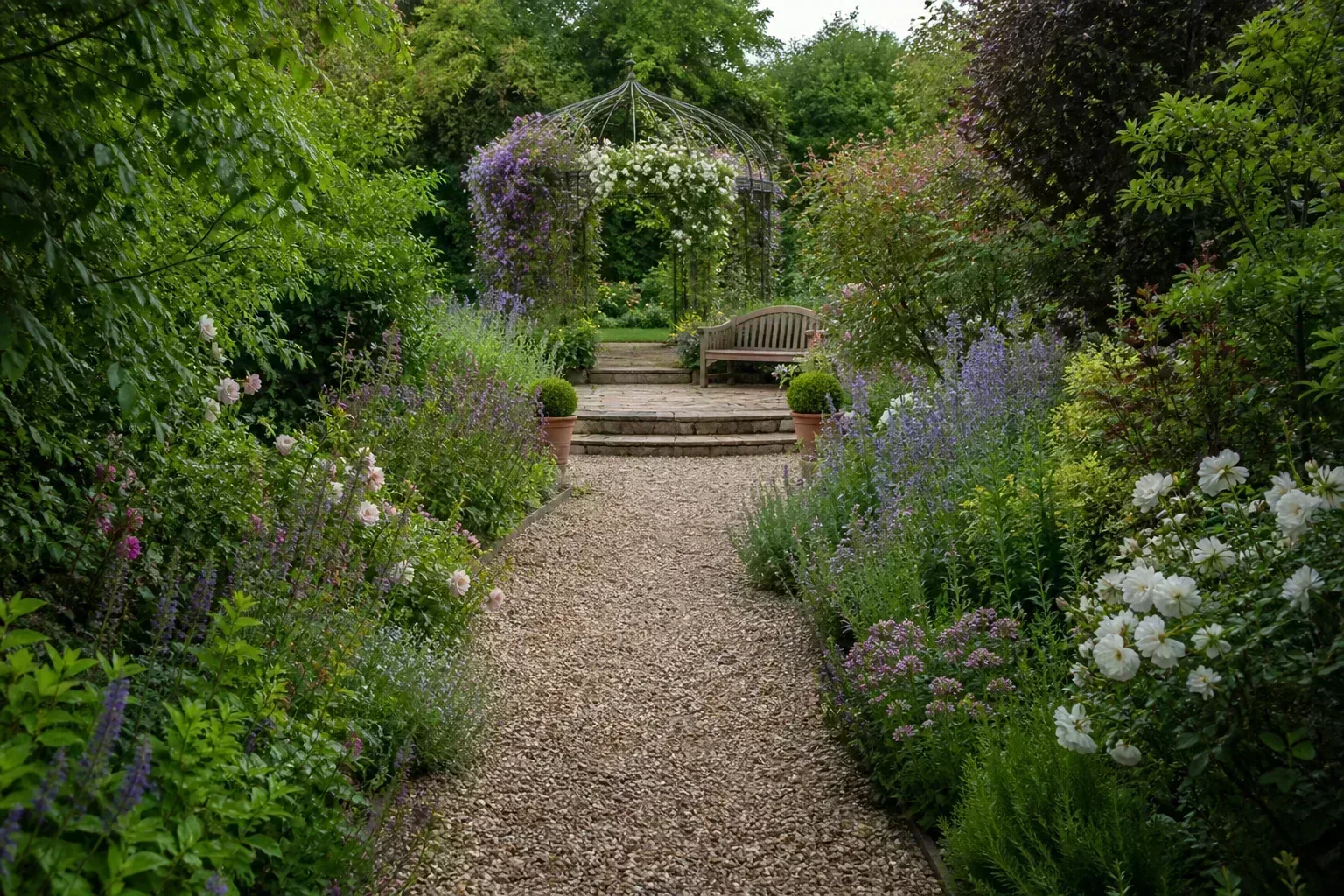
6. Make two garden rooms with a change in ground material. Use gravel for a reading corner and paving for a dining area, or change the direction of the planting to signal a new use. Keep the transition easy to walk across, especially if a cart or mobility aid uses the route.
7. Add stepping stones through a lawn or low groundcover. Set stones where a person naturally walks so the path feels discovered but still works in wet weather. Space them for an ordinary stride and keep the route stable; decorative stones placed too far apart become awkward obstacles.
8. Use a curved or offset path to reveal a destination. A short bend makes a tiny yard feel less like a hallway and can draw the eye toward a bench, pot, or flowering border. The curve should have a reason, though: a route that wanders without leading anywhere wastes usable space.
9. Mark an entry with an arbor or simple gate. An open frame makes the transition into a vegetable patch or flower garden feel deliberate without closing off the view. Choose a width that stays comfortable for wheelbarrows and let climbing plants cover only the structure they can support.
Screens, Walls, and Vertical Structure
10. Turn a fence panel into a trellis. Fix a trellis to sound posts and train a suitable climber over it to soften a blank boundary. Leave the wall itself accessible for repair and avoid attaching a heavy plant to a fence that was not built to carry the weight.
11. Add a slatted screen to hide one practical view. A screen can conceal bins, a hose reel, or a neighboring window while still allowing light and air through. Limit it to the problem area; wrapping an entire small garden in tall opaque panels can make it feel narrower.
12. Set a low raised bed along an edge. A raised bed gives a sitting area a border and brings flowers or herbs closer to eye level. Size it around the walking route and make sure the bed’s depth, materials, and location suit the plants you want to grow.
13. Hang a weather-rated wall sculpture on a plain fence. A flat metal or ceramic piece can add detail where planting would block a narrow route. Fix it to a solid surface, keep it out of a gate’s swing, and choose a finish suited to rain and sun so the accent does not become a repair project.
Make Outdoor Rooms Comfortable
Outdoor decor earns its keep when you use it. Pick a seating arrangement for the number of people who usually gather, then leave enough space to pull out chairs and walk behind them. A compact bistro set can work better than a sectional if you need the same patio for containers or play.
Seating, Dining, and Flexible Furniture
14. Make a reading nook with one comfortable chair. Tuck it beside a hedge or under the edge of a tree, with a small side table within reach. Check that the ground stays level and the chair can be pulled out without crushing nearby plants.
15. Set a bistro table near the kitchen door. A two-person table gives a balcony, patio, or narrow side yard a reason to be used every day. Leave the door swing clear and choose foldable chairs if the area also serves as a walkway.
16. Put a dining table under a pergola. The frame defines an outdoor room and provides a place to hang shade or lights. Before adding overhead fixtures or fabric, confirm the structure is stable, leaves enough headroom, and can handle local wind and weather.
17. Turn a retaining wall into a perch. A broad, finished wall can double as casual seating near a bed, but its top should be comfortable and its edges safe. Use a separate bench if the wall retains soil or is too narrow to sit on securely.
18. Hang a hammock only from suitable anchors. A hammock makes an unused corner inviting, but healthy-looking trees are not automatically safe supports. Follow the hammock maker’s spacing and weight guidance, avoid damaging trunks, and choose a freestanding frame when the anchors are uncertain.
19. Arrange chairs around a fire feature. A fire pit can anchor a gathering spot in a large yard, but place it on a suitable noncombustible surface and respect the manufacturer’s clearances and local fire rules. In a small or fire-prone space, a lantern cluster gives a similar visual center without an open flame.
20. Use an outdoor rug to define a seating group. A rug adds color and separates furniture from the lawn or deck, especially on a plain patio. Choose one made for outdoor exposure, let it dry after rain, and lift it regularly so trapped moisture does not damage the surface below.
21. Keep a serving cart beside an outdoor dining area. It can hold cups during a gathering and move away when the patio needs to be cleared. Choose a stable cart with weather-suitable materials, and bring it under cover if its wheels or finish are not made for year-round exposure.
22. Shade one useful corner with a market umbrella. A weighted, well-sized umbrella can make a table or chair usable through bright parts of the day. Close it when winds rise and check that its base will not obstruct the path or tip into planting.
23. Stretch a shade sail over a defined seating zone. The triangular or rectangular shape reads as a design feature and casts shade without adding a solid roof. Attach it only to appropriate supports, tension it as directed, and remove it when wind or seasonal conditions exceed its rating.
Shade and Evening Light
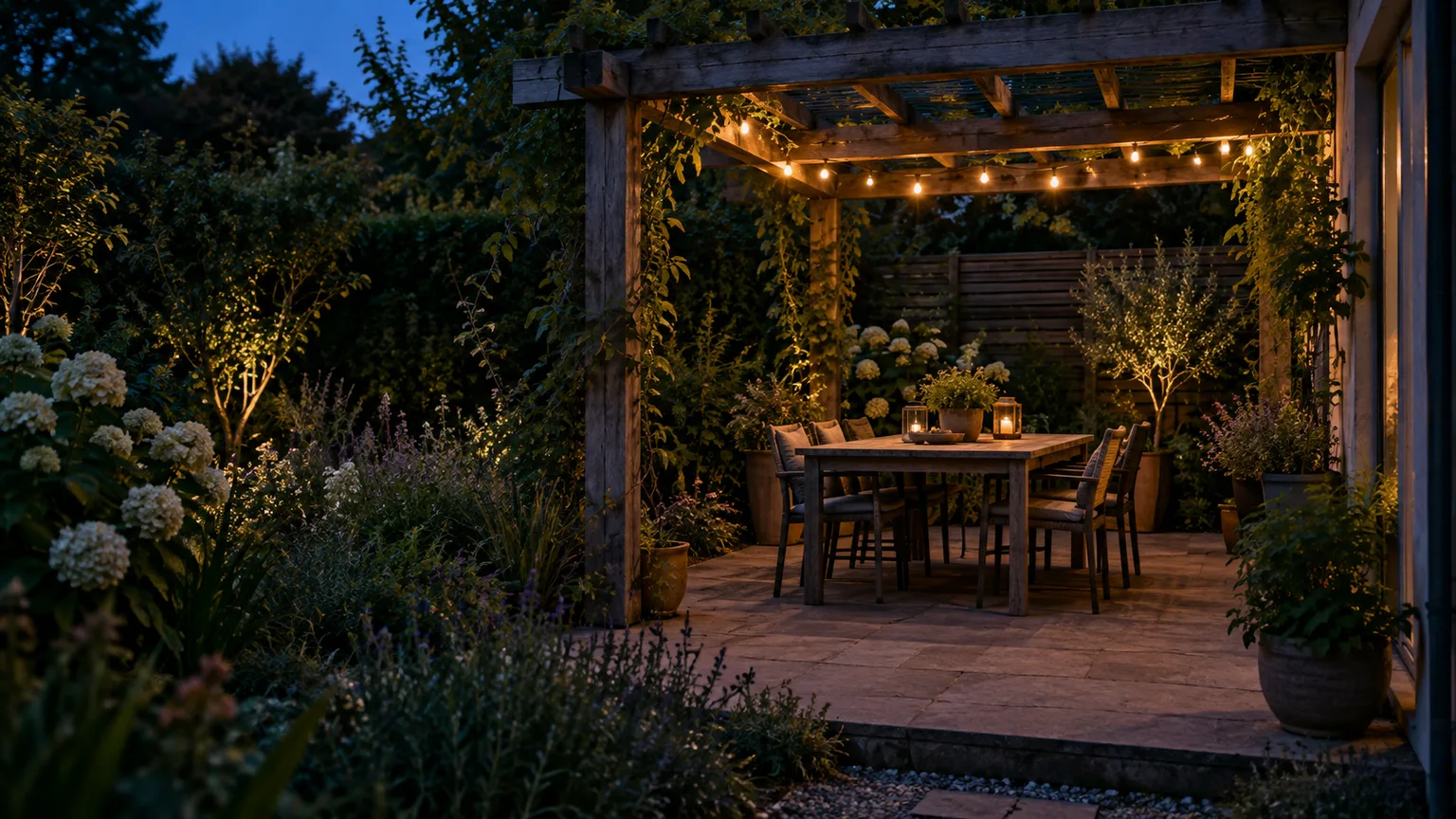
24. String outdoor-rated lights along a pergola edge. A warm strand makes the seating area legible after sunset without lighting the whole garden. Use fixtures and connections rated for their location, follow the manufacturer’s installation directions, and keep cords clear of walking routes and wet soil.
25. Place a lantern on a stable table or step. Battery-powered lanterns add a low, movable glow to a dining or reading spot. Choose a design intended for outdoor use, and avoid leaving candles near dry foliage, fabric, or places where they can be knocked over.
Choose a Focal Point That Fits
A focal point is the feature your eye lands on first; it might be a bench, a pot, a water bowl, a tree, or a piece of sculpture. Garden Design’s guidance recommends checking it from several angles and matching its scale and style to the space. Pick one main feature per view, then support it with smaller repeated details instead of lining up competing statement pieces.
Sculpture and Garden Art
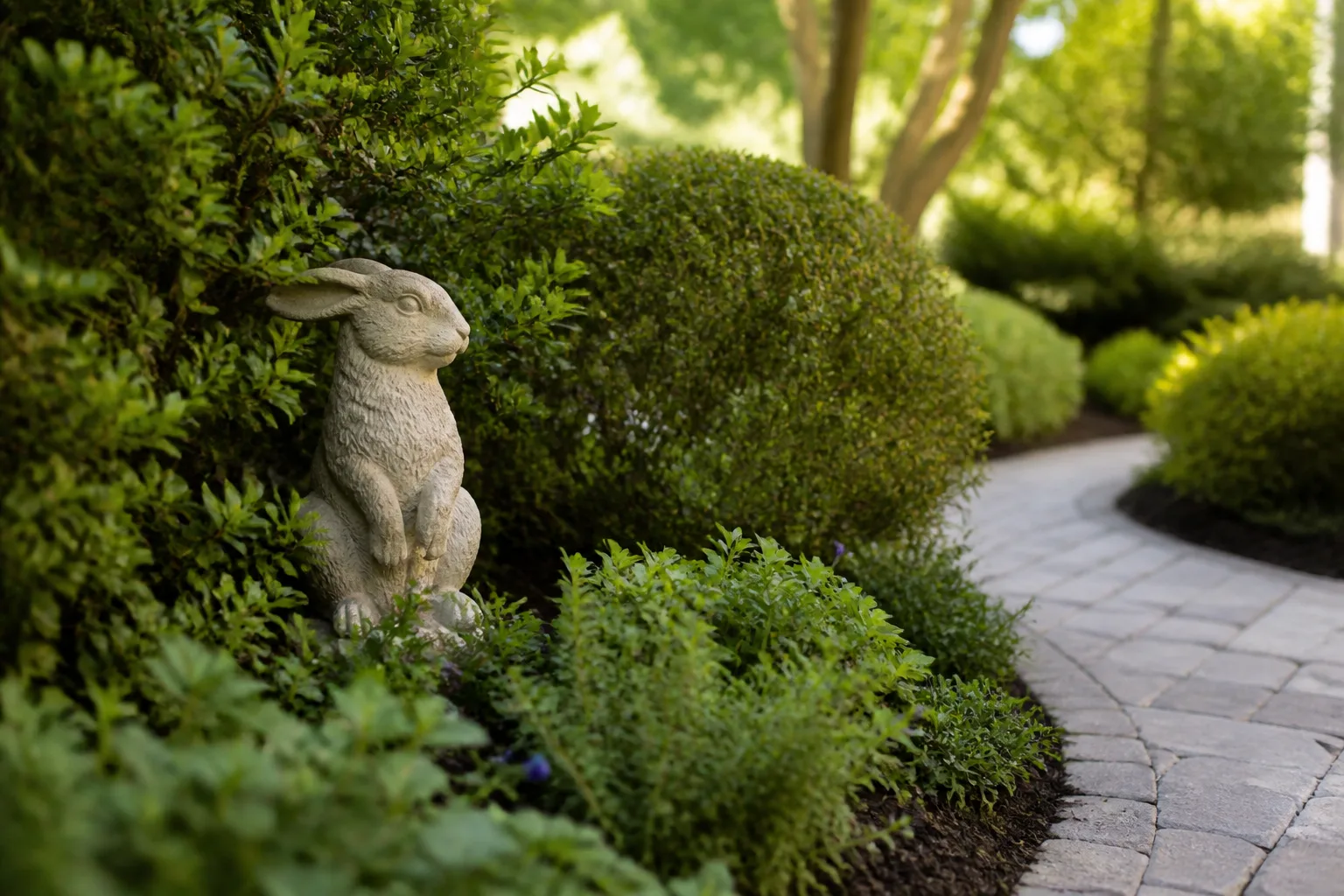
26. Give one statue a quiet backdrop. Place a statue where foliage or a plain fence makes its outline easy to read. Leave air around it so the object does not disappear in plants, and choose a size that feels proportional from the spot where you normally view the garden.
27. Raise a small object on a stable pedestal. A plinth can bring a modest pot, bowl, or sculpture into view above low planting. Check that the base is level and heavy enough for the piece, then avoid a tall, narrow arrangement where wind or accidental contact could topple it.
28. Group three similar objects instead of scattering many. A few stones, lanterns, or small planters in a loose cluster read as a deliberate vignette. Vary their height slightly, leave breathing room around the grouping, and repeat the same material elsewhere only if the garden needs a visual link.
29. Use a vintage chair as sculpture if it is no longer safe to sit on. A weathered chair can hold a light container or stand alone against a wall as a found object. Remove sharp edges, loose paint, and unstable legs; do not let an unsafe seat become everyday furniture by mistake.
30. Add a sundial where sunlight can actually reach it. A sundial offers a quiet traditional accent, but its function depends on suitable sun and correct placement for its design. If you mainly want the look, treat it as a sculpture and set it where the face can be seen.
31. Use a gazing ball or reflective sphere as a single accent. Set it where surrounding leaves and sky can reflect without making the ornament compete with a busy planting bed. Secure the stand, avoid a spot where glare shines into a window, and bring delicate glass indoors before hard freezes.
Water, Bird Baths, and Wildlife

32. Set a birdbath where you can see and maintain it. Choose a stable base near cover but not hidden in dense foliage, so birds have a clear approach and you can refill it easily. The RHS notes that a thin film of water can be a safer choice around young children, and pebbles give bees a place to drink (RHS water-habitat guide). For a practical starting point, an editorial garden-decor guide suggests a shallow 1-to-2-inch bath and fresh water every day or two.
33. Make a tiny container pond from a watertight pot. A sealed trough or basin can bring reflective water to a patio where a full pond will not fit. Use a vessel without drainage holes or line it properly, and decide how you will top it up and clean it before filling it.
34. Add a recirculating fountain for sound and movement. A small pump can make a corner more noticeable and help water move, but it needs power access, cleaning, and periodic checks. Place it on a solid, level base and protect the cord according to the product’s outdoor-use instructions.
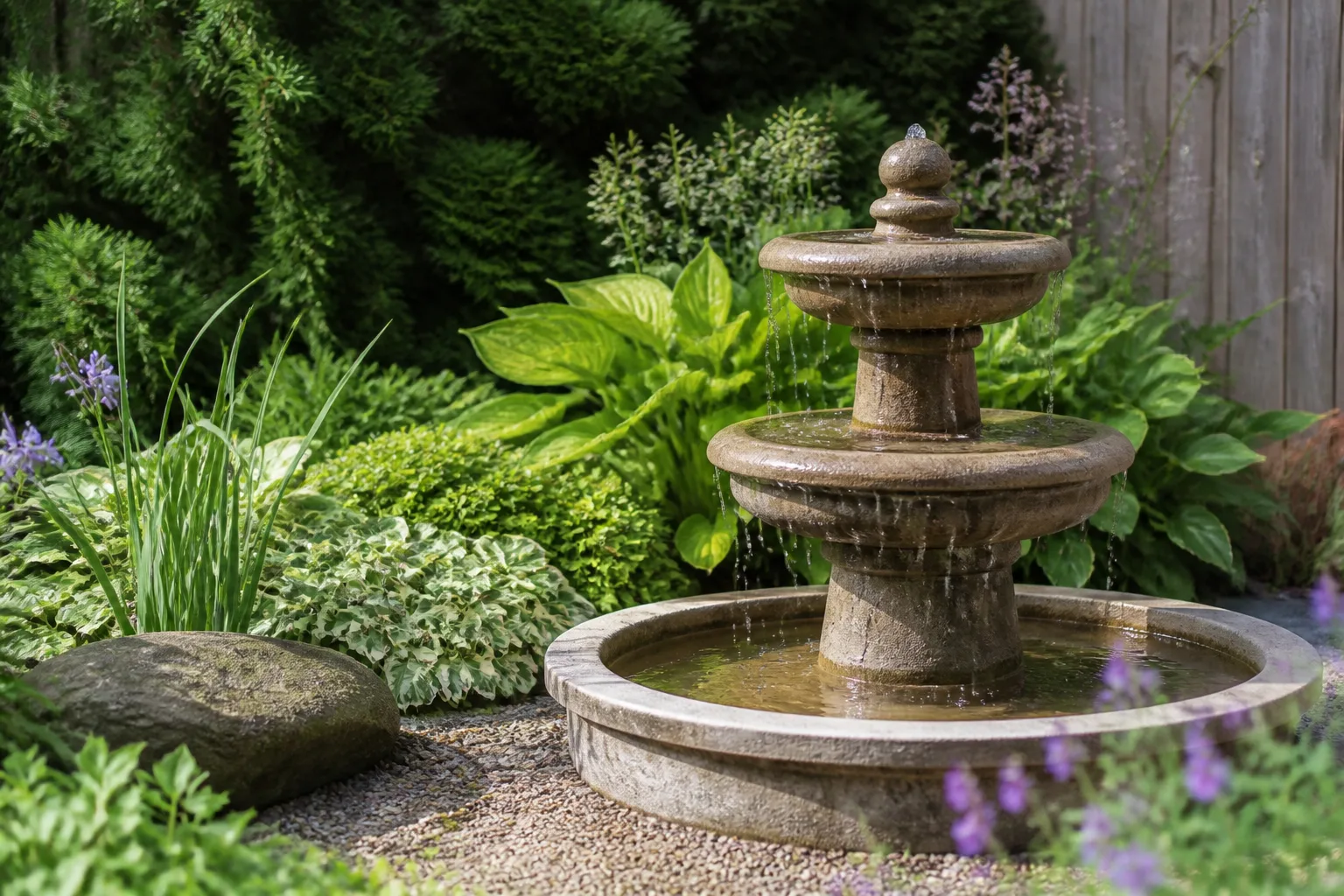
35. Put a shallow pebble dish near pollinator planting. A saucer with clean water and stones gives insects landing places above the waterline. Keep it shallow, rinse it often, and replenish it in hot weather; standing, neglected water is not a low-maintenance decorative feature.
36. Add a rain chain beneath a roof outlet. The chain turns rainwater into a visible detail and can lead runoff into a container or planted area. It needs a catch basin or safe drainage destination below, and it will not handle every roof’s heavy flow without backup drainage.
37. Hang a simple chime where it will not strike a window or neighbor’s wall. One quiet chime can add movement and sound without crowding the ground. Check how strong the breeze is in that corner; a large, loud chime can become a nuisance and may need to come down during storms.
Use Containers and Vertical Displays
Containers are useful decor because they add height, color, and movable planting. Grouped planters and ladder displays can add height; the lasting principle is to repeat a shape or finish while leaving enough room for plants to grow, as shown in these garden-decor examples. A container still needs drainage, an appropriate plant, and a weight you can safely move.
Planters, Plant Stands, and Living Walls
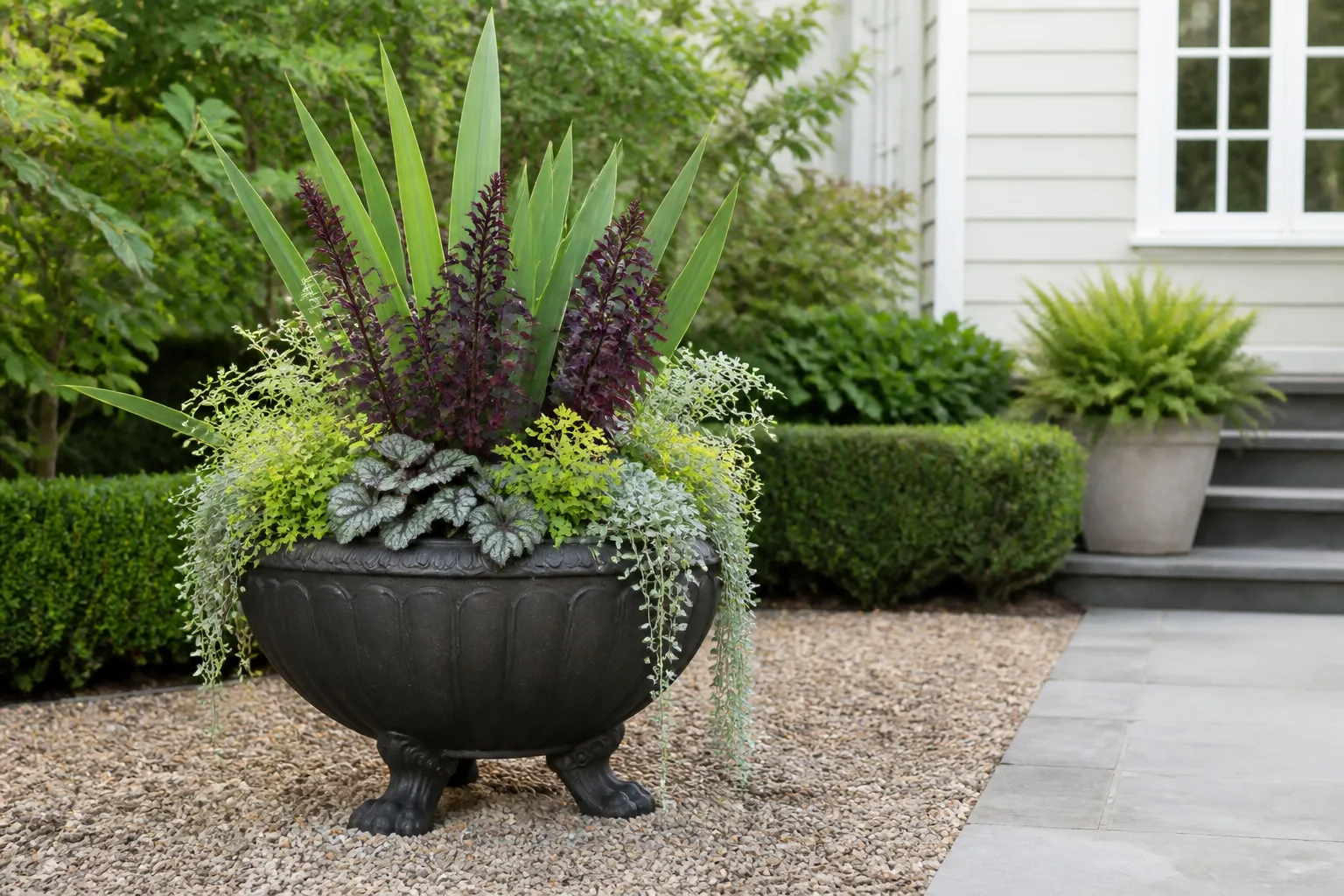
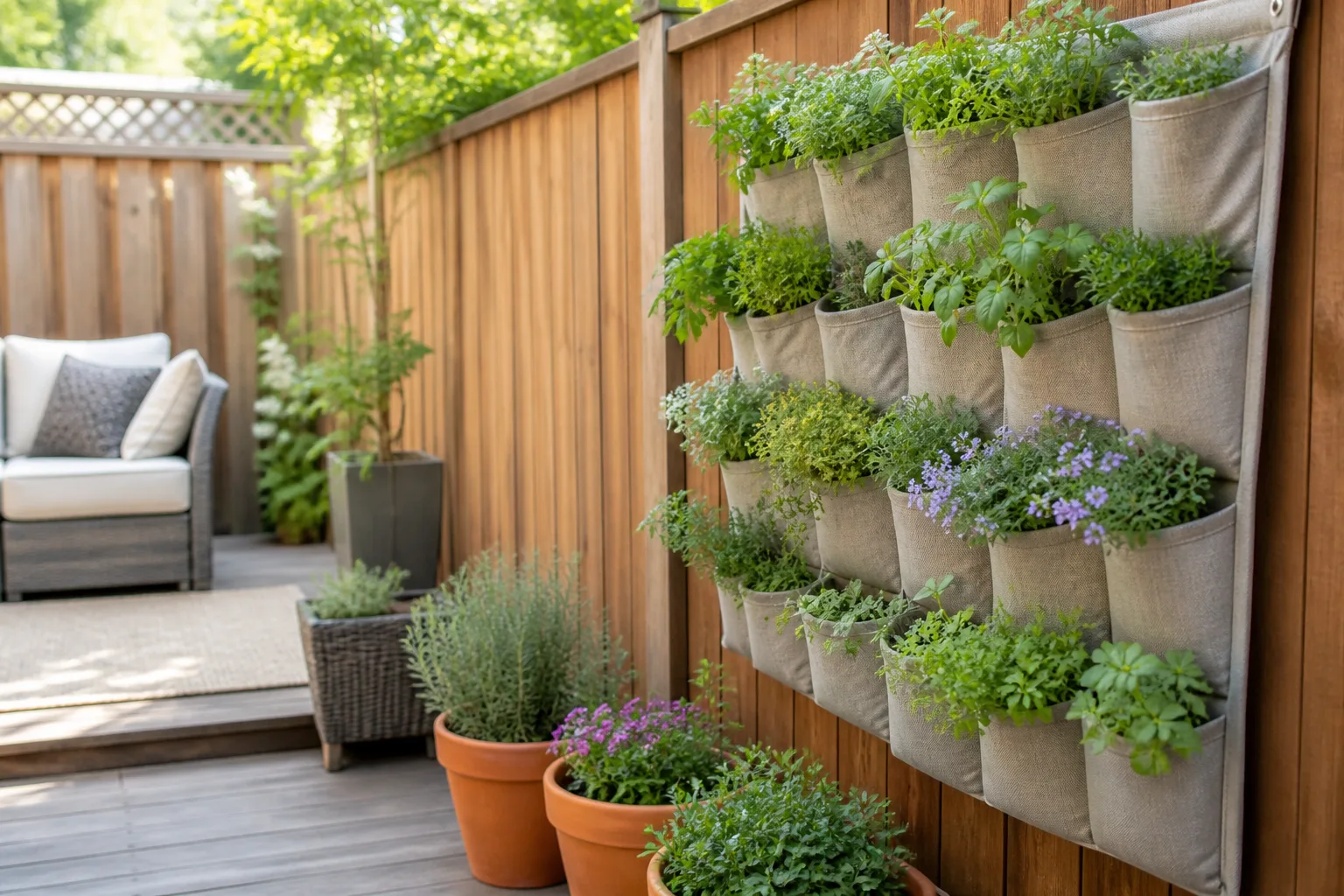
38. Cluster pots in three heights. Combine a tall pot, a medium container, and a low bowl to make a compact display feel layered. Keep the tallest piece toward the back or corner so it does not block sight lines, and group containers with similar watering needs when plants share a tray.
39. Repeat a planter color, not an identical pot. A shared color makes mismatched thrifted pots feel connected while their shapes keep the display interesting. This is especially useful along a fence or patio edge; vary the plants and heights so the row does not become a rigid catalogue display.
40. Use one oversized planter as a patio anchor. A large vessel can hold a small tree or a substantial seasonal display and make an empty corner feel intentional. Check the mature plant size and the container’s drainage before filling it, because a heavy pot becomes difficult to shift later.
41. Line a path with a few spaced containers. Pots can define a walking route where permanent beds are not possible. Keep them out of the clear passage width and avoid placing fragile containers where doors, bikes, wheelbarrows, or snow-clearing equipment will hit them.
42. Add a window box to a bare wall or balcony rail. A window box gives a small garden a strong color band at eye level. Fix it to a support rated for its filled weight, provide drainage, and choose plants based on the actual sun exposure rather than the view from indoors.
43. Mount a vertical herb garden near the kitchen. A wall-mounted rack or tiered planter saves floor space and keeps useful foliage within reach. Make sure the wall can carry the wet weight, water will not stain or damage siding, and the plants still receive enough light.
44. Turn a stable ladder into a tiered plant stand. A ladder gives containers a stepped profile without building a shelf, and it can be moved when the display changes. Secure the ladder against tipping, use weather-resistant materials, and put heavier pots on lower steps.
45. Give a plain trellis a contrasting paint finish. A color-blocked trellis can make the structure visible before a vine fills it in. Use a finish intended for the material and outdoor exposure, and keep paint away from soil and plant stems while it cures.
Add Color, Texture, and Personal Touches
Small accents work best when they repeat something already present: a gate color, a warm wood tone, a round shape, or a single metallic finish. Before adding a new object, remove one item that no longer works. Editing is part of decorating, especially in a garden where plants change size across seasons.
Upcycled and DIY Accents
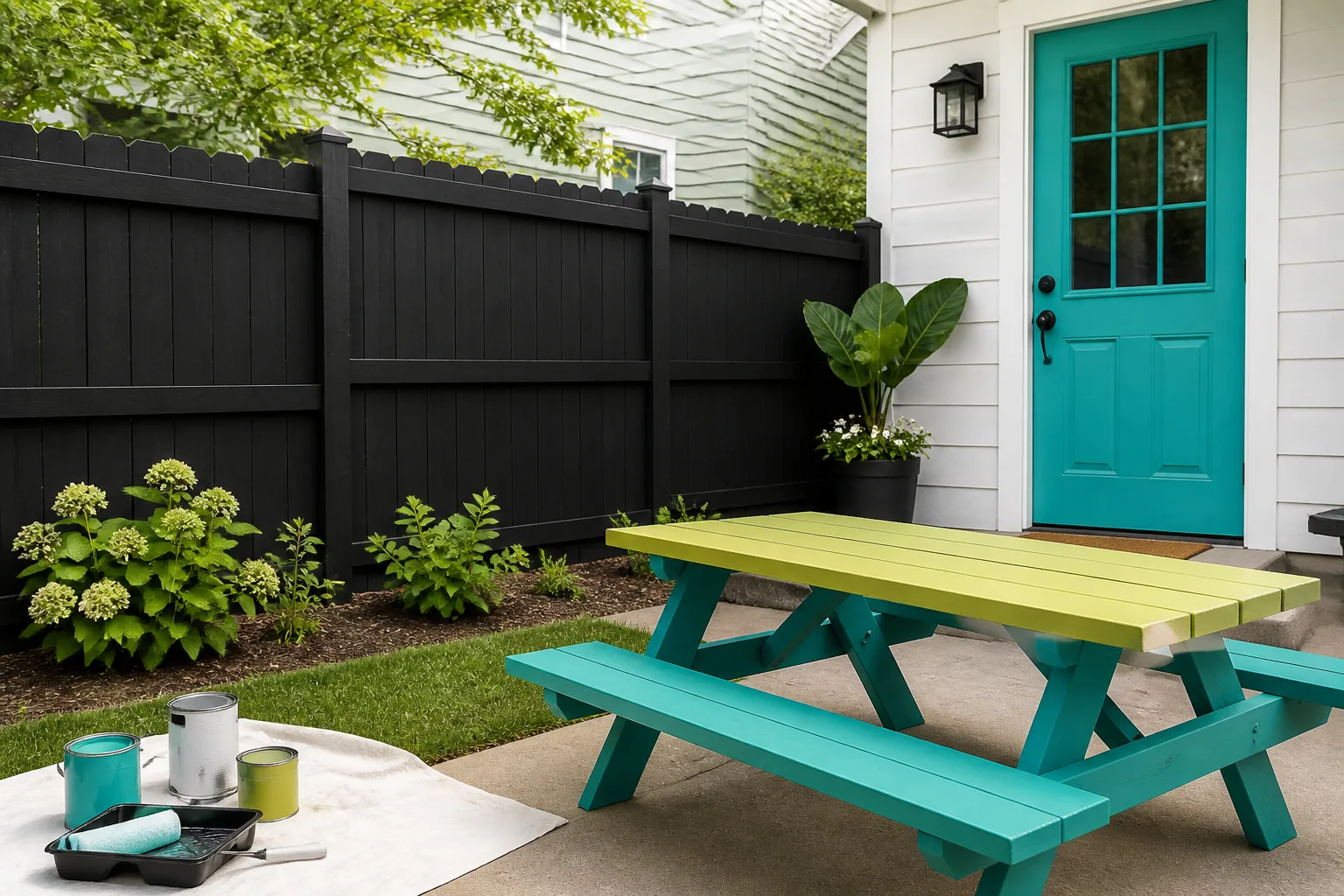
46. Paint a garden gate to mark the entrance. A strong color turns a simple gate into a focal point and makes the transition to a vegetable or cutting garden clear. Use a paint formulated for the gate material and weather; repainting a poorly prepared surface can become a recurring chore.
47. Use a dark wall or fence as a backdrop. A deep, matte finish can make pale flowers and bright foliage stand out, while a pale wall brightens a shaded corner. Test a small area first because large painted surfaces change the garden’s mood more than a small pot does.
48. Paint a plain concrete pot or planter. One broad band of color can refresh a container without buying a new one. Clean it, choose a compatible outdoor finish, and keep drainage holes open; coating every surface can trap moisture or peel where it stays wet.
49. Make durable plant labels part of the design. Slate tags, metal labels, or cut wood markers can make an herb bed easier to read and add a repeated material detail. Use lettering that remains legible outdoors and position labels where watering and harvesting will not knock them loose.
50. Use outdoor cushion covers as a seasonal color accent. One bold color can refresh a familiar bench or bistro set without replacing the furniture. Choose fabric intended for outdoor exposure, and bring cushions under cover when they are wet or the forecast is rough.
51. Build a fairy garden in a portable container. A shallow planter lets you make a miniature scene without disturbing tree roots or creating a permanent feature in a bed. Keep the small pieces grouped, use weatherproof materials, and make sure it will not become a tripping hazard along a path.
52. Display a clean watering can on a potting shelf. A useful tool can act as decor if it is emptied after use and kept where it is easy to reach. Choose one that will not rust through, and do not leave standing water inside it where mosquitoes can breed.
53. Hang garden tools neatly on a shed wall. A row of hand tools brings shape and color to a work area while keeping them off the floor. Dry tools before storing them, use secure hooks, and keep sharp edges out of reach of children.
Choose Decor for Weather, Care, and Safety
Outdoor pieces face sun, rain, temperature swings, wind, and soil splash. Before buying, check the manufacturer’s material and installation guidance, then consider how the object will be secured, cleaned, stored, or repaired. A decorative feature that needs more care than you want to give it will stop feeling like an upgrade.
54. Choose a frost-tolerant pot where winters freeze. Not every ceramic or glazed container handles repeated freezing, especially if it stays full of wet soil. Look for clear outdoor-use guidance, raise the pot off standing water when appropriate, and move fragile vessels under cover for winter.
55. Pick lighting made for the location. Outdoor-rated fixtures and connections matter more than whether the bulb looks decorative. Use a product intended for wet or damp exposure where it will be installed, follow the manufacturer’s instructions, and ask a qualified electrician about fixed wiring.
56. Put tall decor where it can be anchored. Wind can topple screens, umbrellas, lightweight planters, and seasonal figures. Use the maker’s base or anchoring method, set heavy pieces on level ground, and store removable objects before severe weather rather than hoping their weight is enough.
57. Make plant protection look intentional. If a shrub or tender container needs a cover, choose a breathable, well-fitted cover and secure it without scraping branches. Keep the cover clear of paths and check it after weather changes; decorative fabric should never replace protection that the plant actually needs.
Conclusion
The easiest garden to decorate is the one you have already observed. Start with the view, mark the route, and give the space one useful destination; then choose a focal point, repeat a material or color, and add containers or small accents only where they improve the composition. That sequence keeps a small courtyard from feeling crowded and gives a large garden a clearer structure.
Before you buy, ask three questions: Will I see or use this from where I spend time? Can it handle the weather and be maintained safely? Does it connect to something already in the garden? If the answers are yes, even a simple bench, pot, path, or birdbath can make the space feel considered without turning it into a project that never ends.