How to Grow and Care for Ficus Umbellata
Learn how to care for Ficus umbellata indoors: choose a bright spot, water by soil condition, build an airy mix, and respond calmly to yellow or dropping leaves.
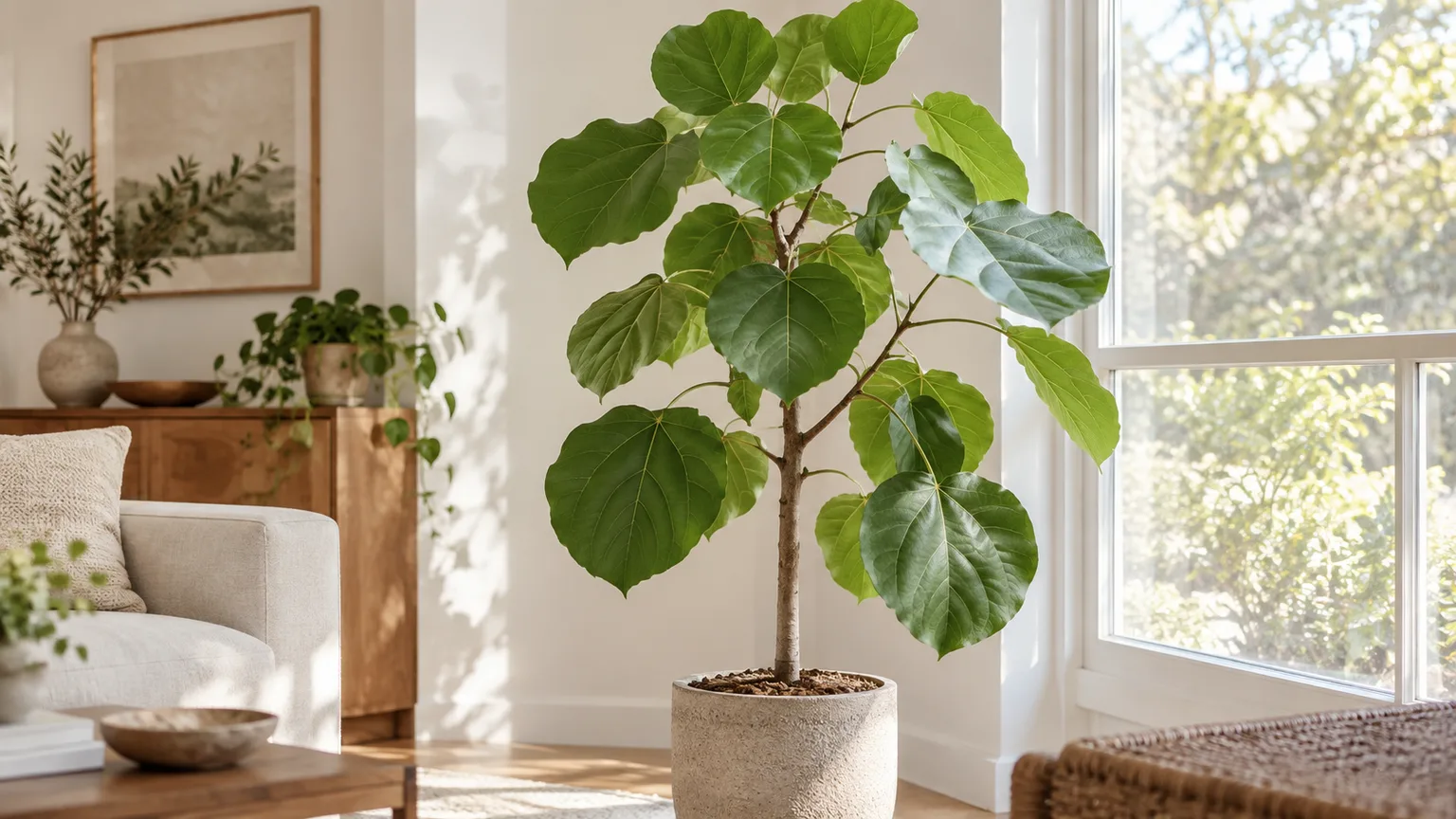
Ficus umbellata is a tropical fig grown indoors for its slender trunk and broad, rounded-to-heart-shaped leaves. It can become a striking floor plant, but the easiest way to keep it healthy is to match its care to the room and pot it actually has: provide strong filtered light, let the root zone partly dry between thorough waterings, and keep excess water moving out of the container.
The biggest mistake is treating this fig like it needs the same drink every seven days. Light, pot size, mix, heating, and season change how quickly the root ball dries, so a quick soil check is more dependable than a calendar. The method below gives you a practical starting point and a way to adjust it without reacting to every imperfect leaf.
What Ficus Umbellata Is—and What Makes It Distinctive
The accepted botanical name is Ficus umbellata. Kew’s Plants of the World Online records it as a tree native from West Tropical Africa to southwestern Ethiopia and Angola, where it grows primarily in wet tropical biomes. The common name umbrella fig describes its large leaves and canopy-like appearance, but it is a tropical fig rather than an umbrella-tree relative such as Schefflera. (Kew’s Plants of the World Online)
Indoors, expect a woody, upright plant that can spread as it branches and can eventually take up more floor space than a tabletop plant. Nursery specimens vary widely in height, stem thickness, and branching because growers prune and train them differently; judge the plant in front of you rather than relying on one fixed “mature indoor size.” It is not a miniature bonsai unless it has been deliberately trained as one.
Its leaves are thinner and more flexible than the thick, violin-shaped foliage of a fiddle-leaf fig. The long leaf stalks can let a healthy canopy sway or droop slightly, so a single leaf angle is not enough to diagnose thirst. Look for changes across several leaves, the firmness of the stems, and the moisture in the potting mix together.
Set It Up Before Changing Its Routine
When you bring a new Ficus umbellata home, first check the underside of leaves, leaf joints, and the stem for scale bumps, cottony mealybugs, webbing, or sticky residue. Keep it a short distance from your other plants while you inspect it regularly for a couple of weeks; catching an insect early is simpler than treating a whole collection.
Choose the brightest stable spot you can provide, then leave the plant there while it adjusts. Avoid repotting, pruning, moving it between windows, and changing the fertilizer routine all at once unless the nursery mix is waterlogged or the pot lacks drainage. If leaves drop after a move, a stable location and careful checks are more useful than immediately adding water or fertilizer.
Remove any decorative sleeve or cachepot to inspect the nursery container after watering. If water is trapped inside an outer pot, pour it away; a plant can have drainage holes and still sit in stagnant runoff. Check that the container is not wedged into a saucer that stays full.
Give It Bright Light Without a Sudden Sun Jump
Aim for a bright position near a window where the leaves receive abundant indirect light for much of the day. An east-facing window often offers gentle morning sun; a south- or west-facing window can also work if a sheer curtain, distance from the glass, or gradual acclimation softens intense afternoon rays. The RHS’s ornamental-fig guidance favors bright light that is not direct, while species-specific growers also caution that abrupt strong sun can mark leaves. (RHS ornamental fig growing guide; Healthy Houseplants)
Do not judge light by the brightness of the room from across the floor. Sit the plant at leaf height and notice whether the leaves cast a distinct shadow during the day; if they remain in deep shade and new growth stretches toward the window, move it closer in small steps. A free light-meter phone app can help compare two locations, but its reading is not a calibrated horticultural measurement.
Direct sun is not automatically harmful in every climate or through every window. A plant acclimated over a few weeks may manage a modest amount of morning sun, while sudden exposure to hot afternoon sun through glass is more likely to scorch foliage. If you see bleached, tan, or papery patches on the window-facing side, filter the light and avoid cutting off otherwise healthy leaves while the plant adjusts.
If the home has no sufficiently bright window, a full-spectrum grow light is a reasonable supplement. Keep it at the distance recommended by the fixture maker and use a timer for a consistent day length; a lamp placed too close can heat or bleach leaves, while one across the room may add little usable light. Rotate the pot a quarter turn every week or two only if you want more even growth, and do not make repeated large moves while it is settling.
Water by Root-Zone Dryness, Not the Calendar
Ficus umbellata prefers an even moisture cycle, not permanent wetness and not repeated complete drying. Species-specific care sources offer different thresholds—roughly the top one to three inches or a fraction of the mix—because the same depth means something different in a shallow nursery pot, a tall floor planter, and a coarse or peat-heavy mix. Use the surface as a clue, then check farther down before deciding. (Healthy Houseplants; Sanjay Nursery)
Push a finger or a clean wooden skewer into the upper part of the root ball. If the top layer has dried and the mix lower down feels only slightly moist rather than cool and wet, water; if the skewer emerges damp with mix clinging to it, wait and check again. With a large pot, compare its weight immediately after watering and again as it dries so you learn what “ready” feels like in that container.
When it is time, water slowly over the soil surface until water runs from the drainage holes. Let the pot finish draining, then empty the saucer or cachepot rather than letting the root ball stand in runoff. If the mix has become so dry that water races down the sides without wetting it, apply water in two or three passes a few minutes apart; this gives dry peat-based media time to reabsorb moisture.
Frequency changes with conditions. A small plant in a warm, bright room and airy mix may need water sooner than a large specimen in a cool corner, and winter growth often slows as daylight declines. That is why “once a week” can be either too much or too little; check the pot every few days when learning its rhythm, but water only when the root zone reaches the appropriate dry point.
A moisture meter can help compare readings from the same pot, but do not treat its number as a universal trigger. Probes can read differently in barky, salty, or unevenly moist mixes, so combine the reading with a finger or skewer check and pot weight. Yellowing leaves alone are not a reason to water: wet roots can also leave foliage yellow while the plant cannot take up water normally.
Build a Mix That Drains but Does Not Dry Instantly
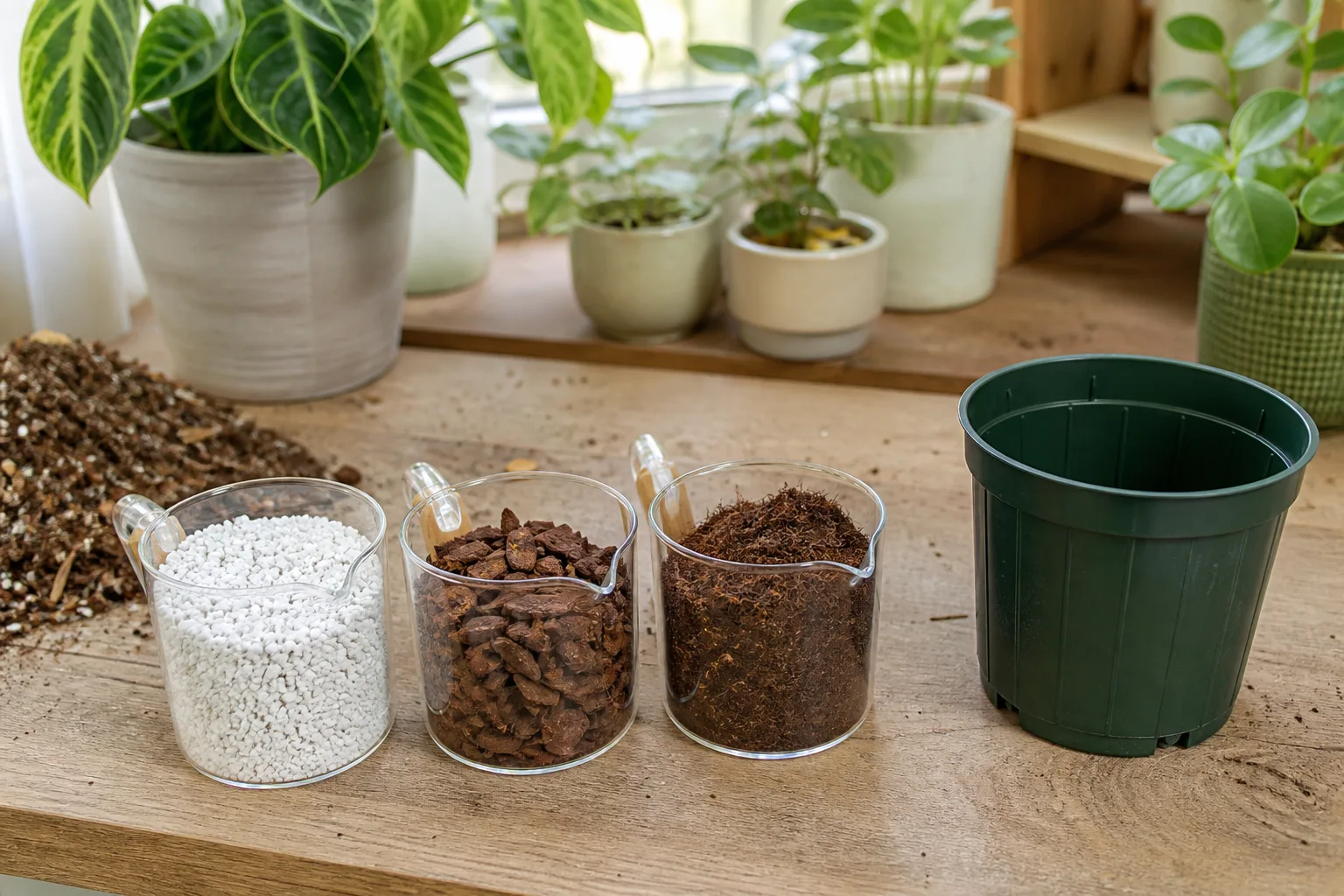
Use a loose indoor potting mix that holds some moisture while leaving air spaces around the roots. A practical starting blend is two parts quality houseplant potting mix to one part perlite or pumice and one part fine orchid bark; adjust toward more coarse material if your room is humid or you tend to water heavily, and toward more potting mix if the root ball dries unusually fast. The useful result is a mix that wets evenly, drains freely, and does not remain heavy for days.
Each ingredient has a job. Potting mix holds water and nutrients, bark adds larger air pockets, and perlite or pumice reduces compaction; none of these amendments makes an oversized, hole-free pot safe from overwatering. You can also use a reputable ready-made indoor tree mix if it stays airy in your conditions, so there is no need to chase an exact recipe.
Avoid dense garden soil and mixes that collapse into a muddy mass after repeated watering. Avoid the opposite extreme too: a very coarse bark-heavy mix may dry before the plant can use the water, especially in a heated room. If water pools on top, the mix stays saturated long after watering, or the plant wilts while the soil remains wet, the root zone needs better aeration and perhaps a root inspection rather than more frequent watering. (RHS ornamental fig growing guide)
Choose a Draining Pot and Repot Only for a Reason
Drainage holes are essential because excess water needs an exit. You can set the nursery pot inside a decorative cachepot, but remove it to water and let it drain, or make sure the outer pot never holds standing water. A layer of gravel at the bottom does not replace drainage holes and can leave the usable root space shallower.
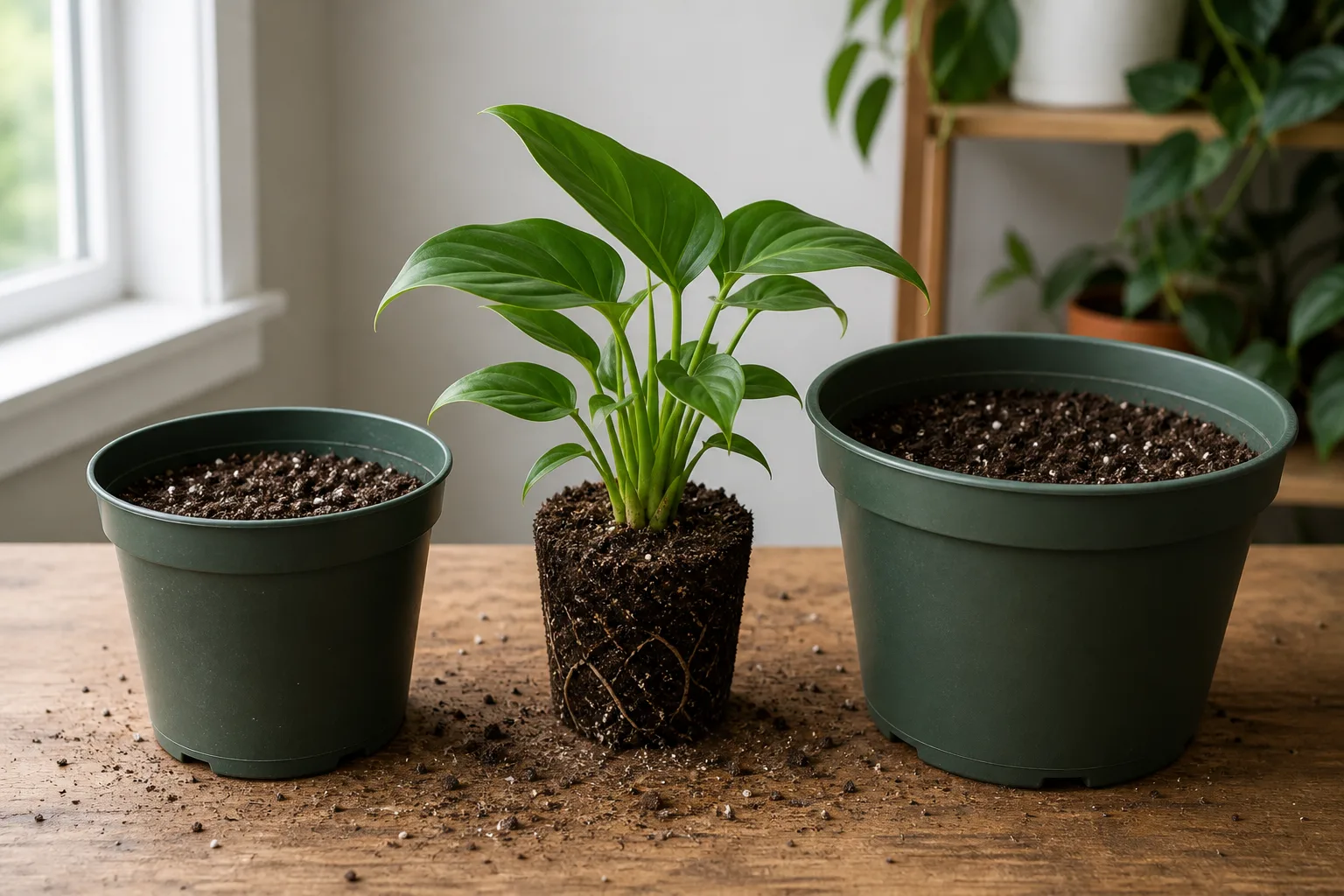
Repot when roots circle densely, emerge from several drainage holes, the mix has broken down and stays wet, or the plant dries so quickly that you cannot keep a steady routine. A few roots at one hole or one yellow leaf are not enough by themselves to justify a larger container. Ficus umbellata may tolerate being slightly snug, and unnecessary repotting can add stress when light or water is already a problem.
Move up only one pot size—usually a container about 1 to 2 inches wider than the root ball, not a huge decorative planter. Loosen only roots that are tightly circling, keep the stem at its former soil line, and fill around the root mass without packing the mix hard. Water it through once, drain thoroughly, then let the top portion of the mix dry before watering again; do not immediately add fertilizer if the fresh mix already contains nutrients.
Spring or early summer is a convenient time to repot because light and growth are increasing, but a failing, sour-smelling, waterlogged mix should be corrected promptly rather than left until a preferred season. If you suspect root rot, inspect the roots, trim only clearly mushy or dead portions with clean tools, and move the plant into fresh, airy mix in a pot that fits the remaining root system. Repotting is a repair, not a cure for continued overwatering.
Keep It Warm; Treat Humidity as a Supporting Factor
A warm, steady room is a better fit than a spot beside a frequently opened exterior door, cold window, heater, or air-conditioning vent. Species care guides commonly suggest ordinary warm indoor conditions around 65–85°F, but the practical priority is avoiding abrupt cold exposure and repeated temperature swings rather than chasing one exact number. The RHS describes ornamental figs as tender plants from tropical regions, and North Carolina State Extension notes that other commonly grown figs can respond poorly to cold drafts or temperature drops. (Sanjay Nursery; RHS ornamental fig growing guide; North Carolina State Extension)
Moderate household humidity is usually workable. Some species-specific growers recommend 50 percent or higher, but that is a helpful target rather than a pass-or-fail line: if the plant is growing well and leaves remain clean and firm, you do not need to turn the room into a greenhouse. A small hygrometer near the foliage can show whether the air is persistently dry, especially during winter heating.
If dry air is causing repeated crisp margins despite sound watering and adequate light, a room humidifier is more predictable than misting. Misting briefly wets the leaf surface but does not hold room humidity up for long; a pebble tray only affects a small area close to the water and should not leave the pot standing in water. Keep good airflow around foliage so adding humidity does not create a stagnant, constantly wet environment. (Healthy Houseplants)
Feed Only While It Is Actively Growing
A balanced liquid houseplant fertilizer can support new leaves during the brighter growing months. Start with the product’s conservative houseplant rate and apply to already-moist soil; concentrated fertilizer on a dry root ball can damage roots, and extra feeding cannot compensate for low light or root problems. Healthy Houseplants recommends monthly feeding from spring through fall, while another species guide uses a spring-and-summer schedule; follow the plant’s visible growth and your fertilizer label rather than treating either calendar as universal. (Healthy Houseplants; Sanjay Nursery)
If the plant is making new leaves in spring and summer, a modest feeding every four to six weeks is a reasonable starting point for many liquid products. If it is not growing because the room is dim or cold, pause or reduce feeding; salts can accumulate in a pot that is not using nutrients. Flush the mix occasionally by watering thoroughly and allowing full drainage, and stop if leaf tips brown after repeated feeding.
Prune for Height and Branching With a Plan
Pruning can shorten an overly tall stem or encourage branching, but it will not make every cut produce two new branches at the exact point you choose. Make a clean cut just above a node during active growth, and remove no more than about one-third of the canopy at once so the remaining leaves can continue supporting the roots. If you only want a tidier outline, remove a few damaged or poorly placed leaves rather than topping the plant.
The cut stems release milky latex. Wear gloves, keep the sap away from eyes and skin, and clean the shears after use; North Carolina State Extension’s general Ficus profile notes that fig latex can irritate skin, with sunlight increasing the concern. Avoid pruning during a period of active leaf loss or immediately after repotting unless damaged tissue must be removed. (North Carolina State Extension)
If the trunk leans, first move the plant toward a stronger light source and rotate it gradually, then use a stake only if the stem cannot support itself. Tie the stem loosely with soft plant ties so it can still thicken; tight wire or string can cut into the bark. A support helps with posture but cannot compensate for a weak, poorly lit plant.
Propagate a Healthy Stem Cutting
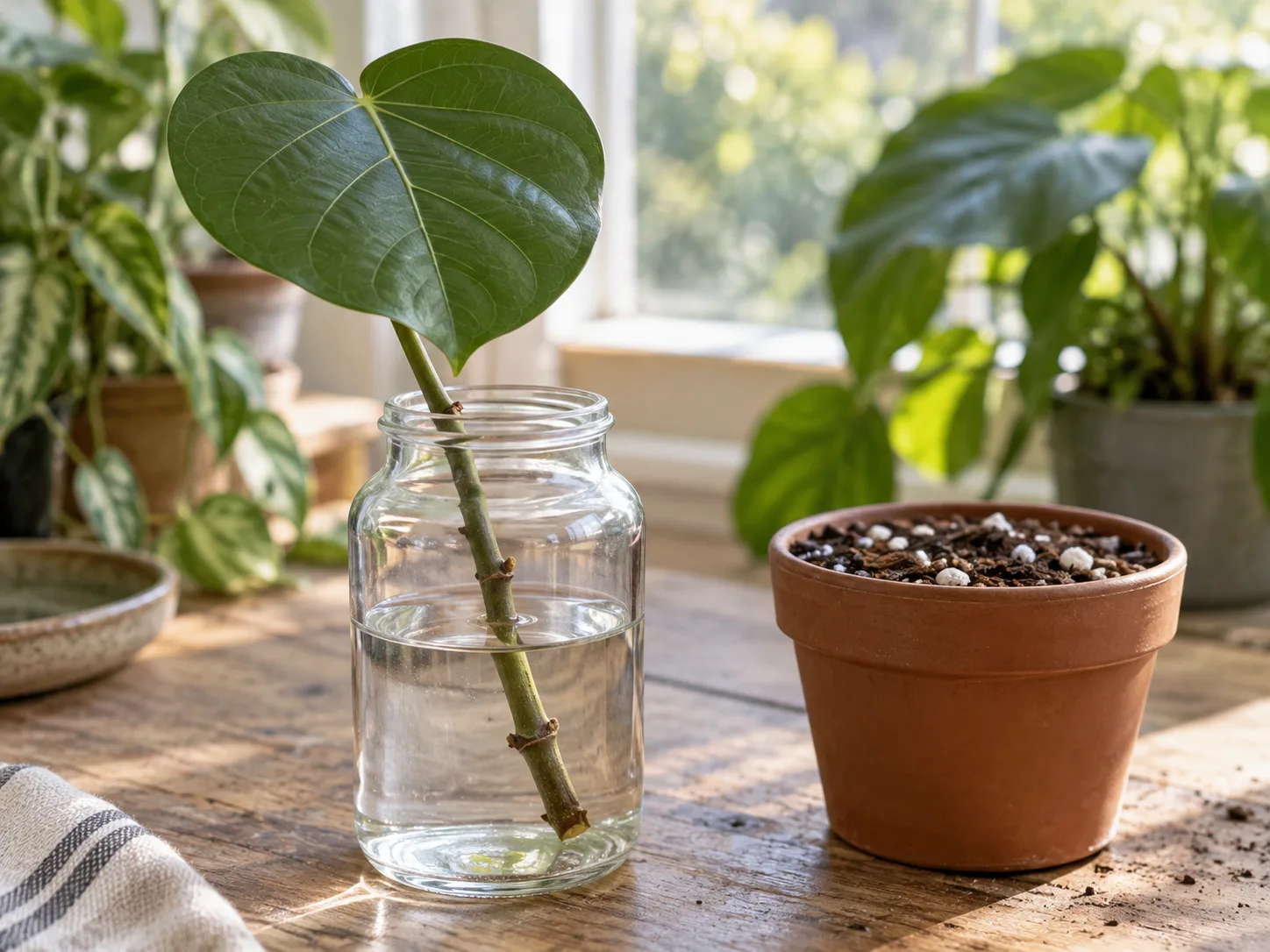
Take cuttings in spring or early summer from a healthy plant that is actively growing. Choose a flexible but firm stem with at least two nodes and one or two leaves, then use clean, sharp pruners to cut just below a node. Ficus sap can irritate skin, so wear gloves and keep the cut surface away from children and pets.
You can root the cutting in water or a lightly moist, airy propagation mix. For water, submerge at least one node while keeping the leaves above the surface; replace the water when it becomes cloudy and keep the jar in warm, bright indirect light. For a soil-based start, place a node under the surface in a small pot of damp—not sodden—mix, then cover loosely with a clear bag if the room is dry and open it periodically for fresh air.
Water rooting makes root development easy to see, but roots formed in water need time to adapt when moved into potting mix. Soil rooting avoids that transition but makes it harder to know what is happening below the surface. Species-specific growers describe both water and soil as options; try one cutting first and keep the parent plant’s care unchanged while you wait. (Sanjay Nursery; Healthy Houseplants)
Once roots are visible and branching, pot the cutting into a small container with drainage and airy mix. Keep the medium evenly but lightly moist at first, then resume the same partial-dry cycle used for the established plant as new growth appears. Do not tug on the cutting every day; repeated checking can tear the fragile roots before they anchor.
Diagnose Problems in the Right Order
When a leaf changes, check the recent conditions before changing the whole care routine. Ask three questions: Is the mix wet, evenly moist, or dry below the surface? Did the plant move, receive stronger sun, or sit in a draft? Are one or two older leaves affected, or is the pattern spreading across new growth too?
Change one factor at a time when there is no emergency. If the soil is wet and stems are soft, inspect drainage and roots; if it is dry and the leaves are limp, water thoroughly and let it drain. If the roots are healthy but growth is stretched, address light before adding fertilizer, humidity, or a larger pot.
Yellow Leaves: Check the Pattern and the Soil
One older leaf turning yellow while the rest of the plant continues growing can be normal turnover. Several leaves yellowing at once calls for a root-zone check: if the mix stays wet, empty trapped runoff and let it dry appropriately; if the mix is bone dry and the pot feels light, water it through. Root damage can make a plant show thirst aboveground while the medium below remains saturated, so do not use yellow leaves as a stand-alone watering signal. (North Carolina State Extension)
If yellowing begins on the window-facing side after moving the plant, consider sun stress. If it begins on shaded lower growth while new stems stretch toward a window, light may be insufficient. Nutrient shortage is only one possibility and is less likely to be solved by feeding if the plant is not actively growing or the roots are compromised.
Brown Edges or Pale Patches: Separate Dry Air From Sun Scorch
Dry, crisp edges can follow a long gap between waterings, persistently dry air, or salt buildup from fertilizer; brown patches on the glass-facing side after a move point more toward sun scorch. These causes can look similar in a photograph, so note when the damage started and whether it affects exposed or older leaves. Check soil moisture and recent changes before raising humidity or watering more often.
Brown tissue will not turn green again. Trim only the dead portion with clean scissors if the appearance bothers you, leaving a narrow brown margin rather than cutting into healthy green tissue. If marks keep appearing on new leaves, correct the underlying exposure, watering, or fertilizer issue instead of repeatedly trimming symptoms.
Sudden Leaf Drop: Look for a Recent Change
Ficus plants can drop leaves after a substantial change in light, temperature, watering, or location. North Carolina State Extension notes that both too much and too little water, as well as temperature drops, can trigger leaf loss in commonly grown figs; apply that genus-level pattern cautiously and check this plant’s conditions rather than assuming every lost leaf means overwatering. (North Carolina State Extension)
If leaf drop begins after you move the plant, return it to one bright, stable spot and avoid repeatedly repositioning it. If the mix is wet, do not add water simply because leaves are falling; if it is dry well below the surface, water slowly and let the pot drain. Escalate to a root inspection only when the soil remains wet, the smell is sour, or stems and roots feel mushy.
Find Pests Early and Use the Least Disruptive Response
Check leaf undersides, petioles, and stem joints when you water. Scale may look like small brown or tan bumps that do not brush away easily; mealybugs resemble white cotton, while spider mites can leave fine webbing and stippled leaves. Ficus species are susceptible to sap-feeding insects, including scale and mealybugs, so early inspection is useful even when the plant looks healthy. (North Carolina State Extension)
Isolate an infested plant before treatment and confirm the insect before choosing a product. For a small infestation, wipe insects off with a damp cloth or cotton swab and rinse leaf surfaces; repeat inspections because eggs and hidden insects may remain. If you use insecticidal soap, choose a product labeled for indoor ornamental plants, follow its label exactly, and test a small leaf area first—especially because ficus leaves can react to products or strong sun.
Sticky residue can be honeydew from scale or mealybugs, but dust and water spots can also make leaves look dirty. Wipe leaves gently with a damp soft cloth, then inspect the cloth and petioles for insects. Avoid routine pesticide sprays when no pest is present; they add exposure without solving a problem.
Handle Latex and Pet Access Carefully
The available extension guidance is genus-level, not a dose study for Ficus umbellata. North Carolina State Extension notes that Ficus latex can cause minor skin irritation and flags the genus as a concern for pets and children; the ASPCA also cautions that eating plant material can cause gastrointestinal upset and recommends contacting a veterinarian or poison-control service after suspected ingestion. Treat the plant as ornamental rather than edible, wear gloves for pruning, and keep fallen leaves and cuttings out of reach. (North Carolina State Extension; ASPCA Animal Poison Control)
If sap touches skin, wash it off promptly and avoid exposing the spot to sunlight until it is clean. If a pet chews the plant or a child may have swallowed a piece, do not guess at risk from the plant’s name alone; contact a veterinarian, poison-control service, or local medical professional with the plant identification and estimated amount. This careful approach is more useful than labeling the species with a certainty that the available sources do not provide.
Adjust Care as Indoor Growth Slows
In fall and winter, shorter days and cooler rooms usually slow new growth and lengthen the time soil stays damp. Keep the plant in its brightest safe location, reduce watering only as the mix dries more slowly, and stop or reduce fertilizer when it is not actively making leaves. Do not automatically move it far from a window to avoid cold if the glass itself is not freezing; instead, keep foliage from touching cold panes and protect it from drafts.
If you bring the plant outdoors for warm weather, wait until nights are reliably warm and acclimate it over a week or two in bright shade before increasing exposure. Outdoor light and wind can dry the pot much faster, while direct midday sun may scorch leaves that developed indoors. Bring it back inside before chilly nights and inspect for insects before setting it near other houseplants.
Conclusion
Ficus umbellata grows best when you give it bright, stable light, a breathable potting mix, and a full watering followed by enough drying time for air to return to the roots. The exact interval will change with the season and your home, so use the mix, the pot’s weight, and the plant’s new growth as your guide instead of watering on a fixed weekday.
When a leaf yellows, crisps, or drops, look for a pattern and check the root zone before making a big change. A steady location, functional drainage, measured adjustments, and careful handling of the plant’s sap will do more for a healthy umbrella fig than adding products or changing several conditions at once.