Best Vines to Grow on Pergolas and Arbors by Goal
Find the best vines to grow on pergolas and arbors by climate, climbing style and frame strength, with picks for shade, flowers, fruit and low upkeep.
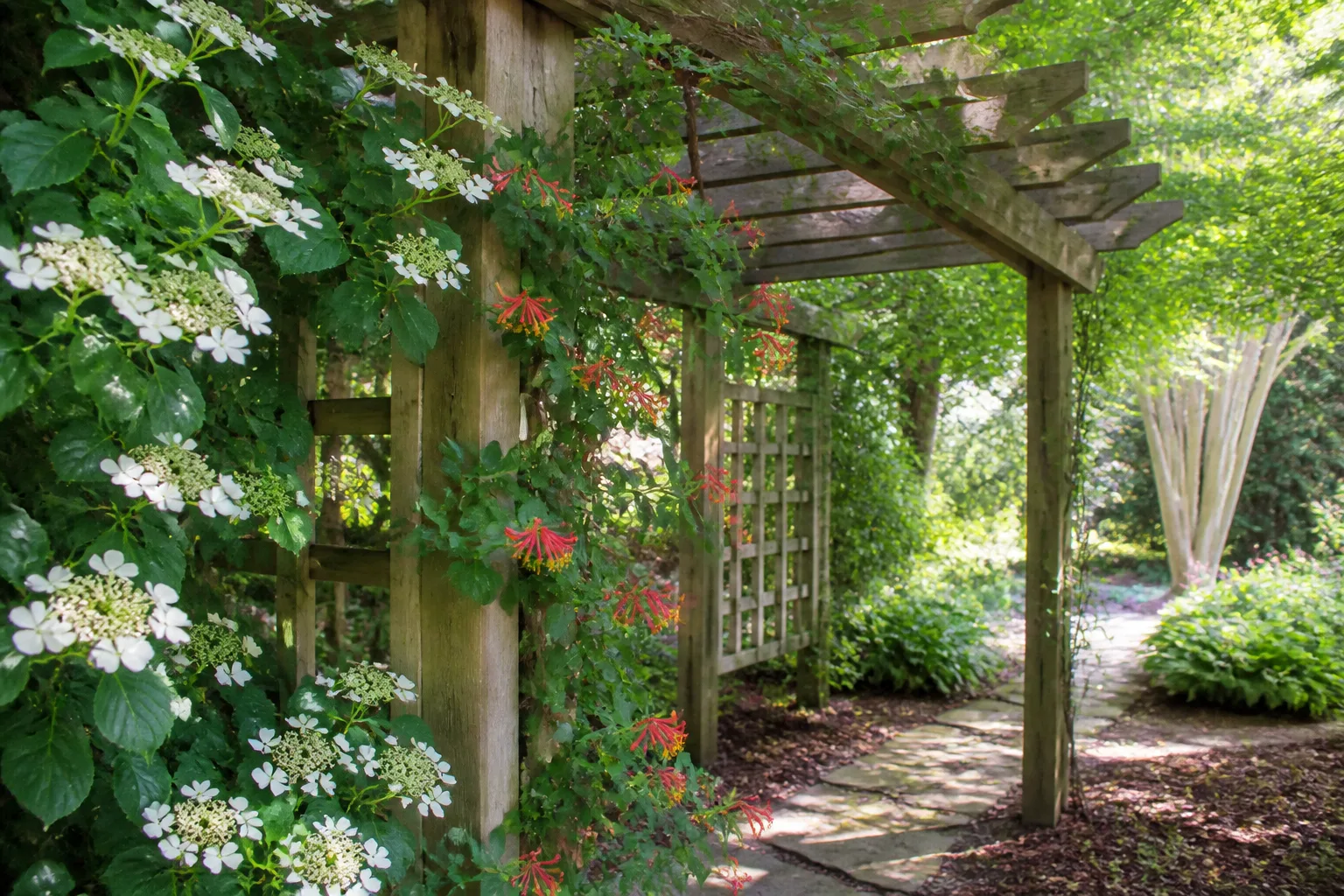
A vine can turn an open pergola into a leafy summer room, add flowers over a garden gate, or provide fruit overhead. The right choice depends on more than bloom color: a pergola vine must suit your climate, climb the frame you have, and stay manageable as its stems thicken and its canopy fills in.
Start with the structure and your goal. A sturdy, freestanding arbor can carry a woody wisteria or grapevine; a light kit pergola is a better match for clematis, honeysuckle, or seasonal annuals. If you want shade quickly, select a vigorous vine only if you are ready to prune and contain it.
| If you want… | Start with… | Main trade-off |
|---|---|---|
| Summer shade and fruit | Grapevine | Needs full sun, strong support, and annual pruning |
| Cascading spring flowers | American wisteria | Still a large woody vine; give it a stout frame |
| Large blooms on a lighter arbor | Clematis | Choose the variety’s pruning group and add fine support |
| Native flowers and hummingbirds | Coral honeysuckle | Twines around slender supports; takes time to cover a roof |
| A rose-covered walkway | Climbing rose | You must tie stems in; thorns and pruning are part of the job |
| Seasonal color in a small space | Sweet pea or moonflower | Annual or frost-tender, so it will not provide permanent shade |
Match a vine’s growth habit to the structure
Pergolas and arbors are open frameworks, but vines do not all climb the same way. A plant that wraps a narrow wire may not grip a thick post; a vine that adheres to walls can be difficult to remove; a mature woody climber may be too heavy for a decorative frame. Check the botanical name and mature growth habit on the nursery label, because common names can refer to several species with very different behavior.
Start with the climbing method and mature weight
Twining vines coil their stems around slender supports. Wisteria, honeysuckle, and many jasmines need something they can wrap around as they climb, such as a post-mounted wire or lattice. Clematis uses its leaf stalks to grasp thin supports, while grapes and passionflowers use tendrils; both do better with a network of wires or narrow crosspieces than with a single thick column. Roses, bougainvillea, and some scrambling vines do not fasten themselves securely, so guide and tie them to the frame as they grow.
The frame matters just as much as the plant. Woody wisteria and established grapes can become substantial, while wet foliage and wind catch add load across the roof. University of Utah Extension warns that mature wisteria can overwhelm all but the strongest structures and recommends substantial posts and beams; the Royal Horticultural Society likewise notes that vigorous climbers may need restriction as they cover pergola beams (USU Extension; RHS pergola guidance). If your pergola is lightweight, attached to a house, or already flexes, choose a moderate vine and check the manufacturer’s limits before adding a dense canopy.
Choose a pergola vine by its job
The most useful shortlist begins with what the structure should do. Deciduous vines can shade a patio in summer and let more winter sun through after leaf drop; evergreen or semi-evergreen choices screen the frame longer but also need a suitable winter climate. For a small arbor, flowers and scent may matter more than a continuous roof of leaves.
Grapes: deep summer shade with a harvest
Grapevines are among the most practical pergola choices when you want a leafy summer canopy and edible fruit. A sunny, warm position helps fruit ripen, and the vine’s flexible canes can be trained along crossbeams. The trade-off is upkeep: a grape canopy can grow thick, harbor disease if air cannot move through it, and drop fruit that attracts insects or stains paving.
Choose a grape variety suited to your region and intended use rather than planting an unspecified wine grape. Some cultivars are bred for cold climates or table use, and local extension guidance can help you match the variety to winter temperatures and disease pressure. University of Minnesota Extension notes that grapevines need sturdy support, grow quickly, and require dormant-season pruning; a pergola can be trained for shade, though a simpler trellis gives more sunlight and easier access when fruit quality is the priority (UMN Extension grape guide). A pergola grape is a sensible choice if you value dappled shade and are willing to prune each year, not if you want a no-work roof.
American wisteria: spring flower curtains for a strong arbor
Wisteria produces hanging clusters of fragrant flowers and a long-lived woody framework, which makes it an iconic arbor vine. In the eastern United States, look for American wisteria (Wisteria frutescens) or a named native selection. It is less aggressive than the commonly planted Chinese and Japanese species, although it still needs a sturdy, freestanding structure and regular training. Its flowers tend to appear with the leaves rather than on bare stems, so the display is different from the dramatic, early bloom of many Asian varieties.
Do not buy a plant labeled only “wisteria” if species matters in your region. North Carolina State Extension describes American wisteria as less aggressive than Chinese wisteria, while its genus guidance notes that Asian species can escape cultivation and compete with trees (NC State Extension: wisteria). Ask a local nursery or extension office about invasive status before buying; state and county lists differ. Even the native choice is not a petite vine: give it a dedicated arbor, keep shoots out of gutters and siding, and prune it on a schedule.
Wisteria seeds and pods are not edible. Poison Control reports that swallowing seeds, pods, or other plant parts can cause gastrointestinal symptoms, so remove fallen pods where children or pets might investigate them (Poison Control).
Clematis: floral color for a lighter framework
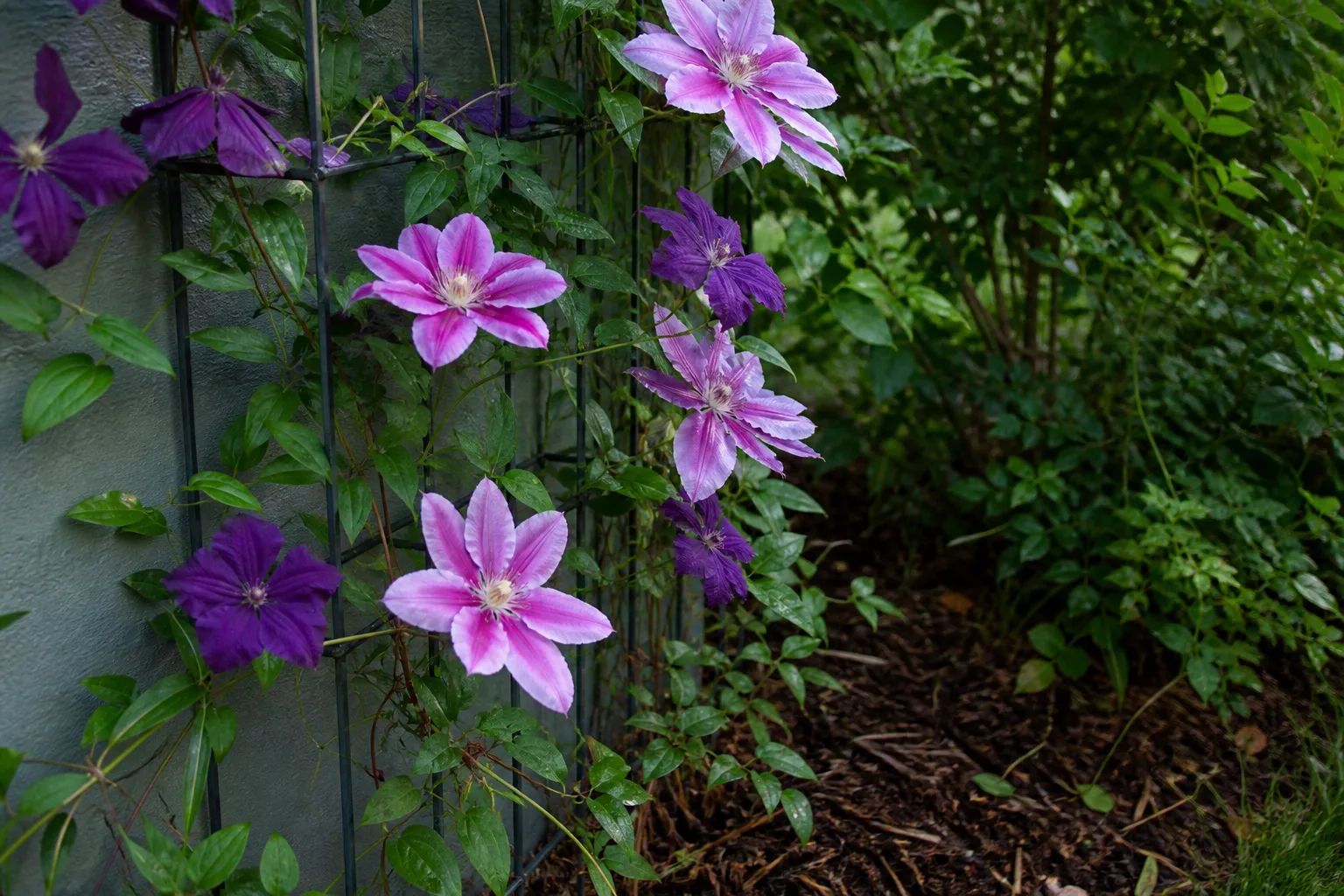
Clematis is a better fit than wisteria when you want showy blooms without building a heavy timber structure. Many cultivars stay more moderate in size, and flower colors range from white and pink to purple and deep blue. The vine climbs with its leaf stalks, so give it netting, wire, or narrow lattice that the stalks can wrap around; it will not wind itself around a broad pergola post.
Buy by mature height and bloom timing, then note the plant’s pruning group before cutting. Clematis types flower on different ages of wood: some bloom on last season’s stems, while others flower on new growth. A hard pruning at the wrong time can remove next season’s buds. North Carolina State Extension summarizes the three pruning groups and recommends handling the stems gently because they break easily (NC State Extension: clematis). Keep the root zone evenly moist and use mulch to protect it from drying; the old “feet in the shade, head in the sun” rule is less important than steady moisture and the light needs of the specific cultivar.
Coral honeysuckle: a native pollinator vine
Coral or trumpet honeysuckle (Lonicera sempervirens) is a strong choice for gardeners in its native range who want red-orange flowers and hummingbird visits without planting an enormous woody vine. It twines around slender supports, usually reaches a manageable pergola height, and can stay evergreen in mild-winter climates. Its flowers are showy rather than strongly fragrant, so choose it for color and wildlife value more than perfume.
Plant it in sun for the best flowering, although it tolerates some shade. The North Carolina Extension Plant Toolbox lists it as native to the eastern United States, suitable for arbors and trellises, and attractive to hummingbirds (NC State Extension: coral honeysuckle). Check the label: Japanese honeysuckle is a different species and is invasive in many areas. The native vine is a slower, more controllable way to soften a post or cover one side of an arbor.
Climbing roses: fragrance and flowers you can shape
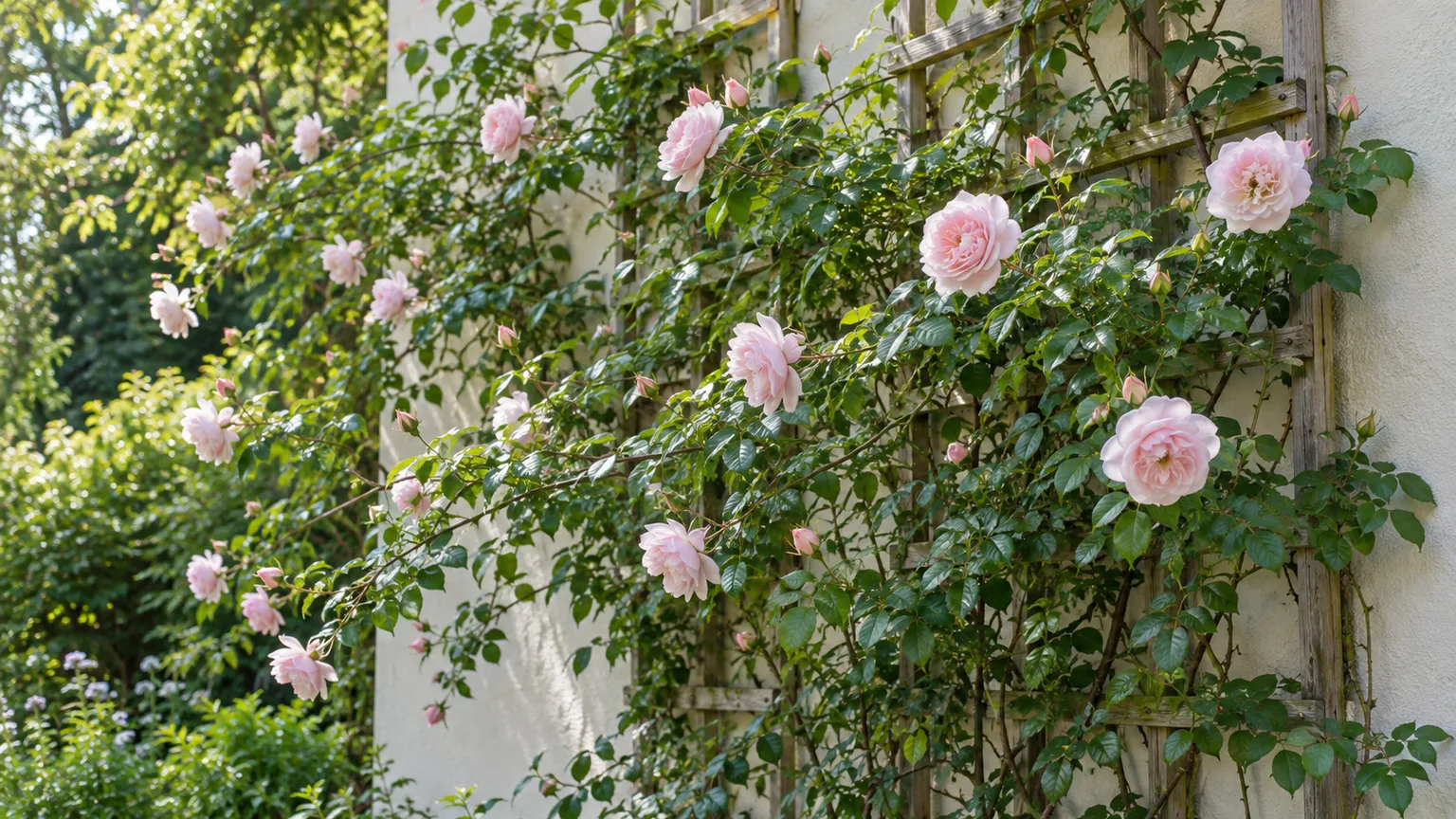
A climbing rose gives an arbor the classic look of long, flowering canes over a path or seating area. Pick a cultivar sold as a climber or rambler, not a compact shrub rose, and check how much room its mature canes need. Many climbing roses bloom best when you spread the main canes sideways along the frame rather than letting every shoot point straight up.
Unlike twining vines, roses do not hold themselves to a pergola. Use soft ties or garden wire and attach the long canes to beams before they become stiff; avoid wrapping them tightly around posts, where thickening stems can be trapped. Expect to manage thorns, fallen petals, and periodic pruning. The Royal Horticultural Society’s pergola guidance lists roses among suitable climbers, and BBC Gardeners’ World recommends climbing and rambling roses for pergola planting (RHS; Gardeners’ World).
Passionflower: tropical-looking blooms and tendrils
Passionflower vines produce intricate flowers and climb with tendrils that grasp wire or thin crosspieces. They suit a sunny, warm pergola where you want a dramatic focal point more than a uniform leaf roof. Species vary widely in cold tolerance and vigor, so choose one that matches your location instead of assuming every passionflower is hardy or edible.
Some passionflowers produce edible fruit, but that depends on the species and cultivar. The familiar purple or yellow passion fruit is not a safe stand-in for every ornamental Passiflora; identify the plant and wait for fully ripe fruit before eating. If you grow one in a cold-winter area, select a hardy species and expect the top growth to die back or be damaged by frost, depending on local conditions.
Bougainvillea and mandevilla: frost-tender color
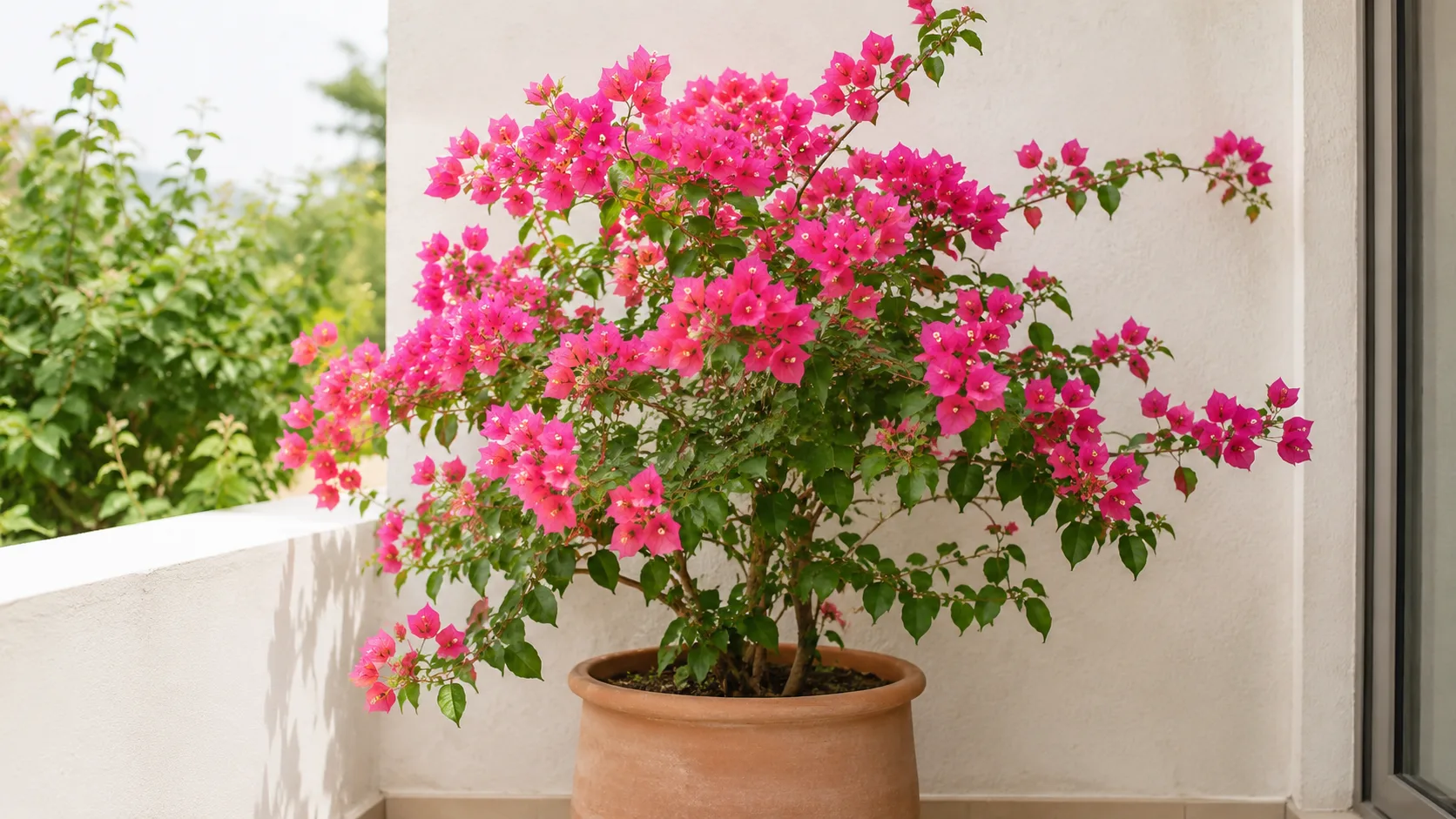
In frost-free or nearly frost-free climates, bougainvillea and mandevilla can bring long-season color to a sunny patio. Bougainvillea has brilliant papery bracts and thorny, woody growth; it can be trained over a strong support, but it is not a low-maintenance choice for a small pergola. Mandevilla has large trumpet flowers and a more flexible habit, making it easier to guide up a modest trellis or post.
In colder climates, grow either in a container and treat it as a seasonal patio vine, then move it to protected conditions before frost. Containers dry faster than garden soil and need regular watering during active growth. Neither plant will reliably create a permanent outdoor canopy where winters freeze; use it for flowers and a tropical look, not as a hardy shade solution.
Jasmine and warm-climate climbers: fragrance with a climate check
Pink jasmine (Jasminum polyanthum) and bower vine (Pandorea jasminoides) are options for mild-winter gardens where you want fragrance and a leafy screen. Both can be trained onto a pergola with ties or a slender support, but the local climate determines whether they remain outdoors year-round. Cape honeysuckle (Tecoma capensis) is a vigorous, warm-climate shrub-vine that can be trained across a fence or arbor; it is often better suited to a managed side screen than a dense overhead roof.
Giant Burmese honeysuckle (Lonicera hildebrandiana) needs a long growing season and substantial support, so it is a specialty choice for warm regions rather than a general recommendation. Carolina jessamine (Gelsemium sempervirens) is an evergreen native with fragrant yellow flowers in parts of the southeastern United States, but every part is poisonous if eaten. North Carolina State Extension flags its toxicity; keep it out of reach where children or pets chew plants, and do not confuse it with edible jasmine (NC State Extension: Carolina jessamine). These warm-climate options are worth considering only after confirming hardiness, local status, and the plant’s mature size.
Sweet peas, moonflower, and firecracker vine: one-season cover
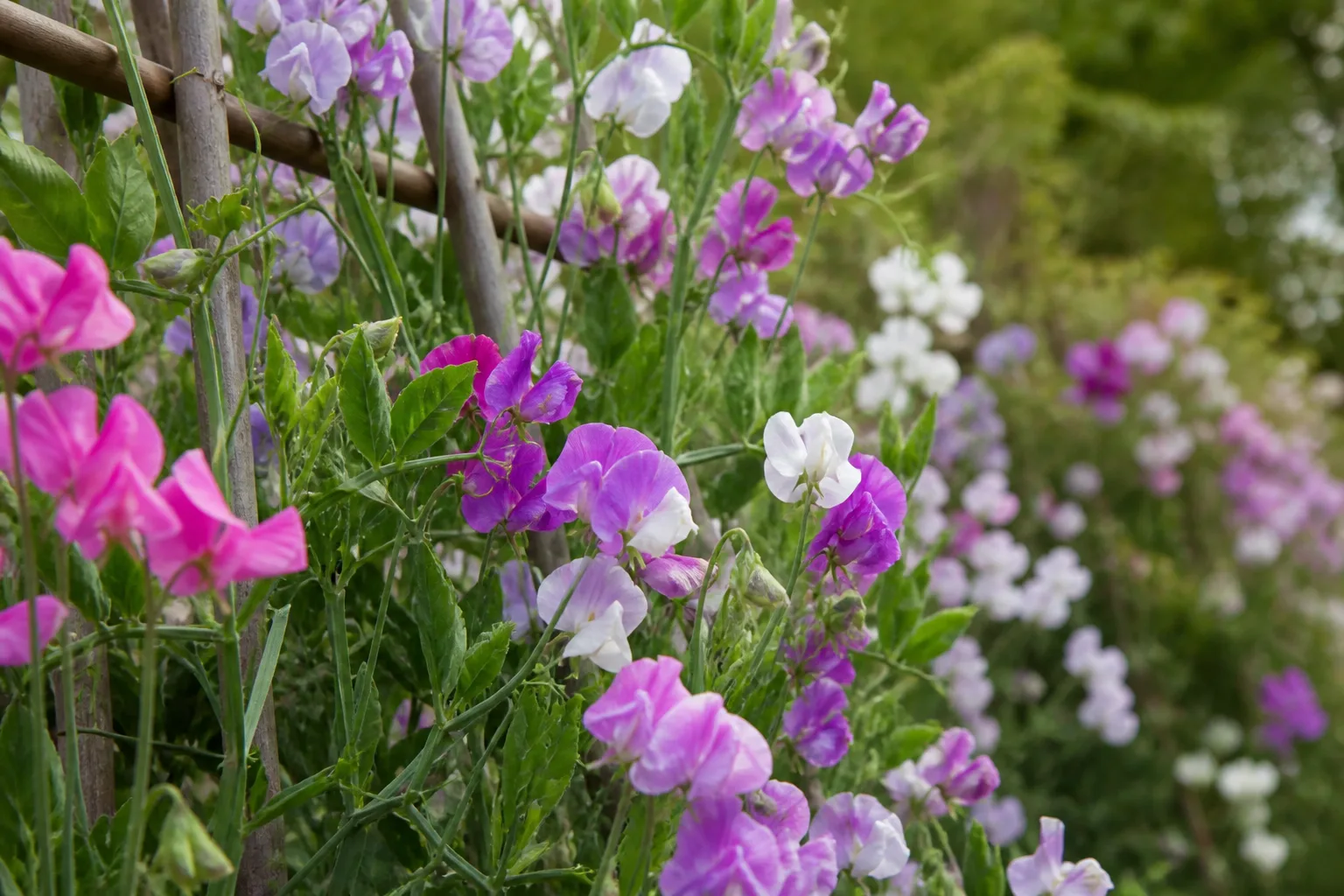
Annual vines let you test a color scheme or cover a light arbor without committing to a permanent woody plant. Sweet peas (Lathyrus odoratus) climb with tendrils and are prized for fragrance, but they prefer cool weather and generally perform best in spring. They can reach several feet but will not make a dense, lasting shade roof. North Carolina State Extension identifies sweet pea as a climbing annual and warns that it is poisonous; ornamental pods are not edible (NC State Extension: sweet pea).
Moonflower (Ipomoea alba) opens fragrant white flowers at night in warm weather, while firecracker vine (Ipomoea lobata) gives a seasonal display of red-to-yellow blooms. Both are frost-tender and need a long warm season to fill out. Start them on a light mesh or wire grid, guide young stems, and remove seed pods if you do not want volunteer seedlings. Their foliage is temporary, so pair them with a hardy framework plant only if you can keep the two from competing.
Virginia creeper: foliage and fall color with a fruit warning
Virginia creeper (Parthenocissus quinquefolia) offers a dense green screen in summer and vivid red foliage in fall. It clings using tendrils with adhesive tips, rather than twining around beams, so it can cover posts and panels without much tying. That same grip makes it difficult to remove cleanly from a surface and can leave attachment pads behind.
Use it only where vigorous foliage and seasonal cleanup are welcome, such as a freestanding arbor away from siding, windows, and gutters. The dark berries are eaten by birds but are not food for people; Poison Control notes that the plant can be mistaken for poison ivy and that ingestion can cause symptoms (Poison Control). If children or pets use the patio, consider coral honeysuckle or clematis instead.
Climbing hydrangea: white flowers for a shadier frame
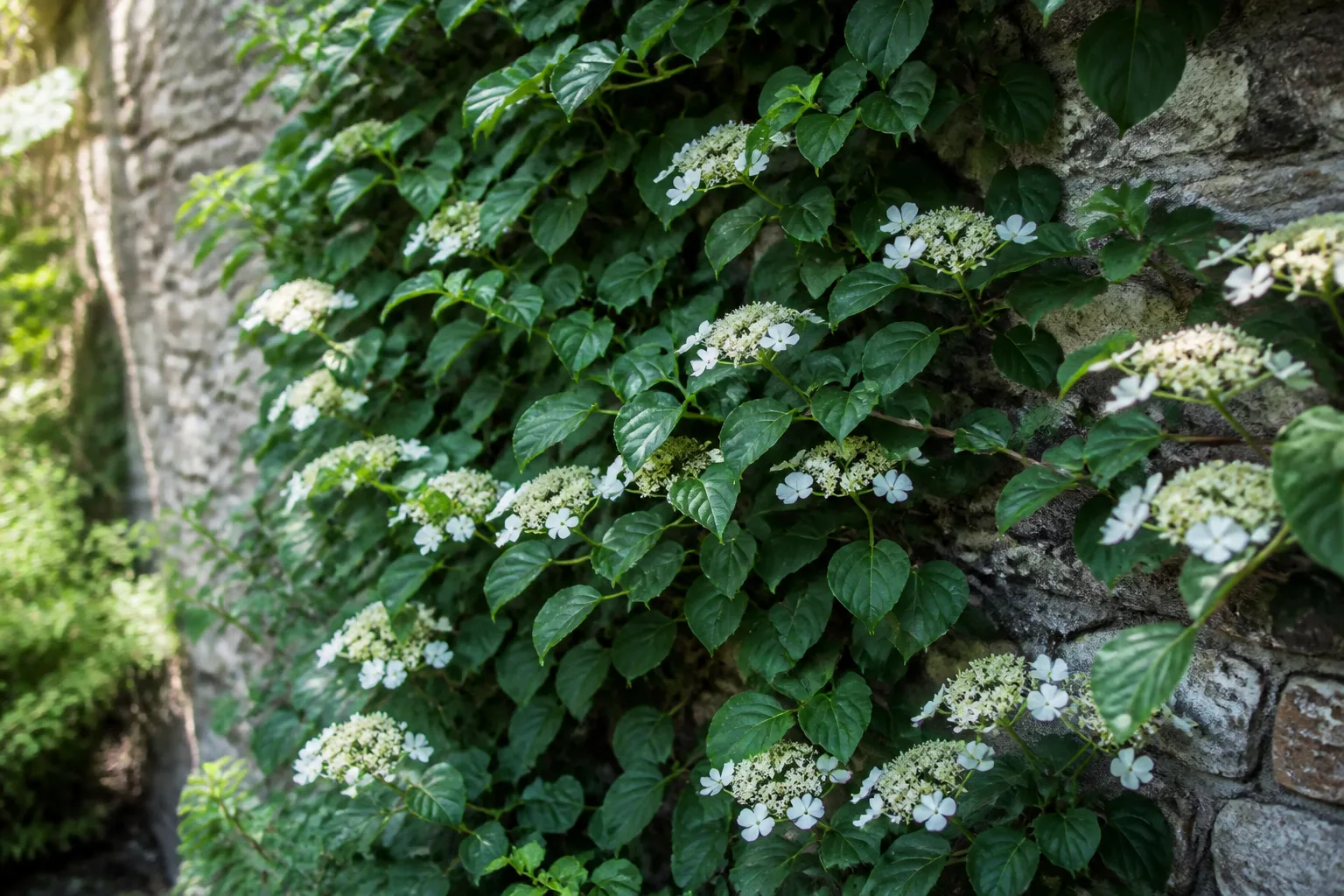
Climbing hydrangea (Hydrangea anomala subsp. petiolaris) is one of the better choices for a partly shaded garden where many flowering vines bloom poorly. It clings with aerial rootlets and produces broad white flower clusters over substantial foliage. It is slow to establish, then becomes a large, heavy plant, so plan the permanent support before planting.
On a pergola, it is often easier to use climbing hydrangea on a side panel or post-mounted trellis than to expect it to cover the entire roof quickly. It can soften a shaded walkway or the back of an arbor while a smaller climber fills the top. Make sure the structure can carry the mature vine, and do not plant it against delicate siding simply because its rootlets can grip a wall.
Vigorous vines that need a containment plan
Fast growth is useful when a new structure looks bare, but it can create a long maintenance commitment. A plant that spreads by underground runners or clings to every surface is not necessarily the best choice for a patio just because it can cover a pergola quickly. If you cannot reach the roof to prune and inspect it, avoid the most aggressive candidates.
Trumpet creeper and chocolate vine: plant with room to prune
Trumpet creeper (Campsis radicans) has bright tubular flowers that attract hummingbirds, but it is a vigorous woody vine that can become heavy and spread by underground suckers. North Carolina State Extension says its aerial rootlets attach it to structures and that the species can form dense colonies; it needs a strong frame and room to contain the runners (NC State Extension: trumpet creeper). Use it on a sturdy, freestanding arbor only where you can mow or remove suckers. Avoid a small patio, a lightweight kit, or a spot beside fragile masonry.
Chocolate vine (Akebia quinata) is a twining climber with unusual spring flowers and attractive foliage. It can be appealing where it is well behaved, but its vigor and tendency to spread make local invasive-plant guidance important before purchase. A plant that escapes into nearby natural areas is a poor trade for a little extra coverage. If your region lists it as invasive or problematic, choose a locally native honeysuckle or a manageable clematis instead.
Chinese and Japanese wisteria: check regional invasiveness
Chinese (Wisteria sinensis) and Japanese wisteria (W. floribunda) are often sold for their long, fragrant flower clusters, but their woody stems can girdle supports and their vigorous growth can escape into natural areas. The exact status varies by region, so check your state extension service or invasive-plant council before planting. North Carolina State Extension describes the American species as less aggressive; Duke Gardens also documents replacing Chinese wisteria with a native alternative as part of its sustainability work (NC State Extension; Duke Gardens).
If you already have an Asian wisteria, do not let it climb a tree, house, drainpipe, or a thin lattice panel. Keep one main trunk and selected framework branches on a stout, detached arbor, then remove suckers and long whips several times during the growing season. Wisteria is a plant for gardeners who will prune; it is a poor “plant it and forget it” choice.
Plant, train, and maintain a safe canopy
Before buying, write down the pergola’s height and width, the hours of direct sun, winter lows, and whether you want summer shade or flowers over a walkway. Match those conditions to the plant’s mature dimensions and hardiness range, then check local invasive-plant lists and toxicity notes. If the label names only a genus, ask the nursery which species or cultivar you are getting.
Inspect the frame before planting. Look for loose post bases, rot, cracked fasteners, a roof that flexes, or a support that was designed only for a light fabric cover. Heavy woody vines belong on a substantial freestanding structure; a smaller arbor or bolt-on kit is safer with moderate climbers, annuals, or a few trained canes. Keep any vine clear of gutters, doorways, lights, and moving louver panels.
Set the plant where its roots have room and where you can water it without soaking the post base. Many climbers need guidance for the first few feet: attach a narrow wire or trellis to the post, then direct the strongest young shoot upward with a loose tie. Do not twist woody stems around a beam or cinch ties so tightly that they cut into expanding growth. For grapes and passionflower, provide thin crosswires for tendrils; for clematis, add a fine mesh or slender wires; for roses, spread and tie the main canes along the frame.
Keep new plants evenly watered while they establish, especially when grown in containers or beside paving that heats and dries the soil. Mulch the root zone without piling it against a wooden post, and avoid high-nitrogen feeding if the plant produces leaves but few flowers. Once the vine reaches the roof, remove shoots that head toward the house, wrap around one another, or block access for pruning.
Pruning time depends on where the plant forms flowers. Clematis types differ: some flower on old stems and should be pruned lightly after flowering, while others bloom on new growth and can be cut back in late winter. Grapes are pruned during dormancy to balance the canopy and support fruit production; roses, wisteria, and honeysuckle each have their own timing. BBC Gardeners’ World emphasizes training new climbers early and pruning vigorous types to keep them in bounds, while the RHS recommends removing ties and guiding stems as the plant grows (Gardeners’ World: pruning vigorous climbers; RHS training and pruning).
Inspect the canopy at least once each season. Remove dead or crossing growth, keep the roof drain paths open, and prune away stems pressing against the house or forcing apart joints. If you cannot safely reach the top of the pergola, choose a smaller vine or hire help for periodic pruning before the canopy becomes too large to control.
Conclusion
The best vine for a pergola is the one that fits the frame, local climate, and amount of maintenance you can keep up with. Grapes bring summer shade and fruit, clematis and coral honeysuckle suit lighter supports, roses need hands-on training, and wisteria belongs only on a strong detached arbor with regular pruning.
Before planting, check the species name, mature size, climbing method, and regional invasive status. Then match the support to the plant and guide new growth early; those decisions prevent most problems and help the pergola become the kind of leafy outdoor room you wanted.



