Mountain Laurel Care and Growing Guide
Learn how to grow mountain laurel in acidic, well-drained soil, choose the right shade, protect next year's buds, and select compact cultivars.
Is mountain laurel right for your garden?
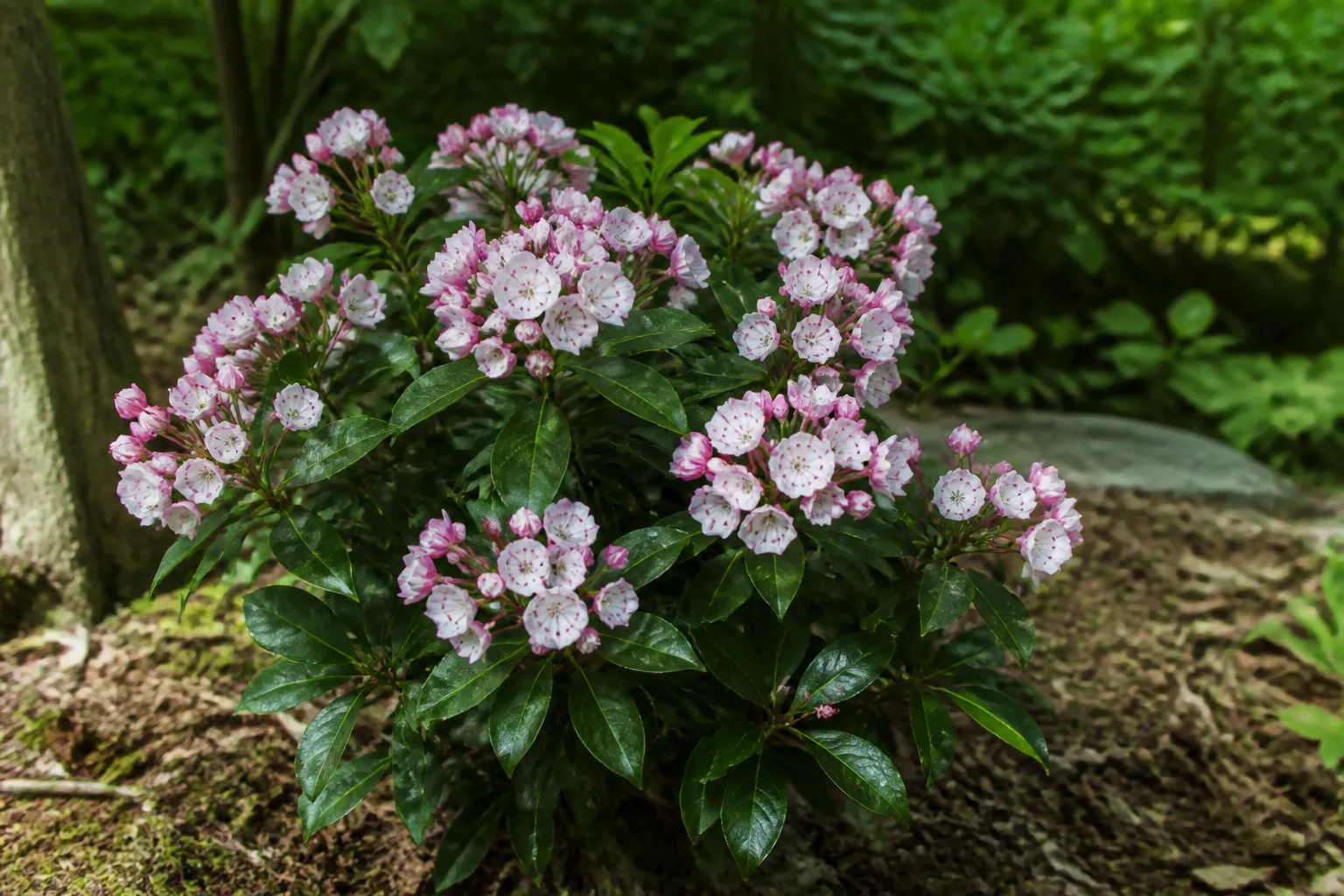
Mountain laurel (Kalmia latifolia) is a broadleaf evergreen shrub with glossy leaves and spring clusters of white, pink, or rose flowers. It is native to eastern North America, so the claim that it is “probably native to your area” is true only if your garden lies within that eastern range—not automatically if you live anywhere in the United States. North Carolina State Extension lists its distribution from New England south through parts of the Midwest, Gulf Coast, and Florida Panhandle. (North Carolina State Extension)
This is a good shrub for a woodland edge, a naturalized slope, or a lightly shaded border where the soil is acidic and drains reliably. It is a poor choice for a sunny, alkaline foundation bed, a low wet spot, or the strip directly beside a house in a fire-prone landscape. The most useful mountain laurel care decision happens before you buy the plant: test the soil, watch the light for a full day, and measure the mature footprint rather than the nursery pot.
What the shrub looks like through the seasons
Flowers, foliage, and mature size
Mountain laurel keeps its leathery, dark green leaves through winter, giving a garden structure when deciduous shrubs are bare. In late spring or early summer, terminal clusters called corymbs open above the foliage. Individual flowers are shallow cups with five sides and often have purple or red markings inside; the buds can be as decorative as the open flowers.
The flower has an unusual pollination mechanism. Its stamens rest under tension in small pockets in the petals and spring toward a visiting insect when triggered. That detail is fun to observe, but the practical lesson is simpler: this is a nectar-and-pollen shrub for an active garden, not a plant you should treat as a cut-flower crop or a food source.
The straight species commonly develops into a dense, rounded shrub around 6 to 10 feet tall, although mature plants can fall outside that range depending on climate, cultivar, and growing conditions. Older plants may open up and develop gnarled trunks rather than staying like a perfectly clipped ball. Give the plant room to become interesting instead of choosing a site that requires constant shearing.
The site test: light, soil, and space
Light that protects leaves and supports blooms
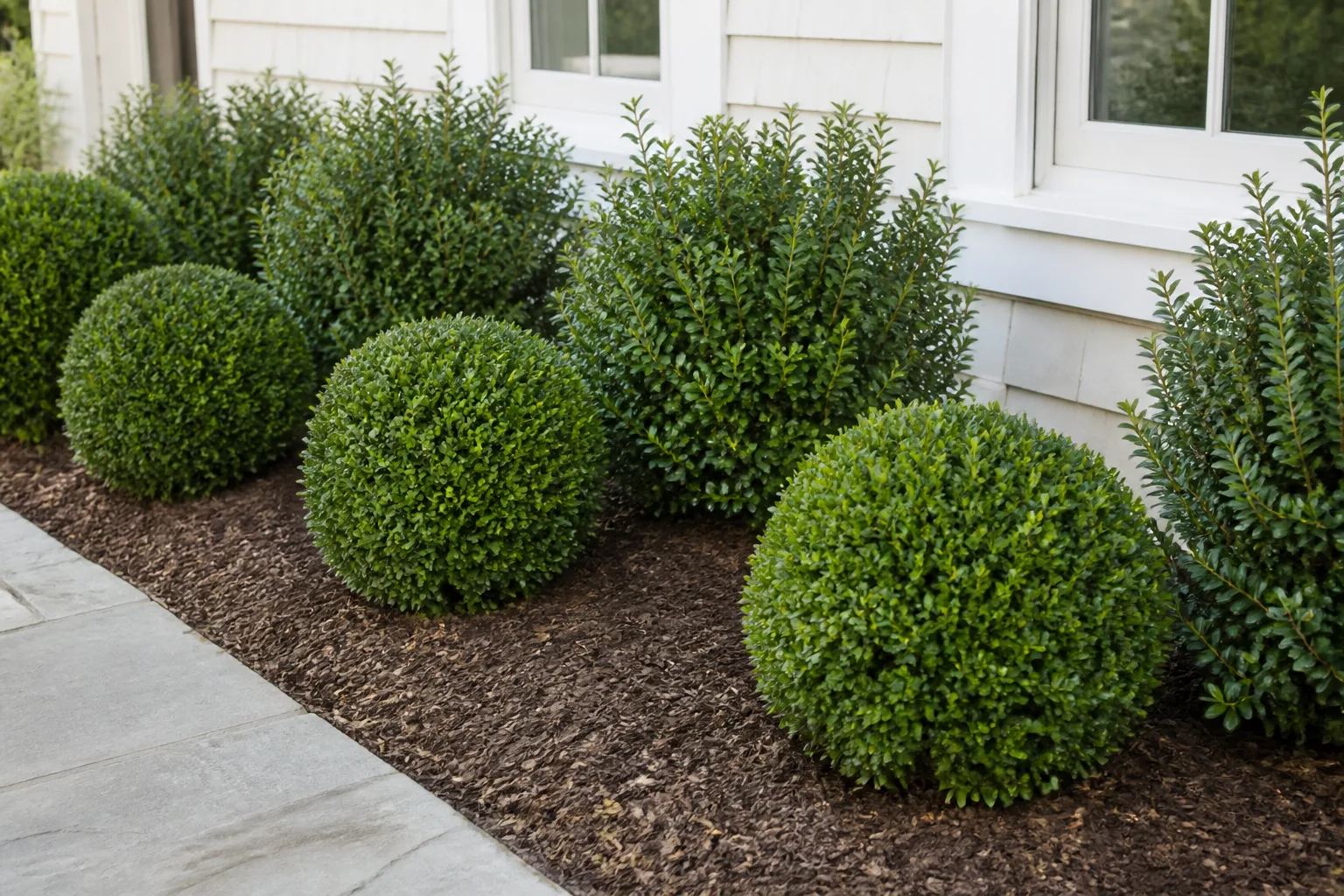
Mountain laurel tolerates a surprisingly wide range of light, from full sun to full shade, but tolerance is not the same as best performance. Morning sun followed by afternoon shade, or bright dappled light beneath a high tree canopy, is the safest general placement. In a cool climate with evenly moist soil, more sun can work; in a hot or drought-prone site, harsh afternoon sun can scorch leaves and increase watering stress.
Deep shade creates the opposite problem. A shrub may stay green but produce fewer flowers and thinner growth when it receives very little usable light. If you are choosing between a spot with two hours of bright morning sun and a dark corner beneath dense trees, choose the brighter spot as long as the soil does not dry out or heat up.
Watch the site before planting. Notice whether nearby deciduous trees cast shade in summer, whether reflected heat comes off a wall, and whether the ground stays wet after rain. A site that looks ideal in April can become a hot, dry pocket in July, exactly when mountain laurel is forming and carrying next season’s flower buds.
Acidic soil with dependable drainage
The soil target is cool, moist, humus-rich, acidic, and well drained. A pH around 4.5 to 5.5 is a useful working range for mountain laurel, azaleas, and rhododendrons, but use a soil test rather than adding sulfur, peat, or other amendments by guesswork. North Carolina State Extension describes the plant as an acid-soil shrub and specifically warns that heavy or wet soil can cause trouble.
Drainage matters as much as acidity. Mountain laurel has relatively shallow, fibrous roots, so it needs moisture near the surface without sitting in stagnant water below it. If a planting hole fills with water and drains slowly, do not solve the problem by digging a deeper bathtub; plant on a broad raised mound or choose a different shrub for that location.
Organic matter should improve structure, not create a rich, soggy pocket. Mix finished compost into a broad bed when the soil is poor, then use pine bark, leaf mold, or pine needles as a surface mulch. Do not pile fresh amendments against the crown, and do not assume that coffee grounds or a bag labeled “for acid-loving plants” can permanently correct alkaline soil without a test and a long-term plan.
If a soil test shows a pH above the plant’s preferred range, decide whether you can maintain the correction before buying the shrub. A small planting hole filled with acidic material will gradually meet the surrounding soil, and irrigation water with high alkalinity can push pH upward again. In that situation, a broad prepared bed or a naturally acidic woodland site is more dependable than repeated emergency amendments. (Gardeners Path)
Do not confuse wetness with good moisture. Mountain laurel wants a reservoir of usable water in a well-aerated root zone, not mud. A handful of soil that clumps into a glossy ball, a sour smell, standing water after ordinary rain, or roots that stay dark and soft are reasons to fix drainage before worrying about fertilizer or flower color.
Clearance, wind, and fire-safety placement
Check three distances before planting: the shrub’s mature spread from walks and doors, the canopy or roof line above it, and the clearance from structures. A compact cultivar may stay around 2 to 4 feet, but a species plant can become a substantial shrub. If the nursery tag lists only the plant’s current pot size, find the cultivar’s mature height and width before committing.
Shelter from drying winter wind is helpful, especially in colder or exposed gardens. A house, fence, or taller planting can reduce wind without turning the site into a heat trap. Avoid planting where deicing salt, roof runoff, or reflected afternoon heat will repeatedly hit the foliage.
North Carolina State Extension gives mountain laurel a high flammability rating. In a wildfire-prone region, do not place it in the defensible space nearest your home just because it is evergreen or native. Choose a lower-flammability plant for the immediate perimeter and reserve mountain laurel for a safer part of the landscape.
How to plant mountain laurel for a strong first year
Plant in early spring or fall when temperatures are moderate and the soil is workable. Spring planting is useful in a cold climate because the shrub gets a full season to root; fall planting can work well where the ground remains open and moist, but avoid periods of frozen soil, extreme heat, or waterlogged winter conditions.
Root-ball depth, watering, and mulch
Dig a hole two to three times wider than the root ball and no deeper than the root ball’s height. Set the shrub so the crown—the transition from stems to roots—is level with or slightly above the surrounding soil. Planting too deeply is especially risky in heavy soil because the shallow root system loses access to air.
If the roots are circling tightly, loosen only the outer roots that will not move into the surrounding soil; do not tear the entire root ball apart. Backfill with the excavated soil unless a soil test or a major drainage problem calls for a designed bed amendment. Water slowly halfway through backfilling and again when the hole is full so air pockets collapse without compacting the soil.
For the first growing season, check the soil regularly and give a deep soak when the upper few inches begin to dry. In a hot, sandy, windy site, that may mean roughly an inch of water per week; in cool, rainy weather, it may mean much less. The plant’s root zone—not the calendar—should decide.
Apply about 2 to 3 inches of pine bark, shredded leaves, or another stable organic mulch over the root zone. Keep the mulch several inches away from the stems and crown. A clear space around the base reduces the risk of chronic dampness, rodent damage, and hidden stem problems.
For the first month, inspect the plant twice a week rather than assuming a single planting soak finished the job. Nursery root balls can dry faster than the surrounding bed, especially when the original mix is dense or the shrub is planted beneath established trees. Water at the root ball and the surrounding soil, then taper the frequency only after new roots begin moving into the bed.
Low-maintenance care that protects next year’s flowers
Water and fertilizer after establishment
Established mountain laurel is more drought tolerant than a newly planted shrub, but “drought tolerant” does not mean “never water.” Give it a slow, deep soaking during a prolonged dry spell, especially when the plant is carrying flower buds for the following spring. A mature shrub in naturally cool woodland soil may need little supplemental water; a plant beside pavement or under thirsty trees may need more frequent checks.
Lift or probe the mulch before watering. If the soil below it is cool and moist, wait; if it is dry several inches down and the leaves are beginning to curl or dull, water at the base. Avoid frequent shallow sprays and repeated overhead watering, which wet the foliage without replenishing the root zone and can increase leaf-spot pressure.
Fertilizer is optional when the soil is healthy and the shrub is growing normally. If a soil test identifies a nutrient need, use a product labeled for acid-loving plants at the label rate and timing. A light spring application is safer than repeated feeding, and excess nitrogen can produce lush leaves at the expense of flowers or contribute to weak, overly soft growth.
Do not lower soil pH blindly because the leaves look pale. Yellow leaves can come from alkaline soil, poor drainage, drought, root damage, or natural aging, and those problems need different fixes. Test first, then correct the cause that the evidence supports.
Pruning and deadheading without cutting flower buds
Mountain laurel naturally forms a rounded shape and usually needs only light maintenance. Remove dead, damaged, diseased, or crossing branches, and make cuts just outside the branch collar rather than leaving long stubs. If the shrub is opening up with age, selective thinning is less disruptive than turning the whole plant into a hedge.
Prune immediately after flowering if shaping is necessary. The shrub flowers on old wood, which means the branches produced this season carry the buds that open next year. A late-summer, fall, or winter haircut can remove those buds and create the false impression that the plant is unhealthy when the real problem is timing.
Removing spent flower clusters after the display fades improves the shrub’s appearance and reduces seed production. It is not a guarantee of more flowers, and it should not become an excuse to shear the plant repeatedly. If a hard renovation is unavoidable, remove no more than about one-third of the plant at a time and expect recovery to be slow.
Choosing a compact cultivar
The species is not automatically compact, but selected cultivars can fit smaller gardens. North Carolina State Extension lists ‘Elf’ at roughly 2 to 4 feet, ‘Minuet’ as a dwarf around 3 feet, and ‘Keepsake’ as a compact selection suited to partial shade. Availability and mature size vary by nursery, so treat a cultivar name as a starting point and confirm the tag’s upper size range.
Choose the cultivar for the site, not just the flower color. A dwarf plant still needs acidic soil, reliable drainage, and enough light to bloom. If you want a low mound beside a path, ask for a true dwarf selection; if you want a woodland anchor, the straight species may be more appropriate even though it will take longer to fill the space.
Compact mountain laurel can grow in a container when the pot has a drainage hole, the mix is acidic and fast draining, and the plant is protected from extreme heat and winter root freezing. Use a large, stable container rather than a shallow decorative pot, check moisture more often than you would in the ground, and choose a dwarf cultivar. Container growing is a way to control the footprint—not a way to make the species tolerate alkaline water, saturated mix, or neglect.
Read the label for the cultivar’s expected width as carefully as its height. A plant that stays 3 feet tall but spreads 5 feet can still crowd a narrow path, and a slow-growing shrub may take several years to reveal its eventual shape. When a nursery lists only a vague word such as “compact,” ask whether that means a mature size, a slower growth rate, or simply a smaller plant at the time of sale. (Gardenia)
Companion plants that share its woodland conditions
Good companion planting starts with the same environmental needs, not just a matching flower color. Group plants that prefer light shade, cool root zones, acidic soil, and steady but not stagnant moisture; then vary height and texture so the bed does not become a wall of identical foliage.
Ferns and Solomon’s seal for the lower layer
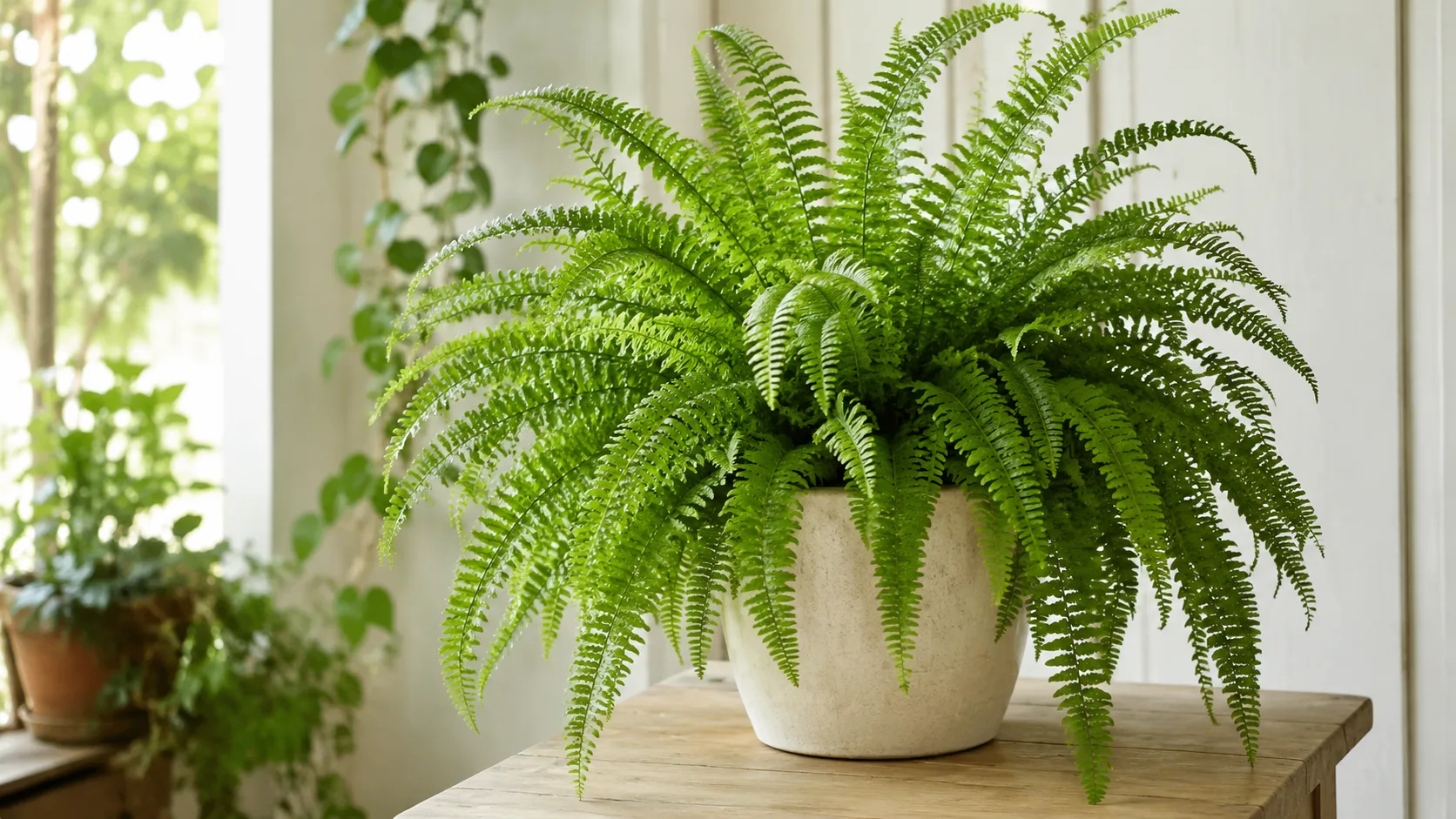
Native ferns are useful around mountain laurel because they fill the lower layer without competing visually with the shrub’s spring flowers. Christmas fern and other shade-tolerant native ferns can cover open soil, soften the base, and help the bed look intentional while the shrub is still young. Leave enough space for airflow and do not bury the fern crowns under mulch.
Solomon’s seal adds arching stems and downward-facing flowers later in spring. Plant it in groups rather than as isolated dots if you want a natural woodland effect. The combination works best under filtered light, where neither partner is forced into hot afternoon sun.
Keep the companion bed open enough to inspect the mountain laurel’s lower stems and leaves. Dense, crowded planting can trap humidity and make leaf spots harder to diagnose. A thin layer of living groundcover with open gaps is often healthier than filling every square inch on the first day; the shrub will occupy more of the bed as it matures.
Azaleas, rhododendrons, and blueberries for acidic beds
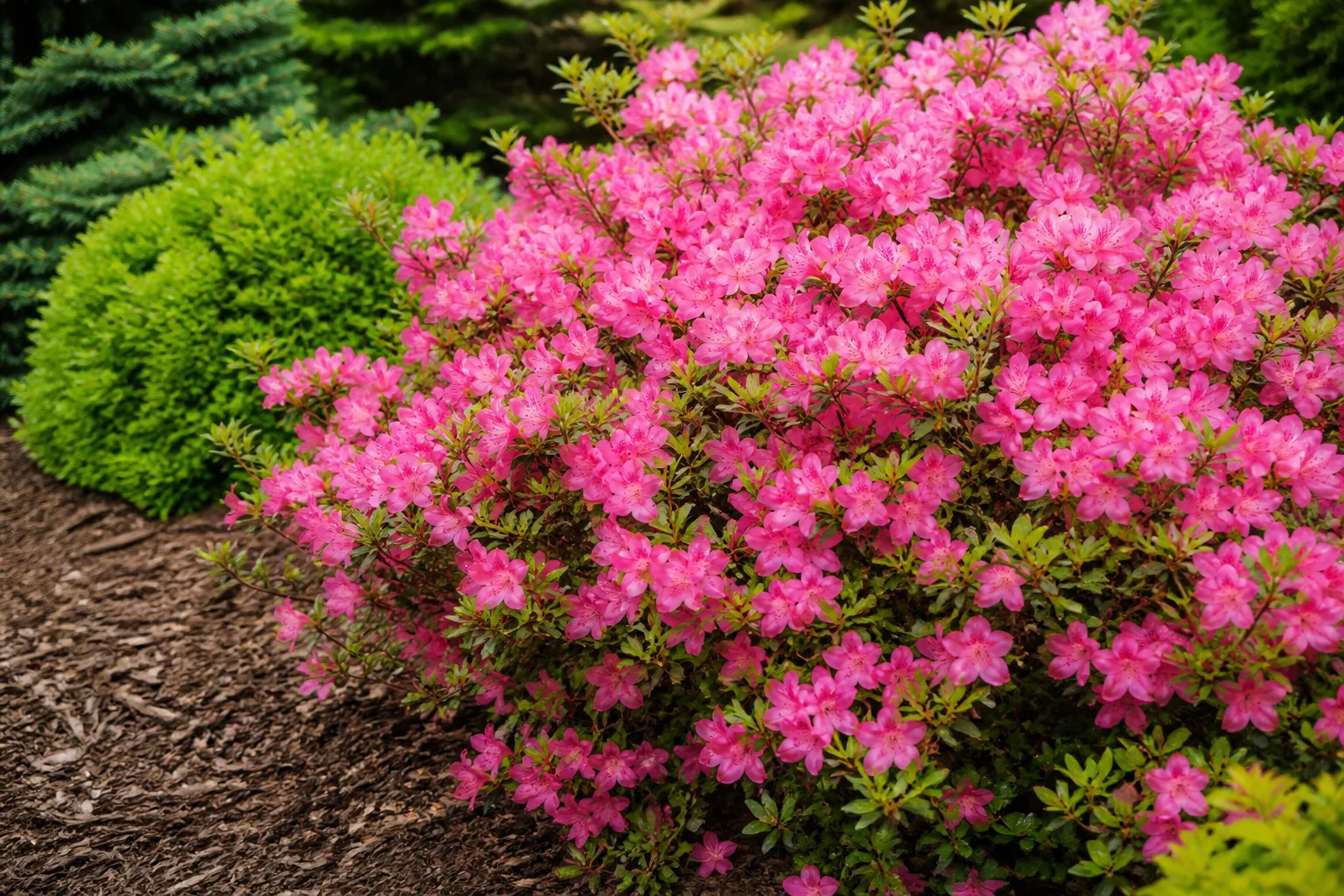
Azaleas and rhododendrons share mountain laurel’s preference for acidic soil and partial shade, making them logical neighbors in a mixed shrub border. Place the tallest plant toward the back, use a lower cultivar in front, and check each plant’s mature width so the bed does not become overcrowded. Similar soil pH does not mean identical light needs: some azaleas flower better with more light than mountain laurel.
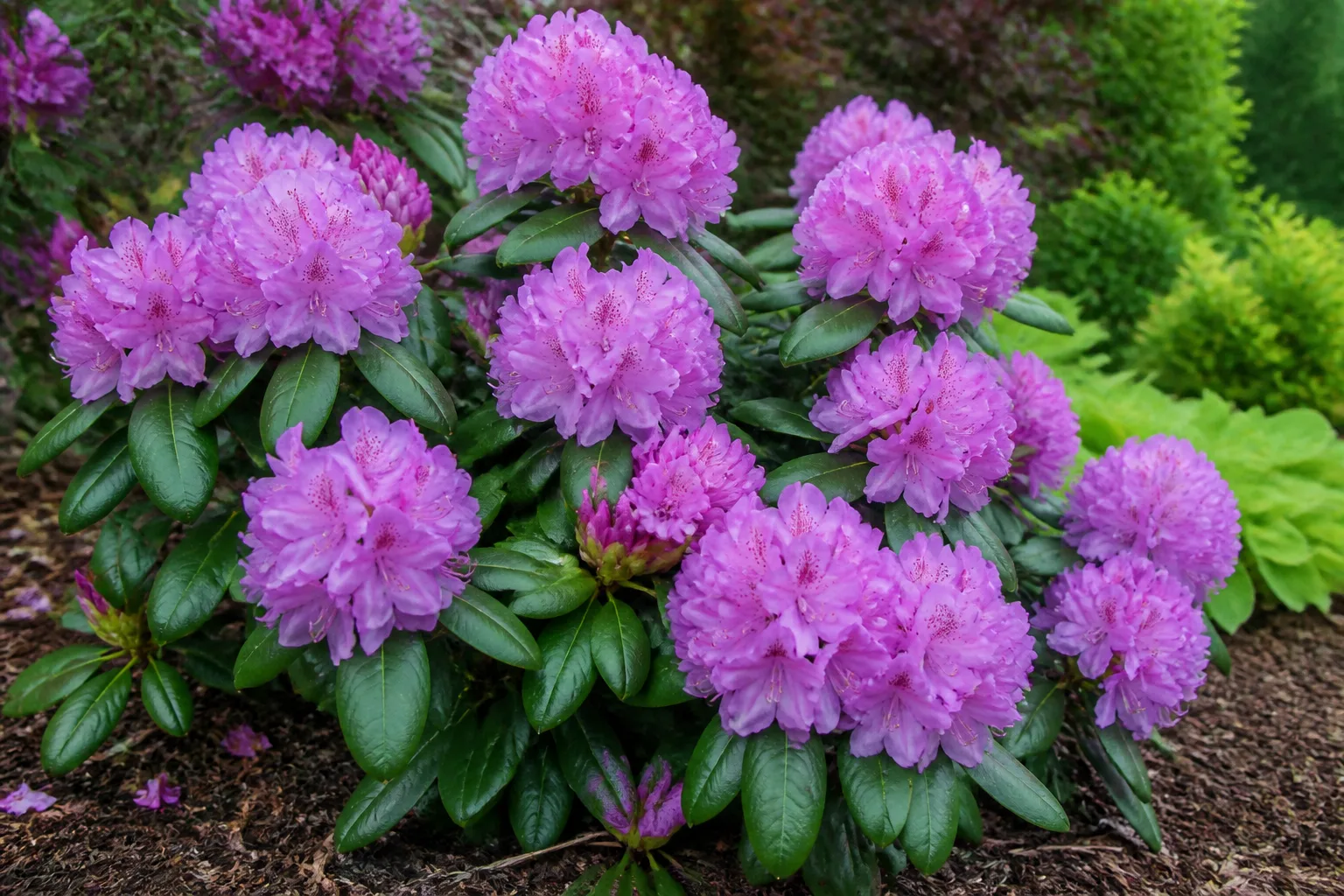
Blueberries can share an acidic bed, but they generally fruit best with more sun than a mountain laurel understory provides. Use them at the brighter edge of the planting, and do not promise yourself a heavy harvest beneath a dense canopy. Their shared soil preference is useful; their light requirement is the deciding difference.
Troubleshooting and safety notes
No flowers, yellow leaves, or leaf spots
Use the symptom and the site together. A mountain laurel that is green but flowerless is not necessarily underfed, and a yellow leaf is not proof that the soil needs acidifying. Start with the least disruptive check: light, soil moisture, drainage, pH, pruning history, and the age of the plant.
| Symptom | Likely clues | First action |
|---|---|---|
| Few or no flowers | Deep shade, late pruning, drought while buds formed, young plant, or wrong pH | Check light and pH; protect summer moisture; prune only after flowering |
| Yellow leaves across the plant | Waterlogged roots, alkaline soil, drought, or root damage | Probe moisture and inspect drainage before adding fertilizer |
| Brown leaf edges or curled leaves | Hot sun, drying wind, salt, or prolonged drought | Move or shade young plants if possible; water deeply during dry spells; check runoff |
| Spots and premature leaf drop | Crowded, wet foliage or a leaf-spot disease | Improve airflow, remove fallen leaves, and avoid routine overhead watering |
| Dieback on one branch | Canker, borer damage, winter injury, or a damaged branch | Cut back to healthy wood, sanitize pruners, and seek local extension diagnosis if it spreads |
Compare the current symptom with the plant’s history. Yellowing that follows a week of saturated rain points toward a different first action than yellowing that appears after a month of hot, dry wind. Likewise, a few older leaves dropping from the interior can be normal seasonal turnover, while new leaves yellowing across the canopy deserves a root-zone and pH check.
North Carolina State Extension lists borers, scale, whiteflies, lace bugs, leaf spots, and blights among the problems that can affect mountain laurel. Gardeners Path likewise emphasizes good drainage, air circulation, and avoiding overhead watering as the first line of defense. Do not reach for a pesticide based on a photo alone; identify the pest or disease and follow the product label and local rules if treatment becomes necessary.
Mountain laurel also needs a clear safety label. All plant parts should be treated as poisonous if eaten; North Carolina State Extension identifies high-severity poison characteristics and problems for people, dogs, cats, and horses. The ASPCA lists mountain laurel’s grayanotoxin and documents toxicity in horses, with signs that can include digestive upset, drooling, weakness, loss of coordination, and cardiac effects. (ASPCA Poison Control)
Keep children and pets from chewing the leaves, flowers, twigs, or fruit, and do not place fresh trimmings where grazing animals can reach them. If anyone or any animal may have swallowed plant material, contact a veterinarian, physician, or poison-control service promptly rather than waiting for symptoms. The flowers can support pollinators, but that ecological value does not make the plant edible, and heavy honey production from some ericaceous plants can also raise a food-safety concern noted by extension guidance.
Conclusion: get the soil right, then let it mature
Mountain laurel is a long-lived native evergreen shrub when its site matches its biology. Give it dappled or morning light, cool acidic soil that drains, a mulch ring that does not touch the crown, and enough room to reach its real mature size. Water new plants consistently, then shift to drought monitoring rather than a rigid schedule.
The details that protect the flower show are easy to miss: avoid deep shade, do not let roots sit in wet clay, and prune just after flowering because next year’s buds form on old wood. Choose a compact cultivar when space is limited, pair it with plants that truly share the site, and place the shrub away from structures where its flammability or toxicity creates an avoidable risk.