Diatomaceous Earth for Bed Bugs: Does It Work?
Does diatomaceous earth kill bed bugs? Learn how it works, why eggs survive, where to apply it safely, which products qualify, and when to call a pro.
If you are wondering whether diatomaceous earth (DE) can kill bed bugs, the honest answer is yes—but only when a bed bug crawls through the product, the product is the right kind, and the dust remains dry and undisturbed long enough to work. DE is a slow desiccant, not an instant knockdown spray and not a complete infestation plan.
The distinction matters because a bag of white powder can look harmless while still irritating your nose, eyes, skin, or lungs. It also matters because DE does not reliably kill bed bug eggs, cannot reach every hidden harborage, and should not be spread across a mattress or bedroom floor as a substitute for inspection and follow-up. Used carefully as one part of integrated pest management, it can be useful. Used as the only answer, it can leave you with a dusty room and a growing infestation.
The short answer: yes, but it is slow and incomplete
DE works physically rather than through a conventional nerve-poisoning insecticide. Its fine particles abrade and absorb oils from the insect’s protective outer surface, so an exposed bed bug gradually loses moisture and dies. The National Pesticide Information Center’s DE fact sheet describes this desiccating action and notes that products are registered for bed-bug use, among other pests.
That answer applies to crawling nymphs and adults that contact the dust. It does not mean every bed bug in a room will find the dust, and it does not mean a single application ends the problem. Bed bugs can hide in seams, bed frames, furniture joints, baseboards, wall voids, and neighboring rooms. Eggs can remain after adults have died and hatch later, which is why the U.S. Environmental Protection Agency’s DIY guidance describes desiccants as potentially effective but sometimes slow to work.
Think of DE as a targeted barrier and residual tool. It is most useful where bugs must cross a protected crack or crevice, not as a blanket coating for every soft surface in the bedroom.
That makes DE a better fit for a confirmed, localized problem than for a mystery bite or a heavily cluttered home that has not been inspected. Before choosing it, ask whether you can identify the routes bugs are using, keep the dust dry and out of living surfaces, and continue monitoring after the first application. If the answer to any of those questions is no, another control method or professional assessment is safer.
Confirm bed bugs before treating the room
Do not choose DE because you woke up with itchy spots. Bites can resemble bites from mosquitoes, fleas, or other insects, and some people show no visible reaction. The CDC’s bed-bug overview says signs can include bugs or shed skins in mattress folds, rusty-colored spots on bedding or nearby furniture, and a sweet, musty odor—but a bite pattern alone is not confirmation.
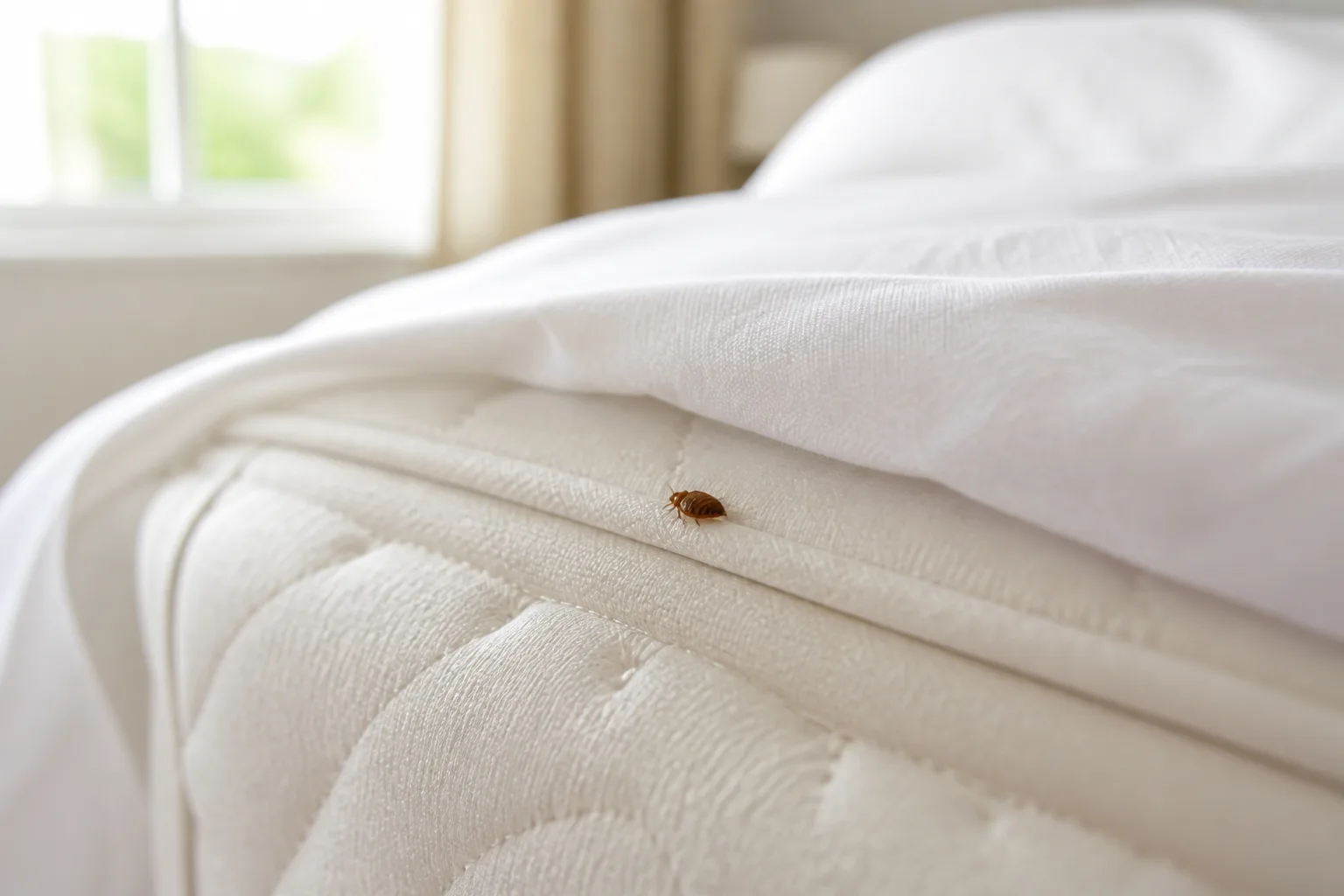
Use a flashlight to inspect the mattress piping, box-spring edges, bed-frame joints, headboard, nightstand, and the wall-floor junction near the bed. Look for a live insect, pale eggs or eggshells, cast skins, dark fecal spotting, or tiny blood marks. Save a specimen in clear tape or a sealed container for identification rather than crushing it and treating the entire room on a guess.
If you rent, live in attached housing, or find bugs in more than one sleeping area, notify the landlord or property manager early. Bed bugs can move through cracks and utility routes, so treating one room while an adjacent unit remains infested can make a good application look like a failure.
The signs that matter more than bites
The most useful confirmation is physical evidence close to where people sleep. A single mysterious bite is weak evidence; a live bed bug or a matching cluster of signs in a seam is much stronger. If the insect is too small to identify confidently, an extension agent, pest professional, or local insect-identification service can prevent you from applying pesticide to the wrong pest.
The CDC notes that bed bugs are flat, reddish-brown, wingless insects roughly 1 to 7 millimeters long and can live for months without a blood meal. Those details help distinguish them from carpet beetle larvae, fleas, ticks, and cockroach nymphs, but photographs and bite marks are still unreliable substitutes for a specimen.
How diatomaceous earth kills bed bugs
DE is often called a desiccant insecticide because it kills by drying an insect rather than poisoning it through the nervous system. When a bed bug walks through a thin deposit, particles cling to the body and damage the waxy cuticle that normally slows water loss. The bug eventually dehydrates, but the process depends on enough contact and a dry, persistent deposit.
This is why a thick mound is not automatically better. A large pile can be avoided, pushed aside, or disturbed into the air, while a light coating in the actual travel route gives a bug a better chance of contacting the particles. Humidity, cleaning, foot traffic, fans, and bedding can all remove or move the dust before a bed bug crosses it.
DE cannot kill a bed bug that stays inside an untouched void, behind a cluttered object, or in a neighboring apartment. It also cannot compensate for a product that is not labeled for bed bugs or an application that places the powder where people will brush against it rather than where insects travel.
There is no honest universal “DE kills bed bugs in X hours” promise. Some exposed bugs may die sooner, but the room-level timeline depends on the product label, how much of the infestation was found, whether eggs are present, how dry the sites remain, and whether neighboring areas are involved. A few days of continued sightings do not prove that the dust has failed; repeated new evidence over a monitored treatment period does mean you need to reassess the plan.
Choose the right product before you open the bag
The most important buying rule is simple: use only a pesticide product registered for use in your area and labeled for bed bugs, and follow that label exactly. The EPA’s bed-bug product guidance explains that the label controls where a product can be used, which pests it has been tested against, and how it must be applied. If bed bugs are not named on the label, do not assume the product will work just because the ingredient list says silicon dioxide or diatomaceous earth.
This rule is stronger than marketing language such as “natural,” “pure,” “food safe,” or “pet safe.” A product’s intended use, formulation, registration, and label directions are what determine whether it belongs in a bedroom.
Food-grade, pool-grade, and pesticide-label differences
Avoid choosing DE by a label that only says food grade or pool grade. EPA’s DIY bed-bug guidance specifically warns against using pool- or food-grade DE for this purpose because inhaling those dusts can be harmful. A pesticide formulation labeled for bed bugs has been made and registered for that use; it is not interchangeable with a pantry, garden, or pool product.
The NPIC fact sheet also explains that DE products vary, that some contain mostly amorphous silicon dioxide, and that exposure can occur through inhalation, eye contact, skin contact, or accidental access by children and pets. “Natural” describes an origin, not a permission slip to breathe loose powder.
Do not mix DE with another insecticide, add essential oils, wet it into a homemade spray, or change the label rate. If you cannot find a product with a clear pesticide registration and bed-bug use directions, skip the experiment and ask a licensed pest professional or local pesticide authority what is legal where you live.
Where DE belongs—and where it does not
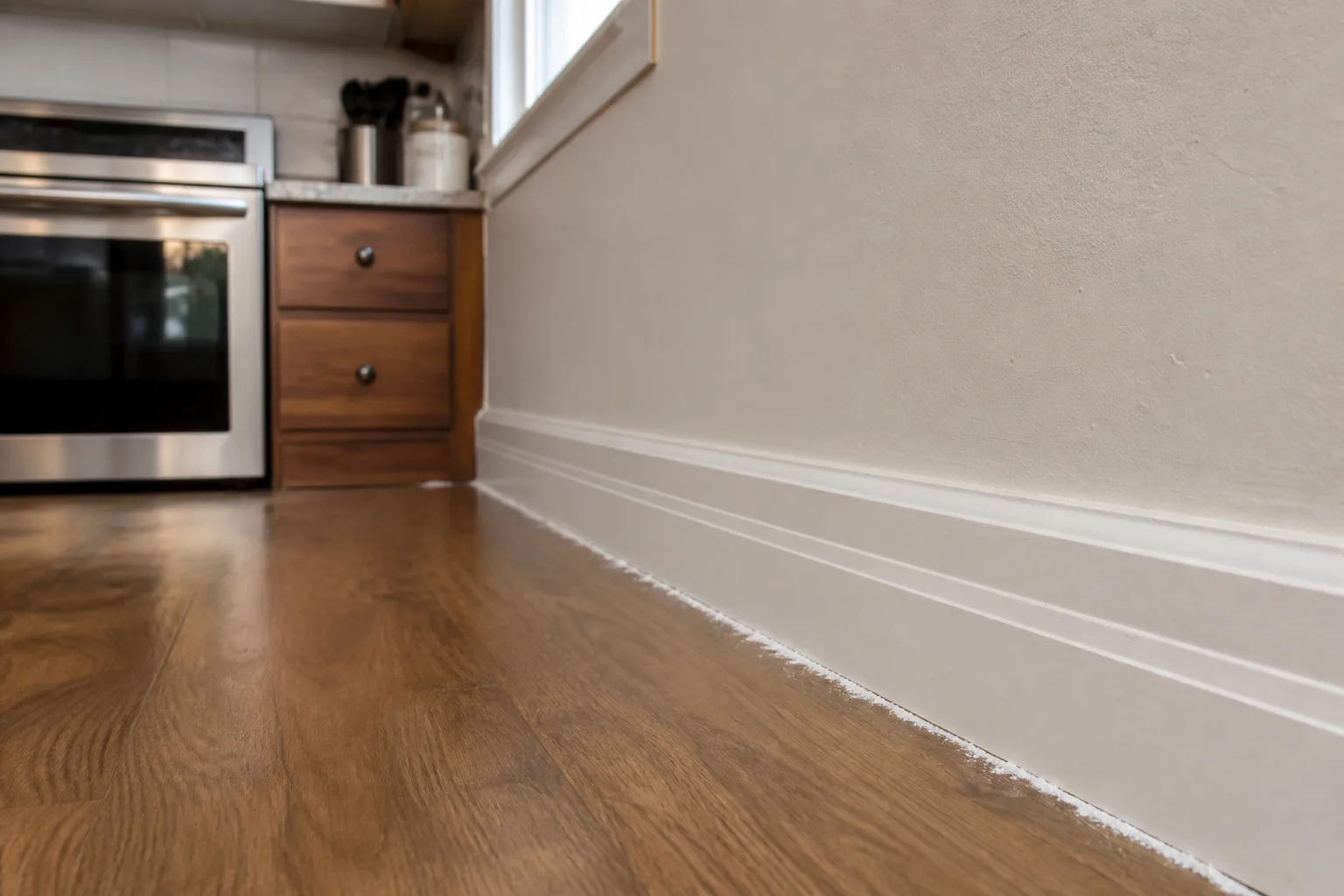
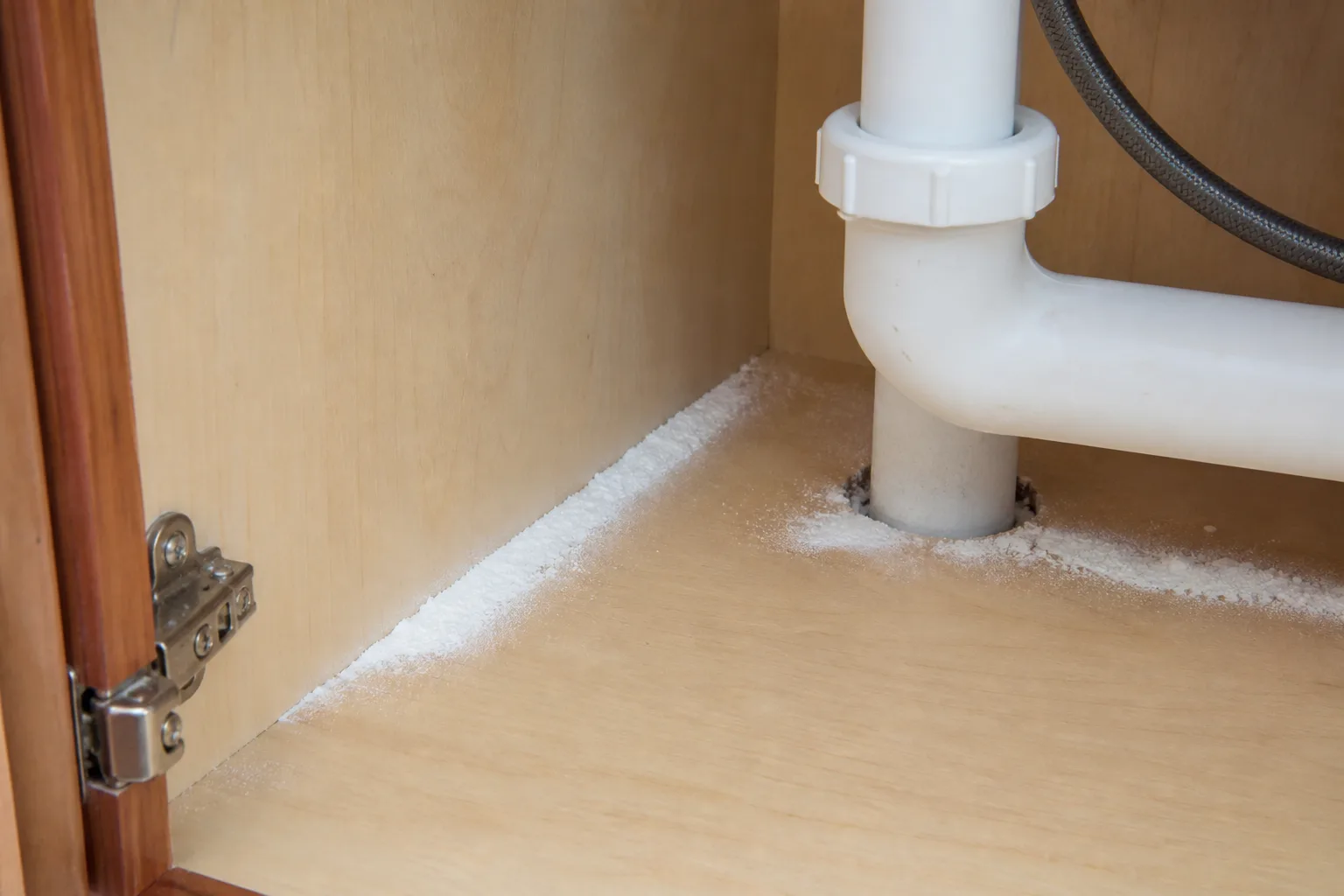
The goal is to place the dust at protected points a bed bug must cross, while keeping it away from surfaces people touch, sleep on, or routinely disturb. Penn State Extension’s bed-bug IPM guidance recommends limiting insecticidal dusts to cracks, crevices, and voids rather than using them as open-room surface treatments; it also warns that dusts are respiratory irritants.
High-priority cracks and travel routes
Follow the product label and focus on places such as:
- joints and voids inside a bed frame;
- cracks where a baseboard meets the wall or floor;
- protected furniture joints, drawer runners, and the back of a headboard;
- gaps around a box spring only when the label allows that location and the dust will remain enclosed and inaccessible;
- wall, door, or window-frame crevices where bed bugs may travel; and
- other narrow, undisturbed harborage sites identified during inspection.
Use a hand duster or applicator only as the label directs. Never improvise by blowing powder with your mouth or creating a cloud. Electrical outlets and switch boxes can be bed-bug pathways in some buildings, but opening them introduces shock and fire risks; leave those voids to a qualified professional unless the label and local rules clearly permit a safe treatment method.
Surfaces to keep free of loose dust
Do not dust pillows, sheets, blankets, clothing, the top of a mattress, or the open floor around a bed where feet, pets, children, or a vacuum will disturb it. Penn State Extension specifically cautions against surface dusting and says not to use insecticidal dusts on mattresses because of skin and respiratory irritation.
A zippered, bed-bug-rated encasement is a better way to isolate a mattress or box spring than sprinkling DE over the sleeping surface. Keep the bed away from the wall, prevent bedding from touching the floor, and use interceptors under the legs when appropriate so you can monitor movement without coating the room in powder.
A safer DE application sequence
DE works best as a precise step in a larger plan. The following sequence keeps you from applying dust before you know what you are treating or from spreading surviving bugs into new areas.
Prepare and isolate the room
Start by reducing clutter without carrying loose items through clean rooms. Bag or seal items that cannot be treated immediately, and sort clothing, bedding, and washable fabrics into loads that can go directly to a dryer or another approved treatment. Do not move a pile of clothing from an infested bedroom to a guest room.
Pull the bed slightly away from the wall, remove bed skirts and anything touching the floor, and inspect the bed frame and nearby furniture. Vacuum visible bugs, shed skins, and debris with the crevice tool, then seal the vacuum bag or contents outdoors immediately. The same Penn State Extension guidance notes that vacuuming alone misses many adults and eggs, but it is valuable for reducing accessible bugs before targeted treatment.
Wear the protective equipment required by the product label, protect your eyes, and keep children and pets out of the work area. Avoid applying dust when fans, forced-air vents, or an open window will carry it into occupied space. If you have asthma or another respiratory condition, have someone else handle the dust or use a professional service.
Apply a barely visible layer to labeled sites
Apply the smallest amount that gives the labeled site a light, even coating. You should not be building a white road across the bedroom. Work the product into a crack or protected joint instead of leaving a loose pile on top of a baseboard, rug, or mattress.
Stop if the powder becomes airborne, clumps in a damp area, or lands on a surface the label excludes. Do not use a kitchen spoon, flour sifter, leaf blower, or vacuum exhaust to spread it. Never combine products in the applicator, and never increase the amount because you want faster results.
Leave it undisturbed, then clean and reassess
Give the product the time specified on its label, while continuing to inspect at least every seven days. The EPA’s DIY guidance recommends repeated evaluation because eggs can remain and hatch after the first cleanup. Record the date, room, exact treated sites, live-bug sightings, and fresh signs; memory is poor when a treatment takes weeks.
When the label or your treatment plan calls for cleanup, avoid stirring the dust into the air. Use the recommended method, seal vacuum contents, and reapply only if the label allows it and the site remains appropriate. Do not keep adding powder to a visibly contaminated sleeping surface simply because you are still seeing bites; find the missed harborage or escalate the treatment.
Build DE into an integrated bed-bug plan
DE is more useful when it is surrounded by controls that work on different parts of the bed bug’s life cycle and movement pattern. Penn State Extension describes integrated pest management as a combination of inspection, exclusion, mechanical methods, monitoring, and carefully chosen pesticides—not a single spray or dust.
Heat, laundry, and steam for items and fabrics
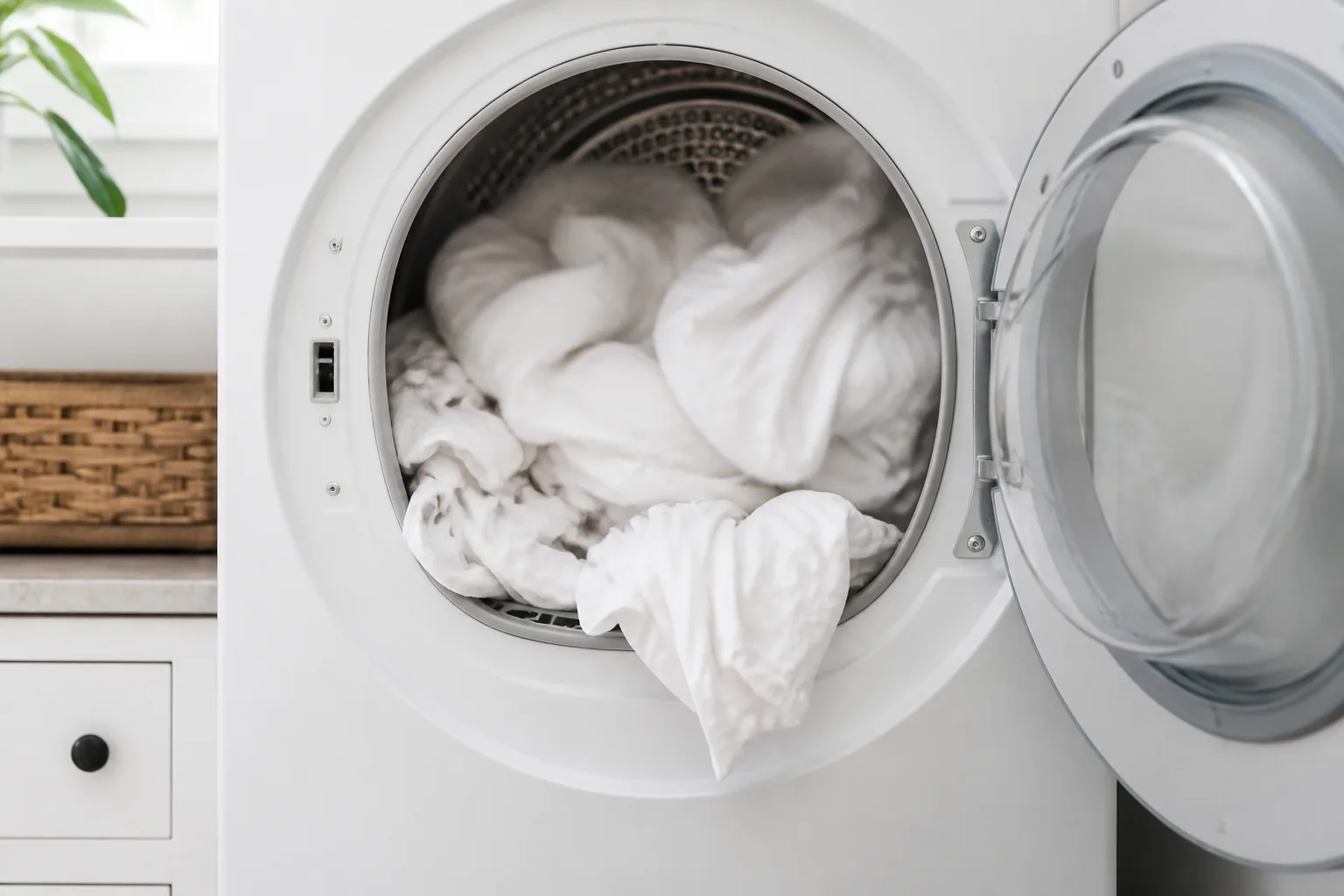
Move washable bedding, sleepwear, and clothing straight into a dryer when the fabric allows, and use the hottest safe setting for enough time to heat the load thoroughly. Penn State Extension’s bed-bug biology guidance reports that temperatures of at least 131°F are lethal to all bed-bug stages, while cold or low-temperature drying may not be. Do not overfill the dryer; loose loading helps heat reach the items.
For furniture and seams that can tolerate it, a steamer can treat cracks and fabrics without leaving pesticide residue. Steam must be hot enough at the treated surface and applied slowly enough to heat it, but forceful airflow can scatter bugs. EPA guidance gives at least 130°F as a minimum steam temperature and warns that steam alone may not eliminate an infestation.
Do not use a hot car, hair dryer, space heater, or improvised whole-room heating setup as if it were a controlled heat treatment. Professional heat work depends on measured temperatures reaching every harboring location; a warm room can simply move bed bugs deeper into walls or furniture.
Vacuuming, encasements, interceptors, and weekly checks
Vacuum mattress edges, bed-frame joints, baseboards, and nearby furniture slowly and methodically. The goal is removal, not a one-time cure: vacuuming can miss eggs and hidden adults, so seal the bag or canister contents immediately and repeat it as part of the schedule.
Use bed-bug-rated encasements on the mattress and box spring, inspect them for tears, and leave them in place for the full period specified by the manufacturer or your pest professional. Put interceptors under bed legs, keep bedding off the floor, and avoid storing items under the bed. These steps make the bed easier to inspect and help reveal whether activity is decreasing.
Inspect at least weekly after treatment and record what you find. The EPA’s DIY bed-bug guidance recommends continuing checks because eggs can survive an initial round. A simple log of live bugs, new dark spotting, location, and date is more useful than guessing from the number of itchy marks.
Why diatomaceous earth treatments fail
When DE appears not to work, the explanation is usually a coverage or timing problem rather than proof that desiccants never work. Check these failure modes in order:
- The insect was not a bed bug. Bites and random brown insects are not enough to diagnose an infestation.
- The product was wrong. Food-grade or pool-grade DE is not a substitute for a labeled bed-bug pesticide product.
- The dust never met the bugs. A thick line on an open floor can be avoided while bugs remain in a bed frame, box spring, wall void, or adjacent room.
- Eggs hatched after the application. DE is not a reliable egg treatment, so a new generation can appear later.
- Moisture or cleaning removed the residue. Wet, clumped, vacuumed, or windblown dust is not the same as a dry, protected deposit.
- The infestation is larger than the room. Attached housing, shared walls, and clutter can create untreated reservoirs.
- The follow-up stopped too soon. A few quiet nights are not proof of elimination, and a few sightings are not proof of failure; the trend across inspections matters.
Do not respond to failure by spreading more dust across the mattress or doubling the amount in every room. Recheck identification and label directions, inspect adjacent harborages, and get a professional assessment if signs continue.
When to stop DIY treatment and call a professional
Call a licensed, experienced bed-bug professional when you find bugs in multiple rooms, live in an apartment or attached home, cannot identify the insect, have a child or medically vulnerable person in the home, cannot safely apply dust, or continue finding live bugs after a disciplined treatment-and-monitoring cycle. The CDC recommends contacting a professional pest control company experienced with bed bugs, and Penn State Extension emphasizes that effective control usually requires multiple coordinated actions.
Ask what the inspection covers, whether nearby rooms or units will be evaluated, which products are EPA-registered and labeled for the intended sites, how follow-up will be handled, and what preparation is actually necessary. Be cautious of anyone promising one spray, one dusting, or 100 percent results without inspecting the room and explaining the label.
If someone has trouble breathing after dust exposure, move them to fresh air and follow the product’s first-aid directions. For eye or skin exposure, use the label’s first-aid instructions; for a possible poisoning, contact Poison Control at 800-222-1222 in the United States or your local equivalent. The NPIC fact sheet explains that DE can irritate the nose, nasal passages, eyes, and skin even though it is not intended to act as a conventional poison.
Conclusion: use DE as a targeted tool, not a whole-room promise
Diatomaceous earth can kill bed bugs that crawl through a dry, properly selected product, but it is a slow and incomplete tool. It does not reliably kill eggs, it cannot reach every hiding place, and “natural” does not remove the need for a pesticide label or protection from airborne dust.
Confirm the pest first. Choose an EPA-registered product labeled for bed bugs. Apply a light deposit only to labeled, protected cracks and crevices; keep it off mattresses, bedding, and open living surfaces; then pair it with heat-safe laundry, careful vacuuming, encasements, interceptors, and weekly monitoring. If the evidence keeps spreading or the room cannot be treated safely, professional inspection is the faster path to a complete plan.