7 Fall Gardening Tasks to Finish Before the First Frost
Finish seven practical fall gardening tasks before frost, with clear advice on mulch, perennial cleanup, tree watering, hoses, and wildlife-friendly stems.
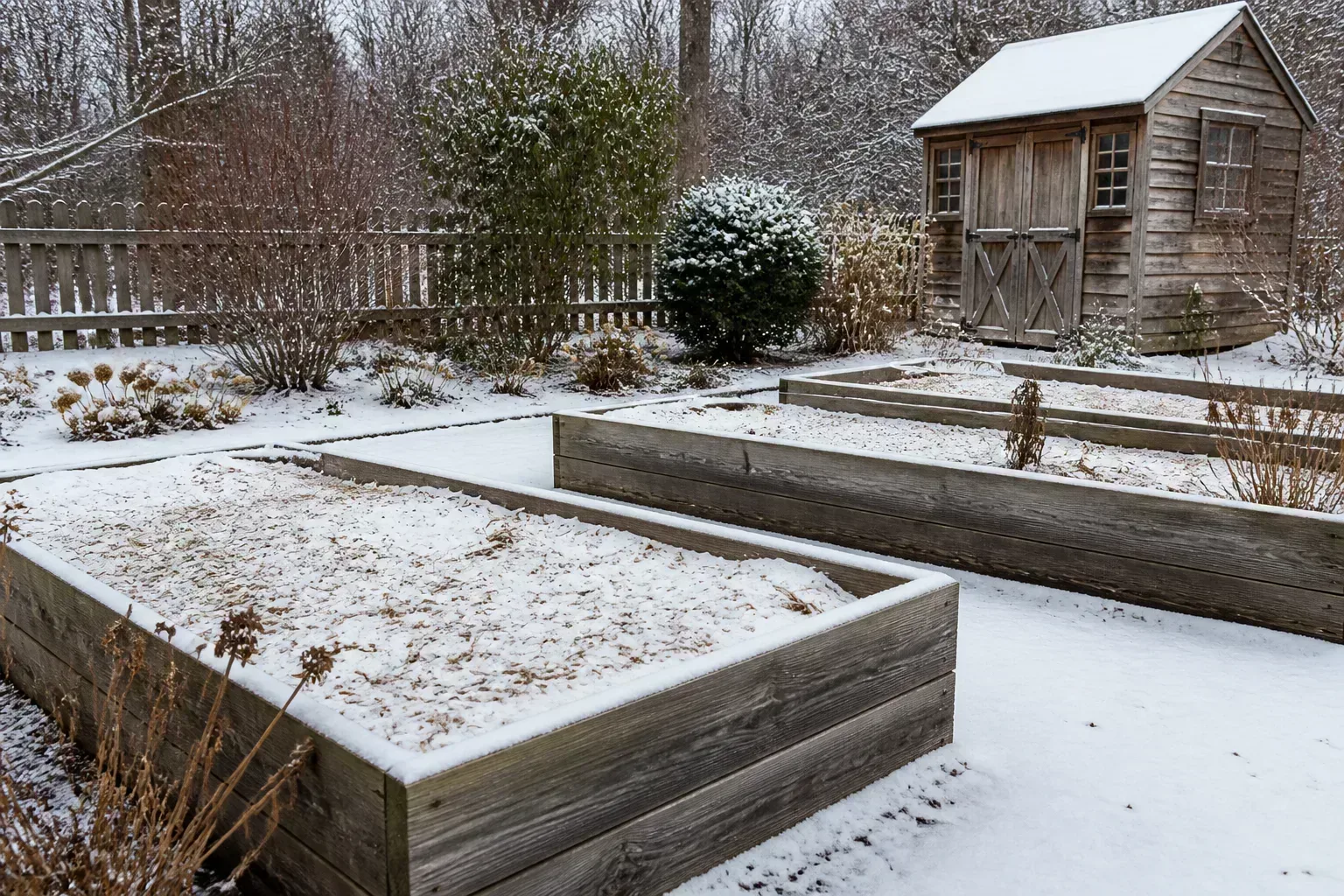
“Before the holidays” is not a reliable gardening date. A gardener in a cold inland valley may be shutting down irrigation while someone near the coast is still planting, and a sheltered urban bed can stay frost-free after a nearby low spot freezes. Use your local forecast and the condition of your soil as the clock: first frost can damage tender foliage, while a hard freeze can freeze the ground and injure roots, containers, and water-filled equipment.
You also do not need to make every bed look empty. The most useful fall garden cleanup is selective: remove material that could carry a serious disease or pest, protect plants that are not reliably hardy, and leave healthy stems and seedheads that offer food, shelter, or winter structure. These seven jobs give you a sensible order, from urgent freeze preparation to work that can wait until a dry afternoon.
The short list: what to do first
If the forecast is already turning cold, begin with anything that can be damaged by frozen water or an early killing freeze: drain hoses and vulnerable irrigation parts, bring tender container plants in, and lift bulbs that cannot survive your winter outdoors. Next, remove diseased foliage and weeds that are about to set seed. Water newly planted trees or evergreens if autumn has been dry and the ground is still able to absorb moisture.
After those time-sensitive jobs, divide suitable perennials while the soil remains workable, mulch only where it helps, and clean your tools before storing them. Leave healthy seedheads and sturdy stems in place unless they are diseased, invasive, blocking access, or likely to create a specific problem. A tidy garden is not automatically a healthier garden; aim for a garden prepared for its actual weather.
1. Remove diseased plants and risky debris
Start with the plants that had persistent disease or a serious pest problem, rather than cutting every perennial to the ground. Foliage with powdery mildew, black spot, severe leaf spot, or another recurring disease can carry spores or infected material into the next season.
Pull it after it has died back, collect fallen leaves under the affected plant, and avoid dragging that material through clean beds. Penn State Extension specifically recommends removing diseased garden material and keeping it out of the compost pile. Penn State Extension
The same targeted approach applies to vegetable beds. Remove exhausted annual crops and any stems that remain visibly diseased or infested; also pull weeds that are carrying mature seed heads.
A clean vegetable bed can reduce the amount of infected residue and pest shelter left on the soil, but it does not need to be stripped of every healthy root or leaf. If an annual crop was healthy, chop it into smaller pieces for a well-managed compost pile or use it as a surface layer where it will not smother new growth.
Decide what belongs in compost and what does not
Home compost piles do not always stay hot enough for long enough to kill every pathogen, weed seed, or insect stage. When you are not certain that a pile reaches and maintains a reliably hot temperature, do not use it as a disposal shortcut for material from a diseased plant. Bag that residue for municipal or household trash according to local rules; do not burn it unless local regulations and fire conditions explicitly allow it.
Diseased leaves are a stronger reason to clear a plant than their appearance is. By contrast, ordinary dry leaves, healthy spent annuals, and disease-free vegetable tops can be composted, chopped, or used as mulch.
If a problem is unclear, identify it before deciding: a few naturally yellow lower leaves are not the same as an active disease spreading across the plant. Avoid broad pesticide treatments as a fall ritual; treat a confirmed pest only when a local Extension recommendation and the product label support that use.
2. Divide and plant only what can establish in time
Fall can be a good window to divide crowded perennials because cooler air reduces stress while the soil may still be warm enough for roots to grow. It is not a universal deadline for every perennial.
Divide a plant when it is healthy, has finished flowering, and has enough mild growing weather left for the divisions to settle before the soil freezes. Water the plant the day before if the ground is dry, lift the root mass carefully, and replant divisions at the same depth rather than leaving roots exposed overnight.
Do not divide a perennial simply because its leaves look untidy. A plant that is drought-stressed, diseased, newly planted, or already entering dormancy may recover better if you wait. Some perennials are best divided in spring.
Species with woody crowns, deep taproots, or sensitive roots can be damaged by splitting at the wrong time. Check guidance for the specific plant, not just a general fall checklist. The RHS lists autumn among the productive seasons for planting and dividing, but timing still depends on the plant and local conditions. RHS autumn gardening guidance
Let bloom season and plant type set the timing
As a practical starting point, many spring- and summer-flowering perennials can be divided in early fall after flowering, while fall bloomers are often easier to divide in spring so you do not interrupt the display or leave a fresh division with too little establishment time. Treat that as a scheduling rule of thumb, not a botanical law: the right season varies by species and climate. If you are unsure, leave the plant intact this year and mark it for a spring check.
Fall is also useful for planting hardy, container-grown perennials, shrubs, and spring-flowering bulbs where the ground remains workable. Water new plants deeply at planting, then keep an eye on rainfall; roots cannot establish in a bone-dry root ball. Avoid planting a tender species just because a nursery is clearing stock.
If your winter brings prolonged freezing, a plant that is marginally hardy in your area may do better in spring or in a protected container. Your hardiness zone estimates cold tolerance, not the exact date frost will arrive in your yard; the USDA map is based on average annual extreme minimum temperature. USDA Agricultural Research Service
3. Mulch roots and manage leaves by surface
Mulch has two different fall jobs: it can insulate roots against temperature swings and protect exposed soil, but it can also hold excess moisture against plant crowns if applied carelessly. Use it where a plant needs protection, not as a blanket over every bed. A thin, even layer of shredded leaves or another loose organic mulch can help protect soil.
For vulnerable roots in cold areas, a deeper insulating layer may be appropriate. Penn State’s fall guidance gives three to five inches of straw as an example for insulating roots against severe winter temperatures, while Kansas State recommends mulching or cover crops to protect vegetable soil from erosion. Match the material and thickness to the bed and plant rather than copying one depth everywhere. Penn State Extension Kansas State University Extension
Avoid piling mulch against trunks, stems, or perennial crowns. A mulch volcano around a tree trunk keeps the bark damp and hides the root flare.
A thick wet layer over a crown can encourage decay or delay the plant’s normal seasonal changes. For recently planted shrubs, water the root ball first if the soil is dry, spread mulch over the root zone, and leave a clear ring around the trunk. In colder climates with frequent freeze-thaw cycles, wait until the soil has cooled before applying the final winter layer so the mulch does not keep the ground artificially warm for too long.
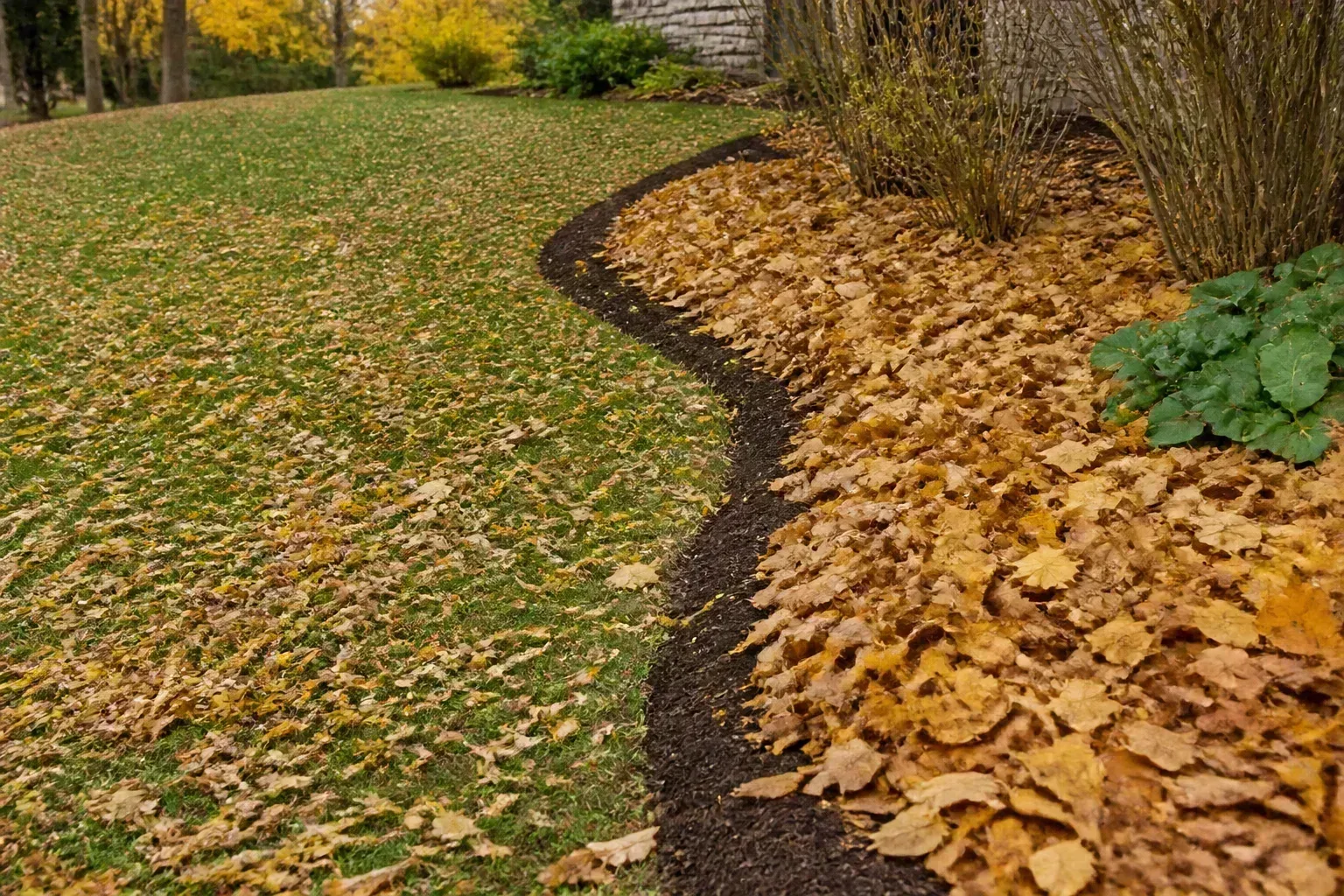
Keep mulch off crowns, stems, and trunks
Leaves are not waste by default, but where you leave them matters. A light layer can stay under shrubs or in beds where it will not smother low evergreen plants.
On a lawn, thick, matted leaves block light and air; mow a modest layer into small pieces or rake it off before it forms a wet blanket. Penn State notes that heavy compacted leaves can damage turf and that chopped leaves can return organic matter to the soil. Penn State Extension
Move leaves away from sidewalks, drains, and areas where they become slippery. Leaves from plants with active disease should not be spread as mulch beneath susceptible plants.
Healthy leaves can be chopped with a mower, added to compost, or held in a separate leaf pile to break down into leaf mold. This turns one fall chore into a supply of soil-covering material instead of a stack of disposable bags.
4. Check trees and protect vulnerable plants
Walk around trees and shrubs before leaves fall completely. Look for broken branches, storm damage, loose stakes, rubbing ties, exposed roots, and containers that could tip in winter wind. Remove small dead or damaged branches only if you can make a clean cut safely and identify the branch collar.
Do not use fall cleanup as an excuse to shear, top, or heavily reshape a tree. Pruning timing differs by species, and unnecessary fall cuts can expose fresh wounds or remove next season’s flower buds; leave high limbs and uncertain structural problems to a qualified arborist.
If late summer and fall have been unusually dry, give newly planted trees and evergreens a slow, deep drink while the soil is unfrozen and not already saturated. Check the root zone rather than following a fixed weekly schedule: rainfall, soil type, tree size, and drainage all change how quickly it dries.
A newly planted tree is more vulnerable than a long-established one because its root system still occupies a relatively small volume of soil. Stop when the ground is frozen or water is running off rather than soaking in. Farmers’ Almanac
Lift tender bulbs and secure exposed containers
Dahlias, cannas, caladiums, and other tender tubers or bulbs may not survive a freezing winter outdoors. Once frost has ended their growth, lift them carefully, label them by variety, and follow species-specific directions for drying and storage.
Store only healthy material in a cool, dark, frost-free place; a warm, damp basement can trigger rot or premature sprouting. Kansas State and Penn State both distinguish these tender plants from hardy bulbs that can remain in the ground. Kansas State University Extension Penn State Extension
For potted shrubs and perennials, remember that roots in containers experience colder conditions than roots in the ground. Move pots into an unheated but frost-protected space if the plants require it, or group and shelter containers that are hardy outdoors.
Drain saucers, elevate pots so drainage holes remain open, and protect brittle ceramic containers from repeated freeze-thaw exposure. Do not bring a dormant hardy plant into a heated room; warmth can wake it at the wrong time.
5. Drain hoses and winterize irrigation, but keep watering as needed
Water left inside a hose, timer, filter, sprinkler, or exposed valve can freeze and expand. Before temperatures stay below freezing, disconnect hoses from outdoor faucets, drain them fully, empty watering wands and nozzles, and store the equipment somewhere dry.
Remove quick-connect fittings if they hold water. A hose left attached can also trap water at the faucet, so do not treat coiling it as the whole job.
For an in-ground sprinkler or drip system, follow the manufacturer’s shutdown procedure. Turn off the controller or set it to the appropriate winter mode, close any required supply valve, and drain exposed components.
Some systems require compressed-air blowout, but doing that incorrectly can damage pipe, valves, or emitters; if you do not know the system’s design or pressure limits, arrange a qualified irrigation service rather than guessing. Farmers’ Almanac’s fall checklist likewise prioritizes draining hoses and freeze-vulnerable irrigation parts before a hard freeze. Farmers’ Almanac
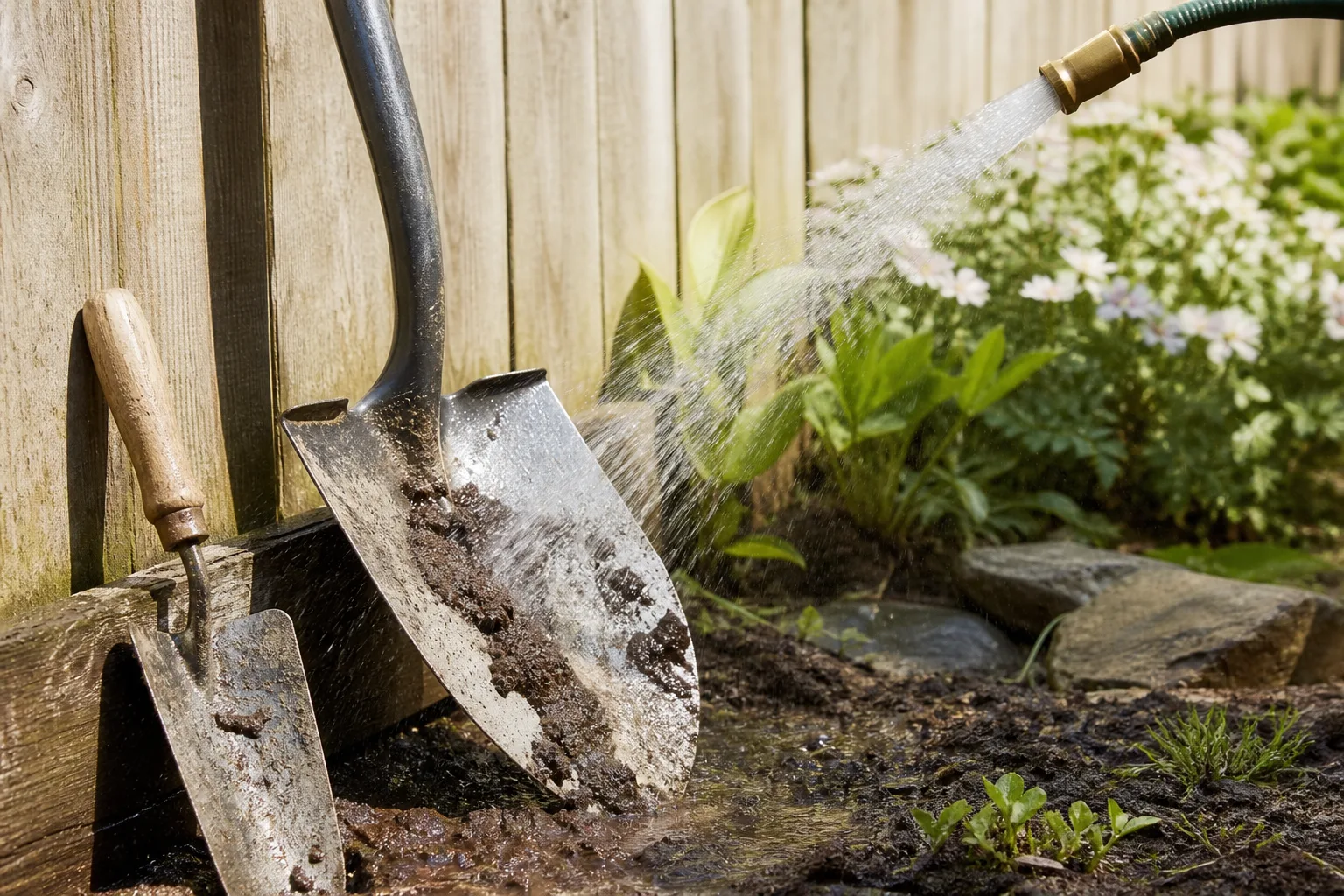
Shut down freeze-vulnerable parts safely
Do not confuse winterizing equipment with stopping all plant watering. Trees, evergreen shrubs, and newly installed plants can still need moisture during a dry autumn, especially before the ground freezes.
Water the soil slowly in the morning so it has time to soak in; avoid standing water around roots and skip irrigation during a saturated spell. Rainfall totals alone can mislead because a brief shower may wet the surface without reaching a new tree’s root ball.
Container plants have a separate risk: wet potting mix can freeze more quickly than garden soil. Water only when the mix is dry at the depth where roots are growing, make sure excess water drains, and move tender pots before a forecast hard freeze.
In a mild region with no freezing temperatures, you may not need to drain every hose or shut down the full irrigation system, but inspect it for leaks and adjust schedules for shorter days and rainfall. Local weather, not a holiday date, should decide the final shutdown.
6. Leave useful seedheads and stems standing
Do not cut every perennial to the ground just to make a bed look tidy. Seedheads on coneflowers, sunflowers, asters, sedums, and other plants can provide food for birds; standing stems add structure in winter and may shelter overwintering insects. The RHS recommends leaving selected seedheads for both wildlife value and winter interest, and Penn State notes that some dried perennials support birds and beneficial insects. Royal Horticultural Society Penn State Extension
Choose what stays rather than treating every stem the same. Keep healthy, sturdy stems that are not spreading unwanted seed and that do not block a path or obscure a plant you need to monitor.
Leave some leaf litter under shrubs or in a quiet bed where it can support habitat, but keep it away from storm drains and lawns where it mats. If you want a neat edge, clear a narrow strip along paths and leave the back of the bed standing; a small managed zone can look intentional without eliminating all shelter.
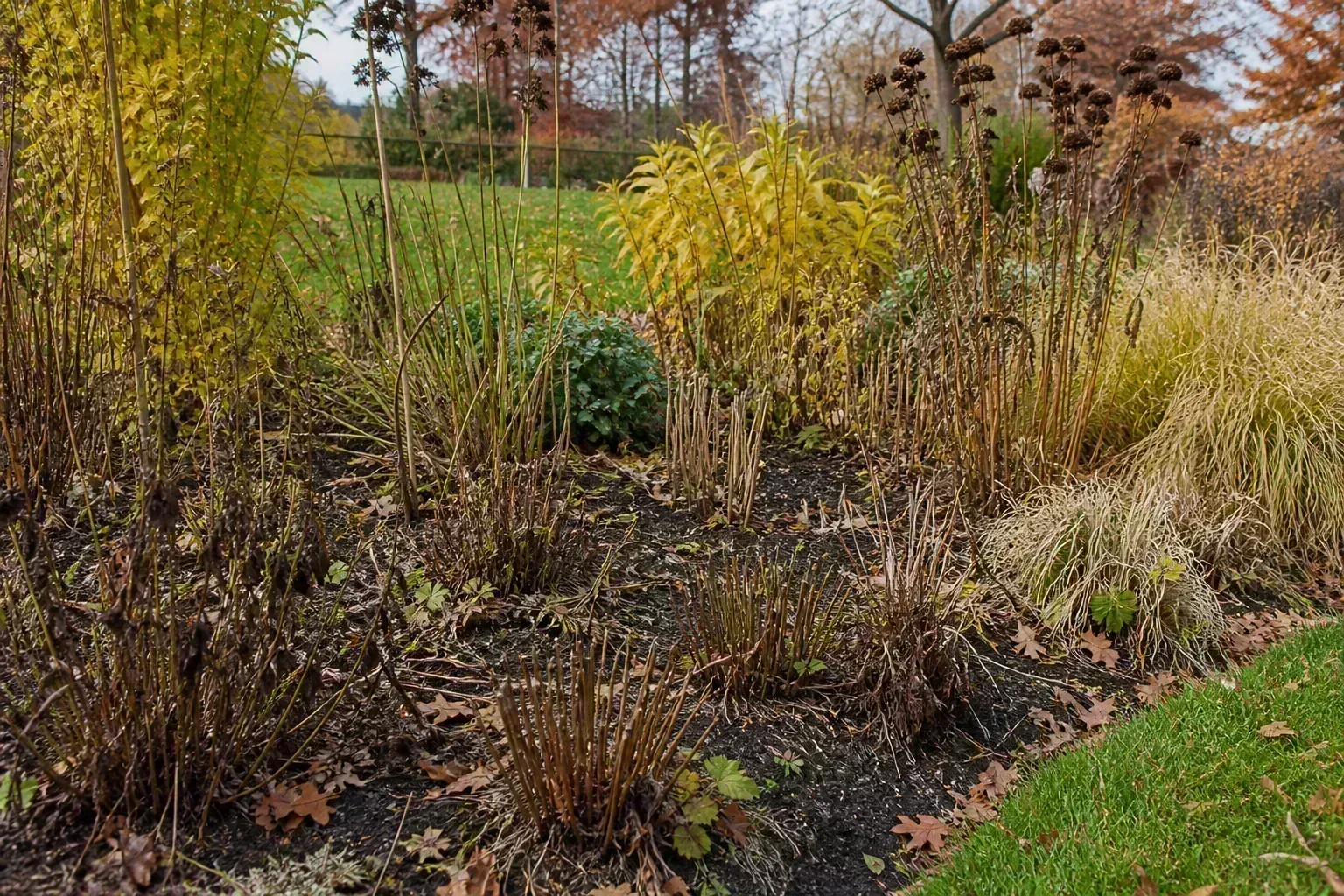
Make targeted cuts for disease and access
Cut back and remove foliage that is visibly diseased, mushy, or likely to spread a known problem. Also remove plants that are invasive in your region or whose seeds you do not want to distribute.
Clean pruners between plants when disease is present, and do not use a mower to shred infected leaves into a healthy lawn or flower bed. For healthy stems, wait until late winter or early spring when you can see new growth beginning, then cut without injuring emerging shoots.
Some plants are exceptions. Marginally hardy perennials may benefit from retaining their top growth for extra protection, while low evergreen or semi-evergreen plants can be damaged by indiscriminate shearing.
If snow is heavy in your region, a few stems may bend or break; that is a practical reason to remove a specific plant after the ground freezes, not proof that every bed must be cleared in autumn. Seasonal cleanup should balance plant health, access, and habitat.
7. Clean, dry, and store garden tools
Tools last longer when they go into storage dry and free of soil. Knock soil off shovels, hoes, and trowels, rinse away stuck residue when needed, and dry metal parts before putting them away.
Dirt left on a blade holds moisture and can transfer soil-borne material from one bed to another. If a tool touched a diseased plant, clean it before using it elsewhere; use an appropriate disinfectant according to its label and tool-maker guidance, then dry and oil metal surfaces to limit corrosion.
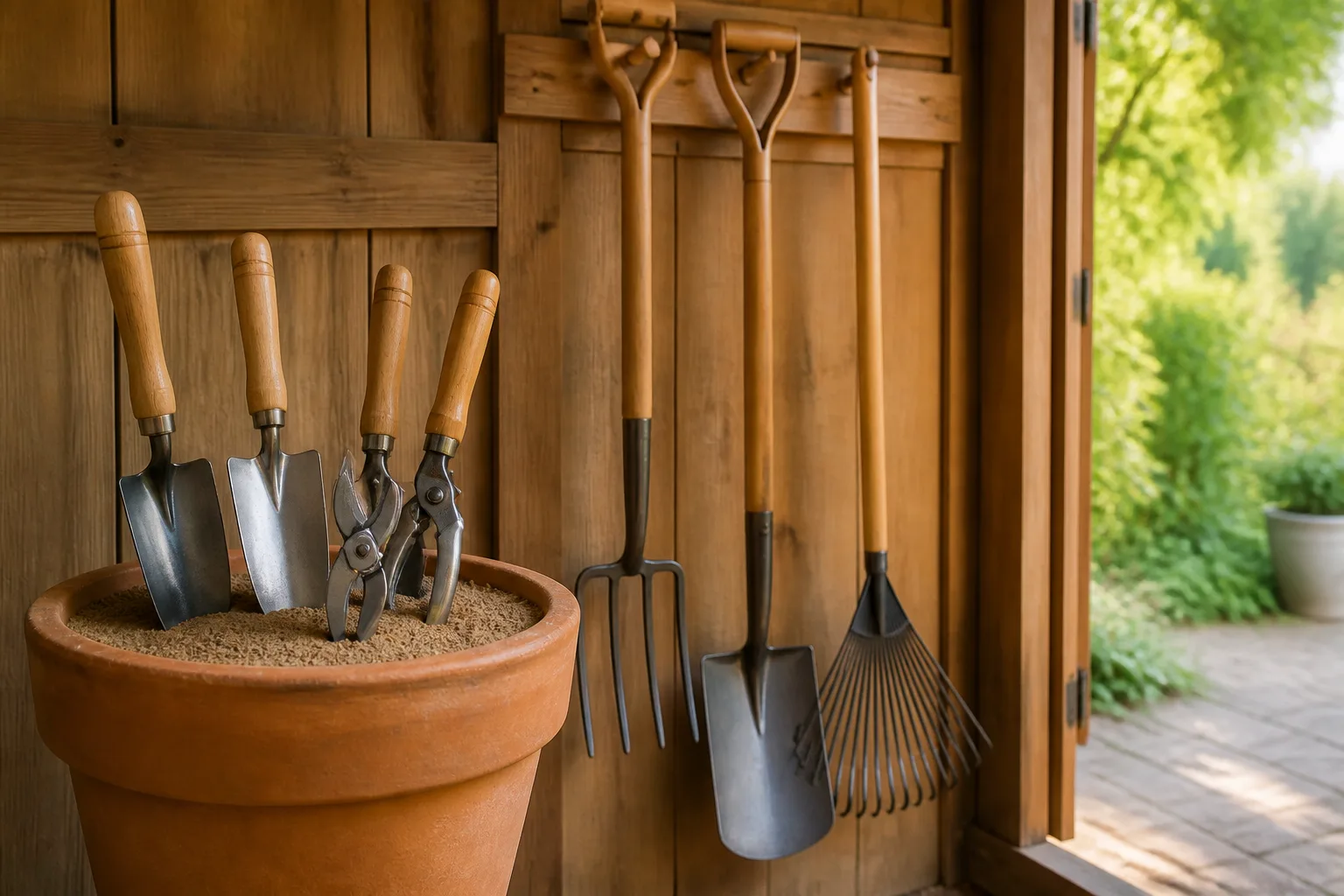
Sharpen pruning blades and digging edges if you have time, tighten loose handles, and replace damaged parts before the next rush of spring work. Do not sharpen a dirty blade or leave it soaking in a bucket of water.
Wipe metal with a light protective oil, keep wooden handles dry, and hang tools where they will not sit in puddles or lean against damp soil. The job is a short inspection as much as a cleaning routine: a cracked handle or sticky pruner is easier to fix now than on the first busy planting day.
Adjust the checklist to your region and the forecast
In cold-winter areas, give priority to draining exposed equipment, moving tender plants, protecting container roots, and finishing work that requires unfrozen soil. If a hard freeze is imminent, do not spend the last warm afternoon dividing a large perennial clump; protect the most vulnerable plants first and schedule nonurgent divisions for spring. A quick cleanup of infected material is still worthwhile even if the rest of the bed stays standing.
In milder coastal and southern climates, fall may be a planting and growth season rather than a shutdown. Keep watering during dry spells, leave irrigation running as long as plants need it, and avoid applying winter mulch solely because the calendar says autumn.
You may have more time to divide suitable plants, sow a cover crop, or improve vegetable beds. In hot-summer climates, a cool autumn can be the best establishment window for new plants, but check local guidance for heat, rainfall, and winter lows.
Elevation, wind exposure, pavement, walls, low-lying frost pockets, and canopy cover can shift conditions within the same neighborhood. A weather app’s regional average is a useful warning, not a guarantee for your garden.
Use a local forecast and observe the coldest part of your yard; if you keep records, note where frost hits first and where soil remains workable longest. Hardiness zone helps select plants for winter lows, while a frost-date calendar and short-range forecast help with the fall schedule. Farmers’ Almanac
You can skip jobs that do not solve a real problem. You do not need to dig up healthy hardy bulbs, strip every bed, fertilize dormant perennials, or prune every tree before winter. If garden time is limited, remove diseased plants, protect vulnerable roots and equipment, water newly planted woody plants during dry weather, and leave healthy habitat wherever it is compatible with safety and good plant health.
Conclusion
The best fall gardening checklist is selective. Remove disease, divide only plants that can recover in the time and climate you have, use mulch and leaves without smothering crowns or turf, protect tender plants and exposed water lines, and give trees moisture only when the soil is dry and unfrozen. Then leave healthy stems and seedheads where they can feed birds, shelter insects, and keep winter beds from looking bare.
Work from your forecast rather than a fixed holiday date. Once the vulnerable plants and freeze-sensitive equipment are ready, the rest can be paced around the weather—and much of the garden can wait until spring.



