Hydrangeas Not Reblooming: 7 Reasons and Fixes
Hydrangeas not reblooming? Identify your type first, then fix pruning timing, water, light, fertility, cold damage, and pests with expert-backed steps.
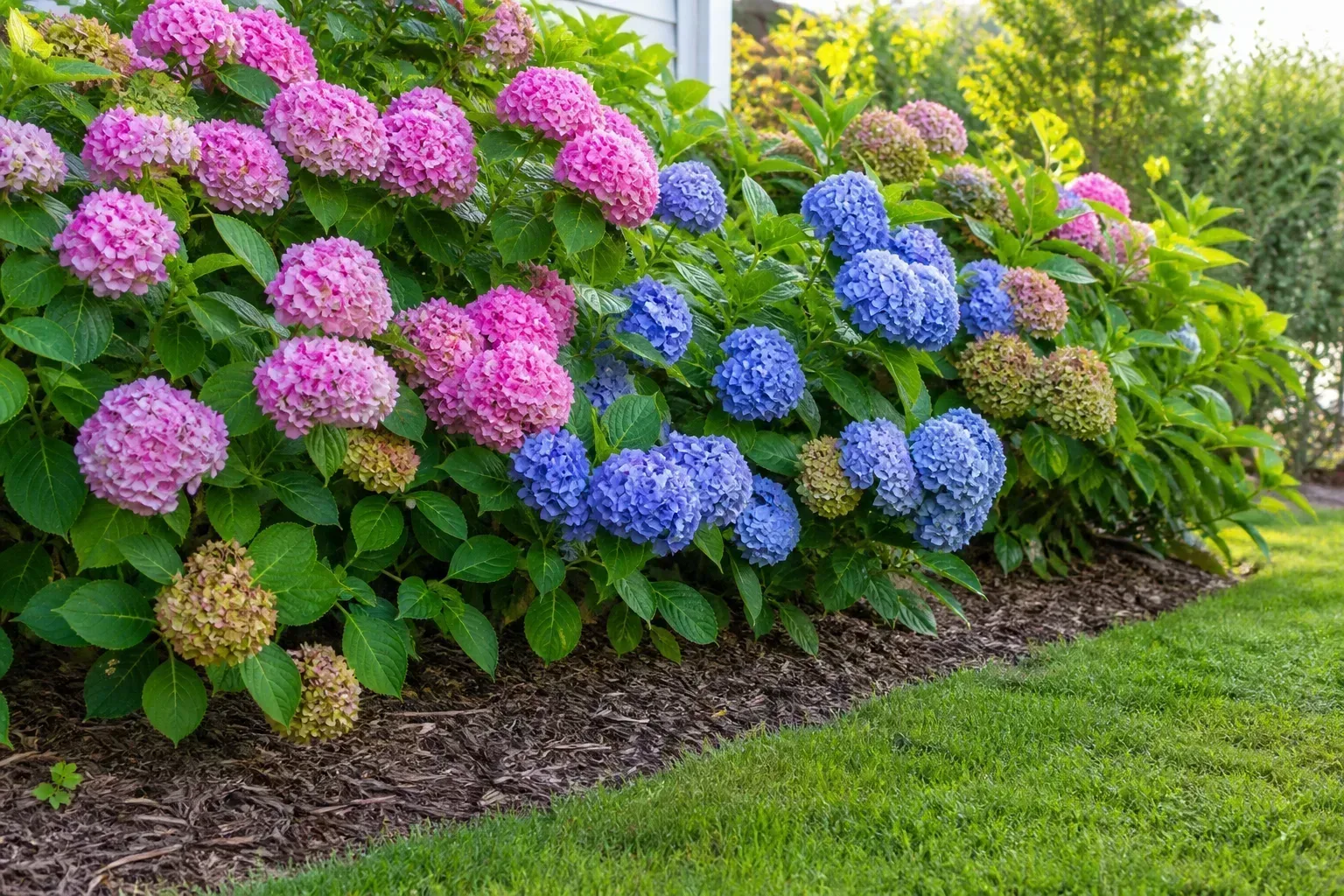
A hydrangea that bloomed beautifully in June and then went quiet can feel like a mystery. Before you reach for fertilizer or start cutting branches, sort two different problems: a shrub that never produced its first flowers this year, and a shrub that finished one flush but did not send up the second round you expected. Those are not the same failure, and they do not share the same fix.
Reblooming only applies to cultivars bred to flower more than once in a season, usually on a mix of old and new wood. Most garden hydrangeas are built for one main show. If yours is a classic old-wood mophead and it bloomed once, the plant may have done exactly what its biology allows. If you bought a rebloomer such as Endless Summer, BloomStruck, or Let’s Dance and the second flush never arrived, something in care, timing, or bud survival blocked it. The seven reasons below cover both situations—but only after you know which kind of hydrangea you are troubleshooting.
Start With the Right Question: Missing a Second Flush or No Flowers at All?
Hydrangeas not reblooming usually means one of three things: the plant never opened its first flowers, it bloomed once and stopped, or a labeled rebloomer skipped its later flush. Each path starts with bloom biology, not guesswork.
If the shrub has healthy leaves but no flowers at all, look first at pruning date, winter bud loss, deep shade, or heavy nitrogen—not rebloomer feeding schedules. If it bloomed once on schedule and you expected more, confirm the cultivar actually reblooms. NC State Extension notes that some bigleaf cultivars classified as reblooming can flower again later in summer on new growth, while most bloom primarily on previous-season wood (NC State Extension). A non-reblooming mophead that finished its June display is not broken. A rebloomer that stalls after the first round usually lost buds, ran out of resources, or was pruned or stressed at the wrong moment.
One Main Flush vs True Rebloomers
One-flush hydrangeas include most old-wood bigleaf, oakleaf, and mountain types, plus new-wood panicle and smooth hydrangeas that produce one strong seasonal display. True rebloomers—many Endless Summer-type bigleafs—can flower on old wood early and again on new shoots later. UConn Extension lists Endless Summer and Let’s Dance cultivars as blooming on both old and new wood, with spent-bloom removal promoting additional blossoms (University of Connecticut Extension). That extra flush costs energy. Rebloomers need steady moisture, adequate fertility, and intact buds far more than one-and-done types.
Identify Your Hydrangea Type Before You Change Anything
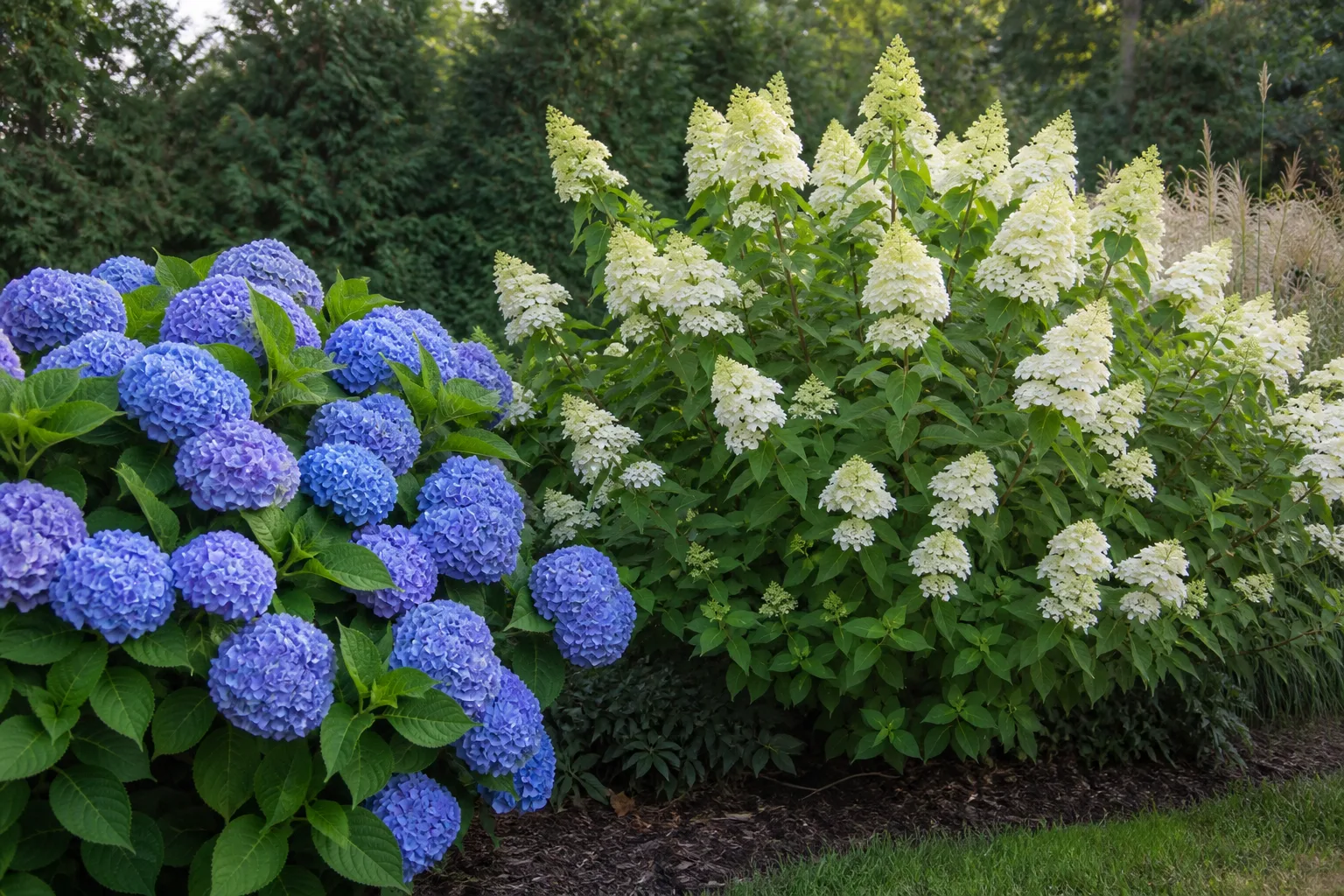
Every fix below depends on when and where your plant sets flower buds. Round blue or pink mopheads and flat lacecaps are usually bigleaf hydrangeas. Cone-shaped panicles point to Hydrangea paniculata. Large rounded white heads on flexible stems often mean smooth hydrangea (H. arborescens). Oak-shaped leaves identify oakleaf. Check the original tag if you still have it.
Old-Wood, New-Wood, and Rebloom-on-Both Groups
Old-wood bloomers—bigleaf, mountain, oakleaf, climbing—form many flower buds on stems that grew the previous season. UGA Extension warns that bigleaf hydrangea sets flower buds in late summer for the following year, so pruning in late summer, fall, or winter removes potential flowers (University of Georgia Cooperative Extension). New-wood bloomers—panicle and smooth types—flower on shoots produced in the current year; they tolerate late-winter pruning but still suffer if summer cuts remove developing buds. Rebloom-on-both cultivars gain flexibility after a bad winter, yet they are not immune to late hard pruning, drought, or starvation.
If you cannot identify the plant, treat it as old-wood until proven otherwise: minimal cuts, no fall renovation, and no deep branch shortening after July.
Reason 1: Improper Pruning Removed This Year’s or Next Year’s Buds
Improper pruning is the most common reason hydrangeas fail to bloom again. The mistake is rarely “pruning too little.” It is cutting at the wrong season, removing bud-bearing wood, or confusing deadheading with reshaping.
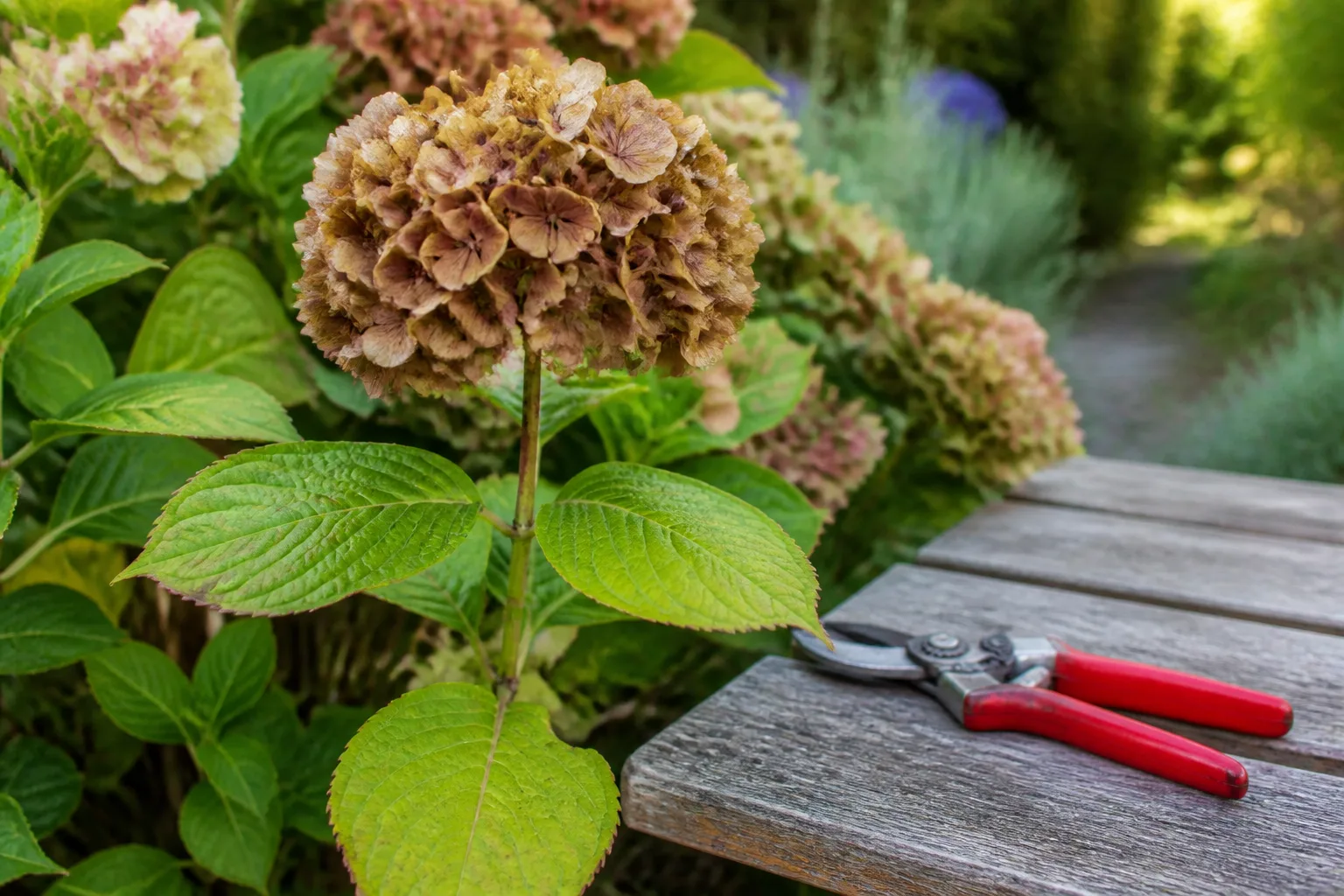
On old-wood hydrangeas, next year’s flowers often sit at or near the tips of stems that grew this year. A hard fall cleanup, spring “tidy-up” chop, or deep deadhead in August can delete an entire year of blooms. On new-wood types, heavy summer pruning removes the shoots that would have carried this season’s panicles. On rebloomers, late cuts can remove both the old-wood early flush and the new-wood backup.
Species-Specific Pruning Windows That Actually Work
Use the calendar that matches your plant, not a generic “prune in spring” rule:
- Bigleaf and mountain hydrangeas: Prune as blooms fade, generally by early summer and before August 1 in most climates. UConn recommends July timing as flowers start to fade and explicitly warns against fall, winter, or early-spring pruning on one-year-old-wood types (University of Connecticut Extension).
- Oakleaf hydrangeas: Same old-wood rules—after bloom, light shaping only.
- Panicle and smooth hydrangeas: Structural pruning in late winter or early spring; avoid summer branch removal that deletes current-season buds.
- Reblooming bigleaf cultivars: Remove spent heads promptly to encourage another flush; avoid cutting stems back to the ground unless you accept losing the earliest old-wood flowers next year.
If you already pruned too late, stop cutting and give the shrub a full season of good care. Old-wood plants may not bloom until the following year. Rebloomers may still produce a late flush on new wood if buds lower on the stem survived. For deeper deadheading rules, see our guide on when to deadhead hydrangeas in summer.
Reason 2: Soil Fertility Is Too Low to Support a Second Flush
All hydrangeas prefer fertile, organic-rich soil, but reblooming cultivars demand more because a second flush draws on the same root system twice in one season. Thin, sandy, or exhausted soil may carry a shrub through one round of flowers and leave nothing for the next.
Before planting or when performance slips, run a soil test if you can. UConn recommends testing before planting bigleaf hydrangeas, especially when maintaining blue or pink color (University of Connecticut Extension). At planting, work compost into a wide area rather than stuffing fertilizer into a small hole. For established shrubs, a light balanced feed in late spring and, for rebloomers only, a second modest application as the first flush finishes can help—provided you stop well before late summer on cold-climate plants.
If the shrub looks pale, stunted, or repeatedly weak despite correct pruning, side-dress with compost or apply a slow-release balanced product such as 5-10-10 at label rates. UConn suggests 5-10-10 in late spring and mid-summer but not after August 15 (University of Connecticut Extension). Low fertility rarely explains a total bloom failure on its own, but it commonly explains rebloomers that stall after the first round.
Reason 3: Excess Nitrogen Grew Leaves Instead of Flowers
Hydrangeas need nutrients, yet too much nitrogen is a classic bloom killer. High-nitrogen lawn fertilizer drifting onto shrub beds, repeated doses of lush-growth formulas, or fresh manure piled at the base can push vegetative shoots at the expense of flowers. UGA Extension lists excess nitrogen among the main causes of bigleaf hydrangea failure to flower (University of Georgia Cooperative Extension).
The symptom pattern is familiar: dark green, vigorous leaves, long soft shoots, and few or no buds. Fix it by skipping nitrogen-heavy feeds, keeping lawn fertilizer away from root zones, and switching to a balanced or slightly phosphorus-forward product if a soil test shows need. Do not try to “force” blooms with more fertilizer—that usually makes the problem worse. Recovery may take until the next growing season once excess nitrogen washes through and pruning timing is corrected.
Reason 4: Inconsistent Watering Interrupted Bud Development
Hydrangeas are water-demanding shrubs. The name even references water vessels. When roots cycle between bone dry and soggy, the plant prioritizes survival over bud formation—and rebloomers quit first.
UConn guidance recommends about 1 inch of water per week under normal conditions and 2 inches during hot, dry weather, delivered in one or two deep soaks rather than daily sprinkles (University of Connecticut Extension). Hydrangeas allowed to wilt repeatedly in spring and early summer may produce fewer flower buds the following year, not just fewer flowers this week. That matters for old-wood types setting next season’s buds while this year’s flowers fade.
Mulch, Soil Checks, and Recovery Watering
Apply 2 to 3 inches of organic mulch over the root zone, keeping it a few inches away from stems. Mulch moderates soil temperature and slows evaporation; it does not replace irrigation. Check moisture by feeling the soil beneath the mulch before you water. If leaves flag in afternoon heat but recover overnight, you may be seeing heat stress rather than true drought—still worth improving mulch and afternoon shade for bigleaf types. For wilt that will not recover, read how to keep hydrangeas from going limp before you double-water a drainage problem.
Reason 5: Too Much Shade—or Too Much Hot Afternoon Sun
Light mistakes cut both ways. Deep shade reduces flowering because buds need energy from sufficient light. UGA and UConn both note that too much shade is a primary reason bigleaf hydrangeas fail to flower (University of Georgia Cooperative Extension; University of Connecticut Extension). Under large trees or on the north side of a wall, hydrangeas may grow leaves happily and bloom lightly—or not at all.
At the other extreme, hot afternoon sun on bigleaf hydrangeas causes repeated wilt, leaf scorch, and stress that can abort bud development on rebloomers trying for a second flush. The safe default for mopheads and lacecaps is morning sun with afternoon shade. Panicle hydrangeas generally tolerate more sun; oakleaf handles sun or partial shade. If shade is the issue, prune overhanging branches selectively or plan a move during dormancy. If scorch is the issue, add afternoon protection rather than more fertilizer.
Reason 6: Winter Cold or Late Frost Killed the Buds
Even perfect summer care fails when flower buds die over winter or during a late cold snap. Old-wood hydrangeas are especially vulnerable in zones where they are marginally hardy. Buds form late in the season; an early warm spell followed by hard frost can kill them while leaves look fine.
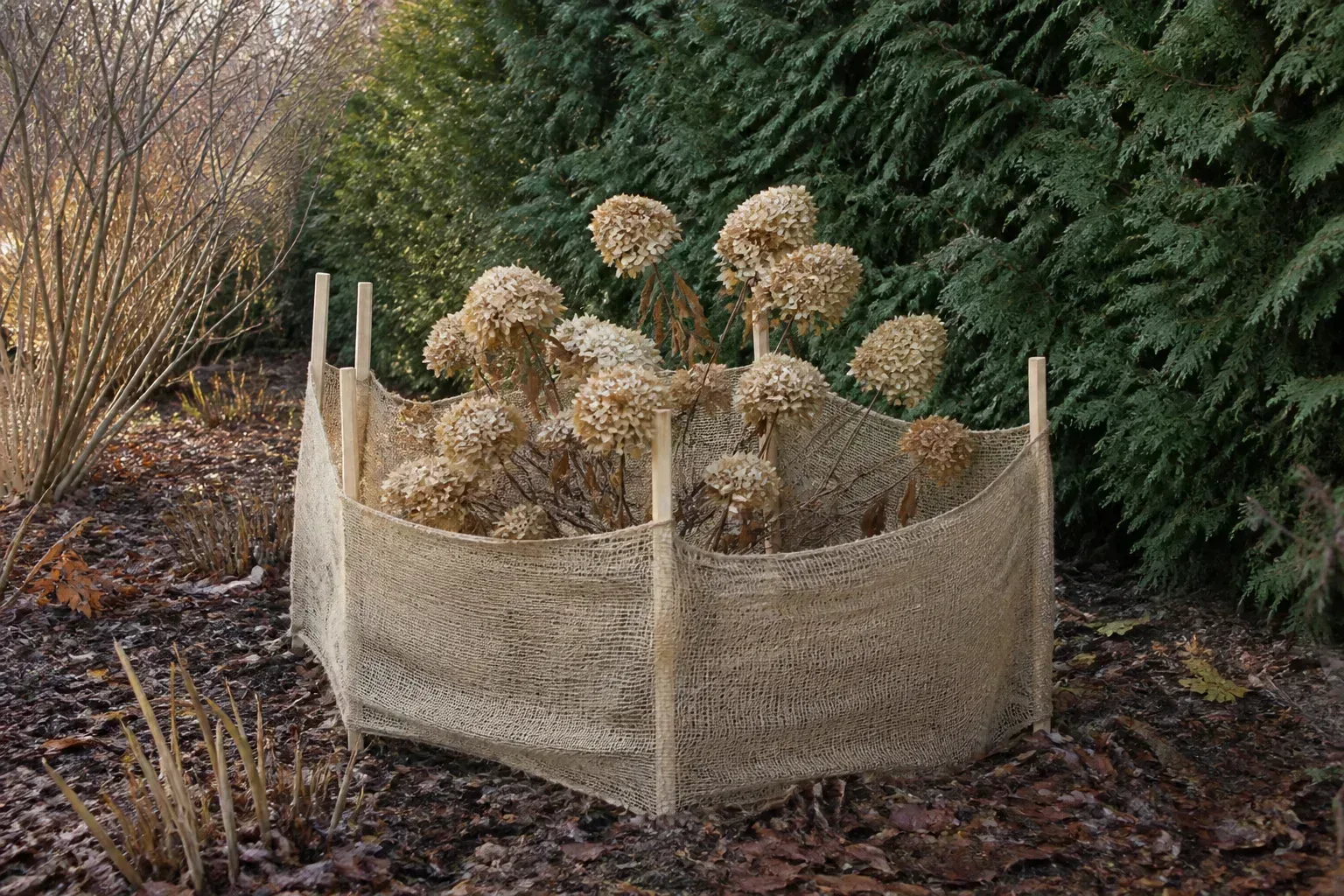
UGA recommends winter protection for bigleaf hydrangea in exposed sites—covering plants when temperatures drop below freezing or building a cylinder of chicken wire filled with leaves (University of Georgia Cooperative Extension). UConn describes the same pattern: flower buds breaking dormancy during a late-winter warm period, then dying in subsequent freezes (University of Connecticut Extension).
Protection Tactics for Marginally Hardy Shrubs
- Refresh mulch after bloom; avoid piling it against the crown.
- Leave some dried flower heads on old-wood types in cold climates—the RHS hydrangea pruning guide notes faded mophead blooms can shield lower buds through winter.
- Install a loose wind screen after leaf drop in exposed yards.
- Choose hardier types—panicle hydrangeas for cold zones—when rebloom reliability matters more than blue mopheads.
Rebloomers may still flower on new wood after bud loss, but the first, largest flush is often gone for the year. Recovery is possible; instant rebloom is not.
Reason 7: Pests, Disease Stress, or Deer Ate the Buds
Stressed hydrangeas redirect energy away from flowers. Aphids, spider mites, scale, and leaf spots rarely delete an entire bloom cycle alone, but heavy infestations weaken rebloomers trying for a second round. Deer and rabbits are different—they eat buds directly.
Scout plants weekly from bud break through bloom. Look under leaves, along stem tips, and at developing flower heads. Treat pests when populations build, using the least disruptive effective method for your garden. For deer, rotate repellents, use fencing where practical, and protect vulnerable stems in late winter and early spring when bud loss is silent but total.
If pests were severe, pair control with steady watering and modest feeding so the shrub can rebuild—not with aggressive pruning that removes more wood.
A Step-by-Step Troubleshooting Plan When You Are Not Sure
When several causes overlap, use this order:
- Confirm cultivar and bloom group from tag, flower shape, and leaf type.
- Review pruning dates for the last 12 months. Any fall or spring cuts on old wood?
- Check light and water—morning sun, afternoon shade for bigleaf; deep soak when soil dries; mulch in place.
- Audit fertilizer—especially lawn nitrogen near the root zone.
- Inspect buds in late winter or early spring. Brown, mushy, or missing terminal buds predict bloom loss before leaves emerge.
- Scout pests and deer damage at bud break.
- Adjust expectations—non-reblooming types may need a full year after a bad prune or freeze.
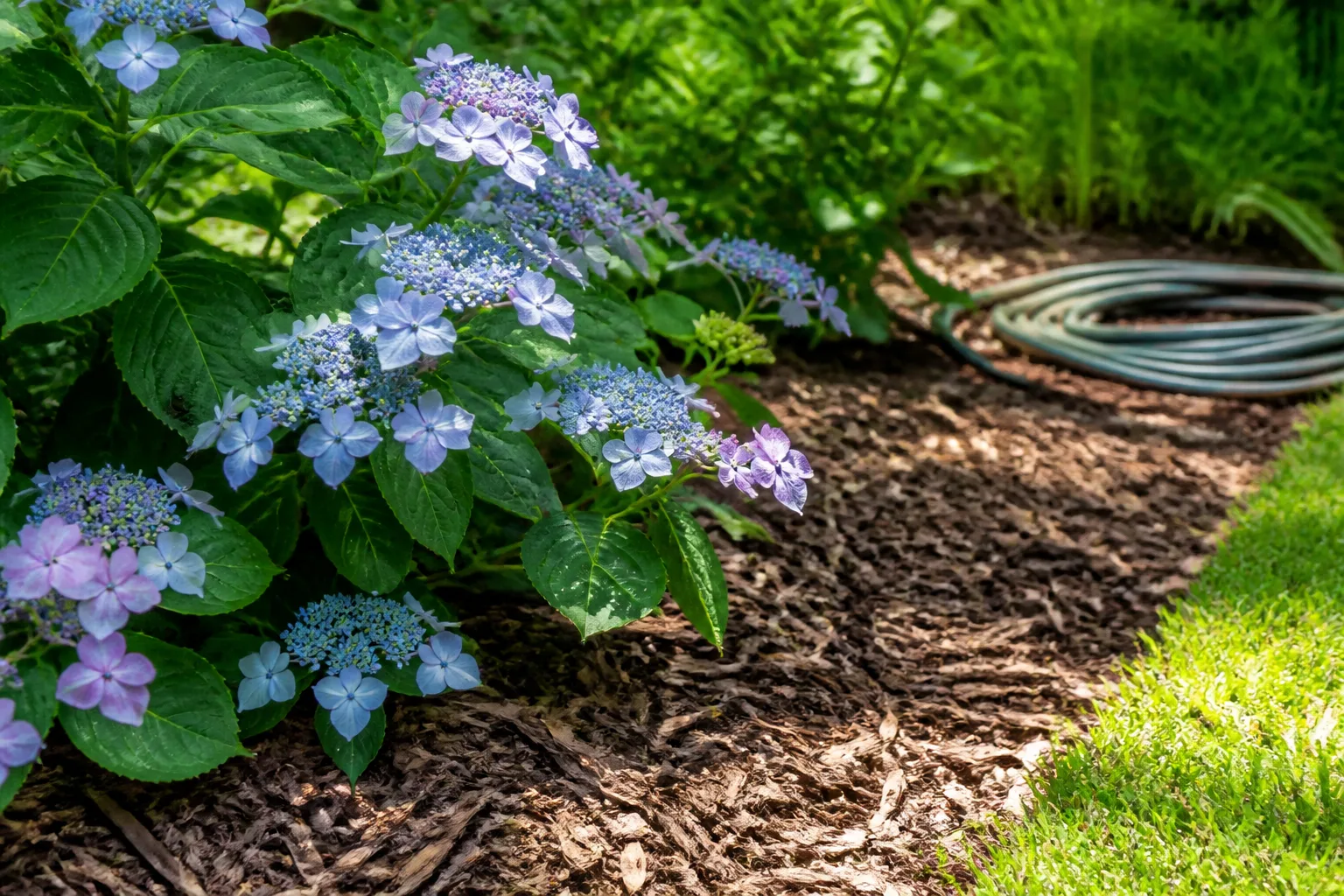
For late-summer care that sets up next year’s buds—not just this week’s flowers—see late-summer hydrangea care for bigger blooms next year. Gardening Know How also summarizes common bloom failures as pruning, winter injury, shade, and excess nitrogen (Gardening Know How)—the same core levers, worth checking once you know your type.
Conclusion
Hydrangeas not reblooming is rarely a single mystery ingredient. It is usually a timing problem—pruning, frost, or feeding—or a resource problem with water, light, and soil fertility. Start by confirming whether your shrub is supposed to rebloom at all, then match the fix to old wood, new wood, or rebloom-on-both biology.
The fastest way to repeat last year’s disappointment is to prune hard without identifying the plant, blast nitrogen at a leafy shrub, or assume drought wilt will fix itself. The fastest way toward flowers again is conservative cuts, even moisture, balanced fertility, correct light, bud protection in cold zones, and weekly scouting while the shrub rebuilds. Some damage takes a season to outgrow. Give the plant that time while you stop the habit that caused it.