Who Is Responsible When a Tree Falls on a Neighbor's Yard
Fallen tree on a neighbor's property? This guide explains liability rules, insurance claims, debris cleanup splits, and how to avoid a boundary dispute.
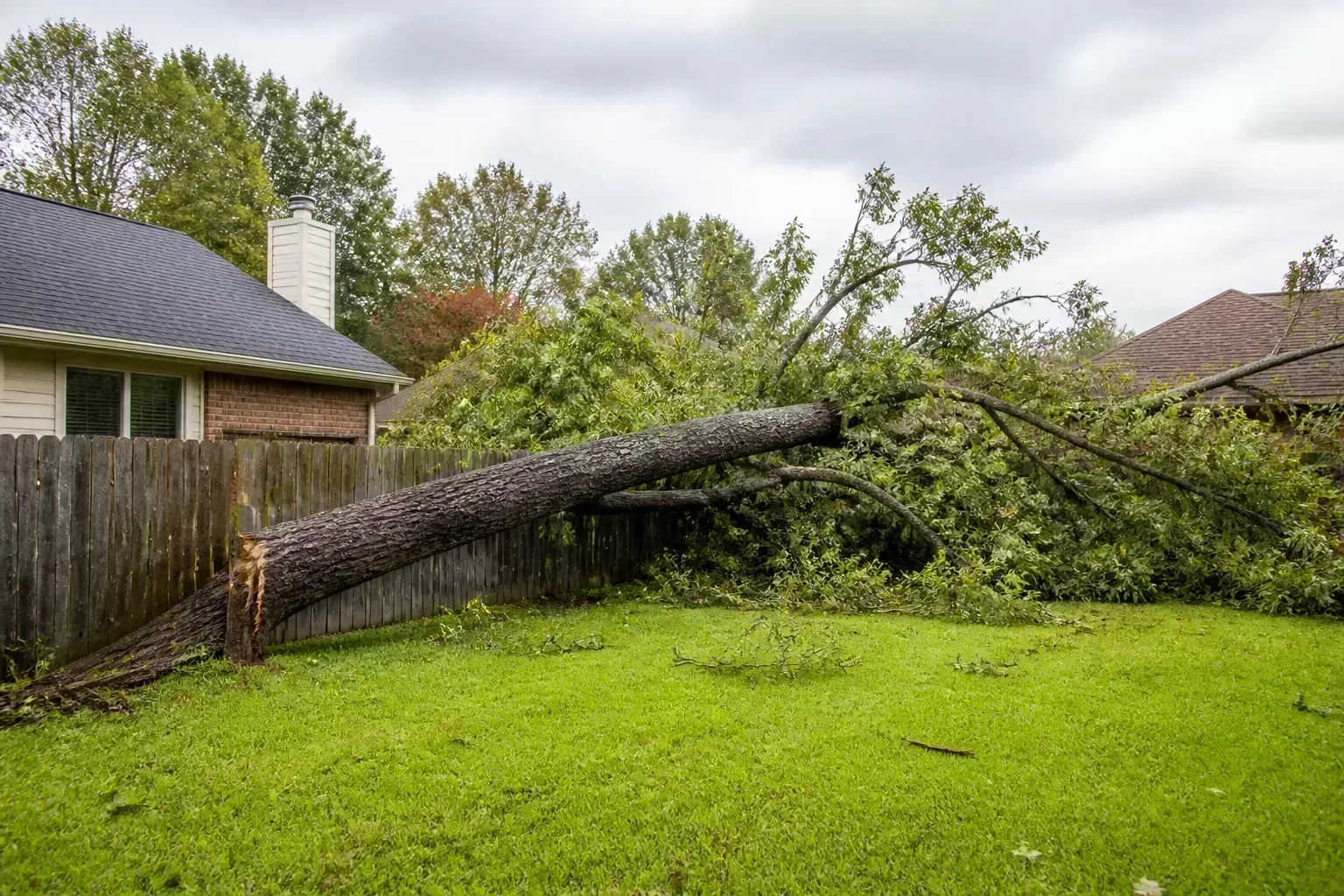
A tree that lands in the yard next door turns a weather event into a neighborhood stress test within minutes. Your neighbor is staring at a trunk across the lawn. You are wondering whether you are legally on the hook, whether your insurance company cares, and whether you should grab a chainsaw or call a professional. The answer is almost never as simple as “my tree, my bill” or “their yard, their problem.” It depends on who owned the tree, whether it was a foreseeable hazard, and where the debris ended up.
This guide walks through the cleanup and liability rules most U.S. homeowners encounter after a boundary-tree failure. Laws vary by state and policy language matters, so treat this as practical orientation—not personal legal advice. When dollar amounts are large or neighbors are hostile, a local attorney or your insurance adjuster should confirm specifics.
The Short Answer: Liability Hinges on Tree Health and Foreseeable Risk
If your tree was structurally sound and fell because of a storm, high winds, ice, or another natural event, you are generally not legally responsible for damage or cleanup on your neighbor’s property. Insurance companies and courts often call that an act of nature (sometimes phrased “act of God”). The neighbor whose land was hit typically handles removal of debris on their side and files a claim with their own homeowners policy for any covered damage.
If the tree—or the limb that failed—showed obvious signs of decay, death, instability, or neglect that a reasonable owner should have addressed, liability can shift to you. That is the negligence standard: the hazard was foreseeable, you knew or should have known, and you did not act. In that scenario your neighbor may pursue you directly, and your insurer may defend you—or deny coverage if you failed to maintain the tree.
Between those poles sits everyday storm reality: healthy trees still fail in hurricanes and ice storms. Extreme weather does not automatically mean someone was negligent. The question is whether the failure was predictable from the tree’s pre-storm condition, not whether the wind was strong.
First Steps in the First 24 Hours After a Tree Falls
Panic pushes people toward the wrong first move—cutting without photos, arguing across the fence, or assuming the neighbor’s anger equals legal liability. A short, calm sequence protects you physically, financially, and relationally.
Secure people and utilities first. Keep everyone away from the trunk, hanging branches, and anything touching structures. If wires are involved, treat every downed line as energized and call the utility emergency number from a safe distance. Do not start chainsaw work near conductors.
Photograph and video before cleanup. Capture wide shots showing where the trunk sat, which property each section landed on, roof or fence damage, soil/root plate uplift, and close-ups of the break surface and any decay, fungal conks, hollow wood, or prior pruning wounds. Oklahoma State University Extension recommends this documentation especially when a tree looked unhealthy before the fall, because photos and correspondence help establish whether negligence was involved.
Notify insurers promptly. The neighbor should contact their carrier if their house, garage, fence, or car was hit. You should call yours if you think a negligence claim might come your way—or if debris on your side damaged your own structures. Many policies have reporting windows; late notice can complicate claims.
Get written tree-removal quotes before anyone hauls wood away. If both yards are affected, agree in writing—email is fine—on who hires the crew and how costs split when insurance is not involved. One coordinated removal is almost always cheaper than two.
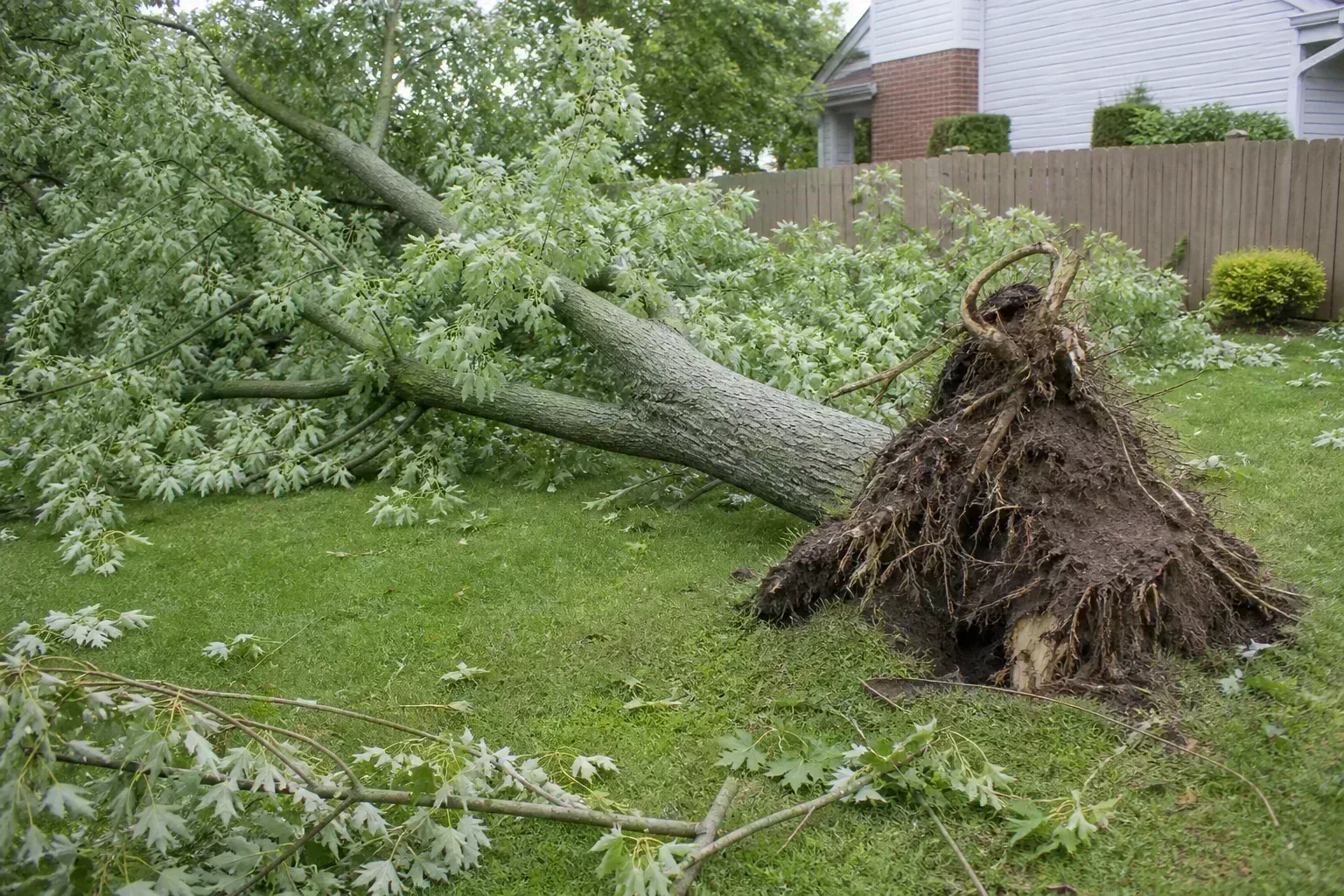
Document the Scene Before Debris Is Moved
Insurance adjusters and arborists reconstruct failures from what the wood shows at the break. Once sections are bucked and hauled, that evidence disappears.
Walk the site with your phone camera on panorama mode. Note compass direction, date, and time in the voice-memo app while filming. If the root ball pulled out of the ground, photograph the underside of the root plate and any decay in major roots. If a limb snapped mid-trunk, shoot the fracture face from several angles.
If you previously warned the neighbor about their tree—or they warned you—pull those emails or texts now. A dated record that someone flagged hazard before the storm is central to negligence arguments on either side.
Treat Downed Power Lines and Structural Damage as Emergencies
A fallen tree that only blankets grass is inconvenient. A fallen tree leaning on a roof, garage, or primary service line is a safety incident.
Stay out of damaged buildings until fire or building officials clear them if walls or roofs are compromised. Utility crews—not homeowners—handle lines on poles and most service drops. Attempting to clear a trunk off a conductor is how preventable electrocutions happen during otherwise minor storms.
Who Owns the Tree When Branches Cross the Property Line
Ownership determines who had the duty to maintain the tree before it fell. The rule used in most U.S. jurisdictions is straightforward:
- Trunk entirely on your lot: you own the tree, even if most of the canopy shades your neighbor’s patio.
- Trunk entirely on their lot: they own it, even if branches overhang your driveway.
- Trunk straddling the property line: you have a boundary tree jointly owned and jointly maintained.
Nolo’s neighbor-law overview summarizes this trunk-location test clearly. Canopy location does not override where the trunk enters the ground. That matters when a limb that always hung over the fence snaps: the owner is still whoever owns the trunk.
For overhanging branches that have not fallen yet, your rights are narrower than many homeowners assume. In many areas you may trim back to the property line on your side, but not destroy the tree. Our guide on trimming a neighbor’s tree that hangs in your yard covers lawful pruning without escalating into a timber trespass dispute.
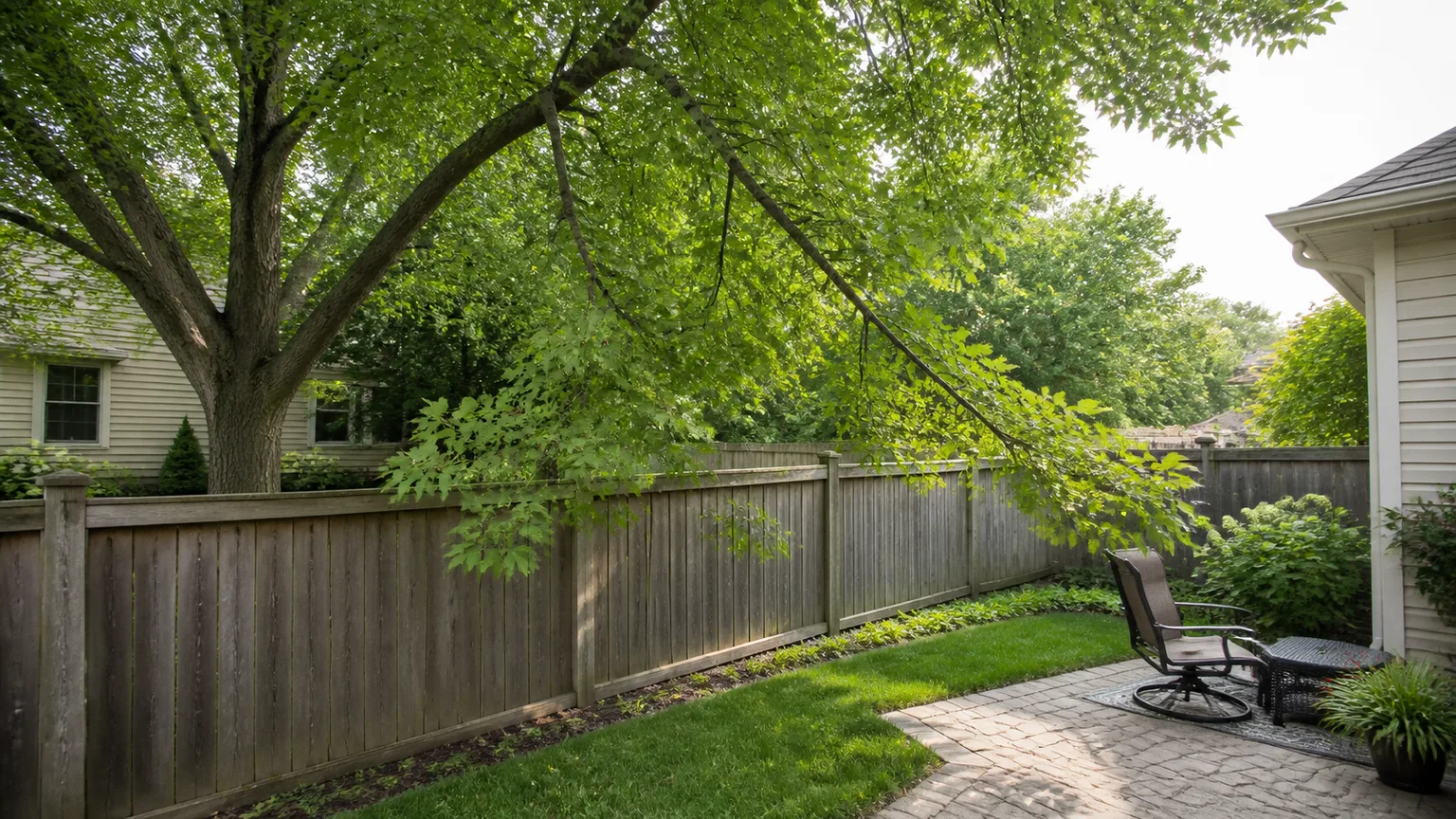
Boundary Trees and Shared Ownership Rules
Boundary trees create shared responsibility before and after failure. Both owners typically must agree before removing the entire tree, and both may share maintenance costs for hazard reduction pruning.
When a boundary tree falls across both lots, practical cleanup often works best as a single job split by agreement—especially if no insurer is paying. Get two or three written quotes from insured tree companies and split the lowest bid unless your policy or a written easement says otherwise. Fighting over every branch while wet wood attracts insects and complicates access usually costs more than cooperative removal.
When a Healthy Tree Falls in a Storm (Act-of-Nature Rules)
The scenario homeowners fear most—a sound oak laid across the fence during a thunderstorm—usually follows the act-of-nature rule. Neither party “caused” the wind. Each property owner is generally responsible for damage and debris on their own land.
Consumer reporters summarizing North Carolina law put it plainly: when a healthy tree that does not appear dangerous falls, the person who sustains the damage pays, because the event is treated as natural. If your neighbor’s healthy tree hits your shed, your policy addresses your shed. If your healthy tree hits their shed, their policy addresses their shed. You are not automatically writing a check because the roots started on your side.
That feels unfair when you are the neighbor staring at a stranger’s maple on your lawn. It is, however, how insurers allocate risk at scale. Your neighbor may still appreciate a gesture—helping stack brush or sharing a crew if you were already removing your side—but legal duty and neighborly choice are different things.
Insurance still has limits. Policies may cap debris removal when no structure was damaged, exclude landscaping, or apply deductibles that make small claims pointless. Read your declarations page before assuming “covered” means “worth filing.”
When Negligence Makes the Tree Owner Liable
Negligence flips the act-of-nature rule. If you allowed a clearly hazardous tree to stand, the neighbor’s insurer—or the neighbor directly—may seek reimbursement from you. Courts and carriers look for foreseeable danger plus failure to act.
Examples that commonly support negligence findings include:
- Large dead limbs visible from the street that you ignored for seasons
- A trunk with fungal conks, cavities, or significant lean toward the neighbor’s structures
- Prior drop history from the same tree without corrective pruning
- A tree you were told was dangerous in writing and left standing anyway
OSU Extension notes that insurers may even deny your own claim if your neglected tree damages your house, arguing you failed to take reasonable precautions. Maintenance is not just about neighbor relations—it protects your coverage.
Importantly, healthy trees fail in extreme weather. A well-maintained tree that uproots in a hurricane is not negligence merely because it was large. Adjusters distinguish pre-existing structural defect from storm severity.
Warning Signs That a Tree Was a Foreseeable Hazard
The International Society of Arboriculture publishes homeowner resources on recognizing tree risk and storm-related damage assessment. Before a lawyer gets involved, field evidence usually centers on whether an ordinary homeowner or arborist would have flagged the tree.
Red flags include:
- More than about one-third of the crown dead or missing
- Cracks or seams running through the trunk
- Mushrooms or conks on the trunk or major roots (wood decay fungi)
- Soil mounding or cracking on the lean side of a tilted trunk
- Hollow sound when tapped, or open cavities with soft wood
- Recent construction trenching within the dripline that severed roots
- Included bark unions where two trunks squeeze together weakly
A single minor issue does not make every tree a lawsuit waiting to happen. Risk is cumulative. Document what you see annually on large trees near boundaries.
How to Build a Negligence Record Before and After a Fall
If you are worried about a neighbor’s hazardous tree—or they have complained about yours—paper trail beats fence arguments.
Send a polite, factual email or certified letter describing specific defects: “The north-facing trunk shows a softball-sized fungal conk at eye level and the tree leans approximately 15 degrees toward our deck.” Ask them to have a qualified arborist assess it. Keep copies.
If you are the tree owner receiving that notice, respond in writing and schedule inspection promptly. Ignoring certified mail is exactly the fact pattern negligence claims exploit.
After a fall, hire a consulting arborist if amounts are substantial. A written opinion on whether defects were visible pre-storm carries weight with insurers and small-claims courts. Pair that with your photo set and any prior correspondence.
How Homeowners Insurance Handles Fallen Tree Claims
Homeowners insurance is built around sudden, accidental damage to covered property—not ongoing tree maintenance. Still, most policies touch fallen trees in three ways:
Damage to structures. If a tree hits a covered house, garage, fence, or other listed structure, the affected property owner’s policy typically pays for repair minus deductible—subject to coverage limits and exclusions.
Debris removal. Many policies include limited funds to remove a fallen tree from a covered structure or blocked driveway. Caps vary; some policies pay little or nothing when a tree simply lies in open lawn with no structural hit.
Liability coverage. If you are found negligent and legally liable for damage to a neighbor’s property, your liability portion may defend and pay judgments—again subject to limits and policy terms.
Better Homes & Gardens’ insurance reporting echoes what adjusters repeat: storm damage from a previously healthy tree is usually handled as an accident on the damaged property owner’s policy, while proven neglect can move liability to the tree owner.
Call your agent before admitting fault to a neighbor. A casual “You’re right, I should have taken that tree down” can complicate coverage discussions.
What Policies Usually Cover—and Common Exclusions
Read your policy for these recurring details:
- Tree removal sublimits when no structure is damaged—sometimes $500–$1,000 total
- Wind vs flood distinctions—flood requires separate coverage
- Neglect exclusions for failure to maintain property
- Deductibles that exceed minor fence repairs, making cash payment smarter than a claim
- Replacement cost vs actual cash value for structures
OSU Extension also warns that insurance terminology trips people up after storms—water damage from burst pipes is not the same peril as rising floodwater. Tree failures tied to saturated soil may still be wind claims, but documentation matters.
If your tree damaged only the neighbor’s property and negligence is alleged, their insurer may subrogate—pay the neighbor, then seek repayment from you or your carrier. That is when your liability coverage becomes critical.
Cleanup When Debris Lands on One Yard or Both
Cleanup responsibility tracks where the wood lies, not where the roots grew—unless negligence shifts financial blame.
| Scenario | Typical cleanup responsibility | Insurance notes |
|---|---|---|
| Healthy tree, all debris on neighbor’s lawn, no structure hit | Neighbor removes their-side debris | Removal may not be covered; neighbor pays out of pocket |
| Healthy tree, debris on both properties | Each owner clears their own side | Optional neighborly split for one crew |
| Healthy tree damages neighbor’s fence | Neighbor’s policy repairs fence; debris often follows structure rules | Deductible applies to neighbor |
| Negligent tree damages neighbor’s property | Tree owner likely liable for damage + removal | Liability claim or lawsuit |
| Boundary tree falls across line | Both owners share removal by agreement | Document split in writing |
When no structures are damaged, emotions run highest over who pays the chipper truck. Legally, each side usually owns the mess on their dirt. Practically, offering to help remove the portion that originated from your tree—even when not required—preserves goodwill and may cost less than years of cold shoulders at the mailbox.
Do not dump cut wood back across the property line. That creates a separate dispute and can constitute illegal dumping in some municipalities.
Removal Costs: DIY Limits vs Hiring a Certified Arborist
Stump and brush work tempts confident homeowners, but storm-damaged trees are unpredictable load cases. Hung branches (spring poles) snap back fatally. Trunks under tension bind chainsaws. Roof-loaded wood shifts when cut.
Ballpark professional costs in many U.S. markets:
- Small tree on open lawn: $300–$800
- Medium tree with sectional rigging: $800–$2,500
- Large tree on a structure or tight access: $2,500–$8,000+
Emergency storm surcharges apply. One coordinated job for both properties is usually cheaper per cubic yard than two minimum charges.
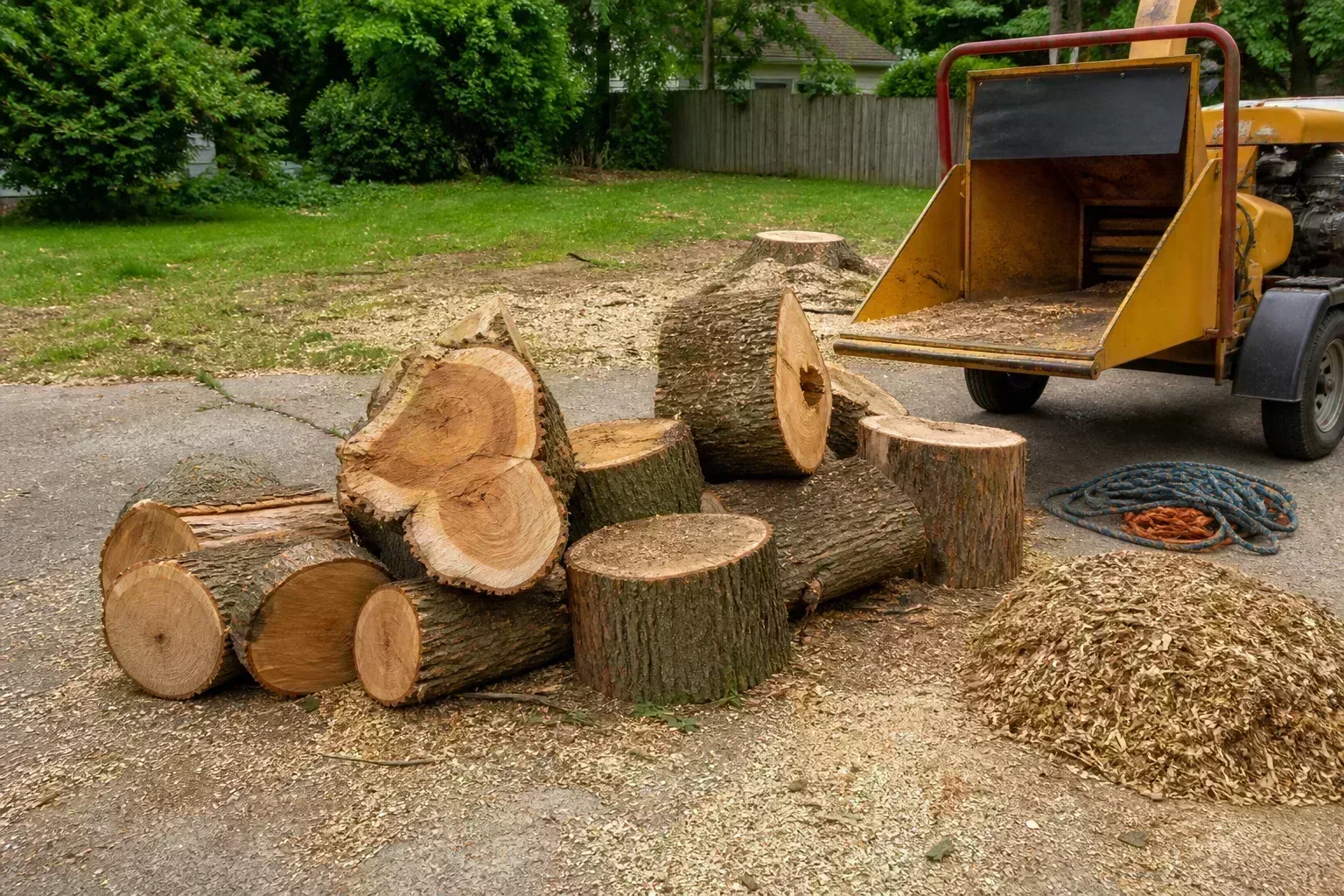
Hire insured companies with ISA-certified arborists on staff for anything beyond bucking a few limbs you can reach safely from the ground. The ISA’s storm-related tree damage guidance stresses assessing structural stability before cutting—homeowners should not replicate crane work with a ladder and borrowed saw.
If power lines are within the fall zone, stop and wait for utility clearance. Our planting near power lines guide explains why tall species near wires become compound hazards during failures.
Prevent Boundary Tree Problems Before the Next Storm
Prevention is cheaper than emergency rigging and far cheaper than litigation. Large trees near lot lines deserve deliberate species choice, spacing, and maintenance budgets—not plant-and-forget optimism.
Plant Smarter Near Property Lines
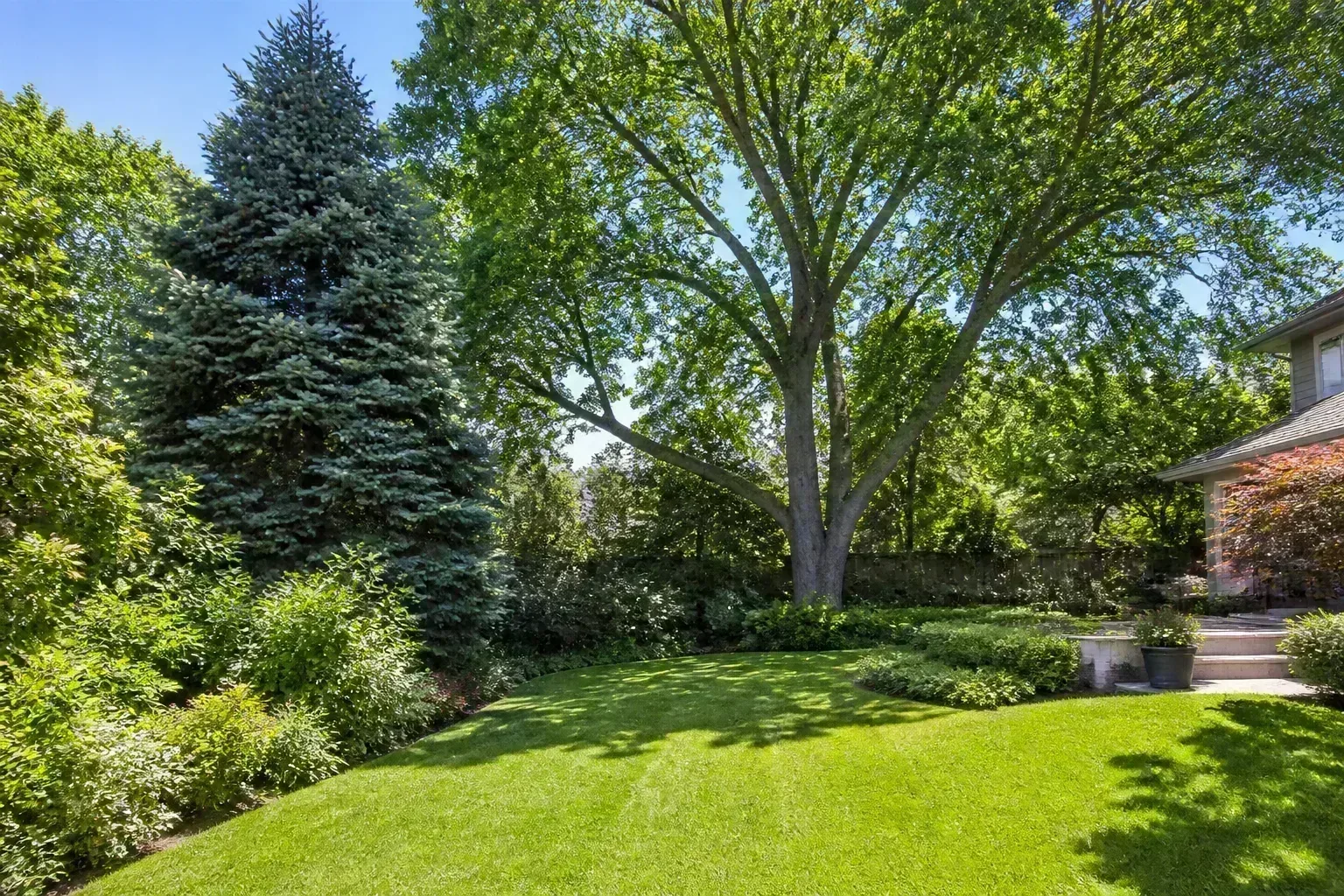
Match mature height and wood strength to the space. Fast-growing shade trees with brittle wood—silver maple is a classic example—are poor choices where limbs will overhang a neighbor’s roof for decades. Prefer smaller-maturing ornamentals or set large species far enough inward that failure arcs stay on your side.
When planting new trees, locate trunks at least 15–20 feet from the boundary for medium growers and farther for large species, adjusting for local ordinances and easements. Future you will not have to negotiate removal of a boundary-embracing trunk.
Inspections, Pruning, and Neighbor Communication That Works
Walk your tree line once a season. After major ice or wind events, look up again. Budget for professional pruning on mature trees every three to seven years depending on species and exposure.
Talk to neighbors early when you see an issue on either side of the fence. Frame it as safety, not accusation: “That cracked limb over your patio worries me—want me to split an arborist visit?” Early cooperation beats certified letters, but letters beat silence when risk is serious.
If you receive a hazard complaint, respond. Nolo emphasizes that cooperative fact-sharing often ends disputes before court. Mediation through a community board or neutral third party can preserve relationships when stakes are moderate.
What to Do If Your Neighbor Demands Payment You Don’t Owe
A neighbor convinced you must pay is not the same as a judge agreeing. If your tree was healthy and a storm did the work, you may politely decline while still choosing neighborly help.
Steps that keep you protected:
- Restate the act-of-nature principle in writing without insults
- Point them to their insurer for structure damage
- Avoid signing admissions of neglect
- Continue documenting the tree’s pre-storm condition
- Consult your insurance if they threaten suit—liability defense may be included
If amounts exceed a few thousand dollars or threats escalate, a local real-estate or neighbor-law attorney is worth a short consult. Small-claims court is the common venue for modest tree-damage disputes when insurance subrogation does not resolve the issue.
Conclusion
When your tree falls on a neighbor’s yard, cleanup responsibility follows a pattern most insurers and courts repeat: each property owner handles debris and covered damage on their own land after a healthy-tree storm failure, while visible neglect before the fall can move liability to the tree owner. The first day is about safety, photos, and insurer notice—not chainsaw heroics or heated blame.
Know where the trunk stood, whether the tree showed foreseeable hazard, and what your policy actually covers for removal versus structure repair. Offer cooperation where you can, document everything where you must, and keep large-tree maintenance on a calendar so the next storm does not become a neighborhood trial. General principles get you most of the way; your agent, arborist, and local counsel fill in the state-specific gaps.