7 Shrubs to Prune in Fall for Healthier Spring Growth
Learn which shrubs benefit from fall pruning, which should wait until spring, and how to tell new-wood bloomers from old-wood bloomers before you cut.
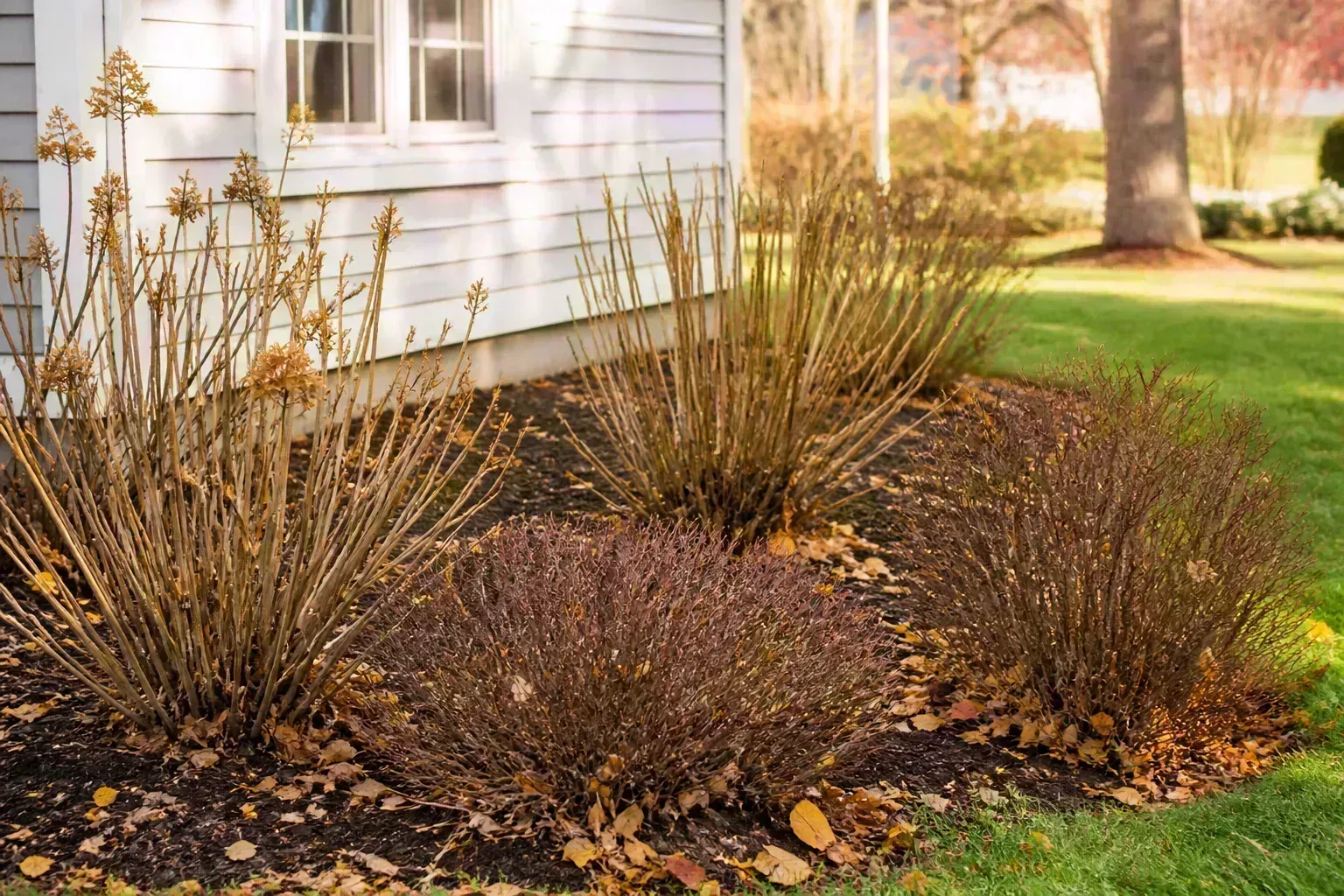
Fall feels like the natural moment to tidy the yard. Leaves are down, beds look tired, and it is tempting to shear everything into neat mounds before winter. That instinct works for some shrubs and backfires badly on others. The difference is not whether a plant is “tough.” It is whether next year’s flowers already exist on the branches in front of you, and whether a cut will push soft new growth that cannot harden before cold weather arrives.
The seven shrubs below are the ones gardeners most often handle in fall because they either bloom on new wood, tolerate a late-season shape-up once growth slows, or benefit from removing spent blooms and damaged stems before dormancy. Everything else in the landscape should be judged by the rules in the next sections—not by a blanket “fall cleanup” pass with hedge shears.
The short answer: fall pruning depends on bloom wood
Prune in fall when the shrub blooms on new wood, when you are removing only dead or damaged branches, or when light grooming will not stimulate a major flush of tender growth. Panicle hydrangeas (Hydrangea paniculata), smooth hydrangeas (H. arborescens), many spireas, repeat-blooming shrub roses such as Knock Out, and certain ornamental grasses fit that pattern once the plant has slowed down for the season.
Wait until late winter or early spring—or until right after spring flowering—when the shrub blooms on old wood. Bigleaf hydrangeas (H. macrophylla), oakleaf hydrangeas (H. quercifolia), lilacs, forsythia, azaleas, rhododendrons, and most early-spring flowering shrubs already carry next year’s flower buds on stems that grew this year. A hard fall cut on those plants removes the display before it starts.
If you remember only one thing: identify bloom wood first, then pick the season. The calendar is secondary.
New wood vs old wood: the rule that decides fall pruning
Old-wood bloomers set flower buds on stems produced the previous growing season. They typically flower in spring or early summer, then spend the rest of the year forming buds at the tips and along those same branches. Prune them in fall or late winter and you are often cutting off next year’s show.
New-wood bloomers flower on stems that grow in the current season. They can be cut back harder during dormancy because the buds that matter have not formed yet. Panicle and smooth hydrangeas, many summer-flowering spireas, butterfly bush (Buddleja), and crape myrtle (Lagerstroemia) are classic new-wood shrubs in most gardens.
The hardening-off problem sits on top of that rule. Pruning stimulates growth. Growth that emerges in late summer or early fall often stays soft when the first frosts arrive. That tissue dies back, wastes stored energy, and sometimes opens a path for dieback into older wood. As Homes & Gardens pruning guidance notes, late-summer and early-fall cuts on summer-flowering shrubs can push growth that will not harden before winter. Extension educators therefore treat early fall differently from late fall after leaf drop, when many deciduous shrubs are entering true dormancy and unlikely to push a large new flush.
North Carolina State Extension notes that panicle hydrangea blooms on new wood and tolerates pruning to control size, while bigleaf hydrangea blooms primarily on old wood—one of the main reasons gardeners lose blue or pink mophead flowers after pruning at the wrong time. Keep those two hydrangea habits separate in your head even when they are planted side by side.
Dead and damaged wood you can remove any time
Some pruning jobs are not seasonal. Remove dead, broken, diseased, rubbing, or hazardous branches whenever you find them, including mid-fall. That work does not depend on bloom wood because you are not shaping living flowering wood—you are eliminating material that will not recover and may spread problems.
Start every fall shrub session with a sanitation pass:
- Follow a dead branch to where it meets live wood, or to the ground if the whole stem has failed.
- Cut back to a healthy outward-facing bud or side branch on living tissue.
- Strip out twigs that cross through the center and chafe bark over winter.
- Bag or destroy wood from plants with obvious canker, fire blight, or mildew-covered stems instead of composting it.
This is the only fall pruning bigleaf and oakleaf hydrangeas should receive in most yards: dead stems and snapped tips, not a resize. If you are unsure whether a hydrangea cane is alive, scratch a thin patch of bark with your thumbnail. Green tissue underneath means the stem is still working; brown and dry means it can go.
Shrubs to leave alone until late winter or after spring bloom
Put the loppers away for major work on these unless you are clearing damage:
- Spring-flowering shrubs: lilac, forsythia, quince, deutzia, weigela, viburnums that bloom on old wood, and spring-blooming azaleas and rhododendrons. Prune them right after they finish flowering, not in autumn.
- Bigleaf and oakleaf hydrangeas: limit fall work to deadwood unless you accept fewer or no flowers next year.
- Most grafted hybrid tea and floribunda roses: stop meaningful pruning by late summer so canes can harden. Repeat-blooming shrub roses are the main rose exception (covered below).
- Pines, spruce, and fir: winter is fine for deadwood, but living-wood size reduction belongs to candle or early-summer tip pruning, as explained in our evergreen winter pruning guide.
- Newly planted shrubs: focus on watering and mulch the first year; save structural shaping for the second dormant season unless a branch is clearly broken.
If your goal is a full renovation—taking an overgrown lilac or forsythia down by a third—late winter while the plant is fully dormant is usually safer than fall, when a regrowth flush is more likely before the soil freezes.
Seven shrubs that often benefit from fall pruning
The list below is not permission to hack every specimen on the first October weekend. It is a set of common landscape shrubs where fall attention often pays off if you match the cut to the plant and your climate.
Panicle and smooth hydrangeas
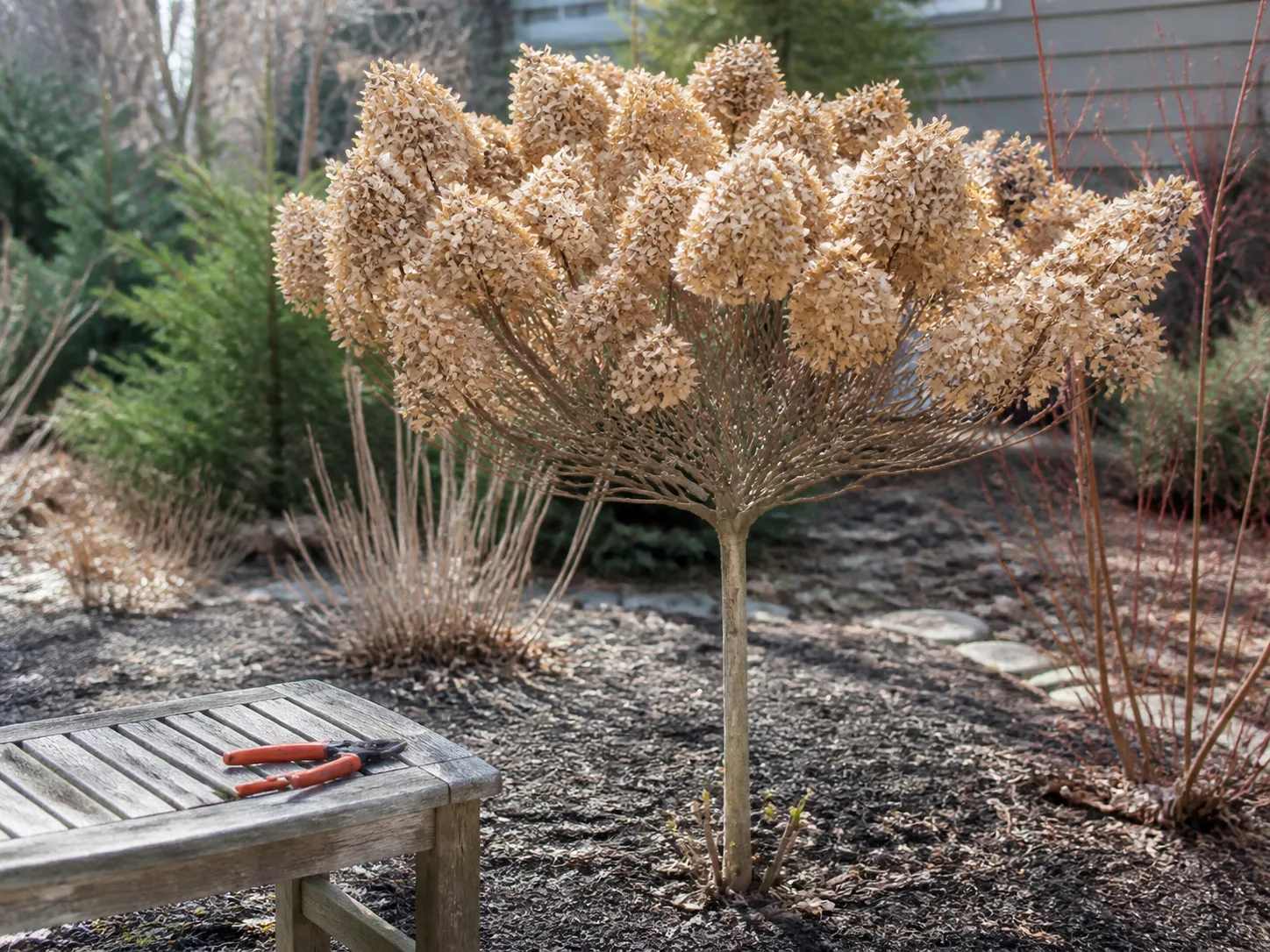
Panicle hydrangeas—including PeeGee types and modern cultivars such as ‘Limelight’ and ‘Vanilla Strawberry’—bloom on new wood. Smooth hydrangeas such as ‘Annabelle’ and ‘Incrediball’ do the same. That means fall and late-winter pruning both remove stems that would have carried only leaves, not flower buds for next year.
Fall move: Once leaves drop and the plant is visibly slowing down, remove spent flower heads if they weigh branches down or look messy. Thin out the oldest, weakest canes at the base to keep the shrub from becoming a tangle of weak stems. If you need to reduce height, take up to one-third of the oldest canes to the ground rather than shearing the top into a ball.
Why fall works here: You are not sacrificing next season’s blooms, and opening the structure before winter makes it easier to see dieback when you do a final tidy-up in late winter. Many gardeners still prefer the main hard cut in February or March; fall is the lighter grooming pass. Our panicle hydrangea guide walks through planting and harder renewal cuts if the shrub has outgrown its space.
Bigleaf and oakleaf hydrangeas (deadwood only)
Bigleaf hydrangeas (H. macrophylla)—the blue, pink, and many purple mopheads and lacecaps—bloom on old wood. Oakleaf hydrangeas (H. quercifolia) follow the same pattern and add winter value with exfoliating bark and dried flower panicles.
Fall move: Remove clearly dead canes, broken branches, and stems with no live buds. Snip spent flowers only if the weight is splitting wood or you need a cleaner look along a path. Do not cut the whole shrub back for size in fall.
Why gardeners still touch them in autumn: After a dry summer or a cold snap, some stems fail while others remain green. Cleaning out the dead portion prevents snow load from tearing the plant apart and makes true structural decisions easier in spring. The NC State bigleaf hydrangea profile emphasizes bloom on previous-season wood—treat any live-wood reduction in fall as a trade you are choosing on purpose.
Knock Out and other repeat-blooming shrub roses
Most rose advice says to stop pruning by late summer so canes lignify before winter. Knock Out and similar landscape shrub roses are the practical exception in many regions. They bloom on new growth, recover quickly, and often look better with a late-season tidy that removes leggy, disease-spotted canes.
Fall move: After the last meaningful flush fades—often late September through November in milder zones—cut back leggy stems by up to one-third, shaping the plant lightly. Remove dead, blackened, or mildew-covered canes at the base. Avoid a hard 12-inch stump cut in a cold zone unless you have successfully done it before on that cultivar in your yard.
Caution: Grafted tree roses, hybrid teas, and climbers are not Knock Outs. Do not transfer this advice across rose types. When in doubt, limit fall rose work to deadheading and deadwood.
Spirea
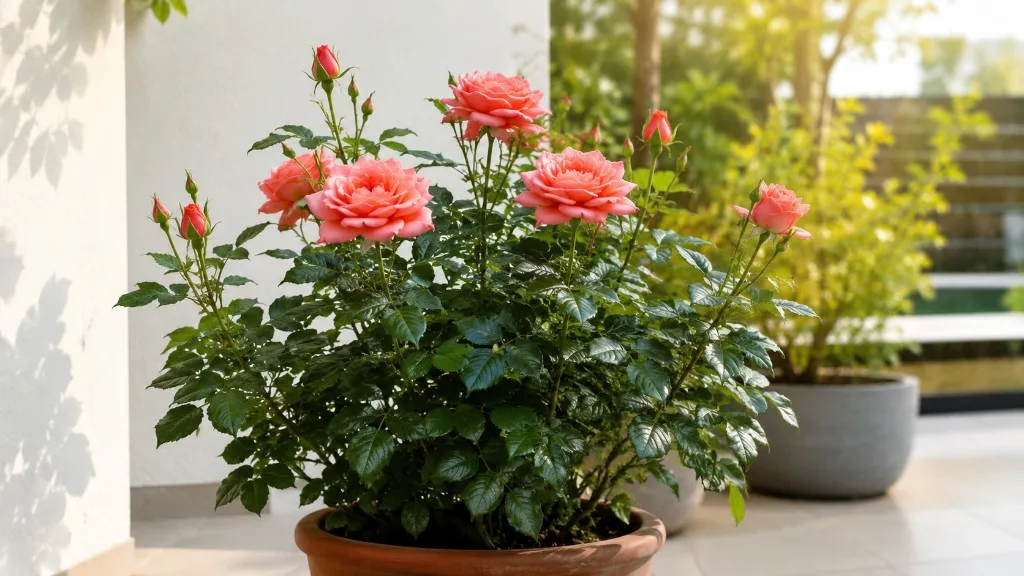
Spireas such as ‘Goldflame’, ‘Little Princess’, and bridal wreath types vary in bloom season, but the summer-blooming mounded cultivars most often planted in foundation beds behave like new-wood shrubs. They can become leggy, with bare lower stems and a puff of foliage on top.
Fall move: Once foliage yellows or drops, thin out the oldest stems at the base and remove weak, crossing growth. A light shaping cut on the outer canopy is fine; save a harder rejuvenation—cutting several old canes to the ground—for late winter if the plant is still overgrown.
Why fall helps: You enter spring with air movement through the center, which reduces powdery mildew pressure on crowded cultivars. If your spirea blooms heavily in spring on arching wood (bridal wreath types), prune right after that spring show instead of fall.
Ornamental grasses
Large ornamental grasses are not shrubs botanically, but they fill the same design role: winter structure, screening, and movement. Fall decisions depend on whether the grass reseeds aggressively or is grown mainly for winter silhouette.
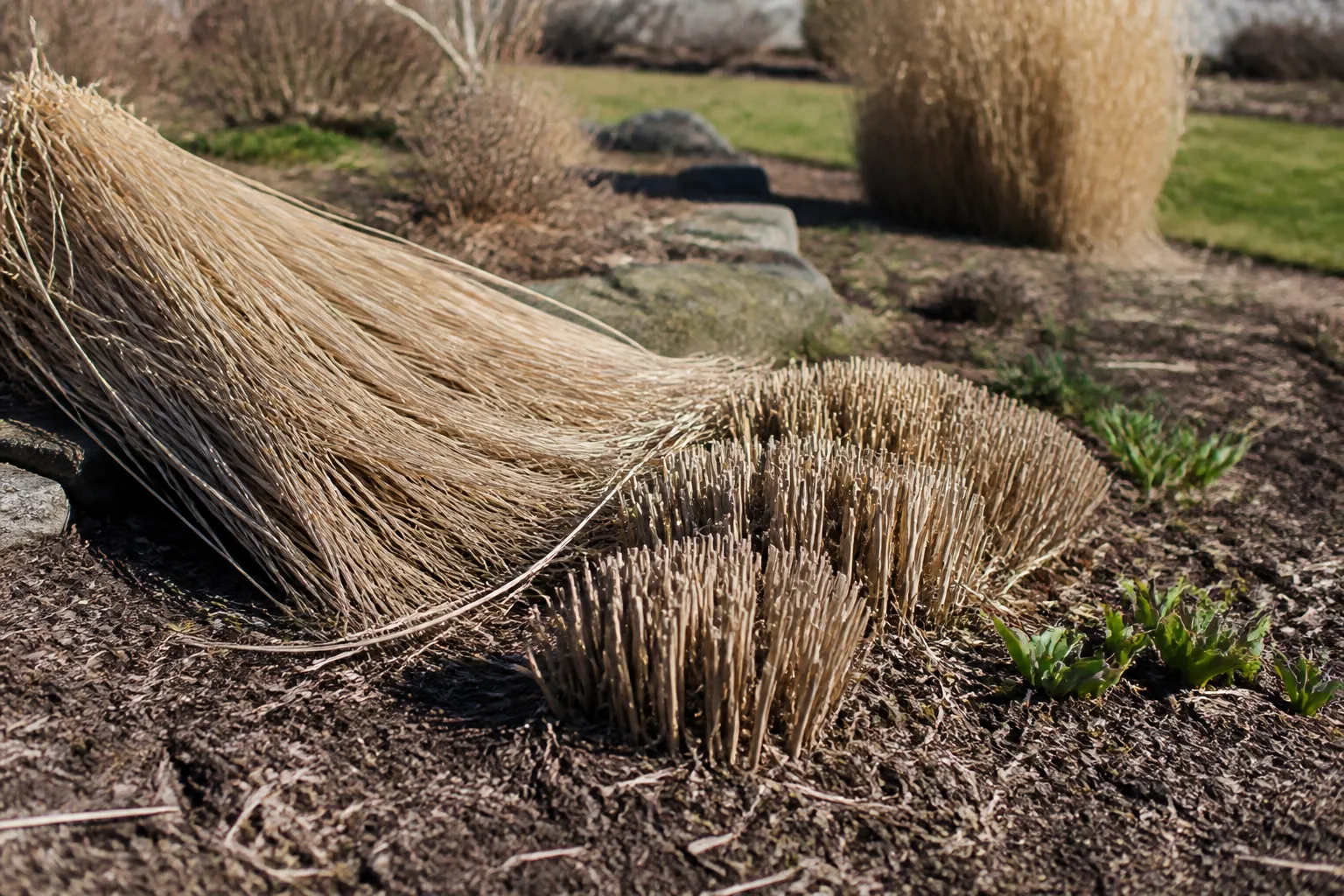
Fall move for reseeders: Trim seed heads in late fall if you see volunteer seedlings where you do not want them—foxtail barley, some miscanthus seedlings in moist beds, and other spreaders. Snip tops only; leave the clump standing.
Fall move for most clumps: Leave maiden grass, switchgrass, and fountain grass standing for winter interest and wildlife cover. Cut back to a few inches in late winter or early spring before new shoots emerge. Our spring perennial cleanup guide covers grasses alongside perennials if you prefer a single seasonal pass.
Gardenia
Gardenias (Gardenia jasminoides) are evergreen shrubs in the warmest zones and often behave as container or protected plants farther north. They bloom on old wood, setting buds on mature stems.
Fall move: After the main summer flush fades, deadhead spent flowers and remove yellowing leaves, leggy water sprouts, and stems damaged by insects or summer heat. This is grooming, not renovation. Keep cuts small and selective so you do not remove the wood that will carry next year’s fragrant blooms.
Climate note: In USDA zones 8–11, light fall shaping is common. In marginal zones, stop touching live wood six weeks before your typical first frost and protect roots with mulch instead of trying to size the plant late in the season.
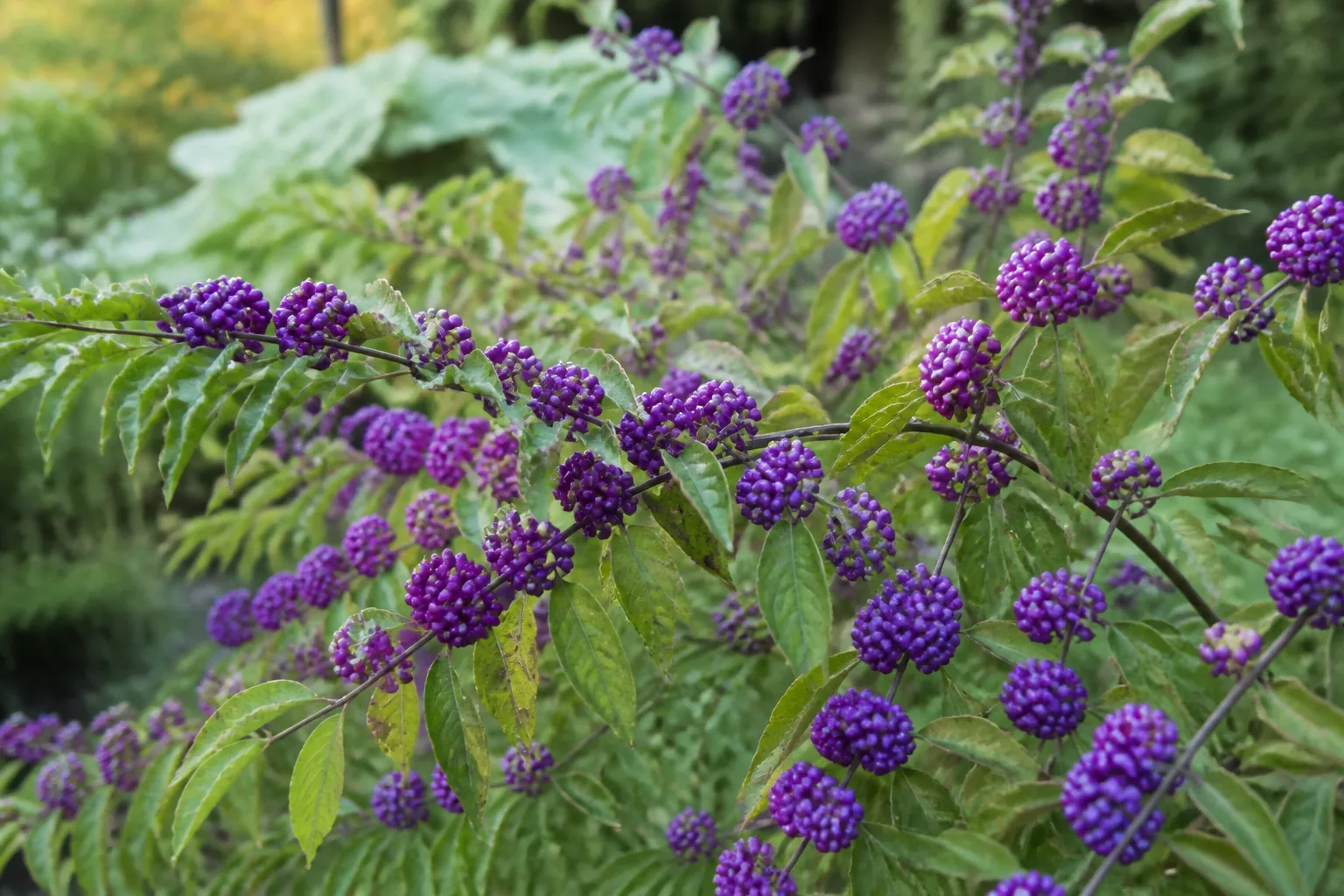
Beautyberry
American beautyberry (Callicarpa americana) produces vivid purple berries on new growth, but many gardeners in colder zones dislike the bare, twiggy winter look. Southern and mid-Atlantic growers often hard-prune in late winter; northern growers sometimes shift that work to late fall after leaf drop.
Fall move (optional, zone-driven): If winter stems bother you in zones 5–7, cut the whole shrub back to 12–18 inches after leaves fall and the plant is dormant. You sacrifice some natural arching form but get a cleaner line and vigorous spring regrowth. In warmer zones, a lighter thin of the oldest canes may be enough.
Trade-off: Hard fall cuts remove berry-covered branches that birds still use in early winter. If wildlife value matters in your yard, wait until late winter instead.
Climate timing: when “fall” actually starts in your yard
“Fall pruning” is not a single date on the calendar. Use plant signals:
- Leaves changing or dropping on the shrub you intend to cut, indicating growth has slowed.
- Several nights near frost without a hard freeze that would damage fresh cuts in borderline zones.
- At least four to six weeks before your average first hard freeze if you must remove a significant amount of living wood in a cold zone. That window gives wounds time to begin drying and reduces the odds of a late regrowth flush.
In mild coastal and Southern climates, the useful fall window can stretch into December. In short-season northern gardens, late October may already be too late for anything beyond deadwood on marginal plants. Watch the forecast more than the month on the page.
How to make fall cuts that heal before cold weather
Good fall pruning is selective. You are preparing the plant for dormancy, not forcing it back into summer growth.
Work from the inside out. Remove dead and crossing wood first, then step back and decide whether living wood truly needs to come off. Most shrubs look halfway renovated after sanitation alone.
Follow the one-third rule for live wood. In a single season, avoid removing more than one-third of healthy branches on any shrub you want to keep. Hard rejuvenation belongs to late winter on the specific plants that tolerate it.
Cut for structure, not meatballs. Place cuts just above an outward-facing bud or at the base of the stem you are removing. Shearing the outer shell every year creates dense outer growth and a dead center—especially on spirea and hydrangea.
Tools and where to cut
Match the tool to branch size so you do not crush wood:
- Bypass hand pruners: stems up to about three-quarters of an inch.
- Loppers: branches up to about one and a half inches.
- Pruning saw: anything larger, using a shallow undercut first on heavy limbs to prevent bark tearing.
On branches that join a trunk or larger limb, cut just outside the branch collar—the slightly swollen tissue where the branch meets the parent stem. Do not leave a long stub, and do not cut flush into the trunk. University of Minnesota Extension pruning guidance emphasizes clean tools and proper cut placement to reduce disease entry, especially when woody plants will sit with open wounds through winter.
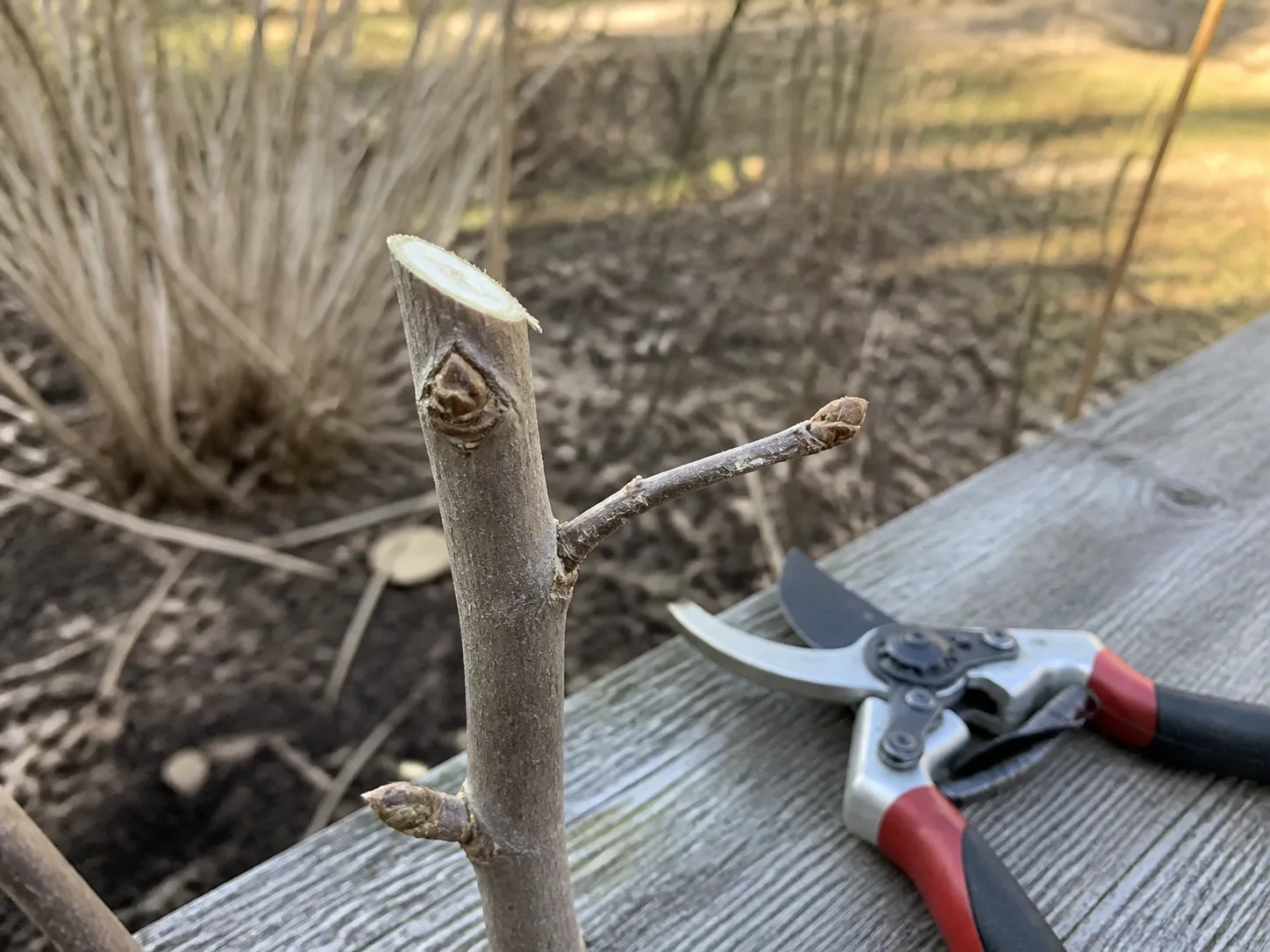
Disinfect blades between plants when you have worked on diseased wood—10 percent bleach solution or rubbing alcohol is enough for home tools.
Five fall pruning mistakes that cost you flowers
1. Treating every shrub like a hedge. Shearing azaleas, lilacs, or bigleaf hydrangeas into rounds in fall is the fastest way to delete spring flowers. Shape those after they bloom.
2. Pruning too early in autumn while plants are still growing. Early September cuts on summer-flowering shrubs can still push soft growth. Wait for visible slowdown or leaf drop on deciduous types.
3. Confusing hydrangea types. Panicle and smooth types forgive fall work; bigleaf and oakleaf types usually do not. Label plants when you install them if the leaves look similar.
4. Cutting ornamental grasses to the ground in October. You lose winter structure and expose crowns to freeze-thaw heaving in some climates. Trim reseeding tops if needed; postpone the main chop.
5. Ignoring the forecast after a warm spell. A week of record heat in late fall can wake shrubs briefly. If you must prune then, keep cuts minimal and avoid fertilizing afterward.
Fall cleanup checklist before the first hard freeze
Use this sequence on a dry, mild day:
- Sanitize: Remove dead, diseased, and damaged wood on every shrub in the list above.
- Match the plant to the cut: New-wood bloomers get light shaping; old-wood bloomers get cleanup only.
- Clear debris: Rake fallen leaves away from rose and hydrangea crowns if mildew was present; compost healthy leaves elsewhere.
- Mulch roots, not stems: Apply 2–3 inches of shredded bark or leaves around the drip line after the ground cools, keeping mulch off the crown.
- Water if dry: Evergreens and newly planted shrubs benefit from a deep soak before the soil freezes.
- Mark uncertain plants: Flag shrubs you are not sure about and verify bloom wood in spring before harder cuts.
If you also maintain perennial beds, pair this pass with our fall perennial cutback guide for herbaceous plants—shrubs and perennials follow related but not identical rules. Illinois Extension fall garden cleanup guidance similarly separates urgent sanitation from optional standing winter structure.
Conclusion
Fall shrub pruning is not a single yes-or-no decision. It is a bloom-wood choice made at the right moment in the plant’s slowdown, with deadwood removed whenever it appears. Panicle and smooth hydrangeas, spirea, Knock Out roses, gardenias, beautyberry, and selected ornamental grasses are the landscape staples gardeners most often touch in autumn—but the cut should match each plant’s biology, not a generic “tidy everything” impulse.
When you are unsure, default to dead and damaged wood only, then finish structural work in late winter or after spring flowers fade. That conservative path protects next year’s display while still leaving the yard cleaner and healthier going into winter.



