Pruning Shrubs During Dry Weather: What to Know
Can you prune shrubs during a dry spell? Learn when to wait, what you can remove, how to water first, and how to avoid lost blooms or heat damage.
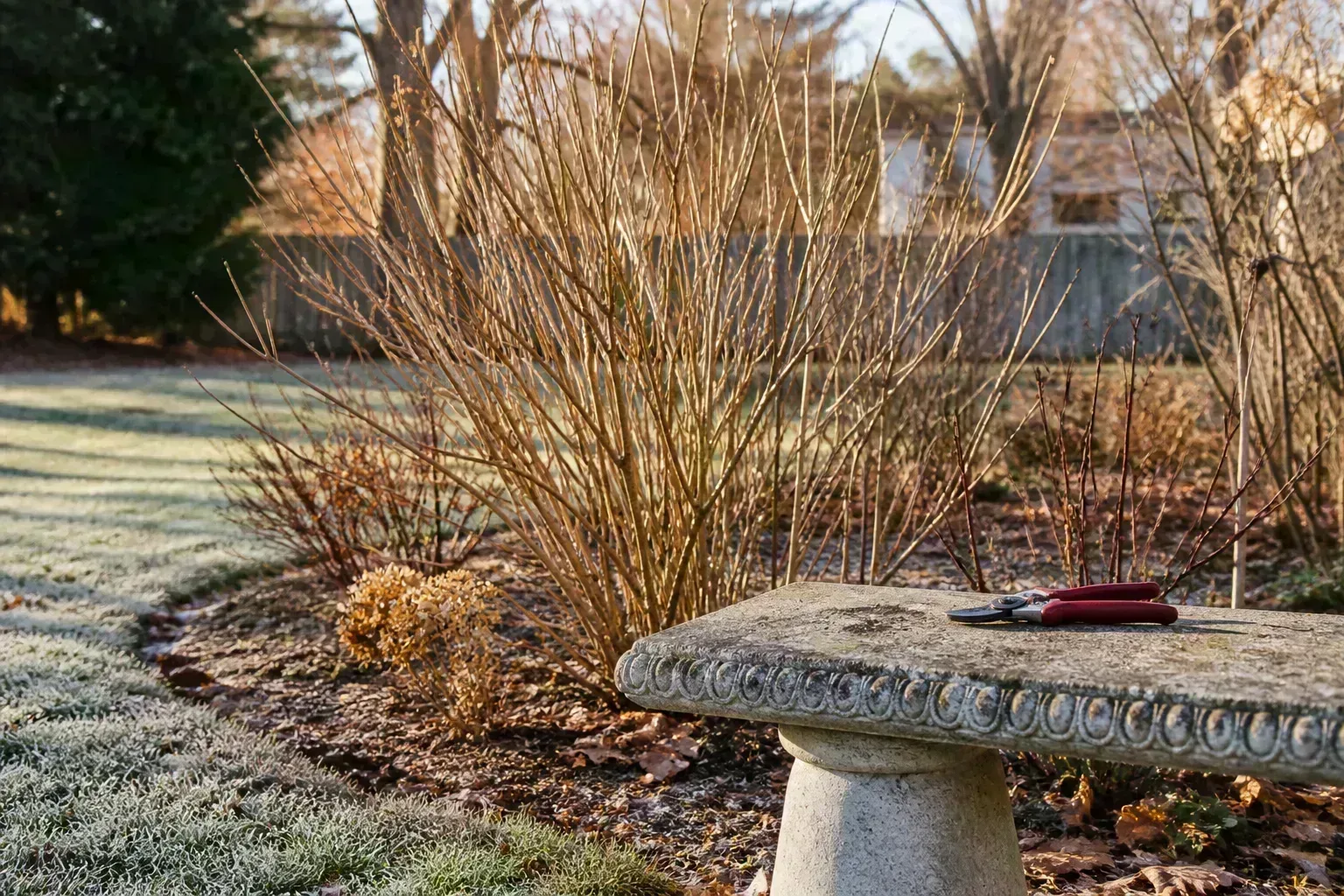
Quick answer: light cleanup can be okay, heavy pruning usually can’t
Yes, you can make a few necessary cuts during a dry spell, but a hot, drought-stressed day is a poor time for a major haircut. If the shrub is wilted, the soil is dry well below the surface, or temperatures are extreme, stabilize the root zone first and postpone shaping, shearing, and size reduction. If a branch is dead, broken, diseased, rubbing badly, or threatening a path or roof, remove that problem branch even when the season is inconvenient.
The important distinction is between dry weather and drought stress. A calm, dry morning after the soil has been watered is not the same as a shrub that has been declining for weeks. Dry foliage can recover after irrigation; a dead branch cannot. Treating every brown leaf or drooping shoot as a reason to prune can remove living tissue the shrub still needs for shade and photosynthesis.
Let the shrub type decide the pruning window
Weather tells you whether a cut will be stressful today. The shrub’s flowering habit tells you whether that cut will cost next year’s flowers. Before pruning a healthy branch, identify the plant and decide whether it flowers on old wood or new wood. Clemson Cooperative Extension’s shrub guidance also separates heading cuts from thinning cuts and recommends removing dead, diseased, injured, crossing, and out-of-place branches before taking on larger structural work (Clemson Cooperative Extension).
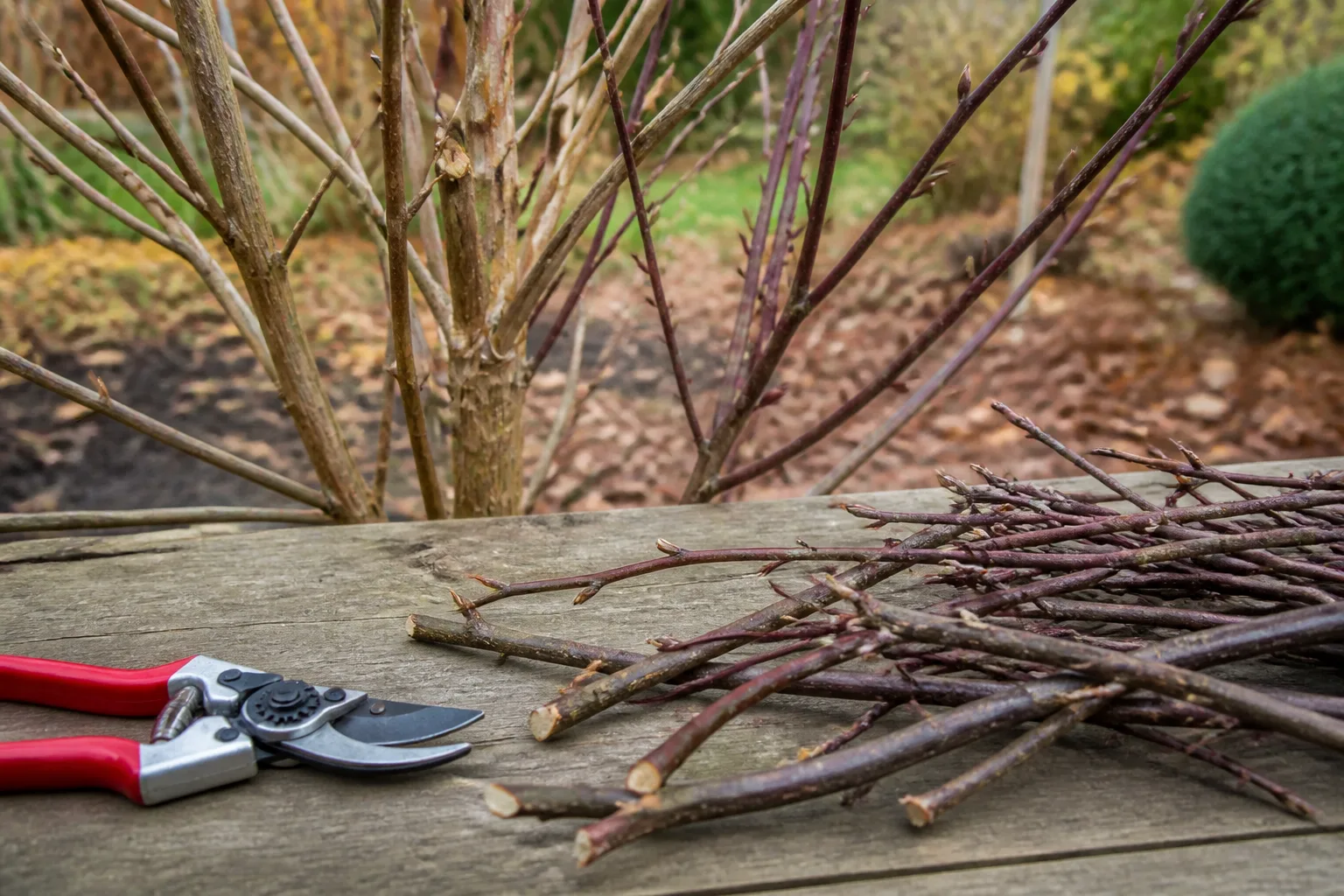
Old-wood bloomers need flower-bud protection
Old-wood shrubs form next season’s flower buds on stems made during the previous growing season or earlier. Lilac, forsythia, weigela, mock orange, many viburnums, azaleas, rhododendrons, and bigleaf or oakleaf hydrangeas commonly fall into this group, although the exact habit can vary by species or cultivar.
For these plants, the safest routine pruning time is usually immediately after flowering, when you can see which stems carried flowers. A dry spell does not change that biological deadline. If an old-wood shrub is healthy but too wide in late summer, wait rather than remove the branch tips that may already hold next spring’s buds.
This is where a generic “prune in fall” or “prune in spring” rule breaks down. A light sanitation cut is different from shortening every branch. If you cannot identify the shrub, protect the possible flower display and limit the work to clearly dead, broken, or hazardous wood.
New-wood bloomers are more flexible, not heat-proof
New-wood shrubs produce flowers on shoots that emerge during the coming growing season. Panicle and smooth hydrangeas, butterfly bush, Rose of Sharon, crape myrtle, and some spireas are familiar examples. Their main shaping or rejuvenation window is often late winter or early spring, before the new flush begins.
That flexibility does not make mid-summer drought pruning harmless. A large cut can expose previously shaded stems to strong sun, remove leaves that are cooling the framework, and trigger tender regrowth when water is scarce. The practical rule is to save major reduction for a season when the plant can replace shoots steadily, then use dry-weather pruning only for a clear, limited purpose. Proven Winners likewise separates shrubs that bloom on old wood from those that flower on new growth when setting the pruning window (Proven Winners shrub-pruning guide).
Evergreens and hedges carry a different risk
Broadleaf evergreens such as boxwood, holly, laurel, and rhododendron keep their leaves through the stressful season. Removing a large section of foliage can expose inner leaves and bark to sun and wind, while the remaining roots may struggle to replace water lost through transpiration. Needled evergreens such as juniper, arborvitae, and many conifers are even less forgiving of cuts into old, bare wood; some will not generate new shoots there.
Formal hedges can tolerate regular light trimming when actively growing, but a hedge that is already heat-stressed should not be forced into a severe reshaping session. Keep the base wider than the top when you do trim, so lower foliage receives light. For a hedge that has outgrown its space, plan staged reduction or replacement instead of trying to solve years of growth in one dry afternoon.
Assess drought stress before you pick up the pruners
Walk around the shrub and inspect the soil, not just the leaves. Push a finger, trowel, or soil probe several inches into the root zone beneath the outer canopy. If the soil is dry throughout that depth, the plant is relying on shrinking moisture reserves; if it is cool and moist below a dry surface crust, the shrub may be less stressed than it appears.
Look for wilt that improves in the evening and returns in the afternoon, leaf scorch on the sun-facing side, premature leaf drop, curled foliage, brittle new shoots, or a canopy that is thinning from the outside inward. These symptoms do not prove that pruning is needed. They are signals to correct water delivery and exposure first, then reassess after the shrub has had time to respond.
When to postpone even a planned trim
Postpone healthy-wood pruning when the shrub is visibly wilted at dawn, when the forecast calls for extreme heat, when a hard freeze is imminent, or when the soil is too dry to wet thoroughly. Also wait if the shrub was planted or transplanted recently, has suffered root damage, or is recovering from a pest or disease outbreak. A stressed root system has less capacity to support new shoots after you reduce the leaf canopy.
The RHS advises aiming water at the base of plants during heat and drought, while avoiding wasteful splashing over foliage; it also cautions that mulching established plants during the height of a dry spell can delay rainfall from entering the soil, so timing and existing soil conditions matter (RHS: What not to do in a heatwave and drought). That is a useful reminder that “do something” is not always the same as “cut something.”
When a cut should not wait
Remove a branch promptly when leaving it in place creates a safety, disease, or structural problem. That includes a storm-split limb, a dead branch over a walkway, a branch rubbing until the bark is open, or a clearly diseased section that could spread through contact with healthy tissue.
Keep the job narrow. Do not turn one dangerous branch into a whole-shrub makeover just because the tools are already out. If the branch is large, overhead, close to utility lines, or requires a ladder or chainsaw, stop and call a qualified arborist; shrub pruning should not become a tree-removal hazard.
Make the first cuts the lowest-risk cuts
Start at the base of the problem, not the top of the shrub. The first pass should remove only growth that is unquestionably expendable, then give you a clearer view of the living framework. This approach is especially helpful when heat has made foliage droop and it is difficult to tell what is truly dead.
The four Ds: dead, diseased, damaged, and dangerous
Use the four Ds as your dry-weather filter:
- Dead: dry, brittle wood with no green tissue under a tiny bark scrape. Cut back to healthy tissue or remove the entire dead branch at its point of origin.
- Diseased: cankers, sunken lesions, spreading discoloration, or a clear line of dieback. Cut below the affected area into healthy-looking wood, then sanitize the blade.
- Damaged: cracked, split, storm-torn, or badly rubbed branches that cannot recover their structure.
- Dangerous: wood that can fall onto people, vehicles, windows, paths, or utility equipment.
Do not count a wilted but flexible shoot as dead simply because it is limp at midday. Scratch-test a small section and reassess after watering. If the tissue is green and the stem firms up overnight, leave it in place; its leaves may still help the shrub rebuild its water balance.
After the four Ds, remove only a few obvious suckers, water sprouts, or crossing stems if they are causing a real problem. A sucker emerging below a graft union is not the same as a desirable branch from the named cultivar, so cut it at its origin instead of leaving a stub. For crossing branches, remove the weaker or less well-placed one only when the stems rub, trap a wet tangle, or create a structural weakness.
Prepare the root zone, tools, and weather window
If the cut can wait 24 hours, use that time to make the shrub better able to handle it. Choose a cool morning or late afternoon with no immediate heat spike, strong wind, or frost. A dry surface is fine; what matters is that the plant is not in active water deficit and that the wound will not be followed by an abrupt weather extreme.
Water deeply without keeping soil soggy
Water the soil around the root zone, not the leaves. Apply a slow, thorough soak from near the stem out toward the drip line, where many feeder roots are located. Let the water infiltrate instead of running down a hard, compacted surface; on very dry soil, several slower passes can wet the root zone more effectively than one fast blast.
The goal is evenly moist soil, not a saturated planting bed. Waterlogged soil deprives roots of oxygen and can create a different kind of stress. NC State Extension notes that established woody ornamentals benefit from irrigation and mulch that conserve moisture, while also explaining that pruning reduces leaf area and can reduce the photosynthates available for root growth (NC State Extension: Woody ornamentals).
If the shrub is badly wilted, water first and wait until the leaves and stems show a stable response. Do not use fertilizer as a rescue step on pruning day. Extra salts or a forced flush of growth can add stress when the plant needs functioning roots and undamaged leaves more than it needs a growth push.
Match the tool to the branch
Use the smallest sharp tool that makes a clean cut without crushing the stem. Bypass pruners suit small live branches; loppers give leverage on thicker wood; a pruning saw is safer than forcing loppers on a branch they cannot cut cleanly. Anvil tools can be useful on dry dead wood, but a bypass blade is generally the better choice for live stems because it leaves a cleaner surface.
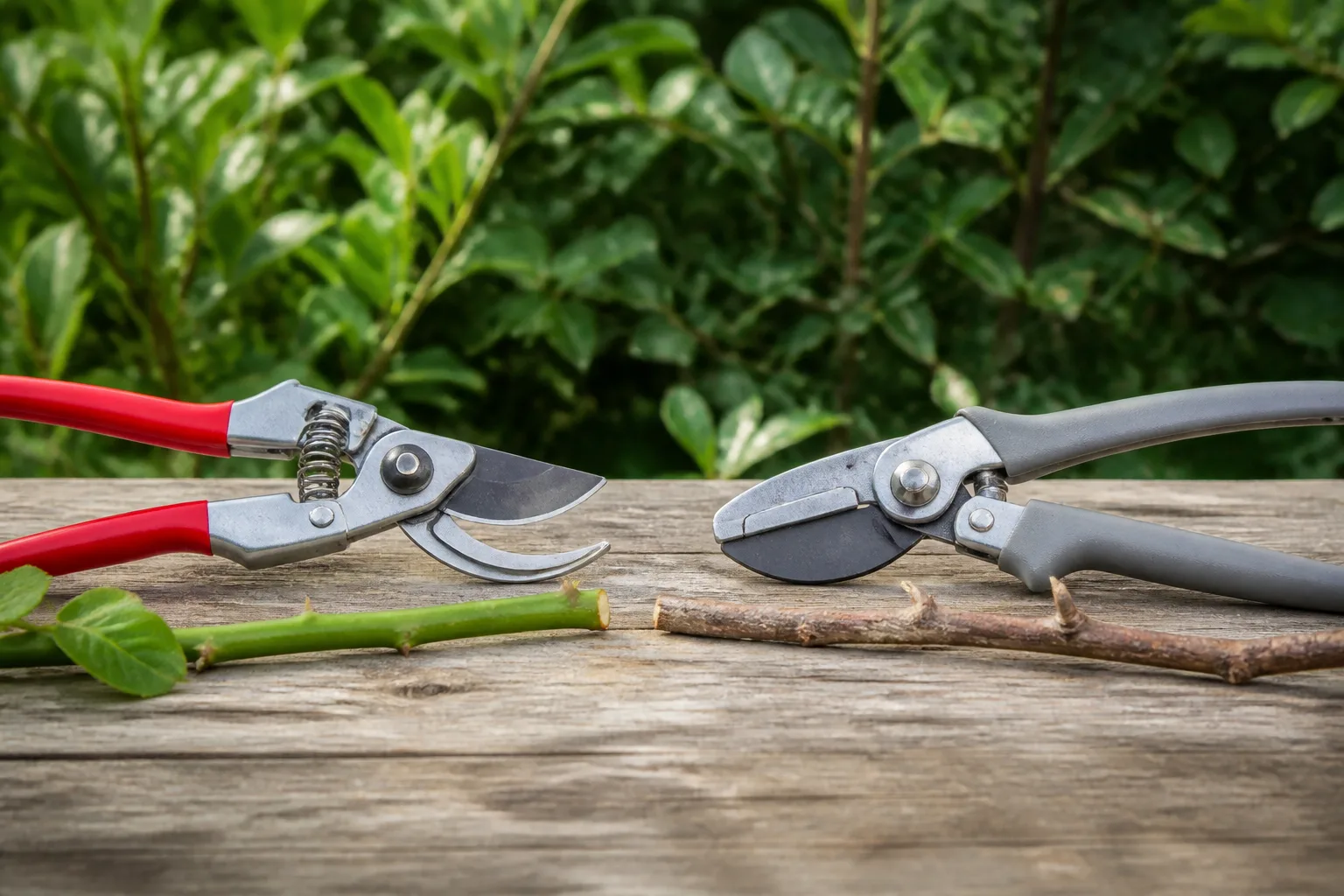
Wipe soil and sap from the blades, sharpen them, and disinfect between shrubs when disease is possible. Ragged cuts take longer to close and can leave damaged tissue around the wound. Keep a bucket or tarp nearby for diseased debris, and do not toss suspect canes into a home compost pile unless you know the pathogen will be destroyed by the composting conditions.
Make selective cuts that help the shrub recover
Once the low-risk cleanup is complete, decide whether the remaining problem truly needs a live-wood cut. Thinning removes a whole branch where it joins another branch or the main stem, opening the shrub without stimulating a dense tuft at the outer edge. Heading shortens a branch back to a bud or side shoot and can encourage branching, but repeated heading at the same height creates a dense, weak outer shell.
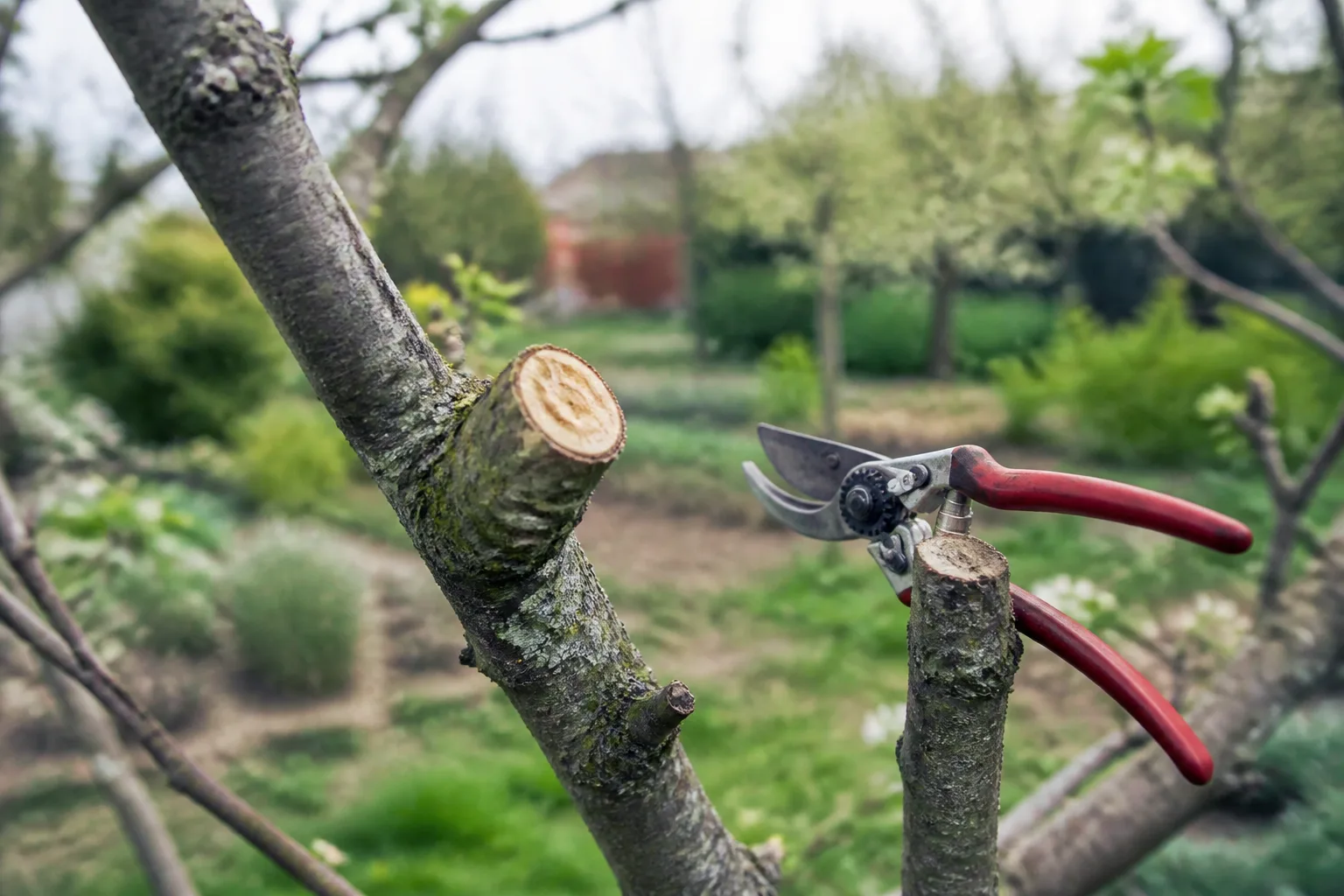
For a drought-prone shrub, thinning is usually the more conservative structural choice because it removes fewer random shoot tips and preserves a more natural canopy. Select a branch that is crossing, inward-growing, weakly attached, or blocking a path, then follow it back to a strong origin. Avoid hollowing out the center so severely that the remaining exterior leaves are exposed to sudden full sun.
When heading is necessary, cut slightly above a healthy outward-facing bud or side branch. The direction of that bud influences where the next shoot grows. Do not leave long stubs, and do not cut flush into the branch collar; a clean cut just outside the collar preserves the shrub’s natural wound response.
Treat one-third as a ceiling, not a target
The familiar one-third rule is a useful upper limit for many established shrubs, not an instruction to remove one-third every time. During a dry spell, the safer number may be far less—one dead branch, a few broken stems, or a small reduction that solves a specific clearance problem.
Count healthy live wood, not dead material, when judging the scale of the session. If the job requires removing half the canopy, lowering every branch, or cutting into old bare wood, stop and move the work to the shrub’s correct dormant or post-flowering window. Clemson’s guidance describes renewal pruning as a separate, carefully timed operation and warns that several narrow-leaved evergreens do not recover from severe cuts (Clemson Cooperative Extension).
For an overgrown broadleaf shrub that genuinely tolerates renovation, remove the oldest stems in stages over two or three dormant seasons. That staged approach keeps some photosynthetic canopy in place and lets you evaluate the new shoots before taking more out. It is more deliberate than a hard reset, but it protects you from discovering too late that the plant cannot resprout from the framework you left.
Aftercare: help the plant replace what you removed
Water the root zone again after pruning if the soil is dry, then monitor the moisture several inches down instead of following a rigid daily schedule. A 2- to 3-inch layer of suitable organic mulch can reduce evaporation when applied over the root zone, but keep it away from the crown and stems. Renew or move mulch when it forms a water-shedding crust, and avoid piling it against bark.
Protect newly exposed foliage from a sudden change in light when practical. A shrub that was dense and shaded inside can scorch after an aggressive cut, especially if the cut is followed by hot sun and dry wind. This is another reason to postpone cosmetic thinning until cooler conditions or make a few smaller cuts over time.
Watch the plant for two to four weeks, depending on the species and weather. A successful light pruning session usually shows up as stable stems, no expanding dieback, leaves that hold their shape through the day, and new buds that remain firm. A worsening canopy, spreading scorch, repeated dawn wilt, or shoots dying back below the cut means the original problem may be root stress, disease, irrigation failure, or exposure—not a need for more pruning.
Common dry-weather pruning mistakes
Cutting wilted leaves because they look ugly. Wilt is a water-status symptom, not a diagnosis of dead tissue. Restore root-zone moisture and wait before removing living foliage unless it is completely dead or diseased.
Using the calendar instead of the shrub. A dry September day is not a universal pruning window. Flowering habit, evergreen status, growth stage, and the local forecast matter more than the month printed on the calendar.
Assuming “dry” means “safe from disease.” Dry conditions can reduce the time a cut surface stays wet, but clean tools, sound cut placement, and removing diseased material still matter. Drought does not make a dirty blade safe.
Shearing when thinning would solve the problem. A hedge trimmer can make an uneven shrub look tidy for a few weeks while creating a dense outer layer and bare interior. Use hand thinning for a one-off correction or identify the plant’s formal hedge schedule before shearing.
Watering only at the stem. Mature shrubs often have active roots beyond the trunk or crown. Soak the broader root zone, then let the soil drain; a tiny puddle at the base is not the same as deep irrigation.
Doing every task in one visit. Do not combine a major size reduction with transplanting, root disturbance, heavy feeding, or disease treatment during a drought unless there is an urgent reason. Separate jobs reduce the number of stresses you have to diagnose if the shrub declines.
Conclusion
During a dry spell, prune a shrub only when the cut has a clear job. Start with dead, diseased, damaged, or dangerous wood; water the root zone if the plant is dry; choose a cool, stable weather window; and leave healthy shaping cuts until the shrub’s proper flowering or dormant season.
The best decision is often not “never prune in dry weather,” but prune less, prune precisely, and preserve the living canopy. Once you know whether the shrub flowers on old or new wood—and whether it is actually drought-stressed—you can make the one necessary cut today without turning a seasonal cleanup into a preventable recovery problem.



