How to Deadhead Dahlias: Cut Points, Timing, and Rebloom
Deadhead dahlias without guessing: cut before petals drop, tell buds from spent heads, and know when summer slowdown is normal.
The Direct Answer: Yes—Deadhead Regularly, Not Once
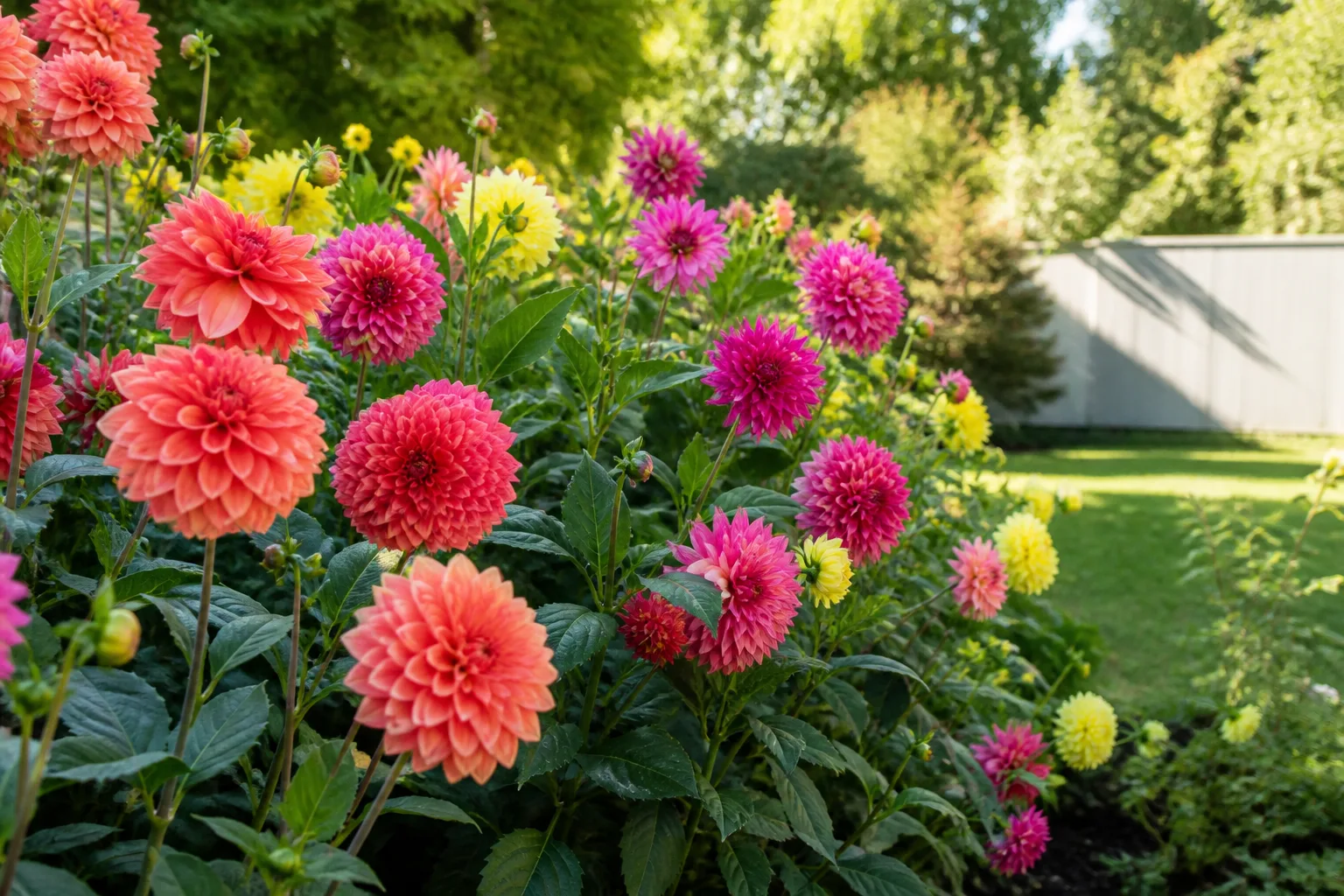
Yes—deadhead dahlias when blooms start to fade if you want the longest show and the tidiest plants. Dahlias are built for repeat flowering when you remove spent blooms before they set seed, and the job works best as ongoing maintenance, not one dramatic pruning session at midsummer. Check plants every few days during peak bloom, snip each fading flower back to a leaf joint lower on the stem, and keep watering and feeding on schedule.
The safe default is to cut before petals brown and drop, when the flower still looks tired but structurally intact. Waiting until the head shatters spreads messy petals through the bed and makes it harder to spot the correct cut point. If you also cut stems for vases, treat those harvest cuts the same way horticulturists treat deadheading—both redirect the plant toward new buds instead of seed production.
Use this quick decision rule at the plant. If a bloom is wilting, browning, or losing petals while buds remain on the same stem, remove only that spent head and its stem section down to the first healthy leaf pair or side branch. If you are cutting for a bouquet, take the stem long enough for vase life but still leave at least one set of healthy leaves on the plant when possible. If flowering slows during a heat wave, do not panic-prune the whole plant—fix water and wait for cooler nights. If frost blackens foliage, stop deadheading flowers and switch to end-of-season stem cutback for tuber protection.
Why Deadheading Keeps Dahlias Blooming Through Fall
Dahlias are tender tuberous plants that can flower from midsummer until the first hard frost, but only if the plant keeps investing in new buds instead of finishing seed. Removing spent flowers is one of the highest-return summer tasks in a dahlia bed—along with deep watering, staking tall forms, and a potassium-forward feed schedule.
Energy Goes to Flowers, Not Seeds
Once a dahlia flower is pollinated and moving toward seed, the plant shifts resources toward seed development. Deadheading interrupts that path and encourages the stem to push side shoots and new buds from nodes below your cut. The Royal Horticultural Society (RHS) advises deadheading dahlias regularly—ideally weekly during the flowering season so energy goes into blooms rather than seeds. (RHS)
That is why the cut location matters. Snapping off only the dry petal cap leaves the seed-forming structure on the stem. Cutting back to a leaf joint—where the stem meets a leaf pair or side branch—signals the plant to branch and bloom again from that point.
Bouquet Cutting Counts as Deadheading
Dahlias are exceptional cut flowers, and harvesting stems for vases is not the opposite of deadheading—it is often the best form of it. BBC Gardeners’ World notes that the more you cut dahlias, the more flowers they produce, and recommends cutting blooms when fully open for the longest vase life. (Gardeners’ World)
Do not hesitate to cut strong stems for arrangements, including taller side shoots that flop into paths. Strategic cutting keeps plants shorter, bushier, and easier to stake. Just avoid stripping every leaf from a young plant in one go; leaves feed the tuber that will power next week’s buds.
Where to Cut a Spent Dahlia Bloom (The Leaf Joint Rule)
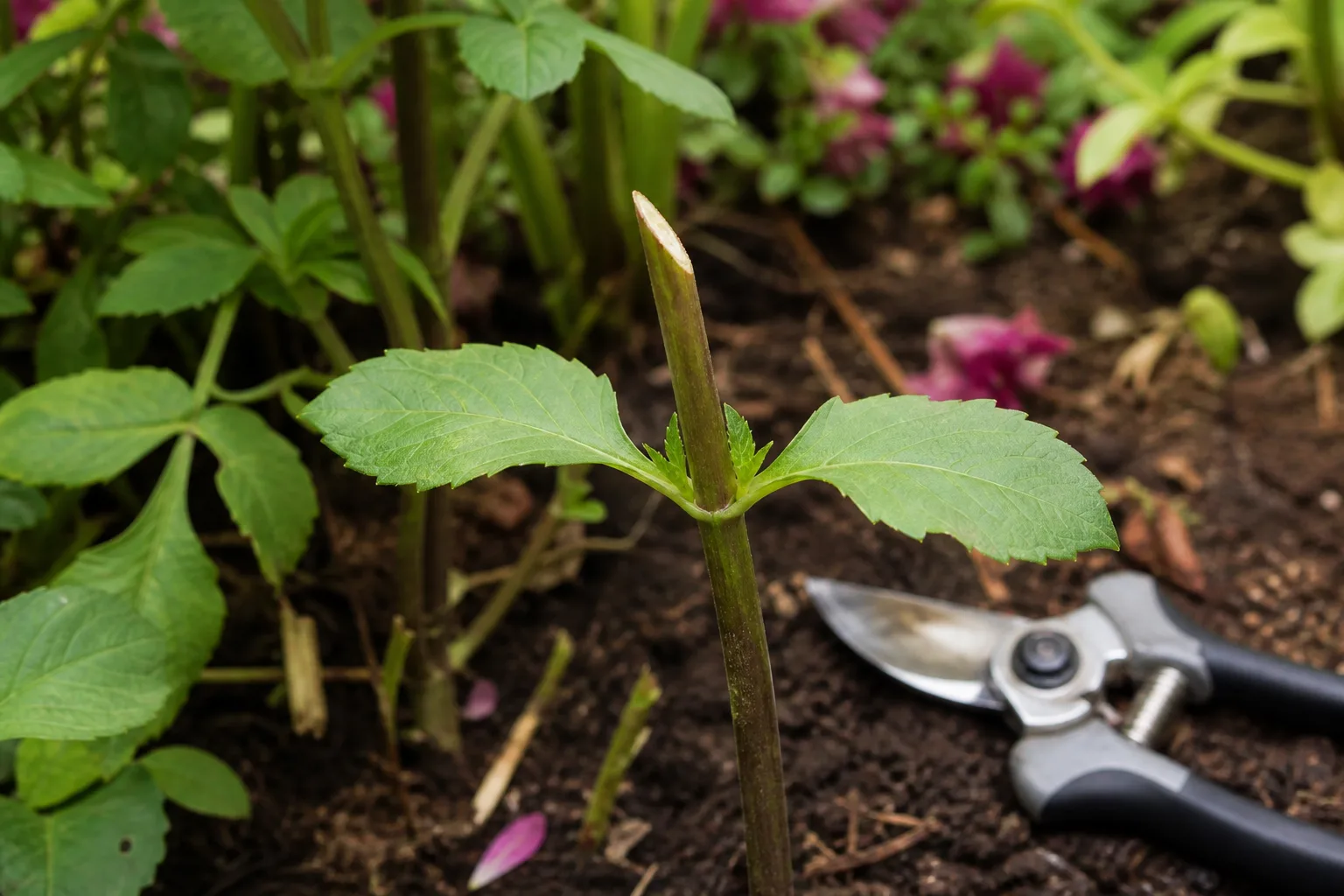
The most important deadheading detail on dahlias is where you cut, not whether you cut. The correct spot is the first leaf joint below the spent bloom—where the flowering stem meets a healthy pair of leaves or a side branch.
RHS guidance is straightforward: remove each spent flower by cutting back to a leaf joint lower down the stem. (RHS) Gardeners’ World goes one step further for clarity: remove the whole flowering stem, not just the faded head, when that stem has finished its job. (Gardeners’ World)
Do Not Just Pinch Off the Petals
Pulling off brown petals without cutting the stem is the most common deadheading mistake on dahlias. The cone-shaped seed structure stays attached, so the plant still treats that stem tip as finished business. You get a stubby brown nub instead of a clean branch point, and new buds arrive more slowly.
Use bypass secateurs, sharp snips, or a knife on thick stems. On very thin side shoots you can sometimes snap the spent head with its short stalk using finger and thumb, but only if you take the stalk with the flower. RHS deadheading guidance for tough stems recommends cutting to just above the next bud or leaf rather than leaving a ragged tip. (RHS)
Tell Buds From Spent Flowers Before You Cut
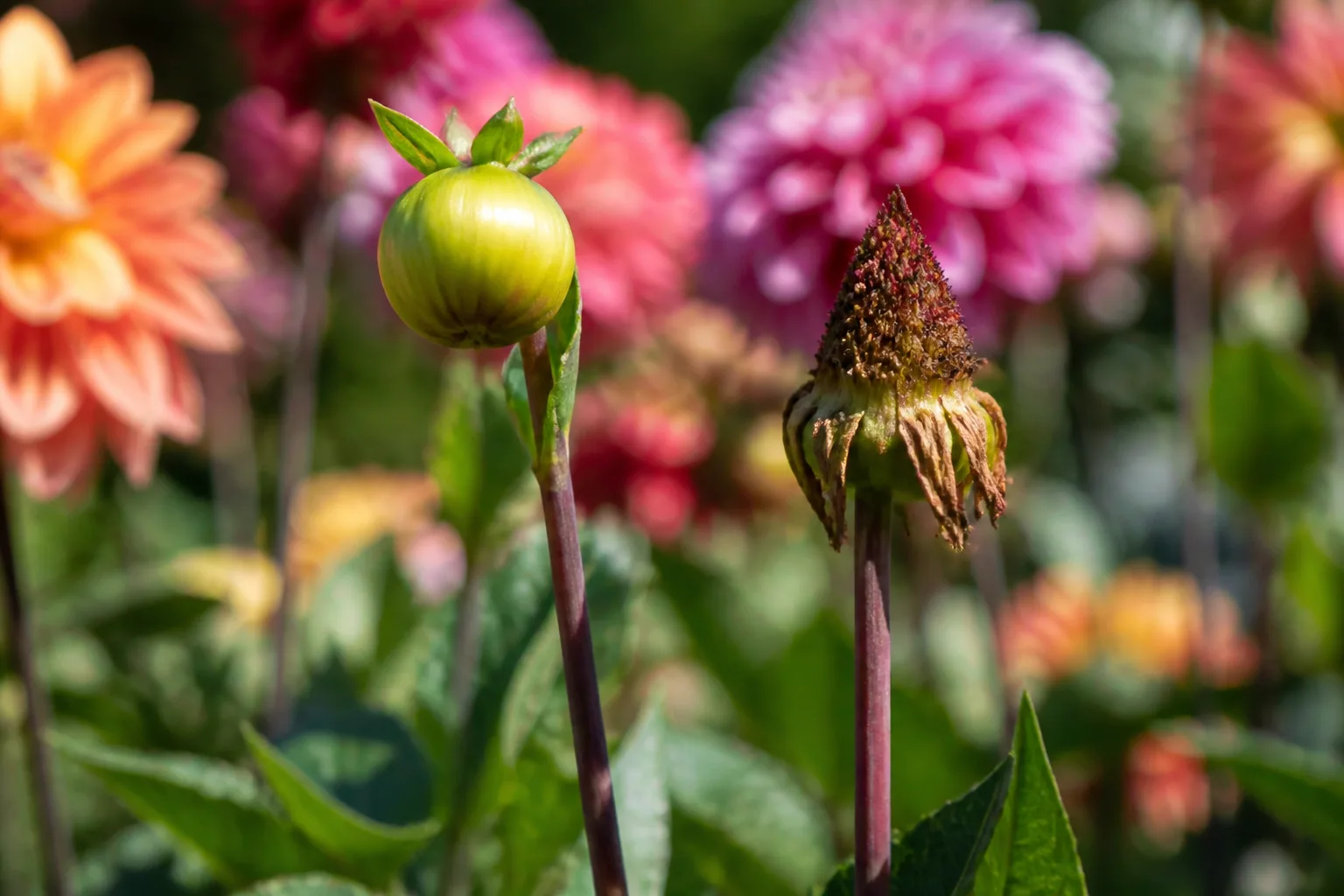
Dahlia deadheading has a famous trap: after petals fall, round flower buds can look like spent heads, and pointed spent heads can fool you from a distance. Both sit at stem tips, but the shapes differ once you look closely.
RHS and Gardeners’ World agree on the quick field test: flower buds are usually rounded, while spent flower heads are more pointed once petals have dropped. (RHS; Gardeners’ World) If you are unsure, track the stem for a few days. Buds swell and show color; spent heads shrink, dry, and darken at the tip.
When in doubt, follow the stem down to the next set of healthy leaves and cut only above tissue that looks actively growing—not above a bud you hope is a bud. Losing one questionable tip is cheaper than stripping a whole week’s worth of flowers.
Step-by-Step: How to Deadhead Dahlias
Start with clean, sharp bypass secateurs or snips. Blunt tools crush dahlia stems and leave entry points for disease on crowded plants.
Walk the bed from the outside in so you do not step on soft stems. For each spent bloom, trace the flowering stalk down to the first healthy leaf pair or outward-facing side branch. Cut at a slight angle just above that joint, leaving the leaves intact. Those leaves continue photosynthesizing and feeding the tuber.
If a stem carried one finished flower but still has tight buds farther down, remove only the spent section down to the highest remaining bud or leaf node—do not cut the entire stalk to the ground unless every flower on that stalk is done. When a whole stalk has no buds left, remove the remaining bare section to a leaf joint or, if needed, to the main stem.
Drop spent heads into a bucket rather than leaving them in the bed. Old petals invite moisture and slugs around the crown. If you are harvesting for vases, cut in the cool of morning, choose fully open flowers, and plunge stems immediately into deep water.
Finish by checking stakes and ties. Deadheading often reveals stems that need re-tying before the next rainstorm weighted with fresh blooms.
How Often Should You Deadhead Dahlias?
During peak bloom, aim for once a week as a minimum and every two to three days if you want exhibition-clean beds. RHS lists weekly deadheading as the baseline for dahlias. (RHS) In practice, fast cultivars in warm weather may need more frequent passes—especially if you are also cutting for bouquets.
The best timing is just as flowers pass their peak, when petals start to curl or discolor but before they shatter. That window redirects energy early and keeps the plant looking intentional rather than neglected.
You can relax slightly in late summer if you are saving seed from a favorite open-pollinated line, but most garden hybrids are grown for flowers, not seed. Stop cosmetic deadheading once frost is near and switch to tuber prep (see below). A few days’ delay during a busy week will not ruin the season; consistent deadheading through July, August, and September is what extends the show.
Pair deadheading with fortnightly high-potash feed (tomato feed works well) and deep weekly watering in dry spells, as Gardeners’ World recommends for keeping dahlia flowers coming. (Gardeners’ World)
When Dahlia Blooms Die for Reasons Beyond Age
Not every brown dahlia flower means you deadheaded too late. Sometimes the plant is pausing, thirsty, or under insect pressure. Deadheading still helps, but it will not replace water, shade relief, or pest control.
Summer Heat Slowdown
Dahlias often slow bud production during extreme heat, then push another flush when nights cool. That mid-summer stall frustrates gardeners who assume the season is over. If foliage is still green and stems firm, keep deadheading spent blooms, maintain even moisture, and wait.
Heat pause is normal on many summer-blooming tuberous plants. Cutting the whole plant back hard during a heat wave removes leaves the tuber still needs. Patience plus consistent care usually brings another round of blooms in late summer or early fall.
Water Stress and Thirsty Roots
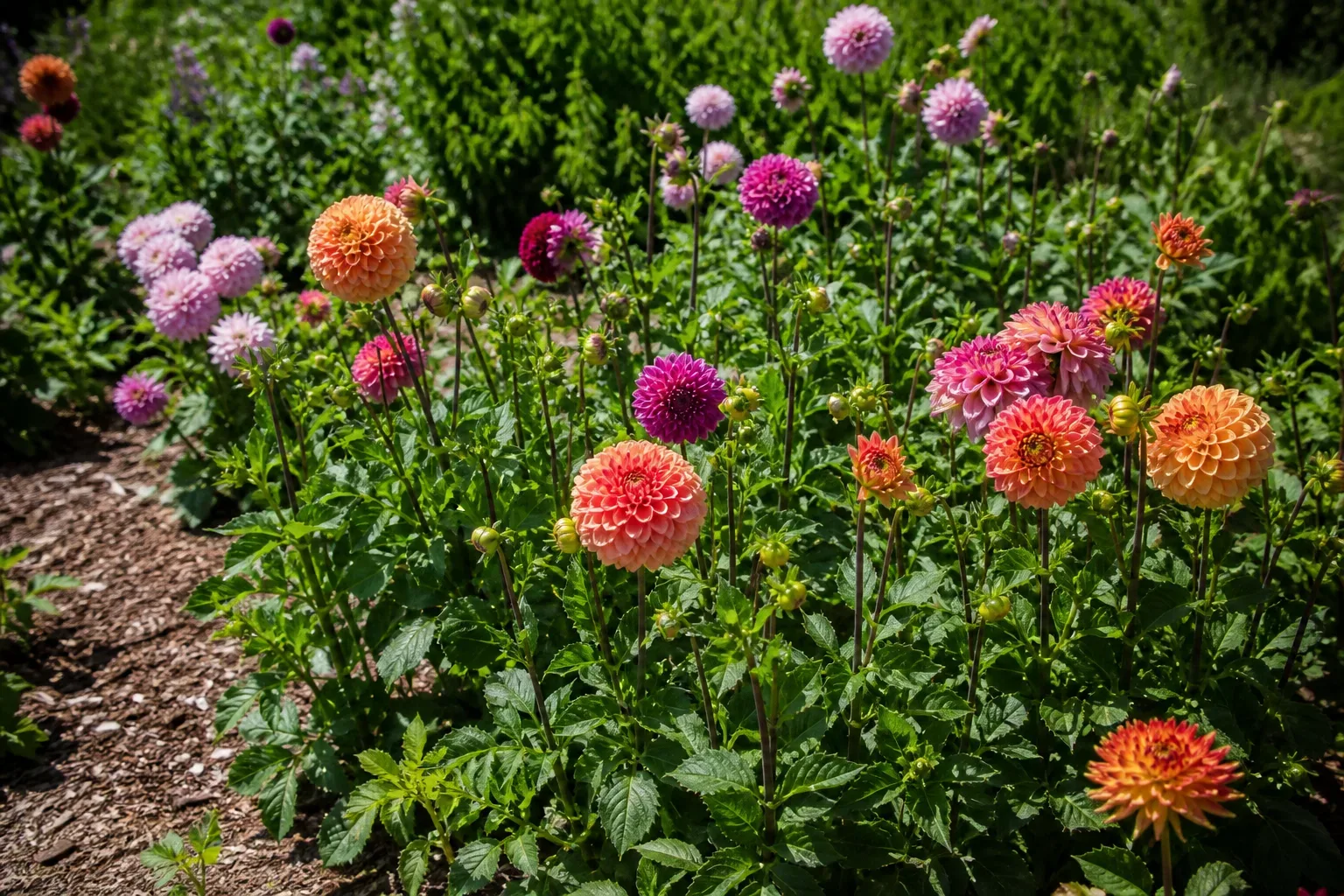
Dahlias want fertile, moist, well-drained soil and struggle in bone-dry beds or soggy clay. RHS emphasizes that dahlias need additional watering in dry, hot weather and that container plants need regular water through the growing season. (RHS)
Inconsistent watering shows up as bud drop, crisp edge burn, or flowers that open small and fade in days. Mulch to reduce evaporation, water deeply at the root zone rather than sprinkling petals, and deadhead so the plant is not also trying to ripen seed on stressed stems.
Thrips, Earwigs, and Other Bloom Busters
Pests can ruin buds before you ever get a perfect flower. Earwigs chew foliage, buds, and petals; Gardeners’ World notes they are a common dahlia problem and suggests simple traps such as straw-filled pots inverted on canes to collect them during the day. (Gardeners’ World)
Thrips scar petals and distort opening blooms, especially in hot, dry microclimates. Capsid bugs can also mark petals. If flowers look mechanically damaged rather than simply aged, inspect buds at dusk and early morning, then treat the pest—not just the symptom.
Deadhead damaged flowers so the plant does not hold rotting tissue, but fix the underlying cause or the next buds will fail the same way.
Deadheading vs End-of-Season Cutting
Summer deadheading and frost cutback solve different problems. Confusing the two is how healthy tubers get damaged going into winter.
Deadheading removes individual spent flowers during the growing season to encourage rebloom. Frost cutback removes the entire top growth after cold damages foliage so you can lift, dry, and store tubers—or mulch them in mild climates.
What to Do After the First Frost
After the first frost blackens leaves, stop deadheading for beauty and shift to season-end stem removal. Gardeners’ World advises cutting stems back to about 12 cm (5 in.) before lifting tubers, drying them upside down briefly, then storing cool and frost-free through winter. (Gardeners’ World)
RHS similarly ties winter protection to frost-damaged foliage: once frost hits, either leave tubers in the ground with heavy mulch in mild, well-drained sites or dig and store them by late November in colder regions. (RHS)
That late-season cut is not the same as snipping a single faded bloom in August. You are clearing the plant for dormancy, not stimulating another flower.
When You Can Leave Tubers in the Ground
In mild climates with free-draining soil, some gardeners overwinter dahlias in place under a thick mulch layer over the crown. RHS notes this is the easiest option but carries risk if winter turns unexpectedly wet or cold. (RHS)
Gardeners’ World suggests that gardeners in mild areas can cover crowns with compost and straw instead of lifting—then rake away excess in spring. (Gardeners’ World)
Whether you lift or mulch, the frost cutback still matters. Leaving long, rotting stems on crowns invites disease and makes mulch placement harder. Match your choice to your USDA hardiness zone, drainage, and typical winter wetness—not to what worked one mild year for someone online.
Common Dahlia Deadheading Mistakes
Popping petals only leaves seed structures behind and slows rebloom. Always cut to a leaf joint or remove the finished flowering stem section.
Cutting rounded buds because they look “done” after a neighbor’s petals fell strips future flowers. Learn the rounded-bud vs pointed-spent-head test before mass pruning.
Shearing the plant in heat when bloom slows removes leaves the tuber needs. Deadhead flowers; do not scalp the whole plant unless you are executing a deliberate horticultural pinch early in the season (a different task at ~20 cm tall, not a midsummer rescue).
Harvesting every stem on young plants weakens small starts. Cut bouquets generously on established plants, but leave enough foliage to support root growth.
Skipping water and feed while deadheading obsessively treats deadheading like magic. Flowers need potash and steady moisture; deadheading only redirects energy that must still be supplied.
Using frost cutback technique in midsummer shocks the plant and ends the bloom season early. Save hard stem removal for post-frost dormancy prep.
Conclusion
Cut dead dahlia blooms—yes, and do it often. Remove each spent flower by cutting back to the first healthy leaf joint or side branch, ideally before petals shatter, and treat bouquet stems as the same helpful cut. During peak summer, weekly deadheading plus deep watering and high-potash feeding keeps dahlias flowering into fall; when heat stalls buds, stay the course instead of hard-pruning the plant.
Learn to separate rounded buds from pointed spent heads, fix water and pests when damage—not age—ends blooms, and switch from cosmetic deadheading to frost cutback when cold ends the season. Get those three rhythms right and dahlias reward you with months of color instead of a single early flush followed by brown cones holding the bed hostage.



