7 Shrubs to Prune in January for Spring Blooms
Seven shrubs love a January trim while dormant. Get species-specific cut heights, rose and hydrangea exceptions, and shrubs you must not touch yet.
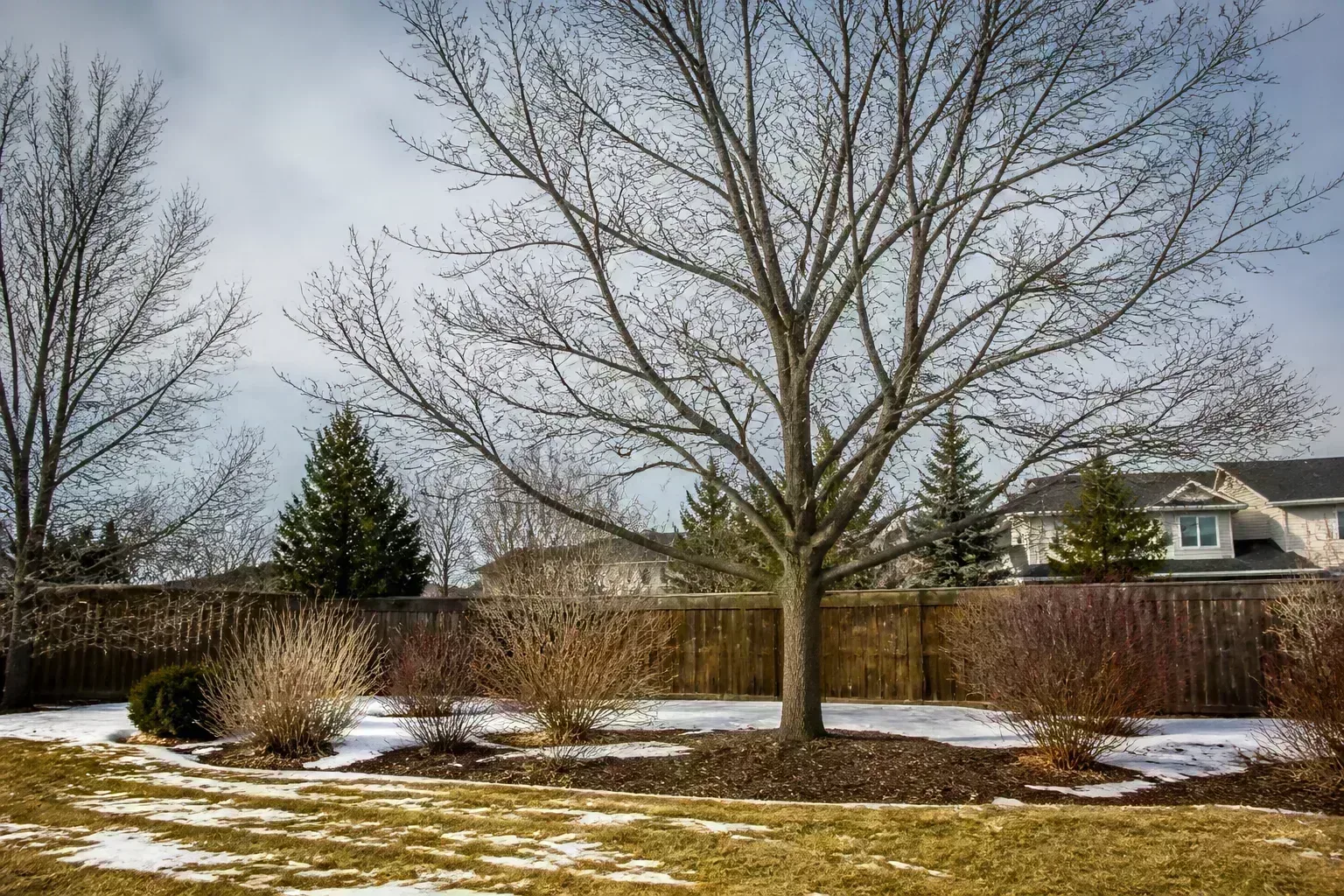
A dry January afternoon with sharp bypass pruners feels like free progress. Leaves are off, the garden looks manageable, and every cut seems to make room for something better in spring. That feeling is correct—but only for a specific group of shrubs. January pruning is for plants that flower on new wood: branches that grow after you cut, not buds that formed last summer and waited all winter to open.
Get that distinction wrong and you will not just delay blooms—you can erase an entire spring display on lilacs, azaleas, or bigleaf hydrangeas. This guide names the seven shrubs that genuinely benefit from a January (or late-winter) trim, tells you how hard to cut each one, and lists the common yard plants you should walk past with shears still holstered.
The quick answer: prune new-wood summer bloomers in dormant January
Prune in January if the shrub blooms in summer or fall on wood that will grow after your cut. That group includes smooth and panicle hydrangeas, butterfly bush, summer-blooming spiraea, caryopteris, beautyberry, and most repeat-flowering shrub roses. Work while the plant is dormant—after leaves drop and before buds swell—so you can see branch structure and the plant channels spring energy into the framework you leave behind.
Do not prune in January if the shrub flowers in spring on old wood (last year’s branches). Forsythia, lilac, azalea, rhododendron, mock orange, and mophead or oakleaf hydrangeas fall here. For those, January cuts remove flower buds that already exist. Wait until after they bloom, or limit January work to broken and hazardous branches only.
When January is too early—and when late February is safer
“January” is a calendar label, not a horticultural guarantee. In USDA Zones 7–9 and mild coastal areas, late January often matches ideal dormant timing. In Zones 3–5, the coldest weeks may still lie ahead in January, and fresh pruning wounds are more vulnerable to severe freeze for several days after cutting. If your forecast shows sustained lows below about 20°F (−7°C) right after you plan to prune, wait until late February or early March when hard freezes are less likely.
The plant cue matters more than the month. Ideal timing sits in the window after the worst winter cold has passed but before buds break. Swollen buds at branch tips mean you should finish structural cuts soon. Fully open leaves mean you are already into active growth and should postpone anything beyond light deadwood removal.
New wood vs old wood: the one rule that saves your flower show
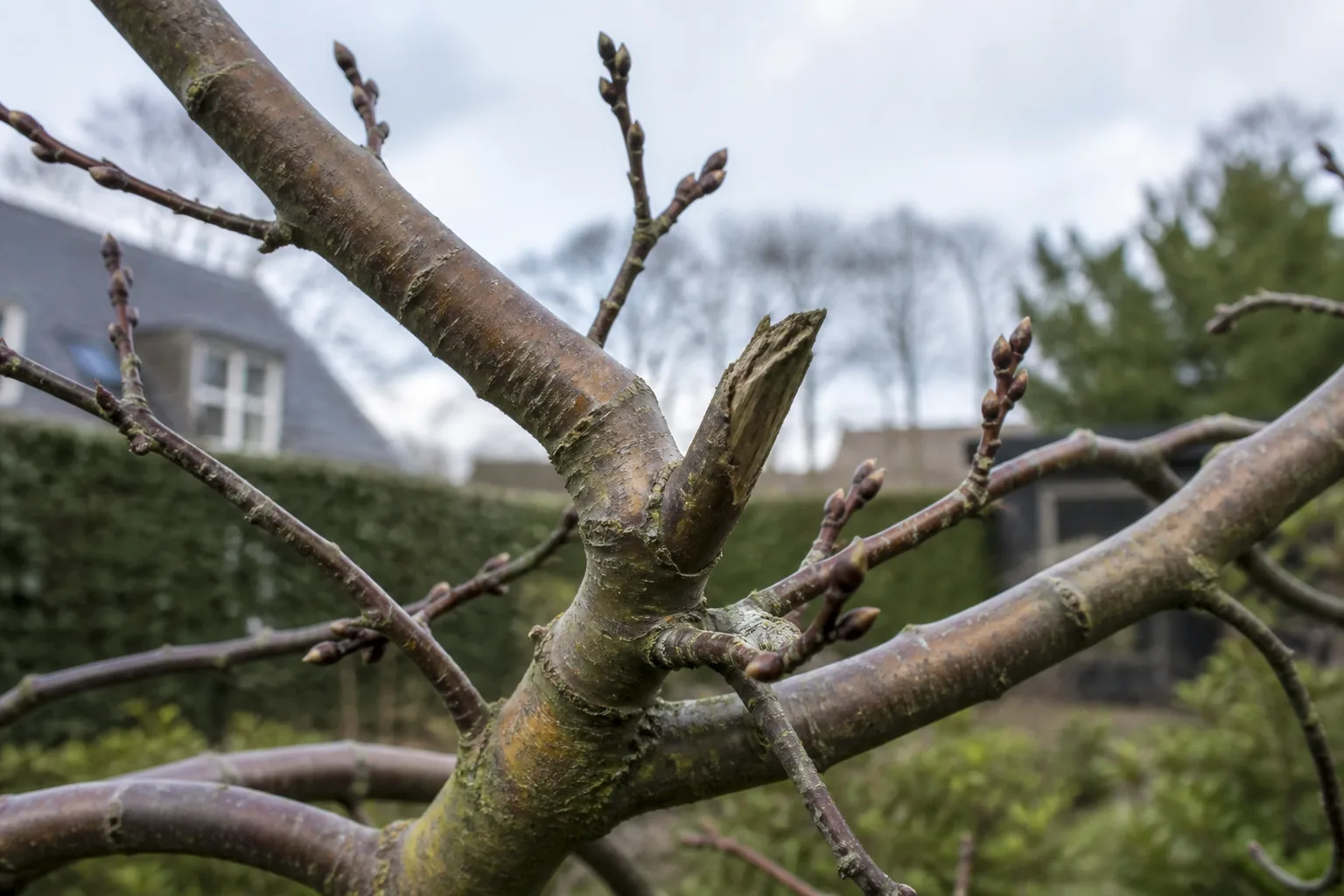
Old wood is growth that developed before the plant went dormant. Spring-flowering shrubs set flower buds on that wood during the previous summer. Cut it in January and you remove the blooms scheduled for March and April.
New wood is growth that emerges after the plant breaks dormancy in spring. Summer- and fall-flowering shrubs form flower buds on those fresh shoots. Prune them in late winter and you are not deleting future flowers—you are resetting the plant so it pushes vigorous new stems that will carry this year’s display.
Gardeners’ Path groups butterfly bush, caryopteris, and many summer shrubs firmly in the new-wood camp, while forsythia, lilac, and azalea sit on the old-wood list. The RHS pruning groups formalize the same idea: Group 6 covers late-summer shrubs like Buddleja davidii and Caryopteris that are pruned in early to mid-spring when severe weather has passed and growth buds are beginning to swell.
How to identify shrubs that bloom on current-year growth
If you are unsure, ask three questions before cutting. When does it flower? Spring bloomers usually flower on old wood; mid- to late-summer bloomers often flower on new wood. What did the label or nursery tag say? Modern reblooming hybrids blur the lines, so verify the cultivar. Did it bloom on short new shoots last year? Butterfly bush and panicle hydrangea typically flower at the tips of current-season growth—your January job is to renew those shoots.
When in doubt, skip live-wood cuts and remove only dead, damaged, or crossing branches. You can always prune harder next month; you cannot reattach a bud once it is gone.
1. Smooth hydrangea (Hydrangea arborescens)
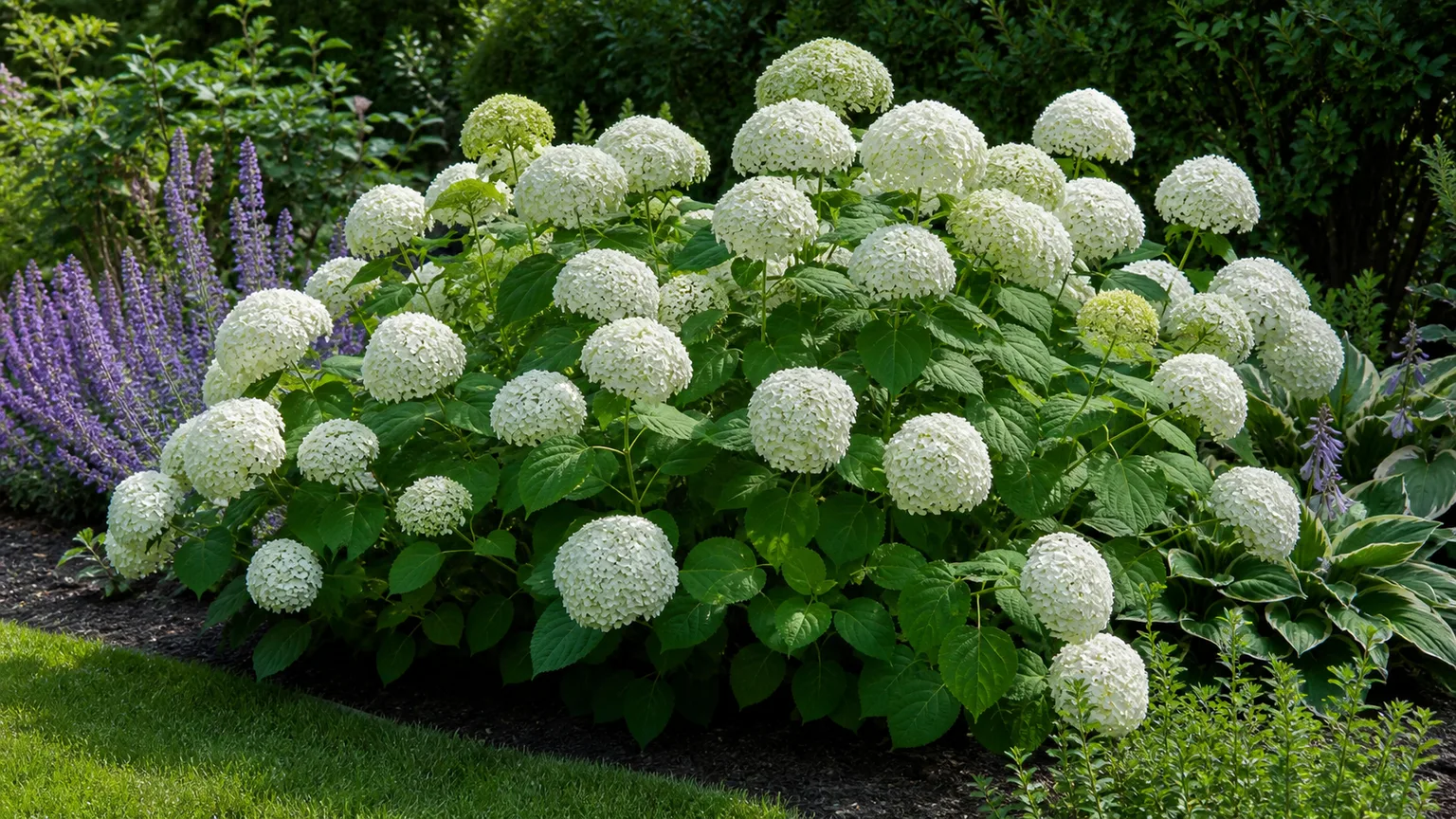
Smooth hydrangeas—including the popular ‘Annabelle’ and newer strong-stemmed cultivars like ‘Incrediball’—bloom on new wood. They can be cut back hard in late winter without sacrificing summer flowers. In fact, annual renewal pruning is how you prevent floppy stems and keep the white mophead clusters upright.
The RHS hydrangea pruning guide treats H. arborescens differently from mophead types: cut last year’s stems back to a pair of healthy buds on a low framework, or harder—to about 12–18 inches (30–45 cm)—for fewer but larger flower heads. January through early March is the standard window in most climates.
Smooth hydrangeas also produce root suckers. A January cleanup lets you remove suckers emerging outside the main clump before they steal space. Leave a handful of strong stems evenly spaced around the crown rather than a single stub—multiple shoots support each other and reduce flopping.
2. Caryopteris, or bluebeard (Caryopteris × clandonensis)
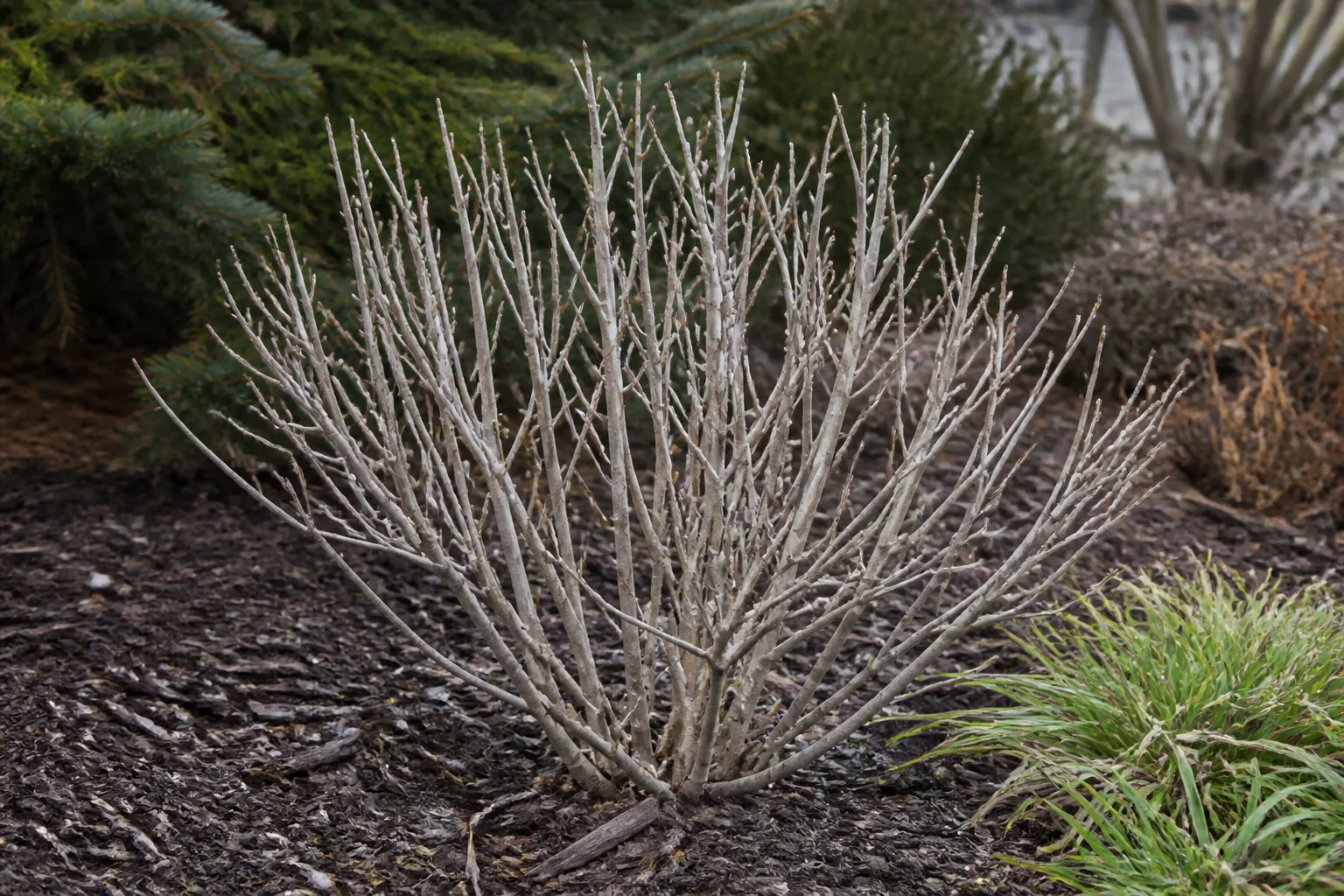
Bluebeard is a compact late-summer shrub with aromatic gray-green foliage and blue to violet flowers that peak when many spring shrubs have finished. It blooms on new growth and belongs to RHS Pruning Group 6. Prune in late winter—January in mild zones, February where winters run colder—once you are past the harshest freeze risk.
Cut the previous year’s stems back to within a few inches of the woody base, leaving a low framework of healthy buds. Caryopteris often dies back partially in cold winters; wait until you can tell live from dead wood, then remove anything blackened or brittle before shaping what remains. Light January touch-ups are fine for broken branches, but the main hard cut should wait until you are confident the plant has survived winter.
Because it flowers late, aggressive spring pruning does not cost you spring color the way it would on forsythia. Neglecting renewal cuts, however, produces a leggy, open center with flowers only at the tips.
3. Butterfly bush (Buddleja davidii)
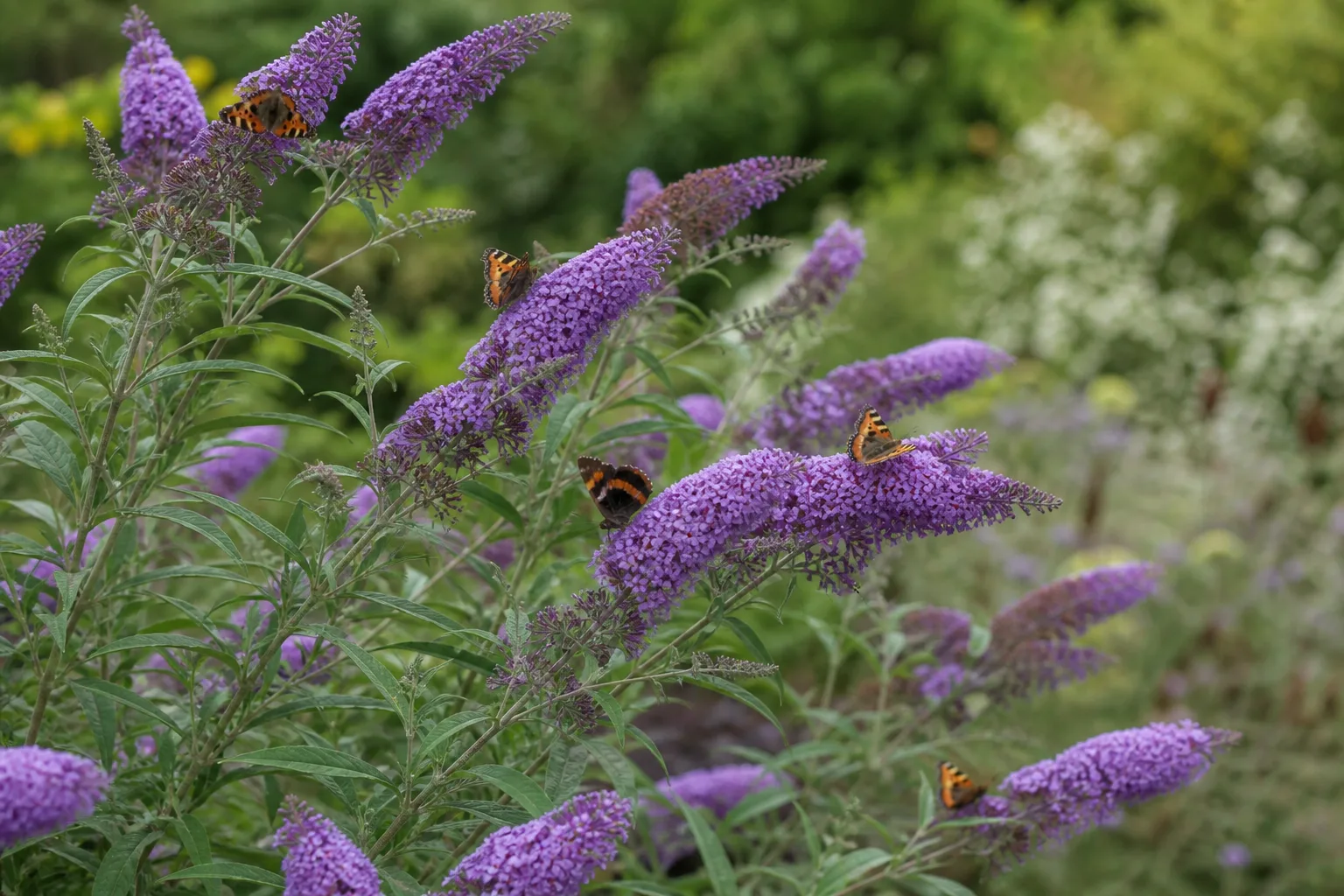
Butterfly bush is the classic hard-prune candidate. It flowers on new wood from summer into fall, and unpruned plants quickly become tall, leggy, and sparse at the base. In late winter, cut last year’s stems down to 12–24 inches (30–60 cm) above ground, just above outward-facing buds on a sturdy framework.
January works in Zones 7–9 where winters are mild. Colder regions often wait until February or early March so a post-prune freeze does not damage exposed wood. Either way, the goal is the same: force vigorous new shoots that carry large panicles at a height you can actually see and enjoy.
Hard-prune height and invasive spread in warm zones
In USDA Zones 5–6, butterfly bush may die back to the ground most winters; prune to live wood and let new shoots emerge from the base. In Zones 8–9, some cultivars remain semi-evergreen and can self-seed aggressively. Deadhead spent flowers in summer and consider sterile or low-seed cultivars if your region lists Buddleja as invasive. Pruning does not solve spread by itself, but it keeps size manageable and improves air circulation, which reduces mildew on crowded stems.
4. Spiraea (spirea)
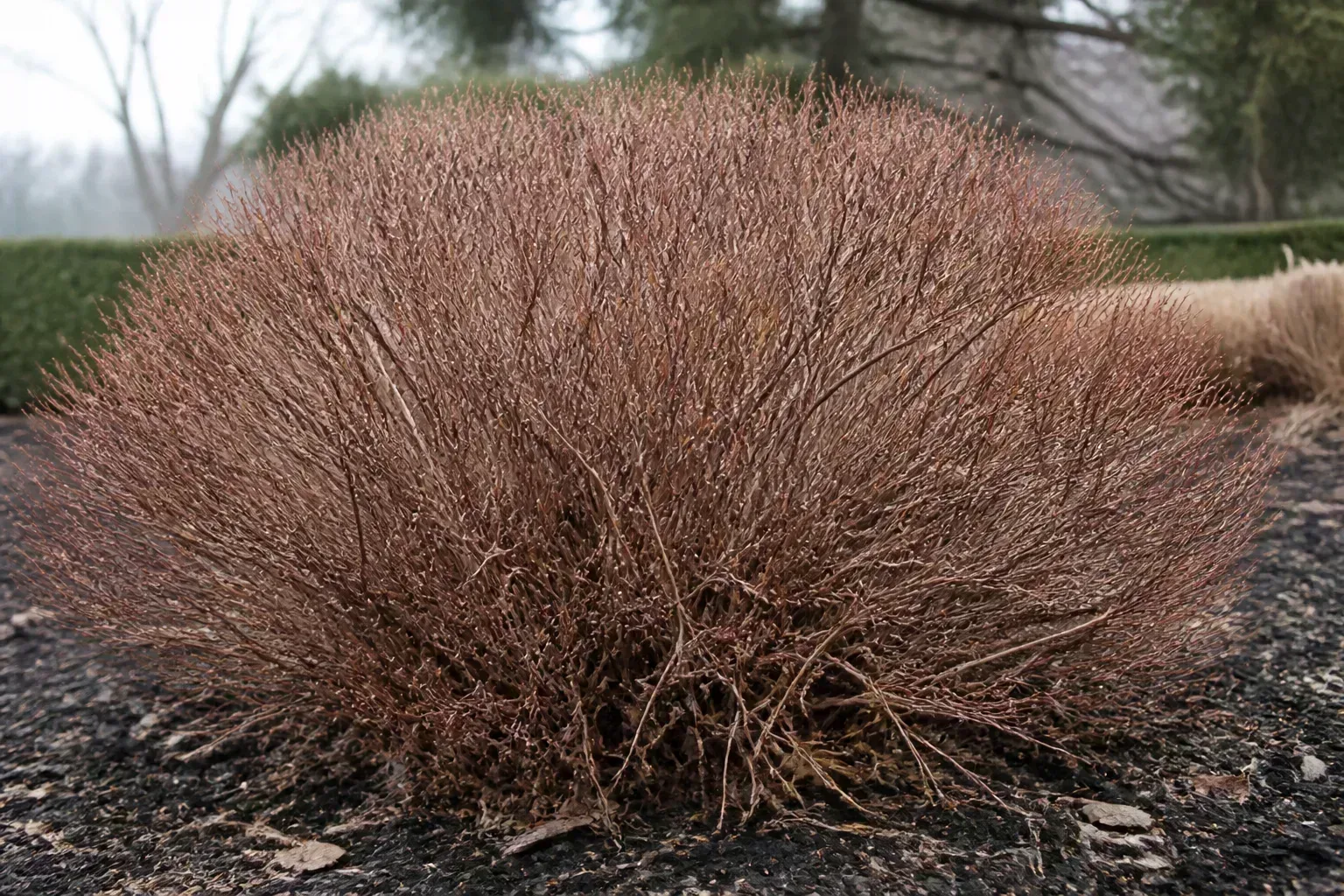
Spiraea is where careful gardeners pause—and should. Summer-blooming spiraea (such as Spiraea japonica and S. × bumalda) flowers on new wood and fits the January list. Cut these back by about one-third to one-half in late winter, or thin congested stems at the base to renew an overgrown clump. Remove the oldest, woodiest canes entirely and leave younger shoots for this year’s color.
Spring-blooming spiraea (bridal wreath types such as S. prunifolia and S. × vanhouttei) flowers on old wood. Prune those immediately after their spring show, not in January. If you only know the plant as “spirea” without a species name, check bloom time from last year before cutting. Bridal wreath in full white cascade in April means hands off in January.
For summer types, fall deadheading of spent flower clusters is optional cosmetic work; the meaningful structural prune happens now, while bare branches reveal the tangle at the base.
5. Beautyberry (Callicarpa americana and hybrids)
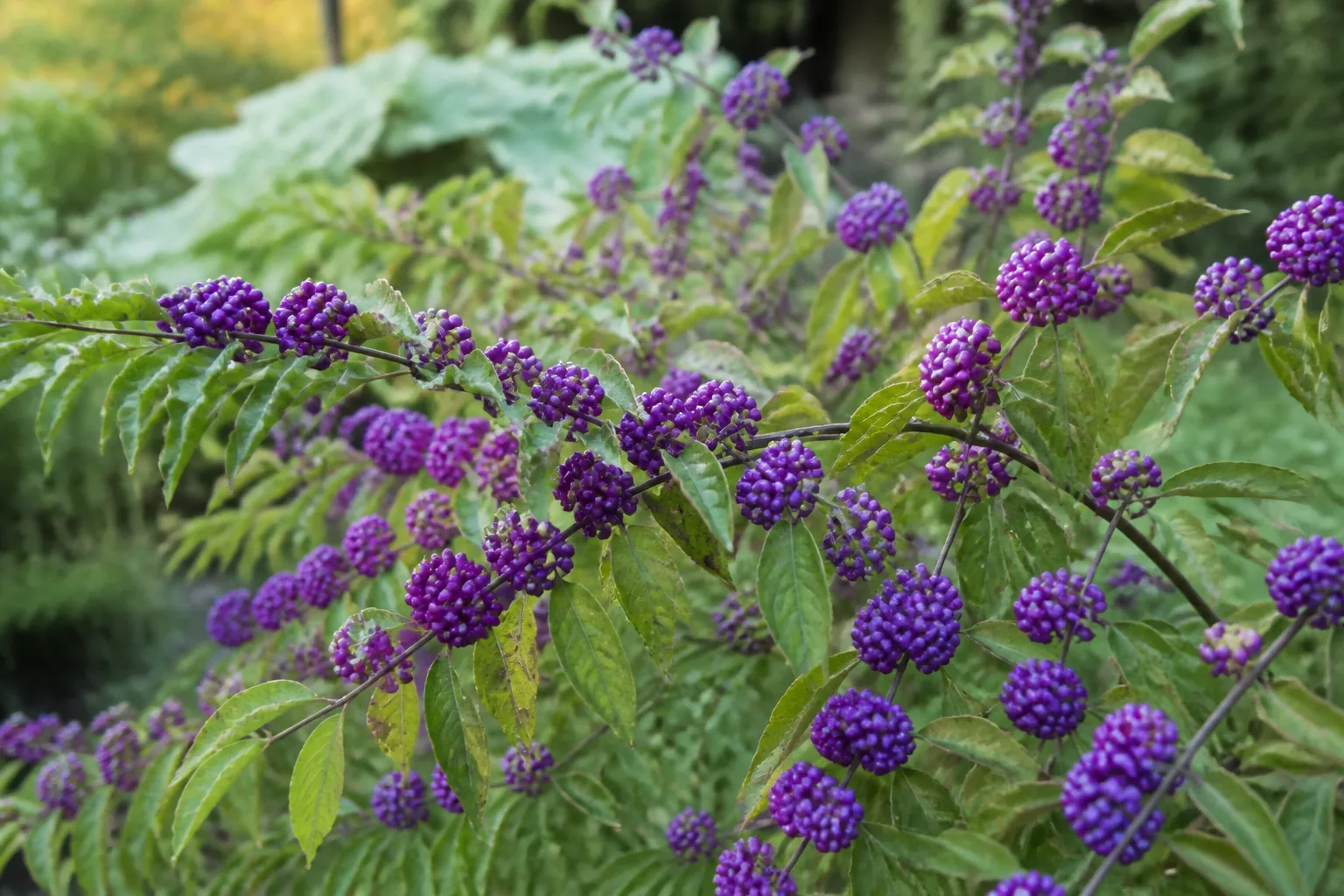
Beautyberry earns its name with vivid purple berry clusters along stems in late summer and fall. The shrub flowers on new growth, and late-winter renewal pruning keeps berry display at eye level instead of at the top of leggy eight-foot stems.
Cut stems back to 12–18 inches (30–45 cm) from the ground in late winter, similar to a moderate butterfly bush renewal. Beautyberry fruits on new shoots, so harder pruning does not eliminate berries—it relocates them to fresh wood you can actually see from the path. If you love the architectural look of bare arching stems in winter, you can delay until February; avoid waiting until buds have fully opened.
Light fall shaping is fine for wayward branches, but save the heavy framework cut for dormant season when you can evaluate winter dieback and remove dead tips before spring flush.
6. Shrub roses and many climbing roses
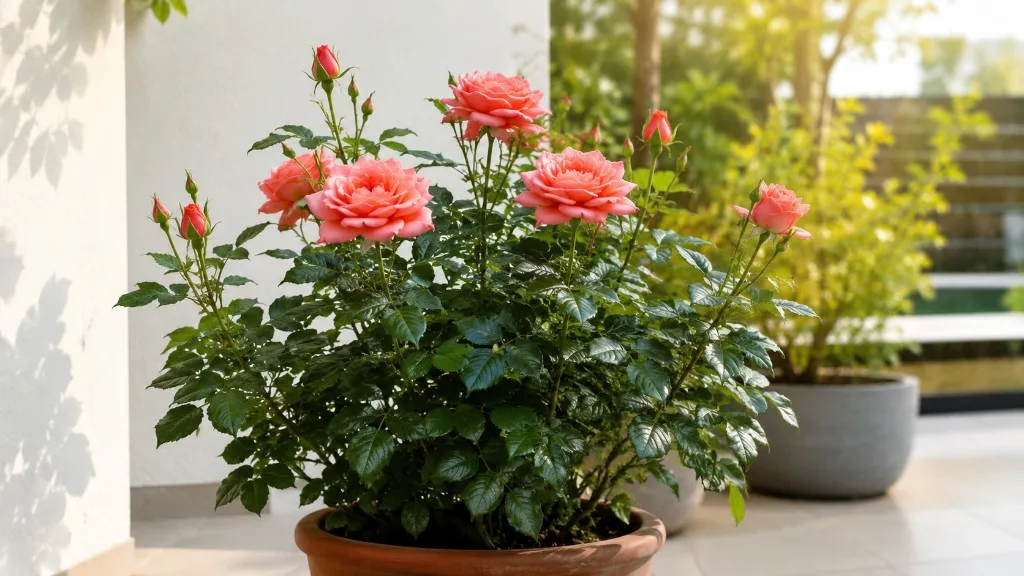
Roses intimidate because the genus is huge, but repeat-flowering shrub roses and many modern climbers bloom on new wood and welcome late-winter pruning. In January—where freezes have eased—remove dead, damaged, and crossing canes first, then shorten remaining healthy stems by about one-third to an outward-facing bud.
Strip any lingering leaves that harbor black spot or rust spores. Open the center for air movement. Seal large cuts only if your climate is wet and disease pressure is high; in dry late-winter weather, clean cuts heal naturally as growth resumes.
Exceptions matter. Once-blooming old garden roses and many species climbers flower on old wood; prune them after their single spring flush, not in January. If you do not know the class, default to the four D’s (dead, damaged, diseased, dangerous) only until you identify the variety. Repeat-blooming landscape roses—Knock Out types, Flower Carpet, and most modern shrub roses—fit the January window well.
7. Panicle hydrangea (Hydrangea paniculata)
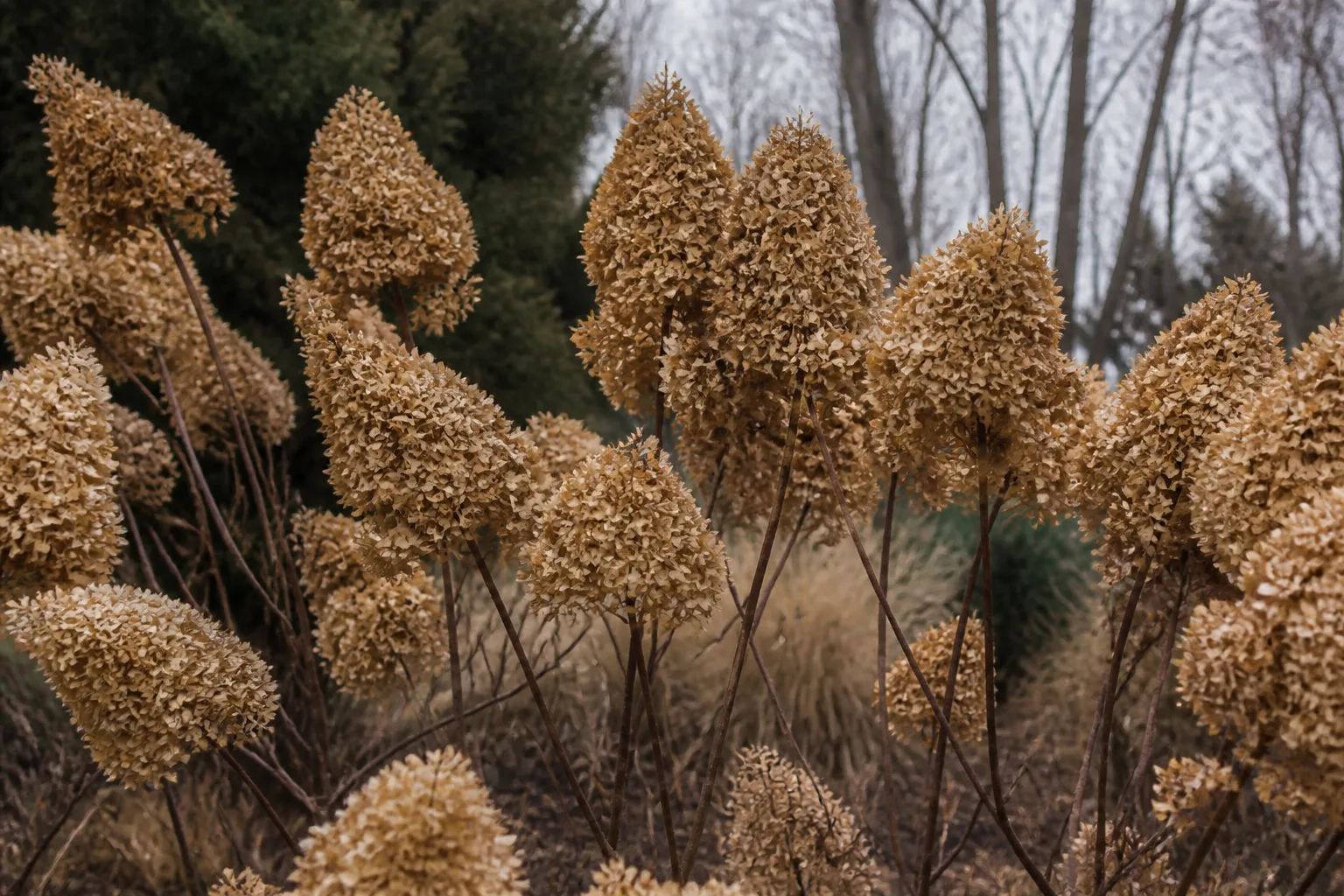
Panicle hydrangeas—including ‘Limelight’, ‘Pinky Winky’, and ‘Quick Fire’—bloom on new wood like smooth hydrangeas, but they build a taller woody framework over time. Annual late-winter pruning keeps panicles large and stems from splaying under rain weight.
Remove thin, weak, and crossing branches, then cut last year’s flowering stems back to two strong buds on each branch of your permanent framework. For a smaller plant, cut the entire framework down to about 18–24 inches (45–60 cm). For maximum flower size on sturdy upright stems, some gardeners cut back to the lowest pair of healthy buds each year, accepting a shorter shrub.
Some gardeners leave dried flower heads for winter interest and bird perches. January is the time to remove them, cutting just above the first fat pair of buds below the old panicle. Do not confuse panicle types with mophead or lacecap H. macrophylla, which set buds on old wood and should not get a January haircut. Our guide on plants you should never prune in winter covers that distinction in depth.
The three January cuts that matter on every shrub
Regardless of species, every January pruning session should start with the same three priorities before you think about height or shape.
Remove dead, damaged, and diseased wood first. Winter reveals canker, broken limbs, and bark splits that summer foliage hid. Cut back to healthy tissue; if stems are black or hollow, follow the damage to its origin.
Eliminate crossing and rubbing branches. Two stems that chafe wear bark away and invite disease. Keep the stronger, better-placed branch and remove the competitor at its base or junction.
Thin congested centers for air and light. Even new-wood shrubs suffer when interiors become a thicket of weak shoots. Open the middle so spring growth emerges outward, not as a crowded cluster of spindly stems.
Only after those three passes should you apply species-specific renewal heights. Cosmetic shaping without hygiene cuts is how gardeners end up with pretty outlines and hidden rot inside.
Shrubs you should NOT prune in January
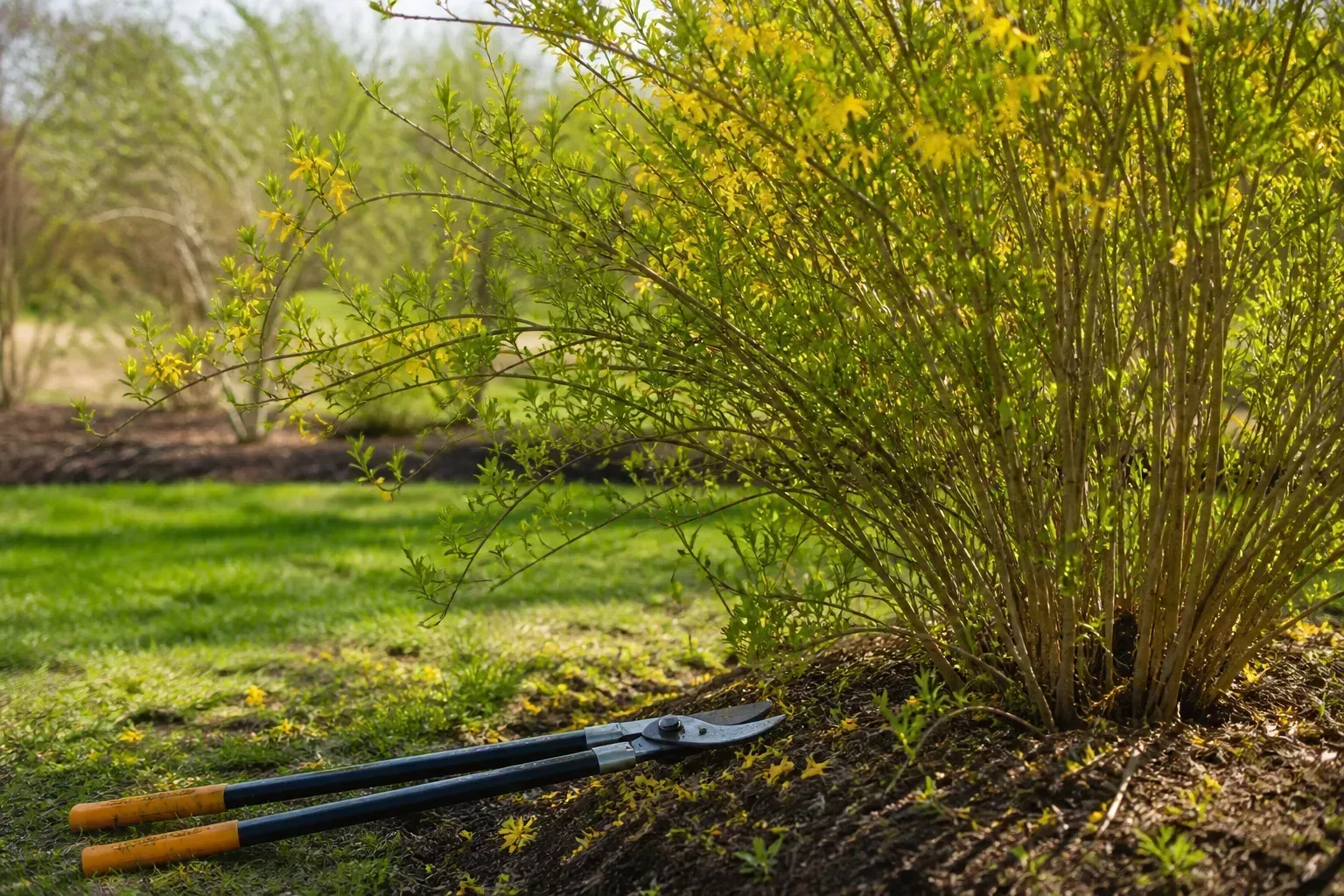
If a shrub blooms in spring on branches that grew last year, January pruning removes this year’s flowers. The skip list is short but painful when ignored:
Forsythia sets yellow buds on old wood in summer. Cut now and you get green arching stems with no blaze of gold in March.
Lilac (Syringa) forms flower buds on prior-year shoots. Wait until flowers fade, then prune immediately after bloom.
Azalea and rhododendron carry spring blossom buds through winter on old stems. Limit January work to deadwood.
Mophead, lacecap, and oakleaf hydrangeas (H. macrophylla, H. serrata, H. quercifolia) bloom on old wood. Deadhead faded blooms in spring if you wish, but do not hard-cut the framework in January.
Spring-blooming spiraea (bridal wreath types) belongs here too—see the spiraea section above.
When storms break branches in January, remove the damage carefully with clean tools even on spring bloomers. That is triage, not renewal pruning. For the full framework on why winter cuts help some plants and wreck others, read our companion guide on why to prune in late winter.
Tools, weather, and after-cut care
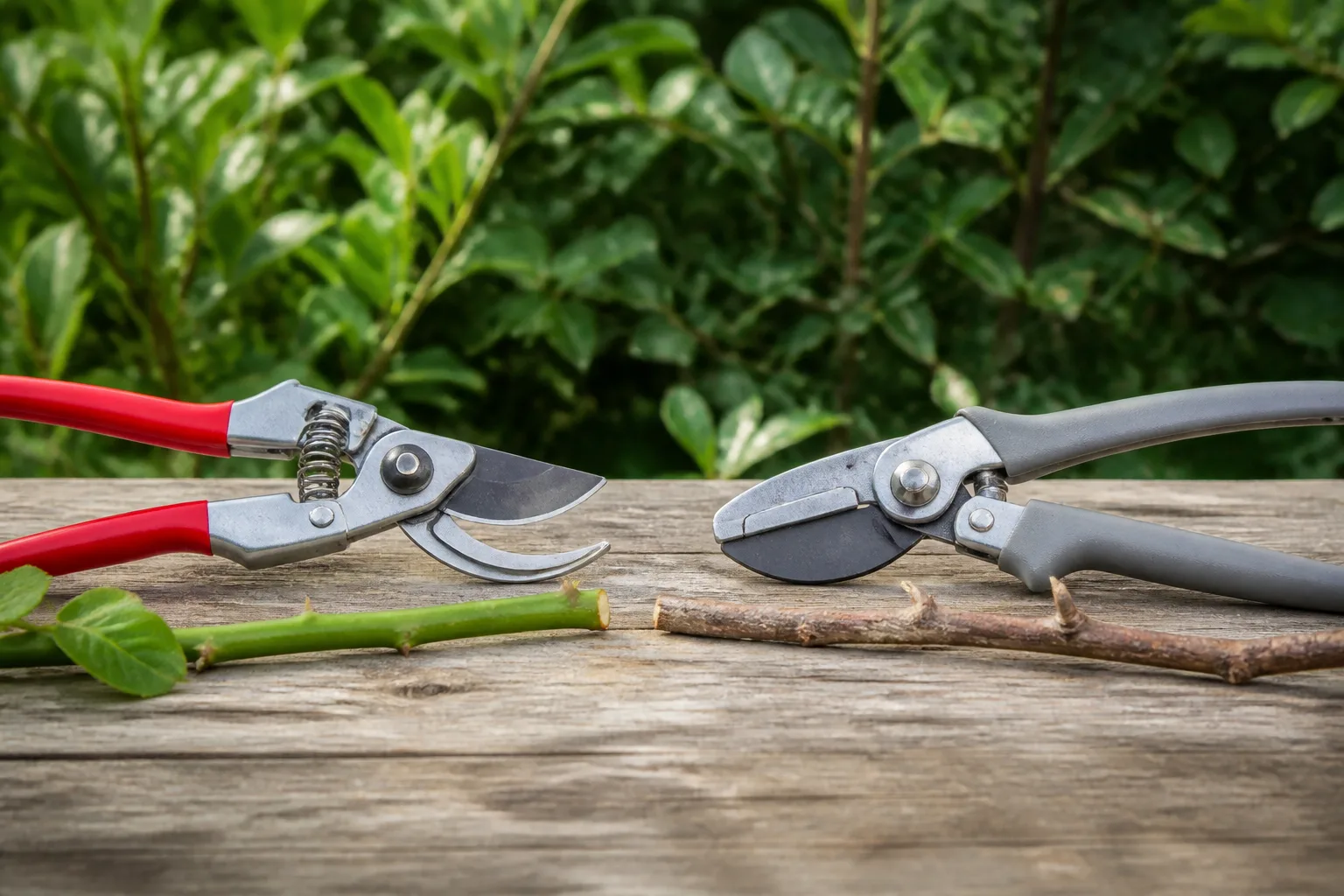
Use bypass pruners for stems up to about ¾ inch (2 cm), loppers for thicker branches, and a curved pruning saw for anything you cannot cut cleanly in one motion. Dull tools crush wood and slow healing—sharpen blades before your first session.
Prune on a dry day above freezing when possible. Wet wood spreads disease, and frozen stems shatter instead of slicing cleanly. The Green Team’s shrub-pruning guidance groups smooth hydrangeas, panicle hydrangeas, and many rose varieties in the spring-pruning bucket for summer flowers on new wood—the same biology January gardeners target a few weeks earlier in mild climates.
Disinfect blades between plants if you removed diseased tissue (10% bleach solution or rubbing alcohol, then rinse and dry). Rake and compost small twigs; chip larger branches or haul them away so fungal spores do not linger at the base.
Do not paint wounds with sealers on most deciduous shrubs; a clean cut at the branch collar heals naturally as sap rises in spring. Skip ladder work on icy ground—one postponed session beats a February in crutches.
Conclusion
January pruning is not a free pass to trim everything in the yard. It is a targeted tool for seven groups of summer- and fall-flowering shrubs that bloom on new wood: smooth hydrangea, caryopteris, butterfly bush, summer-blooming spiraea, beautyberry, repeat-flowering shrub roses, and panicle hydrangea. Match your cut to the species—hard renewal for butterfly bush and beautyberry, framework pruning for panicle hydrangeas, species check for spiraea—and keep spring bloomers on the do-not-touch list until after they flower.
Watch the weather, not just the calendar. Finish before buds swell, after the coldest nights have eased, and start every session with dead, damaged, and crossing wood. Do that and January stops being a gamble and becomes the reason your summer shrubs are fuller, neater, and easier to enjoy from the first warm week onward.



