Green Giant Arborvitae: Care and Growing Guide
Learn Green Giant arborvitae spacing, watering, zones, and pruning for fast privacy screens—plus when Emerald Green or Leyland cypress is the smarter pick.
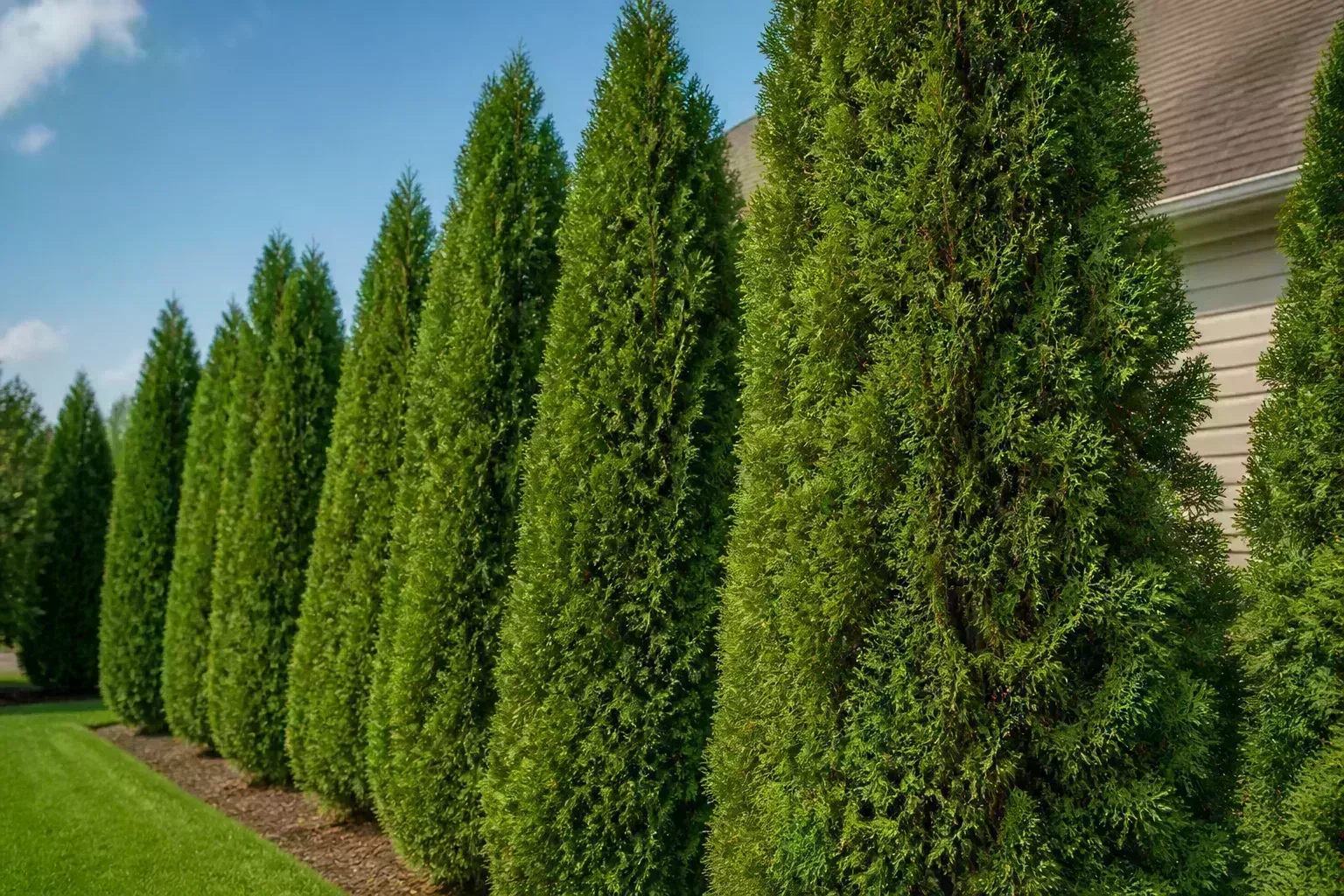
Green Giant arborvitae (Thuja ‘Green Giant’) is the evergreen homeowners reach for when they want a living privacy wall that fills in fast and stays green through winter. It is a hybrid of western redcedar (Thuja plicata) and Japanese arborvitae (Thuja standishii), developed in Denmark in the 1930s and introduced to the U.S. through the National Arboretum in 1967, according to NC State Extension. That pedigree matters less at the garden center than what happens after planting: give it sun, drainage, and room, and it can add 3–4 feet of height per year in favorable conditions while topping out around 40–60 feet tall and 12–18 feet wide.
The same traits that make Green Giant excellent for long property lines also make it a poor impulse buy for small beds. This guide covers whether the tree fits your site, how to plant and space it, what maintenance actually looks like year by year, and how to tell Green Giant apart from Emerald Green and Leyland cypress before you commit.
What Makes Green Giant Different From Other Arborvitae
Most arborvitae sold for hedges are selections of eastern arborvitae (Thuja occidentalis)—compact, cold-hardy, and easy to shear. Green Giant plays a different role: large-scale screening. NC State describes a low-branching, dense columnar-pyramidal habit with glossy scale-like sprays that hold deep green color through winter. Growth is rapid; maintenance is low if you respect mature size.
Green Giant also tolerates heat and humidity better than many cold-climate arborvitae cultivars, which is why it dominates privacy-planting conversations in the Southeast and Mid-Atlantic. It resists most common insect and disease issues, handles periodic drought once established, and shows better deer resistance than many arborvitae, though it is not immune to hungry browsers. The hard limits are salt (spray or saline soil) and wet feet—two site errors that turn “easy care” into brown, declining trees within a few seasons.
Quick Reference Profile
| Trait | Green Giant arborvitae |
|---|---|
| Botanical name | Thuja standishii × T. plicata ‘Green Giant’ |
| Type | Needled evergreen tree |
| USDA zones | 5a–8b (NC State Extension) |
| Mature size | 40–60 ft. tall × 12–18 ft. wide |
| Growth rate | Rapid; often 3–4 ft./year in optimal conditions |
| Sun | Full sun best; tolerates partial shade |
| Soil | Adaptable; prefers moist, fertile, well-drained loam |
| Lifespan | Commonly 40–60 years with good siting |
| Best uses | Privacy screens, windbreaks, large specimens |
| Weak spots | Salt, poor drainage, undersized planting spaces |
Use this table as a sanity check before checkout. If your bed is 8 feet wide between a fence and a patio, Green Giant is not the plant—no amount of pruning fixes a tree bred to spread 12 feet or more.
Is Green Giant Right for Your Yard?
Green Giant solves one job exceptionally well: tall, fast, evergreen coverage on a lot with horizontal space. It does not solve small foundation gaps, formal 4-foot hedges, or salty coastal wind tunnels.
When Green Giant Is the Best Fit
Choose Green Giant when you need a screen 15 feet tall or more, have at least 12–15 feet of depth from trunk to house, fence, or walk at maturity, and want year-round privacy without shearing every month. It shines along rear lot lines, open side yards, rural driveway edges, and wind-exposed perimeters where a fence alone feels stark. A single staggered row can also soften highway or alley views when local codes allow planting near the lot line and you confirm underground utilities first.
It is also a strong Leyland cypress alternative when you want fast fill with fewer long-term disease headaches—more on that comparison below. For broader privacy strategy—sightline audits, fence rules, and mixed screens—see our backyard privacy ideas guide.
When to Choose a Different Plant
Pick Emerald Green (Thuja occidentalis ‘Smaragd’) for narrow beds, 8–12 foot heights, and colder northern sites where Green Giant can winter-stress. Choose native eastern redcedar (Juniperus virginiana) or mixed shrub borders when you want wildlife value and lower formal hedge expectations. Skip Green Giant entirely if your soil stays soggy after rain, you are within 15 feet of overhead utilities, or winter salt spray hits the planting strip—NC State lists salt intolerance as a primary limitation.
Light, Air Movement, and Site Selection
Green Giant performs best in full sun—six or more hours of direct light daily—producing the densest foliage on privacy rows. It tolerates partial shade (two to six hours of sun), but shade-side growth thins and screens look uneven. In hot-summer climates, light afternoon shade can reduce heat stress without sacrificing overall density if morning sun is strong.
Air movement matters as much as light when you plant a tight row. Crowded trees with stagnant humidity invite interior browning and fungal stress. Before digging, trace the mature 18-foot spread on the ground and confirm you are not trapping the row between a solid fence and a masonry wall with no airflow.
Soil, Drainage, and Salt Limits
Green Giant adapts to clay, loam, sand, and rocky soils if water moves through the profile. It prefers moist, fertile, well-drained loam and struggles in constantly wet ground where Phytophthora root rot and related issues appear (NC State black root rot guidance). If water pools for hours after rain, fix grading or install drainage before planting— swapping species alone will not save the row.
Soil pH flexibility is a strength: acidic, neutral, and alkaline soils all work within normal garden ranges. Salt spray from roads and ** saline soils** are deal-breakers; foliage browns from the windward side inward. Coastal gardeners should site Green Giant behind a salt-buffer fence or choose more salt-tolerant screen plants.
How to Plant Green Giant Arborvitae
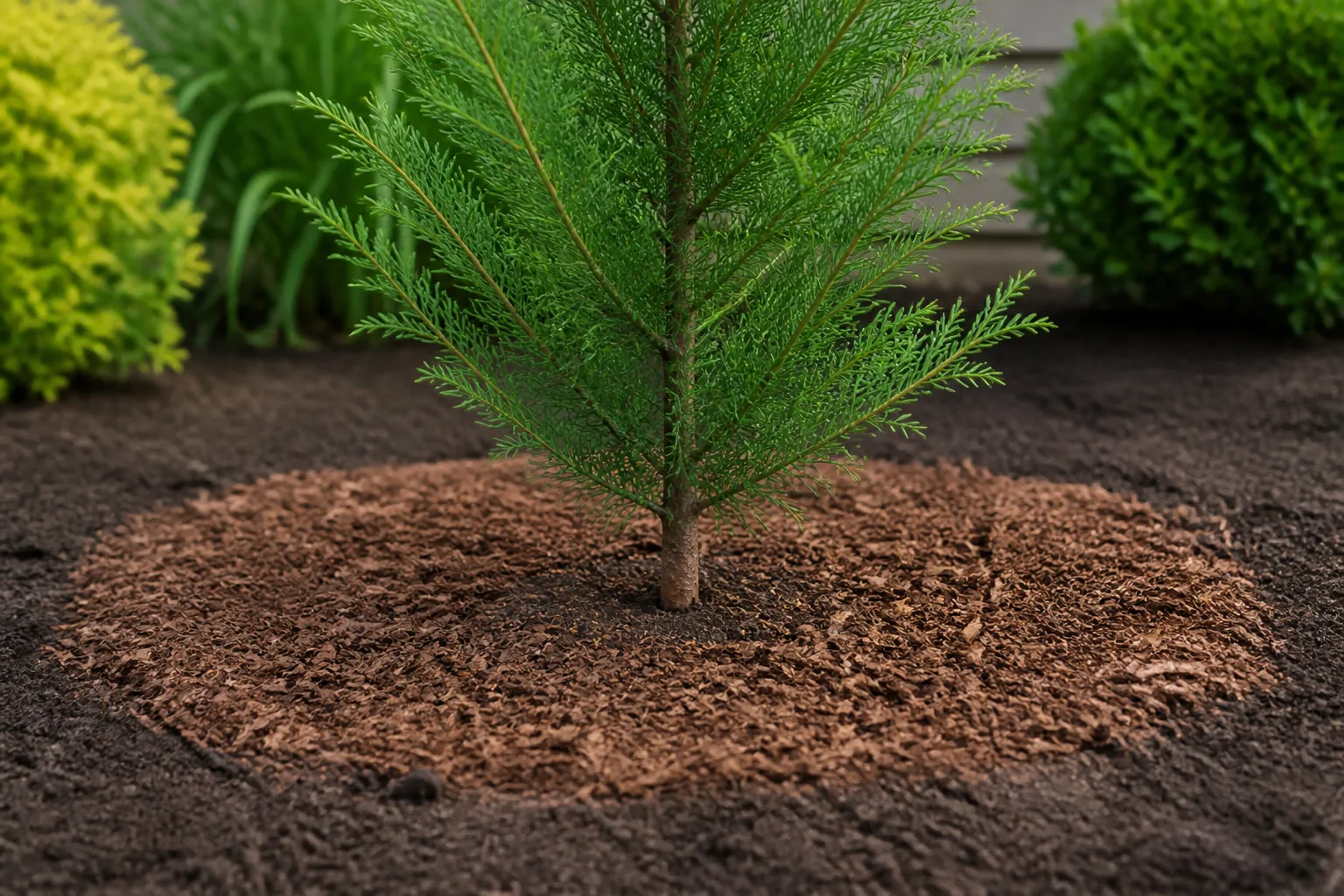
Plant in early spring or early fall so roots establish before summer heat or winter freeze-thaw cycles. Summer planting is possible with extra watering but increases transplant stress.
- Water the root ball in its container or burlap before digging.
- Dig a hole twice as wide as the root ball and only as deep as the root ball height—saucer-shaped, not a deep pit.
- Set the trunk flare level with or slightly above native grade; never bury the stem deeper than it grew in the nursery.
- Backfill with native soil—skip heavy amendments in heavy clay; they can create a “bathtub” around roots.
- Water deeply until soil settles; fix low spots without piling soil on the trunk.
- Mulch 2–3 inches deep in a wide ring, keeping mulch several inches away from bark.
For balled-and-burlap trees, remove synthetic burlap and wire from the top half of the ball; natural burlap may stay if slashed. Container plants should have circling roots teased outward or lightly scored. Staking is rarely needed unless the site is extremely windy; remove ties within one year so trunks develop strength.
Watering From First Season Through Drought
The first 12–24 months define long-term success. New Green Giants need deep, consistent moisture while roots spread beyond the original root ball. A practical schedule for loam soil in a dry week: 1 inch of water weekly delivered slowly at the root zone—not a daily mist on leaves. Sandy soil may need twice-weekly deep soaks; heavy clay may need less frequency but longer duration to penetrate.
Check moisture 3–4 inches down with your finger or a probe. Dry at that depth means water; soggy means wait. Extend hoses or drip lines along entire privacy rows—the tree at the end of the line often dies first when only the middle plant gets attention.
Once established, Green Giant is drought tolerant by arborvitae standards, but extended summer drought still thins interior needles. A monthly deep soak during heat waves keeps screens dense. Winter desiccation in windy, sunny sites may require anti-desiccant sprays or burlap wind screens on young plants—especially the first winter after planting.
For long privacy rows, soaker hoses or drip irrigation beat overhead sprinklers because they deliver water to the root zone without wetting foliage overnight. Run irrigation early in the morning so needles dry before evening; constantly damp arborvitae foliage in humid summers can invite fungal spotting on interior branches that already receive less light.
Fertilizer: Helpful Timing and Common Overfeeding Mistakes
Do not fertilize at planting or during the first full growing season unless a soil test documents a specific deficiency. Roots need to colonize native soil without forced top growth.
From year two through four, if growth looks pale or soil is poor, apply a slow-release evergreen fertilizer (roughly balanced to slightly nitrogen-heavy, such as 4-3-4 formulations) in early spring before new growth hardens. Skip late-summer and fall feeding—it pushes tender shoots into frost.
Established trees 40 feet tall rarely need fertilizer if mulch and fallen needle litter recycle nutrients. Overfeeding fast-growing conifers produces lush, susceptible growth and wastes money. If a privacy row competes with lawn grass, keep a mulched tree zone instead of feeding both with high-nitrogen lawn programs.
Spacing for Privacy Screens, Windbreaks, and Specimens
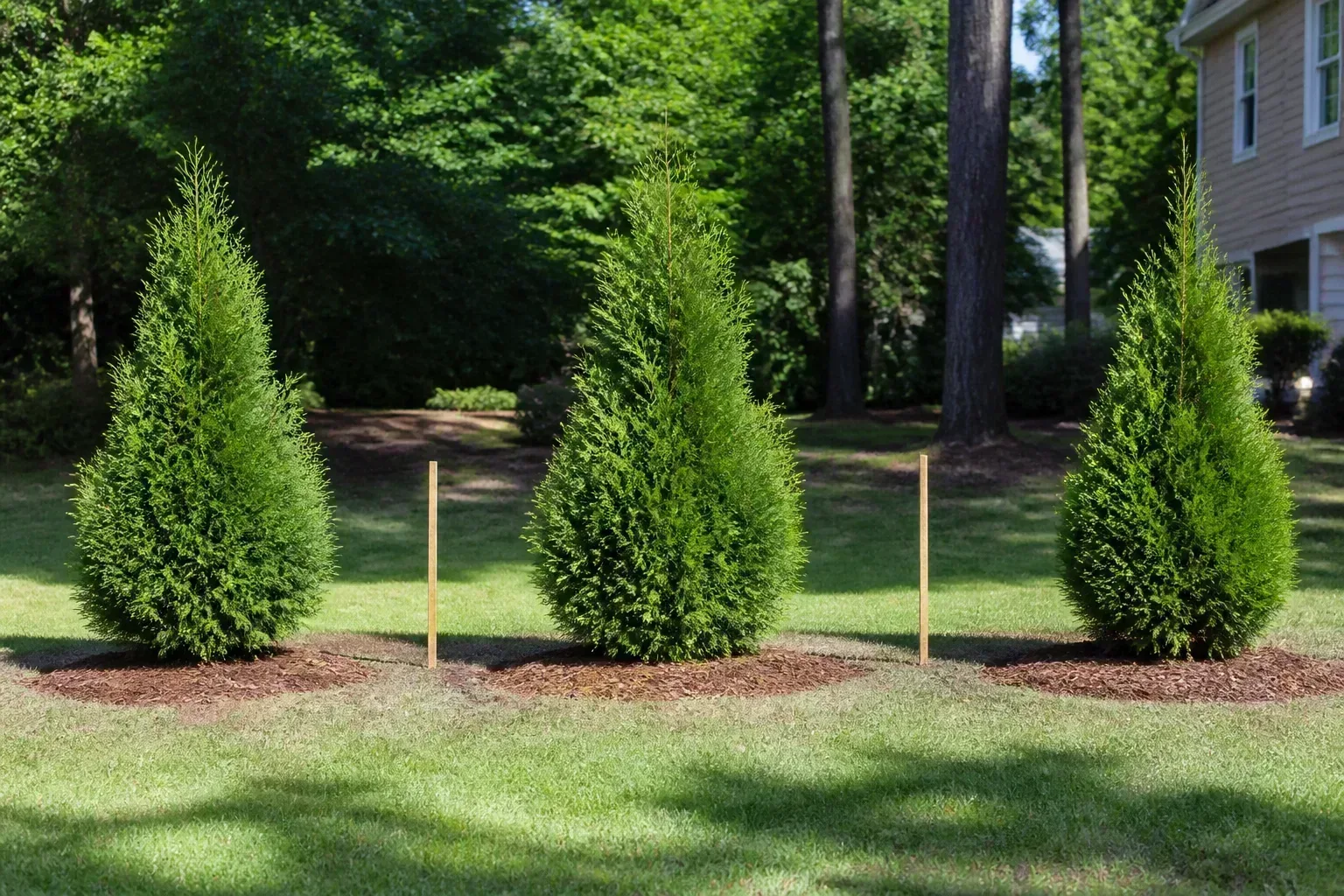
Spacing is the decision homeowners get wrong most often. Planting too close looks good for three years and miserable at ten.
Dense privacy screen (single row): Space 5–6 feet on center for canopies to merge into a continuous wall while maintaining airflow. Some growers use 6–8 feet in humid regions to reduce interior dieback.
Natural windbreak or loose screen: Space 8–12 feet on center so pyramidal forms stay distinct. Staggered double rows—offset second row in gaps—create thicker wind filtration on large properties when total depth exceeds 20 feet.
Specimen or small group: Allow 15–20 feet between trunks unless you want a grove effect decades later.
Measure on center (trunk to trunk), not edge of root ball to edge of root ball. Mark stakes before buying so you purchase the correct count—running short mid-project forces mismatched sizes and gaps.
Pruning, Height Control, and Snow Recovery
Green Giant’s uniform pyramidal habit needs little pruning if sited with room. Remove dead, broken, or crossing branches anytime. For formal hedges, light shear outer green growth in late winter to early spring; a second light touch in early summer can tame a flush.
Never cut into old, leafless interior wood—arborvitae seldom resprouts from brown stems. If a tree outgrows its space, you cannot “size it down” permanently; replacement or redesign is the honest fix.
After heavy snow, brush snow off gently with a broom rather than letting ice-laden branches splay. Split leaders can be tied temporarily; cracked trunks may need removal. For broader evergreen pruning timing, see should you prune evergreens in winter—Green Giant responds best to corrective cuts before spring growth.
Green Giant vs Emerald Green vs Leyland Cypress
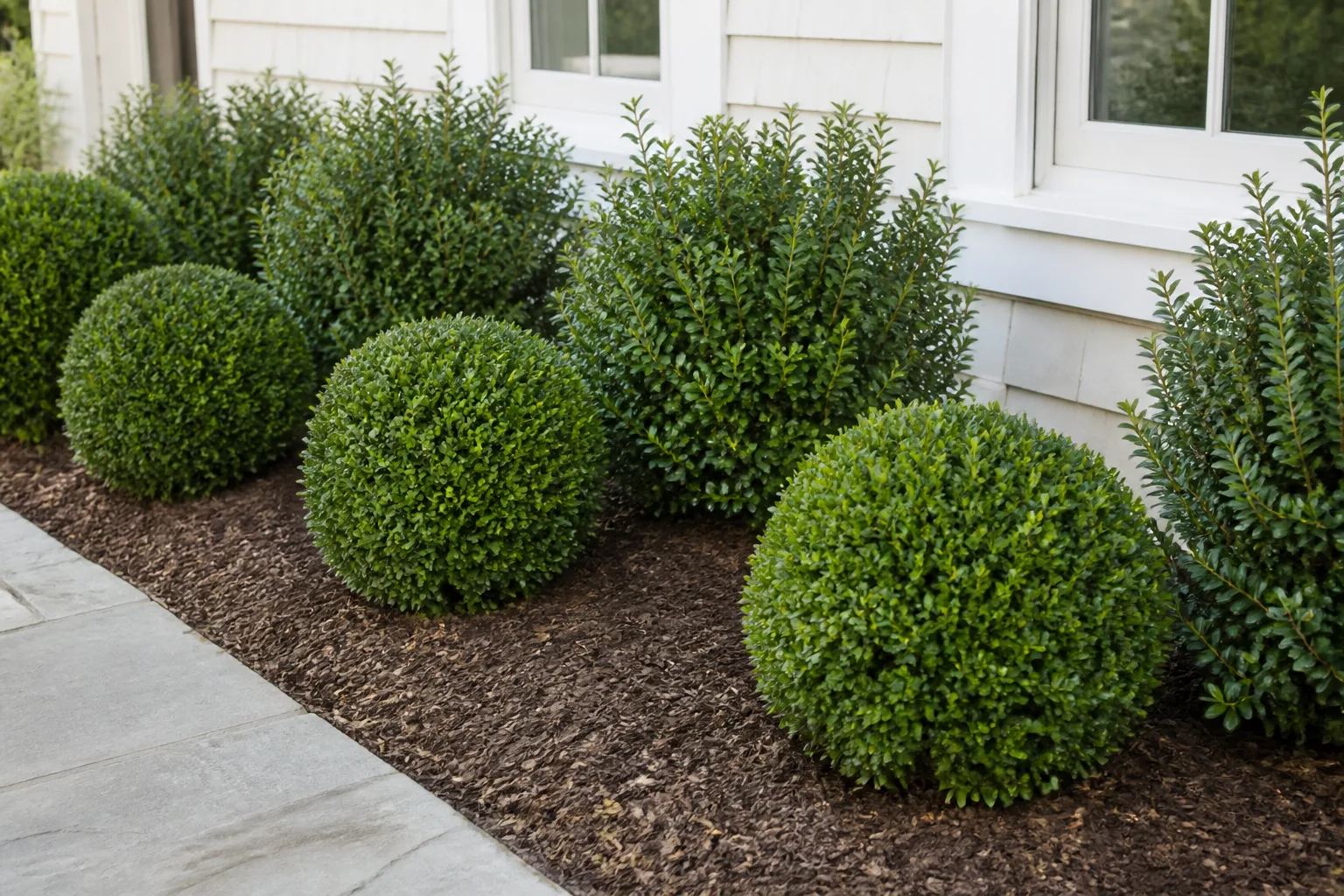
Green Giant wins on speed and ultimate height for large privacy jobs in zones 5–8. Expect 3–4 feet of yearly growth and a 40–60 foot ceiling.
Emerald Green (Thuja occidentalis ‘Smaragd’) stays 8–12 feet tall and 3–4 feet wide, tolerates colder winters better, and suits foundation strips and formal 6-foot hedges. Choose Emerald Green when the planting bed is less than 8 feet deep or you need tight shearing.
Leyland cypress (× Hesperotropsis leylandii) also grows fast but is more disease-prone in humid regions—cankers, bagworm outbreaks, and root issues often shorten useful life. NC State lists Green Giant as a popular Leyland alternative in the Southeast when space allows. If you need speed without Leyland’s baggage, Green Giant is usually the safer large-screen evergreen; our fast-growing shrubs guide walks through spacing and Leyland trade-offs in more detail.
Pests, Diseases, and Browning Foliage
Green Giant is relatively trouble-free, but bagworms (Thyridopteryx ephemeraeformis) can defoliate branches if ignored (NC State bagworm factsheet). Hand-pick silk bags in winter or early spring on reachable trees; larger rows may need targeted Bacillus thuringiensis (Bt) sprays when larvae are small, following label directions. Bagworm bags look like small brown cones hanging from branch tips—they are easy to miss until a section goes bare, so scan the top third of each tree where new growth is softest.
Scale insects occasionally colonize stems, causing sticky honeydew and sooty mold. Horticultural oil applications during crawler windows help; severe infestations may need professional treatment. If ants climb trunks to farm scale honeydew, controlling the scale resolves both problems—spraying ants alone does not protect the tree.
Root rot follows poor drainage—not mysterious bad luck. Browning patterns tell the story:
- Uniform tan from tips inward on windy side: winter desiccation or salt.
- Whole-tree decline after wet spring: drainage or planting depth.
- Patchy brown with silk bags: bagworm.
- Yellow then brown lower branches: possible root stress or shade dieback.
Start troubleshooting with a soil moisture and depth check, then inspect for pests. Early correction beats reactive spraying on a tree already compromised by wet soil.
Deer, Winter Burn, and Cold-Zone Realities
NC State lists Green Giant among arborvitae with deer resistance, meaning deer prefer other plants when options exist—but young, tender leaders are still vulnerable, especially in late winter when food is scarce. Protect first- and second-year trees with temporary fencing or repellents until foliage toughens and height exceeds easy browse.
In zone 5a and exposed northern sites, Green Giant may show more winter burn than Emerald Green. Windbreak placement, anti-desiccant sprays, and avoiding late-season nitrogen reduce damage. At the warm end (zone 8b), heat and drought stress matter more than cold; mulch and deep watering carry trees through August heat.
For yards with heavy deer pressure, combine Green Giant screens with deer-resistant understory plantings from our deer-resistant shrubs guide—diversity beats betting on one “resistant” label.
Season-by-Season Care Calendar
Late winter is inspection season. Walk the row for bagworm bags, broken branches, and bark splits from frost; plan corrective pruning before spring flush while branches are still visible. If deer browse last winter, adjust fencing before new soft growth appears.
Early spring is for recovery, not pushing growth. Apply slow-release fertilizer only if last year’s color was pale and a soil test or visible deficiency supports it; refresh mulch rings without volcano mounding. This is also the best window to replace any dead trees in a screen so the row stays even in height.
Late spring through summer is when establishment stress shows up as brown tips. Deep-water during drought; scout for scale crawlers and bagworm hatch on new foliage; avoid heavy shearing during heat waves because cut edges desiccate faster. If you must shape, work in cool weather and never remove more than a light outer layer.
Fall matters more than many homeowners realize. Evergreens lose moisture all winter even when dormant. Water until the ground freezes if autumn is dry, especially for trees planted within the last three years. Skip fertilizer entirely so wood hardens before frost.
Winter maintenance is mechanical: shake heavy snow loads before ice forms; maintain deer protection on young trees; note salt spray exposure from plowed roads and rinse foliage during warm thaws if salt dust is visible on the windward side.
Common Planting Mistakes That Cause Expensive Regret
Underestimating mature width is the costliest error—trees planted 4 feet apart become competing trunks with dead interiors. Planting under power lines guarantees utility conflicts or butchered tops. Deep planting and mulch volcanoes suffocate roots and invite bark decay.
Skipping the first-year watering plan kills more Green Giants than bagworms do; the symptom shows up the following summer as sudden browning. Using tight rows as a sound wall without depth fails acoustically—evergreens soften noise somewhat but do not replace mass barriers. Expecting instant 12-foot privacy from 3-gallon pots sets unrealistic timelines; plan on 2–3 years for a readable screen with proper spacing and care.
Conclusion
Green Giant arborvitae earns its reputation when you match the tree to the job: long runs of fast, evergreen privacy on well-drained soil in full sun, with 5–8 foot spacing, steady water through establishment, and honest room for a 40-foot-plus canopy. It is not a foundation shrub, not salt-tolerant, and not deer-proof—but it outpaces most evergreens while asking little pruning once sited correctly.
Before you order a row, mark mature spreads on the ground, compare Emerald Green if depth is limited, and fix drainage problems first. Do that homework once, and Green Giant returns the favor with a dense green wall that actually stays green.