7 Fast-Growing Low-Maintenance Shrubs for Privacy and Structure
Seven fast-growing shrubs that stay manageable after establishment—spacing, zones, evergreen vs flowering picks, and which "easy" plants actually need constant pruning.
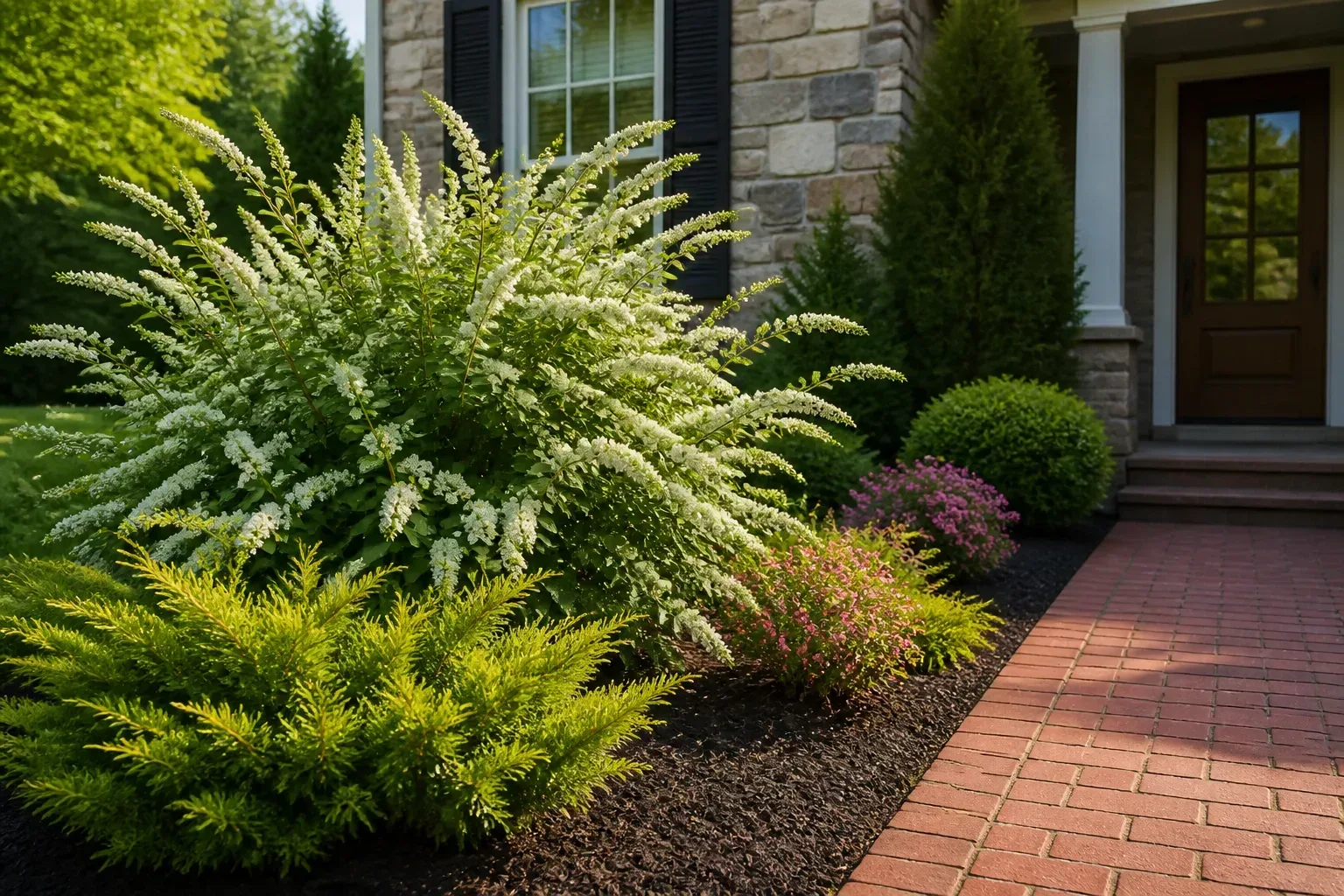
A bare fence line or empty foundation bed can make a new yard feel unfinished for years — unless you pick shrubs that fill space quickly and then settle into a routine you can actually keep. The trick is not finding the fastest grower on a nursery tag. It is matching growth speed, mature size, and your tolerance for pruning so the plant looks good at year three without owning your weekends at year eight.
The seven shrubs below cover the jobs homeowners ask for most: evergreen privacy, fragrant spring flowers, native toughness, and colorful foliage. Each profile includes realistic zones, mature dimensions, and the maintenance invoice that fast growth often hides. Use them to shortlist plants, then confirm hardiness for your USDA zone and measure your bed before you buy.
What Makes a Shrub Both Fast-Growing and Low-Maintenance
Fast-growing usually means 2–4 feet of upward growth per year in good soil and regular moisture during establishment — not instant maturity. Low-maintenance means the shrub’s natural habit fits the space without constant rescue pruning, and it tolerates your typical weather once roots are deep.
Those two traits overlap, but they are not the same thing. A Leyland cypress can add 3 feet per year and still demand regular shearing, disease monitoring, and eventual replacement when canker appears. A ninebark grows quickly yet may need only a post-bloom tidy and an occasional renewal cut.
Fast Growth Has a Maintenance Invoice
Treat growth rate like a bill that arrives later. Shrubs that sprint upward also widen, sucker, or lose lower branches if crowded. Evergreen screens knit fast when spaced for closure, but closure too tight invites airflow problems and uneven watering.
The most sustainable fast screens are plants whose natural mature height matches your target — Green Giant arborvitae for a tall evergreen wall, ninebark for an informal 6-foot border — rather than species you plan to hold at half their genetic size forever.
Low Maintenance Still Means a First-Year Watering Plan
No shrub is hands-off the week it leaves the nursery. New wood needs consistent moisture through the first growing season and often into the second, especially if you plant in spring or early summer. Deep watering twice a week beats daily sprinkles: soak the root ball zone, let the top inch dry, repeat.
Mulch 2–3 inches deep, keeping it off the trunk, reduces watering swings and weeds. Skip heavy fertilizer the first year; roots matter more than top growth. Get establishment right and the list below earns its “low maintenance” label. Skip it and even tough ninebark will look stressed and needy.
How to Choose the Right Shrub for Your Yard
Start with the job, not the photo. A shrub that excels as a 15-foot privacy screen is a poor foundation plant. A fragrant spring bloomer may be perfect near a patio and pointless along a back fence you never visit.
Privacy Screen vs Ornamental Border
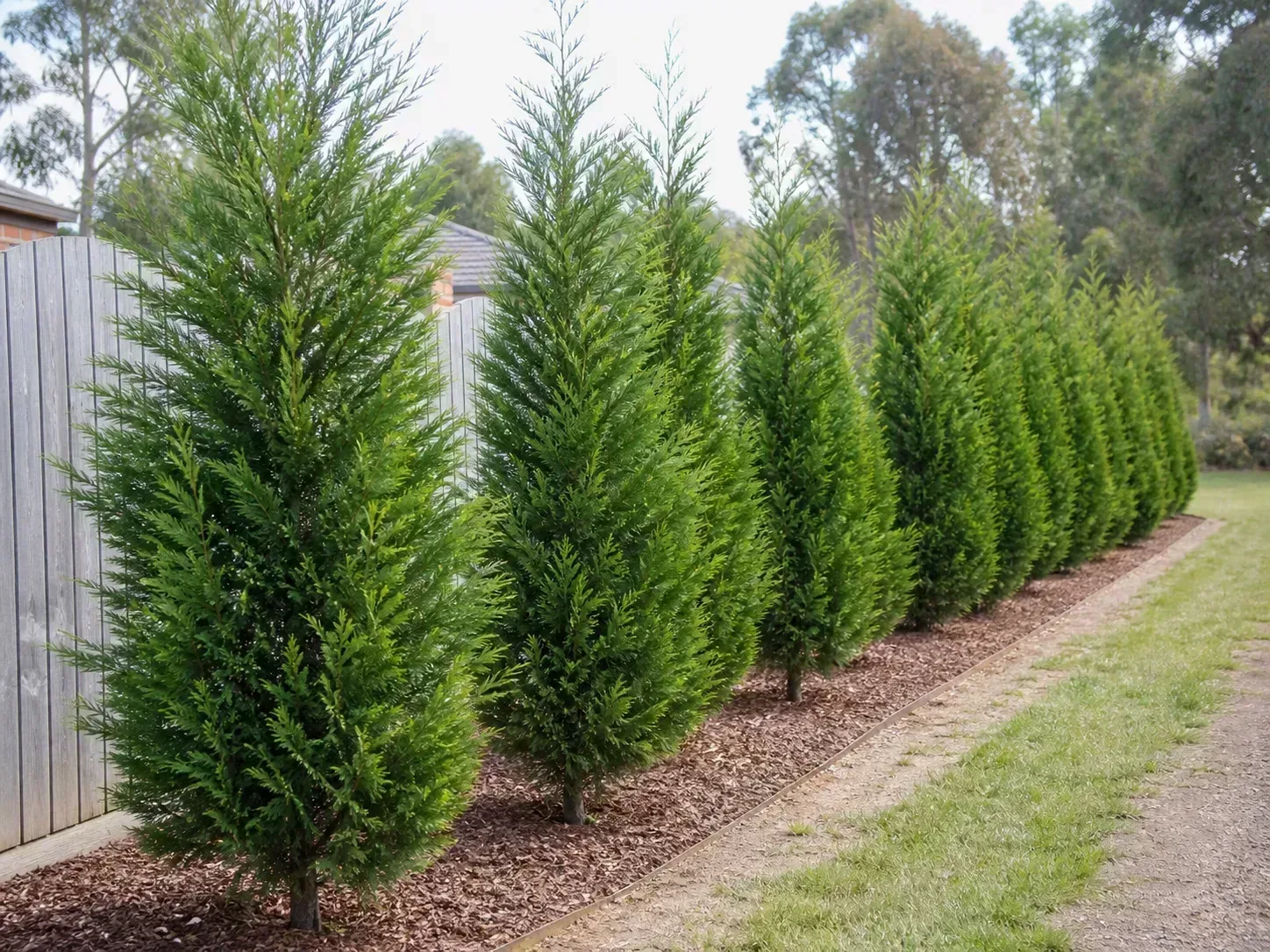
Privacy screens need evergreen or densely branched deciduous plants, planted in a row with spacing that closes sightlines within two to three years. Green Giant arborvitae, sweet viburnum, and Leyland cypress fit here — with very different long-term risk profiles.
Ornamental borders prioritize flowers, fragrance, bark, or fall color over year-round opacity. Lilac, mock orange, and ninebark shine in mixed beds, property corners, and near walkways where you notice seasonal change. For broader privacy strategies beyond shrubs alone, see our guide on backyard privacy ideas.
Match Mature Size Before You Buy
Read the mature height and spread on the tag, then walk your site with a tape measure. If half the mature width plus a maintenance gap does not fit between the house and sidewalk, the shrub is wrong — even if it is labeled dwarf or slow.
Penn State Extension’s plant-selection guidance applies here: a shrub in the wrong spot becomes stressed, pest-prone, and high-maintenance. Measure first; impulse-buy never.
Seven Fast-Growing Shrubs Worth Planting
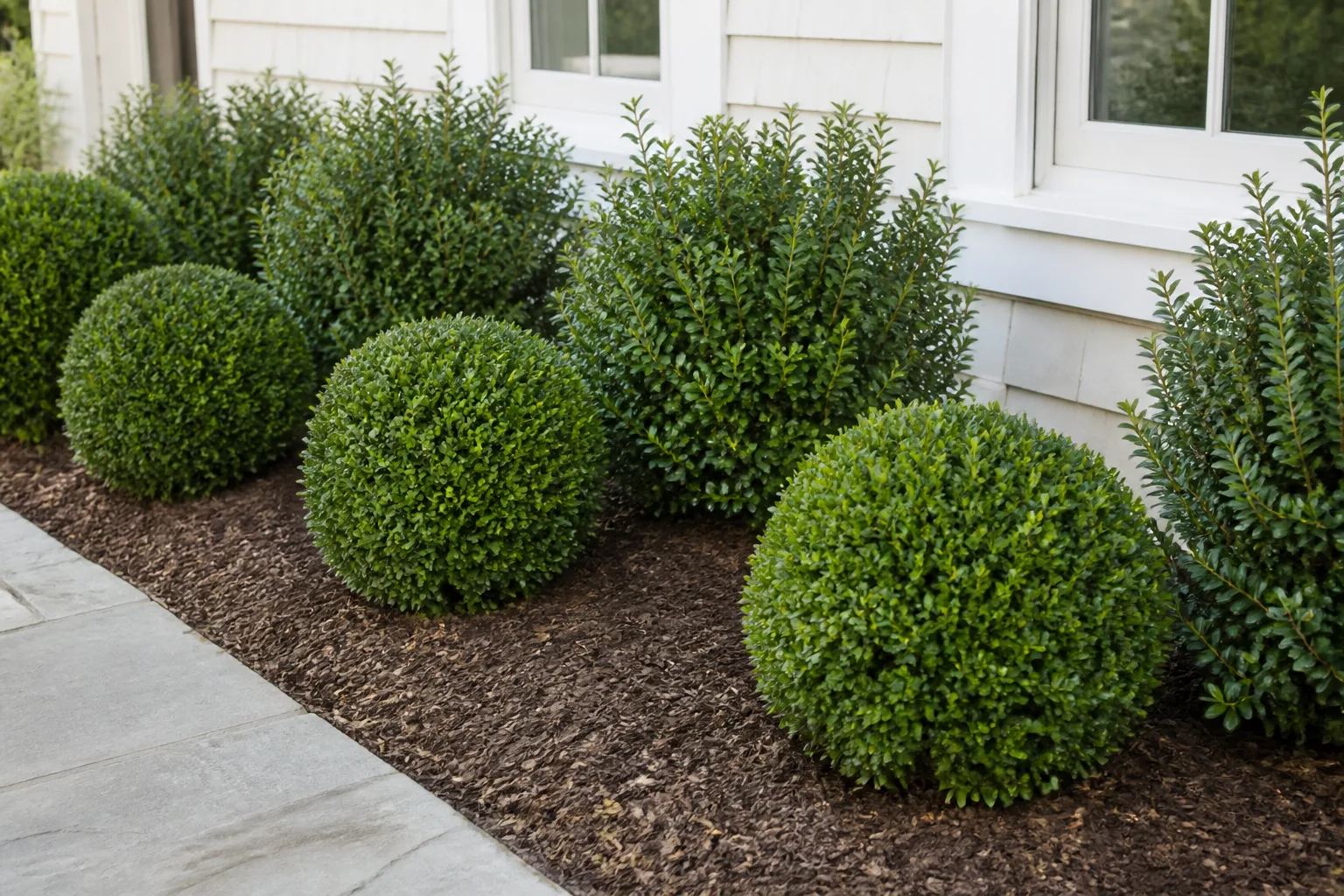
The profiles below are grouped by typical use, but several cross over. All grow faster than boxwood or yew and need less fuss than a formal clipped hedge — if sited with room to grow.
Sweet Viburnum (Viburnum odoratissimum)
Sweet viburnum is a large evergreen shrub or small tree with glossy leaves and intensely fragrant white spring flowers that can blanket the plant. In the right climate it is one of the fastest ways to build a broad screen with a polished, tropical look.
Size and speed: Mature height 10–20 feet, spread 15–20 feet (NC State Extension). Plan for a big plant, not a tidy foundation shrub.
Zones and site: USDA zones 7a–9b. Full sun to partial shade; moist, well-drained soil. Tolerates moderate drought once established. In the northern edge of its range it may behave semi-evergreen.
Best for: Wide privacy rows, large back borders, and open lawn screens where fragrance is a bonus.
Maintenance reality: Low pruning needs if given space. Over-shearing makes it leggy. Watch for viburnum pests; Clemson HGIC publishes a viburnum pests and diseases factsheet worth bookmarking.
Skip if: Your bed is under 8 feet wide, you are in zone 6 or colder, or you need a narrow evergreen column.
Green Giant Arborvitae
Green Giant is the fast evergreen workhorse for Eastern and Midwestern privacy screens — dense, upright-pyramidal, and relatively trouble-free compared with Leyland cypress.
Size and speed: Can grow 3–4 feet per year in favorable conditions, reaching 40–60 feet tall and 12–18 feet wide at maturity (NC State Extension). Lifespan often 40–60 years.
Zones and site: USDA zones 5–9. Full sun with light afternoon shade; tolerates a range of soils if drainage is decent. Resists most diseases and deer better than many conifers. Not salt-tolerant.
Best for: Property-line screens, windbreaks, and tall living fences where width is available.
Maintenance reality: Among the lowest-maintenance fast screens if you plant with room. Little pruning required for shape. Check for bagworm in summer; treat early if found.
Skip if: The planting strip is narrower than 6–8 feet, you need a shrub under 12 feet without topping, or salt spray from roads is constant.
For more evergreen screen comparisons, see 10 best evergreens for hedges and privacy screens.
Ninebark (Physocarpus opulifolius)
Ninebark is a native North American deciduous shrub valued for spring flowers, arching habit, peeling winter bark, and cultivars with purple or chartreuse foliage. It grows quickly without the disease baggage of some non-native hedges.
Size and speed: Typically 5–8 feet tall and 4–6 feet wide; cultivars vary (NC State Extension). Established plants are notably drought tolerant.
Zones and site: USDA zones 2–8. Full sun to partial shade; adapts to clay, rocky soil, and moist thickets. Native to stream banks and hillsides.
Best for: Informal hedges, mixed borders, erosion-prone slopes, and wildlife-friendly plantings.
Maintenance reality: Prune just after spring bloom if shaping; renewal pruning to the ground in late winter rejuvenates older plants. Next year’s flowers form on old wood — do not shear in late summer.
Skip if: You need evergreen screening or a formal clipped wall.
Common Lilac (Syringa vulgaris)
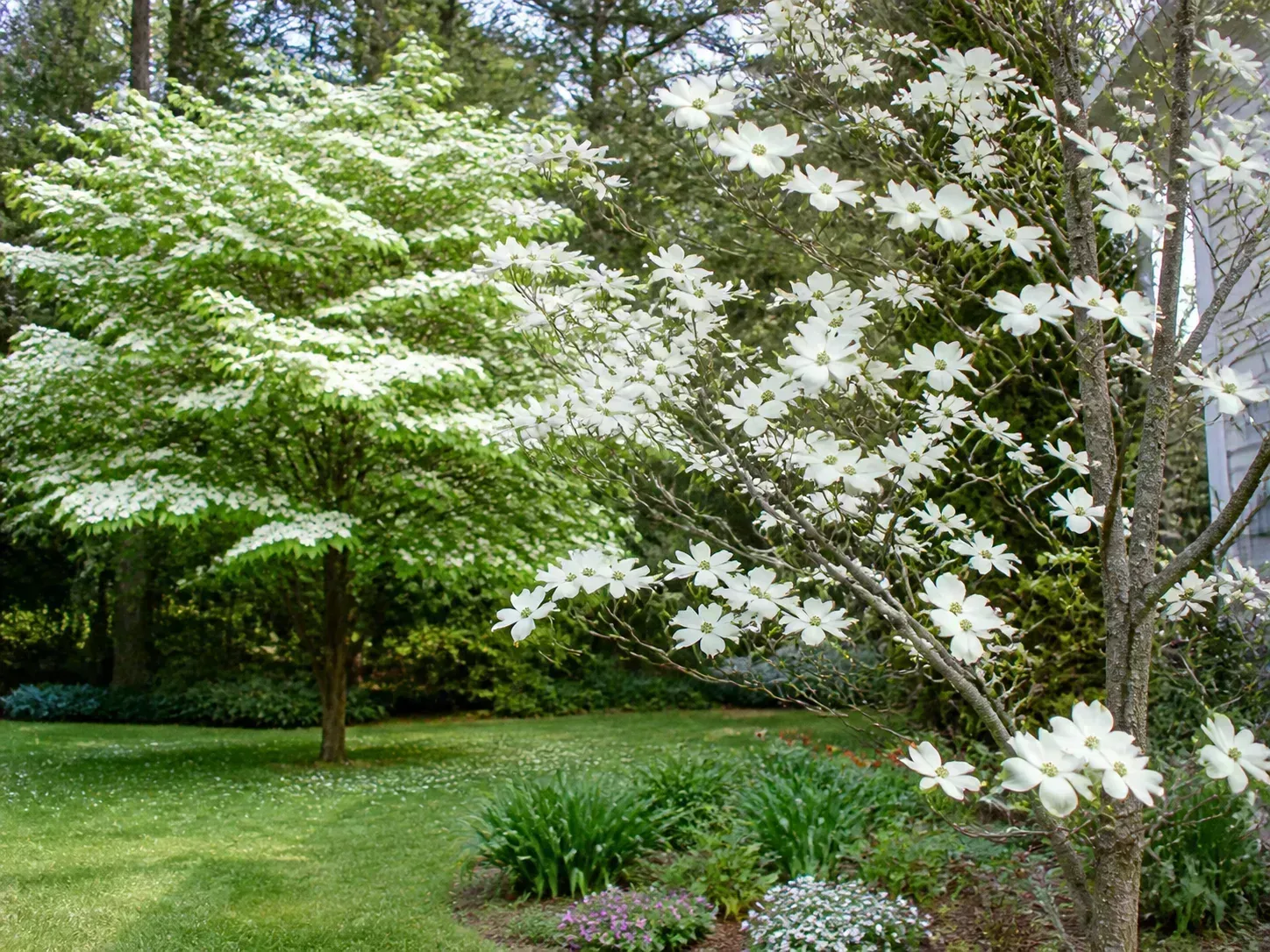
Common lilac delivers iconic fragrant purple (or white) panicles in late spring and a vase-shaped shrub that can anchor a bed for decades.
Size and speed: 8–16 feet tall, 6–12 feet wide (NC State Extension). Moderate to fast growth when young.
Zones and site: USDA zones 3–7. Full sun; well-drained, slightly alkaline soil preferred. Fairly drought tolerant once established.
Best for: Hedgerows, property corners, cut-flower gardens, and nostalgic spring displays.
Maintenance reality: Low day-to-day care — remove spent blooms if you want, thin crowded centers for airflow. Powdery mildew on leaves in humid summers is common and cosmetic; improve air circulation rather than spraying by default.
Skip if: You need year-round privacy, you are in zone 8+, or the bed cannot accommodate suckering and width.
Mock Orange (Philadelphus coronarius)
Mock orange is a hardy deciduous shrub named for citrus-scented white late-spring flowers — not for orange fruit. It fills space quickly and attracts pollinators.
Size and speed: 10–12 feet tall, 8–10 feet wide (NC State Extension). Upright arching branches; can become leggy without occasional thinning.
Zones and site: USDA zones 4–8. Full sun to partial shade; moist, well-drained soil. Drought and wind tolerant once established.
Best for: Back-of-border screens, cottage gardens, and patio-adjacent fragrance where you sit in May and June.
Maintenance reality: Low fertilizer needs. Prune after flowering to shape. Honest caveat: it is unremarkable when not in bloom — design accordingly, pairing with evergreens or summer perennials.
Skip if: You want winter structure or a narrow foundation strip under windows.
Red Tip Photinia — When the Color Is Worth the Risk
Red tip photinia (Photinia × fraseri) is an evergreen with brilliant red new growth each spring — the reason it still sells despite well-known disease issues.
Size and speed: Rapid growth to 10–20 feet tall, 5–10 feet wide (NC State Extension). Alkaline, drought, and salt-spray tolerant.
Zones and site: USDA zones 7a–8b. Full sun to partial shade; good drainage required — wet feet invite root problems.
Best for: Warm-climate screens where you accept monitoring, and sites with airflow.
Maintenance reality: Not low maintenance in humid regions. Entomosporium leaf spot defoliates hedges that are sheared tight and watered overhead. Space for airflow, avoid wetting foliage, and choose resistant contexts over promise of easy care.
Other honest notes: Spring flowers are malodorous to many people — fine at the back of a lot, rough next to a dining patio.
Skip if: You want set-and-forget hedging, your climate is humid and rainy, or the planting bed is less than 5 feet deep.
Leyland Cypress — Fast Privacy With Real Trade-Offs
Leyland cypress is the fastest common conifer screen in warm zones — and one of the most problem-prone once established.
Size and speed: Up to 3 feet per year early on; mature height 60–70 feet, spread 10–15 feet (NC State Extension). Shallow roots; large specimens can topple. Typical lifespan 20–50 years depending on environment.
Zones and site: USDA zones 6–10. Full sun to partial shade; adapts to many soils. Poorly adapted to hot, dry interior summers.
Best for: Large rural properties needing a quick visual block with room for height and width.
Maintenance reality: Requires regular pruning to stay tidy and airflow. Severely pest- and disease-prone: bagworm, Seiridium and Botryosphaeria canker, and root rots — many incurable once established (Clemson HGIC Leyland cypress factsheet). Foliage can irritate skin; wear gloves.
Skip if: You have a suburban lot, narrow planting strip, drought-prone site, or want a 30-year screen without replacement. Green Giant is the better fast evergreen for most Eastern homeowners.
Planting and Spacing for a Solid Screen
Plant shrubs the same depth they grew in the pot — slightly high in heavy clay. Loosen roots on pot-bound plants. Water in thoroughly and mulch, but do not bury the trunk.
For mixed ornamental beds, see low-maintenance shrubs for front yards for foundation spacing principles that apply here too.
How Far Apart to Plant Hedge Shrubs
Spacing controls how fast you get privacy and how much maintenance you inherit.
Informal screens and natural hedges: Space at half to two-thirds of mature spread for same-species rows. Example: Green Giant at 12–18 foot mature spread → plant 6–10 feet apart on center for a single row, wider if you want a looser look.
Dense evergreen closure: Sweet viburnum and arborvitae rows often use 5–8 feet between trunks in privacy installations, adjusting for budget and patience. Staggered double rows — offset second row in the gaps — fill faster and resist wind better than one overcrowded line.
Flowering deciduous hedges: Lilac and mock orange need air. Plant at least 6–8 feet apart unless you plan to renew-prune regularly. Ninebark cultivars may go 4–6 feet for a informal low hedge.
Never space for the nursery pot size. Space for mature spread or accept early thinning and disease pressure.
First-Year Care That Keeps Shrubs Low-Maintenance Later
The first 12–24 months set the tone. Use this checklist after planting:
- Water: Deep soak 2–3 times per week in dry weather the first summer; taper as roots expand. A soaker hose along a new hedge row beats overhead sprinklers for even moisture.
- Mulch: 2–3 inches of shredded bark or leaves; refresh yearly.
- Staking: Only if the root ball rocks in wind — remove stakes after one growing season so trunks strengthen.
- Fertilizer: Hold until the second spring unless a soil test shows a clear deficiency.
- Pruning: Remove broken branches only year one; save shaping until after establishment (and after spring bloom for lilac, mock orange, and ninebark).
- Pest patrol: Bagworm on arborvitae and Leyland, mildew on lilac, leaf spot on photinia — catch problems early when they are cheap to fix.
Shrubs that establish well need less rescue work later. That is what low maintenance actually means.
Conclusion
Fast-growing, low-maintenance shrubs exist — but only when mature size, zone, and disease risk match your site. Green Giant arborvitae and sweet viburnum build evergreen screens with modest pruning if you give them width. Ninebark, lilac, and mock orange add flowers and fragrance without weekly shearing. Red tip photinia and Leyland cypress can fill gaps quickly, yet they trade speed for disease management and long-term replacement more often than nursery tags admit.
Measure your bed, pick for the job (privacy vs ornament), water through establishment, and space for the plant’s adult footprint — not its toddler pot. Do that and you can have a yard that looks intentional by next season and stays manageable for years after.



