23 Flowers That Look Like Bells for Your Garden
Choose bell-shaped flowers by site: sunny borders, woodland shade, moist soil, containers, and climbers—with practical cautions for toxic or spreading plants.
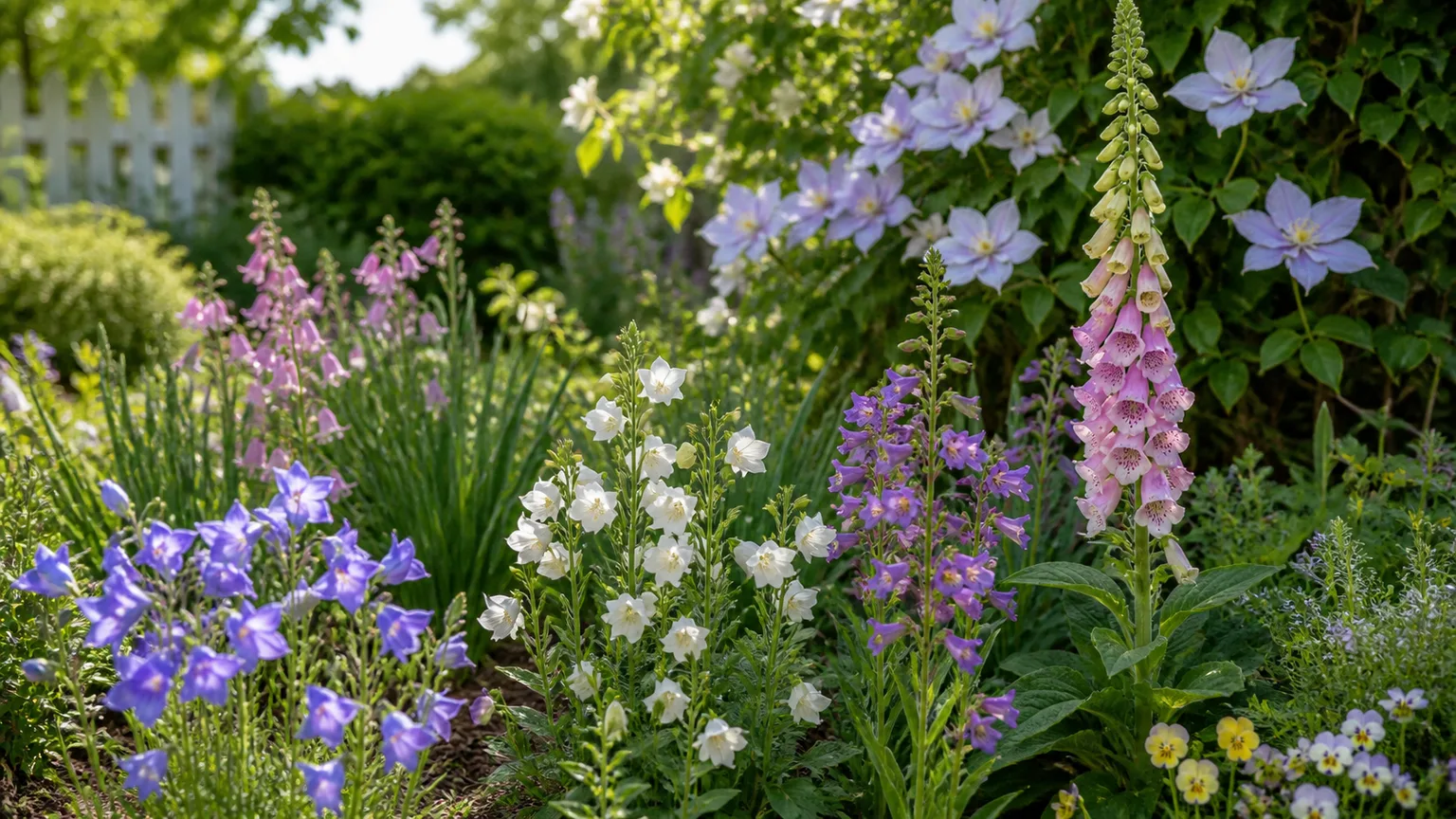
Flowers that look like bells bring a useful shape to a garden: nodding blooms that hang from a stem, narrow trumpets that point toward pollinators, or open cups that catch the light. The look is easy to recognize, but the plants behind it are not interchangeable. A spring bulb, a wet-soil native, a rampant vine, and a frost-tender shrub can all make bell-like flowers while asking for completely different conditions.
Use this list as a site-selection guide, not a catalog of 23 identical plants. Start with light and soil moisture, then check mature size, bloom season, spread, and household safety. That short sequence will narrow the choices much faster than picking by flower color alone.
Quick answer: choose bell-shaped flowers by site first
For a sunny, well-drained border, start with penstemon, daffodils, Dutch hyacinths, grape hyacinths, crown imperial, snake’s head fritillary, balloon flower, or Bells of Ireland. For part shade or a woodland edge, coral bells, lily of the valley, English bluebells, Spanish bluebells, peach-leaved bellflower, Dalmatian bellflower, and columbine are better starting points. For moist soil, cardinal flower is the standout; for height, consider foxglove or mountain laurel; for a trellis, choose a clematis before you consider trumpet vine.
The most important qualification is that “bell-shaped” is a visual description, not a single plant family. The RHS describes Campanula as a broad group ranging from mat-forming rock-garden plants to tall border perennials, with flowers that can be bell-, star-, or cup-and-saucer-shaped. (RHS Campanula guide) The 23 choices below include true bellflowers alongside bulbs, vines, shrubs, and plants whose long tubular or cup-shaped blooms create the same effect.
Four questions to ask before you buy
- How much direct sun reaches the planting spot? Six or more hours suits penstemon, many bulbs, Bells of Ireland, and balloon flower. Dappled light or morning sun is kinder to foxgloves, coral bells, and mountain laurel.
- Does the soil stay damp, or does it dry quickly? Cardinal flower wants soil that never dries out, while a specialist Campanula is more likely to fail in winter wet than in summer dryness. Well-drained does not mean bone-dry: it means water moves through without leaving roots submerged.
- What shape and scale does the bed need? A 6-inch mat of Dalmatian bellflower belongs at a wall, pot rim, or border front. Trumpet vine can reach 30 to 40 feet and needs a structure that can carry a mature woody vine.
- Could anyone in the household chew the plant? Foxglove and Brugmansia require a real safety decision, not a casual “keep an eye on it.” Lily of the valley, cardinal flower, and mountain laurel also deserve care around children and pets.
What “bell-shaped” means in a plant catalog
A true bell has a short, flared corolla that resembles a handbell; Canterbury bells and Campanula species are the clearest examples. A tubular flower is longer and more trumpet-like, as in penstemon, foxglove, trumpet vine, and Brugmansia. A pendant flower hangs downward, which is why crown imperial and snake’s head fritillary read as bells even when the petals are not fused into one bell. Mountain laurel is closer to a small cup, while coral bells carries tiny bells on tall flower stems but is often grown mainly for its foliage.
That distinction matters when you shop. If you want dozens of small bells along a stem, look at hyacinths or foxgloves. If you want one dramatic hanging bloom, Brugmansia or a clematis may fit. If you want a bell-like shape without giving up evergreen foliage, coral bells or mountain laurel offer more structure after flowering.
1. Bell-shaped flowers for sun and well-drained beds
Most plants in this group prefer full sun or at least bright morning light, with soil that drains freely. The bulbs need a seasonal planting window, while the summer performers can fill the gap after spring foliage fades.
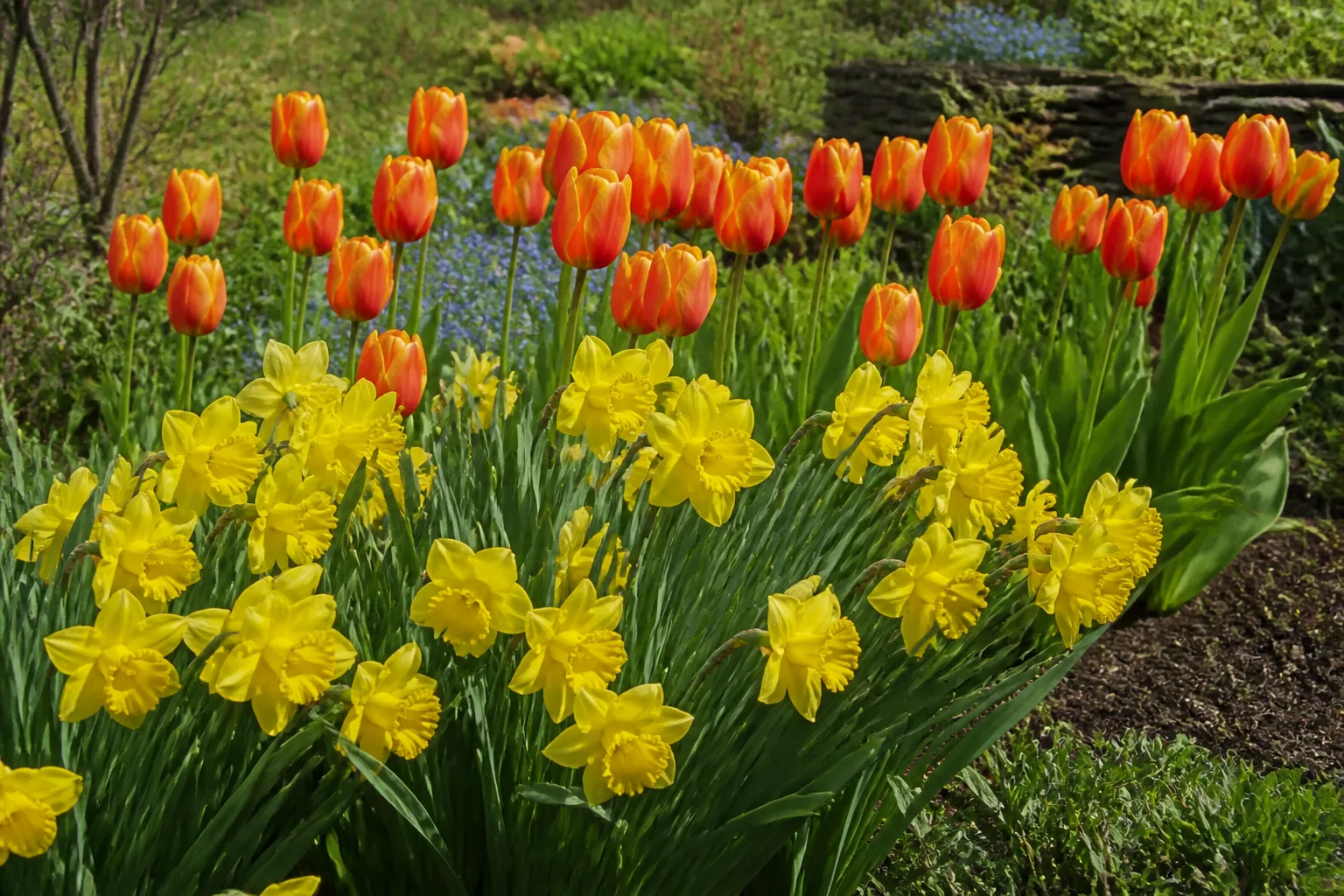
Spring bulbs with pendant bells
1. Daffodils (Narcissus). Not every daffodil has a strongly bell-like profile, but cultivars with a prominent trumpet or recurved cup do. Choose them for early spring color in sun or light shade, plant the bulbs in fall, and let the leaves yellow naturally after flowering so the bulb can recharge. They are dependable in borders and under deciduous trees because the foliage emerges before a full canopy develops; the visual trade-off is a short bloom window, so tuck later perennials around—not directly on top of—their fading leaves.
2. Dutch hyacinths (Hyacinthus orientalis). Hyacinths carry many fragrant, bell-like florets on a compact spring spike. They suit a sunny bed, raised border, or container filled with moisture-retentive but well-drained mix. Give them enough air circulation and do not treat a pot without drainage as a bulb vase: saturated bulbs rot long before the flowers finish. Their fragrance is powerful, so one or two containers near a doorway can be more enjoyable than a large mass beside a seating area.
3. Grape hyacinths (Muscari spp.). These short bulbs make dense clusters of bead-like bells in blue, violet, white, or pink. Plant them in fall for a low front-of-border ribbon, rock garden, or container edge, then let the foliage fade on its own. They can naturalize by offsets and seed, which is useful for a meadow-like drift but less desirable in a tightly edited bed; lift crowded clumps during dormancy if you want to keep the group in bounds.
4. Crown imperial (Fritillaria imperialis). A ring of pendant orange, yellow, or red flowers sits beneath a crown of leaves, giving this tall bulb a distinctly architectural silhouette. It needs sun, free drainage, and a spot where its unusual scent will not bother you at close range. Put it toward the back of a spring border and surround it with lower foliage; its flowers are memorable, but its bare post-bloom space is not a reason to plant it in the middle of a small bed.
5. Snake’s head fritillary (Fritillaria meleagris). The nodding flowers are usually dusty rose, purple, or white with a checkerboard pattern. Unlike dry-border bulbs, this fritillary is happiest in a moisture-retentive but draining site, such as a meadow edge or rain-fed lawn that does not stay submerged. It is a fine choice when you want a delicate spring bell among grasses, but it is a poor choice for a hot, irrigated rock garden that dries to dust.
Summer performers for sunny borders
6. Canterbury bells (Campanula medium). Canterbury bells are classic, wide-mouthed bells in blue, pink, white, or purple. They are usually grown as biennials: the first year builds a leafy rosette, and the second produces the tall flower stalk, although a self-sown patch can make them seem perennial. Give them rich, moist but well-drained soil and sun or part shade. Treat the cycle as a feature—sow or plant a new generation while the flowering plants are still performing—rather than assuming a single planting will bloom forever.
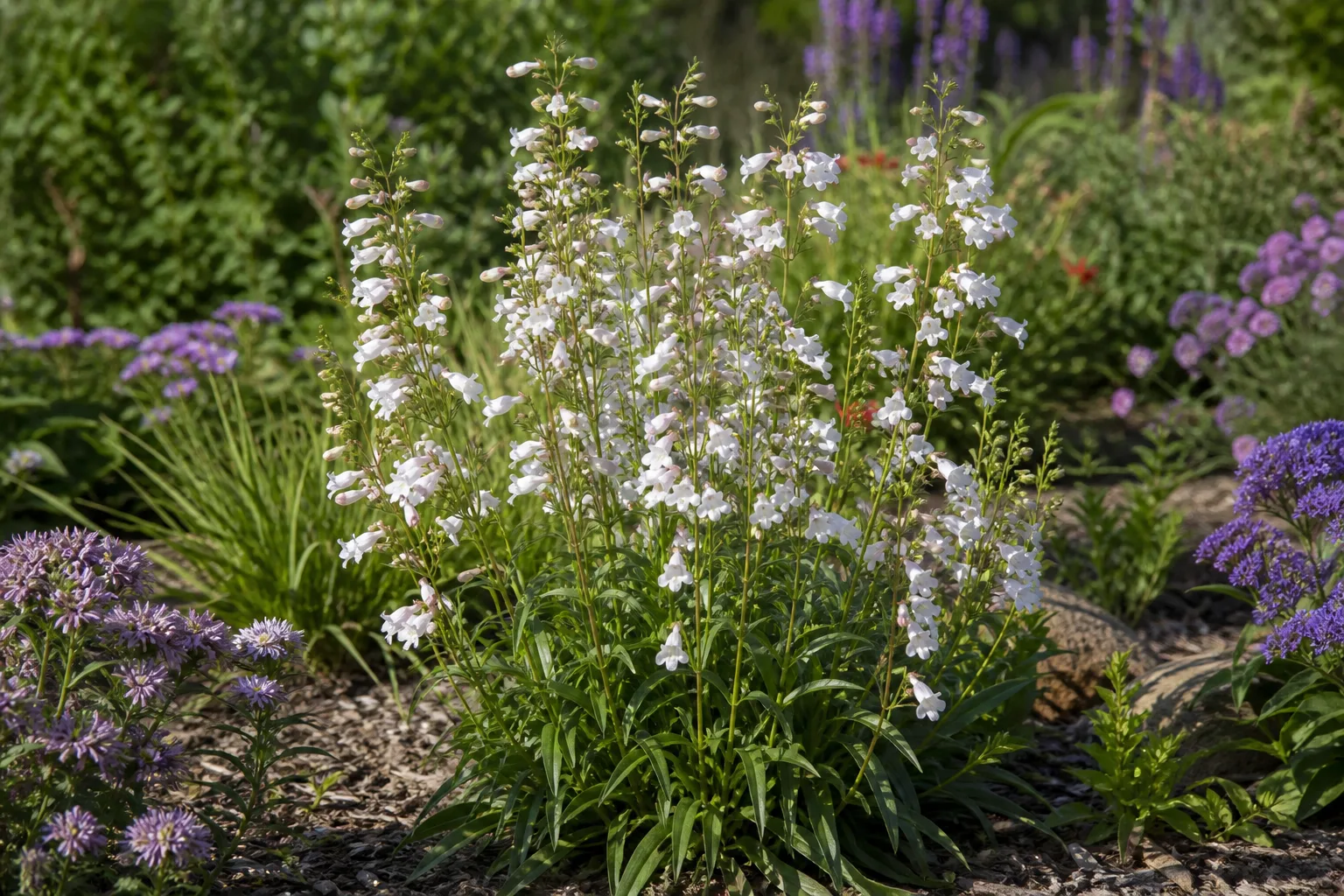
7. Penstemon or beardtongue (Penstemon spp.). Penstemon is a large and varied group, but the common thread is a tubular, bell-like corolla and a strong preference for full sun and good drainage. Species range from low mounds to tall border plants, so choose a regional species or cultivar instead of trusting the genus name alone. NC State Extension notes that penstemons provide nectar and can support specialized bees as well as other pollinators. (NC State Extension penstemon profile) Do not crowd them into heavy, wet soil; a slightly raised or gravelly position is often a better investment than extra fertilizer.
8. Bells of Ireland (Moluccella laevis). This annual is valued for its tall green spikes, but the green “bells” are actually calyces surrounding small white flowers. It brings a cool vertical accent to a sunny cutting garden and dries well for arrangements. Sow or transplant it where stems have room to branch, and support the planting if wind funnels through the border. It is a useful choice when the garden needs green structure rather than another pink, purple, or orange bloom.
9. Balloon flower (Platycodon grandiflorus). Balloon flower earns its name from the round buds that inflate before opening into large blue, white, or pink starry bells. It makes a tidy clump for a sunny or lightly shaded perennial border and works especially well where the swollen buds can be seen at eye level. The roots resent repeated disturbance, so choose the permanent location before planting and mark the crown in winter rather than digging around it by mistake.
2. Bell-shaped flowers for shade, part shade, and moist soil
Shade does not mean one condition. Dry shade beneath mature trees is very different from cool, moist soil beside a pond. The plants in this section are arranged by that distinction so you do not put a moisture lover into a root-competitive woodland bank or a rot-prone crown into standing water.
Woodland-edge and front-of-border choices
10. Coral bells (Heuchera spp.). Coral bells produce clouds of small bell-like flowers on wiry stems, but their foliage is the main attraction. Modern cultivars range from lime and silver to burgundy and near-black, giving a shady border color after the bells fade. Grow them in part shade with excellent drainage; keep mulch off the crown because a wet, buried crown is more dangerous than a missed watering. In hot regions, morning sun and afternoon shade are usually easier than reflected afternoon heat.
11. Lily of the valley (Convallaria majalis). Fragrant white bells hang from short stems above broad leaves in spring, making lily of the valley a strong woodland-groundcover plant. It prefers dappled to deep shade and moist, organic soil, and its rhizomes can form a dense mat. NC State Extension warns that it can spread aggressively in favorable conditions and is reported invasive in some regions. (NC State Extension lily of the valley profile) Use it where a spreading groundcover is wanted, or confine it to a clearly bounded area rather than slipping a few plants into a mixed perennial border.
12. English bluebells (Hyacinthoides non-scripta). English bluebells create a spring carpet of narrow, nodding blue flowers beneath deciduous trees. They are best suited to a woodland edge with humus-rich, moisture-retentive soil that does not stay waterlogged. Buy bulbs or plants from a reputable cultivated source, especially if you want the characteristic English form; do not remove bulbs from wild woodland. Their leaves and flowers disappear after bloom, so combine them with later-emerging perennials that will cover the empty space without digging into the bulbs.
13. Spanish bluebells (Hyacinthoides hispanica). Spanish bluebells have broader, more upright leaves and often produce several flower scapes per bulb, with lavender-blue, pink, or white bells in late spring. They tolerate a wider range of light than the English type, but they also naturalize readily by offsets and seed. NC State Extension describes them as clump-forming, weedy in some situations, and capable of spreading through both bulbs and seeds. (NC State Extension Spanish bluebell profile) Choose them for a managed drift only after checking local invasive-plant guidance; they are not a “plant it anywhere and forget it” bulb.
14. Peach-leaved bellflower (Campanula persicifolia). Tall stems carry open blue, lilac, or white bells above narrow leaves. This is a useful bridge between a woodland edge and a sunny cottage border because it tolerates sun or part shade, provided the soil is well drained and does not bake dry. Plant it behind low foliage, stake it if the site is windy, and deadhead spent spikes if you want to limit self-sowing and encourage a tidier repeat display.
15. Dalmatian bellflower (Campanula portenschlagiana). For a true bellflower at the front of a border, on a dry stone wall, or in a container, Dalmatian bellflower is one of the most useful choices. It forms a low mat covered with purple bells and can spill over a pot edge without demanding the vertical space of a foxglove or vine. Campanulas vary from tiny rock-garden plants to tall border species, and the RHS recommends free-draining soil in sun or light shade; winter wet is a more serious threat than a brief dry spell for many specialist types. (RHS specialist Campanula growing guide)
Moisture lovers for rain gardens and streamside soil
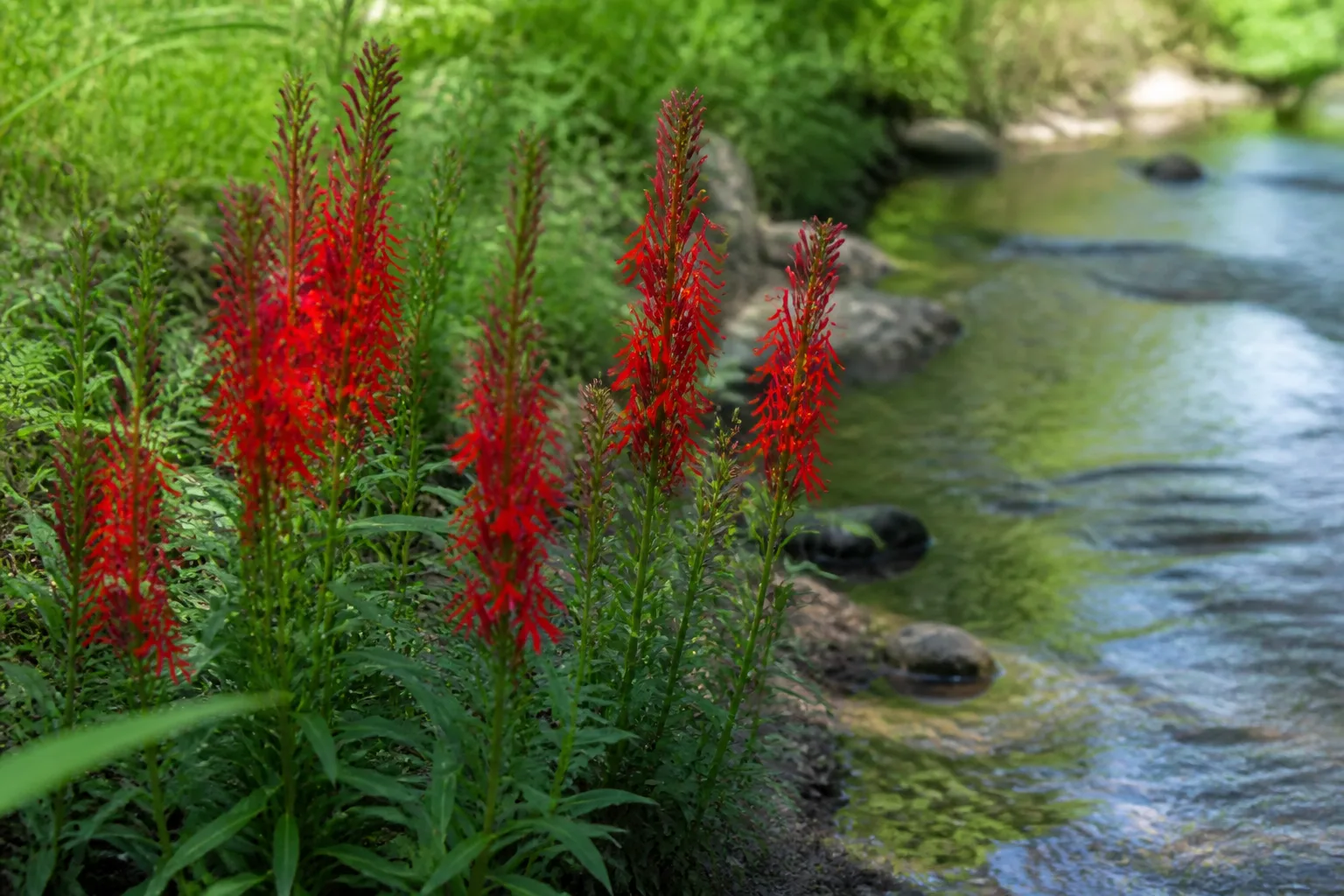
16. Cardinal flower (Lobelia cardinalis). Cardinal flower sends vivid red tubular bells up a tall spike in late summer and early fall, when many spring bells are long gone. It grows best in rich, medium-to-wet soil that does not dry out, with full sun to part shade; afternoon shade helps in hot climates. NC State Extension lists it as a native eastern North American perennial that attracts hummingbirds, butterflies, and other pollinators. (NC State Extension cardinal flower profile) Put it at the edge of a rain garden, pond, or consistently moist bed, not in a dry foundation border where daily irrigation will still struggle to replace lost moisture.
3. Tall border plants, climbers, and shrubs
These six plants create height or a strong architectural anchor. They are also the group most likely to be mishandled through crowding, weak support, incorrect soil pH, or an overlooked toxicity issue.
Foxglove, columbine, and mountain laurel
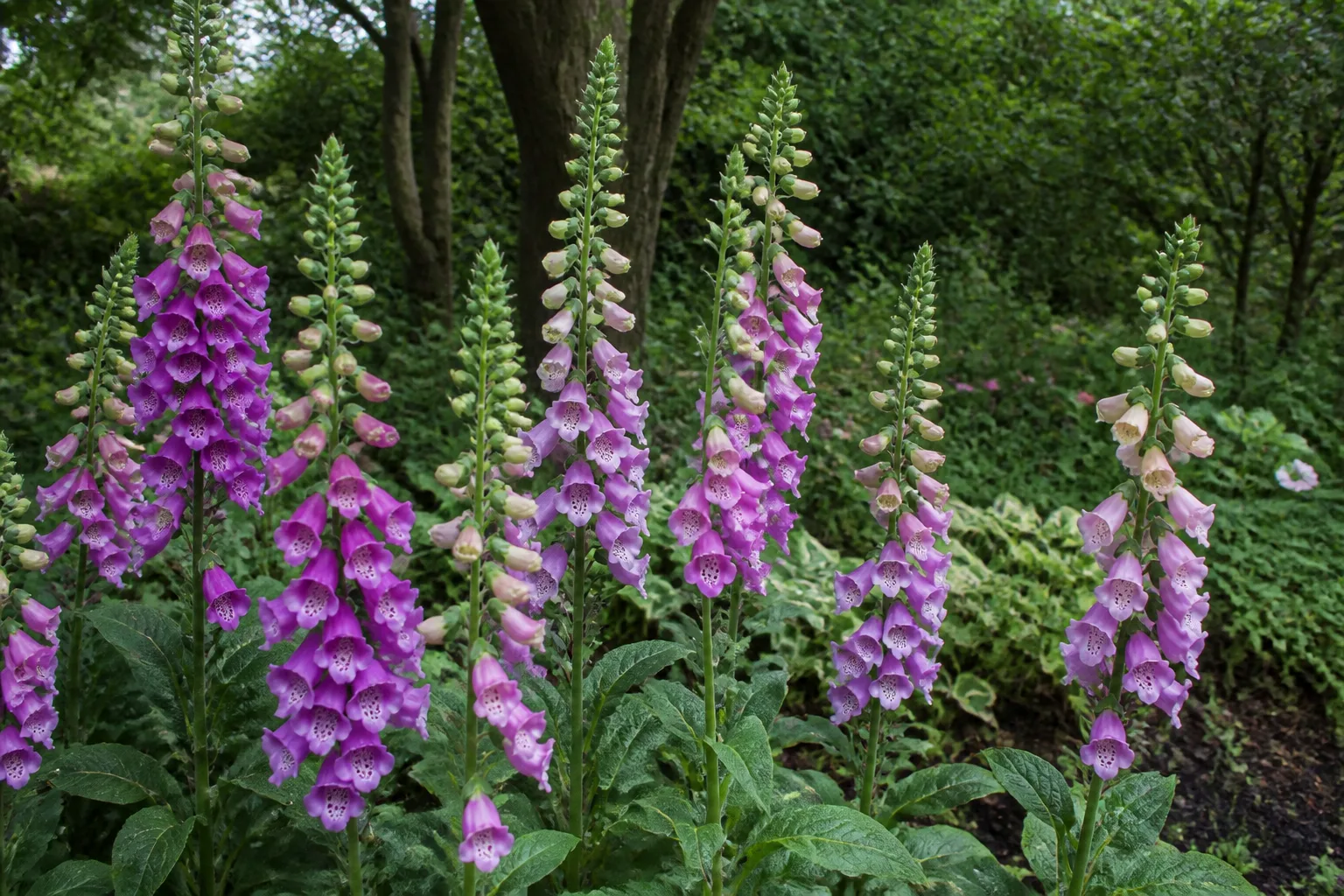
17. Foxglove (Digitalis purpurea). Foxglove is the classic tall spike of spotted, pendant bells. It is usually biennial, forming a leafy rosette before flowering in its second year, though selected cultivars and self-sowing can make a patch look perennial. Give it moist, organic, well-drained soil and morning sun or afternoon shade; drought stress reduces flowering. NC State Extension recommends allowing some flowers to set seed if you want the population to continue, while deadheading the rest can keep the patch from becoming excessive. (NC State Extension foxglove profile) This plant is toxic to cats, dogs, and horses; ASPCA lists cardiac glycosides and potentially severe cardiac signs. (ASPCA foxglove safety profile)
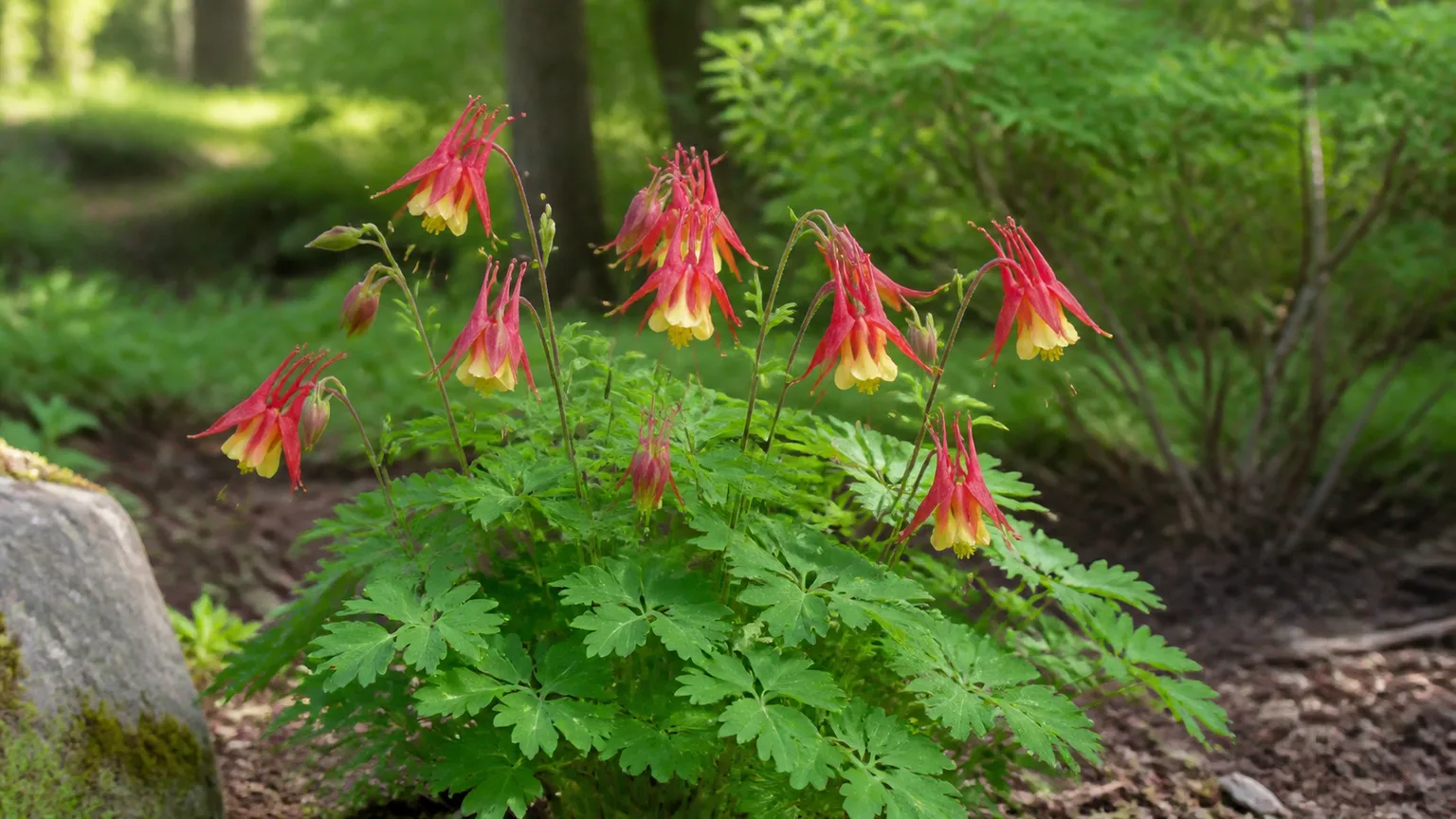
18. Columbine (Aquilegia spp.). Columbine combines nodding bell-like flowers with backward spurs, so the silhouette is lighter and more intricate than a simple Campanula. It handles sun to part shade depending on climate, blooms in spring, and often reseeds into cracks and woodland edges. Choose a spot with good drainage and enough afternoon protection in hot regions. Because individual plants can be short-lived, let a few seed capsules mature if you want a continuing colony; remove unwanted seedlings while they are small rather than trying to relocate a mature taproot.
19. Mountain laurel (Kalmia latifolia). This evergreen native shrub carries clusters of pink or white, cup-shaped flowers with distinctive markings in late spring to early summer. It belongs in cool, acidic, humus-rich, well-drained soil with partial shade, not in compacted wet clay. NC State Extension notes that mountain laurel can grow slowly into a dense shrub, is highly flammable, and is poisonous; it also flags a rare but important concern that honey made from heavy feeding on the plant may be toxic to humans. (NC State Extension mountain laurel profile) Give it room to become a shrub and keep it away from a home’s defensible space in fire-prone landscapes.
Trumpet vine and the two clematis choices
20. Trumpet vine (Campsis radicans). Trumpet vine produces summer clusters of long orange, red, or yellow trumpets that hummingbirds visit. The plant is native across the central and eastern United States, but “native” does not mean “small”: NC State Extension describes a vigorous woody vine that can sucker from underground runners, self-seed, and form colonies that choke out other plants. (NC State Extension trumpet vine profile) Give it a heavy support, full sun if flowers are the priority, and a location where suckers can be mowed or removed. Do not plant it against a small tree, fragile fence, or the foundation and expect pruning alone to solve the problem.
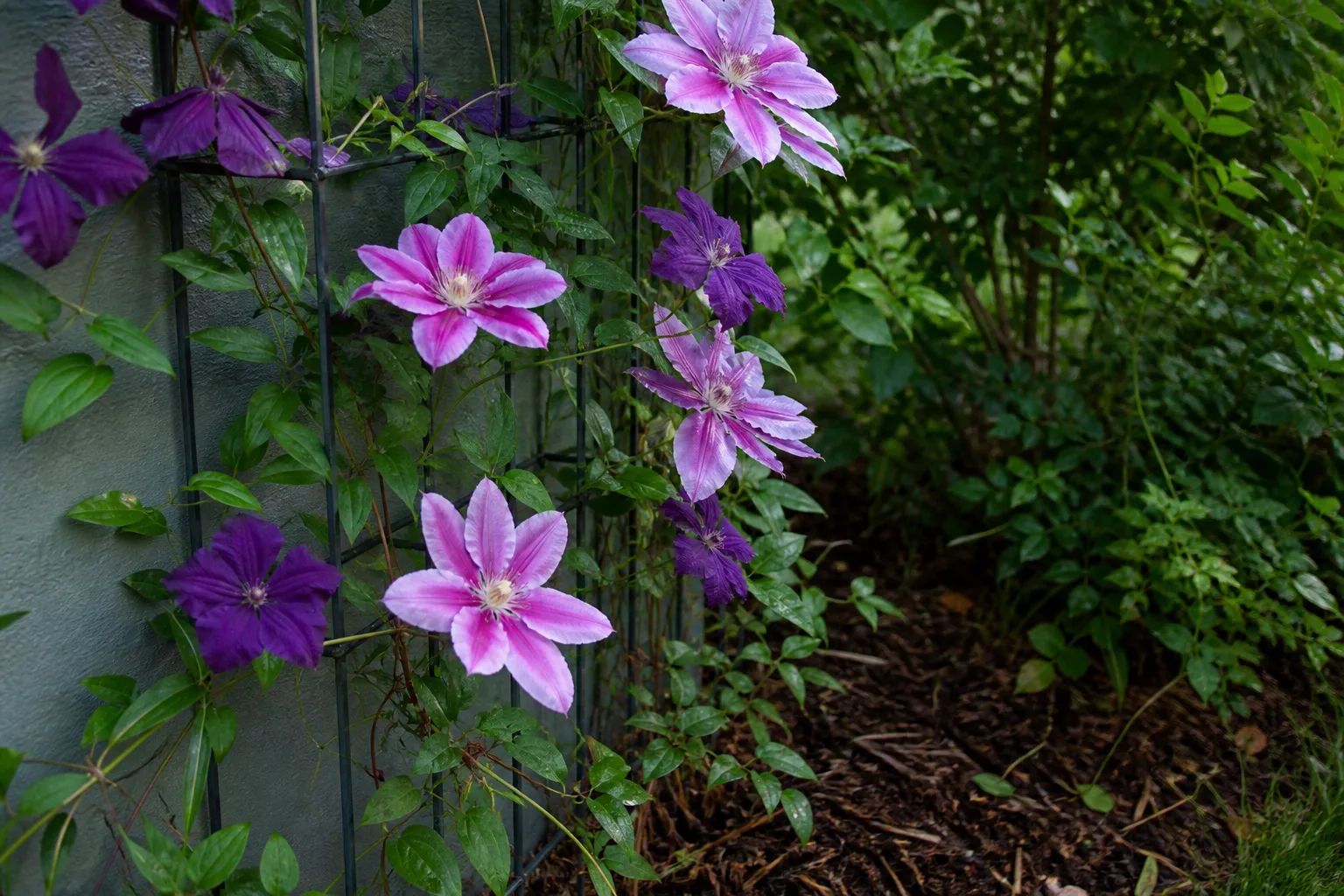
21. Roguchi clematis. This clematis is grown for small, dark purple, nodding bells rather than the large flat flowers associated with many clematis. Train it on a trellis or obelisk where the flowers can hang into view, and keep the stems in sun while shading the root zone with mulch or a low perennial. Its scale is much more manageable than trumpet vine, but the same basic rule applies: choose the support and final height before planting, not after the stems have tangled.
22. Betty Corning clematis. ‘Betty Corning’ produces pale lilac, bell-like flowers that open wider as they age. It is a graceful choice for a cottage fence, arch, or narrow trellis because the flowers read as a soft pendant rhythm rather than a solid wall of foliage. Use a well-drained site with sun on the vine and cool, shaded roots, and follow the nursery’s pruning-group instructions for the plant you buy; cultivar labels are more reliable than guessing from a generic clematis calendar.
Brugmansia, the tropical statement plant
23. Brugmansia or angel’s trumpet (Brugmansia spp.). Brugmansia makes huge, fragrant, pendulous trumpets in white, yellow, peach, pink, or orange. In warm climates it can become a large woody shrub; in colder regions it is better treated as a container plant that moves to shelter before frost. Give it bright light, rich moisture-retentive soil, regular feeding during active growth, and enough space for the mature canopy. The spectacular flowers come with a serious safety cost: government poison guidance identifies angel’s trumpet as a poisonous plant, and all parts should be handled as hazardous around children and pets. (Queensland Poisons Information Centre angel’s trumpet guidance) Wear gloves when pruning and never choose it for a garden where leaves or fallen flowers could be chewed.
Safety, spreading, and local fit
Bell-like flowers are often used in cottage, woodland, and pollinator gardens, but those settings can place plants close to paths, play areas, pets, and neighboring natural spaces. A good choice is not only one that grows well; it is one whose behavior you can manage.
Plants that need a household safety plan
The clearest red flags in this list are foxglove, Brugmansia, lily of the valley, cardinal flower, and mountain laurel. Foxglove and Brugmansia deserve the strictest treatment because pet exposure can be severe. Lily of the valley is a rhizomatous spreader and can cause poisoning if plant parts are eaten. NC State Extension flags cardinal flower and mountain laurel as poisonous too, even though both are valuable ornamental or wildlife plants. Check the exact species and cultivar before planting because a common name can be shared by unrelated plants.
If a child or pet may have chewed a plant, save a labeled cutting or photograph, identify the plant, and contact a veterinarian, local poison service, or emergency service promptly. Do not induce vomiting or wait for symptoms before asking for advice. Keep plant labels, seed packets, and nursery tags until you know the planting is established; they are more useful than trying to identify a damaged plant from memory.
Plants that need a containment plan
Trumpet vine needs the strongest containment plan: a standalone support, a mowing or edging strategy for suckers, and regular checks beyond the original planting hole. Lily of the valley can form a dense rhizomatous groundcover, while Spanish bluebells can spread by offsets and seed. Grape hyacinths, columbine, Canterbury bells, and some Campanula may self-sow or naturalize, which can be charming in a drift and frustrating in a formal border.
Naturalizing is not automatically invasive, but it is a signal to learn the plant’s behavior in your region. Check your state or provincial invasive-plant list before planting a bulb or vine near a natural area. For bulbs, deadheading reduces seed but does not stop offsets; lifting and dividing overcrowded clumps during dormancy is the more dependable control. For vines and rhizomatous groundcovers, containment is easier when you plan it before the first season of vigorous growth.
How to combine bell-shaped flowers for a long season
Start with one structural layer, one seasonal layer, and one ground-level layer. For example, a clematis or mountain laurel can supply height, a Campanula or penstemon can provide the main bell display, and coral bells or grape hyacinths can keep the front of the bed visually anchored. Match moisture before matching color: a red cardinal flower and a purple penstemon may look beautiful together on paper, but they will not be happy on opposite sides of the same irrigation decision.
Plant for handoff between bloom seasons. Daffodils, hyacinths, grape hyacinths, crown imperial, snake’s head fritillary, English bluebells, and columbine can start the display. Canterbury bells and peach-leaved bellflower carry the late-spring transition, while penstemon, balloon flower, clematis, trumpet vine, cardinal flower, and Brugmansia extend the bell-like effect into summer. Fine Gardening’s seasonal garden coverage makes the same broader design point: a border reads as a composition of foliage, height, hardscape, and changing bloom windows rather than as one permanently flowering layer. (Fine Gardening seasonal garden tour)
Three garden formulas to copy
Sunny cottage border: Plant a loose drift of grape hyacinths and daffodils for spring, add peach-leaved bellflower or balloon flower in the middle layer, and finish with penstemon and Bells of Ireland for summer. Keep the bulbs toward the front or between perennials so their fading foliage is hidden without being cut early.
Cool woodland edge: Use English bluebells as the spring carpet, coral bells for foliage, and columbine for the spring-to-summer bridge. Add foxglove only if the household safety plan is solid, and use lily of the valley only where a spreading groundcover is welcome. Leave enough undisturbed soil for bulbs and avoid planting the later perennials directly over them.
Small patio or container collection: Combine Dutch hyacinth or grape hyacinth with a compact Campanula such as Dalmatian bellflower for different heights and bloom textures. Add coral bells to a larger, shaded container for foliage after the bells fade. A Brugmansia can be grown in a container in an appropriate warm climate, but it is a separate safety decision—not a casual centerpiece for a family patio.
Conclusion
The best flowers that look like bells are the ones that match your site before they match your mood board. Choose bulbs for seasonal spring color, Campanula for true bells in a range of sizes, penstemon and foxglove for vertical flowers, cardinal flower for reliably moist soil, clematis for a manageable climber, and mountain laurel or Brugmansia only when the space and household fit their scale and safety needs.
Before buying, write down the spot’s sun exposure, how quickly the soil drains, the tallest height you can accommodate, and whether spreading or toxicity would be a problem. That four-point check turns a charming list of 23 flowers into a garden plan that can stay beautiful—and manageable—after the first flush of flowers is gone.