How to Grow and Care for Dahlias
Grow showy dahlias with this tuber-to-bloom guide: soil prep, staking, feeding, deadheading, pests, and overwintering decisions for your climate.
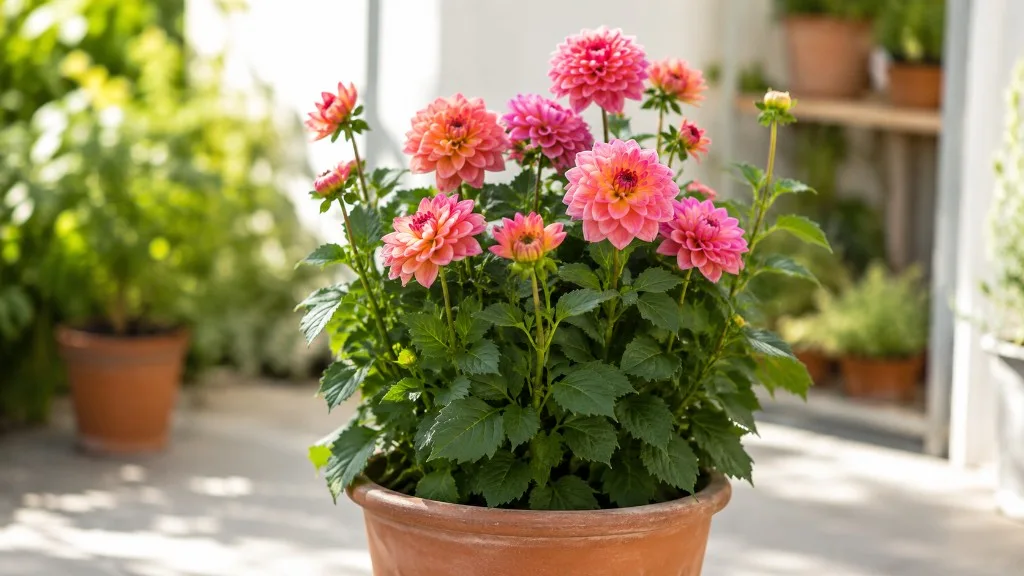
Dahlias are tender tuberous perennials that can produce some of the most dramatic flowers in a summer garden—if you respect their timing. The mistakes that kill enthusiasm are almost always predictable: planting into cold soil, watering dormant tubers into rot, skipping stakes until stems flop, or storing tubers without understanding where the eyes (growth buds) actually live. This guide walks through the full season from tuber selection to fall storage, with decisions spelled out for your climate.
Dahlia Quick Facts: What You Are Actually Growing
Dahlias grow from underground tubers—enlarged storage roots connected to a central stem. New shoots emerge only from eyes located at the neck where tubers join that stem, not from random spots on the root body. That detail matters when you divide clumps in spring.
| Trait | Typical range |
|---|---|
| Botanical name | Dahlia hybrids ( Asteraceae ) |
| Mature size | 1–6 ft tall, 1–3 ft wide by variety |
| Sun | Full sun; 6–8 hours daily |
| Soil | Rich, loose, well-drained; pH ~6.0–7.0 |
| Bloom window | Midsummer until first hard frost |
| USDA hardiness | Often listed zones 8–10 for in-ground survival |
| Pet safety | Toxic to dogs, cats, and horses (ASPCA) |
In zones 8 and warmer, some gardeners leave tubers in the ground with mulch. In cooler regions, dahlias are treated as lift-and-store plants: spectacular summer performers that need a dry, frost-free winter rest. Neither approach is wrong—it depends on winter wetness and frost depth where you garden.
Are dahlias perennials? Botanically yes, but practically they behave like annuals anywhere you must dig and store tubers to keep them alive. Think of them as repeat investments: one healthy tuber can multiply into several plants if you divide carefully each year.
Choosing the Right Dahlia for Your Space
Before you buy, decide what job the plant must do. A dinner-plate decorative dahlia needs staking, space, and a cutting-garden mindset. A compact bedding type can live in a patio pot. A single-flowered form feeds pollinators and tends to look lighter in mixed borders.
Named varieties bought as labeled tubers outperform anonymous “mixed color” bags when you care about flower form and stem length. Check tubers in hand when possible: firm, plump, and free of mold beat shriveled or squishy roots every time.
Dahlia Flower Forms Worth Knowing
National dahlia classifications group flowers by shape—decorative, cactus, ball, pompon, collarette, single, and more. You do not need to memorize every class, but matching form to placement saves frustration:
- Large decorative and dinner-plate types need the most staking and widest spacing.
- Cactus and semi-cactus forms carry spiky rolled petals; they are showy but still top-heavy.
- Ball and pompon types stay neater in smaller spaces.
- Single and collarette flowers are excellent for pollinators and lighter cottage borders.
If you are new to dahlias, start with one or two reliable midsize decorative types plus a compact variety for pots. You can explore specialty forms after you have the seasonal rhythm down.
Where and When to Plant Dahlias
Dahlias are frost-tender. Plant outdoors only after your last spring frost and when soil has warmed—often when soil temperatures reach about 60°F (15°C). In many regions that means late spring; in cool climates, early summer outdoor planting is normal.
Choose a sheltered, full-sun site. Six to eight hours of direct light supports the heaviest bloom. In very hot afternoon climates, light shade during peak heat can reduce wilting, but deep shade produces leggy plants with few flowers.
Spacing depends on mature size: allow at least 12 inches for small types and 2–3 feet for tall varieties so air can move between plants. Crowding invites powdery mildew and makes staking harder later.
Soil Preparation That Prevents Tuber Rot
Dahlias demand fertility and drainage at the same time. Heavy clay that holds winter water will rot tubers; sandy soil that dries instantly will starve large plants in July.
Dig a generous planting area—think 24 inches wide and 18 inches deep for in-ground specimens in average soil—and blend one-third organic matter (compost, well-rotted manure, or leaf mold) with two-thirds native soil. On clay, add grit or coarse sand at the base of the hole so water does not pool around the crown.
The Royal Horticultural Society (RHS) emphasizes moist but free-draining soil; waterlogged conditions are a primary failure mode (RHS). If a site puddles after rain, fix drainage before you plant—not after tubers soften.
How to Plant Dahlia Tubers Step by Step
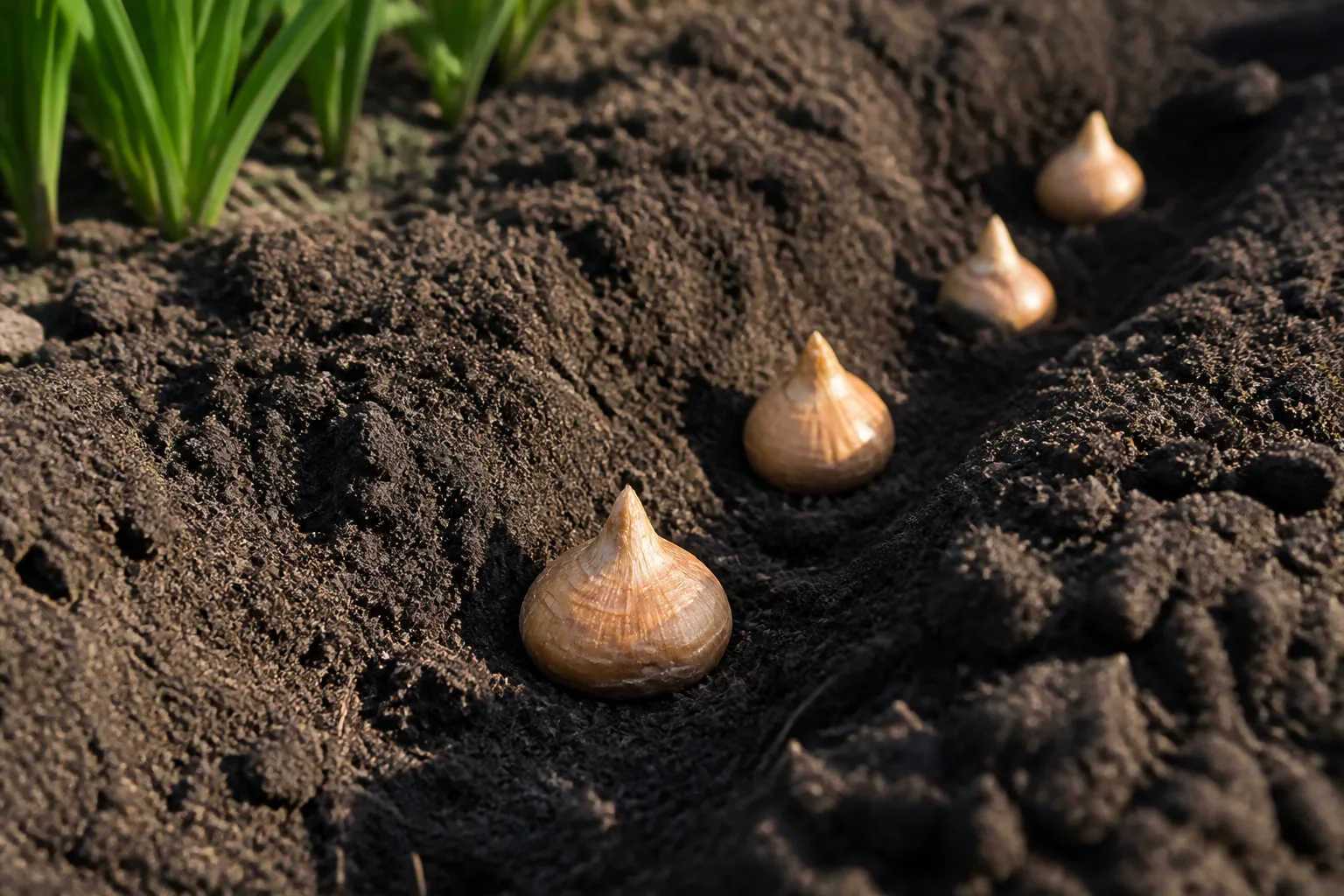
Planting depth is usually 4–6 inches for most garden dahlias, with the eye or sprout facing up and the old stem attachment just below soil level. Large varieties trend deeper; small types can sit slightly shallower. Always follow the depth guidance on your variety label when it differs.
- Inspect tubers. Cut away soft rot; keep firm tissue with at least one eye near the stem neck.
- Prepare the hole with amended soil and, for tall types, install stakes at planting time—much easier than driving stakes through roots later.
- Set the tuber horizontally or at a slight angle with the eye up. Cover with soil and firm gently.
- Hold water until green shoots break the surface. Pre-sprout rot is common when tubers sit wet while still dormant.
- Mulch after sprouting to conserve moisture and suppress weeds, keeping mulch a few inches away from the stem.
Starting Tubers Indoors vs Planting Outdoors
You have two valid spring paths:
Indoor or greenhouse start (recommended in short seasons): Pot tubers in late winter to early spring in moist (not soggy) peat-free compost, stem end just below the surface. Keep frost-free in bright light. New shoots often appear in several weeks. Harden off before outdoor planting.
Direct outdoor planting: Plant dormant tubers in the garden after frost danger passes and soil warms. Simpler, but bloom starts later.
BBC Gardeners’ World notes that cold-climate gardeners often lift tubers after autumn frost and restart them indoors the following late March or April (Gardeners’ World). That rhythm—early start, late planting, fall lift—is the backbone of dahlia success north of zone 8.
Light, Water, and Fertilizer Through the Season
Light: Treat full sun as the default. Dahlias photosynthesize aggressively once stems elongate; shade shows up first as fewer buds, not just smaller leaves.
Fertilizer: Dahlias are heavy feeders, but the wrong ratio backfires. Use a phosphorus-forward blend (for example, ratios in the 5-10-10 or 10-30-20 range) or a potassium-rich tomato feed during bloom. Excess nitrogen pushes leafy growth at the expense of flowers (University of Idaho Extension).
Feed every two to three weeks from active growth through late summer. If you plan to lift tubers for storage, stop fertilizing about a month before frost so plants harden rather than push soft late growth.
Watering Rules That Change After Sprouting
This is the rule beginners break most often:
- Before sprouts show: keep soil barely moist or dry at the surface. Do not soak dormant tubers on a schedule.
- After green growth appears: water deeply once or twice weekly, more in heat or containers.
- During bloom: large dinner-plate types may need extra water; wilting in afternoon heat on moist soil often recovers overnight.
UGA Extension recommends a weekly deep soaking rather than light sprinkles, plus mulch to stretch intervals (UGA Extension). If leaves yellow and feel mushy while soil stays wet, cut back watering immediately—root suffocation mimics drought from above.
Pinching, Staking, and Disbudding for Better Blooms
Staking: Install supports at planting or when plants are knee-high. Tall dahlias snap in summer storms without help. Use stout stakes or a cage of bamboo canes, and tie loosely every foot of growth.
Pinching: When the young plant has three to four pairs of true leaves (often around 8–16 inches tall), remove the soft terminal tip above the top leaf pair. That redirects growth into side branches and more flowering stems. UGA Extension lists pinching at three to four leaf pairs as standard practice (UGA Extension). For cut-point detail and recovery timing, see the dedicated guide on pinching dahlias.
Disbudding (optional): Exhibition growers remove side buds on a stem so one flower receives all resources, producing larger blooms on longer stems. Backyard gardeners can skip this unless you want fewer, bigger flowers.
Deadheading and Cutting Dahlias for Vases
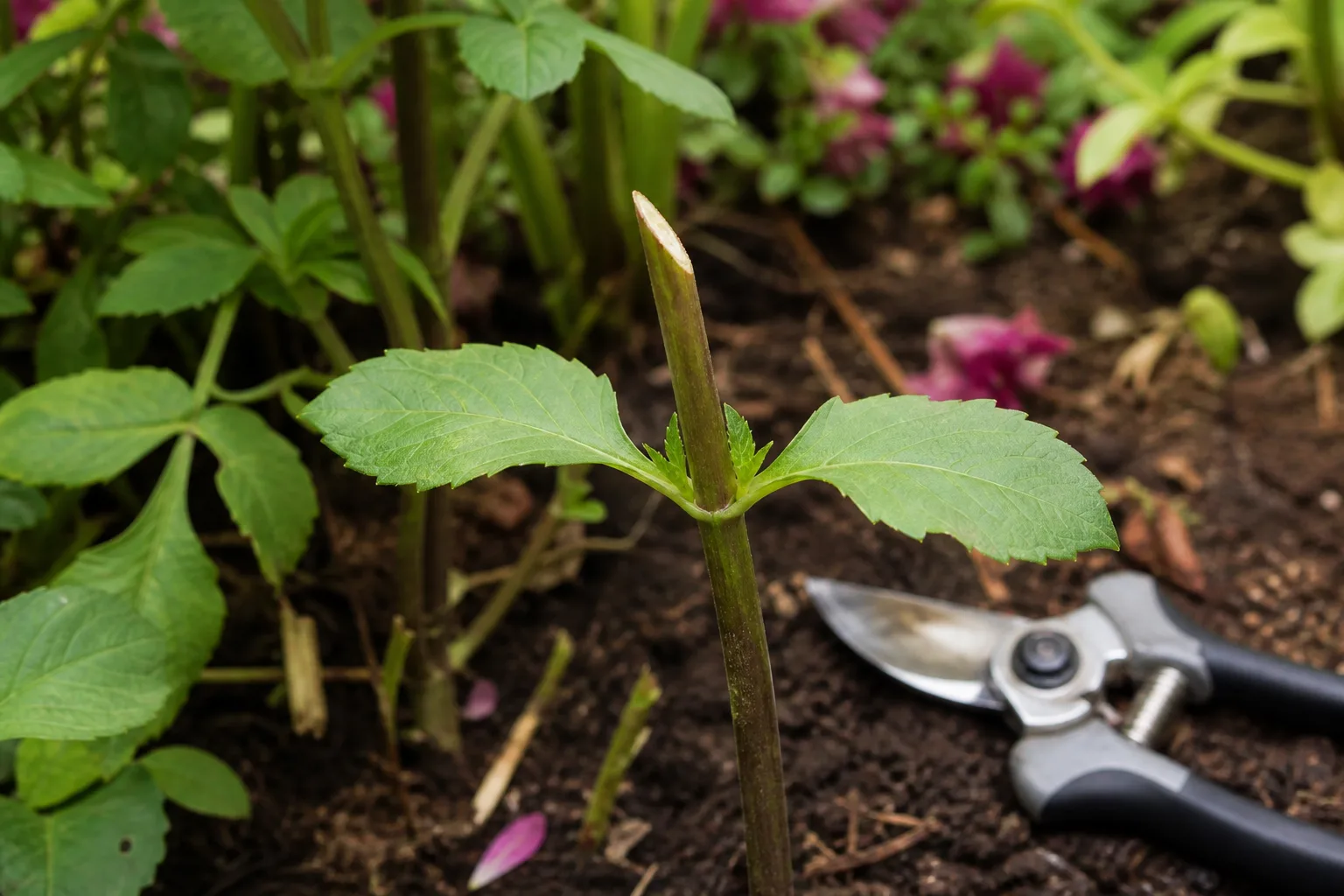
Removing spent blooms keeps energy moving toward new buds instead of seed. Cut back to a leaf joint on the flowering stem—not just the faded petals. Harvest for vases when flowers are nearly fully open; buds rarely expand much after cutting.
Warm-water conditioning after cutting helps stems drink. The more you cut during peak season, the more many varieties branch and rebloom—bouquet harvesting doubles as maintenance. For bud-vs-spent identification and heat-stall troubleshooting, use the full deadheading dahlias guide rather than guessing at stem tips.
Growing Dahlias in Containers
Choose pots at least 12 inches deep and wide for compact types; large varieties need 18–24 inch containers. Use quality peat-free potting mix blended with compost, and never rely on a saucer that keeps roots waterlogged.
Container dahlias dry faster than in-ground plants—check moisture daily in heat. Staking is still required for anything but the shortest bedding forms. Plan to lift and store tubers from pots in cold climates just as you would for garden plants.
Overwintering Dahlia Tubers by Climate
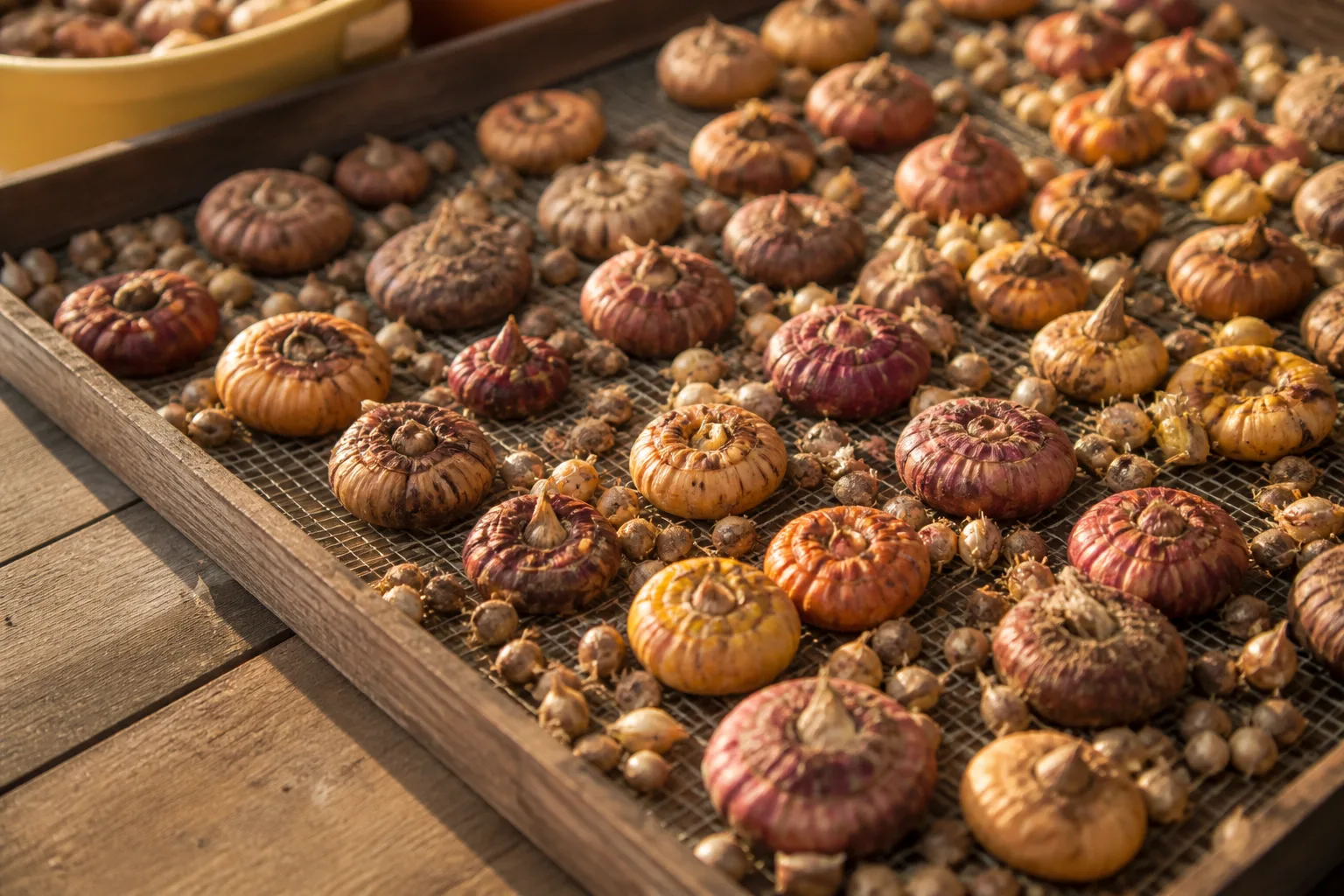
Dahlias are not reliably hardy where winters combine hard frost and wet soil. Your overwinter plan should follow local wetness more than hype:
| Situation | Practical approach |
|---|---|
| Zones 8–10, dry winters | Leave in ground; mulch crown after frost cutback |
| Zone 8, wet winters | Lift and store even if technically “warm enough” |
| Zones 3–7 | Lift after frost; store cool and dry |
Lift sequence after first frost blackens foliage:
- Cut stems to 4–6 inches.
- Wait about a week, then dig 12 inches out from the stem to avoid slicing tubers.
- Gently wash soil off; let clumps air-dry a few days in shade.
- Store whole clumps or divided tubers in 35–50°F (2–10°C), dry, and dark—basement, garage, or root cellar. Barely humid beats bone-dry shriveling.
- Check monthly; remove rotting pieces.
Eyes matter: Growth buds sit at the stem neck, not on detached tuber bodies. Broken tubers without neck tissue usually will not sprout (UGA Extension). Divide in spring when eyes swell and are easy to see.
In mild, well-drained gardens, a thick dry mulch over the crown may suffice—but have a backup plan if rot appears in spring.
Propagating Dahlias From Division and Cuttings
Division: Split overwintered clumps so each piece includes stem neck tissue plus at least one eye. Dust cuts if you wish, then pot individually.
Basal cuttings: When shoots are a few inches tall in spring, slice shoots with a sliver of tuber, root in moist compost, and grow on in bright light. Each tuber can yield several new plants.
Seed: Possible for breeding or bedding mixes, but named varieties do not come true from seed. Expect variation in color and form.
Propagation rewards patience: rushed division without visible eyes produces pots of compost and disappointment.
Common Dahlia Pests, Diseases, and Fixes
Slugs and snails attack tender new shoots in spring. Hand-pick at dusk, use barriers around young plants, and avoid mulch piled against stems while shoots are soft.
Earwigs chew petals and buds. Trap by stuffing straw into an inverted pot on a stake; shake out captives in the morning (Gardeners’ World).
Thrips and aphids distort buds; rinse with water or use insecticidal soap on severe infestations, following label directions.
Powdery mildew appears when airflow is poor. Space plants, water at soil level, and remove heavily infected leaves. Neem or horticultural oils can help early infections (Clemson Cooperative Extension).
Deer may browse dahlias depending on local pressure—do not assume resistance. Fence or repellents are more reliable than variety folklore.
Pet note: ASPCA lists dahlias as toxic to dogs, cats, and horses, with possible mild GI upset or skin irritation (ASPCA). Risk is usually moderate, but place beds away from chronic chewers.
Troubleshooting Weak or Failed Dahlia Plants
No sprouts by late spring: tuber rotted from winter wet, was planted upside down, or eyes were damaged in division. Dig carefully; firm replanting rarely saves a rotten core.
Tall, leafy, few flowers: excess nitrogen or too little sun. Shift feeding toward bloom formulas and verify six-plus hours of direct light.
Wilting at midday on moist soil: often heat stress, not drought. Wait for evening recovery before adding more water.
Yellow mushy lower leaves: overwatering or poor drainage. Reduce irrigation and improve soil structure for next year.
Stems rot at soil line: crown rot from standing water. Amend drainage and raise planting slightly in heavy beds.
Bloom stops in July heat: common pause until nights cool. Maintain water and deadheading rather than cutting the whole plant back.
For deeper care by topic—watering rhythm, soil mixes, fertilizer timing, and propagation—see the dahlia plant hub and linked care pages rather than restarting from scratch each season.
Conclusion
Dahlias ask for calendar discipline, not constant fuss: warm soil at planting, dry rest for dormant tubers, deep weekly water once they leaf out, phosphorus-forward feeding, stakes before stems lean, and a frost plan that matches your winter wetness. Nail those habits and even a modest tuber can deliver months of cut-worthy color from midsummer until the first hard freeze. Start with one well-chosen variety this year, lift or mulch on purpose in fall, and let the tubers teach you what your garden can sustain.



