How to Pinch Dahlias for Bushier Plants
Pinch dahlias at the right height and leaf count to encourage branching. Get the cut point, recovery plan, disbudding choice, and common mistakes.
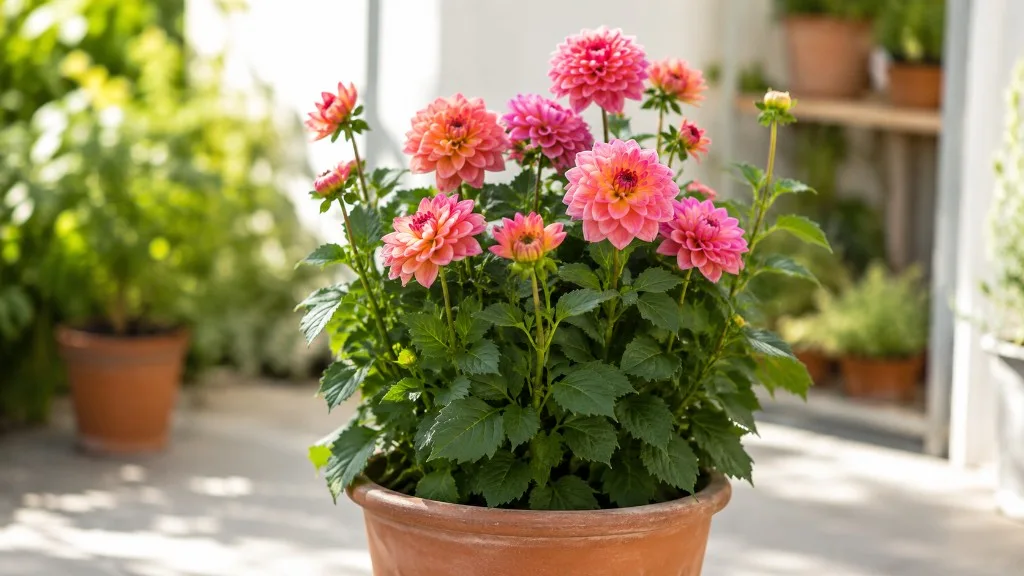
The quick answer: pinch at three to four leaf pairs
Pinch a dahlia when the young plant has three to four pairs of true leaves and is roughly 8 to 12 inches tall. Remove the tender growing tip from the central stem, cutting just above a healthy pair of leaves. That single cut removes the plant’s main upward-growing point and gives lower buds a chance to develop into side branches.
Use the leaf count as the deciding signal and height as a helpful cross-check. A short, sturdy plant with four leaf pairs is usually ready; a tall, pale plant with only two leaf pairs is not. The University of Georgia Cooperative Extension gives the same three-to-four-pair timing and explains that the goal is to create side limbs, while practical dahlia growers commonly use the 8-to-12-inch range as a field check (UGA Extension; Dahlia Almanac).
Do not pinch a seedling, a freshly transplanted plant that is still wilting, or a dahlia already carrying open flowers unless you have a specific reason to reshape it. Pinching briefly delays the first bloom while the plant builds new shoots, so the timing works best when there is still plenty of growing season left.
If you can already see a few flower buds but the plant is otherwise young, decide what you value before cutting. Keep the buds if an early display matters, or pinch only if the plant is healthy and you have enough time for a later, fuller flush. Once a dahlia is in full flower, switch from whole-plant pinching to selective cutting, disbudding, or deadheading so you do not remove the season’s main growing tips by habit.
Why pinching works—and what it costs
A young dahlia naturally tries to extend one dominant central stem. Its terminal growing tip produces hormones and growth signals that favor upward extension, while buds lower on the stem remain quieter. Removing that tip changes the plant’s priorities: buds at the leaf joints can begin growing as lateral shoots instead of leaving you with one tall stem and a small number of flowering branches.
The practical result is a wider, more branched plant with more places to produce flower stems. Longfield Gardens describes the same response as the development of two shoots where the terminal sprout was removed, and notes that pinching can make the plant stronger and easier to manage (Longfield Gardens).
The trade-off is timing. For a week or two, the dahlia spends energy making stems and leaves rather than opening its first flowers. You may sacrifice an early bloom, but a well-timed pinch can give a long-season plant more flowering points later. The delay is not a guarantee of a fixed number of days because variety, light, temperature, moisture, and planting date all affect recovery.
A fuller plant comes from lateral shoots
The new branches do not appear instantly at the cut. Look for small shoots emerging from leaf axils—the angles where leaves meet the stem—over the following one to two weeks. If the plant stays green and firm, a quiet first few days are normal rather than evidence that the pinch failed.
Pinching also changes the plant’s shape before it changes the flower count. A lower, branched framework distributes future blooms across more stems, but those stems still need enough light and support. A crowded or shaded dahlia can branch and then produce weak, floppy growth, so pinching cannot compensate for poor growing conditions.
Pinching, disbudding, and deadheading are different jobs
These terms are often mixed together, but they solve different problems. Pinching or topping removes the tender terminal tip early in growth to encourage branching. The cut is made on vegetative growth before the plant is in its main flowering display.
Disbudding happens later, after flower buds form. A dahlia commonly produces a cluster of buds at the end of a flowering stem. Removing the two side buds and keeping the central bud concentrates the plant’s resources into one flower, which is useful when you want a larger bloom or a clean exhibition stem.
Deadheading removes a spent flower after it fades. It keeps the plant from putting as much energy into seed production and helps maintain repeat flowering. Bouquet cutting can serve a similar maintenance role when you remove a mature stem cleanly rather than leaving a spent head behind. For the later-season cut point, see this separate guide to deadheading dahlias.
The simplest memory aid is: pinch for more branches, disbud for a larger selected flower, and deadhead after flowering. You can use all three on one plant, but not necessarily on every stem or every variety.
Check these signals before you cut
The best pinch is based on plant readiness, not a calendar date. Weather and starting material vary too much for “two weeks after planting” to be a dependable rule in every garden.
Height and leaf count
Count pairs of fully formed true leaves on the central stem. When the plant has three or four pairs and the top growth is soft enough to remove with fingers or snips, it has enough leaf area to recover and enough stem below the cut to produce useful side shoots.
The common height range is 8 to 12 inches, with about 10 inches a useful target for many tall cut-flower types. A compact bedding dahlia may be ready at a different height, while a plant stretched by low light may reach the height without having the sturdy, leafy structure you want. If height and leaf count disagree, trust the plant’s structure and wait for healthy leaf development.
Container-grown dahlias deserve one extra check: confirm that the pot is large enough to hold the plant’s roots and that the mix is not drying completely between waterings. A potted plant can reach the right height while still being root-bound or heat-stressed, especially in a dark container on a hot patio. Pinching a compact variety can still improve its shape, but remove only the soft terminal tip and expect the plant to fill the pot rather than behave like a tall field-grown cut-flower dahlia.
Plant health and weather
Pinch only when the dahlia is actively growing. Delay the job if the plant is wilted from dry soil, recovering from transplant shock, damaged by cold, or struggling with severe pest pressure. Removing the growing tip removes a small but important source of new leaf growth, and a stressed plant may need that tissue while it re-establishes roots.
Choose a calm, dry part of the day if possible. The cut does not require a special healing treatment, but clean tools and good air movement reduce the chance of smearing sap or soil onto fresh tissue. If a heat wave is causing the plant to wilt each afternoon, stabilize watering and shade exposure first, then pinch when it is growing steadily again.
How to pinch a dahlia step by step
Pinching is a small job, but the cut should be deliberate. You are removing the soft terminal growth, not shearing the whole plant and not cutting down to the soil.
Prepare a clean, sharp tool
For a tender shoot, clean fingers can work if you pinch without crushing nearby leaves. Sharp bypass snips or secateurs give better control when the stem is firm. Wipe the blades clean before moving between visibly diseased plants, and avoid tools that crush or tear the hollowing stem.
You do not need to coat the cut with sealant. A clean cut above a leaf pair will dry naturally as the plant resumes growth. If the top is too thick or woody to pinch easily, the plant is probably past the ideal early window; make a neat cut rather than forcing the stem to snap.
Find the terminal growing tip
Stand above the plant and identify the central stem that is still extending upward. The terminal tip is the small cluster of soft leaves at the very top, not a mature flower bud farther down and not every side shoot on the plant.
Trace the stem down until you can see the highest healthy pair of leaves. Those leaves should remain on the plant. The cut removes the tip above them, leaving a short, clean stub rather than a long bare section that can bend or die back.
Cut just above a leaf pair
Use your fingers or snips to remove the terminal tip about ¼ to ½ inch above the highest healthy leaf pair. A cut slightly above the node protects the buds in the leaf axils while keeping the remaining stem short. Do not cut through the leaf bases, because the axillary buds you want to activate sit at those joints.
You usually remove the top inch or two, depending on how much soft growth is present. The right amount is enough to remove the growing point, not a fixed length. When the cut is complete, the plant should still have a leafy central stem below it and no obvious flower cluster that you intended to keep.
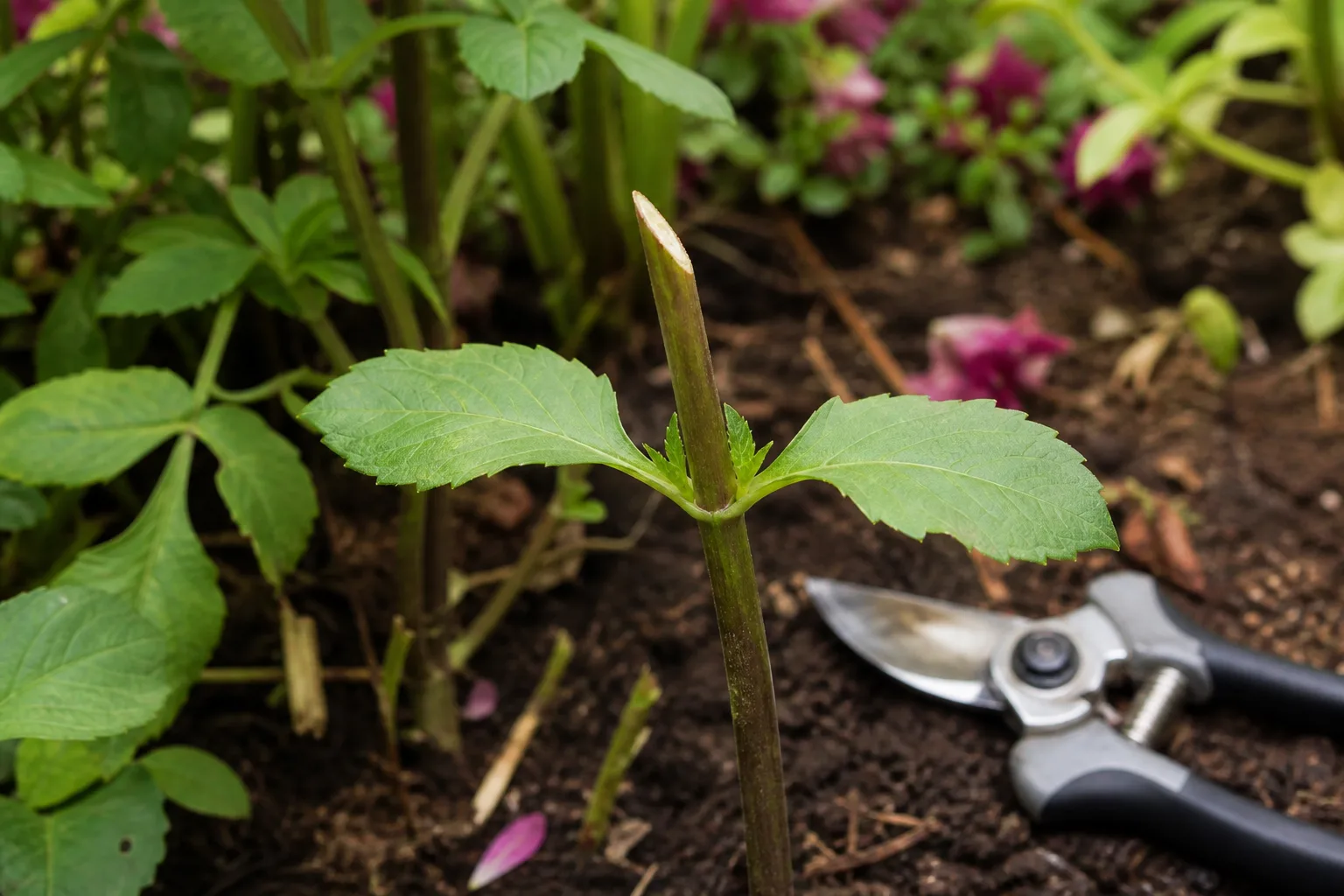
If you accidentally remove too much, do not keep correcting the plant with more cuts. Leave the remaining leaves in place, water normally, and wait for new shoots. One imperfect pinch is usually less damaging than repeated pruning while the dahlia is trying to recover.
What to do during the first two weeks after pinching
After the cut, return the dahlia to stable care rather than trying to force a faster response. Keep the root zone evenly supplied with moisture, but do not turn the bed into a constantly wet basin. The University of Georgia guidance emphasizes deep watering during dry periods and well-drained soil; those basics matter more after pinching than a sudden dose of fertilizer (UGA Extension).
Give the plant the strongest light available for its variety. A dahlia that has enough sun can build compact side branches; one growing in shade may respond with thin, stretched shoots. Keep weeds from competing for water and check the underside of leaves for aphids, mites, and chewing pests while the new growth is tender.
Support the new growth early
Pinching creates more stems, which can eventually create more weight. Put a stake, cage, or row support in place before the branches become large enough to flop. The UGA publication recommends installing tall stakes and tying plants as they grow, while Longfield Gardens notes that support is easiest to add near planting time, before roots fill the surrounding soil.
Use soft ties with a little slack instead of cinching stems tightly. For one or two plants, a sturdy stake beside the root ball works well. For a block of tall dahlias, horizontal netting or a simple twine corral can hold several branched plants without tying every stem separately.
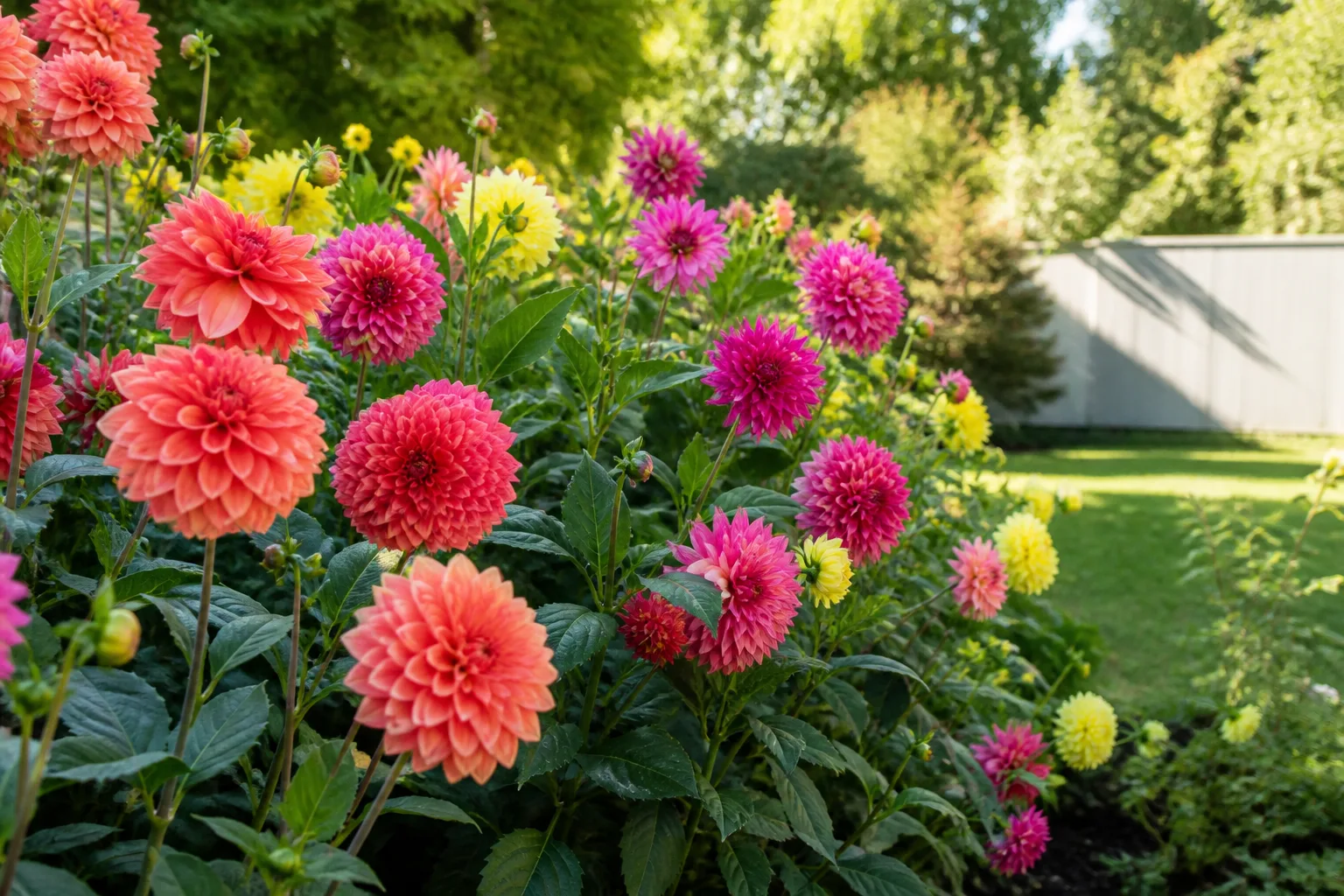
Keep moisture, light, and nutrition steady
The plant does not need special “pinching fertilizer.” If the soil was prepared well and the foliage is a healthy green, continue the normal feeding plan for your soil and variety. Avoid pushing soft, lush growth with excessive nitrogen; that can make stems weaker and increase the amount of support the plant needs.
Water deeply when the root zone begins to dry, adjusting for rainfall, container size, soil, and heat. A mulch layer can reduce rapid moisture swings, but keep it away from direct contact with the crown. The goal during recovery is steady growth, not a constantly saturated root zone.
In hot-summer climates, the best recovery window may be a stretch of warm days without punishing afternoon heat. Dahlias can grow leaves in heat while pausing bud production, so a pinched plant may look healthy yet take longer to show new flowering tips. That is a reason to keep the plant stable and observe the nodes, not to cut the branches again or compensate with a large fertilizer dose.
Expect new side shoots to start at the leaf joints below the cut. Once those shoots are several inches long, check that they are receiving light and are not rubbing against nearby stems. Do not pinch the new branches again immediately; let the plant establish its new framework first.
Disbud later when you want larger flowers
Pinching and disbudding can be used together because they happen at different stages. The early pinch builds the branch structure; later disbudding decides how much of the plant’s energy goes into each flower on a chosen stem.
Remove side buds at pea size
When the flower-bud cluster at a stem tip is about the size of a pea, look for a central bud flanked by side buds. The UGA Extension recommendation is to remove all but one bud at this stage and to remove small growth buds in the leaf axils of the top leaf set when needed, especially on varieties that make short stems (UGA Extension).
Use a fingernail or fine snips to take off the side buds while they are small. Keep the central bud if your goal is a single, larger flower. Do not mistake a rounded, swelling bud for a spent flower head; if you are deadheading later, the distinction matters because removing the wrong rounded bud costs you a bloom.
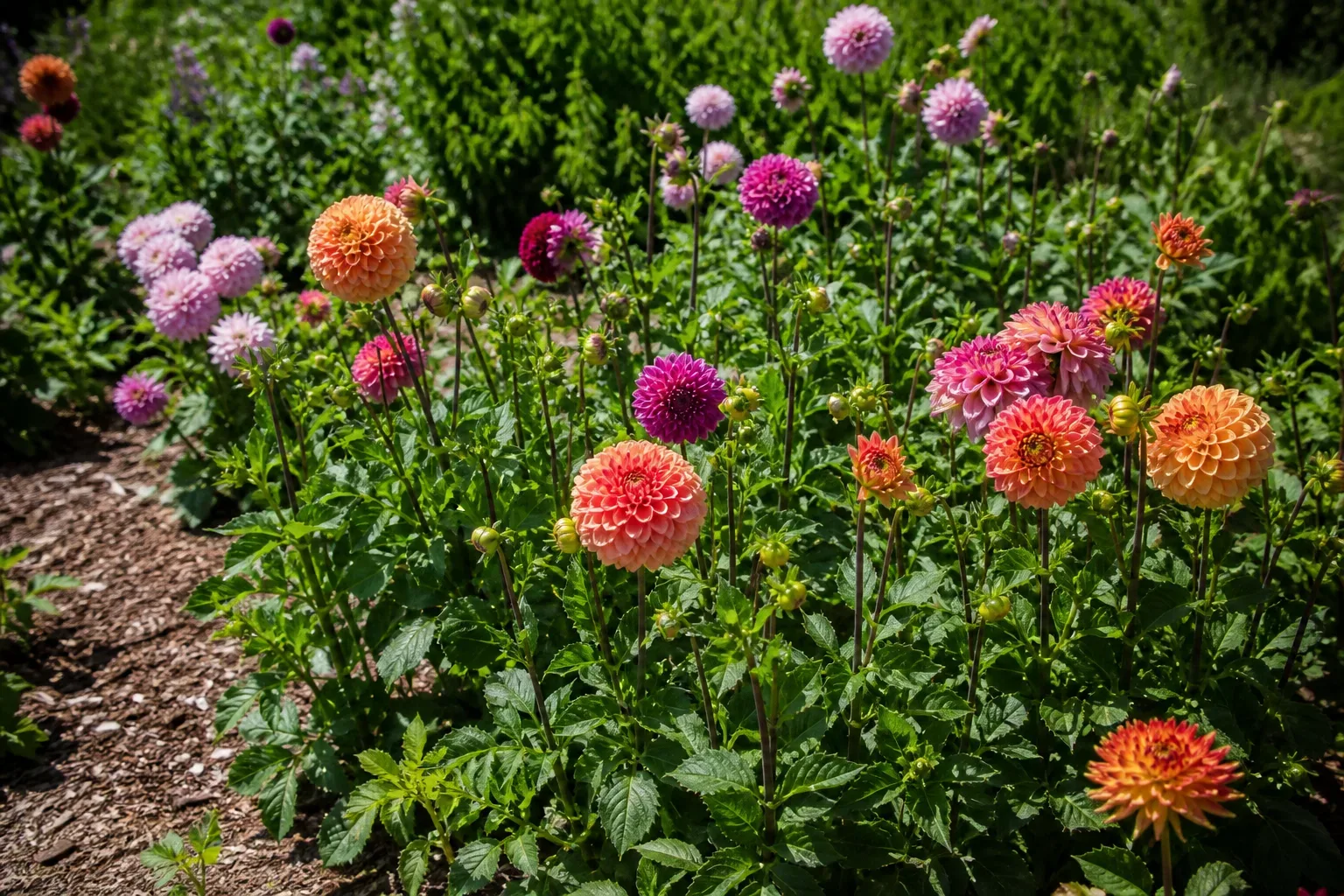
Disbudding is not a requirement for a healthy garden dahlia. It is a choice about resource distribution. As UGA explains, dahlias can produce more flower buds than the plant can supply with food, so removing extras channels resources into the flowers you decide to keep.
Choose between more flowers and larger flowers
Leave the cluster intact when you want a generous display of medium-sized blooms, pollinator activity, or plenty of stems for casual cutting. Disbud selected stems when you want a large dinnerplate-style flower, a longer clean stem for a vase, or a more uniform show bloom. You can make both choices on one plant: leave side buds on some branches and disbud the stems you plan to photograph or cut.
The plant’s variety matters. Large-flowered types often benefit most visibly from disbudding, while smaller bedding types may look better with a full set of buds. If removing side buds leaves you with too few flowers for the space, disbud fewer stems next time rather than abandoning pinching altogether.
For a cutting garden, think in terms of a harvest plan rather than a single perfect plant. You can leave some branches to create a colorful mass, disbud a few strong stems for large arrangements, and harvest other stems as they open. Regular cutting keeps the plant in active production, but always leave enough healthy foliage for the plant to keep feeding its tuber and rebuilding the next flush.
Common mistakes and troubleshooting
Pinching too early: A two- or three-inch shoot has very little leaf area to support recovery. Wait until the plant has three or four true-leaf pairs instead of pinching simply because a shoot has emerged.
Using height alone: A stretched plant can reach 10 inches without being ready. Look for sturdy growth and enough true leaves, then address the light problem so the new branches do not repeat the same weak pattern.
Cutting below the leaf pair: A low cut removes the axillary buds that should become new branches. If you have not cut yet, leave a short stub above the highest healthy pair. If you already cut too low, stop pruning and give the remaining nodes time to respond.
Pinching a stressed plant: Wilting, cold damage, transplant shock, or a heavy pest load can slow recovery. Stabilize the plant first and postpone the pinch until the leaves are firm and new growth is active.
Pinching after flowering has started: It is not automatically fatal, but it changes the goal. If the plant already has useful flowering stems, use selective cutting or deadheading rather than removing the main tip without a plan. A late pinch may delay the display you are trying to enjoy.
Expecting instant branching: New shoots can take one to two weeks to become obvious. During that time, steady light and moisture are more useful than another cut or a heavy fertilizer application.
Forgetting the support plan: A bushier dahlia can carry more blooms but also become top-heavy. Add support before rain and wind test the stems, and tie loosely as the plant grows.
Removing every side bud: That is disbudding, not pinching, and it trades flower quantity for flower size. Keep some stems untouched if your priority is a long, colorful season.
If a healthy plant still has not branched after roughly two weeks, inspect the cut point first. Confirm that you removed the terminal tip, left healthy leaf nodes below it, and did not pinch during a period when the plant was stalled by heat, drought, cold, or low light. If all four checks look good, give the plant more time; dahlia varieties do not all respond at the same speed.
If the plant branches but still produces few flowers, look beyond the pinch. Insufficient sun, excess nitrogen, crowded roots, drought, and pest damage can all limit flowering even when the stem structure is good. A pinch creates opportunities for flowers; it does not replace the light, water, soil drainage, nutrition, and pest monitoring that allow those opportunities to mature.
Conclusion: pinch once, then let the plant branch
For most tall garden and cut-flower dahlias, the reliable starting rule is simple: wait for three to four pairs of true leaves, use the 8-to-12-inch range as a cross-check, and remove the tender terminal tip just above a healthy leaf pair. That one early cut redirects the plant from a single upright stem toward a broader framework of flowering branches.
Afterward, keep care steady, support the new growth, and resist the urge to prune again before the side shoots develop. Later, choose disbudding only on the stems where larger flowers matter; leave other clusters intact when you want the greatest number of blooms. Pinching works best as a small, well-timed decision—not as a promise that every dahlia must be treated exactly the same way.



