How to Make Geraniums Fuller and Bloom More
Learn how to make geraniums fuller by fixing light, watering, drainage, heat, deadheading, and fertilizer mistakes without overcorrecting.
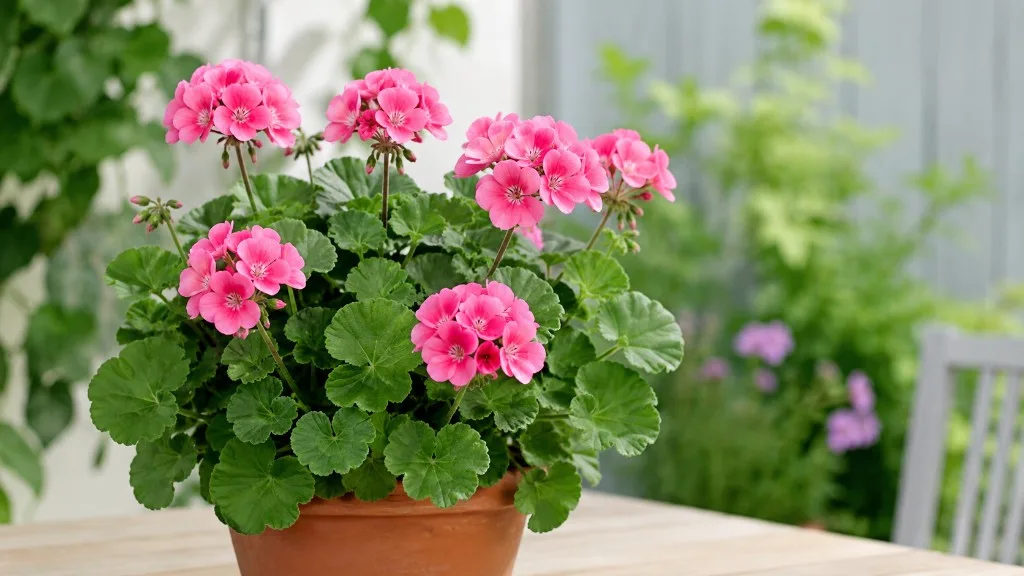
A geranium can be alive, green, and still look strangely thin. The stems stretch, the leaves collect near the tips, and the flower clusters arrive less often than they did when the plant was new. That shape usually means the plant is rationing growth because one part of its environment is out of balance—not that it needs a stronger “bloom booster.”
The fastest route to a fuller geranium is to check light first, roots second, and flowers third. Fix usable light, let the root ball cycle between watering and drainage, remove spent clusters, and only then decide whether feeding is warranted. The advice below is aimed at the tender florist geraniums sold for pots and summer beds, usually Pelargonium hybrids; hardy border geraniums, or cranesbills, follow a different growth rhythm.
The quick answer: fullness comes from light, roots, and new growth
Fullness is not one trait. It is the combination of short, leafy spaces between nodes; active side shoots; firm leaves; and enough flower buds to keep the tips from looking bare. If a geranium is reaching toward a window, staying wet for days, or carrying old flower stalks, adding fertilizer may make the problem harder to read while doing little to improve its shape.
Use this order when the plant looks puny:
- Check the light. Count direct-light hours where the leaves actually sit, not where you wish the pot sat.
- Check the root zone. Feel the mix and confirm that water can leave through the drainage holes.
- Check the stems and leaves. Look for pests, rot, spots, and soft tissue before pruning.
- Groom the flowers. Remove fading clusters with their stalks so the plant is not carrying finished blooms.
- Feed only after the first four checks. Fertilizer supports active growth; it does not substitute for light or healthy roots.
NC State Extension describes zonal pelargoniums as full-sun plants that prefer well-drained soil and moderate moisture, becoming leggy and blooming poorly in insufficient light. That explains why the first correction is usually environmental rather than chemical. (NC State Extension)
Identify the geranium before changing its care
The common name hides two very different plant groups. The rounded, flower-heavy plant in a patio pot is usually a tender Pelargonium, while a hardy Geranium or cranesbill is a perennial border plant that may spread, rest, and respond to a post-bloom cutback rather than behave like a bedding annual.
Florist geraniums and hardy geraniums are not interchangeable
Florist geraniums have thick, rounded leaves and flower clusters held on long stalks. They are commonly grown in containers, hanging baskets, and seasonal beds, and they need frost protection where winters are cold. Hardy geraniums have a broader range of habits and light tolerances; some prefer part shade and many look fuller after a seasonal cutback rather than constant deadheading.
If your plant has been sold as a zonal, ivy, regal, or scented geranium, read it as a Pelargonium for the purposes of this guide. If it is a named cranesbill planted in a perennial border, do not force these six container rules onto it. The right fix for a hardy geranium that flops after flowering may be a cutback and division; the right fix for a tender pelargonium that stretches toward a window is usually more light and selective pruning.
Mistake 1: treating low light as a watering problem
Low light is the most common reason a geranium becomes tall instead of broad. The plant lengthens its stem between leaves to reach a brighter position, producing a narrow silhouette with fewer side shoots and fewer flower buds. Watering more often cannot shorten those stretched internodes; it can only keep a low-light root ball wetter for longer.
Look for a pattern rather than one pale leaf. A leggy geranium usually has long bare sections, leaves concentrated toward the ends, flower stalks leaning toward one direction, and new growth that is smaller or farther apart than the older leaves. A plant with firm leaves and no root-zone red flags can often recover, but the old bare stem will not suddenly fill in overnight.
Move a leggy plant toward brighter light gradually
Give tender geraniums the brightest practical position you can, ideally with several hours of direct sun. In a hot climate, morning sun plus protection from the fiercest afternoon reflection may outperform an exposed west-facing balcony where the flowers scorch and the pot overheats. The aim is strong usable light with a root zone that can keep up.
Do not carry a plant from a dim room straight into a full day of intense sun. Move it closer to the bright window or outdoor light over several days, watching for bleached patches, crisp leaf edges, and sudden wilt. Once it has acclimated, pinch or prune the longest bare shoots just above a healthy leaf joint so new side shoots have light to work with.
Prune in stages if the plant is very stretched. Removing half the canopy at once can leave a weak root system supporting fewer leaves while the plant is also adapting to brighter conditions. Cut the longest, least productive stems first, then wait for new buds before making a second shaping pass.
Mistake 2: watering by the calendar
“Water once a week” is not a care plan for a geranium in a pot. A small hanging basket in wind may dry in a day or two, while a large container in cool, cloudy weather may stay wet for much longer. Even the same pot can change quickly when a heat wave arrives or a rainy week reduces evaporation.
The more reliable rule is to water when the upper layer has begun to dry and the pot is noticeably lighter, then water thoroughly enough to wet the root ball and allow excess to drain. Do not leave the pot standing in a saucer of runoff. A geranium can tolerate a short dry interval better than a root ball that remains airless and saturated.
Read the pot, mix, and roots together
Check the mix at the depth where the roots are growing, not only at the surface. If the top looks dry but the lower pot is cool and heavy, delay watering and investigate drainage. If the entire root ball has pulled from the pot, the leaves are limp, and the container feels unusually light, water slowly until the mix is evenly rehydrated rather than giving one small splash.
Overwatering is not just “too much water.” It is a mismatch between water added and water released. Blocked holes, a cachepot that holds runoff, dense mix, a pot that is too large, and low light can all create the same result even when the grower waters only once a week. Roots that stay wet may turn brown or soft, and the above-ground symptoms can include yellow leaves, wilt, slow growth, and fewer flowers.
When in doubt, pause the schedule and inspect. A dry, firm stem with normal leaves calls for a moisture check; a soft stem at the soil line, sour-smelling mix, or rapidly yellowing plant calls for root and disease triage before any fertilizer.
Mistake 3: keeping roots in dense, wet soil
Geraniums need moisture, but they also need air in the pore spaces around their roots. A heavy garden soil in a pot, a compacted old mix, or a container with one tiny opening can stay wet long after the surface appears reasonable. The plant then produces weak, sparse growth because the roots cannot reliably deliver water and nutrients even though the pot is full of them.
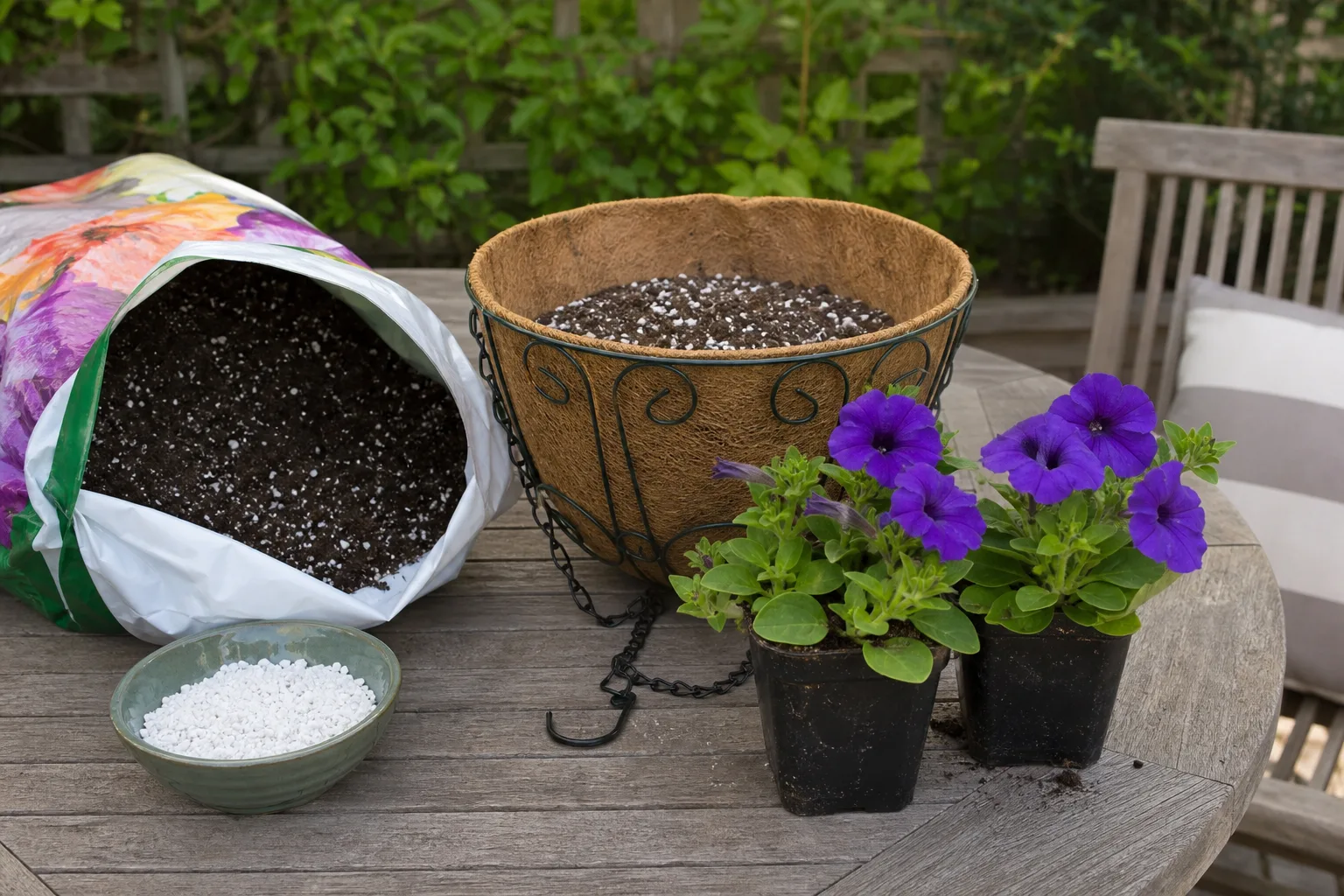
For a container, use a fresh, porous potting mix designed for containers rather than scooped garden soil. A well-drained mix should accept a thorough watering and release the excess through open holes; it should not turn into a muddy plug or repel water down the sides. BBC Gardeners’ World Magazine likewise recommends moist but well-drained conditions and a container compost with drainage and slow-release nutrition for pelargoniums. (BBC Gardeners’ World Magazine)
Build a container that drains without drying instantly
Start with a pot that has real drainage holes and is only modestly larger than the current root ball. A giant pot may look generous, but its extra wet mix dries slowly around a small root system. A pot that is severely rootbound can dry too quickly and may need a slightly larger home, but repotting into the biggest container available is not the cure for sparse growth.
When repotting, loosen only roots that are circling tightly or forming a hard outer mat. Do not tear apart a healthy root ball just to replace the mix. Set the plant at the same depth it was growing, keep the crown and stems above the soil line, water once to settle the mix, and then let the container drain completely.
Do not put a layer of gravel in the bottom as a substitute for drainage holes. Stones do not create a lower water table that makes a pot safer; they reduce the volume available to roots and can leave the finer mix above them saturated. Fix the hole, the mix, the pot size, and the saucer instead.
Mistake 4: ignoring heat swings and airflow
Geraniums like bright conditions, but “more sun” does not mean every hour of extreme heat is beneficial. A dark pot on concrete beside a wall can become much hotter than the surrounding air. Flower clusters may wilt or fade in the afternoon even when the roots are adequately watered, while a shaded, stagnant corner can encourage weak growth and wet foliage.
Heat stress often arrives as a timing pattern: the plant looks acceptable in the morning, droops during the hottest hours, and recovers after sunset. If the leaves stay limp overnight, the mix remains wet, or new spots and gray fuzzy growth appear, do not assume heat is the only cause. University of Minnesota Extension’s geranium diagnostic guide groups wilt, discolored leaves, spots, and damaged flowers as separate symptom paths—useful reminder that a droop is not a diagnosis by itself. (University of Minnesota Extension)
Protect flowers without hiding the plant in deep shade
During a severe heat wave, move a container to morning sun and afternoon shade, use a light-colored outer pot or shade the container rather than burying the plant in darkness, and check moisture more often. Water the root zone when it needs water, preferably early enough that leaves and stems are not left wet through a humid night. Keep enough space around the plant for air to move between leaves.
Do not respond to one hot afternoon by soaking an already wet pot. Touch the mix first and lift the container if you can. If the pot is wet and the plant is still collapsing, inspect the roots and stem instead of repeating irrigation.
Temperature swings also matter at the edges of the season. Tender pelargoniums should be protected from frost and cold winds, and an indoor overwintering plant needs bright light if you want it to keep growing. A cool, dark room may preserve a dormant plant, but it will not produce a compact, flowering plant at the same rate as a bright position.
Mistake 5: leaving spent flower clusters on the stems
Old flowers are not only a cosmetic problem on a bedding geranium. A fading cluster can remain attached to a long stalk, collect moisture, and distract the plant from producing the next flush. Deadheading is a small task, but it is one of the few fixes that can make a container look tidier immediately while also helping flowering continue.
The Royal Horticultural Society recommends removing faded pelargonium clusters and the long flower stalk down to just above where it joins the main stem. BBC Gardeners’ World also lists deadheading as part of keeping pelargoniums flowering through summer. (Royal Horticultural Society; BBC Gardeners’ World Magazine)
Deadhead the whole cluster, not just the petals
Follow the flower stalk down to its attachment point. Pinch off individual faded flowers if a cluster is still partly in bloom, then remove the finished cluster and its stalk with clean fingers or pruners. The goal is to leave a clean stem junction rather than a long, leafless spike.
Inspect the plant once or twice a week during active bloom. You do not need to strip every flower the instant a petal drops; a short delay will not ruin the plant. If you want to save seed, leave a selected flower cluster in place and accept that it may not contribute to the next wave of flowers as quickly.
Deadheading will not make a deeply shaded, root-rotted, or badly heat-stressed geranium full. It is a multiplier for a plant that already has enough light, functioning roots, and active growing conditions—not a replacement for them.
Mistake 6: reaching for fertilizer before fixing the basics
Fertilizer is attractive because it feels measurable: choose a number, pour a dose, and wait for flowers. But a geranium that is light-starved or sitting in stagnant mix cannot turn a bloom formula into healthy side shoots. Fertilizer may produce more leaves on a plant that already has too much soft vegetative growth, and concentrated salts can injure roots.
RHS guidance makes a useful distinction: feeding is generally unnecessary for most geraniums in good garden soil, while container-grown tender species may benefit from liquid feed during active growth. That is a better starting point than assuming every sparse plant needs extra phosphorus. (RHS geranium growing guide)
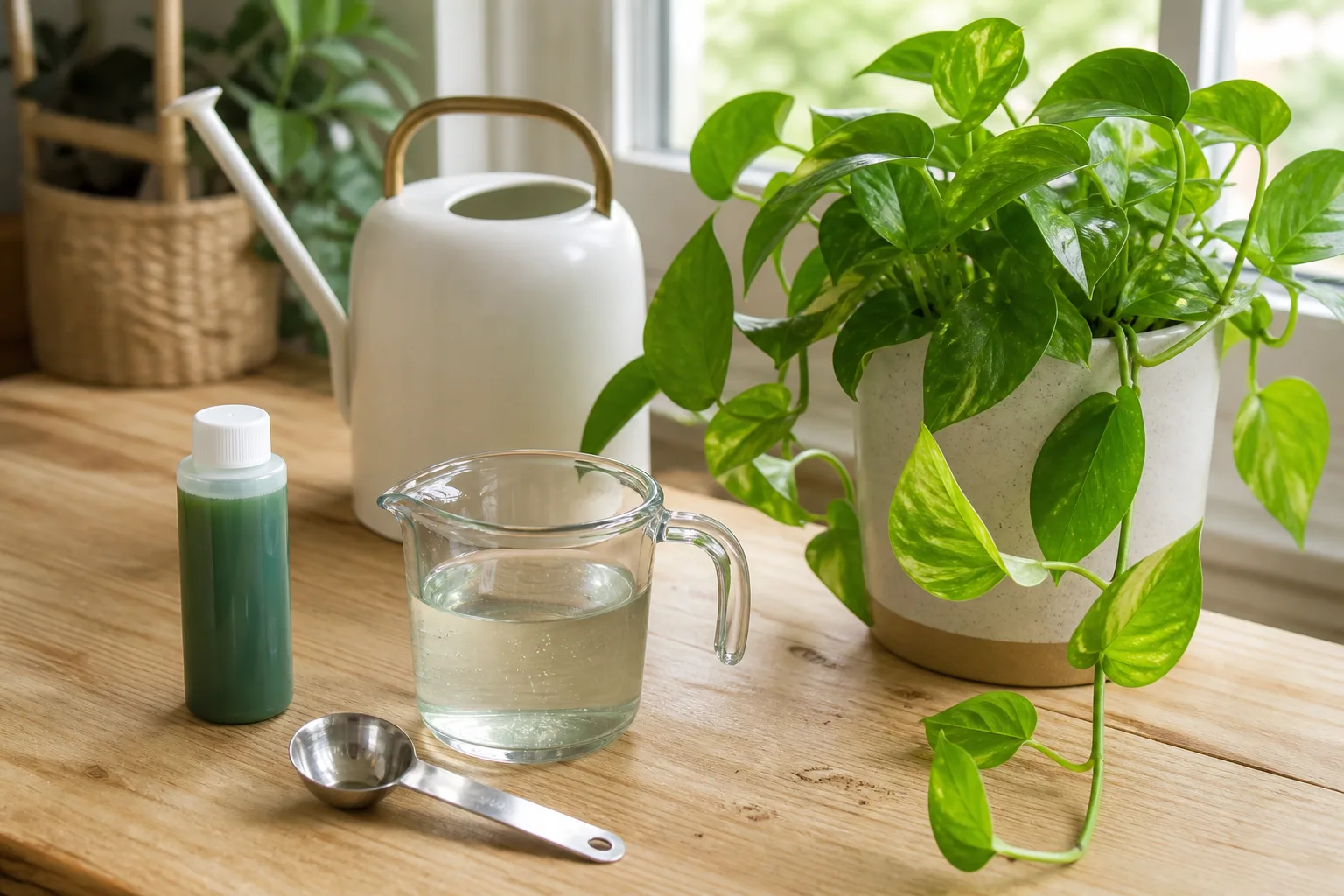
Use feeding to support recovery, not to replace light
Feed only when the plant is actively growing, the roots are functioning, and the product label allows use on flowering container plants. Use the label rate; do not stack a liquid feed, slow-release granules, compost tea, and a homemade bloom mixture because the plant looks sparse. If you have recently repotted into a pre-fertilized mix, wait until that built-in nutrition has been used according to the product directions.
Avoid choosing a high-phosphorus product as a universal answer. A suitable complete fertilizer at the label rate can support growth, but excess phosphorus does not correct poor light, wet roots, heat stress, or a cultivar that naturally has a looser habit. If the foliage is dark green and plentiful while flowers are scarce, diagnose light, temperature, deadheading, and root health before adding more nutrients.
Stop feeding when the plant is wilted from dry roots, sitting in saturated mix, freshly repotted with damaged roots, or showing possible disease. Watering fertilizer into a stressed root system can compound the injury. Resume only after the plant has begun producing firm new growth and the underlying condition is stable.
A seven-day reset for a sparse geranium
Use this short reset when the plant is generally firm and green but thin, leggy, or flower-poor. If you find mushy stems, spreading leaf spots, gray mold, severe pest activity, or roots that are collapsing, skip the routine and move to the diagnostic boundary below.
- Day 1—Photograph and identify. Take a whole-plant photo, note whether it is a Pelargonium or hardy Geranium, and record where direct light reaches the pot.
- Day 1—Check the root zone. Feel below the surface, lift the container, clear the drainage holes, and empty any saucer holding runoff.
- Day 2—Correct placement. Move the pot toward brighter light, but acclimate it over several days if it came from shade. In extreme heat, choose morning sun and afternoon protection.
- Day 3—Groom. Remove spent clusters and yellow leaves. Do not remove healthy green leaves just to make the plant look tidy.
- Day 4—Shape selectively. Cut the longest bare or damaged shoots just above a healthy leaf joint. Leave enough leafy growth to support recovery.
- Day 5—Recheck moisture. Water only if the mix has begun to dry at the root zone; then water thoroughly and let the pot drain.
- Day 7—Decide about feeding. If the plant is stable and actively growing, use an appropriate fertilizer at the label rate. If it is still wet, wilted, or declining, do not feed—inspect roots and symptoms instead.
The useful result is not a dramatic change in seven days. You are looking for a better position, a root ball with a sensible wet-dry cycle, clean flower stalks, and buds or side shoots that can develop over the next several weeks. Existing bare sections may stay bare; new growth tells you whether the correction is working.
When sparse growth is not a simple care mistake
Some geraniums are naturally less compact than others. Trailing ivy geraniums, scented-leaf types, regal pelargoniums, and plants grown for overwintering may not form the same rounded mound as a compact zonal cultivar. Compare the plant with its own tag and recent growth before declaring it unhealthy.
Escalate beyond ordinary care when you see a combination of clues rather than one imperfect leaf:
| What you see | More likely concern | First response |
|---|---|---|
| Soft stem at the soil line, sour mix, yellowing, collapse | Root or stem rot | Stop routine watering, inspect roots and tissue, and isolate the pot. |
| Brown or black leaf spots that spread, damaged flowers, gray fuzzy growth | Foliar disease or gray mold | Remove affected tissue, improve airflow, keep leaves dry, and seek local diagnostic advice if it advances. |
| Fine webbing, stippling, sticky residue, clusters under leaves | Mites, aphids, whiteflies, or scale | Isolate and identify the pest before choosing a treatment. |
| Sudden wilt while the mix is wet, especially across several plants | Vascular or bacterial problem | Do not propagate from the plant; contact the seller or local extension service for guidance. |
| Only the newest growth is distorted or pale | Nutrient, root, pest, or chemical injury | Inspect the underside of leaves and root zone before applying fertilizer. |
Do not compost a plant with unexplained progressive wilt if several plants from the same purchase are affected. A healthy-looking cutting is not automatically safe when the parent has a soft stem or systemic wilt. Containment is more useful than repeated home remedies when the pattern is spreading.
Conclusion: grow the fuller plant from the root zone upward
To make geraniums fuller, start with the condition that controls everything else: usable light reaching a functioning root system. Then adjust watering to the pot and weather, use an airy mix with open drainage, protect flowers from extreme heat without hiding the plant, deadhead the whole cluster, and feed only when active growth can use it.
The best recovery signal is not a faded flower suddenly returning. It is a firm stem, clean new leaves, shorter new internodes, and fresh side shoots appearing after the care conditions improve. Give those new growing points time, and your geranium can rebuild a fuller shape without being pushed into a cycle of overwatering, overfeeding, and unnecessary pruning.



