Why Native Plants Are Suddenly So Popular in Home Gardens
Learn why native plants are surging in home gardens, what “native” really means, and how to choose a beautiful, lower-input planting that fits your yard.
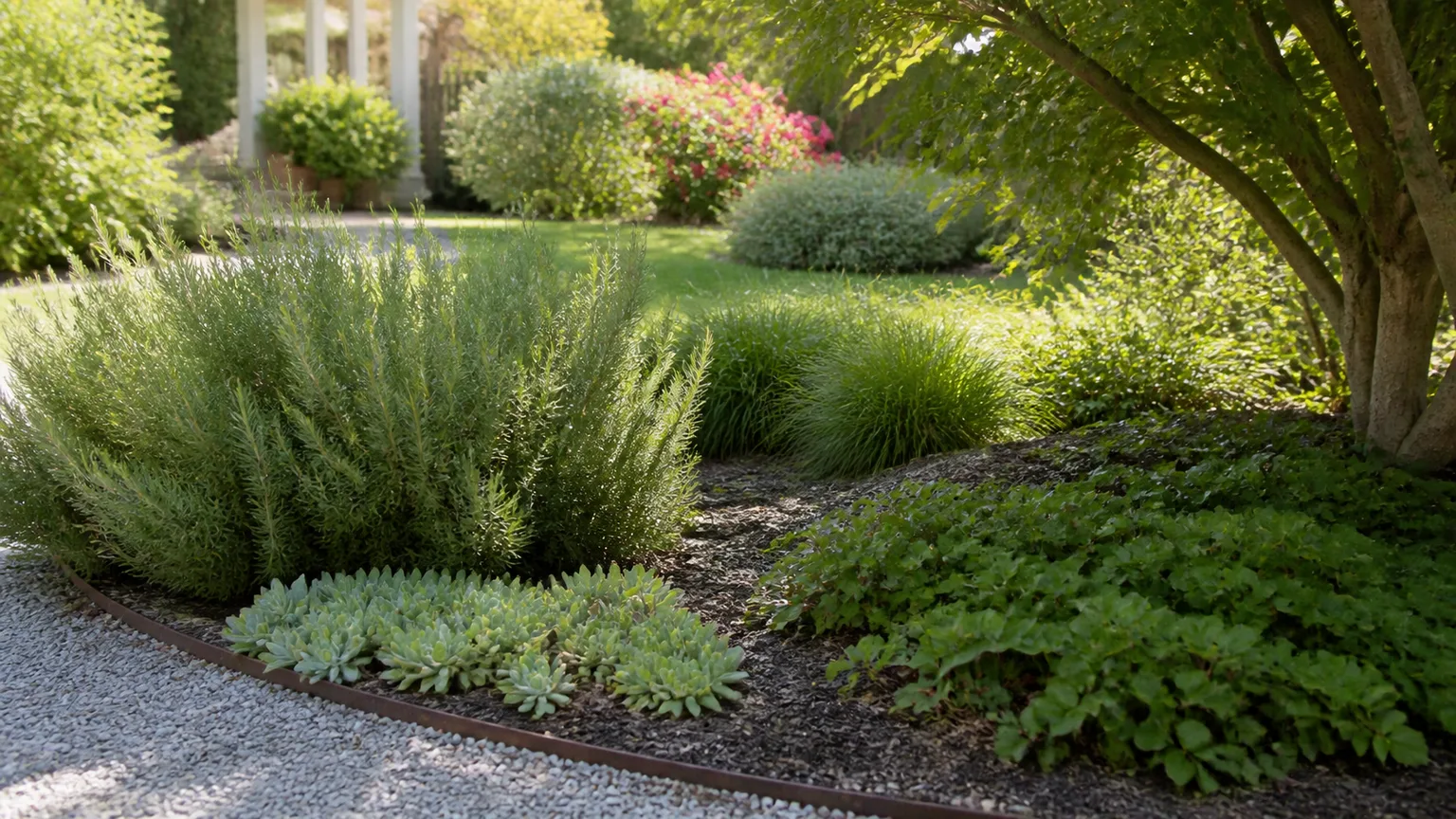
Native plants are not new, but the way home gardeners think about them is changing. Instead of treating a yard as a collection of decorative specimens, more people are asking what their plant choices do for water, soil, insects, birds, and the character of the place they live.
That shift explains the sudden popularity. Native plants can make a garden more connected to its local ecosystem, and they can reduce some recurring work once established. They are not magic “plant it and forget it” solutions, though. The best results come from matching the right species to the right site, then designing the planting so it looks deliberate as well as useful.
Why native plants are having a moment
The appeal is partly practical and partly emotional. A native garden can look beautiful while giving a homeowner something to observe through the seasons: a caterpillar on a leaf, birds working through seed heads, or a late-blooming plant that keeps the garden active after many ornamental flowers have finished.
Native planting makes ecological work visible at home
Plants sit at the bottom of the local food web. Insects eat leaves, nectar, pollen, and plant juices; birds and other animals then feed on those insects, fruit, seeds, or one another. The National Park Service explains that many insects have specialized relationships with particular plants, which is why a plant can be attractive to people yet offer little usable food to local wildlife.National Park Service
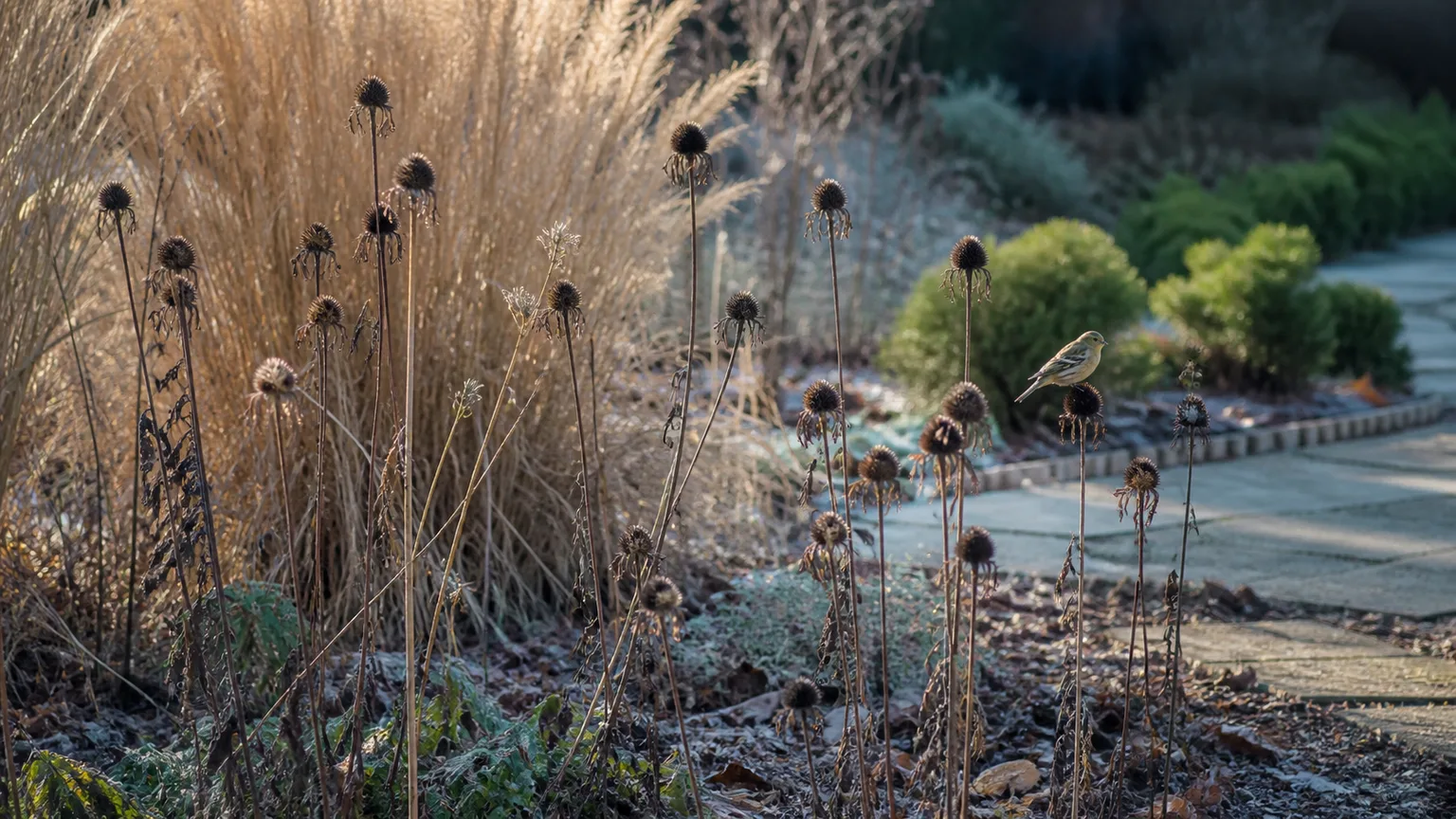
That makes a native planting feel more immediate than an abstract sustainability goal. A small bed becomes a place where the gardener can see a sequence of relationships instead of only seeing flowers. The point is not to turn every yard into a restoration project. It is to make ordinary home space do more ecological work.
The lower-input promise starts after establishment
Native plants are often better matched to regional temperature swings, rainfall patterns, and soil conditions than plants from a very different climate. That can mean less supplemental irrigation, fertilizer, replacement planting, or pest intervention after roots have settled in. EPA’s Greenacres guidance also describes native landscaping as a way to reduce water use, mowing, and chemical inputs in appropriate designs.U.S. EPA Greenacres program
The qualification matters: lower input is an outcome of good plant-and-site matching, not a property of the word native alone. A moisture-loving woodland plant in a hot gravel strip will struggle, and a locally native plant planted in compacted fill may need more attention than an adapted ornamental in better soil.
What “native” means locally
There is no single national shopping list of native plants. A species can be native to North America, the United States, or a broad region and still be a poor ecological or horticultural fit for your county, ecoregion, soil, or microclimate.
Native, adapted, naturalized, and invasive are not synonyms
Native usually means a plant has a long-standing relationship with a particular region’s soils, climate, and other organisms, rather than arriving through recent human introduction. The exact boundary changes by organization and purpose, so a regional source matters more than a broad label.
Adapted describes a plant that grows reliably in the conditions where you garden, whether or not it originated there. An adapted plant can have real value for structure, food, beauty, or seasonal continuity. Naturalized means a non-native plant is reproducing outside cultivation; that does not automatically mean it is invasive, but it deserves closer attention. Invasive describes a plant that spreads and causes ecological, economic, or other harm in a particular context.
These categories can overlap in everyday conversation, which is why plant tags are not enough. Ask for the botanical name, mature dimensions, spread habit, and local status before buying. Penn State Extension’s native plant guidance is a useful example of this approach: it discusses native plants for a specific region and pairs each plant with site conditions and wildlife value rather than presenting the species as universally suitable.Penn State Extension
The benefits you can actually expect
The strongest case for native plants is not that they are automatically easier or more virtuous. It is that they can perform several jobs at once when placed in the conditions they evolved to use.
Native plants strengthen the local food web
Flowers provide nectar and pollen, but a habitat garden should also account for leaves, fruit, seeds, bark, and shelter. Many caterpillars and other plant-eating insects cannot use every ornamental plant equally well, so increasing the diversity of appropriate native plants can create more food for insects and the birds that depend on them.Penn State Extension
That is why a wildlife-friendly planting is more than a row of showy blooms. A serviceberry can offer flowers, fruit, nesting structure, and fall color. A native grass can provide cover and winter seed. A host plant may look nibbled because it is being used, which is a sign of function rather than failure.
You will get more value from a mix of plant forms than from a single “pollinator favorite.” Combine a small tree or shrub with flowering perennials, grasses or sedges, and groundcover where space allows. The resulting layers give wildlife food at different heights and times of year.
A better fit for water and seasonal stress
Native plants can be useful in places where irrigation is expensive, unreliable, or environmentally costly. Deep-rooted prairie plants, moisture-loving wetland species, and drought-tolerant plants from dry regions all demonstrate the same lesson: a plant can use water efficiently when the site resembles the conditions it is adapted to.
That does not mean every native plant is drought tolerant. A native plant from a wet forest floor may need regular moisture, while a native succulent or prairie forb may resent a soggy downspout area. EPA also highlights the role native vegetation can play in stabilizing soil and helping manage runoff, particularly in naturalized drainage areas and buffers.U.S. EPA Greenacres program
Use the benefit as a design question: Where can a locally suitable plant reduce irrigation, protect soil, or slow runoff without being forced into the wrong conditions? That question leads to better choices than buying a plant because it is labeled “tough.”
Where native planting falls short
Native planting deserves enthusiasm, not exaggeration. A realistic plan includes the work required to get plants established and the situations where a different plant would serve the site better.
First-year care still matters
Nursery plants begin life in your yard with a small root system. Even a drought-adapted native may need regular, deep watering during its first growing season, especially in heat, wind, sandy soil, or a newly cleared bed. Watering needs usually decrease as roots move into the surrounding soil, but the timing depends on rain, soil, plant size, and exposure.
Mulch helps conserve moisture and suppress weeds, but it cannot correct poor drainage or replace observation. Keep mulch off crowns and trunks, water the root zone rather than the foliage, and check soil moisture before adding more. A plant that wilts in wet soil is asking for a drainage diagnosis, not another drink.
Not every native belongs in every yard
A plant can be native and still be too large, too aggressive, too thirsty, too shade-loving, or too attractive to deer for your particular site. Some plants spread by runners or seed; others need a seasonal cutback that may conflict with a tidy front-yard design. Wildlife value also has to be balanced with practical concerns such as visibility near a driveway, access to a path, or fire-safe spacing where relevant.
Do not remove every non-native plant simply to make the garden more authentic. A well-behaved adapted plant can contribute flowers, evergreen structure, shade, or food when a local native cannot fill that role. The more important exclusions are plants that are invasive in your region, poorly matched to the site, or dependent on inputs that contradict the reason you are changing the garden.
Choose plants by site and ecological job
The fastest way to waste money on native plants is to start with a shopping cart. Start with the patch of ground, then choose the job you want the planting to perform.
Read sun, moisture, and soil before shopping
Watch the site on a clear day and note direct sun, reflected heat from walls or pavement, wind, and the hours when the area is shaded. After rain, see whether water drains promptly, lingers for a day, or stays pooled. Dig a small hole to notice compacted layers, shallow roots, and whether the soil is loose enough for new roots to move.
Use those observations to sort the site before searching a plant database:
| Site condition | Look for | Avoid assuming |
|---|---|---|
| Hot sun and fast drainage | Regional prairie, meadow, or dry-border plants | Every native plant tolerates drought |
| Part shade under a high canopy | Woodland perennials, sedges, and shrubs matched to local moisture | Shade means the soil is moist |
| Wet edge or downspout zone | Plants recommended for wet soil or a rain-garden palette | Any plant described as “water-wise” will like standing water |
| Narrow urban strip | Tough local trees, shrubs, or perennials with known mature size | A small nursery pot means a small adult plant |
Then consult your county extension service, native plant society, botanical garden, or a nursery that specializes in regional plants. Ask for species and cultivars that fit the exact light and moisture conditions, not just a list of plants native to your state.
Combine layers and bloom times
Think in functions rather than a parade of flower colors. Use a tree or shrub for height and shelter where the space allows, mid-height perennials for the main seasonal display, grasses or sedges for texture, and groundcovers to protect open soil. The right combination will often look fuller and more intentional than a single-species patch.
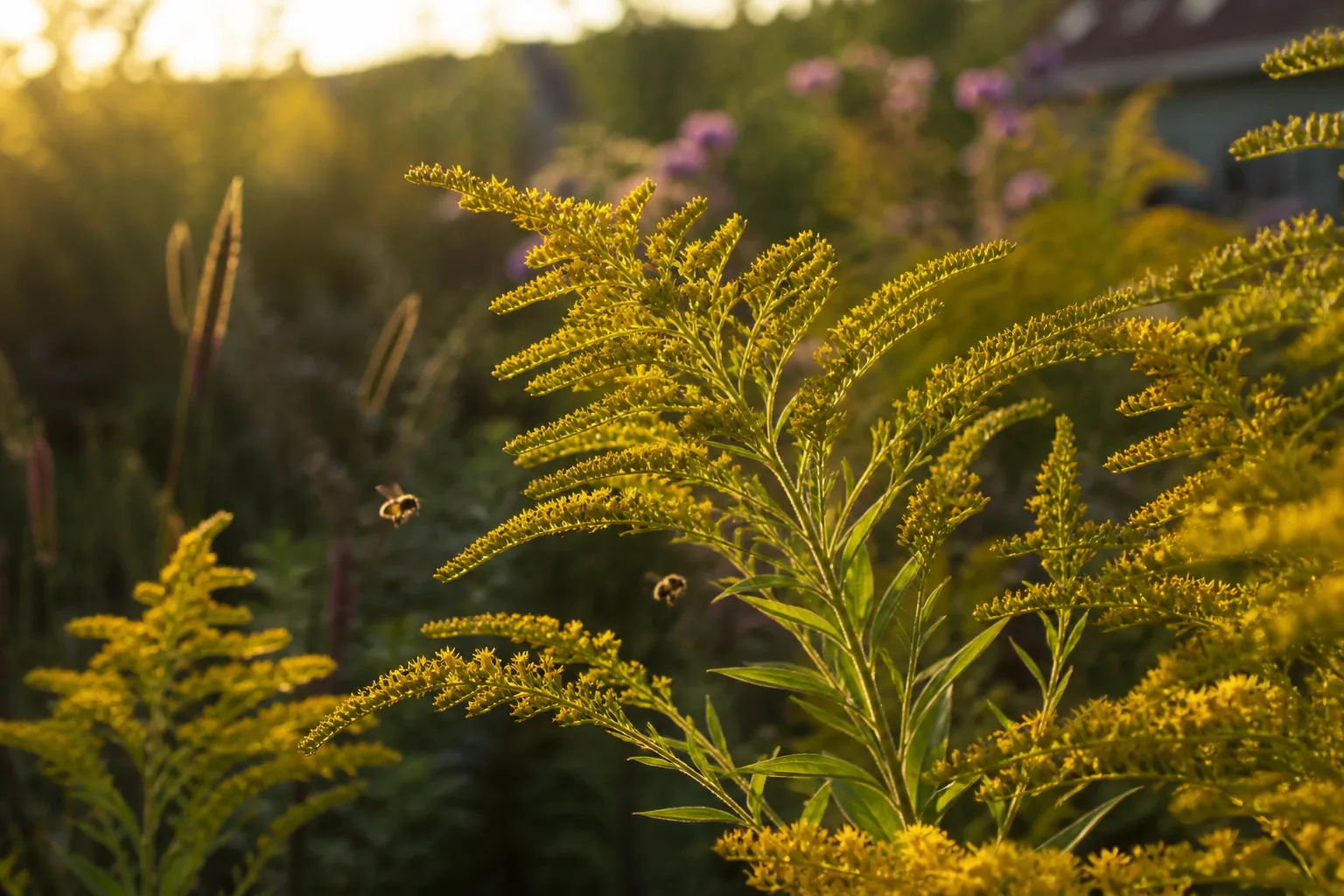
Plan for continuity from spring through fall and, where possible, into winter. Savvy Gardening recommends considering food, shelter, and water together, and points out that staggered bloom periods can provide a more continuous supply of resources for wildlife.Savvy Gardening Early flowers help start the season; summer blooms carry the middle; late asters, goldenrods, grasses, berries, and seed heads can keep the garden useful after frost.
You do not need every plant to bloom at once. A garden with changing texture, seed heads, bark, berries, and leaf color can look designed even when the dominant color shifts from month to month.
Make a native garden look intentional
The “messy native garden” stereotype usually comes from unclear edges and random placement, not from native plants themselves. A garden can support wildlife and still have a strong visual structure.
Use repetition, structure, and clear edges
Repeat a few plants in drifts instead of scattering one of everything. Grouping improves visual rhythm, makes maintenance easier, and gives insects a more substantial patch of the same resource. Place taller species toward the back or center, keep paths open, and use a defined bed line, mown strip, stones, or a low border to tell the eye where the garden ends.
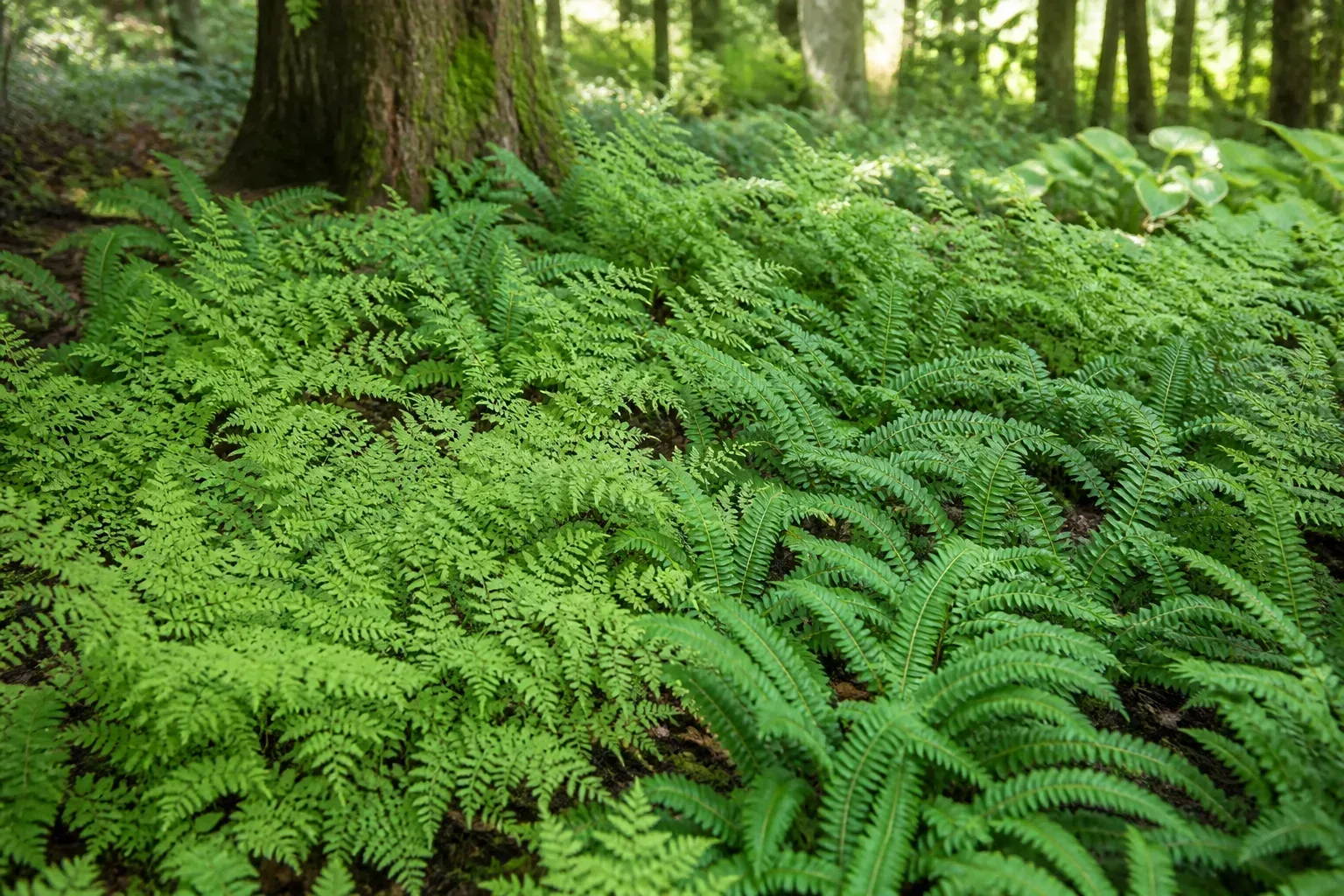
Keep some areas formal and let others be looser. A clipped hedge, patio edge, or clear path can frame a more natural planting beyond it. This contrast makes the garden feel composed while leaving room for leaf litter, stems, and seasonal movement inside the bed.
Use adapted ornamentals as accents when they are non-invasive and genuinely useful. There is no ecological prize for removing a healthy plant that already works; the goal is to increase habitat value and reduce unnecessary inputs over time. A mixed planting can also help a household accept the transition from lawn to a more layered garden.
A practical first-year care plan
Once the design is set, the first year is about helping plants establish and learning what the site does. A simple routine prevents most of the problems that later get blamed on native plants.
- Water by root-zone moisture. Soak new plants slowly and thoroughly, then check the soil before watering again. Increase frequency during heat or wind, and reduce it after meaningful rain. Do not keep a well-drained plant constantly wet.
- Control weeds while they are small. Newly planted beds have open soil, and weeds will use it. Pull or hoe them before they seed, then add an appropriate mulch layer while keeping crowns clear.
- Track failure patterns. Record plants that wilt in wet soil, scorch in reflected heat, flop in shade, or outgrow their space. Move or replace a poor match rather than compensating forever with fertilizer, staking, or irrigation.
- Use chemicals only with a clear reason. A few chewed leaves are evidence of wildlife using the garden, not automatically a pest emergency. If a treatment is necessary, identify the problem first and follow the product label; broad spraying can remove beneficial insects along with the target.
- Clean up selectively. Joe Gardener’s ecological gardening guidance emphasizes that leaf litter, hollow stems, and standing seed heads can provide overwintering habitat and food, while also returning organic matter to the soil.Joe Gardener Leave what is safe and attractive, but clear material from paths, drains, vents, and places where it creates a genuine hazard.
By the second season, you should be able to see which plants are filling their intended roles and which are struggling. Thin crowded clumps, edit runners before they reach paths, refresh worn edges, and adjust the plant list based on what the yard actually teaches you.
Conclusion
Native plants are suddenly popular because they offer a way to make a home garden more beautiful, more observably alive, and better connected to local conditions. They can support insects and birds, reduce some water and maintenance demands, and bring a stronger sense of place to a landscape that might otherwise be dominated by turf and interchangeable ornamentals.
The useful version of the trend is not “plant natives everywhere.” It is choose regionally appropriate plants for the site, give them time to establish, and design them with enough structure that people want to live alongside them. When the planting fits the soil, the wildlife, and the household, a native garden becomes easier to care for because it is working with its surroundings rather than constantly arguing with them.