How to Grow and Care for Sunflowers
Grow sunflowers from seed with spacing by type, watering rules, staking giants, pest fixes, and seed harvest timing—plus when annuals beat perennials.
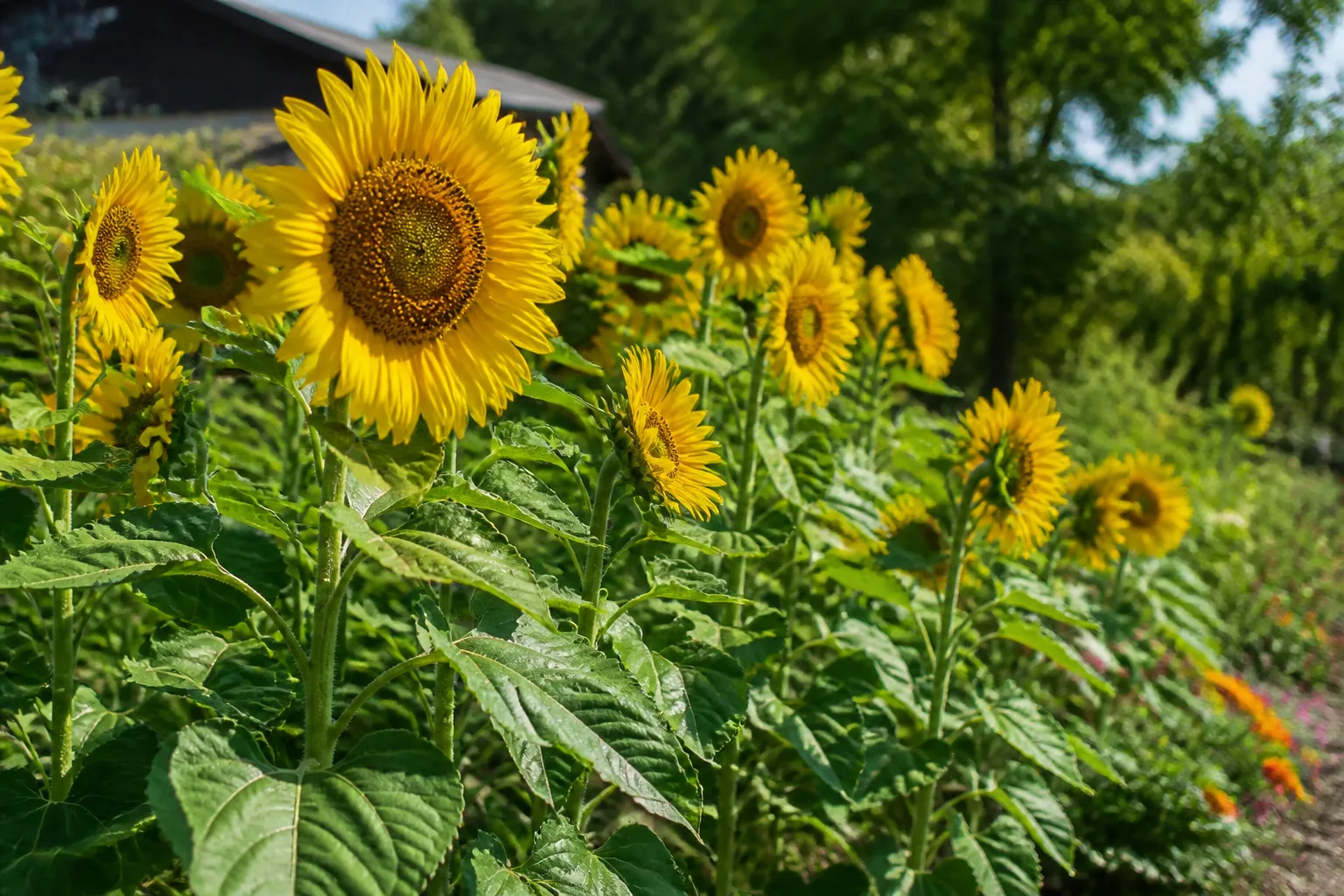
The common sunflower (Helianthus annuus) looks like the simplest plant in the seed rack—big yellow face, tall stem, done. That is mostly true. Sunflowers germinate fast, tolerate mediocre soil, and put on a show in one season. Where beginners lose the plot is variety choice, spacing, wind on 10-foot stems, and birds that harvest your seedheads before you do.
This guide covers the full annual-sunflower cycle: what to buy, how to plant, how to keep giants upright, and how to tell ripeness from rot at harvest. For frost dates, soil-temperature targets, and succession-sowing calendars, see our companion guide on when to plant sunflowers.
What Sunflowers Need at a Glance
Sunflowers are warm-season annuals native to North America. They want full sun, freely draining soil, and room for a deep taproot. Most garden cultivars bloom 60–100 days after sowing, though the seed packet’s days-to-maturity number is the one to trust.
| Need | What works in practice |
|---|---|
| Sun | At least 6 hours of direct light daily; more is better for thick stems |
| Soil | Well drained; pH roughly 6.0–7.0; tolerates poor soil once established |
| Planting window | After last frost when soil at seed depth is 55–60°F or warmer |
| Spacing | Follow mature habit—see spacing section below |
| Water | Steady moisture at germination; about 1 inch per week once growing |
| Support | Often needed for giants in exposed sites |
| Hardiness | Grown as an annual in USDA zones 2–11; frost kills plants |
Young plants are heliotropic: buds and young flower heads track the sun across the sky. Mature blooms usually lock facing east. That movement is normal, not a sign your plant is confused.
Annual Garden Sunflowers vs Perennial Types
Garden sunflowers sold for summer color are almost always H. annuus—a one-year plant. It grows, flowers, sets seed, and dies with frost. It will not return from the same root crown next spring unless volunteers sprout from dropped seed.
Perennial sunflowers—Helianthus species such as swamp sunflower or Jerusalem artichoke—are a different conversation: different height, spread, and maintenance. If you want flowers that return without resowing, read our guide to perennial sunflowers. This page focuses on the classic annual cut-flower and backyard type.
Knowing which group you bought matters because spacing, bloom duration, and end-of-season cleanup differ sharply between a single-stem giant and a clumping perennial.
When and How to Plant Sunflower Seeds
Timing is the first fork in the road. Sunflower seed and seedlings dislike cold, wet soil. Night temperatures should reliably stay above about 50°F, and soil at planting depth should reach at least 55–60°F before you commit a whole bed.
The West Virginia University Extension growing guide recommends planting after the last frost threat. In short-season climates that can mean late spring; in warm regions it may be weeks earlier. A soil thermometer at 2 inches deep beats a calendar.
Direct Sowing Outdoors
Direct sowing is the default method for annual sunflowers. The taproot resents disturbance, and outdoor-sown plants usually outperform transplants started too early indoors.
Sow seeds 1 to 2 inches deep in loosened soil. In sandy soil, err toward the deeper end so moisture stays consistent. The University of Georgia Extension home-garden circular suggests row spacing of 2–3 feet and in-row spacing of about 6 inches at sowing, then thinning.
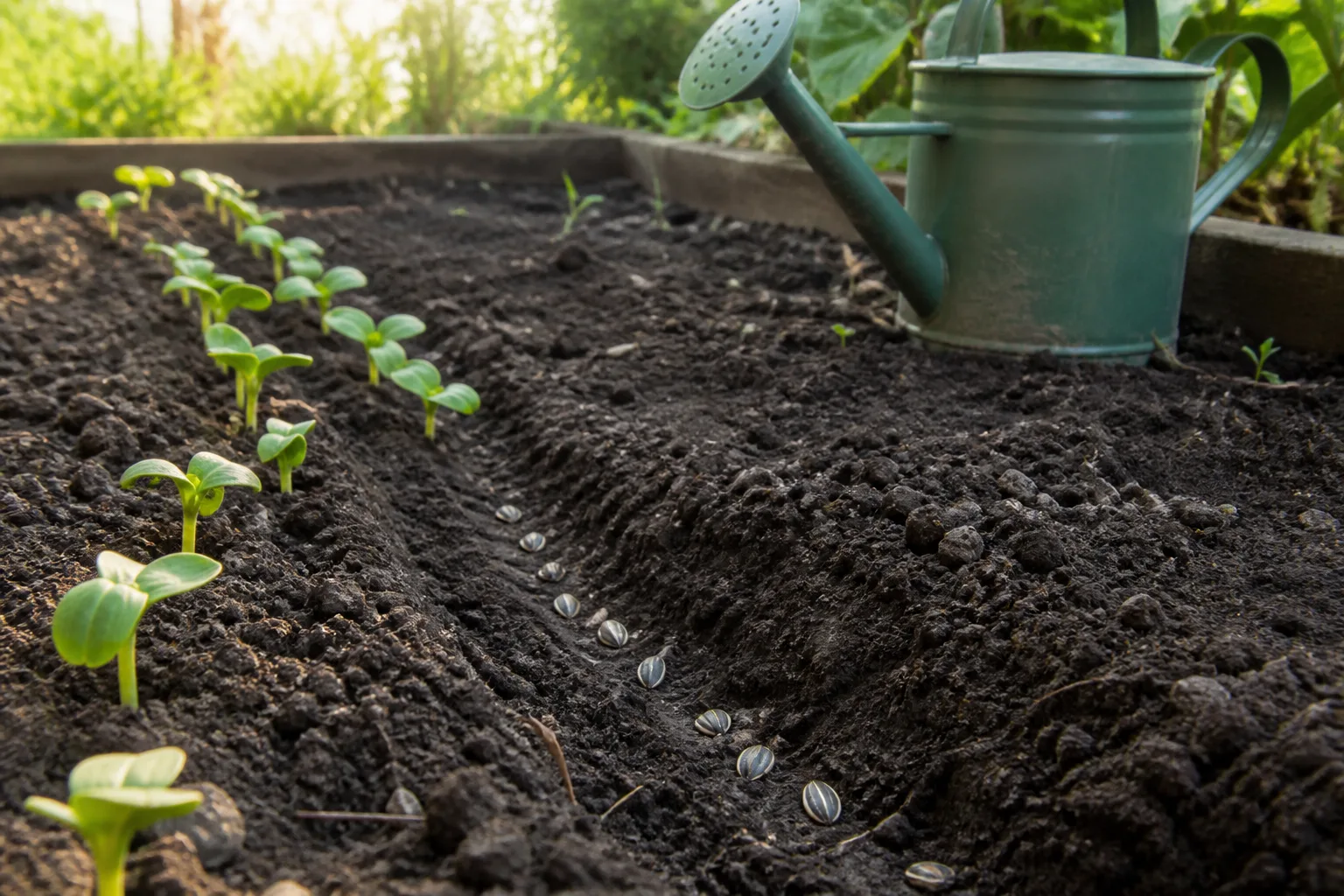
Keep the seed zone evenly moist—not flooded—for 7–10 days until emergence. Germination typically takes about a week in warm soil. Thin ruthlessly once true leaves appear; crowded giants produce weak, floppy stems.
Starting Indoors (Only When You Must)
Start indoors only when your outdoor season is too short for the variety’s days-to-bloom, or when you need a head start for a specific bloom date. Sow in deep biodegradable pots (peat or fiber) so you can plant the whole container without breaking the taproot.
Harden seedlings off for about a week: increasing outdoor time daily before planting out after frost danger passes. Even careful transplants can stall briefly. If you have enough frost-free days, skip indoor starts entirely.
Light, Soil, and Spacing by Variety
Sunflowers are not subtle about light. Shade produces leggy stems, delayed flowering, and smaller heads. Site them where they get morning-to-afternoon sun without competition from trees or tall fences.
Soil can be less than perfect. H. annuus tolerates clay, sand, and lean ground better than many ornamentals. What it will not forgive is standing water. Work in compost on heavy sites, and avoid low spots that puddle after rain.
The NC State Extension plant profile notes preference for moist, well-drained loam with neutral to alkaline pH, plus drought tolerance once roots are deep. A soil test before planting clarifies whether lime or phosphorus is needed; sunflowers use phosphorus and potassium more heavily than nitrogen for strong stems and flowers.
Single-Stem Giants vs Branching Cut-Flower Types
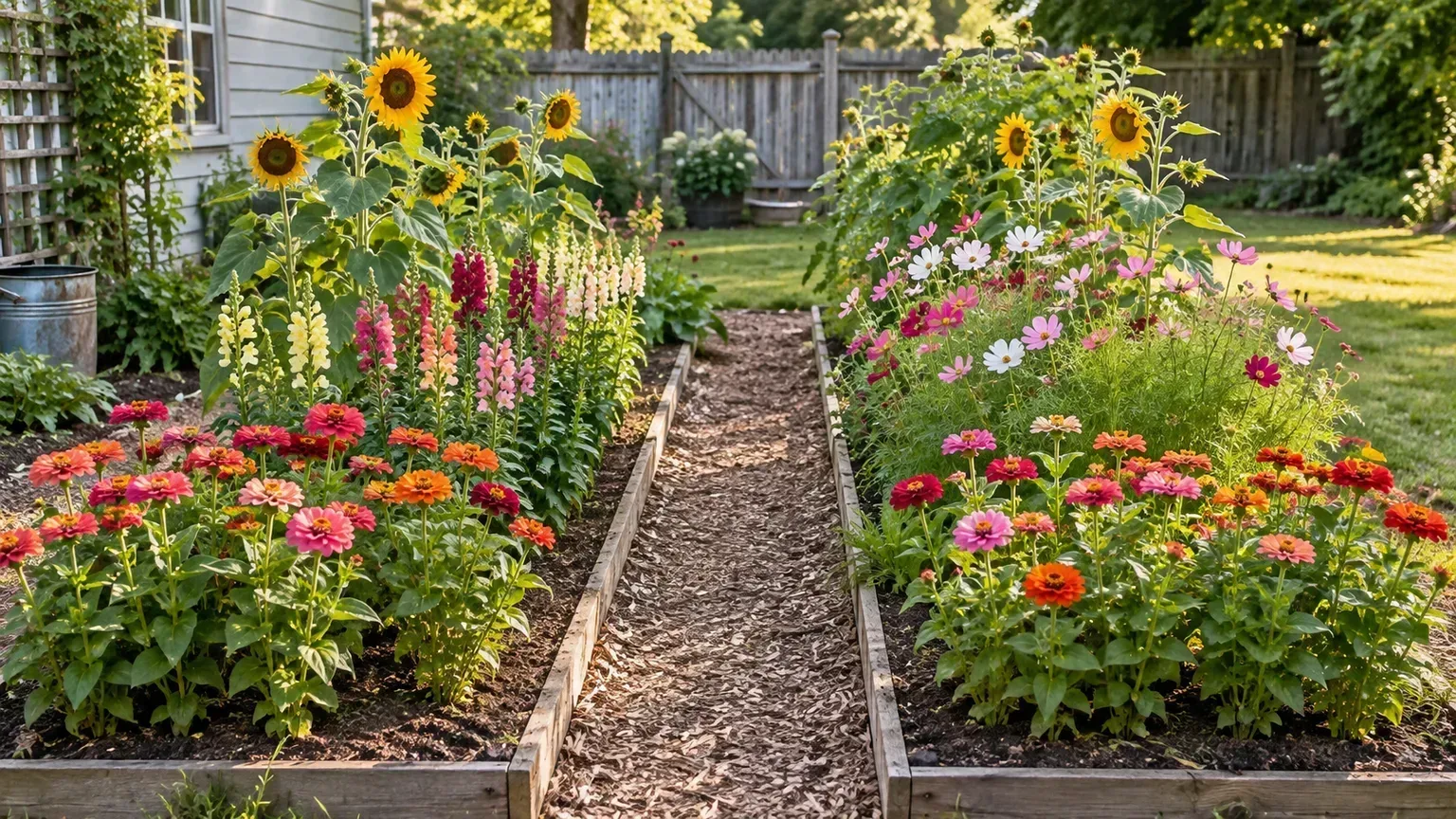
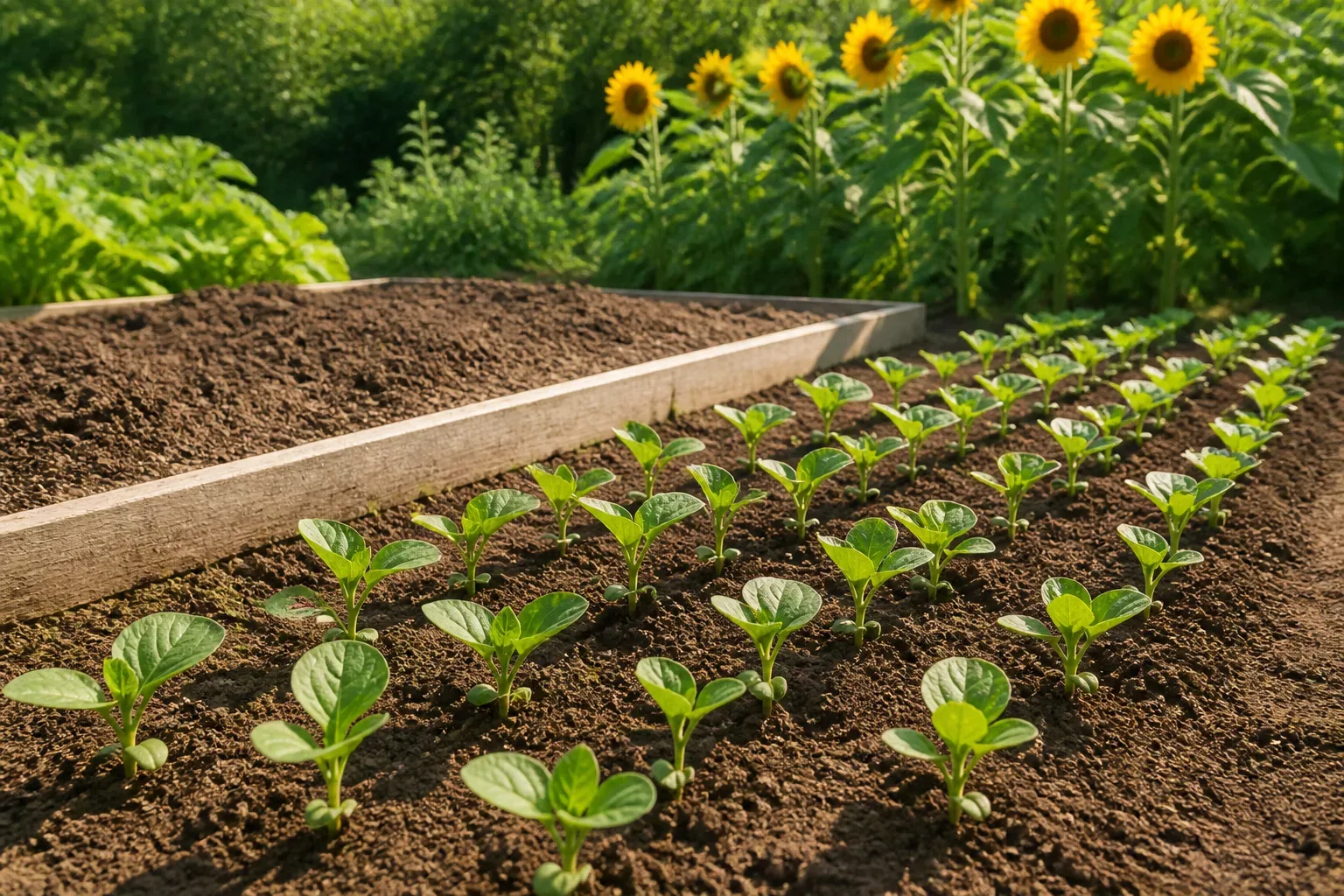
Spacing should follow the mature plant, not the seedling. Use the packet, then adjust:
| Type | Typical height | Thin to (approx.) | Best for |
|---|---|---|---|
| Dwarf / pot types | 1–3 ft | 6–12 inches | Containers, front edges |
| Branching pollenless cuts | 4–6 ft | 12–18 inches | Bouquets, longer bloom window |
| Single-stem giants | 8–12+ ft | 18–30 inches | One huge head, competitions |
Single-stem varieties produce one main flower, then are done. They are the choice for uniform cut-flower rows. Branching types keep producing side blooms for weeks if you harvest or deadhead spent flowers. Mixing both in one bed without a plan leads to either overcrowded dwarfs or lonely giants with too much wind exposure.
Plant tall varieties on the north or west side of a vegetable garden when possible so they do not shade shorter crops—unless you are deliberately using them as a living trellis or windbreak.
Watering Sunflowers Through the Season
Sunflowers handle heat well if roots are established, but they are not cacti. The establishment phase is when most failures happen.
Water lightly and frequently until seedlings have several sets of true leaves. After that, shift to deeper, less frequent soaking. The WVU Extension guide suggests about 1 inch of water per week from rain plus irrigation once plants are growing strongly.
Drooping leaves on a hot afternoon can be normal temporary wilting. Drooping in morning with dry soil 2 inches down means water. Yellow lower leaves with soggy soil suggest overwatering or poor drainage—cut back and improve airflow before root rot sets in.
Mulch 2–3 inches of straw or shredded bark after thinning to hold moisture and suppress weeds. Sunflowers hate weed competition when young.
Fertilizer: When Extra Feed Actually Helps
Rich garden soil often needs no supplemental feed. On depleted or sandy sites, a slow-release balanced fertilizer at planting—or a light side-dress when the second set of leaves appears—can speed early growth.
Sunflowers respond to phosphorus and potassium for stem strength and flowering more than to heavy nitrogen, which can produce tall, weak plants. WVU Extension describes splitting nitrogen: half at planting, half mid-season. If you did not soil-test, a modest application beats dumping high-nitrogen lawn fertilizer on the bed.
Always water after granular fertilizer so nutrients move toward roots rather than sitting on dry crust.
Staking and Wind Protection for Tall Stems
A 10-foot sunflower in full bloom is a sail. Rainstorms and summer wind can snap stems at the base or mid-point, especially on heavy seedheads.
Prevention beats rescue:
- Plant in groups so plants buffer each other slightly
- Choose a site sheltered from prevailing wind when possible
- Space giants wide so stems thicken
- Stake at planting time if exposure is high—threading a stake beside the stem later risks root damage
Use a sturdy bamboo or hardwood stake tied loosely in two places with soft fabric. Planting along a fence works well for cut-flower rows. Dwarf and many branching types under 4 feet often need no support if spaced correctly.
Sunflower Varieties Worth Trying
Seed racks change yearly, but these habits are reliable anchors:
- ‘Russian Giant’ — Classic 10–12 ft single stem, large yellow head; needs space and staking
- ‘Mammoth’ / ‘Titan’ — Competition-scale heads; long season; best for seed harvest
- ‘Teddy Bear’ — Compact 2–3 ft double flowers; great for pots and front borders
- ‘Autumn Beauty’ — Branching mix of yellow, bronze, and burgundy tones
- ‘Italian White’ — Pale petals, dark centers; elegant branching form near 6–7 ft
- Pollenless F1 cuts — Cleaner bouquets, less pollen shed indoors; often branching
Oilseed types (often smaller black seeds) attract birds heavily and suit wildlife plantings. Confection types produce the striped seeds you roast for snacking. Match the variety to your goal before you sow, not after the head is mature.
Growing Sunflowers in Containers
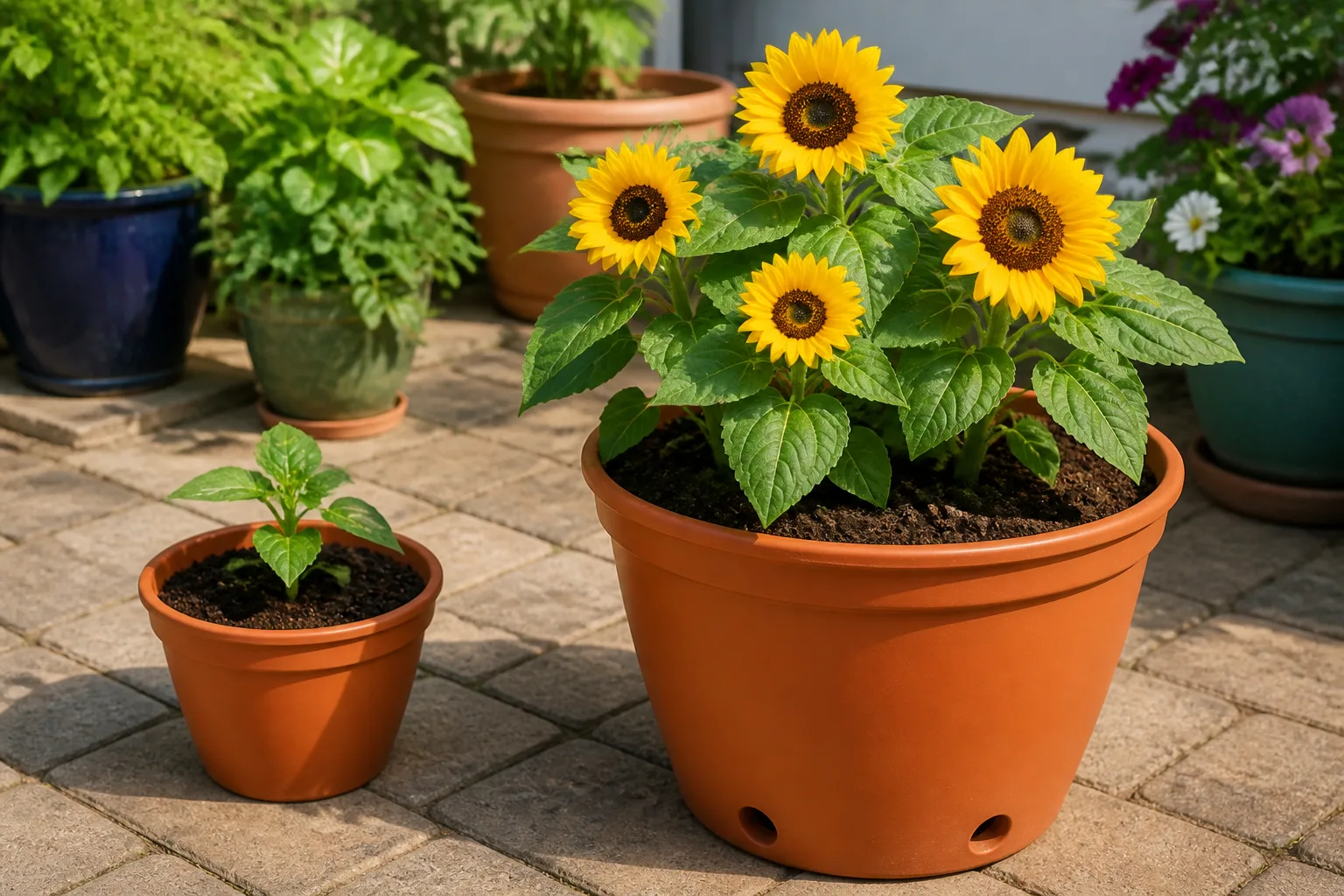
Sunflowers can grow in pots, but container size sets the height ceiling. A dwarf or medium branching cultivar in a 7–10 gallon pot with drainage holes is realistic. Giants in small pots topple and disappoint.
Use a quality potting mix—not garden soil alone—and place the pot in full sun. Containers dry faster than ground beds; check moisture daily in heat. Expect to fertilize lightly mid-season because nutrients leach with frequent watering.
Because H. annuus is an annual, treat the pot as a one-season display. Compost the plant after frost rather than trying to “repot” it.
Deadheading, Pruning, and Extending Bloom
Annual sunflowers do not need pruning to survive. Deadheading changes bloom behavior:
- On branching types, removing spent flowers can redirect energy to new side buds and extend the cutting season
- On single-stem types, removing the only bud ends the show—skip deadheading unless you are sacrificing the head for aesthetics
When plants finish and brown off, cut stems at the base for a tidy bed, or leave seedheads standing for birds if you are not saving seed. The RHS sunflower growing guide notes wildlife value from standing seedheads into winter.
Harvesting and Saving Sunflower Seeds
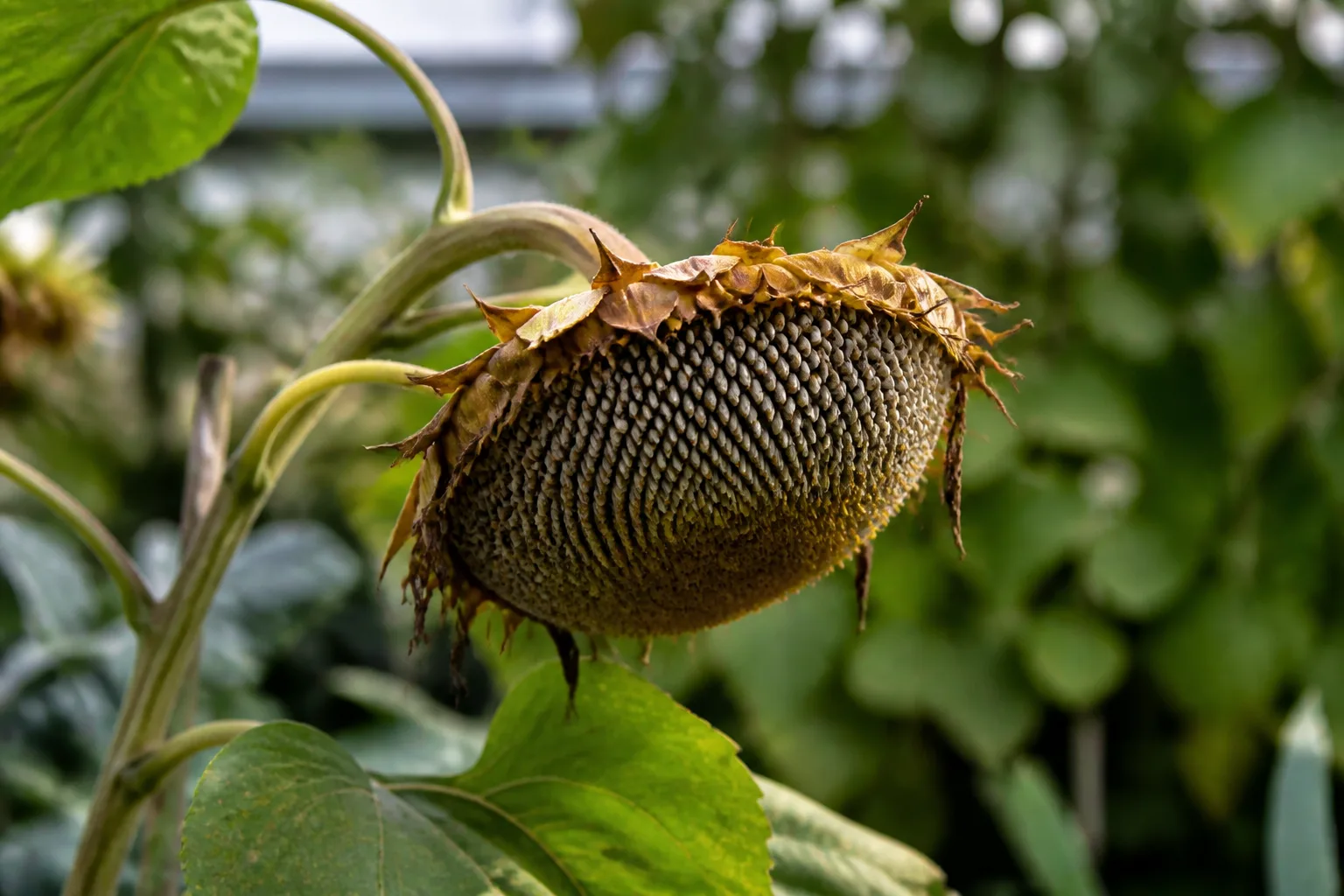
Seed harvest timing is a race against birds, squirrels, and autumn rain. According to UGA Extension, watch the back of the head: it turns from green to yellow-brown, the face nods downward, and dried disk florets rub off to reveal plump seeds.
If wildlife pressure is high, cut the head with 12 inches of stem attached when the back is mostly brown but before seeds loosen on their own. Hang heads upside down in a warm, dry, airy space—paper bags or cheesecloth catch falling seeds. Cure until seeds rub out easily, then dry further in a shallow tray before storage in a cool, airtight container.
For eating, roast thoroughly; for replanting next year, store dry seed labeled with variety and date. Hybrid seed may not breed true.
Pests, Diseases, and Wildlife
Sunflowers attract life—mostly good, sometimes expensive.
Deer browse young plants overnight. Fence or repellents are the realistic fixes in deer territory; a single nibble on the growing tip can ruin a single-stem crop.
Birds and squirrels target ripening seed. Netting over heads, early harvest, or accepting some loss as wildlife feed are the honest options. Scare tactics work briefly; hungry finches adapt fast.
Slugs and snails shred seedlings. Delay outdoor planting until plants are sturdy, use slug barriers on wet years, and clear debris where mollusks hide.
Caterpillars, beetles, and leaf-footed bugs chew foliage and heads. Hand-pick on small plantings; sunflowers also work as trap crops drawing pests away from vegetables—balance spraying against killing pollinators.
Sunflower Moth, Mildew, and Stem Problems
The sunflower moth lays eggs on heads; larvae tunnel seeds and leave holes. Inspect developing heads; remove affected sections on a home scale. Insecticides are a last resort during bloom when bees are active.
Powdery mildew and rust appear as white or rusty patches, often on lower leaves first. Improve spacing and airflow; remove heavily infected leaves. Fungicides help only if cultural fixes come first.
Stem canker and leaf spot show as dark lesions on stems or leaves in humid weather. Infected plants should be removed—not composted—if lesions spread quickly. Avoid overhead watering that keeps foliage wet overnight.
H. annuus can also inhibit growth of nearby plants through allelopathic compounds in roots and decaying debris. Do not replant sensitive crops in the exact same spot without refreshing the soil.
Troubleshooting Drooping, Yellow Leaves, and No Blooms
Drooping mid-day, perky by evening: usually heat stress; water deeply if soil is dry.
Drooping all day with wet soil: root issue from overwatering or compaction; improve drainage and ease off irrigation.
Yellow lower leaves only: often natural senescence as the plant directs energy upward; worry if yellow spreads quickly with spots or wilting.
Tall plant, no flower by frost: variety too slow for your season, planted too late, or severe nitrogen excess with shade—check days-to-maturity and sun hours.
Small heads on giants: overcrowding, drought during bud formation, or nutrient shortage—review spacing and watering logs.
Leaned or bent stem: wind damage; stake the plant and mound soil at the base for minor tilts; snapped stems rarely recover.
Conclusion
Annual sunflowers reward a few clear decisions: pick the right type for your goal (single show head, cut-flower row, or seed harvest), sow into warm soil with realistic spacing, and plan for wind and wildlife before the bloom is ripe. Get those right and Helianthus annuus mostly takes care of the rest—fast growth, pollinator traffic, and seedheads that can feed you or the birds.
Keep a soil thermometer and the seed packet on the same clipboard. They answer more questions than any generic monthly calendar. When you want planting-date detail, succession sowing, or last-chance summer sowings, use when to plant sunflowers. When you want a plant that returns without an annual sowing, explore perennial sunflowers. Between those two guides and the routines above, you can run sunflowers from first frost window to final seed jar without guessing.