6 Heat-Tolerant Container Plants for Hot Summers
Choose six heat-tolerant container plants for hot summers, then match each to sun, water, pot size, pet safety, and afternoon-shade needs.
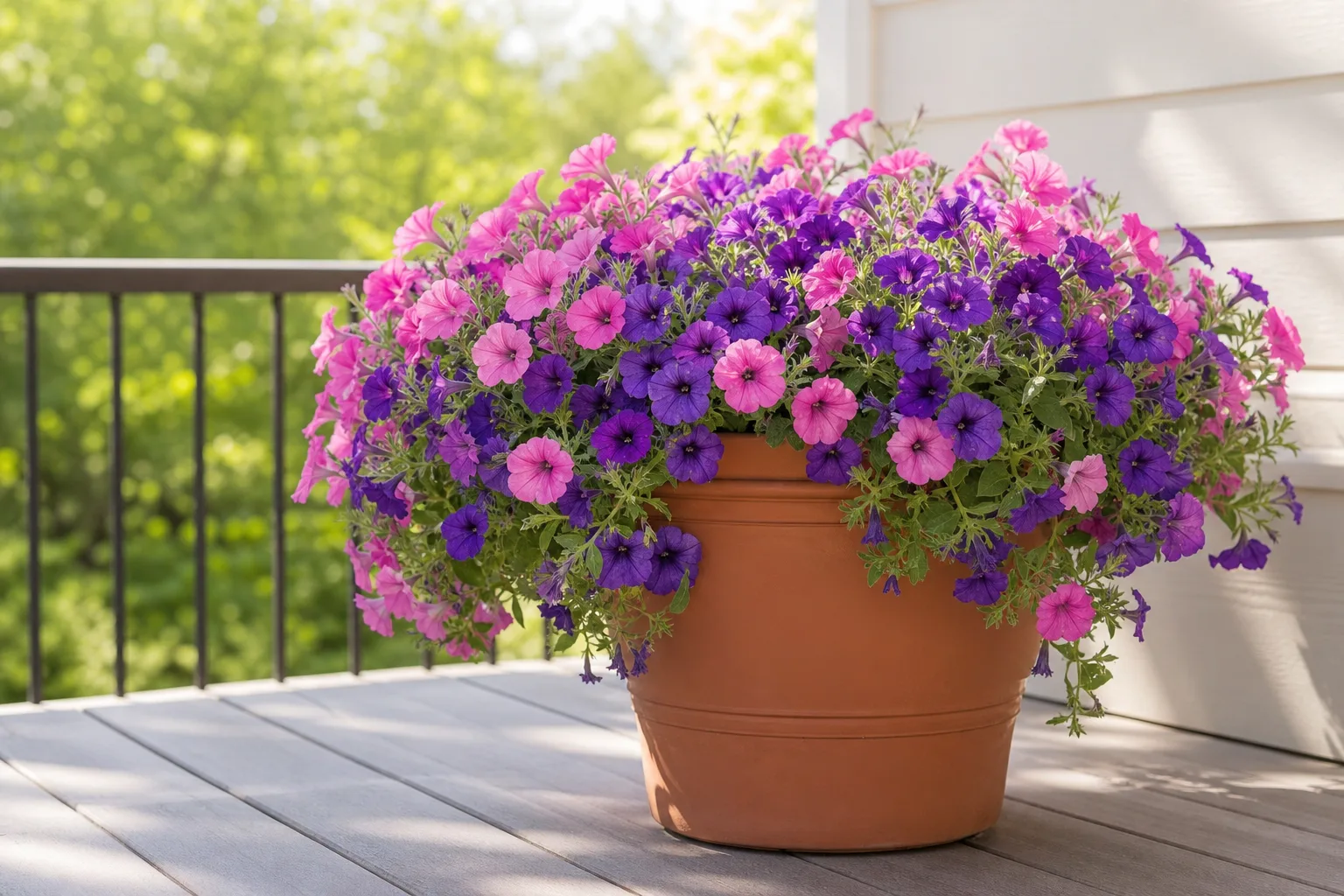
The best heat-tolerant container plants are not simply flowers with a “full sun” label. In a pot, roots have less soil around them, dark plastic or metal can heat quickly, and wind can pull moisture from leaves faster than a garden bed loses it. A plant that shrugs off July heat in the ground may still wilt on a small, exposed balcony.
The six plants below cover different summer situations: dry, sunny spots; large patio planters; pollinator displays; and hot locations that get afternoon shade. Use the list as a matching guide, then give every plant a draining pot, fresh container mix, and a watering routine that accounts for weather and pot size. Extension guidance from NC State, Colorado State University, and Oklahoma State University all make the same underlying point: container success depends as much on the root environment as on the plant’s reputation for toughness.
The Quick Shortlist: Match the Plant to Your Patio
Start with the growing conditions you actually have. “Full sun” usually means at least six hours of direct light, while a flowering container in a truly exposed location may receive eight or more hours plus heat radiating from paving, walls, and railings. If your patio is hot but shaded after lunch, a plant with afternoon-shade tolerance can outperform a supposedly tougher full-sun species.
| Plant | Best use | Light | Moisture once established | The decision to make |
|---|---|---|---|---|
| Anise hyssop (Agastache foeniculum) | Tall, fragrant pollinator pot | Full sun to part shade | Dry to medium | Give it height and fast drainage. |
| Orange coneflower (Rudbeckia fulgida) | Upright yellow-orange perennial | Full sun; tolerates some shade | Medium, then occasional dryness | Use a large, stable pot for its height. |
| Pinks (Dianthus spp.) | Fringed flowers and cool-toned color | Full sun; afternoon shade in hot climates | Dry to medium | Avoid treating it as a hot-humid annual. |
| Threadleaf coreopsis (Coreopsis verticillata) | Airy texture and yellow flowers | Full sun to part shade | Dry to medium | Choose a compact cultivar and avoid rich, wet mix. |
| Bedding geraniums (Pelargonium spp.) | Long-lasting, classic container color | Full sun; shade during extreme heat | Water when the mix dries | Use afternoon shade when heat is relentless. |
| Hummingbird sage (Salvia spathacea) | Pink-red flowers for dry, partly shaded pots | Shade to full sun, depending on climate | Very low after establishment | Best for hot sites that are not all-day reflected sun. |
The “moisture once established” column does not mean a newly planted pot can go without water. Roots need regular moisture while they fill the container, and even drought-tolerant plants may wilt when the root ball becomes hotter and drier than the surrounding landscape.
What “Heat-Tolerant” Really Means in a Container
Heat tolerance is a relationship between the plant and its conditions. It may describe a plant’s ability to keep growing during high air temperatures, tolerate dry soil after its roots are established, or recover from a hot afternoon without permanent damage. Those are useful traits, but none makes a plant immune to a small pot, a blocked drain hole, or a week of missed watering.
Check light, reflected heat, and wind before you buy
Track the spot for one sunny day before choosing plants. Note when direct light begins, when it ends, whether a pale wall reflects heat, and whether wind hits the leaves. A black pot on a west-facing concrete balcony is a harsher environment than a light-colored ceramic pot on a mulched porch, even if both receive six hours of sun.
If foliage wilts only in late afternoon and recovers by evening, heat load may be the problem rather than a permanently dry root ball. Move the container where it gets morning sun and filtered afternoon light, group pots to reduce wind, or use a temporary shade cloth during a heat wave. Do not respond to every afternoon wilt by adding water; wet soil can deprive roots of oxygen and create a second problem.
Choose a pot that protects the root zone
Use a container with a real drainage hole and enough volume for the plant’s mature root system. Larger pots hold more mix and dry more slowly, while very small or shallow pots need more frequent checks. NC State Extension also warns that dark containers in full sun absorb more heat, raise potting-mix temperatures, and can injure fragile roots; a light-colored or insulated pot is a practical upgrade for exposed sites.
Use a quality soilless potting mix rather than garden soil, which compacts in a container and limits air and water movement. Better Homes & Gardens also notes that small pots dry faster, so a roomy container is a useful heat-management tool (BHG). Do not add a layer of gravel to the bottom as a drainage shortcut. The mix itself needs pore space, and the hole needs to let excess water leave freely.
Anise Hyssop: The Tall Pollinator Magnet
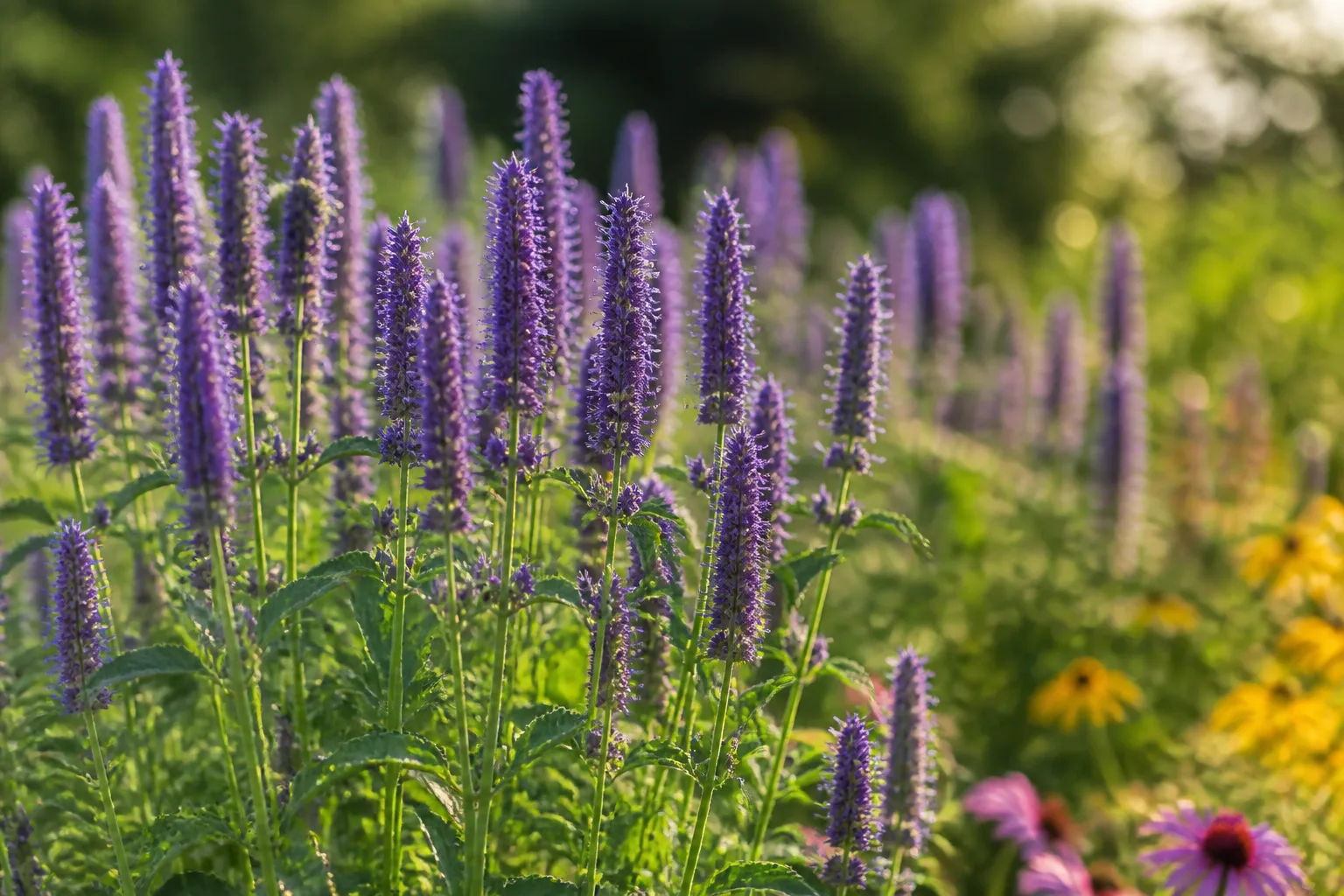
Anise hyssop (Agastache foeniculum) is a strong choice when you want a tall, fragrant centerpiece rather than a low mound of flowers. Its lavender-purple flower spikes rise above aromatic leaves, and the blooms attract hummingbirds and butterflies. The Missouri Botanical Garden Plant Finder lists it as a full-sun to part-shade perennial for Zones 4 through 8 that tolerates drought and dry soil once established.
In a container, use it as a thriller toward the back or center of a wide pot. It can reach 2 to 4 feet, so a narrow lightweight pot may tip in wind. A 12- to 18-inch-wide container gives the root mass and top-heavy stems more stability than a small nursery pot, though the exact size should match the cultivar you buy.
Anise hyssop prefers good drainage and can take some moisture while it is growing, but soggy mix is a greater threat than a brief dry spell. Water deeply during the first several weeks, check the mix again before watering, and let excess drain. Deadheading can encourage more flowers, but leaving a few seed heads also gives birds something to forage later.
Orange Coneflower: A Tough, Upright Summer Perennial
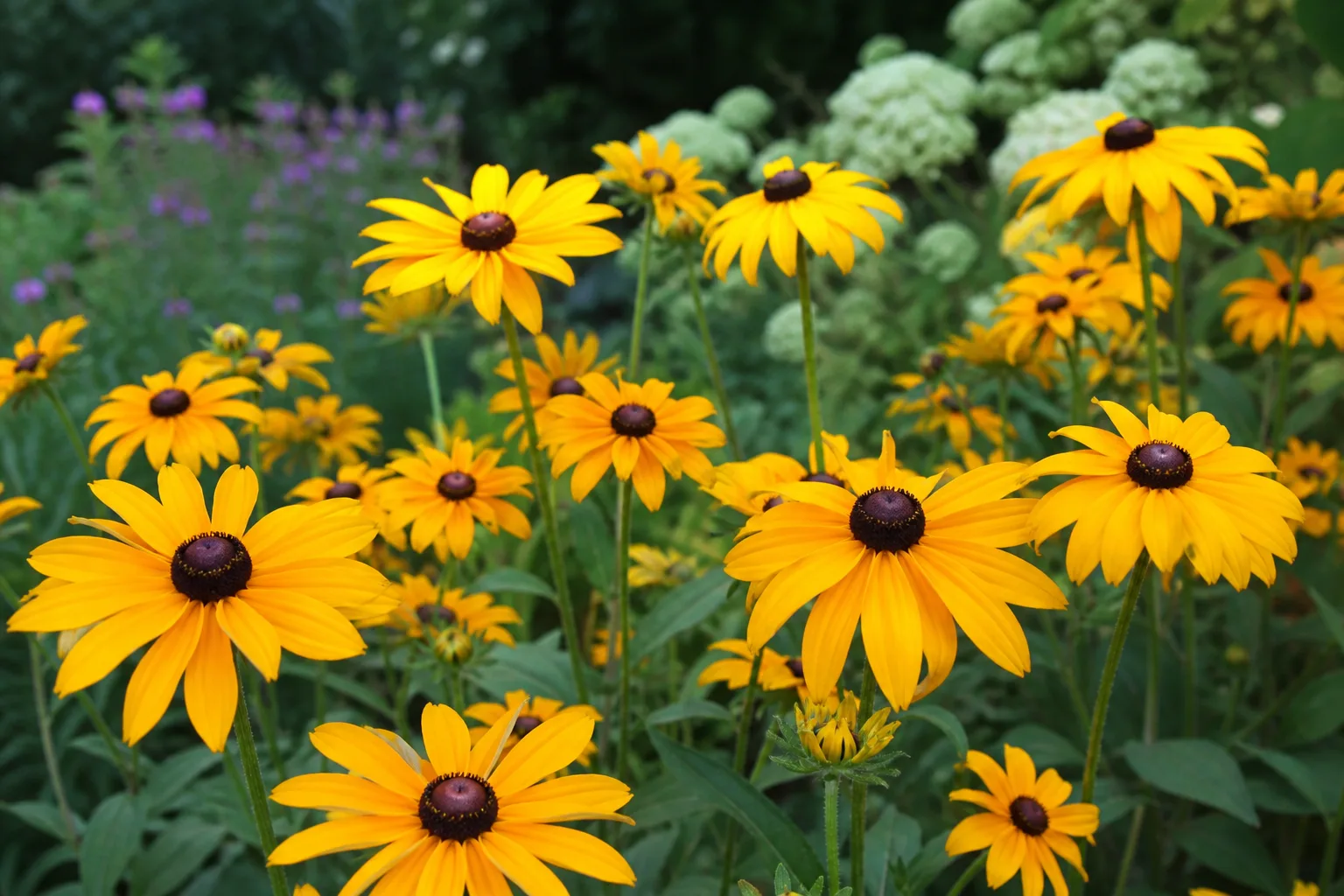
Orange coneflower, commonly sold as black-eyed Susan, is Rudbeckia fulgida. It brings yellow-to-orange rays and dark centers to a container without the delicate look of many small-flowered bedding plants. The NC State plant profile describes it as a low-maintenance perennial that handles hot, humid summers, tolerates occasional dryness once established, and blooms from summer into fall.
This is one of the best picks for a large sunny pot that can stay in place for the season. The species may grow 2 to 3 feet tall and spread by rhizomes, so choose a stable container and expect the clump to fill it. A heavy pot, a sheltered location, or a discreet support keeps tall stems from leaning after wind and rain.
Give the plant full sun for the strongest flowering, use a well-draining mix, and water when the upper mix begins to dry rather than waiting for the entire root ball to become dust-dry. It can tolerate some partial shade, but shade combined with rich, wet mix may produce weaker growth. Leave a few seed heads in place if birds are part of the reason you are growing it.
Pinks: Colorful, but Better With a Heat-Caveat
“Pinks” usually refers to Dianthus species and cultivars with fringed, often fragrant flowers. They are excellent for crisp flower form, compact edging, and pots that need pink, white, red, or bicolored blooms. They are also the plant on this list that most needs a qualification: not every Dianthus is a reliable performer through hot, humid summer weather.
The NC State profile for China pinks says they are often grown as annuals because they do not perform well in hot and humid summers. In warm climates, give them morning sun and afternoon shade, especially when the pot sits against a heat-reflecting wall. In drier climates with cool nights, they may handle full sun more consistently.
Use a fast-draining mix and avoid keeping the crown constantly wet; poor drainage can lead to crown rot and rust. Water thoroughly when the mix is partly dry, then let the pot drain. Trim spent flowers after a flush of bloom to keep the plant tidy and encourage more flowers, but do not fertilize a heat-stressed plant heavily in an attempt to force it back into bloom.
One more practical point matters in pet households. NC State lists Dianthus chinensis as poisonous or problematic for dogs, cats, and horses. Keep the pot where animals cannot chew it, and contact a veterinarian or a poison-control service if a pet has eaten a significant amount of plant material.
Threadleaf Coreopsis: Fine Texture and Drought Tolerance
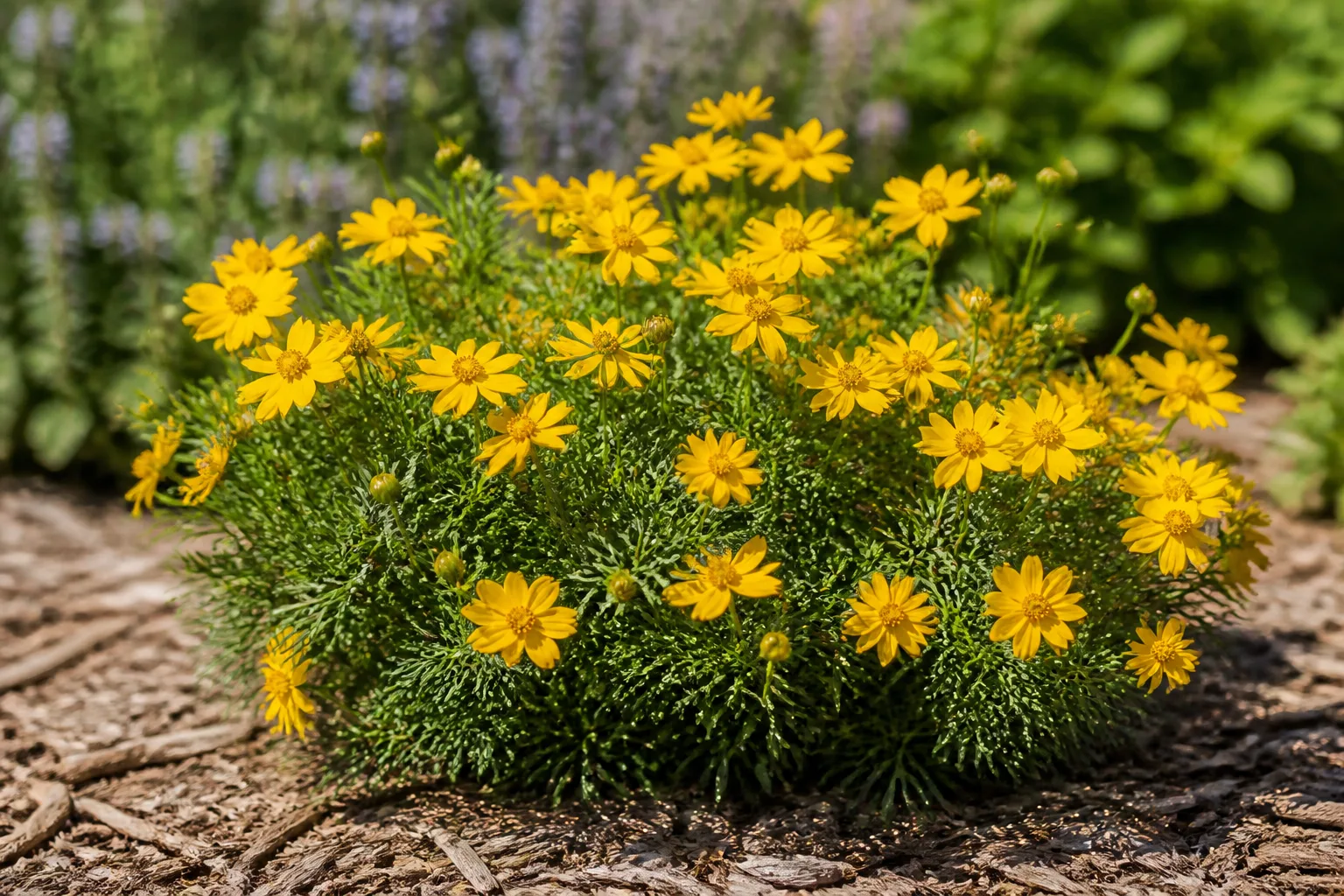
Threadleaf coreopsis, also called threadleaf tickseed, combines airy, finely divided foliage with a long display of yellow daisy-like flowers. It is a good answer when a container needs movement and texture rather than a dense mound. The NC State profile notes that it tolerates drought, heat, humidity, poor sandy or rocky soil, and low fertility—but becomes weak and floppy if the soil stays too rich or wet.
That trait makes it unusually well suited to a potting mix that drains promptly. Avoid moisture-retentive “water garden” mixes and do not crowd it with plants that need constant moisture. Compact cultivars such as ‘Moonbeam’ or ‘Zagreb’ are easier to manage in a container than the full-sized species, which can reach 2 to 3 feet.
Place the pot in full sun to part shade and water more often while roots are establishing. Once the root ball is filled, let the top portion of the mix dry slightly before watering again. If flowering slows after the first flush, a light trim can sometimes encourage a later display, but shearing is optional and should not be used to hide a plant that is flopping from excess water.
Geraniums: Reliable Color With Afternoon-Shade Insurance
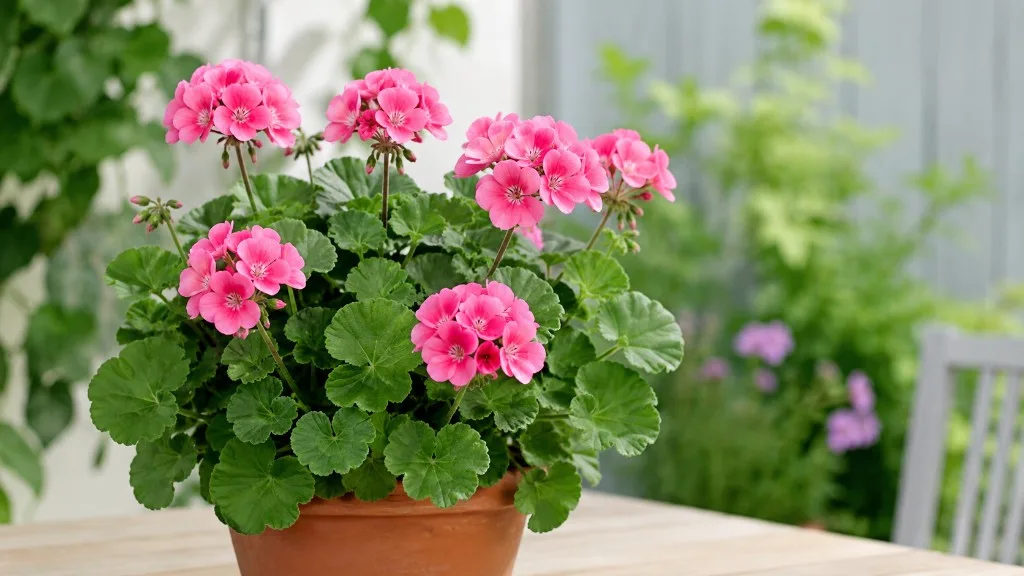
The colorful “geranium” sold for patio pots is usually a Pelargonium, not a hardy cranesbill geranium. Bedding geraniums earn their popularity through strong flower color, scented or textured leaves in some cultivars, and a willingness to keep blooming when the pot is well lit and watered sensibly. The NC State profile for hybrid bedding geraniums lists full sun, good drainage, and container use, with heat-tolerant cultivar groups available.
Give geraniums a sunny position, but treat extreme heat as a reason to adjust the location rather than a challenge to prove the plant can endure. Southern Living’s container guidance recommends afternoon shade during severe heat; this also reduces water loss and the chance that a dark pot turns the root zone into an oven. Water when the mix is dry near the surface, then let the pot drain fully. Periodic dryness is usually less damaging than constant saturation, but repeated wilt will reduce flowering.
Deadhead faded flower clusters and remove yellowing leaves so the plant can direct energy toward new growth and so pests are easier to spot. Do not combine geraniums in one container with a plant that wants constantly damp soil; their water needs are closer to coreopsis and Dianthus than to a moisture-loving tropical.
NC State lists Pelargonium hybrids as poisonous or problematic for dogs, cats, and horses. Place geranium pots out of reach of pets that nibble leaves, particularly when the container sits on a low balcony ledge or patio step.
Hummingbird Sage: The Best Choice for Hot, Dry Part Shade
Hummingbird sage (Salvia spathacea) is the outlier in this list—and that is precisely why it is useful. Its pink to red flower spikes and fragrant foliage bring pollinator value to a location where all-day sun may be too harsh. Calscape describes it as a California native that grows naturally in dry shady areas, tolerates shade through full sun, and needs very little water once established.
Choose it for a pot beneath a bright patio roof, at the edge of a hot courtyard, or in a spot that gets morning sun and dappled afternoon light. It can tolerate more sun when its roots stay cool and the climate is mild, but an exposed west-facing container in an inland heat wave is not the same as a woodland edge. Move the pot temporarily if leaves droop repeatedly in late afternoon even when the mix is moist.
Hummingbird sage spreads by rhizomes, so give it a broad container rather than a cramped one. The plant can go semi-dormant during dry periods; do not respond by keeping the pot wet all the time. Allow the mix to dry somewhat between thorough waterings, and reduce watering further when growth naturally slows. Light deadheading or pruning can tidy the plant, but leaving some flowers supports the hummingbirds and other pollinators that make this plant worth growing.
How to Plant and Water Heat-Tolerant Flowers in Pots
Heat-tolerant plants still need a good start. Transplant in the morning or on a cloudy day, loosen circling roots gently, set the root ball at the same depth it was growing, and leave about an inch of space below the rim so water can soak in without washing mix away. Water the newly planted pot slowly until water exits the drainage hole.
Use the right soil, drainage, and spacing
Use fresh commercial potting mix or a mix formulated for containers. Do not blend garden soil into a patio pot unless a specific, tested recipe calls for it; field soil tends to compact and can hold too much water around roots. For anise hyssop, coneflower, coreopsis, and hummingbird sage, prioritize a mix that drains freely. Dianthus and geraniums also need drainage, but should not be allowed to stay chronically dry while blooming.
Give each plant room for air movement. Overpacked pots look full on day one but dry unevenly, shade their own foliage, and make it harder to see whether the soil is wet. If you combine plants, group species with similar light and water needs: geranium with coreopsis is a more sensible pairing than geranium with a plant that wants permanently moist soil.
Mulch can reduce evaporation in a large outdoor pot, but keep it thin and away from stems. A layer of bark or fine leaf mold helps more than a thick blanket that traps moisture against a crown. Mulch is a moisture buffer, not a substitute for drainage.
Water by root-zone moisture, not the calendar
Check each pot with your finger or a wooden skewer, look for moisture a little below the surface, and lift the container when you can. Water when the mix has begun to dry at the depth appropriate for the plant, then soak the entire root ball and let the pot drain. A saucer may catch runoff, but do not leave the pot standing in water.
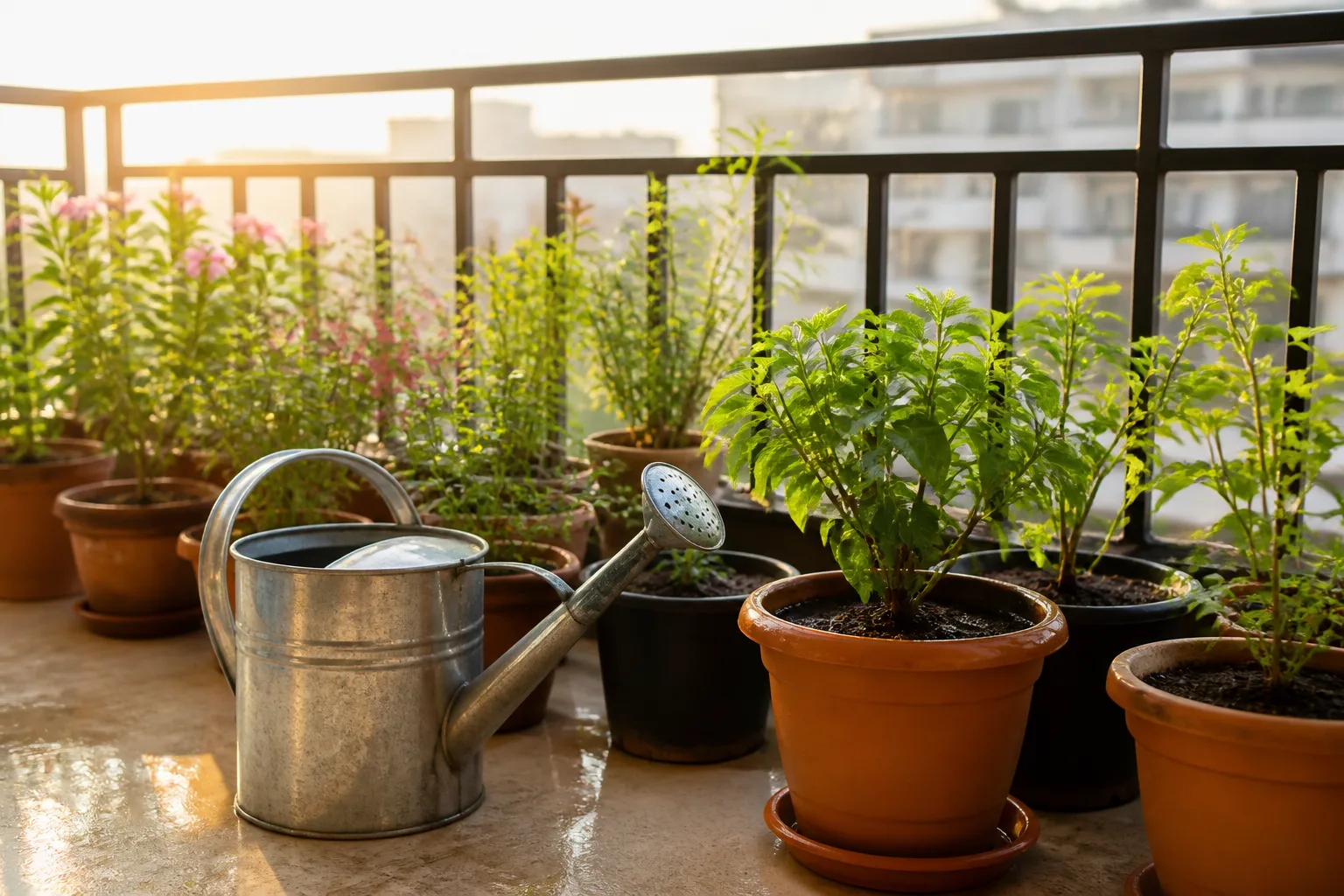
Hot, sunny containers can need water more than once a day, especially when they are small, porous, root-bound, hanging, or exposed to wind. Oklahoma State Extension notes that hot, sunny container gardens may need watering twice a day depending on temperature, plant selection, growing media, and container size. Treat that as a reason to check more often, not as a universal schedule. A large, well-mulched pot with established coreopsis may need less frequent watering than a small hanging basket of flowering geraniums.
Heat-Wave Troubleshooting and Common Mistakes
When a container plant wilts, check the root zone before doing anything else. If the mix is dry several inches down and the pot is light, water slowly and deeply; if water runs down the sides without soaking in, repeat in two passes a few minutes apart. If the mix is wet and the leaves are still limp, move the pot out of hot sun, inspect the drainage hole, and do not add more water until the roots can breathe.
Watch for these patterns:
- Afternoon wilt, evening recovery: reduce reflected heat or add temporary afternoon shade before increasing the watering schedule.
- Crispy leaf edges with bone-dry mix: increase the depth or frequency of watering and consider a larger or less porous pot.
- Yellowing leaves with wet mix: check drainage and root condition; the plant may be stressed by too much water rather than thirsty.
- Wilting that continues after watering: inspect for a blocked drain hole, root damage, severe heat on the container, or a root-bound plant.
- Floppy coreopsis or coneflower: look for rich, constantly wet mix, too little light, or a container that is too small for the top growth.
- Pinks fading in hot humidity: move them to morning sun and afternoon shade; do not assume a second watering will solve heat dormancy.
Avoid five common mistakes: planting a tall perennial in a tiny pot, using a black container on a west-facing surface, adding gravel beneath the mix, grouping plants with incompatible moisture needs, and fertilizing a wilted plant before correcting heat or water stress. Fertilizer can support active growth, but it cannot repair roots that are too hot, too dry, or oxygen-starved.
Conclusion
For the brightest, driest patio, start with anise hyssop, orange coneflower, threadleaf coreopsis, or a heat-tolerant geranium cultivar in a roomy, draining pot. Choose Dianthus when you can offer good drainage and some afternoon relief in hot-humid weather. Choose hummingbird sage when the site is hot but partly shaded and you want flowers that support hummingbirds without constant irrigation.
The dependable formula is simple: match the plant to the actual light, protect the root zone from reflected heat, use a pot large enough to buffer moisture, and check the mix before watering. “Heat tolerant” becomes useful only when those container basics are in place.



