How to Make Hydrangeas Bloom Again This Summer
Get another round of hydrangea flowers before fall: identify reblooming types, cut spent blooms safely, and avoid pruning away next year's buds.
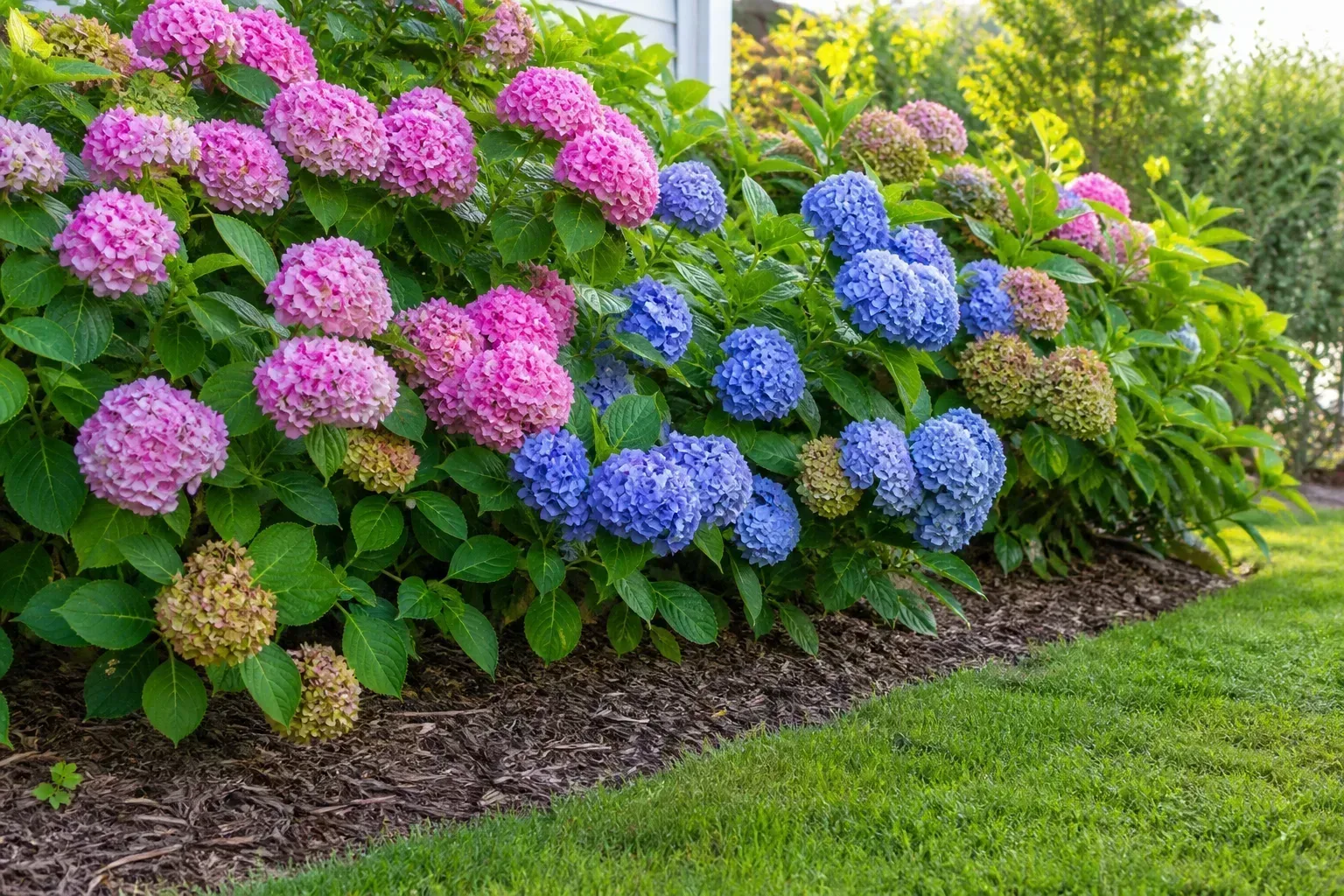
The fastest way to get more hydrangea flowers is not a mystery fertilizer or a harder prune. First confirm that your shrub is a reblooming cultivar, then remove spent flowers without cutting into the stem framework that carries the next flush. From there, keep the root zone evenly moist, give the plant morning sun with relief from punishing afternoon heat, and protect late-season growth from stress.
That first check matters because not every hydrangea can flower twice. A reblooming bigleaf or mountain hydrangea can produce flowers on old and new wood, while an oakleaf or standard mophead may have only one main flowering cycle. You can make a non-reblooming plant healthier and tidier, but you cannot deadhead it into a second flush that its cultivar is not built to produce.
The short answer: protect the plant’s ability to make a second flush
Use this order when the first flowers fade:
- Read the plant tag or identify the cultivar. Look for words such as reblooming, remontant, or a cultivar line known to flower on both old and new wood.
- Deadhead only spent flowers. Cut just below the flower head and above a strong pair of leaves or buds; do not shorten every branch.
- Stop structural pruning late in the season. A second flush still needs healthy new shoots, and old-wood buds for next year may already be forming.
- Water the root zone deeply and consistently. A wilted shrub cannot spend much energy on new flower growth, but constantly wet soil damages roots.
- Correct the site, not just the symptom. Morning sun, afternoon protection in hot climates, mulch, and a windbreak can matter more than another application of fertilizer.
If your plant is an established rebloomer and the foliage is healthy, a light round of deadheading may encourage the plant to keep producing flowers. If the shrub is young, heat-stressed, recently transplanted, heavily browsed, or recovering from winterkill, stabilizing it is more useful than chasing an immediate second flush. See our guide to hydrangeas that stop reblooming for a symptom-first check when the plant has already missed its first display.
Identify whether your hydrangea can rebloom
“Hydrangea” describes a large group of shrubs with different flowering biology. The NC State Extension Gardener Plant Toolbox lists bigleaf, mountain, panicle, smooth, oakleaf, and climbing hydrangeas among the common landscape types, and notes that pruning timing changes with the variety. Before you reach for pruners, use the label, the shape of the flower head, and the leaves to narrow down what you have.
Old wood, new wood, and the clues on the plant
Old-wood hydrangeas form many flower buds on stems made during the previous growing season. Bigleaf mopheads and lacecaps, mountain hydrangeas, oakleaf hydrangeas, and climbing hydrangeas generally fall into this group. Those buds must survive winter, so a fall, winter, or late-spring haircut can remove the flowers before they open. The University of New Hampshire Extension pruning fact sheet makes the same core distinction: know where the buds are before you cut.
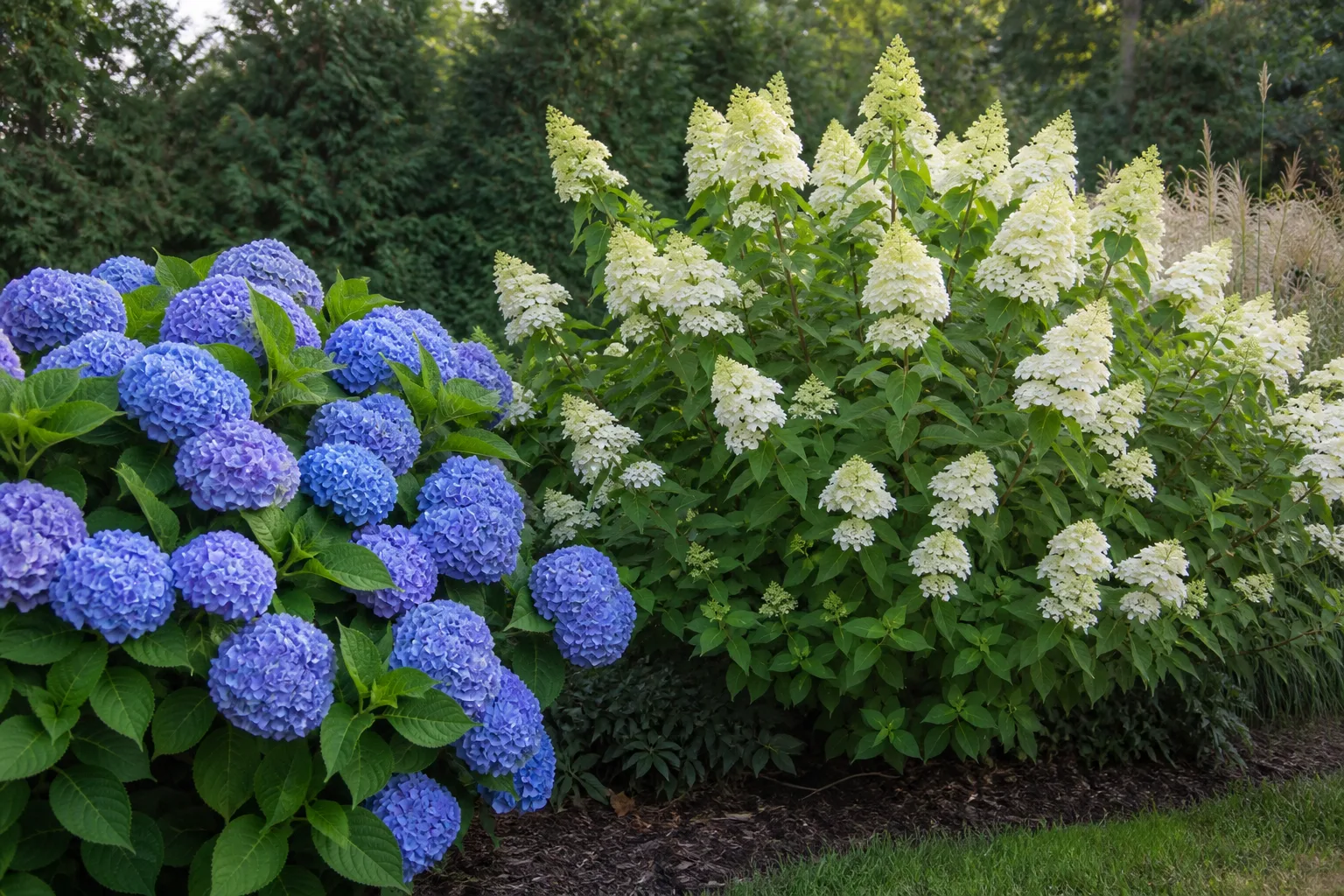
New-wood hydrangeas flower on shoots produced during the current spring and summer. Panicle hydrangeas have elongated, cone-shaped heads; smooth hydrangeas often have rounded heads, including ‘Annabelle’-type flowers. Because their buds are made on fresh growth, they tolerate late-winter or early-spring structural pruning better than old-wood types.
For a practical pruning comparison, Epic Gardening’s hydrangea timing guide also separates new-wood, old-wood, and reblooming types before discussing deadheading. That classification is more useful than a calendar rule copied across every hydrangea.
Reblooming or remontant hydrangeas bridge the two groups. They can flower on old wood for an earlier display and then set additional flowers on new growth later in the season. That flexibility improves the odds of flowers after a cold winter, but it is not permission to prune deeply at any time. Cutting off the old stems can still erase the first and often largest flush.
Reblooming cultivars to look for
Most rebloomers are selections of bigleaf hydrangea (Hydrangea macrophylla) or mountain hydrangea (H. serrata). The Home for the Harvest reblooming hydrangea guide lists examples such as Endless Summer, BloomStruck, Summer Crush, Let’s Dance, and Tuff Stuff; availability and exact performance vary by cultivar and climate. Nursery tags may also list Pop Star® among remontant bigleaf types. Do not confuse those rebloomers with panicle hydrangeas such as PeeGee or smooth hydrangeas such as Incrediball™—those flower on new wood and can put on a long summer show, but they are not the same “old-wood plus new-wood” reblooming biology as Endless Summer-type bigleafs.
Treat the word “reblooming” as a useful capability, not a guarantee. In a mild, evenly watered site, a rebloomer may flower from early summer into fall. In a cold region, the overwintering buds may die and the first flowers may be delayed until new growth develops. In a hot region, intense afternoon heat can pause flowering even when the plant is genetically capable of producing another round.
If the label is missing, do not guess from flower color alone. Blue or pink round heads usually suggest bigleaf hydrangea, but color depends partly on cultivar and soil chemistry. Oak-shaped leaves point to oakleaf; cone-shaped heads that age pink suggest panicle; broad white rounded heads on a flexible shrub may indicate smooth hydrangea. When you are still unsure, remove only the spent head and leave the branches alone until you can identify the plant.
Give the shrub enough light and root-zone moisture
Reblooming is a resource-demanding process. The shrub must keep leaves functioning, replace water lost through broad foliage, and grow new shoots capable of carrying flowers. A plant that is repeatedly scorched, dry, or sitting in saturated soil may stay alive while producing fewer or smaller flowers.
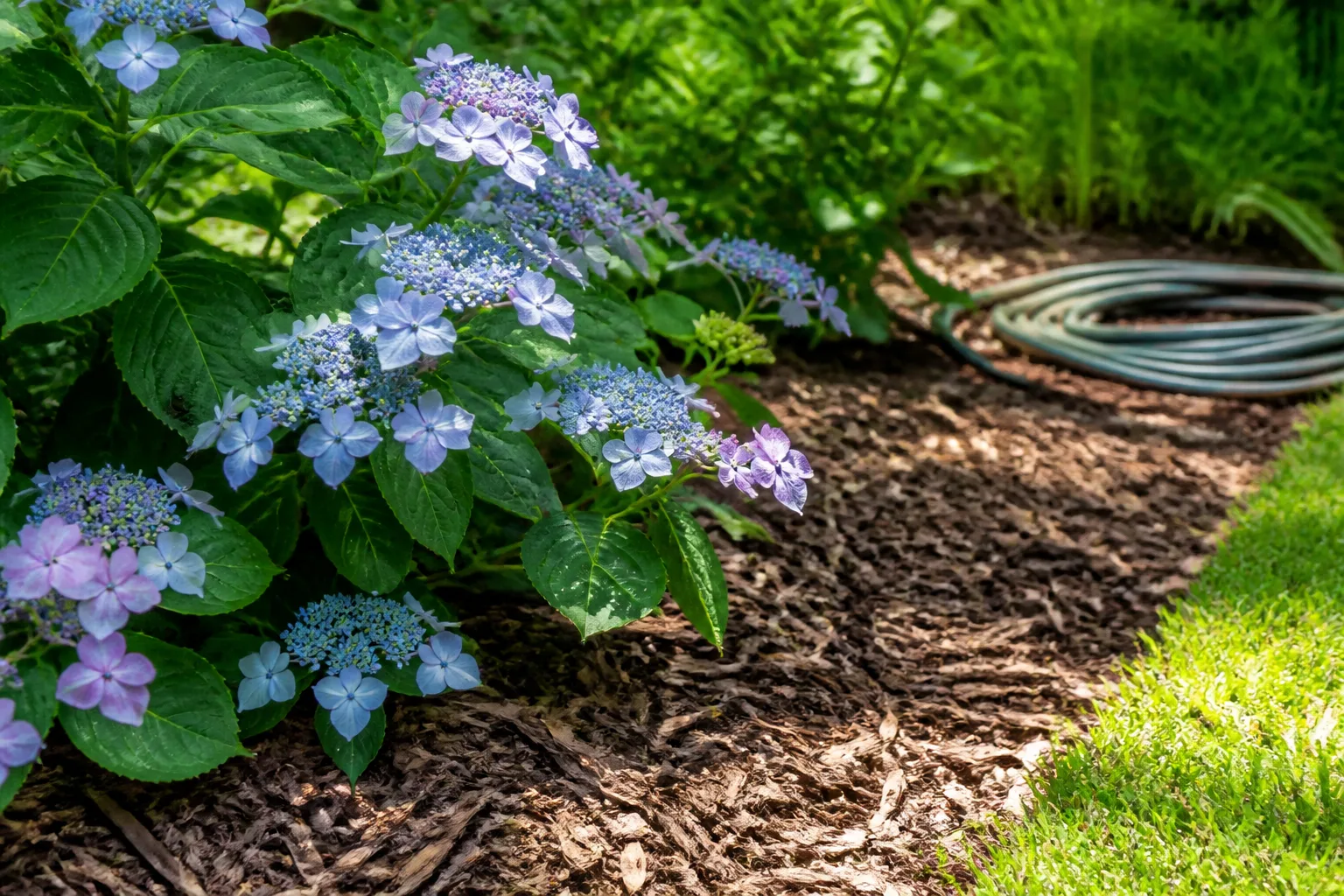
Aim for bright morning sun and protection from the hottest afternoon exposure for most bigleaf and mountain rebloomers. In a cool, moist climate they may handle more sun; in a hot climate, a position with morning light and afternoon shade is usually easier to manage. Panicle hydrangeas generally tolerate more sun, but any plant in all-day sun may need more water than a shrub in a sheltered border. NC State notes that hydrangeas in direct sun can require additional watering.
Check moisture instead of watering by the clock. Push a finger or narrow trowel several inches into the soil beneath the mulch. If the root zone is dry, soak slowly at the base until the soil is moist through the root ball; if it is already wet, do not add more water just because the leaves drooped during the afternoon. Morning wilt that persists into the next day is more concerning than a temporary hot-afternoon slump.
Apply a 2- to 3-inch layer of organic mulch over the root zone, keeping it a few inches away from the stems. Mulch reduces rapid swings between dry and wet soil, but it cannot fix poor drainage. If the soil stays waterlogged, investigate compaction, downspouts, or a planting hole that holds water; roots need oxygen as well as moisture.
For a shrub in a container, the same rule applies but the margin for error is smaller. Containers heat up and dry out faster, so check the mix more often during a hot spell and water until a little drains from the bottom. Do not let the pot sit in a saucer of standing water. A container that dries repeatedly may keep its leaves but abort developing flowers, while a pot that never drains can lose the roots needed to support any new bloom.
Deadhead for another flush without sacrificing buds
Deadheading is the removal of a finished flower head. Structural pruning is the removal of stems to change size, shape, or age distribution. They are not interchangeable, and confusing them is one of the easiest ways to turn a reblooming hydrangea into a one-flush shrub.
Make a conservative cut
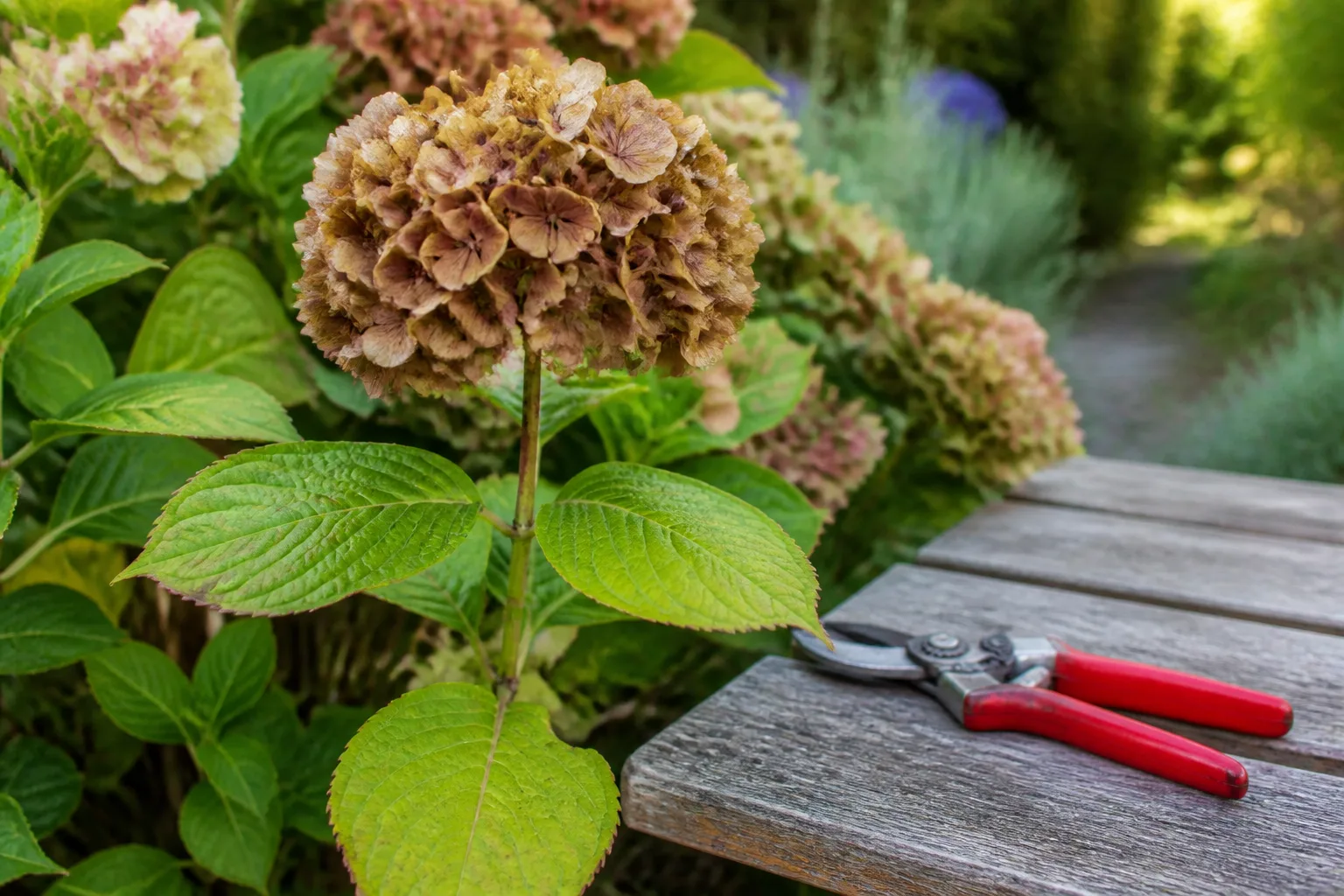
Wait until the flower head is clearly spent—papery, brown, rain-battered, or no longer attractive to you. Follow its stem down to the first strong pair of leaves or visible buds. With clean, sharp bypass pruners, make one angled cut just above that pair without slicing into the buds.
On an actively reblooming cultivar in early or mid-summer, that light cut removes the old display while leaving a short section of stem and the plant’s growing points intact. Repeat selectively rather than shearing the shrub. Remove damaged, diseased, or obviously dead stems at their base, but do not cut healthy branches simply because they have finished carrying one flower head.
The reliable benefit of deadheading is appearance and, on a rebloomer, the possibility of directing continued growth into another flowering cycle. It is not a universal command that tells every hydrangea to flower again. A standard old-wood mophead may not rebloom after deadheading because its flowering cycle is already finished.
Know when to stop deadheading
As summer turns toward late summer, become more conservative. On old-wood and reblooming hydrangeas, next year’s flower buds may be forming near the tips of this year’s stems. The National Garden Bureau warns that pruning before those buds emerge can remove them, and its hydrangea winter-care guidance explains why bigleaf buds are especially vulnerable to cold and wind.
There is no single calendar date that fits every climate. In a short-season or frost-prone garden, finish cosmetic deadheading earlier; in a long, warm season, local weather may give you more time. When nights are cooling, a flower head is still attractive, or you cannot identify the cultivar, leave it in place. Dried heads provide winter interest and can shield tender buds from wind and late frost.
If you want a tidy look without risking the plant, remove only the most damaged heads and leave the rest. You can finish the cleanup in spring after you see which stems and buds survived. Our guide to how to deadhead hydrangeas covers the cut point in more detail, but the same caution applies: a flower head is not always the only thing attached to that stem.
Prune structural wood on the correct calendar
Structural pruning is optional for many hydrangeas. Use it to remove dead or crossing wood, restore airflow, rejuvenate an old shrub gradually, or correct a size problem at the right season. Do not prune simply because the plant has finished blooming; a finished flower is not proof that the branch is expendable.
Reblooming bigleaf and mountain types
For reblooming bigleaf and mountain hydrangeas, the safest routine is usually minimal pruning. In spring, wait until the plant has passed the typical last-frost window for your area and the stems show which buds are alive. Remove dead tips back to a living bud or cut truly dead stems at the base. If a stem has no sign of life while neighboring stems are leafing out, it may be winter-killed wood; wait long enough to distinguish it from a late starter.
Avoid a deep late-summer or fall cut on an unknown rebloomer. Even if the plant can produce flowers on new wood, it may still be carrying old-wood buds for the early display. The National Garden Bureau’s hydrangea pruning guidance describes rebloomers as flowering on both old and new wood, which is why waiting for visible buds is a safer decision than following a generic pruning date.
If the shrub is badly overgrown, rejuvenate it in stages rather than removing every stem in one season. Take out one or two of the oldest stems at the base after flowering or during the correct spring window, then watch how the plant responds. A hard cut may renew an old shrub, but it can cost you the upcoming season’s flowers.
Panicle and smooth types
Panicle and smooth hydrangeas are new-wood bloomers, so late-winter or early-spring pruning is usually the best time for size and structure. The coming flowers will form on the new shoots, not on the stems you are protecting through winter. You can remove spent heads for tidiness after flowering, but there is no need to keep cutting the shrub throughout summer.
This difference explains why two hydrangeas planted side by side can need opposite pruning advice. A panicle hydrangea can recover from a spring cut and flower later on new growth; a bigleaf hydrangea may leaf out beautifully after the same cut yet have no old buds left to open. When in doubt, identify first and cut less.
Fertilize early enough to help, not late enough to hurt
More fertilizer does not equal more flowers. A healthy hydrangea usually benefits more from adequate light, moisture, and roots than from repeated feeding. Excess nitrogen can produce lush leaves and soft stems while doing little for flowering, and late tender growth is more exposed to frost damage.
Use a soil test or the plant’s growth history to decide whether feeding is needed. If the shrub is vigorous and flowering, do not add a late-season nitrogen push to force a second flush. Feed in spring or early summer with a product appropriate for woody ornamentals and follow the label; stop early enough in your climate for new growth to harden before cold weather.
Do not change soil pH just to make a hydrangea rebloom. In some bigleaf and mountain cultivars, soil chemistry changes flower color, but it does not turn a non-reblooming cultivar into a rebloomer. If the plant is not flowering, troubleshoot cultivar, buds, light, moisture, and pruning history before adding lime, sulfur, or aluminum products.
Protect the next round from heat, deer, and winter
Late-season flowers are most likely when the plant keeps its leaves healthy and its new stems intact. Provide a temporary screen from harsh afternoon sun during a heat wave, water deeply when the root zone dries, and inspect for deer browsing on the tender shoots. If new tips disappear overnight, no amount of deadheading will create flowers on tissue that has been eaten.
Winter protection is most important for old-wood bigleaf hydrangeas in cold or exposed locations. Buds can be damaged by freezing temperatures, drying wind, or a winter thaw followed by a hard freeze. A fence, evergreen, wall, or other windbreak can reduce exposure. In especially cold sites, a loose cage around the shrub filled with leaves or covered with breathable burlap can buffer wind and temperature swings; do not seal a wet plant inside plastic.
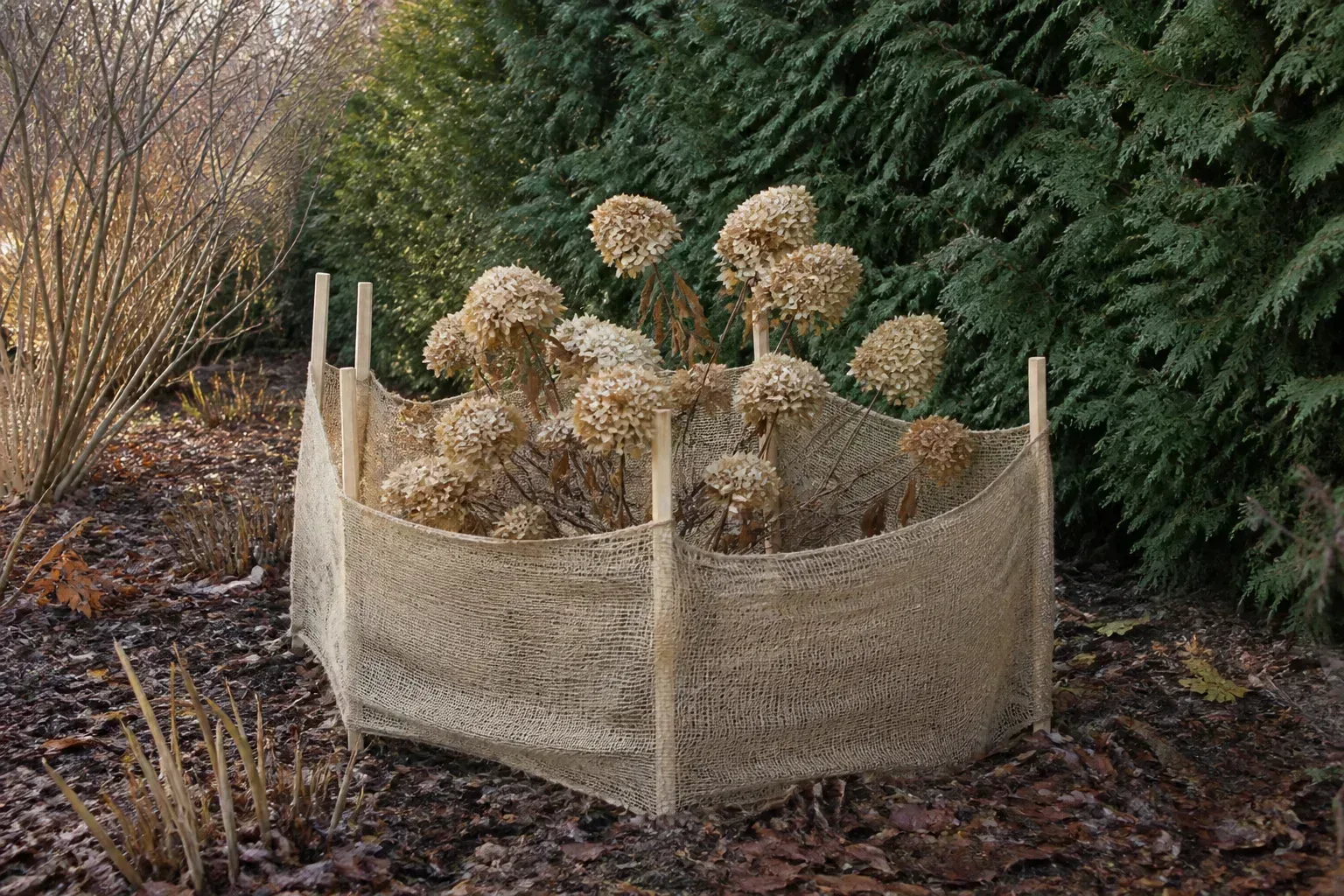
Leave some dry flower heads on the shrub through winter if they are not diseased. They add structure, shield buds below the flower, and give you a reason to delay risky cleanup. Remove a winter cover gradually in spring on a cloudy day after the most serious frost risk has passed, because buds that have warmed under protection can be tender when exposed suddenly to bright sun and cold air.
Troubleshoot a hydrangea that will not rebloom
When the second flush does not appear, check the causes in this order rather than reaching for more fertilizer:
| What you see | Likely cause | First response |
|---|---|---|
| Healthy leaves but no second flowers | Non-reblooming cultivar or wrong expectation | Verify the label; do not keep pruning to force a second cycle. |
| New growth but no early flowers | Old-wood buds killed by frost, wind, deer, or pruning | Wait for new-wood flowers; protect the plant next winter. |
| Afternoon wilt that recovers overnight | Heat or temporary transpiration stress | Check soil before watering; add afternoon relief if it repeats. |
| Persistent wilt with dry soil | Root-zone drought or small root system | Soak slowly at the base and add mulch; recheck drainage. |
| Wilt with wet soil and yellowing | Poor drainage or root damage | Stop watering on a schedule and inspect the root zone. |
| Lots of leaves, few flowers | Too much nitrogen, too much shade, or excessive pruning | Stop late feeding, improve light, and protect the next bud cycle. |
| Flower heads disappear but stems look bitten | Deer or other browsing | Use a physical barrier and inspect new growth regularly. |
If the plant is healthy but simply done with its normal bloom period, deadheading may improve its appearance without producing another flush. If stems are brittle, black, soft, or declining across the shrub, treat that as a health problem rather than a flowering problem. Our guide to keeping hydrangeas from going limp can help separate a heat response from a watering or root issue.
A month-by-month plan for repeat flowers
While the first flowers are open: Identify the cultivar, keep the root zone evenly moist, and note whether the shrub receives morning sun or harsh afternoon exposure. Do not prune healthy stems just to shape the plant.
As the first flush fades: Deadhead a reblooming type selectively, cutting above a strong leaf pair. Remove damaged wood, but keep the branch framework. If the shrub is a standard old-wood type, decide whether tidiness is worth giving up winter interest; it may not flower again this season.
In late summer: Stop chasing flowers with heavy fertilizer or repeated cuts. Refresh mulch, protect from heat and browsing, and let new growth mature. In short-season climates, become conservative earlier because the plant has less time to harden before frost.
In fall and winter: Leave some spent heads on old-wood and reblooming types. Move vulnerable bigleaf shrubs away from winter wind only if transplanting can be done safely in your climate, or install a loose windbreak after dormancy. Do not assume a leafless stem is dead.
In spring: Wait until buds and new growth reveal what survived. Remove dead tips and stems, then prune only according to the plant type. If a rebloomer lost its old-wood buds, give it steady water and light while it develops new shoots; a later flush may still be possible, but it will not happen overnight.
Conclusion
To make hydrangeas bloom again, start with the plant’s biology rather than the pruners. Reblooming bigleaf and mountain cultivars can flower on old and new wood, but they still need viable buds, steady moisture, enough light, and protection from heat, browsing, and winter injury. Deadhead spent heads lightly during the active season, stop before late-season buds are at risk, and leave a non-reblooming or unidentified hydrangea mostly alone until you know which wood carries its flowers.
The best repeat-bloom routine is modest: identify, water deeply, mulch, cut selectively, and let the shrub finish its season. That approach gives a true rebloomer the conditions to produce another flush while protecting the buds that will make next year’s show.



