How to Overwinter Impatiens: Plants, Cuttings, or Seed
Learn how to overwinter impatiens before frost: bring in whole plants, root fall cuttings, or save seed, with winter care and spring timing.
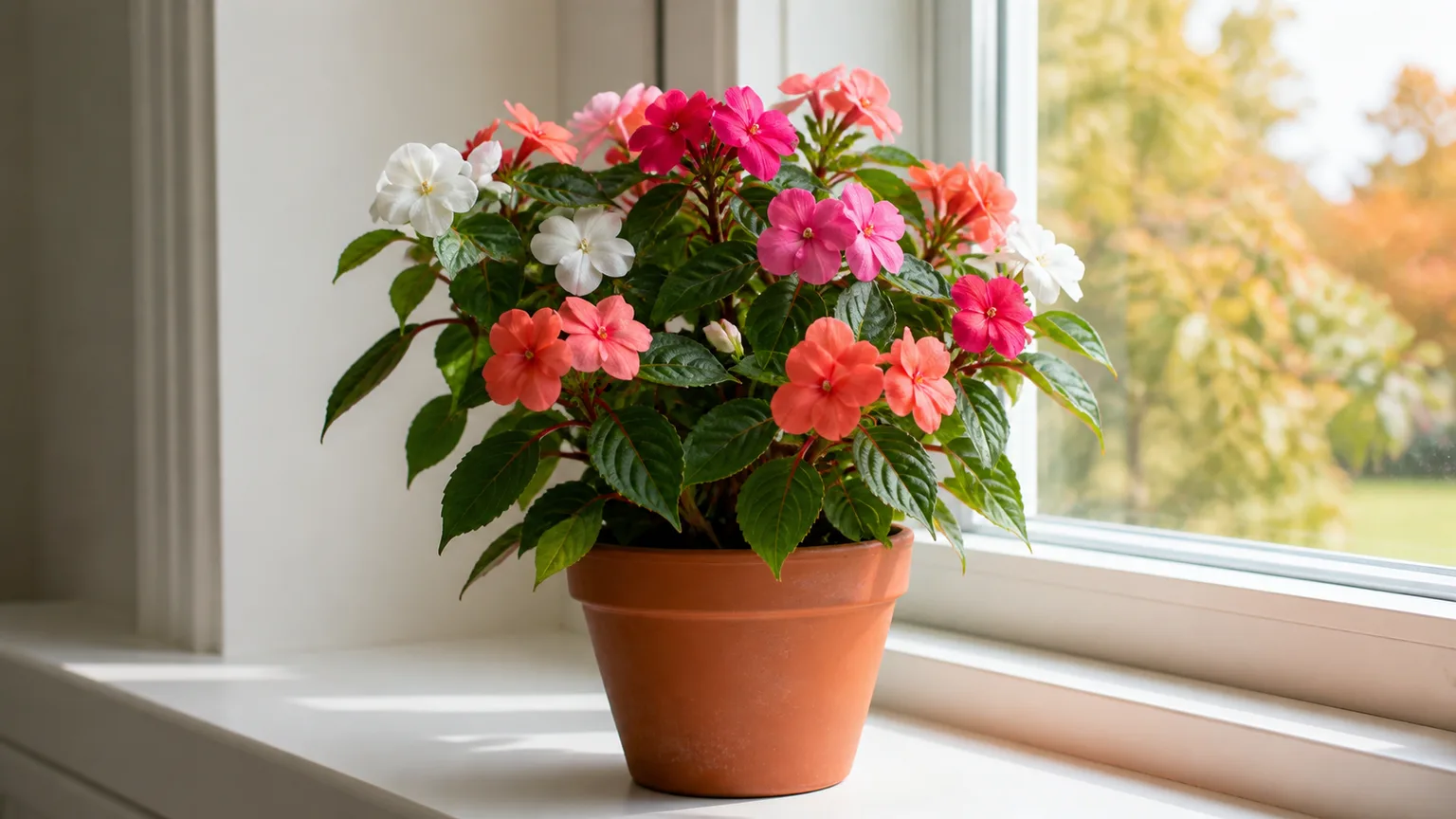
Yes—if you have a healthy favorite and enough bright indoor space, overwintering impatiens can give you a larger, earlier plant next spring. In a cold-winter climate, though, the plant will not survive outside: common bedding impatiens are tender perennials in warm regions and behave as annuals wherever frost freezes their soft stems.
Your first decision is not whether impatiens are “annuals” or “perennials.” It is which piece of the plant you want to carry through winter. Bring in the whole plant when it is compact and healthy, take cuttings when you want several clones without a large pot, or save seed only when the variety is open-pollinated and you accept some variation.
The North Carolina Extension Gardener Plant Toolbox describes Impatiens walleriana as a tropical-zone herbaceous perennial that is commonly grown as an annual, with bloom from late spring until fall frost. That distinction explains why overwintering works indoors but not as a dormant root in a freezing garden bed. (North Carolina Extension Gardener Plant Toolbox)
Can you overwinter impatiens?
You can overwinter healthy impatiens indoors, but you cannot rescue a plant after a hard freeze has turned its stems to mush. In frost-free climates—roughly USDA Zones 10–11 for common I. walleriana—the plant may persist outdoors, while gardeners in colder zones need to move it under protection or start with new material next spring. (North Carolina Extension Gardener Plant Toolbox)
Impatiens do not need a cold, dark dormancy period like a canna or dahlia. They can keep growing slowly in a warm, bright room, so winter care is a reduced-growth routine, not storage. Expect fewer flowers if light is weak, but do not deliberately dry the plant hard or put it in an unheated shed.
Use this quick method check before you bring home the entire garden bed:
| Your situation | Best first choice | Why |
|---|---|---|
| A healthy impatiens already in a manageable pot | Bring in the whole plant | It preserves the established root system and can flower indoors |
| A large bed planting or limited windowsill space | Take several stem cuttings | Cuttings occupy little room and create clones of a favorite |
| An open-pollinated heirloom or species plant | Save seed, with a few cuttings as insurance | Seed is compact but slower and less predictable |
| A plant with downy mildew, heavy pests, or root rot | Do not overwinter it | Carrying it indoors risks nearby plants and wastes winter space |
Know which impatiens you have before you save it
The name “impatiens” covers more than one garden plant. Standard bedding impatiens are usually Impatiens walleriana; New Guinea impatiens are I. hawkeri hybrids with thicker foliage and a greater tolerance for bright light; and SunPatiens are hybrids selected for more sun tolerance, not for frost resistance. All three still need protection from freezing weather.
The Royal Horticultural Society’s impatiens growing guide separates tender bedding cultivars from species that can be grown as houseplants or, in the right climate, outdoors year-round. It lists New Guinea hybrids among impatiens commonly grown indoors in bright indirect light. That makes a New Guinea plant a sensible whole-plant candidate, but it does not make a standard bedding impatiens cold hardy.
There are also genuinely hardier species, such as Impatiens arguta and I. tinctoria, that belong in a different overwintering conversation. Check the plant tag or its botanical name before assuming the instructions for a bedding flat apply to a species perennial. If the tag says SunPatiens, New Guinea, busy Lizzie, or garden impatiens, plan for indoor protection anywhere your winter includes frost.
Move plants before cold does the damage
Do not use the first frost as your moving date. Homes & Gardens, quoting Washington Gardener editor Kathy Jentz, recommends bringing impatiens indoors when nighttime temperatures consistently fall below 60°F, because the plants struggle well before a freeze. The RHS likewise says tender bedding impatiens are killed by frost and set back by low temperatures. (Homes & Gardens; RHS)
Use your local average first-frost date as a planning aid, then watch the actual forecast. A run of cool nights, a sudden cold front, or a windy exposed balcony can damage the plant earlier than the calendar suggests. Move potted plants inside while they are still upright, actively growing, and free of cold injury; take cuttings while the parent has firm green tips.
If your impatiens has already experienced one chilly night, inspect the stems before deciding. A temporary wilt can be cold stress or dry soil, but translucent, water-soaked stems, blackening at the crown, or tissue that collapses when touched means the plant has suffered damage that indoor care will not reverse.
Prep a container plant for its trip indoors
Treat the move like a quarantine-and-acclimation project, not like carrying a pot across a doorway. Indoor light is usually weaker than outdoor shade, air movement is lower, and pests that were harmless in a large bed can spread quickly among houseplants.
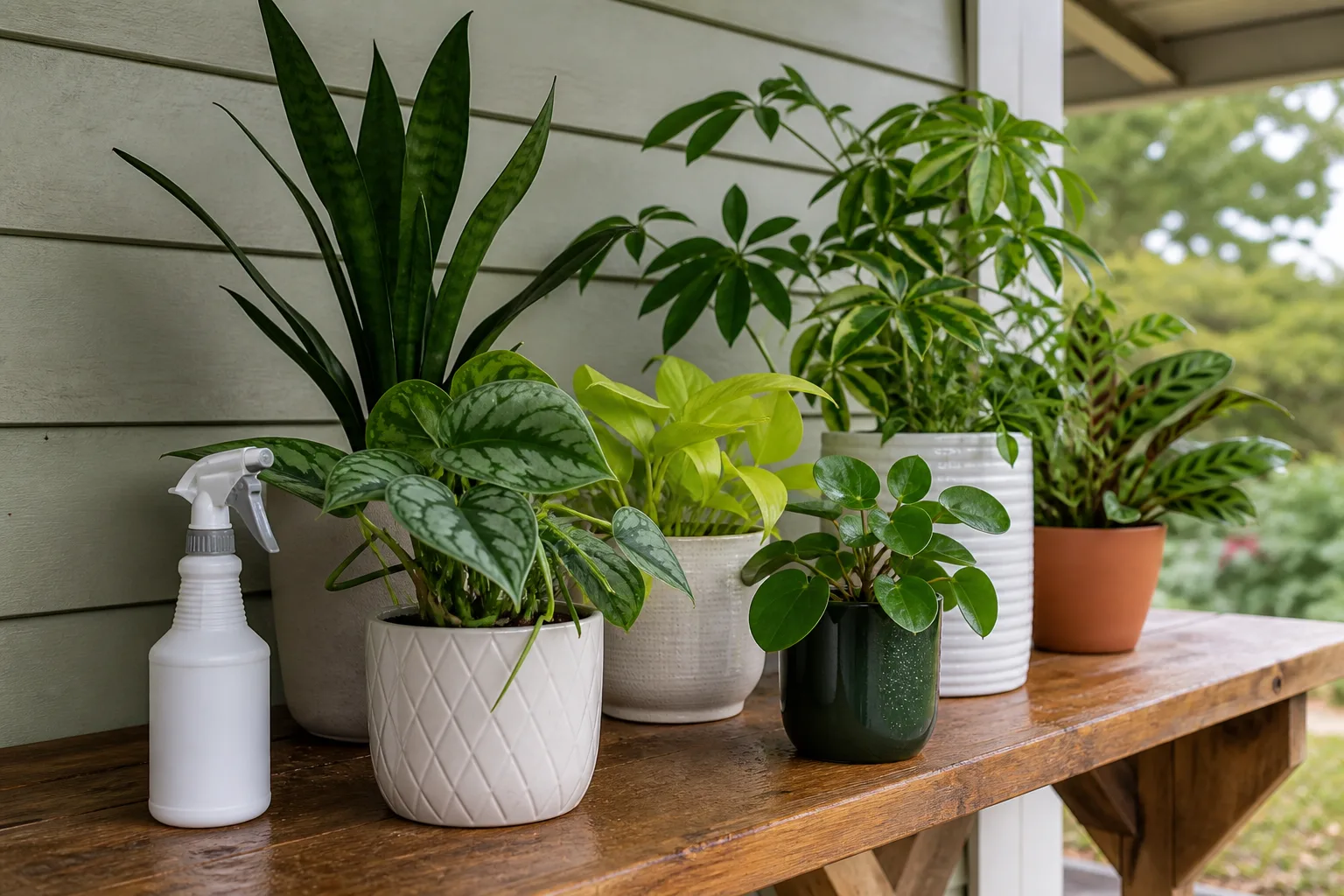
Start several days before the move by shifting the pot into a shadier, sheltered outdoor spot. This reverse hardening process lowers the gap between outdoor light and indoor light. It also gives you time to clean the pot, check the drainage hole, and decide where the plant will live without making a last-minute placement beside your entire collection.
Inspect, rinse, and quarantine
Look closely at stem joints, leaf undersides, new growth, and the soil surface. Aphids cluster around tender tips, spider mites leave stippling or fine webbing, and whiteflies may flutter when foliage is disturbed. Check for sticky residue, cottony patches, scale-like bumps, and fungus gnats around persistently wet mix.
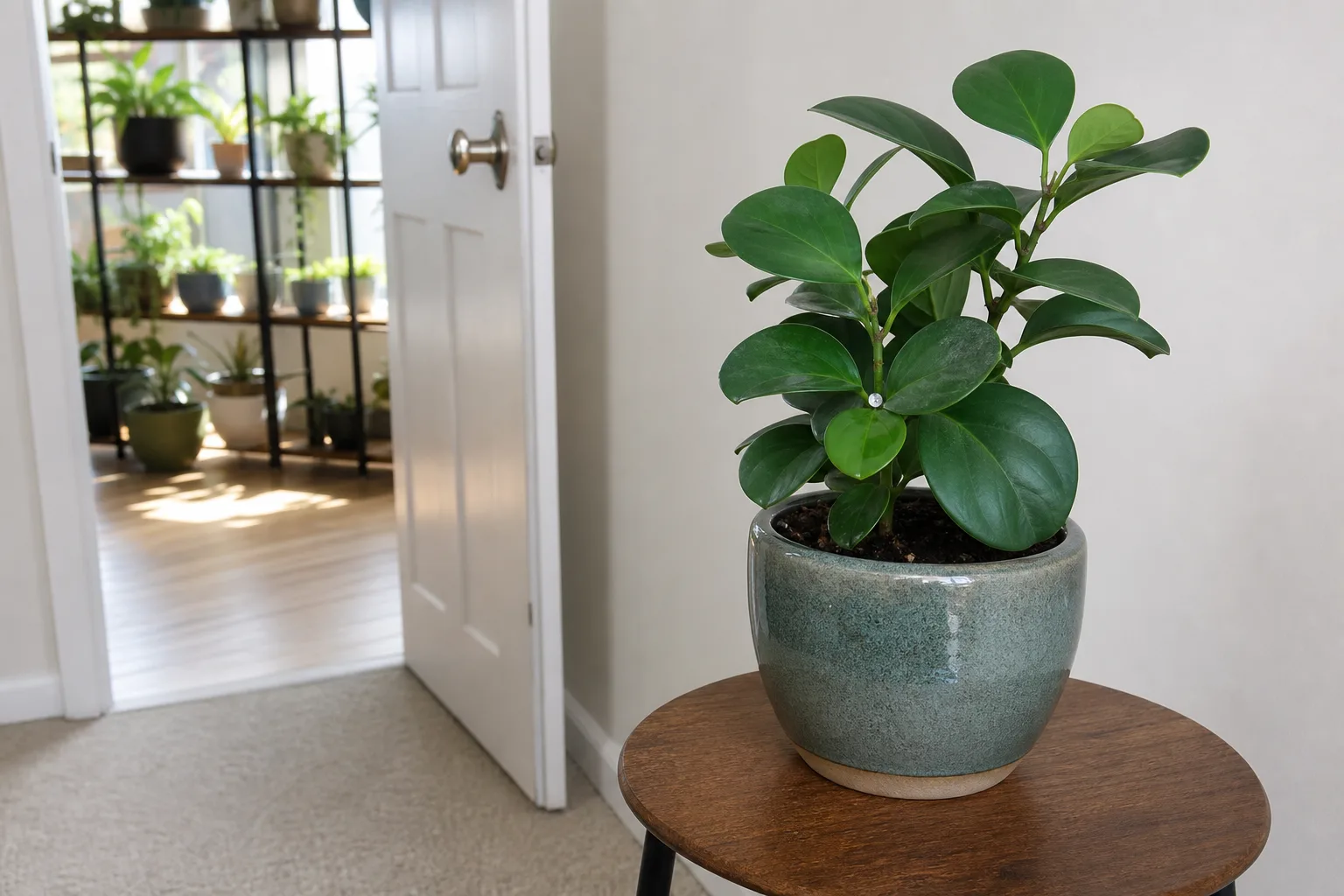
Rinse the foliage and stems with a gentle stream of water, remove dead leaves and spent flowers, and isolate the plant from other houseplants for at least a couple of weeks after moving it in. Gardening Know How also recommends starting with healthy plants, using well-draining containers, and checking that the indoor location has enough light. (Gardening Know How)
Do not bring a visibly diseased plant indoors hoping warmth will cure it. The RHS identifies impatiens downy mildew as a problem that can cause yellowing and rapid defoliation in I. walleriana; affected plants should be discarded, while New Guinea hybrids are not affected in the same way. (RHS) A plant that is merely a little leggy can be worth saving; a plant losing leaves from a spreading disease is not.
Prune enough to fit, not enough to strip
Use clean, sharp snips to remove weak, damaged, or crossing growth, then shorten long stems by about one-third to one-half. This reduces the leaf area the roots must support in lower indoor light and gives you a more manageable plant. Do not shear every stem down to bare stubs while it is still recovering from the move.
Leave several healthy leaf nodes on each retained stem. Impatiens are naturally bushy, and the RHS notes that pinching or trimming the tops of leggy stems can encourage new growth lower down. The goal is a compact framework that can branch again, not a plant with no active buds.
Bringing garden impatiens indoors
Garden-bed impatiens are more vulnerable to transplant shock than container plants because their roots have spread through native soil. If the plant is an exceptional color or a treasured cultivar, dig it before cold weather, take as much root ball as practical, and pot it into a container with a drainage hole and fresh, well-draining potting mix.
Choose a pot only modestly larger than the root ball. An oversized container stays wet around a suddenly smaller root system, especially when indoor light slows water use. Set the plant at the same depth it was growing outdoors, firm the mix gently, water it once to settle the roots, and allow excess water to drain completely.
Expect some leaf yellowing or flower drop after the move. That response is not automatically a sign that the plant is dying; it is often the plant shedding tissue it cannot afford under changed light and humidity. Remove fallen leaves, keep the plant away from a heater or cold draft, and wait until the pot begins to dry before watering again.
Indoor care from fall through late winter
Winter success comes from matching water to light and temperature, not from keeping the pot constantly wet. A plant in a bright, warm window may continue growing and need regular checks; one in a cool, dim room may use water slowly and need much less.
Light and temperature
Place impatiens in the brightest practical location without exposing foliage to harsh, hot glass. A bright south- or east-facing window can work, provided the leaves do not scorch, and a full-spectrum LED grow light can make up for short winter days or a shaded apartment. Keep the plant away from exterior doors, cold panes at night, and heat vents that dry one side of the canopy.
Gardening Know How recommends a minimum of about 55°F for indoor impatiens, while Homes & Gardens similarly describes a bright indoor location that stays above 55°F as suitable. Use that as a floor rather than an ideal target: stable household temperatures in the 60s and 70s are more useful for active growth and flowering. (Gardening Know How; Homes & Gardens)
If the plant becomes stretched, pale, or increasingly sparse, improve light before feeding it. Extra fertilizer cannot compensate for insufficient light and may leave salts in a pot whose roots are already using water slowly. Rotate the pot occasionally so new growth does not lean toward the window.
Water, humidity, and fertilizer
Keep the mix evenly but lightly moist, never saturated. Check the top inch with a finger or lift the pot before watering; then water thoroughly enough to moisten the root ball and empty the saucer. Do not let a decorative cachepot hold runoff against the drainage hole.
The RHS advises keeping houseplant compost just moist in winter, and its impatiens guide warns that the soil should not become soggy. That is a better rule than a weekly calendar because pot size, window temperature, and light change the drying rate. (RHS)
Average household humidity is usually adequate if the plant is not directly above a radiator. Improve the setup with a humidifier or a grouping of plants if the air is very dry, but do not compensate for dry air by keeping roots waterlogged or by misting foliage late in the day. Good airflow matters because grey mold and other fungal problems spread more easily through crowded, damp foliage.
Skip fertilizer while the plant is adjusting in fall and during the dimmest part of winter. Resume a balanced, water-soluble houseplant feed at label strength or weaker when you see clear new growth in late winter or early spring. Feeding a stressed plant in wet soil is more likely to compound root problems than to produce earlier flowers.
Take fall cuttings for the most space-efficient backup
Cuttings are often the best answer for a large bed of impatiens or a home with only one bright window. They are genetically identical to the parent, take little room, and let you choose the healthiest tips instead of moving an exhausted, sprawling plant.
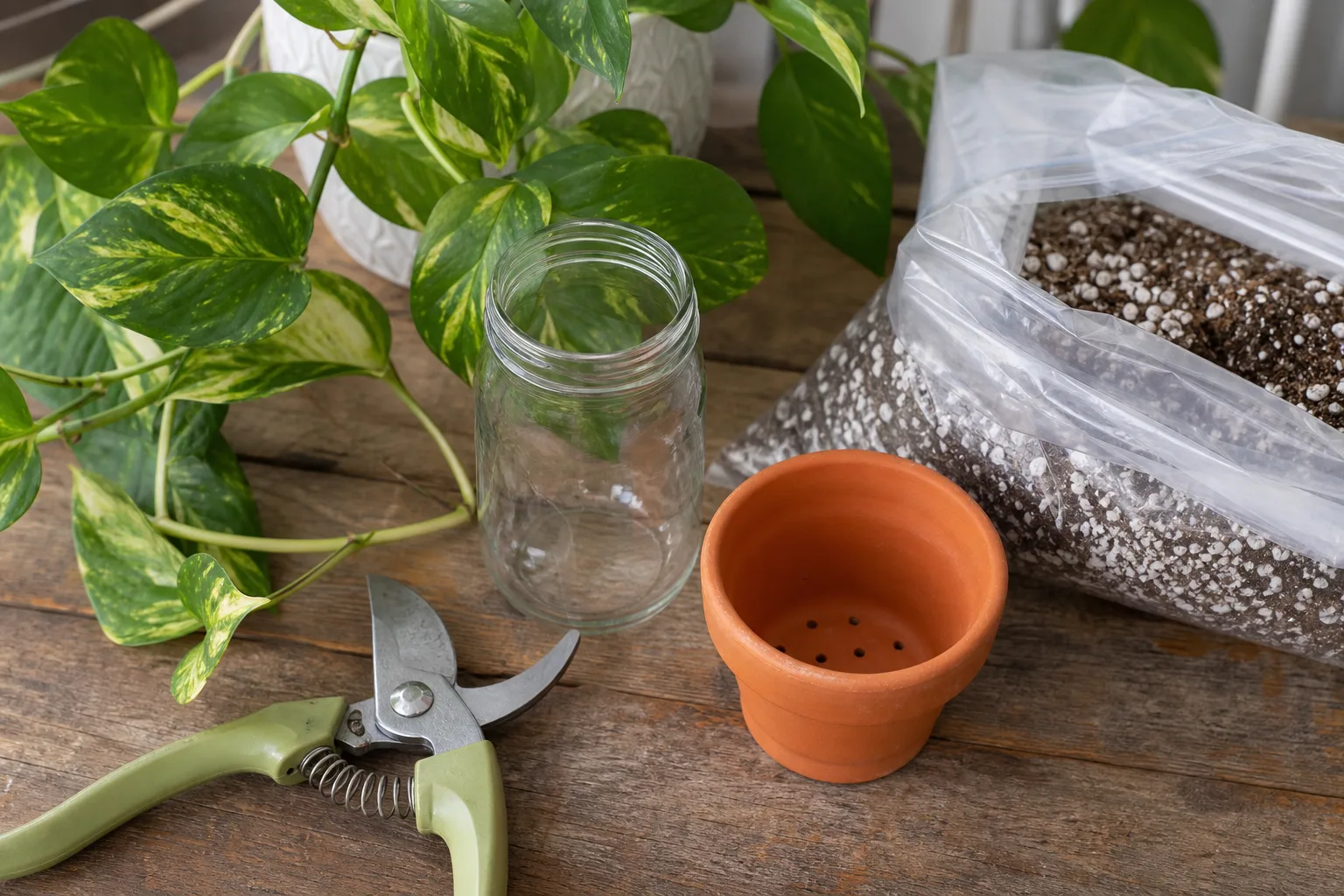
Take more cuttings than the final number you need. A few may wilt, rot, or fail to root, and a small group gives you a chance to select the strongest plants for spring containers. Keep the parent plant alive long enough to flower or set seed if you also want to preserve its color by another method.
How to take impatiens cuttings
Choose firm, non-flowering tips with clean leaves and no pest or disease symptoms. Gardening Know How recommends pieces around 6 inches long; Homes & Gardens gives a practical range of 4–6 inches. Cut just below a node, where roots are most likely to develop, and work in the cool part of the day so the cutting loses less water. (Gardening Know How; Homes & Gardens)
Remove flowers, buds, and the lower leaves, leaving one or two sets of leaves near the tip. If the remaining leaves are large, trim them slightly to reduce moisture loss, but do not strip the cutting completely. Place the prepared stems in water while you finish so the cut ends do not dry.
Insert the lower inch or two into a clean, damp rooting medium such as perlite or a light seed-starting mix. Rooting hormone is optional rather than mandatory: impatiens root readily, and Gardening Know How specifically notes that hormone is not necessary. Keep leaves above the medium, cover loosely with a clear dome or bag for humidity, and make sure the cover does not touch the foliage.
Set the cuttings in bright, indirect light at a stable room temperature. Check the medium every few days; it should feel damp but airy, never like mud. Remove any leaf or stem that turns slimy, brown, or moldy before the problem reaches neighboring cuttings.
Water or rooting medium?
Impatiens can root in a glass of water, and the RHS notes that stem cuttings can be rooted by immersing the lower couple of centimeters. Water is easy to observe and useful for a small number of cuttings, but roots formed in water can be more delicate when moved into potting mix. Change the water when it becomes cloudy and pot the cutting once roots are visible and branched rather than waiting for a tangled mass. (RHS)
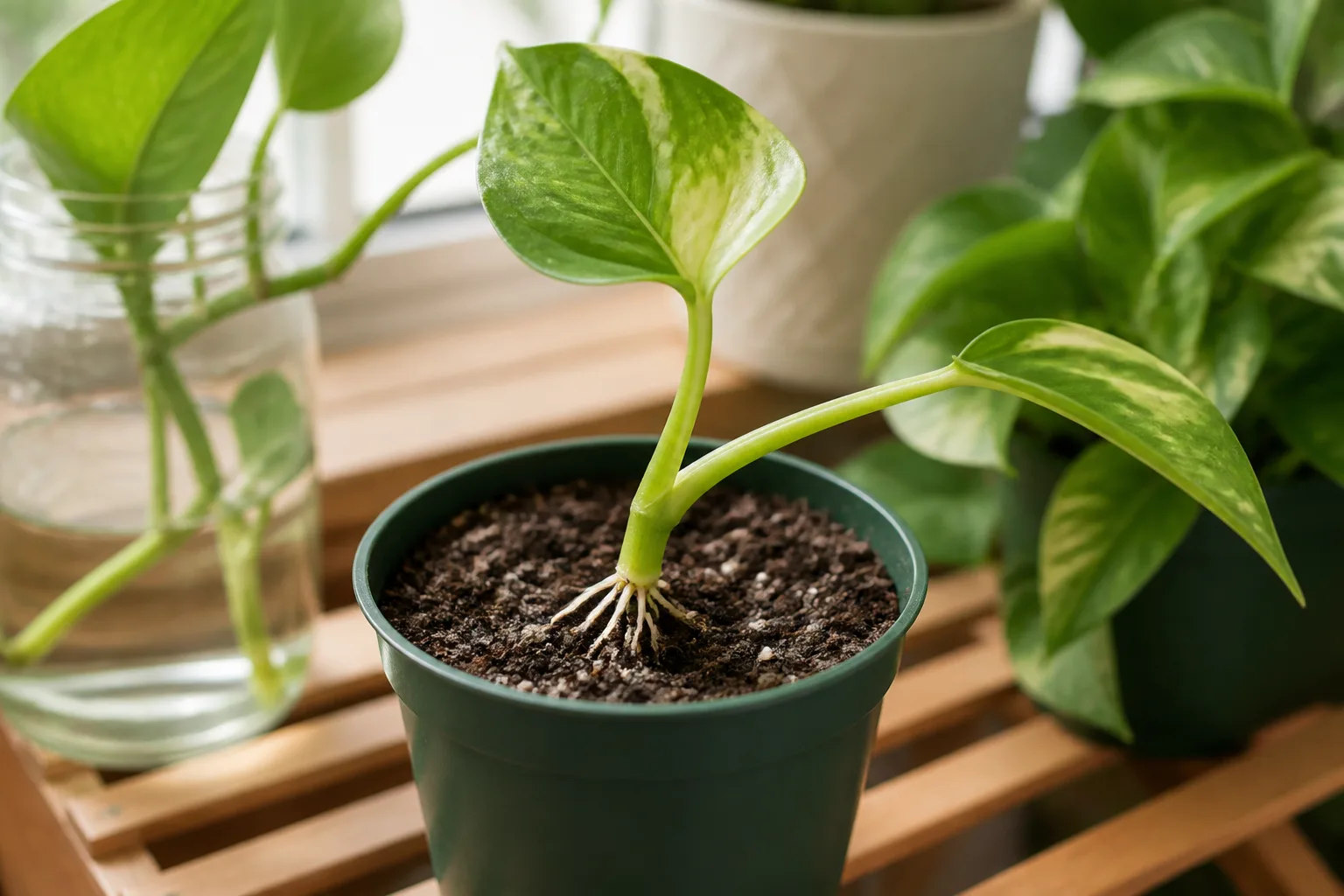
A damp, airy medium is usually the more forgiving choice for a batch. It reduces the transfer from water to soil and lets you maintain a small, compact root zone. Homes & Gardens says cuttings may root in about six weeks, while individual cuttings can vary with temperature, light, cultivar, and cutting health. Pot each rooted cutting into fresh mix when it resists a gentle tug, then pinch the tip after new growth begins to encourage branching.
Save seeds only when the plant will come true
Seed is the smallest way to carry an impatiens collection through winter, but it is not the best way to preserve a named hybrid. The seeds of many commercial I. walleriana, New Guinea, and SunPatiens plants may germinate, yet the seedlings can differ in flower color, form, height, and vigor because hybrids do not reliably reproduce the parent.
Choose seed when you are happy to grow a surprise or when the plant is clearly open-pollinated. Use cuttings instead when the exact color or double-flowered habit matters. NC State notes that impatiens can self-seed, that seed can be harvested in late summer or fall, and that seedlings may take several months to reach flowering size. (North Carolina Extension Gardener Plant Toolbox)
Collect and store seed
Impatiens seed capsules mature late in the season and open explosively when touched. Watch for pods that have filled out and begun to dry, then place a small paper bag over the cluster and cut the stem into the bag. This catches the seed before the capsule scatters it across the bed.
Spread the tiny seeds on a dry surface for a short time, remove bits of capsule, and store them in a labeled paper envelope inside an airtight container in a cool, dry, dark place. Do not seal damp seed in plastic; trapped moisture encourages mold and reduces viability. If the plant had downy mildew or another serious disease, do not use its seed or potting debris as your main sanitation strategy—start with clean purchased seed or a resistant cultivar instead.
Start seedlings and harden them off
Sow saved or purchased seed indoors in late winter, usually 6–10 weeks before your local last spring frost, depending on how large you want the transplants. Use a clean, fine seed-starting mix, press the seed onto the surface or cover only lightly, and keep it warm and evenly moist. The RHS describes germination in a bright, frost-free location at about 18–20°C (64–68°F), often taking two to three weeks. (RHS)
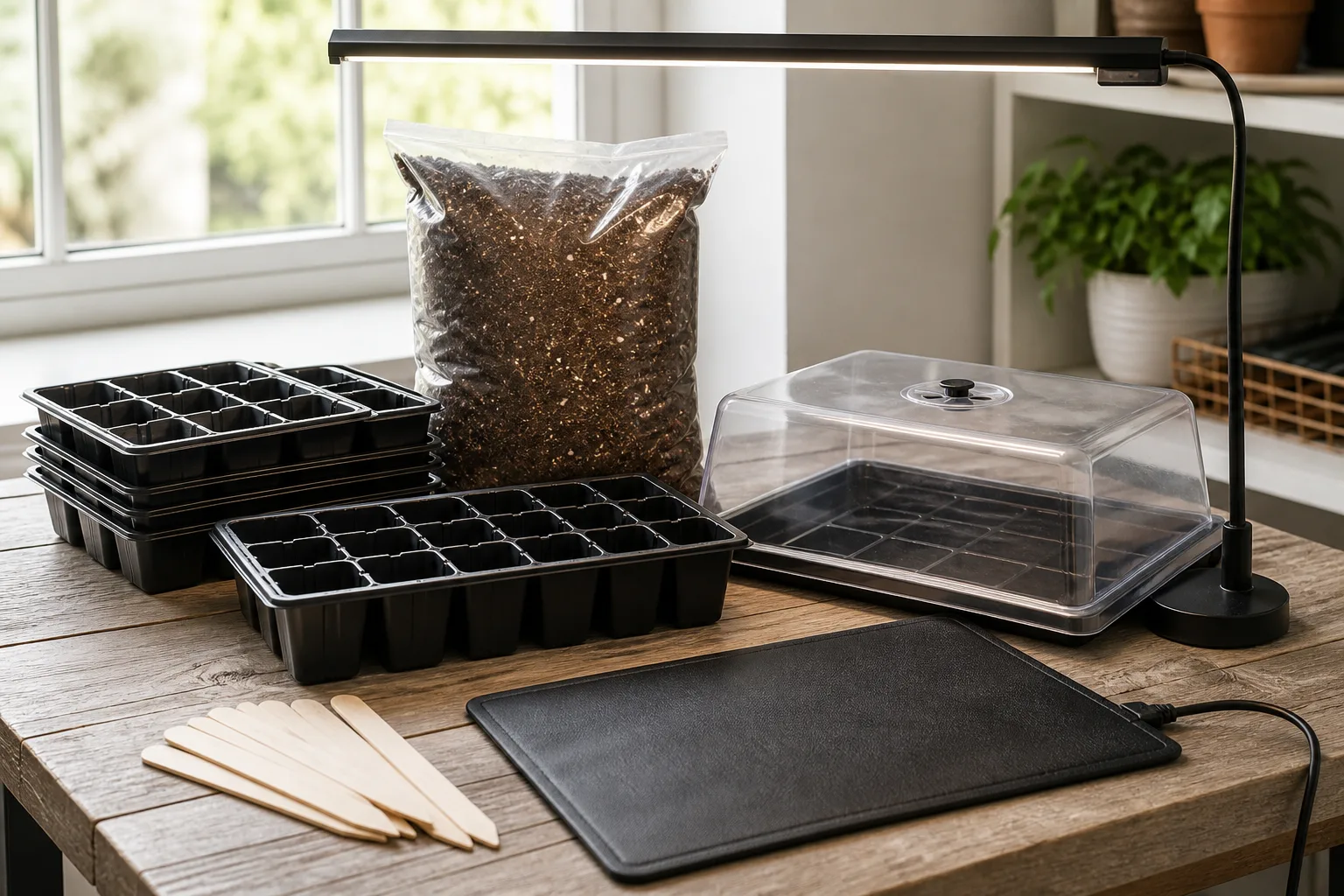
Once seedlings emerge, give them strong light from a bright window or grow light and enough room for air circulation. A sunny window alone may make them tall and thin if winter light is weak. Water from below or at the soil line, let the surface breathe between checks, and thin crowded seedlings before damping-off can spread.
Before planting outdoors, harden seedlings or rooted cuttings gradually. Start with a sheltered, shaded outdoor position for a few hours, bring them in at night, and increase outdoor time over roughly two weeks. Only plant once frost danger has passed and nights are reliably mild; a warm afternoon does not erase a cold overnight forecast.
Restart the plants in spring
Begin the spring restart when day length improves and you see new leaves, not simply because the calendar says March. If an overwintered plant is still resting in dim light, move it closer to its grow light or brightest filtered window first, then remove dead growth and check the root zone before you increase water or fertilizer.
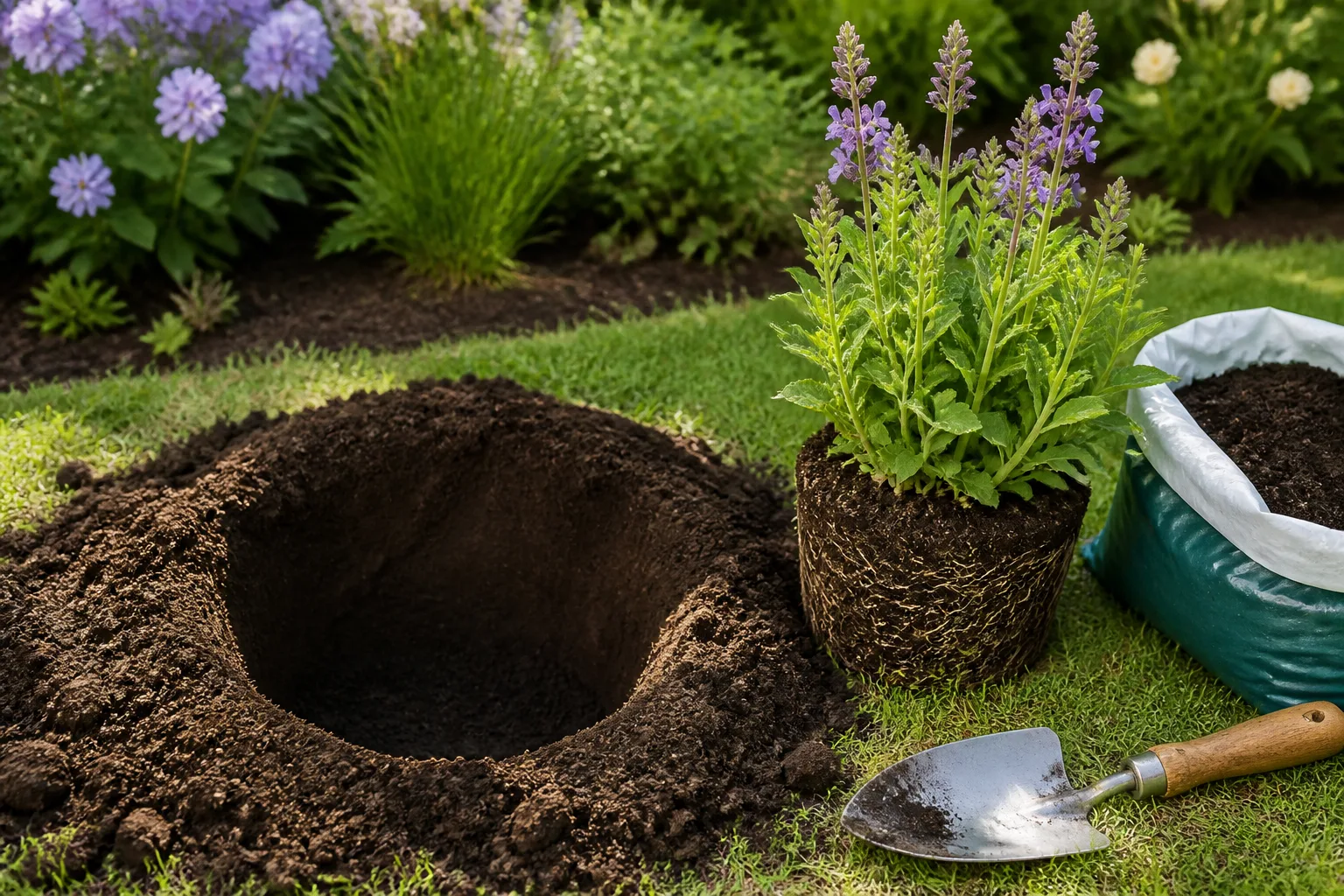
Start feeding lightly after new growth appears. If roots have filled the pot or the mix has collapsed and drains poorly, repot one size up into fresh, well-draining mix. Do not automatically move a plant into a large container; an oversized pot can delay drying just as outdoor temperatures are still fluctuating.
When the forecast is frost-free and nights stay above the plant’s comfort threshold, begin acclimation. Put the pot outside in bright shade for a few hours, return it indoors, and extend the exposure over the next 10–14 days. Increase light gradually, especially for standard impatiens that spent winter behind glass, and keep the pot sheltered from wind while stems strengthen.
Plant into a shady or partly shady bed at the same depth as the container. New Guinea and SunPatiens can accept more light than standard types, but more sun also increases water demand and heat stress. A plant that was healthy in a bright indoor window may still wilt in direct afternoon sun if the transition is too abrupt.
Troubleshoot failures and know when to discard
Leaves drop immediately after moving indoors: Check for cold exposure, a sharp light change, or root-ball disturbance before adding water. Remove damaged leaves, keep temperatures stable, and give the plant time to adjust; persistent wet soil is a more serious warning than a few fallen leaves.
The plant wilts while the mix is wet: Suspect root stress or poor drainage rather than thirst. Confirm that water exits the pot, feel the root zone, and unpot the plant if the mix stays saturated or smells sour. Trim only soft, collapsing roots, repot into fresh mix, and reduce watering until new growth confirms recovery.
Stems stretch and flowering stops: Improve light first. Pinch the longest tips after the plant stabilizes, rotate the pot, and use a grow light if the brightest window still produces long gaps between leaves. Fertilizer may support new growth later, but it cannot replace photons.
Fine webbing, sticky leaves, or pale stippling appears: Isolate the plant and inspect leaf undersides and new growth. Rinse pests away where practical, remove badly infested tissue, and use only a labeled treatment that is appropriate for the plant and indoor setting. Never return the pot to a plant shelf merely because the visible insects disappeared after one rinse.
Yellowing spreads quickly and leaves fall from standard bedding impatiens: Consider downy mildew, especially if the plant was crowded or foliage stayed damp. The RHS recommends disposing of affected plants because spores can persist; saving a diseased specimen indoors is not a worthwhile experiment. (RHS)
Discard rather than overwinter when the plant has severe frost injury, advanced root rot, a spreading disease, or a pest infestation you cannot contain. Compost only according to your local disease and composting guidance; do not put visibly diseased impatiens into a home compost pile that will be reused around susceptible plants.
Conclusion
Overwinter impatiens when you have a healthy plant worth preserving, a frost-free indoor location, and the time to inspect it before it joins your houseplants. Move the plant before cold nights damage it, reduce its size without removing every growing point, keep the mix lightly moist in bright light, and delay fertilizer until new growth returns.
For most gardeners, the best insurance is a small set of fall cuttings even when a whole plant comes indoors. Cuttings save space and preserve the parent exactly; seeds are useful for open-pollinated plants or experiments but may not reproduce a hybrid’s color or flower form. Start spring growth slowly, harden plants off over 10–14 days, and wait for a genuinely frost-free forecast before asking winter survivors to bloom outdoors again.



