10 Types of Perennial Sunflowers to Grow
Find perennial sunflowers that return every year, from compact coastal types to tall prairie plants, plus planting, pruning, and spread-control tips.
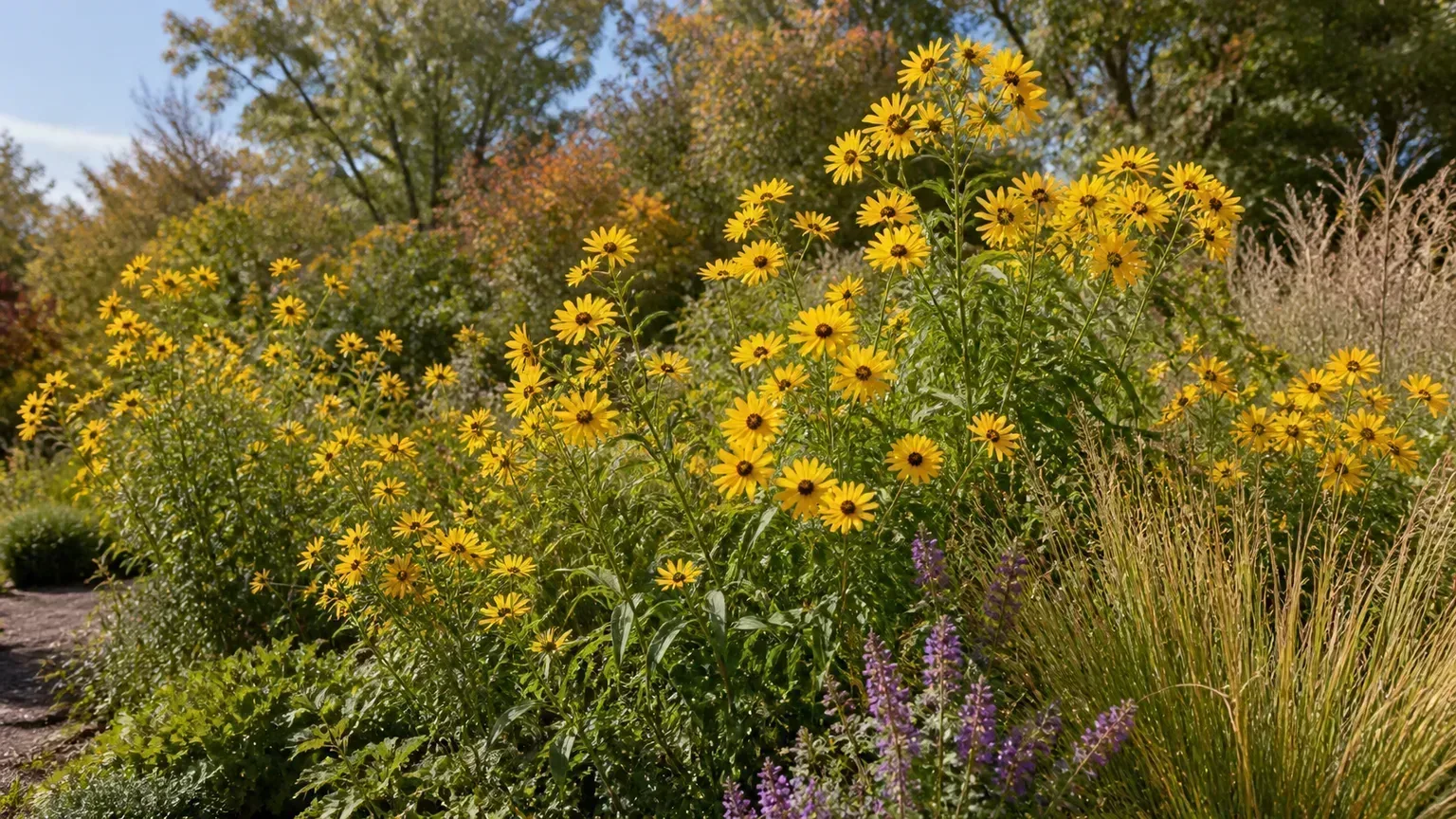
If you want the look of a sunflower without sowing a fresh packet every spring, start with the perennial members of Helianthus. They return from crowns or underground stems, usually flower from late summer into fall, and bring a useful mix of height, late-season color, pollinators, and seed for birds.
The catch is that “perennial sunflower” is not one predictable plant. Some types form a polite clump; others spread by rhizomes or reseed so freely that they belong in a meadow, rain garden, or vegetable patch rather than a narrow border. Use the list below as a matching guide, not a popularity contest.
What makes a sunflower perennial?
Perennial sunflowers are herbaceous Helianthus species and hybrids that die back to a crown or root system and regrow in a later season. They are related to the familiar annual sunflower, Helianthus annuus, but an annual sunflower completes its life cycle in one growing season even if it drops seed that sprouts the following year.
The genus includes dozens of species, many native to North America. Their flowerheads are made from a ring of ray florets around a center of tiny disc florets, so the “single flower” is actually a dense cluster of individual flowers. The New York Botanical Garden’s sunflower guide notes that most perennial sunflowers prefer sun and moist, well-drained soil, while the NC State Extension Helianthus profile adds that some tolerate poor drainage, dry conditions, or partial shade. Those exceptions are the reason species selection matters.
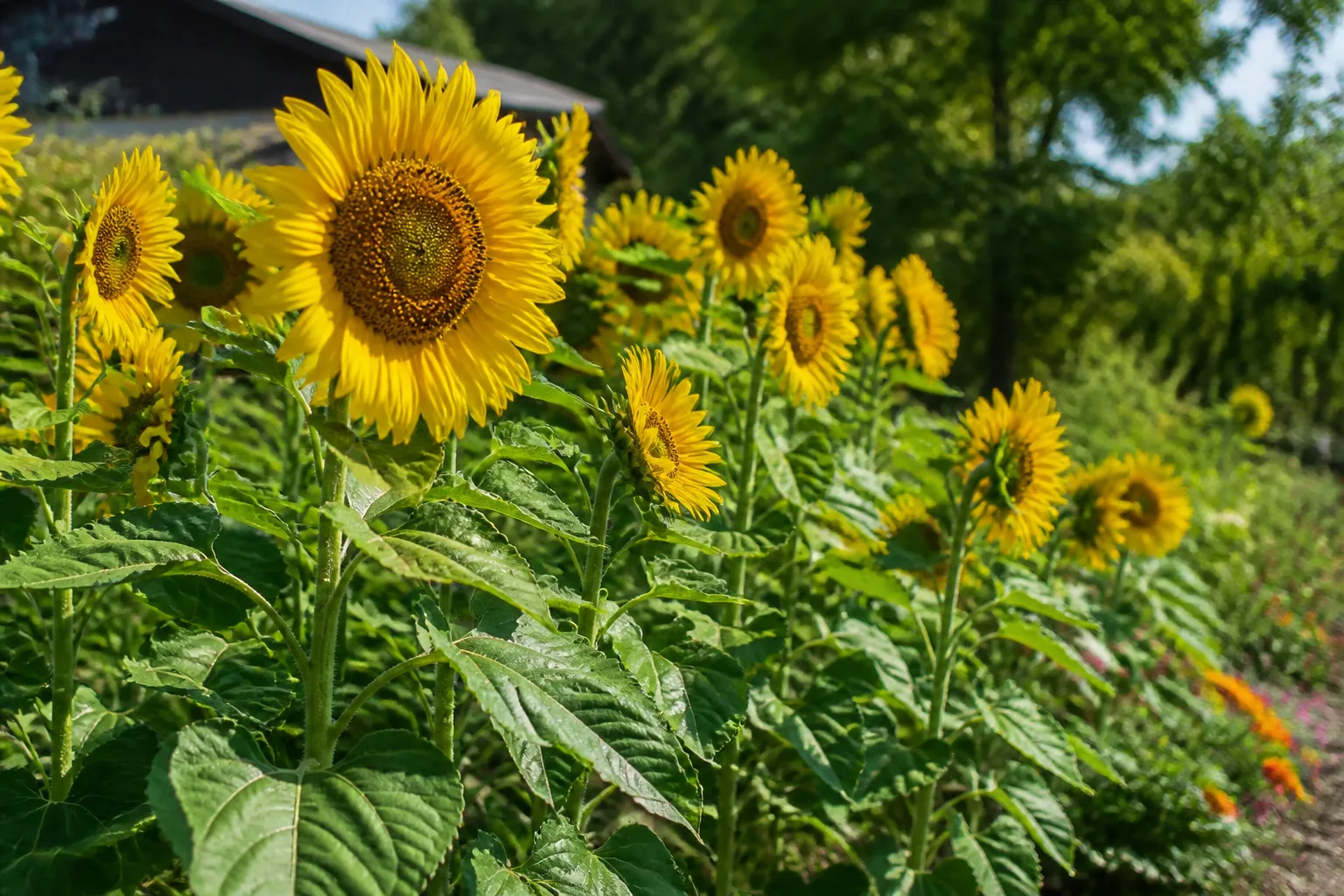
The familiar annual sunflower has the classic large flowerhead; many perennial Helianthus types branch more freely and flower later in the season.
Do not confuse perennial Helianthus with false sunflower, Heliopsis helianthoides. False sunflower is also a valuable perennial, but it is a different genus with different plant descriptions and cultivar choices. Check the botanical name on a nursery label when a true returning sunflower is what you want.
Choose a type by sun, moisture, height, and spread
Start with the planting site, then choose the flower. A sunny bed with average moisture can support many types, but a wet swale, dry sandy slope, coastal garden, or small courtyard needs a more deliberate match.
Wet soil and dry soil call for different Helianthus
For a damp edge, look first at swamp sunflower, H. angustifolius, which can handle moist to occasionally wet soil. For average or drier soil, fewleaf sunflower, ashy sunflower, and Maximilian sunflower are more sensible starting points. Beach sunflower is adapted to heat, salt, and sandy coastal conditions, while woodland sunflower tolerates some shade better than most of the group. Savvy Gardening’s variety guide is useful for seeing how those differences play out in an established garden, while Fafard’s fall-sunflower overview adds practical cultivar and placement ideas.
Height is just as important. A plant listed as 6 feet tall can be taller in rich soil and wider once established. Place the tallest types at the back of a border, against a fence, or in a meadow where a little movement is attractive. If you need a tidy front-of-border plant, choose a named compact cultivar rather than hoping a species will stay small.
Spread deserves a label of its own. Rhizomes are underground stems that can send up new shoots away from the original crown; seedheads can also create volunteers. Neither is automatically bad, but both change the amount of editing your garden will need.
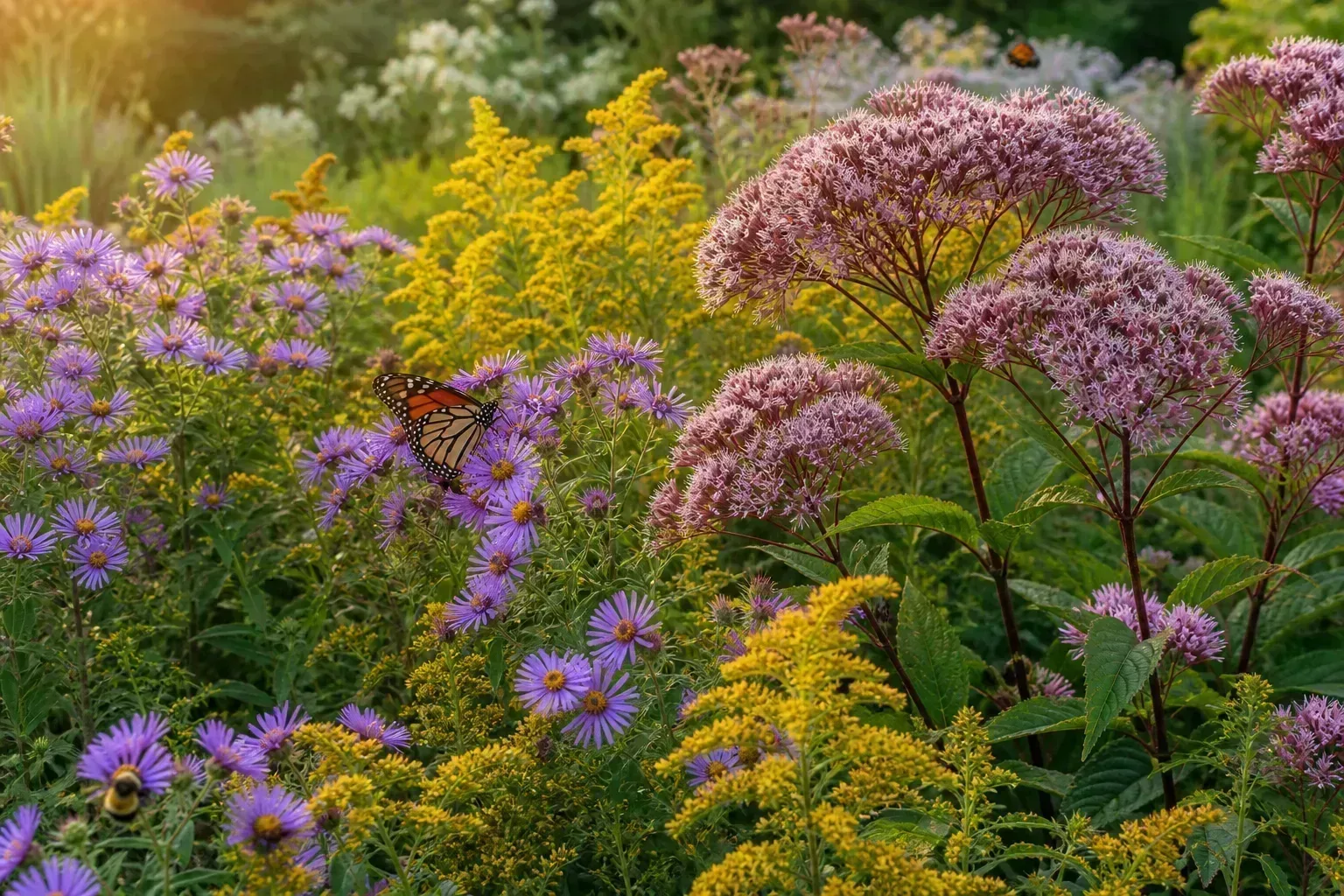
A mixed late-season bed gives tall perennial sunflowers room to rise above lower flowers and grasses while keeping pollinator resources available after midsummer.
Quick comparison of 10 perennial sunflowers
| Type | Typical height | Best moisture match | Spread and maintenance | Best placement |
|---|---|---|---|---|
| Swamp sunflower | 5–8 ft | Moist to occasionally wet | Vigorous rhizomes; may need staking | Stream edge, rain garden, back border |
| Giant sunflower | Up to about 9 ft | Moist or marshy | Large and better in open space | Meadow, naturalized planting |
| Woodland sunflower | 2–6 ft | Average to moist | Spreads; divide when crowded | Part-shade edge, native border |
| Ashy sunflower | 2–4 ft | Average, well drained | Rhizomatous; informal habit | Dry border, meadow, pollinator garden |
| Showy sunflower | 5–8 ft | Moist but well drained | Rhizomatous clump; divide periodically | Large border, wildlife or cut garden |
| Maximilian sunflower | 3–10 ft | Average to dry once established | May reseed; prune or stake tall stems | Prairie-style bed, back border |
| Willowleaf sunflower | 5–8 ft | Average, well drained | Rhizomes and seed; compact cultivars help | Fall border, meadow, cutting garden |
| Jerusalem artichoke | 6–10 ft | Consistent moisture, well drained | Very vigorous rhizomes; hard to remove | Dedicated vegetable patch |
| Beach sunflower | 1–3 ft | Dry, sandy, salty | Low, spreading coastal habit | Coastal groundcover, hot bank |
| Thin-leafed sunflower | 4–6 ft | Average to moist | Hybrid; some cultivars self-seed | Informal border, meadow edge |
Ranges are a planning tool, not a guarantee. Soil fertility, moisture, latitude, cultivar, and whether the plant is cut back in early summer can all change the final size.
1. Swamp sunflower (Helianthus angustifolius)
Swamp sunflower is the one to consider when a sunny part of the garden stays damp longer than its neighbors. It grows about 5 to 8 feet tall, carries narrow green leaves, and opens yellow flowers with dark centers from mid- to late summer into fall. NC State Extension’s species profile describes it as a plant for moist to occasionally wet soil, but it can grow in drier ground if it receives enough moisture.
This is not a small, well-behaved edging plant. It spreads aggressively by rhizomes, and its stems can be flimsy in wind, so give it room and put it where surrounding plants or a discreet support can keep it upright. A June cutback encourages branching and a fuller, shorter display; do not wait until buds are forming unless you are willing to accept a later bloom.
Use it beside a pond, in a rain garden that drains between storms, or at the back of a large pollinator bed. If your soil is dry and sandy, choose a different sunflower instead of trying to recreate swamp conditions with constant irrigation.
2. Giant sunflower (Helianthus giganteus)
Giant sunflower is a bold, tall species for gardeners who have more vertical space than they have room for fussy flowers. It can approach 9 feet, has a strong central-stem look, and is associated with moist or marshy habitats. The effect is closer to a native meadow plant than a compact perennial border clump.
Plant it where its scale is part of the design: along a fence, at the rear of a wide bed, or in a naturalized area with grasses. Give the root zone consistent moisture while it establishes, and expect to stake or weave the stems through neighboring plants if the site is exposed. It is a poor fit for a small garden viewed from every side because the plant can become a tall, coarse wall after flowering.
Leave the seedheads standing if birds are part of your goal. If you need a cleaner winter bed, wait until late winter to cut the stems rather than removing every flower immediately after bloom.
3. Woodland sunflower (Helianthus divaricatus)
Woodland sunflower offers one of the more useful compromises in the group: it can take some partial shade, yet still gives the sunny yellow flower effect associated with Helianthus. It usually reaches about 2 to 6 feet, with branching stems and a lighter, more open presence than the giant types. The NC State Extension profile for H. divaricatus also notes its value as a native wildlife plant.
Although “woodland” does not mean deep shade, it is a good candidate for a bright woodland edge or a border that receives strong afternoon light but not all-day sun. The species spreads by rhizomes, so treat it as a plant that will make a colony over time rather than a fixed point in the bed. Divide it when the clump outgrows its space or the center becomes thin.
Its earlier flowering can bridge the gap before the latest prairie sunflowers begin. Combine it with asters, grasses, or other plants that can hide the lower stems once the foliage becomes less tidy.
4. Ashy sunflower (Helianthus mollis)
Ashy sunflower is easy to recognize by its soft, fuzzy gray-green leaves. At roughly 2 to 4 feet tall, it is more manageable than many perennial sunflowers, but its spreading rhizomes still make it better for an informal border, meadow edge, or pollinator planting than for a tightly clipped bed.
Choose a site with average, well-drained soil and full sun to partial shade. It handles drier conditions better than swamp sunflower, but “drought tolerant” does not mean it should be left unwatered during its first season. Water deeply when the soil is dry while the roots are expanding, then reduce supplemental watering once the plant is established and the weather is moderate.
The leaves are part of its appeal, so do not bury the plant in front of dark, dense foliage. Give it enough room for the gray texture and yellow flowers to read as a pair.
5. Showy sunflower (Helianthus × laetiflorus)
Showy sunflower is a substantial hybrid for late-season color. The Royal Horticultural Society profile describes it as a rhizomatous, clump-forming perennial that can reach 1.5 to 2.5 meters, with bright yellow flowerheads and dark centers from late summer into autumn. Its coarse leaves and sturdy presence suit a large, informal planting better than a delicate cottage border.
Grow it in full sun and moderately fertile, moist but well-drained soil. The hybrid is a better choice when you want a strong visual mass, not when you need a plant that stays exactly where it was planted. Divide established clumps every two to four years to retain vigor and share the extras, checking local conditions because mature spread varies.
The strong yellow-and-dark-center contrast looks especially good with blue-gray grasses or purple late-season flowers. Keep the surrounding plants a little lower so the sunflower reads as a deliberate backdrop rather than a tangle.
6. Maximilian sunflower (Helianthus maximiliani)
Maximilian sunflower is a prairie-style plant with narrow, gray-green leaves and multiple yellow flowers along tall stems. Its usual size is highly variable—roughly 3 to 10 feet depending on the source, soil, climate, and cultivar—so confirm the mature height before placing it near a window or walkway.
It is a good choice for a wide back border, meadow, or wildlife garden, particularly where late-season flowers and seedheads are welcome. Named forms such as ‘Dakota Sunshine’ can make the plant easier to place, but even a selected cultivar should not be treated like a dwarf bedding plant.
Cutting tall stems back in early summer can produce shorter, denser growth and reduce the need for staking. Do it early enough for new side shoots to mature; a late cutback can trade a shorter plant for fewer or later flowers. The NC State genus profile recommends full sun for the most flowers and leaving seedheads for birds after bloom.
7. Willowleaf sunflower (Helianthus salicifolius)
Willowleaf sunflower earns its name from its long, narrow, slightly drooping leaves. It commonly grows 5 to 6 feet and can reach about 8 feet, with bright yellow flowers arriving in late summer or fall. The foliage gives the plant structure before it blooms, which makes it more useful in a designed border than a sunflower that is only interesting for a few weeks.
The species spreads by creeping rhizomes and seed. NC State Extension’s willowleaf profile recommends dividing clumps every two to four years as needed, and full sun helps keep the stems shorter and flowering heavier; shade tends to produce taller plants with fewer blooms. Site it toward the back of a bed or in a meadow where its movement is an asset.
If you want the willowleaf look without the full height, look for compact cultivars such as ‘First Light’ or ‘Autumn Gold’ and read the nursery’s mature-width description as carefully as its height. A shorter plant can still spread sideways.
8. Jerusalem artichoke (Helianthus tuberosus)
Jerusalem artichoke, also called sunchoke or sunroot, is the practical outlier in this list. It is a tall perennial sunflower grown for yellow late-season flowers and edible underground tubers. The flowers are attractive, but the plant’s main garden decision is whether you want a crop that can occupy a large, dedicated patch.
This species grows about 6 to 10 feet tall and can become a dense colony. NC State Extension’s Jerusalem artichoke profile warns that it spreads by rhizomes and self-seeding, and that even small pieces left in the soil can regrow. That makes it a poor choice for a mixed border or a bed where you expect every plant to stay in its assigned footprint.
Grow it in a vegetable garden or contained area with consistent moisture and good drainage. Harvest the tubers after flowering in fall, or leave some flowerheads for birds. If you are planting it only for ornamental flowers, choose a less aggressive perennial sunflower instead.
9. Beach sunflower (Helianthus debilis)
Beach sunflower is the specialist for hot, sandy, coastal conditions. It stays shorter than most of the species here—often about 1 to 3 feet—and can form a low, spreading cover with yellow flowers. Salt tolerance and a prostrate habit make it useful where an upright prairie sunflower would dry out or topple.
It is not a universal small-space sunflower. Its cold tolerance is limited compared with many inland species, so gardeners in colder climates should treat it as an annual or choose a hardy local perennial. In a warm coastal garden, plant it in full sun in sharply drained sand and allow it to spread across a bank or informal bed.
Choose beach sunflower for the conditions it is adapted to, not simply because it is short. A compact cultivar of a hardier species may be a better fit for a small inland garden.
10. Thin-leafed sunflower (Helianthus × multiflorus)
Thin-leafed sunflower is a group of hybrids valued for fuller, sometimes double flowers. Cultivars such as ‘Capenoch Star’, ‘Loddon Gold’, and ‘Sunshine Daydream’ vary in height and flower form, but they generally sit in the middle of the size range—about 4 to 6 feet for common garden selections.
This is the choice for a gardener who wants the sunflower color with a more ornamental flower shape. The plants suit a sunny border, cutting garden, or meadow edge, and several cultivars have enough structure to stand without the support required by a very tall species. Check the individual cultivar’s mature height and whether it is known to self-sow before buying.
Use double forms where you want a strong floral display, but keep a few simple-flowered native plants nearby if pollinator access is a priority. A fuller flowerhead can be beautiful while offering a different feeding surface than an open, pollen-rich center.
Plant perennial sunflowers for strong stems and better bloom
Plant in spring after the soil is workable and the risk of hard frost has passed, or plant nursery divisions and containers in spring or fall when conditions are mild. For seeds, use the packet’s depth and spacing rather than scattering them densely; crowded seedlings are more likely to produce weak, airless growth later.
Choose a site with at least six hours of direct sun for the most flowers. Work a modest amount of compost into poor soil, but do not turn a naturally lean, dry-site plant into a lush, floppy tower with heavy feeding. Most types want moisture that drains away rather than permanently saturated soil, with swamp sunflower and a few habitat specialists as notable exceptions.
Space according to mature width, not the size of the starter pot. If a label says the plant will reach 6 feet tall and 3 feet wide, that is a reason to keep it out of the front of a narrow path even if it looks tiny in May. Install a discreet ring support early for tall or wind-exposed plants; adding a stake after stems have fallen usually produces a more visible and less effective repair.
Named hybrids are best propagated by division if you want the new plant to match the parent. Seedlings may vary, especially where several Helianthus types are growing nearby. Divide in spring as growth begins or in fall after flowering, when the weather is cool and the soil can be kept evenly moist.
Care after planting: water, support, and winter cleanup
Water new plants deeply when the top few inches of soil begin to dry, then adjust to the species and weather. A swamp sunflower beside a stream has a different need from a fewleaf sunflower in sandy soil. Mulch can buffer moisture swings, but keep it off the crown and stems so the base does not stay wet.
For height control, pinch or cut tall stems in early summer before flower buds form. This encourages branching and can make a plant easier to support. Do not shear every perennial sunflower on a fixed calendar: a late cutback can postpone bloom, and a species chosen for a tall meadow effect may look worse after aggressive shaping.
After frost, leave seedheads if you want birds to forage and if volunteer seedlings are acceptable. The NC State Extension genus guidance also recommends leaving cut perennial stems about 12 to 24 inches high for stem-nesting bees, allowing them to remain until they break down. In late winter, remove collapsed material and thin crowded stems while leaving any standing habitat that is still useful.
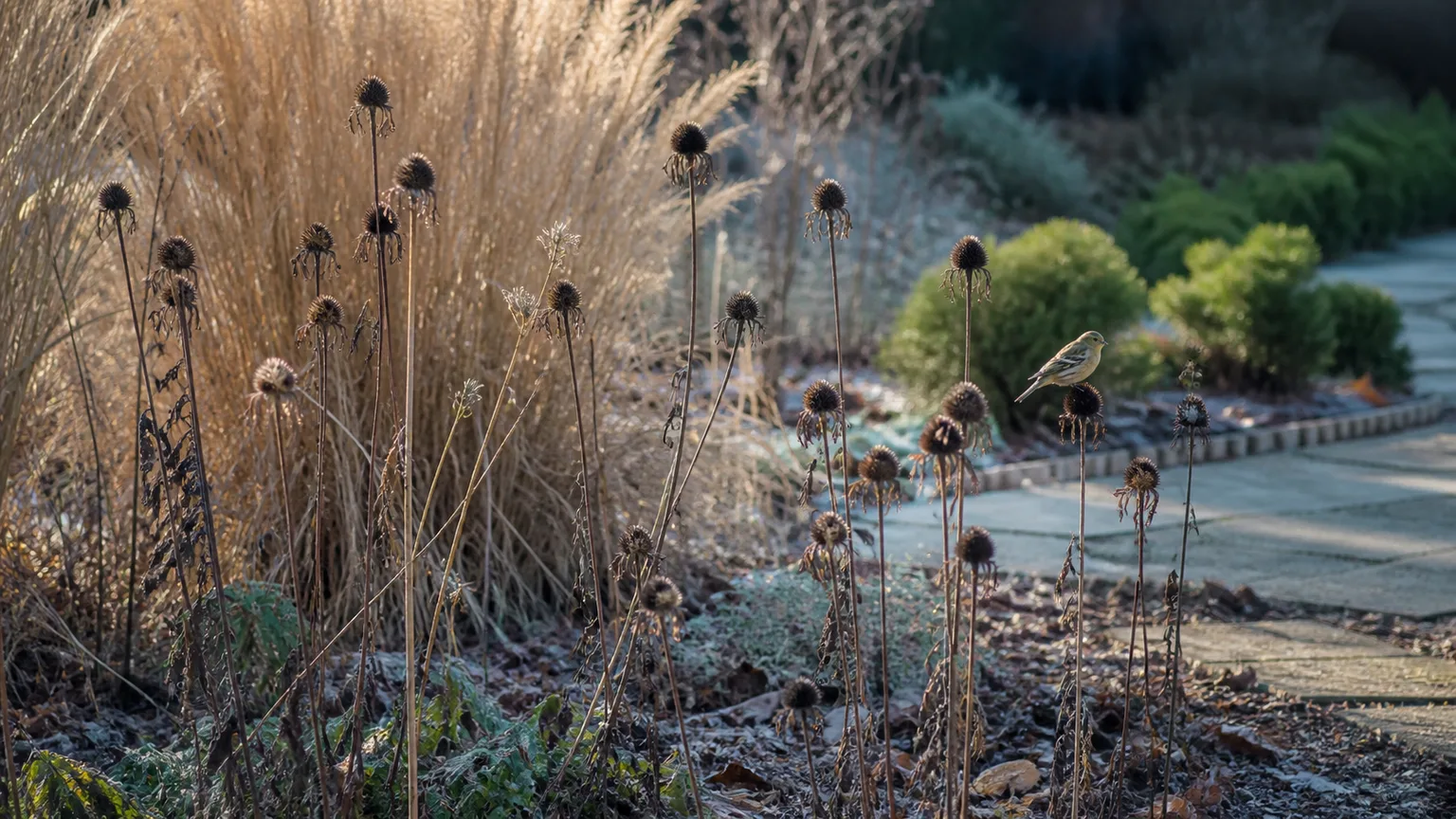
Leaving some seedheads and hollow stems through winter can add food and shelter to a wildlife-friendly garden.
Divide, contain, or let them naturalize?
Divide when the center of a clump dies back, stems become crowded and weak, or the plant crosses the boundary you planned for it. A simple division sequence is:
- Water the plant the day before if the soil is dry.
- Dig around the clump and lift as much of the crown and root system as possible.
- Separate the crown into sections, making sure each division has live shoots and roots or rhizomes.
- Replant at the original depth, firm the soil, and water thoroughly.
Division is not a cure for every spreading sunflower. Jerusalem artichoke and other vigorous rhizomatous types can regrow from fragments, so do not put unwanted pieces in ordinary compost unless you know the pile will heat sufficiently to destroy them. For an orderly border, choose a less aggressive species or a compact cultivar from the start, deadhead before seed matures, and place the plant where a colony is acceptable.
Naturalizing is the right answer when the site is large enough and the planting goal includes wildlife. It is the wrong answer beside a small patio, a lawn edge that must stay crisp, or a bed where future digging is likely to disturb and spread rhizomes.
Common problems and the first fix to try
Perennial sunflowers are generally tough, but toughness does not cancel out poor placement. Powdery mildew, rust, and leaf spots become more likely when a tall clump is crowded, shaded, or kept wet on the foliage. Start by improving spacing and airflow, watering at the soil line, and removing badly collapsed leaves; do not reach for a spray before checking whether the site itself is the problem.
Caterpillars, beetles, aphids, and occasional browsing can leave holes in the foliage. A healthy established plant usually tolerates some chewing, and those insects may be feeding birds or supporting butterfly larvae. Inspect new growth, identify the insect, and intervene only when damage threatens the plant or the garden’s purpose.
Flopping usually means a mismatch between height, light, moisture, and support. Move the plant only during dormancy or choose a shorter cultivar next time; repeatedly tying a very tall plant to one stake will not change its growth habit. Sparse bloom can come from too much shade, a late cutback, drought during bud formation, or a cultivar that simply flowers later than expected.
Conclusion: match the sunflower to the site
The best perennial sunflower is not necessarily the tallest, the most floriferous, or the easiest to find. Swamp sunflower belongs where soil stays moist; beach sunflower belongs in warm coastal sand; fewleaf and ashy sunflowers suit drier ground; compact willowleaf cultivars help with height; and Jerusalem artichoke deserves a dedicated edible patch because its rhizomes are difficult to contain.
Choose the species by mature size and spread first, then by flower color. Give it enough sun, support tall stems before they fall, divide when the clump outgrows its space, and leave some seedheads and stems for wildlife when that fits your garden. With that match in place, perennial Helianthus can provide a reliable bridge from summer into fall without becoming a yearly replanting job.