How to Treat and Prevent Black Spot on Roses
Circular black spots and yellow rose leaves often mean black spot fungus. See symptoms, first-hour fixes, fungicide timing, resistant cultivars, and fall cleanup steps.
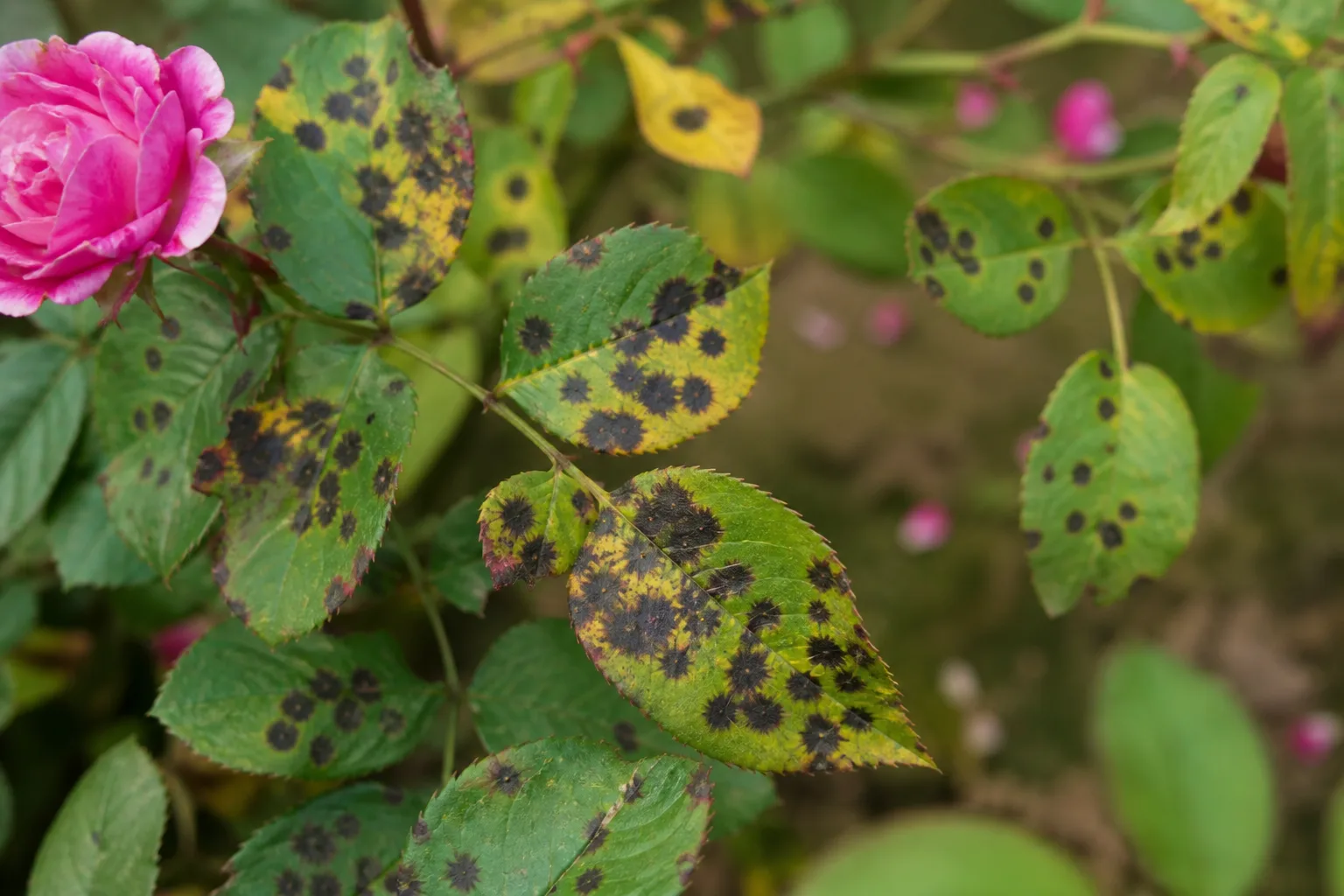
Black spots on rose leaves are not a cosmetic blemish you can ignore until fall. They are usually black spot, a fungal disease caused by Diplocarpon rosae, and it spreads upward through the bush while yellowing and dropping leaves. The goal is not to find a magic spray that erases old spots—it is to stop new infection, keep enough healthy foliage for the plant to feed itself, and cut next season’s spore load before winter.
If you do only three things today, do these: confirm the diagnosis, bag and remove the worst infected leaves, and switch to base watering so leaves stay dry overnight. Everything else—pruning, mulch, protectant sprays, resistant replanting—builds on that foundation.
Start with a 60-Second Field Diagnosis
Before you reach for fungicide, read the plant the way an extension diagnostician would. Check the lowest leaves first (infection usually starts there), then move up the cane. Flip leaves over, inspect young stems, and note whether spots have yellow halos or uniform yellowing without spots.
Black spot is a foliar fungus, not an insect, not a nutrient shortage, and not “just old leaves” unless the yellowing is limited to a few bottom leaves on an otherwise vigorous bush. Matching the pattern wrong means wasted sprays and a bush that keeps defoliating.
Classic Black Spot Signs on Leaves and Canes
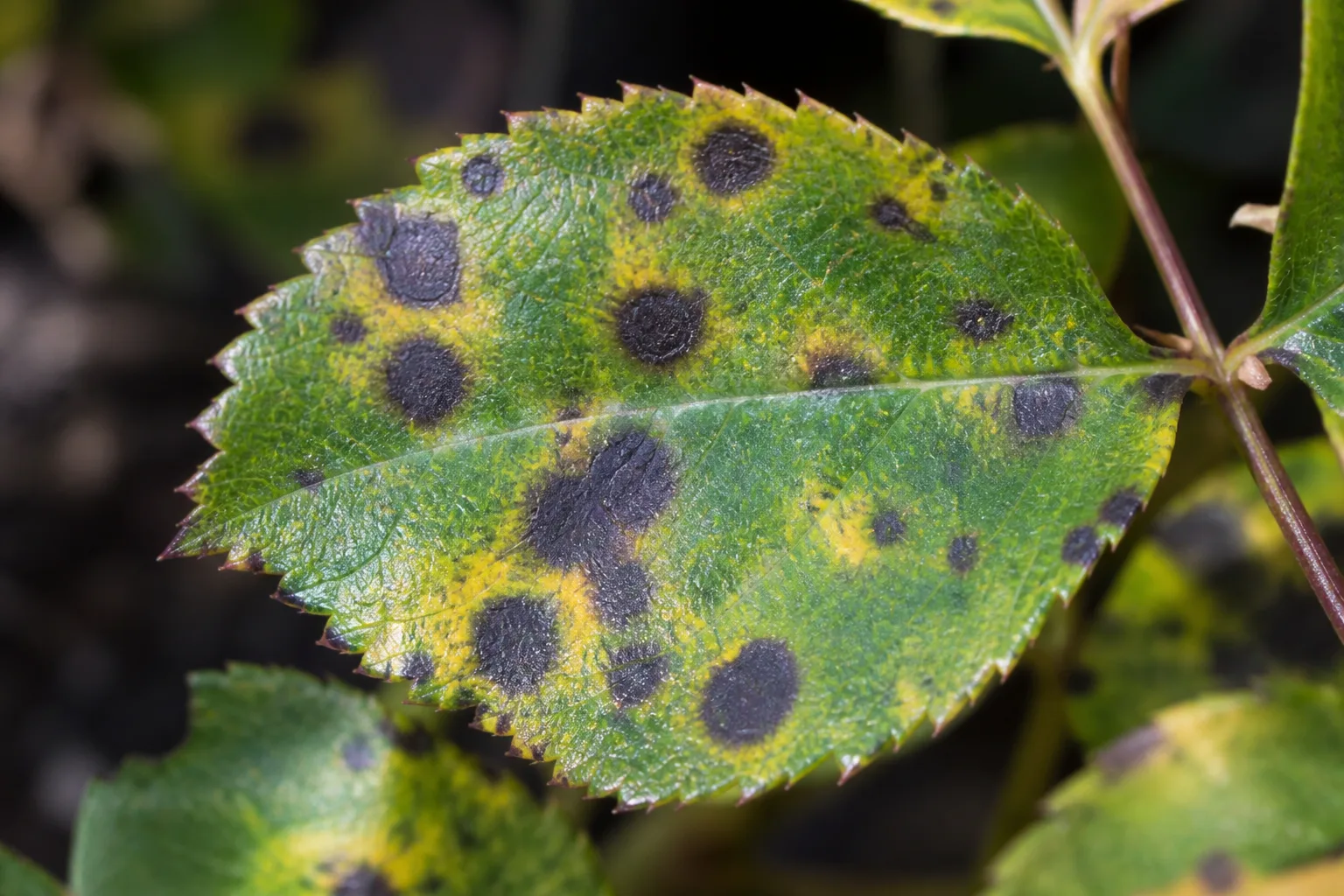
On leaves, look for round to irregular black or dark purple spots roughly one-tenth to one-half inch across on the upper leaf surface, often with fringed or feathery edges and a yellow ring around the lesion. The Missouri Botanical Garden notes that adjacent tissue turns yellow and leaves drop prematurely, typically beginning at the plant base and progressing upward (Missouri Botanical Garden).
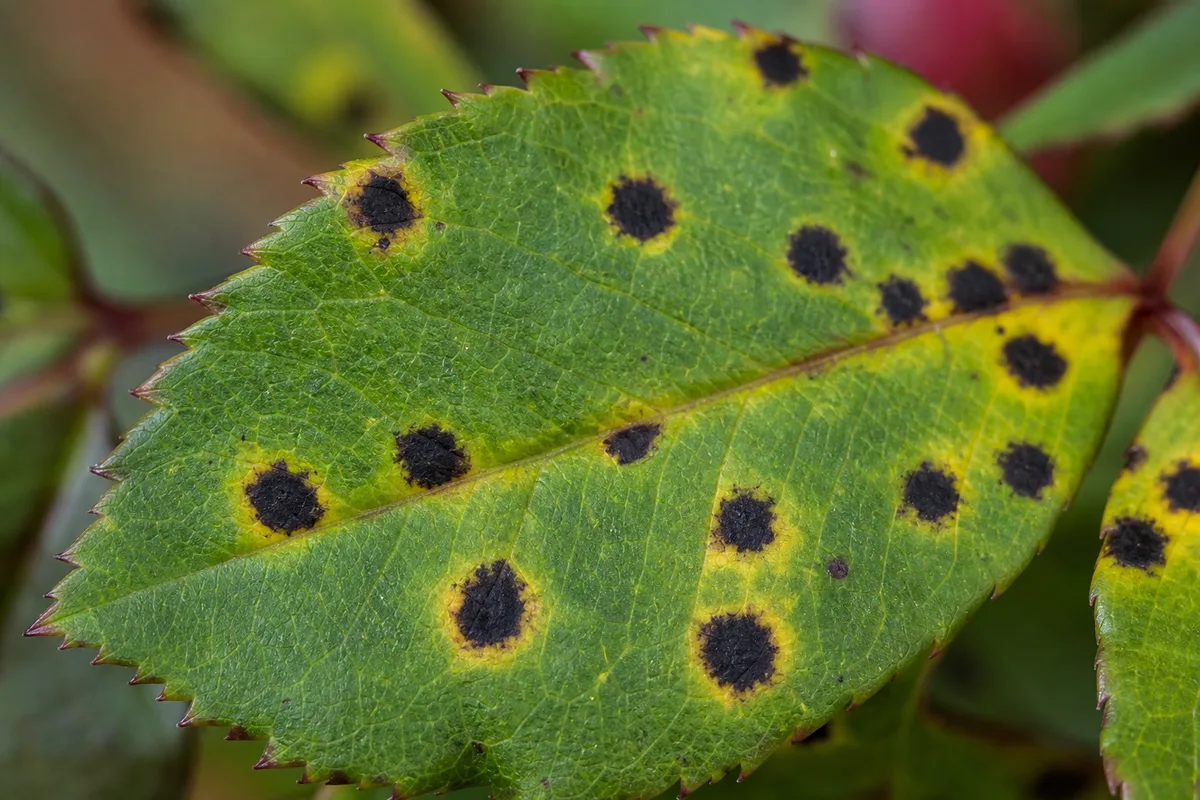
On canes, you may see small raised purple-red blotches on first-year wood; these can darken and blister as the season advances. Flowers may be fewer because the plant is shedding leaves and redirecting energy toward survival rather than bloom production.
Lookalikes You Should Rule Out First
Several rose problems share yellow leaves or dark markings. Use this quick separation before you treat:
Powdery mildew coats leaves in a white, powdery film, often without the discrete black circular lesions black spot produces. See our powdery mildew guide if the coating looks dusty rather than spotty.
Rose rust shows orange or rusty pustules, commonly on leaf undersides, not large black patches with yellow halos on the upper surface.
Cercospora or other leaf spots can mimic black spot at a glance, but black spot’s fringed margin and upward march from lower leaves are distinctive in humid rose beds.
Yellow leaves without spots point toward watering stress, heat, iron chlorosis, or natural aging—not necessarily fungus. Our rose leaves turning yellow guide walks through those patterns, including how black spot’s yellow halos differ from drought or chlorosis.
If symptoms do not fit after a careful look, photograph affected leaves (top and bottom) and ask your local extension office before committing to a full spray program.
What Black Spot Does to a Rose Bush
Black spot rarely kills a rose in a single season, but it can weaken the plant badly by removing photosynthetic leaf area. Affected leaves yellow and fall; heavy infection can leave canes nearly bare by midsummer while the fungus keeps reinfecting any new foliage that emerges.
That matters for three practical reasons. First, fewer leaves mean fewer blooms and smaller flowers because the bush cannot manufacture enough sugars. Second, repeated defoliation reduces winter hardiness—a rose that enters dormancy stressed from leaf loss may suffer more cane dieback after a hard freeze. Third, a thin canopy invites other problems, from sunscald on bark to secondary pests that target stressed plants.
The Royal Horticultural Society calls black spot the most serious rose disease in many gardens and notes that badly affected plants can shed almost all leaves, sharply reducing vigor (RHS). Treat early outbreaks as a vigor emergency, not a patience test.
The Diplocarpon Rosae Life Cycle (And Why Timing Matters)
Understanding the fungus explains why “I sprayed once” fails. Diplocarpon rosae overwinters on infected fallen leaves and on dormant lesions on canes and buds. In spring, spores splash onto new foliage when water carries them from soil or old debris.
When Spores Infect and How Fast Outbreaks Spread
Infection requires continuous leaf wetness for about seven hours—not a quick morning dew, but sustained moisture from rain, overhead irrigation, or heavy dew in crowded, shaded plants (Missouri Botanical Garden). Once established, the fungus forms fruiting structures in the black lesions that release more spores, which splash to higher leaves and neighboring canes.
Cool, moist weather favors the disease; extreme summer heat in July and August can slow new spore development in many climates, giving you a partial reprieve even if old spots remain visible on leaves. The fungus is also genetically diverse, which is why a cultivar marketed as “resistant” may still break down after a few years as new strains arise (RHS).
Black spot is host-specific to roses (Rosa species and hybrids). It will not jump to your tomatoes or lilacs, though the same humid, stagnant conditions that favor black spot may encourage other fungi on nearby plants.
Your First-Hour Response When Black Spot Appears
When you confirm black spot, act in this order:
Strip the worst leaves now. Remove leaves with active spots and yellow halos, working from the bottom up. Drop them straight into a trash bag, not the compost pile—home compost rarely gets hot enough to kill Diplocarpon spores (Missouri Botanical Garden).
Stop wetting foliage. Switch to base watering or drip irrigation. If you must overhead water, do it early on a sunny morning so leaves dry before evening.
Open the canopy. Remove crossing canes and inward-facing shoots so air moves through the bush. Follow sanitation basics from our rose pruning guide—dead and diseased wood first, shape second.
Disinfect tools between bushes. Wipe pruner blades with 70% rubbing alcohol or a 10% bleach solution and let them dry before the next cut, especially if you are moving from an infected plant to a clean one.
Plan protectant sprays for new leaves. Fungicides will not cure marks already on a leaf, but they can protect emerging foliage if you start before infection blankets the bush (Gardening Know How).
Do not strip every leaf in panic. Removing more than about one-third of the canopy at once can shock the plant. Focus on the most infected lower leaves and commit to a prevention routine for what remains.
Cultural Controls That Actually Reduce Pressure
Sprays help, but culture is the backbone of black spot management. A vigorous rose in full sun with dry leaves and clean soil surface faces less disease pressure than a cramped, shaded bush watered from above.
Watering and Foliage Dryness
Roses need consistent root-zone moisture, but wet leaves are what the fungus needs to germinate. Drip tape, soaker hoses, or careful hand watering at the base keeps foliage drier than sprinklers. You cannot stop rain, but you can avoid evening irrigation that leaves leaves wet overnight.
Plant roses where they receive morning sun, which dries dew quickly, or—better—full-day sun in open beds (Missouri Botanical Garden). Space bushes so they do not rub neighbors; crowded foundation plantings are black spot factories.
Apply 2–3 inches of mulch (shredded bark or leaf mold) to reduce soil splash onto lower leaves. Keep mulch off the crown and avoid fresh wood that may carry artillery fungus in very wet sites.
Pruning, Sanitation, and Tool Hygiene
During the growing season, remove spotted leaves as you see them and rake fallen debris weekly when infection is active. In late fall, collect all rose leaves from the ground—even healthy-looking ones may harbor spores.
At late-winter dormant pruning, cut out canes with purple-black lesions, going 6 to 8 inches below visible infection into healthy white pith on a dry day. Bag prunings; do not leave them on the path. For pruning technique by rose type, see our rose pruning care page and the broader rose care guide.
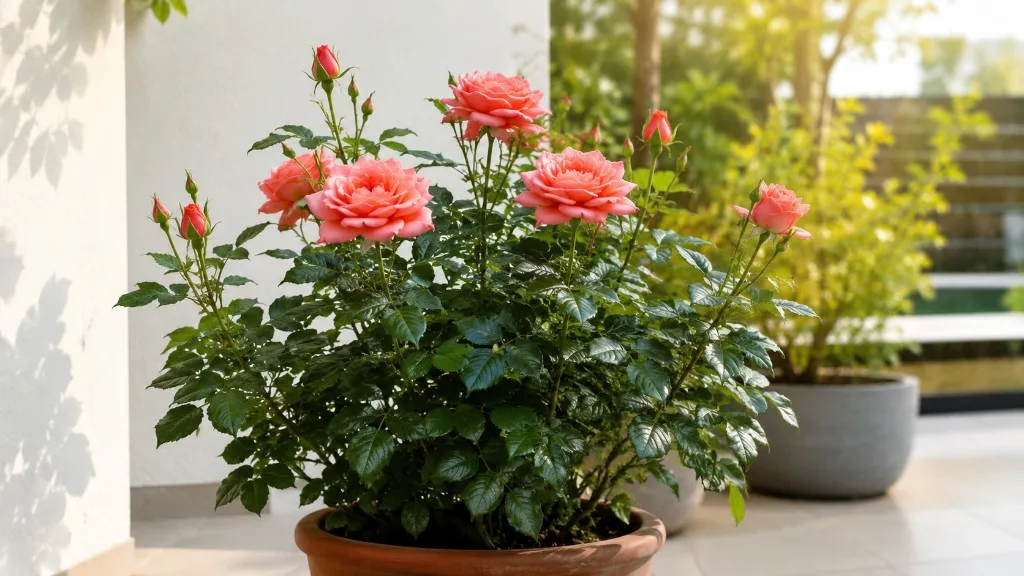
Thinning the interior so canes do not cross improves drying the same way opening a closet door stops mildew on stored clothes—stagnant humidity is the enemy.
Fungicide and Organic Spray Options
Think of fungicides as raincoats for new leaves, not erasers for old spots. Once a leaf is marked, the scar remains until that leaf falls. Products work by preventing spores from establishing on clean tissue.
Missouri Botanical Garden lists numerous protectants registered for black spot, including captan, chlorothalonil, copper, mancozeb, sulfur, and thiophanate-methyl, with typical reapplication every 7–14 days and after heavy rain or overhead watering beyond about one-quarter inch (Missouri Botanical Garden). Always read the label for roses, rates, re-entry intervals, and bee safety.
The RHS emphasizes that non-chemical hygiene and resistant cultivars should come first and notes concerns about fungicide impacts on soil life and biodiversity (RHS). That does not mean sprays never belong in a rose program—it means use the minimum effective product when cultural fixes alone cannot keep up.
Sulfur, Neem, and Copper-Based Protectants
Sulfur is a long-standing protectant against fungal diseases and some insect pests. It works best as a preventive applied before outbreaks peak. Wear eye protection and a mask; sulfur can irritate skin and lungs, corrode metal sprayers (use plastic), and burn foliage in hot weather—avoid applications when temperatures exceed about 85°F (29°C) or when plants are drought-stressed.
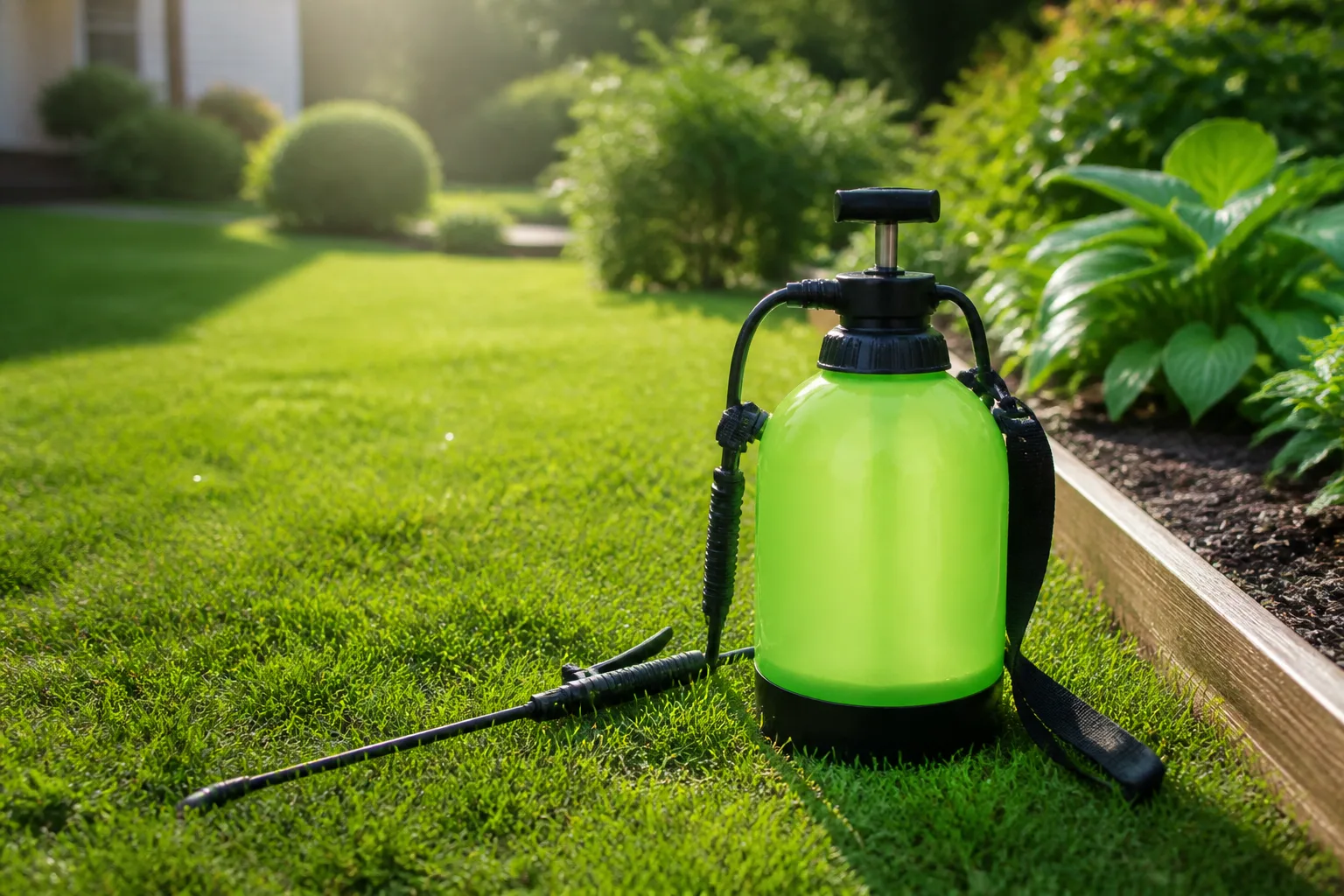
Neem oil doubles as a fungicide and insecticide on many rose pests. It must coat leaf surfaces and may need reapplication after rain unless a systemic formulation is used. Do not apply neem within two weeks of sulfur; combined use risks phytotoxicity.
Copper fungicides (including some Bordeaux-style mixes) provide protectant activity but can burn young leaves and accumulate in soil with repeated use. Spring dormant sprays on bare canes differ from summer foliage sprays—match the product to the growth stage on the label.
For OMRI-listed organic options, Missouri Botanical Garden directs gardeners to consult the Organic Materials Review Institute for approved copper and sulfur products (Missouri Botanical Garden).
Homemade Sprays: What Helps and What Overpromises
Kitchen recipes circulate because labeled fungicides cost money and require reading fine print. Treat homemade mixes as experimental protectants, not cures.
Baking soda (sodium bicarbonate) in water with a drop of soap may raise leaf-surface pH enough to discourage germination on some plants, but concentrations matter—too strong a mix burns foliage. Our baking soda for plants guide explains why household recipes are not universally safe.
Milk sprays (often diluted 1:2 with water) are widely shared online, but university trials show inconsistent results, and Washington State University extension material debunks milk as a reliable black spot remedy. If you try milk, view it as a low-risk experiment on a few leaves—not your only line of defense.
Vinegar-based cocktails risk acid burns and leaf drop on roses; they are poor substitutes for labeled fungicides when infection is established.
Hydrogen peroxide dilutions may knock back surface spores briefly but do not replace sanitation and protectant programs on a defoliating bush.
Gardening Know How rosarian Stan Griep emphasizes that even when a fungicide kills active spores, the black marks remain on the leaf until it sheds—expect visual improvement only on new, unmarked foliage (Gardening Know How).
Building a Season-Long Spray Calendar
A calendar beats spraying only after the bush is bare. Adjust dates to your climate—start when leaf buds first swell, not when flowers open.
Early spring (bud break): Apply first protectant when leaves are coin-sized. Many rosarians use a systemic or broad-spectrum fungicide at this stage, then rotate products to reduce resistance buildup (Gardening Know How).
Every 7–14 days while leaves are emerging and rain is frequent: Reapply protectants on a dry, calm morning. Spray tops and undersides of leaves and young stems until runoff.
Within 24–48 hours after soaking rain: Reapply if the label requires it—Missouri Botanical Garden notes fungicides need renewal after heavy rain or overhead watering (Missouri Botanical Garden).
Midsummer heat pause: In hot, dry July and August weather, extend intervals if new spots are scarce; the fungus slows even though old lesions remain visible.
Late summer and fall: Do not stop sanitation because spraying eased. Rake leaves weekly; a final protectant before autumn rains can reduce overwintering inoculum on stubborn cultivars.
Dormant late winter: Some gardeners apply dormant oil or lime-sulfur on bare canes where labels allow, targeting overwintering structures. This is prevention for next spring, not rescue for spotted summer leaves.
If black spot gets ahead of you midseason—common on susceptible floribundas—step up to a stronger labeled product for a short rescue sequence (often three applications 7–10 days apart), then return to maintenance sprays. Griep notes that mancozeb-based rescue programs can stop active spread, though some formulations leave a visible powder on leaves (Gardening Know How).
Choosing Black-Spot-Resistant Roses
No rose is immune forever, but class and cultivar choice changes how much you fight. Shrub roses, rugosas, many climbers, and landscape series bred for disease resistance typically show fewer outbreaks than old hybrid teas in humid regions.
Texas A&M AgriLife Extension summarizes black spot as affecting every rose species and cultivar to some degree, which is why resistance is about tolerance and slower spread, not a guarantee (Texas A&M AgriLife Extension).
Cultivars with Better Track Records
Missouri Botanical Garden lists roses reported as highly resistant, including ‘Fortyniner,’ ‘Coronado,’ ‘Carefree Beauty,’ ‘Simplicity,’ ‘Bonica,’ and ‘Grand Opera’ (Missouri Botanical Garden). Canadian Explorer roses such as ‘John Cabot’ and ‘William Baffin’ also earn reputations for toughness in cold, wet climates.
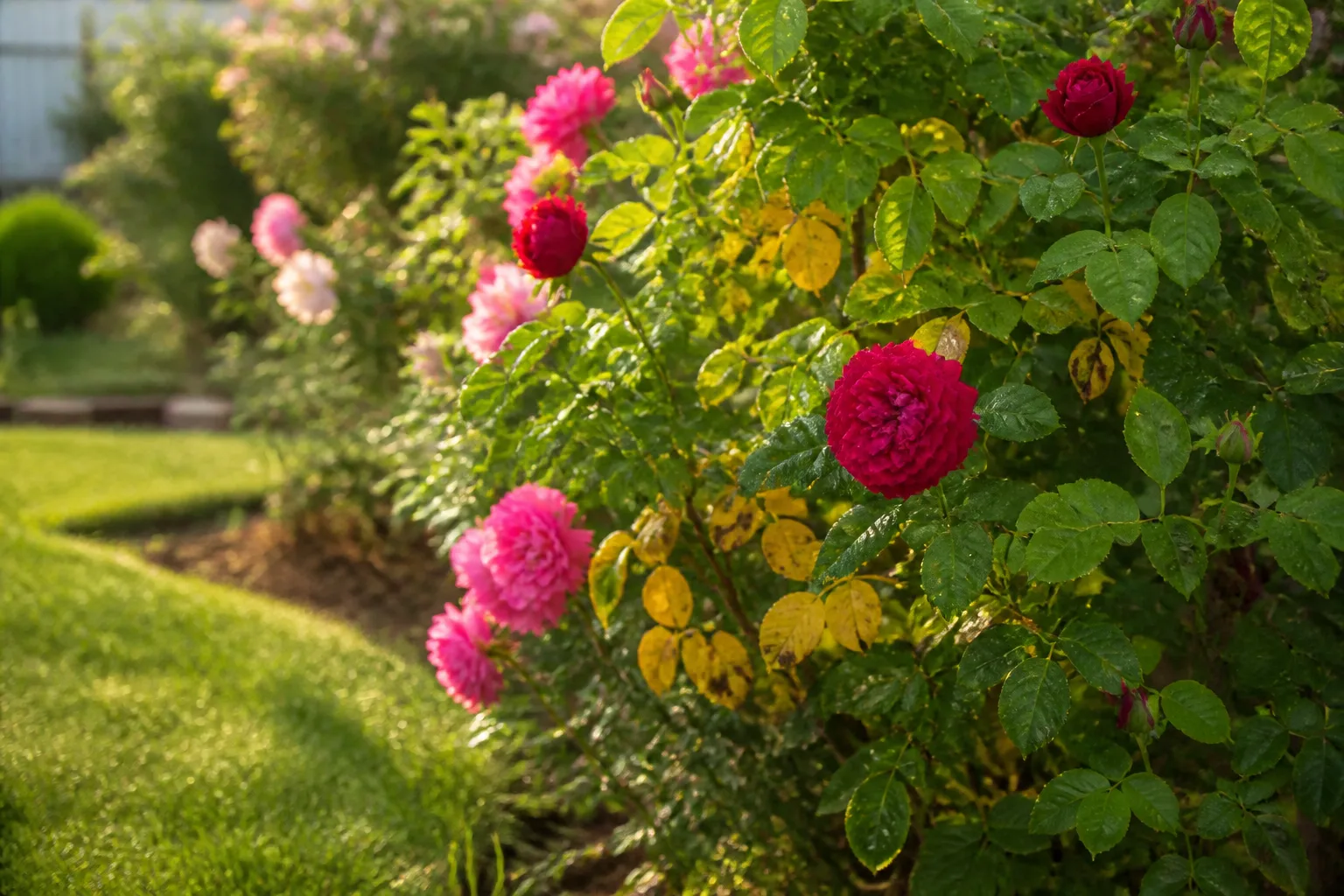
Conversely, many hybrid teas, grandifloras, miniatures, and yellow or copper-toned cultivars tend toward higher susceptibility. If you want exhibition-form flowers on those types, budget time for prevention sprays or accept some foliage loss.
Modern Knock Out and similar landscape roses resist black spot better than traditional teas but are not immune—crowding and overhead watering can still produce spots. Our types of roses guide compares classes when you are replanting.
When shopping, treat “disease resistant” as relative. The RHS warns that new fungal strains can overcome resistance bred into yesterday’s star cultivars (RHS). Plant in full sun with airflow, and resistance will last longer.
When Defoliation Is Severe Enough to Change Strategy
If more than half the canopy has dropped by midsummer and new leaves emerge already spotted, escalate beyond light cleanup:
Hard prune after the worst heat passes (or at dormant pruning if the season is lost) to remove infected wood and restart from outward-facing buds on healthy canes. Sterilize tools between every major cut.
Feed modestly—roses need nutrients to refoliate, but heavy nitrogen on a stressed, leafless bush can push soft growth that infections love. Water deeply at the root zone and mulch.
Consider replacement if the same cultivar defoliates two years running despite full sun, drip water, sanitation, and timely sprays. Installing a resistant shrub rose in the same sunny site often costs less long-term than buying fungicide every spring.
Isolate new purchases for a few weeks before planting them beside clean roses; nursery stock can carry dormant cane lesions.
Conclusion
Black spot on roses is manageable when you treat it as a season-long hygiene and protection problem, not a one-time spray event. Confirm the spots, remove infected leaves to the trash, keep foliage dry, prune for airflow, and apply protectant fungicides to new growth on the schedule your climate demands.
Resistance helps but is not permanent—pair resistant cultivars with the same cultural discipline you would use on a hybrid tea. When outbreaks stay mild, culture alone may suffice; when a favorite floribunda defoliates every June, a labeled spray calendar and honest fall cleanup are what separate a blooming bush from a stick with memories.
For adjacent rose troubles, keep our guides on yellow leaves, powdery mildew, and pruning timing nearby—black spot rarely travels alone in a wet garden year.