10 Foolproof Perennial Plants for the Northeast
Choose Northeast perennials by site, not hype. Compare 10 hardy flowers for sun and shade, learn their trade-offs, and avoid common planting mistakes.
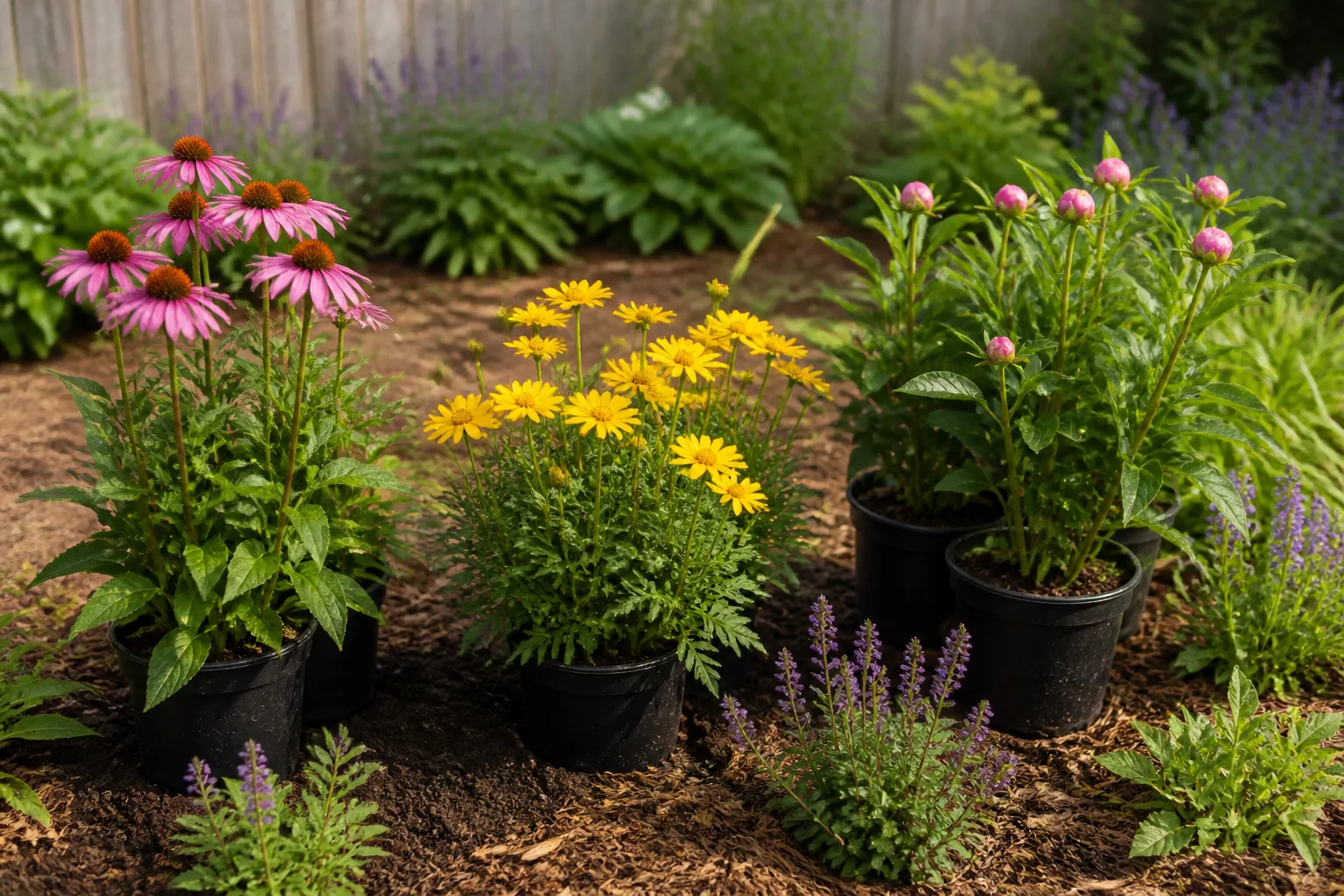
“Foolproof” is useful shorthand, but no perennial is immune to a bad site. A plant that sails through winter in a sunny, well-drained Pennsylvania border can struggle in a shaded, waterlogged New England hollow; the reliable choice is the one whose light, moisture, and mature size fit your garden. The ten plants below cover several common Northeast conditions, so you can choose for the bed you actually have instead of buying a list of flowers and hoping they adapt.
How to choose perennials for a Northeast garden
The Northeast is not one growing condition. Coastal gardens, inland valleys, exposed hilltops, city courtyards, and lake-effect snow belts have different winter lows, wind, drainage, and summer heat. Start by watching the site: count direct-sun hours in midsummer, notice where water stands after a hard rain, and identify the places that dry first. Those observations often tell you more about a plant’s odds than a broad regional label.
A dependable perennial usually has three things in its favor: it is cold-hardy enough for the site, it receives the light it needs, and its roots are neither chronically dry nor waterlogged. The plant profiles here draw on extension guidance, including species entries from NC State Extension’s Plant Toolbox, plus regional horticulture coverage from Better Homes & Gardens and Gardening Know How. Their recommendations become most useful when you apply them to your own exposure and drainage.
Read the hardiness map as a starting point
The USDA Plant Hardiness Zone Map is based on the average annual extreme minimum winter temperature over a 30-year period. It helps you screen out plants unlikely to tolerate your winter cold, but it does not predict the coldest temperature your garden will ever experience or measure summer heat, humidity, snow cover, wind, soil drainage, or the timing of spring frost. A south-facing foundation bed can be warmer than an exposed backyard in the same ZIP code, while a low pocket can collect cold air.
Use the zone on a plant tag as a filter, not as a promise. Check the lowest zone listed for your exact cultivar, then consider local exposure: a plant near a reflective wall may face more summer heat, and a windy, snow-free spot may experience harsher winter conditions than a sheltered bed. When a plant is marginally hardy, choose a protected site and avoid late-season planting that leaves it with little time to establish before freeze-thaw weather.
Match light and moisture before comparing flowers
“Shade” can mean anything from bright dappled light to nearly dark ground under dense evergreens. Astilbe, bleeding heart, and coral bells tolerate part shade, but astilbe and bleeding heart need reliably moist soil; coral bells are more forgiving of short dry spells once rooted. Columbine and cranesbill geranium are comfortable woodland-edge choices, where they get some spring light before tree canopies fill in. A site under a large tree may be shaded yet extremely dry because the tree’s roots take up water.
Likewise, a sunny bed is not automatically drought-prone. Clay soil can hold moisture for days, while a raised bed beside a driveway may bake dry quickly. Before choosing, dig a small hole after rain and see whether water drains away or lingers. If the soil stays saturated, improve the bed’s drainage or choose a different location rather than trying to solve a wet-site problem with more fertilizer. If it dries quickly, plan a first-year watering route and focus on plants that tolerate dry conditions after they establish.
10 dependable perennials, matched to real garden conditions
These plants are dependable for different reasons. Some tolerate cold; others forgive summer heat, return from a sturdy crown, or fill a niche that many flowers cannot. Their common thread is not zero care. It is that they can reward a sensible match and straightforward maintenance without demanding constant intervention.
1. Astilbe for consistently moist shade
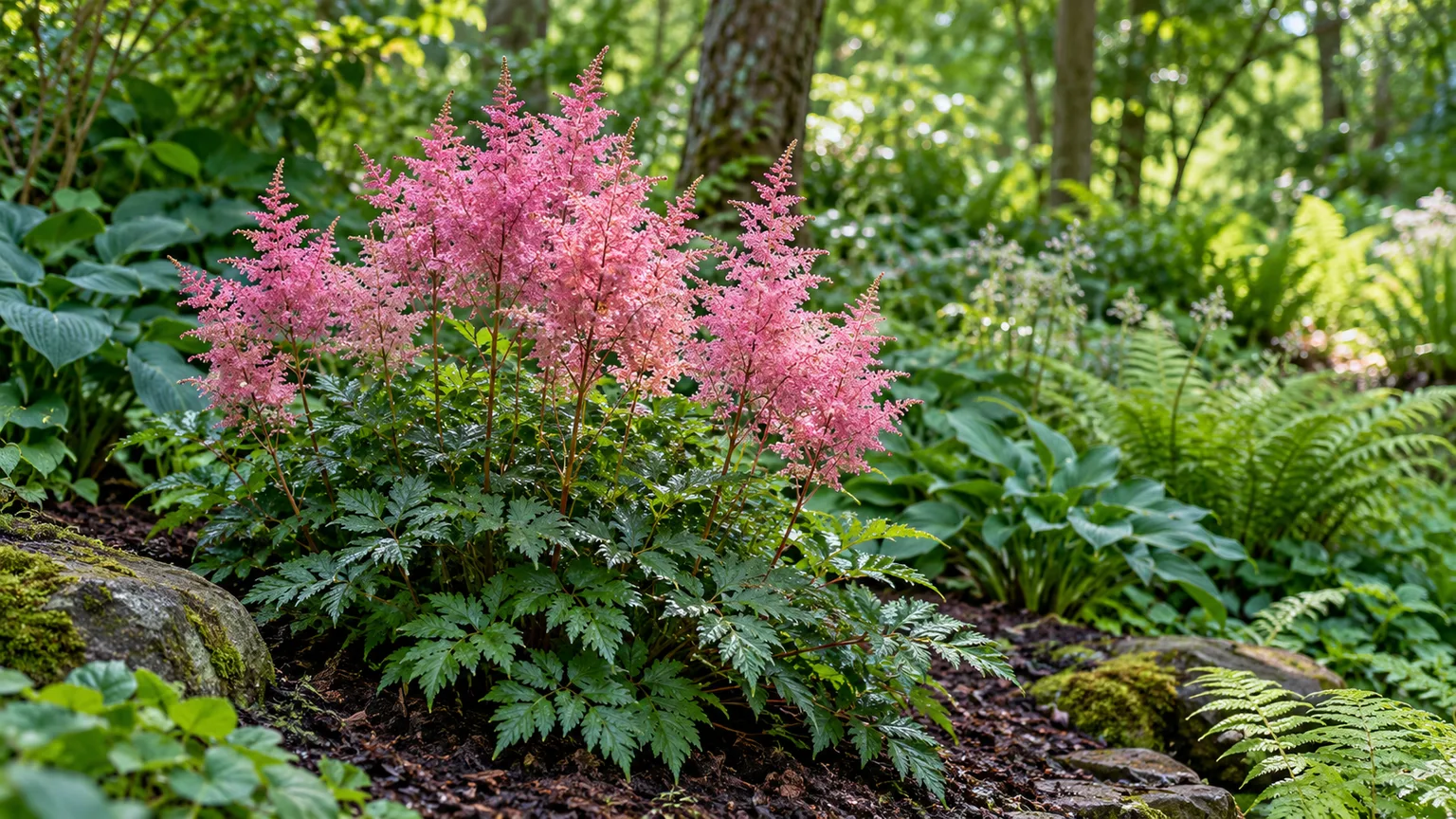
Astilbe is a strong choice for a shaded border that does not dry out. Its feathery flower plumes bring color above divided foliage, and established clumps can make a woodland bed feel layered rather than flat. The important word is moist: astilbe is not a plant for a dry spot beneath a mature maple unless you are willing to water through summer. NC State Extension’s hybrid astilbe profile describes it as a shade plant for moist, organic, well-drained soil and notes that it can decline in heat and drought.
Plant astilbe where the soil stays evenly damp but not swampy, such as a north-facing border or a bed with dependable irrigation. Morning sun or bright dappled light can improve flowering; intense afternoon sun increases the chance of scorched foliage unless moisture is consistent. Spread compost over the root zone rather than burying the crown in a heavy layer of mulch. If flower plumes fade, cut them back for a tidier appearance or leave them for texture; removing them does not fix the underlying problem if the leaves are browning from drought.
Expect the clump to expand gradually, and divide crowded plants when the center thins or flowering drops. That maintenance is occasional, not annual. Choose astilbe for moist shade, not because it appears on a generic list of easy plants; in drier shade, columbine, cranesbill geranium, or a suitable coral bells cultivar is usually a better fit.
2. Eastern red columbine for woodland edges
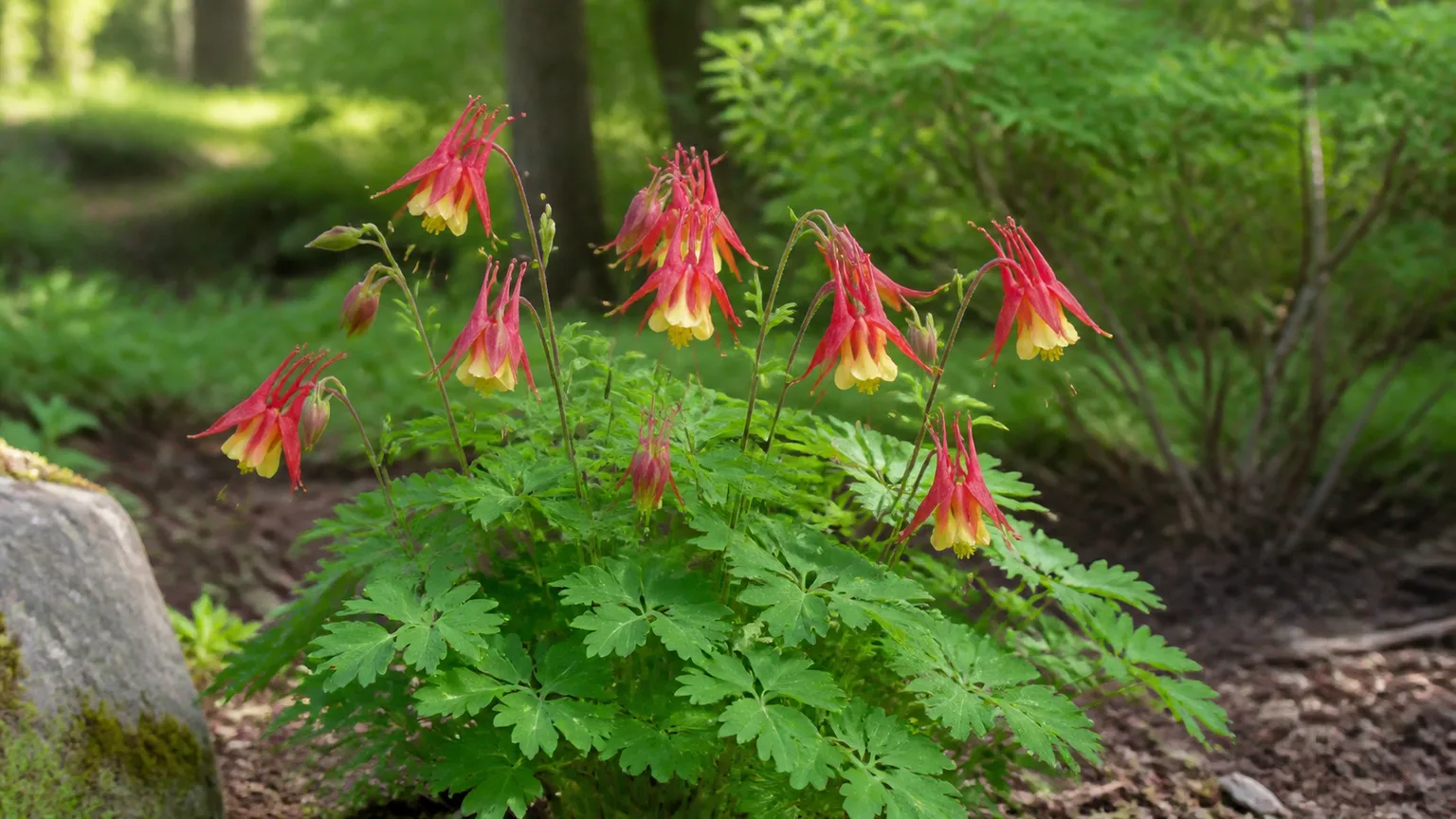
Eastern red columbine (Aquilegia canadensis) is a North American native that suits a woodland edge, open shade, or a border with morning sun and afternoon relief. Its nodding red-and-yellow flowers arrive in spring, often before summer perennials hit their stride, and attract hummingbirds and other pollinators. NC State Extension’s eastern red columbine profile notes that it grows in part shade and freely self-seeds; seedlings are a feature if you like a naturalized look and a nuisance if you want strict spacing.
Give it organically rich soil that drains well. It can take more sun when moisture is available, but harsh afternoon exposure and dry soil can shorten its display. The plant is not a permanent, perfectly symmetrical mound: individual columbines may be short-lived, while seedlings carry the planting forward. Leave some seed pods to mature if you want more plants, or deadhead before seed forms to limit volunteers. Thin seedlings in spring and move extras while small rather than letting a dense patch crowd slower woodland plants.
Columbine is an especially useful choice when you want spring flowers without committing the whole bed to a high-water plant. It can bridge the gap between spring bulbs and summer bloomers, then share the space with later foliage. Its self-seeding also makes it more adaptable than a rigid row: let it settle where conditions suit it and edit the seedlings where they do not.
3. Coral bells for foliage in part shade
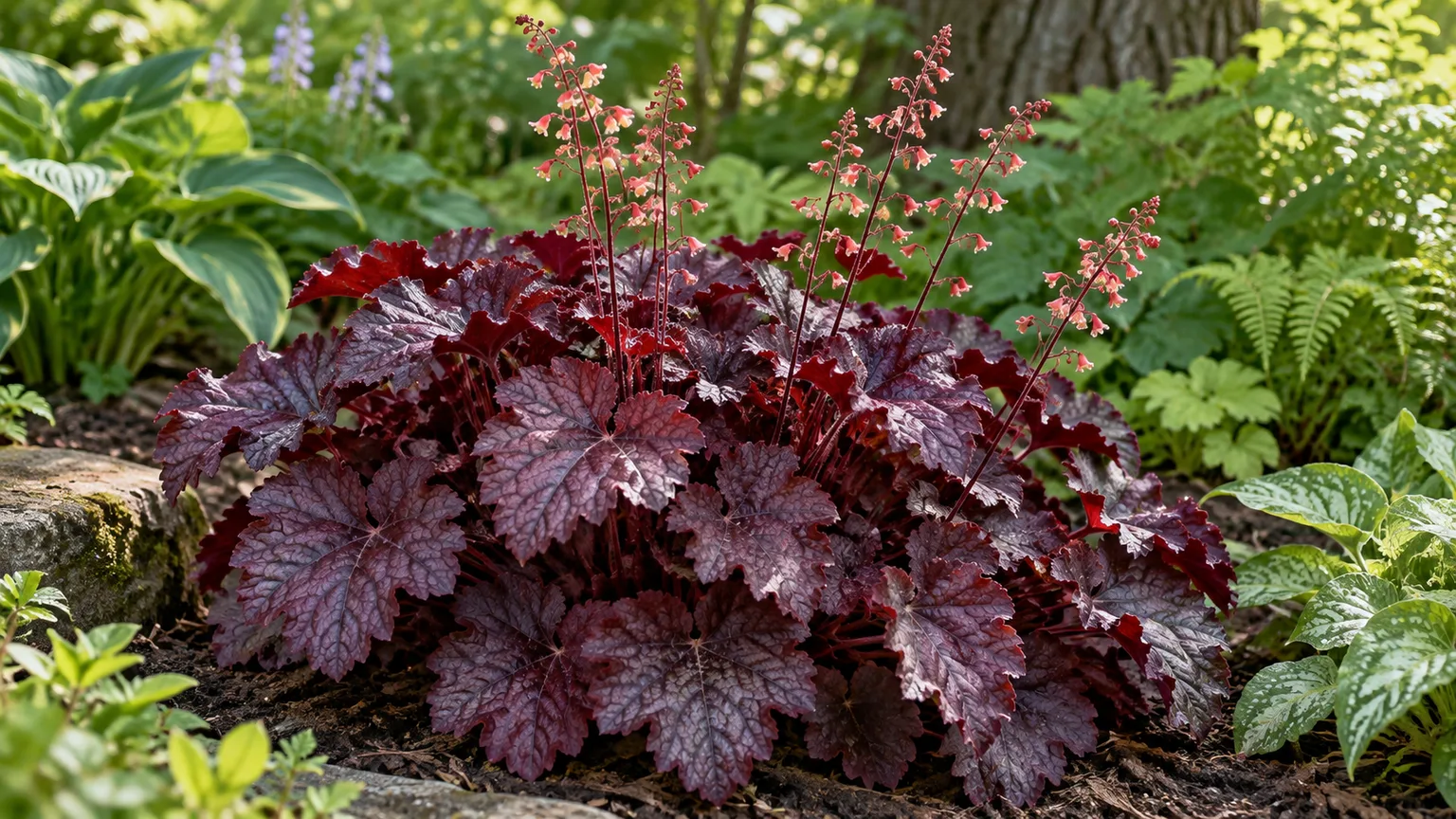
Coral bells (Heuchera) earn their space with foliage that holds interest after flowers fade. Cultivars range from green and silver to burgundy and near-black, so they can brighten the front of a shaded border or echo color in nearby shrubs. They are not all interchangeable: species and cultivars differ in heat tolerance, winter performance, and leaf color. For warm, humid summers, look for a cultivar with a track record in your region; NC State Extension’s Heuchera villosa profile notes its eastern U.S. range, part-shade preference, and tolerance of heat and humidity.
Set the crown at soil level in well-drained soil with organic matter. Coral bells appreciate regular moisture while establishing, but many handle brief dry periods after their roots have settled. Completely dry soil can scorch leaves, while a crown buried under wet mulch may rot. Keep mulch pulled away from the crown and check that winter heaving has not lifted the plant. If the crown rises above the soil after freeze-thaw cycles, gently tuck roots back in and firm soil around them in spring.
Choose coral bells when foliage matters as much as flowers, especially in a bed where deep-rooted trees make regular watering difficult. The flower stalks are generally delicate; remove them if you prefer a compact foliage mound, or leave them for pollinators. Replace a cultivar that repeatedly fails in your exposure instead of trying to rescue it with more feed—site mismatch is the likelier issue.
4. Bleeding heart for a cool, moist shade border
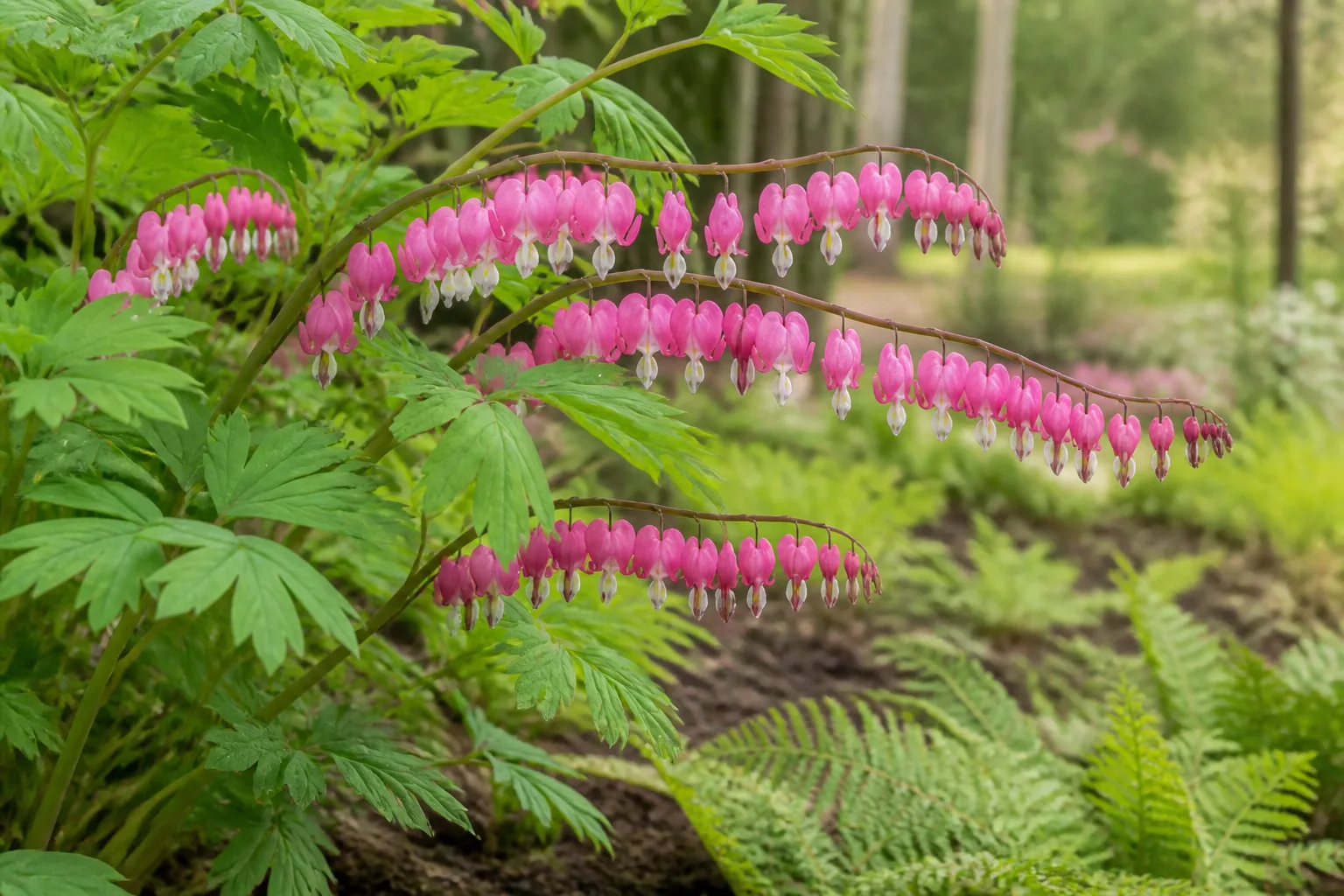
Old-fashioned bleeding heart (Lamprocapnos spectabilis) gives a shady Northeast garden an unmistakable spring display: arching stems carry pink or white heart-shaped flowers above fernlike leaves. It prefers morning sun and afternoon shade, with rich, moist soil that drains well. NC State Extension’s bleeding-heart profile notes that it can reach about 2 to 3 feet, flowers in spring to early summer, and may yellow and go dormant by midsummer, especially in warmer areas. That seasonal retreat is the main planning issue, not a defect.
Plant it where later-emerging ferns, hostas, or other shade perennials can cover the gap after the foliage declines. Keep the root zone evenly moist during dry spells, but avoid a winter-wet pocket: soggy cold soil can damage the crown. The roots can be divided in spring or fall if you need to move a clump, though an established plant is happier when left in place. Its early show is worth the space when the garden has a cool, moist spring bed and room for summer companions.
There is also a safety caveat. NC State Extension reports that all parts are poisonous if ingested and that foliage may irritate skin; wear gloves when handling it and choose another plant where children or pets are likely to chew leaves. The native fringed bleeding heart (Dicentra eximia) is a different species with a longer bloom period, so read the botanical name if that distinction matters to your planting plan. See NC State Extension’s bleeding-heart profile for the full species notes.
5. Spiked speedwell for well-drained sun
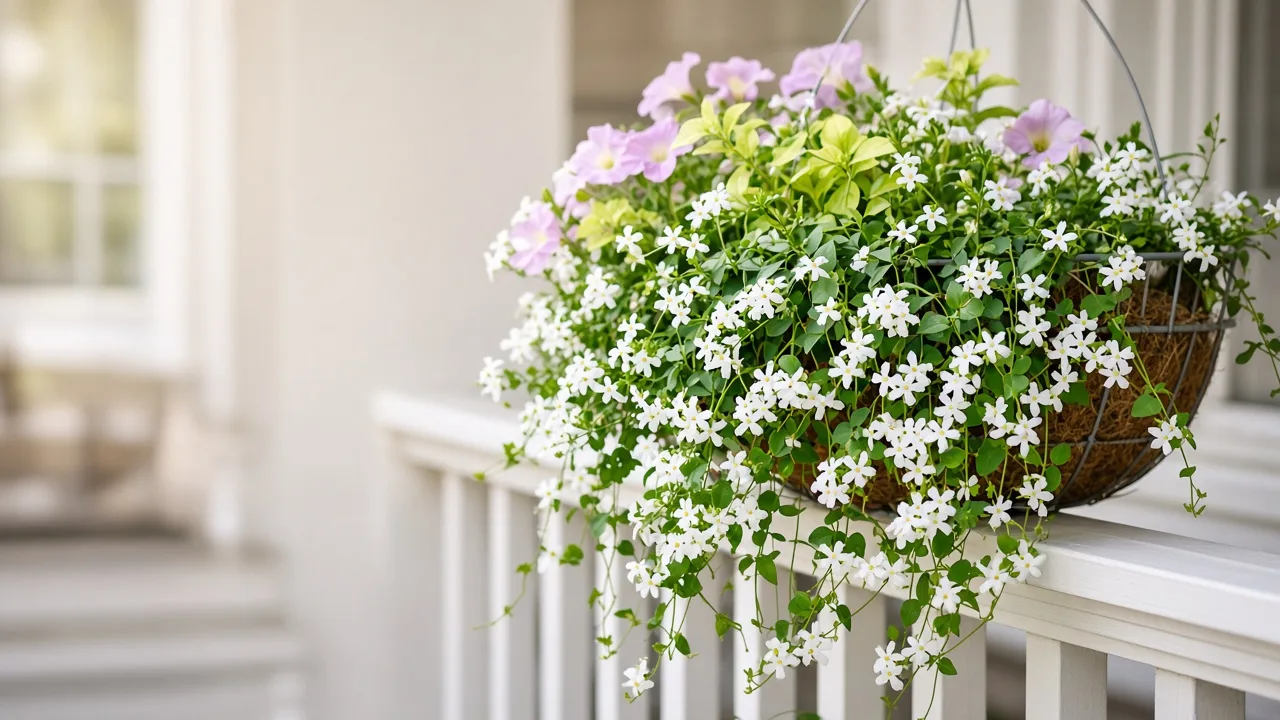
Spiked speedwell (Veronica spicata) puts narrow blue, pink, or white flower spikes above a tidy clump, making it an easy fit for a sunny border or a small pollinator bed. NC State Extension’s spiked speedwell profile lists it for full sun and moist, well-drained soil, with a flowering window that starts in late spring or early summer and can continue into midsummer. It is hardy across a broad zone range, but the “well-drained” part is essential in the Northeast: wet winter soil can cause root rot.
After the main flower flush, shear the stems back to the basal foliage if the plant looks spent. That cleanup can encourage a repeat fall bloom, especially in a long, mild season, though a second flush is not guaranteed in every garden. Give the clump enough room for its mature width and avoid placing it where runoff pools. It is a better choice for a sunny bed with average moisture than a dry, neglected slope; catmint or Russian sage fits the driest sunny sites more naturally.
The upright spikes are useful for cutting and bring pollinators without taking over a bed by runners. Compact cultivars such as ‘Royal Candles’ can fit a smaller border, while taller forms need more space. If the crown dies after winter, check drainage before assuming the plant was not hardy enough. NC State Extension’s speedwell profile gives cultivar, soil, and seasonal-care details.
6. Cranesbill geranium for part-shade groundcover
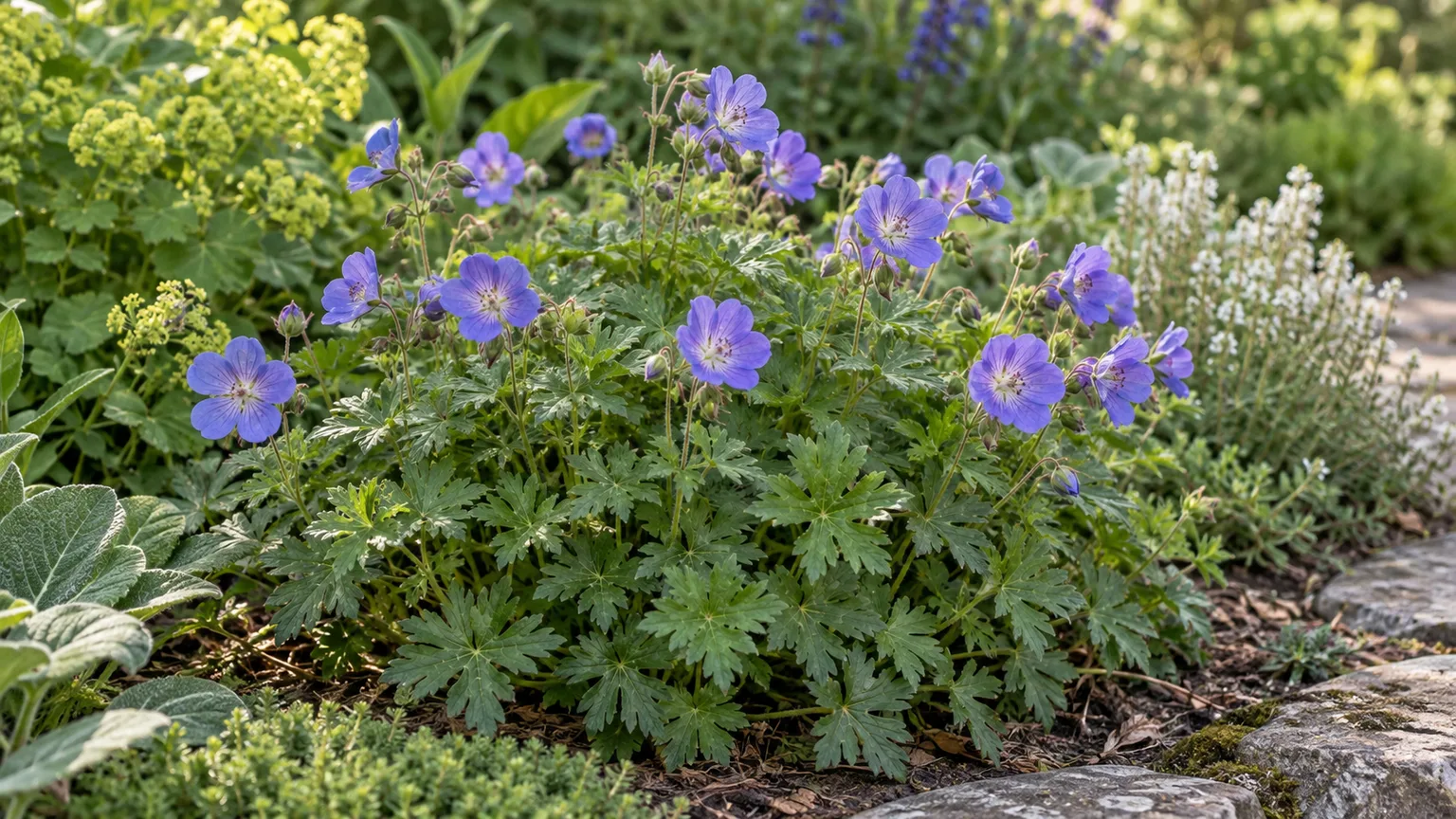
Cranesbill geraniums are hardy, mounding perennials rather than the tender annual “geraniums” often sold for pots. Eastern wild geranium (Geranium maculatum) is a native species for woodland edges, dappled shade, and part-sun beds. NC State Extension’s wild geranium profile describes it as adaptable to moist through slightly dry conditions when the soil is rich and well drained. Its spring flowers and spreading foliage can fill gaps below shrubs, while its shallow roots make a patch easy to manage compared with a deep-rooted runner.
Give a new planting water through its first summer, particularly under trees where mature roots compete for moisture. It tolerates some drying after establishment, but prolonged heat can make foliage look tired or cause it to fade back. Let the plant rest rather than cutting it repeatedly to force a fresh look; pair it with later-growing shade plants that will cover the space. A few hours of morning sun can improve flowering, while dense dry shade may leave it sparse.
Cranesbill geranium is a practical choice where you want a low groundcover with spring color and do not need a perfectly clipped edge. Several plants create a more convincing drift than one isolated specimen. The common name also covers many species and cultivars with different sizes and bloom times, so check the botanical name and mature width on the tag. For the native woodland species, consult NC State Extension’s wild-geranium profile.
7. Russian sage for dry, sunny borders
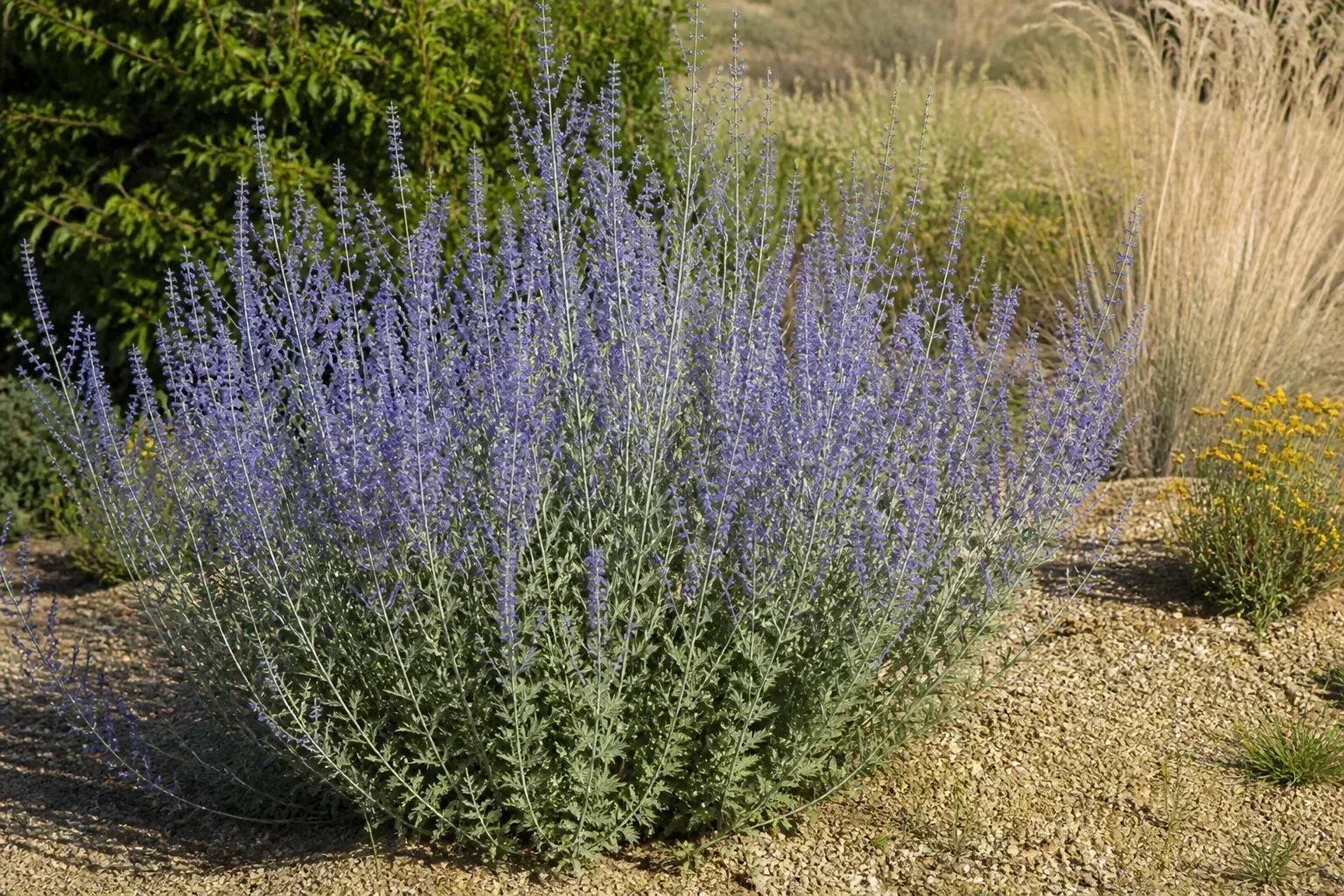
Russian sage (Salvia yangii, formerly Perovskia atriplicifolia) is a woody-based perennial for full sun and sharply drained soil. Its silver, aromatic foliage and airy blue-purple flower panicles add a long season of color without the constant water demand of a lush shade plant. NC State Extension lists it for zones 5 through 9 and describes it as drought tolerant, but a cold, wet Northeast winter is a worse risk than summer dryness. In colder gardens, choose a locally proven cultivar and put it in a raised or naturally well-drained bed.
Allow a mature plant roughly 2 to 4 feet of width, depending on cultivar, and do not crowd it against a walkway. Full sun keeps stems sturdier; partial shade and rich, wet soil increase the chance of flopping. The species blooms through summer into fall, and pollinators visit the flowers. Cut old stems back several inches in early spring, after the worst freeze weather, rather than shearing green growth during the growing season. If stems lean, improve light and drainage before staking as a permanent fix.
Russian sage is a good choice for the hot, open edge where astilbe and bleeding heart would struggle. It is native to central Asia, not the Northeast, so its value is a fit for a dry site rather than regional nativeness. Plant it only if your winter drainage and space suit the plant; compact cultivars can make the choice easier for smaller borders. NC State Extension’s Russian sage profile includes current naming and cultivar notes.
8. Catmint for dry, sunny borders
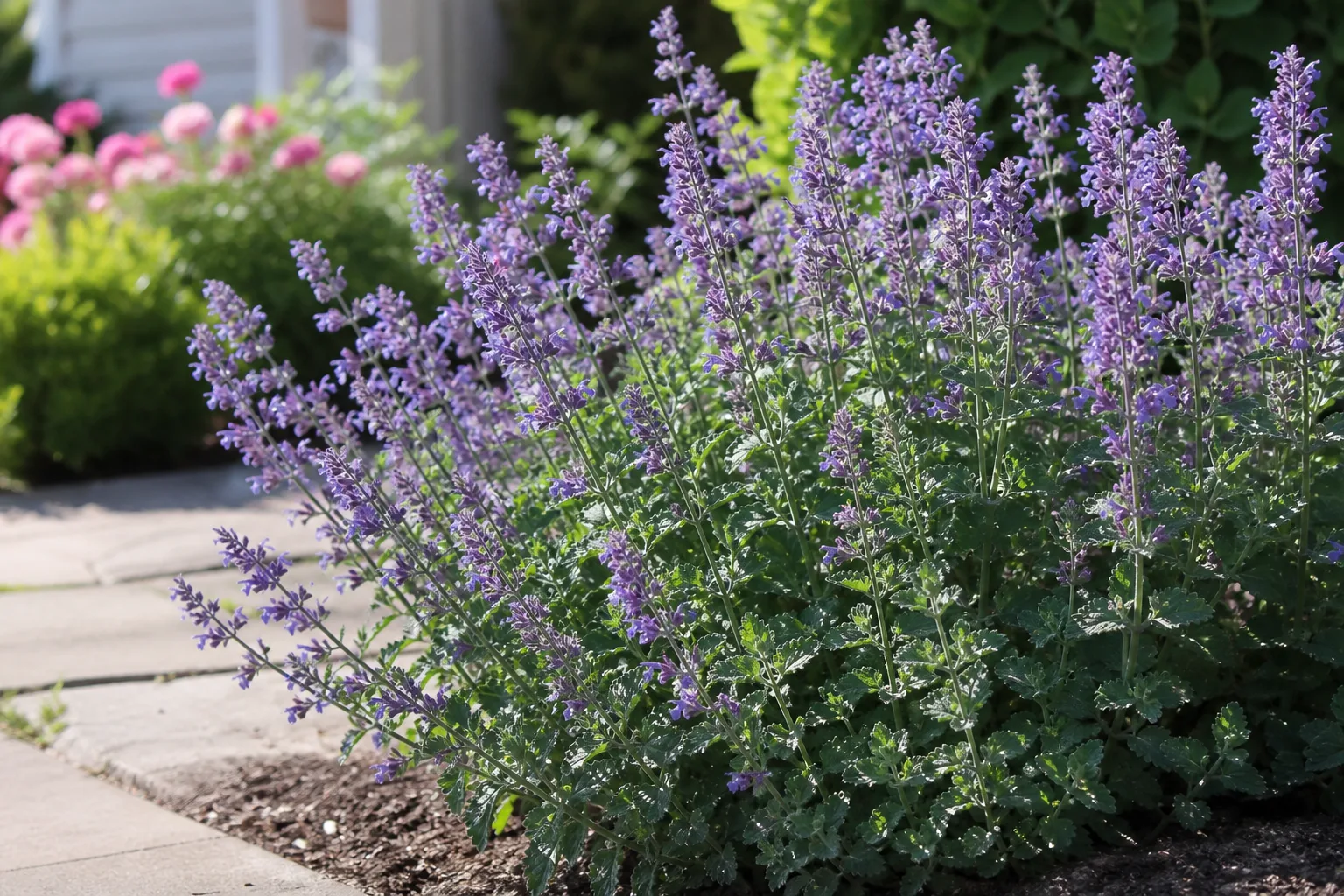
Catmint (Nepeta × faassenii) is a forgiving option for a sunny, well-drained edge. Its soft gray-green foliage and blue-violet flower spikes combine well with roses and other sun perennials, and the plant can handle drought after establishment. NC State Extension’s catmint profile describes this hybrid as low-reseeding and tolerant of dry conditions once rooted. It may spread outward, so allow room for its mature width rather than placing it in a narrow slot between a path and a wall.
Plant it in full sun for the best flower display; part shade is acceptable but can produce a looser shape and fewer blooms. Avoid rich, wet soil, which encourages floppy growth and weakens the plant’s advantage as a dry-site choice. After the first flower flush, shear it back by roughly one-third to encourage fresh foliage and possible repeat bloom. Use hand pruners or hedge shears, and stop before cutting into old woody stems if the cultivar has developed a woody base.
Catmint is a useful border plant when you want a relaxed mound that can soften a path edge. It is often visited by cats, though not every cat reacts to it; that behavior does not affect the plant’s garden value. If it flops into a walkway, cut it back after flowering or choose a more compact cultivar. Do not use a wet, shaded bed as a test site—the plant’s easy-care reputation depends on drainage and sun.
9. Daylily for adaptable, high-impact clumps
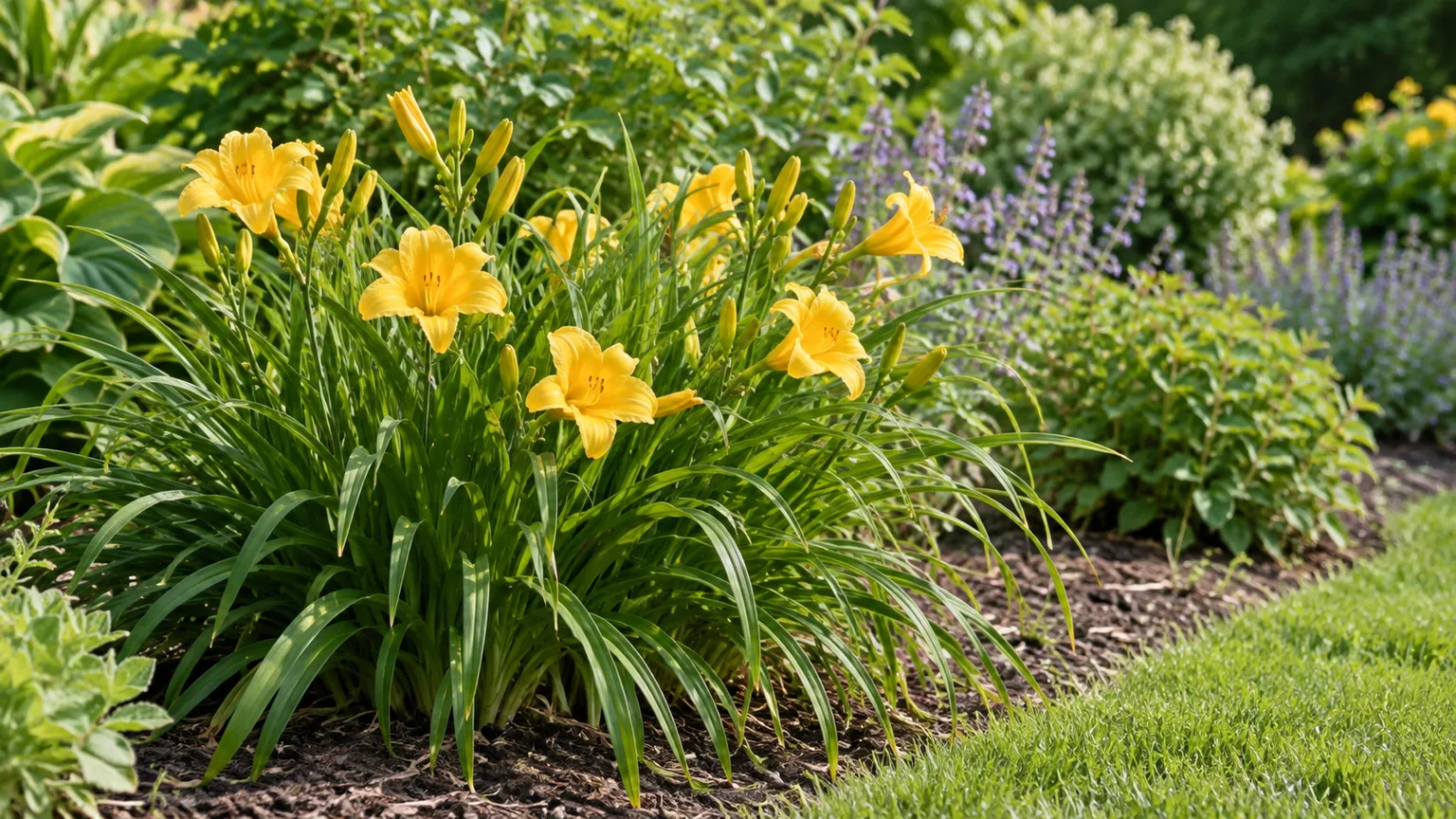
Daylilies (Hemerocallis) are adaptable clump-formers for sunny or lightly shaded Northeast beds. Individual flowers last a day, but each stalk carries multiple buds, so the overall display continues as blooms open in sequence. NC State Extension notes that hybrid daylilies tolerate heat, drought, salt, and urban conditions, while too much shade or excessive fertility can reduce flowering. Choose a cultivar suited to your site and check its mature height and bloom time instead of expecting every daylily to match a compact rebloomer.
Plant in average, well-drained soil and water regularly during establishment. Daylilies tolerate some shade, but full sun generally produces more flowers; too much nitrogen can create lush leaves at the expense of blooms. Remove spent flower stalks when they look untidy. Divide crowded clumps when flowering declines or the center becomes congested, typically every few years rather than on a fixed calendar. Some hybrids multiply quickly, so give them room or choose a slower-growing variety for a small border.
The common name covers a wide range of cultivars, colors, and growth habits. Some daylilies naturalize vigorously, while others stay in manageable clumps; verify the cultivar’s behavior and check local invasive-plant guidance before choosing one for a natural area. A named, compact cultivar is often easier to place than an unidentified pass-along plant. Use daylilies for sturdy summer structure, not as a substitute for matching the plant’s eventual spread to the bed. See NC State Extension’s daylily profile for more cultivar-specific guidance.
10. Herbaceous peony for a long-lived spring focal point
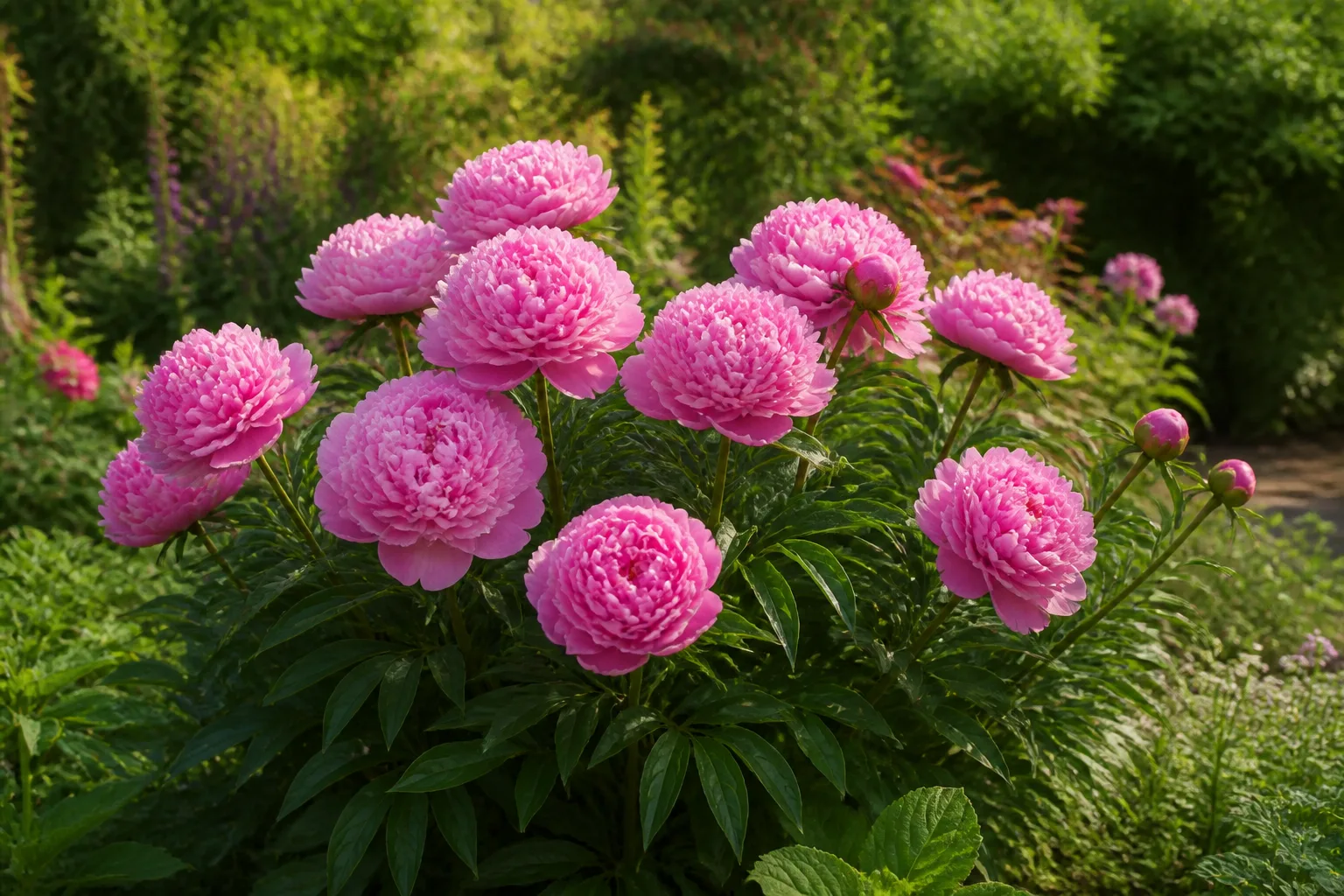
A herbaceous peony can anchor a Northeast garden for decades once it is planted correctly. It is not the fastest route to instant color: a newly planted root may take time to settle, and a division may produce few flowers at first. NC State Extension’s herbaceous peony profile notes that peonies are hardy across a broad range but perform best in suitable climates with full sun or light shade, fertile, well-drained soil, and good air circulation. In much of the Northeast, a sunny site is the safer choice for reliable flowering.
Plant peony roots with the eyes close to the soil surface; in most Northeast gardens, burying them too deeply is a common reason for lush leaves and few or no flowers. Follow the nursery’s depth instructions for the root form you bought, and account for mulch settling over time. Give mature plants generous space, and use a support ring before heavy double flowers open if rain tends to flatten the stems. Water deeply while the plant establishes, then avoid keeping the crown constantly wet.
Peonies ask for patience and little routine disturbance. Do not divide or transplant an established plant just because it did not bloom once; first check planting depth, sun, recent frost damage, and whether it was recently moved. Cut stems to the ground after frost and remove diseased foliage rather than composting it. Choose a peony when you want a long-term focal point and can accept that the first season may be about roots, not a bouquet.
Make establishment easier in the first growing season
Even durable perennials need help during their first growing season, when the root ball is still small and cannot draw water from a wide area. Plant in spring after the soil is workable, or in early fall with enough mild weather left for roots to settle before the ground freezes. Avoid working soil when it is saturated; digging wet clay damages its structure and leaves compacted walls around the planting hole. Set container plants at the same depth they grew in the pot, with crowns visible and not buried beneath a mulch mound.
Keep new roots evenly moist, not constantly wet
After planting, soak the root ball and surrounding soil slowly. During the first few weeks, check moisture with a finger or trowel an inch or two down rather than watering from a calendar. If the soil at root depth is dry, water deeply; if it is still damp, wait. Rainfall, wind, soil texture, container size, and temperature all change how often a new perennial needs water. A sandy raised bed may need more frequent checks than a shaded clay bed, while a short shower can wet leaves without reaching the roots.
Once new growth is steady, gradually lengthen the time between watering so roots grow outward and down. Do not let astilbe, bleeding heart, or newly planted columbine dry repeatedly, but do not keep peony crowns, catmint, or Russian sage sitting in saturated soil. Apply a modest layer of mulch to reduce evaporation and temperature swings, leaving air around crowns and stems. Keep mulch off plant crowns and avoid piling it against the stems; a wet, covered crown is vulnerable to rot.
Prepare the bed before planting by removing persistent weeds and loosening compacted soil across a broad area, not just in a small amended hole. A pocket of rich compost surrounded by dense clay can hold water around roots instead of improving drainage. Add organic matter across the bed when soil structure needs it, and use a soil test before correcting pH or applying fertilizer. Most established perennials do not need repeated high-nitrogen feeding; excessive fertilizer often produces soft foliage and fewer flowers.
Mistakes that turn an easy perennial into a problem
The most common error is choosing by flower photo and trying to retrofit the site afterward. A sunny plant placed in shade can become floppy and bloom poorly; a moisture-loving plant under thirsty tree roots may decline despite regular surface sprinkling. Decide first whether the site is sunny or shaded, wet or dry, and then narrow the list. If a bed has mixed conditions, divide it into small zones and group plants by water needs so irrigation can serve each group sensibly.
The second error is treating a hardiness zone like a complete climate description. The USDA ARS explains that the map represents average annual extreme minimum winter temperatures. It does not promise that a plant will tolerate a wet winter, a snow-free freeze, a late spring frost, or summer humidity. Check the plant’s requirements and your site’s exposure; choose a more cold-hardy cultivar or protected location when the tag places your garden at the edge of its range.
Overcrowding is another avoidable source of work. Astilbe and peonies need room to mature; catmint and daylilies can expand; columbine can seed into open soil. Space according to mature width, then revisit the bed after a few growing seasons. Divide, thin, or deadhead according to the plant’s behavior and the look you want. “Low maintenance” means maintenance is predictable—not that every plant stays the same size forever.
Finally, do not diagnose every brown leaf as a disease or solve every weak bloom with fertilizer. Drought, heat, crown burial, root competition, and too little sun are often more likely explanations. Check soil moisture, crown depth, and light before applying products. In a humid summer, improve spacing and avoid wetting foliage late in the day; for a plant that repeatedly fails despite a good start, replace it with one suited to that exact spot rather than escalating interventions.
Conclusion
A reliable Northeast perennial is one that fits its location and your tolerance for watering, spreading, and seasonal cleanup. Choose astilbe, coral bells, bleeding heart, or geranium for different shade conditions; use catmint and Russian sage in sunny, well-drained ground, and treat columbine, speedwell, daylily, and peony according to their specific habits.
Before buying, note sun hours, drainage, the plant’s lowest hardiness zone, and its mature width. Set the crown at the right depth, water new plants based on soil moisture, and keep enough space for air and growth. Those few decisions turn “foolproof” from a marketing promise into a practical result: plants that return reliably because the garden is working with them.



