How to Fix an Over-Fertilized Lawn
Learn how to fix an over-fertilized lawn, identify fertilizer burn, water safely, and decide whether damaged grass can recover or needs reseeding.
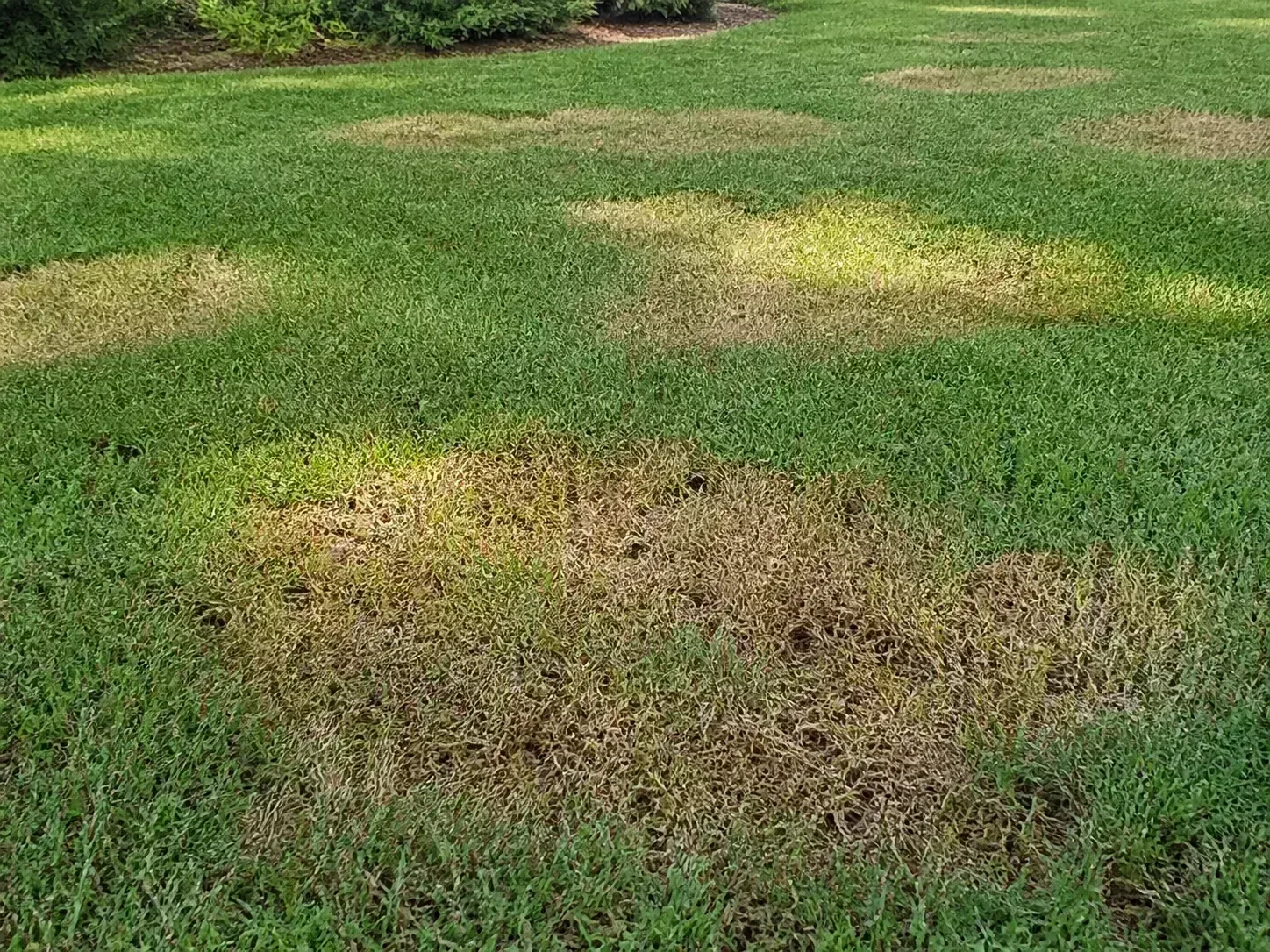
If grass turns yellow, brown, or crisp soon after you fertilize, pause before reaching for another product. A lawn can recover from fertilizer stress, but the right response depends on whether granules are still present, whether the soil can absorb water, and whether the grass crowns are still alive.
Start by stopping fertilizer applications and checking the pattern of damage. Remove any concentrated spill you can still collect, then water only when the ground can take it without sending runoff toward a storm drain, ditch, or waterway. After that, give the turf time to show whether it is producing new growth; brown blades may remain even when the plant is still alive.
Why too much fertilizer damages grass
Fertilizer contains mineral salts, and a heavy concentration around roots can make it harder for grass to take up water. A large or repeated dose of soluble nitrogen can also push rapid top growth while roots are stressed, leaving blades scorched and the lawn more vulnerable to heat or drought. The visible burn is not simply a sign that the grass needs more water.
Overapplication can happen when a spreader overlaps too heavily, the lawn area is smaller than estimated, the setting is wrong for the product, a bag spills, or several products containing fertilizer are applied close together. A slow-release or organic product can still cause damage if too much is applied. Product type may affect how quickly nutrients become available, but it does not cancel out the label rate.
The damage can range from brown tips on otherwise growing grass to a dead patch where crowns and roots have been badly injured. Rain or irrigation may move some dissolved nutrients deeper into soil, but that is not a reason to flood every lawn. Water that runs off can carry nutrients away from the grass and into stormwater systems or nearby water.
Confirm fertilizer burn before treating the lawn
The timing and shape of the damage matter more than color alone. Fertilizer burn is more likely when discoloration appeared within days of an application and follows spreader passes, a wheel track, an overlap, or a known spill. Stripes are clues, not proof; mowing, irrigation problems, heat, disease, and pet urine can also produce patches or lines.
| Clue | What it may suggest | What to check next |
|---|---|---|
| Yellow or brown streaks that match spreader paths soon after feeding | Uneven or excessive fertilizer | Review the application route and bag rate |
| A localized scorched patch at a spill site | Concentrated fertilizer salts | Look for visible granules and identify the product |
| Broad dull or straw-colored turf during dry weather | Drought or heat stress | Check soil moisture and whether footprints linger |
| Small random spots with a dark green edge | Pet urine or another localized cause | Compare the spots with pet activity |
| Turf that lifts easily with little root attachment | Root-feeding pests or severe root loss | Inspect for grubs or ask a local extension office |
| Expanding circles or irregular patches after humid weather | Disease may be involved | Look for active growth at patch edges and seek a diagnosis |
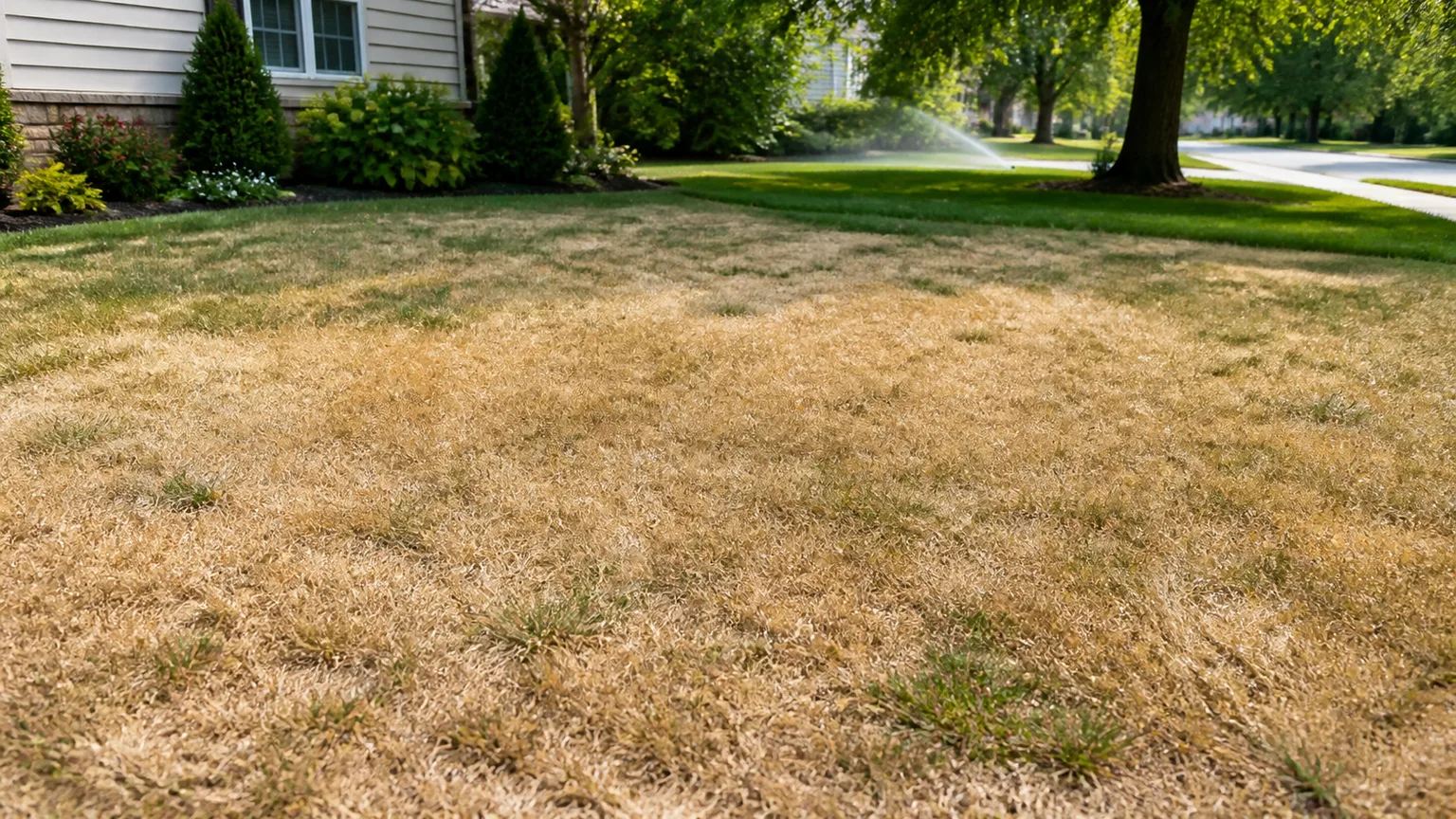
These patterns help narrow the cause, but they cannot diagnose every lawn. For example, fertilizer damage and drought can occur together, while disease can make a fertilizer-stressed lawn look worse. The STIGA lawn-care guide also cautions that yellow grass has several possible causes, so use the recent fertilizer history together with the pattern instead of treating color as a diagnosis.
Check the grass at soil level in a few affected spots. Green tissue near the base or fresh shoots emerging from the crown are encouraging signs; brittle brown blades do not necessarily mean the whole plant is dead. If the turf peels up easily, the roots are absent or rotted, or there is no new growth during active growing weather, a local turf or extension specialist can help distinguish dead grass from grub injury or disease.
First response: stop feeding and assess the spill
Do not apply another fertilizer to balance the first application or restore color. Pause weed-and-feed products and other lawn treatments that add nutrients until you know what was applied and how much; a lawn already under chemical stress benefits from fewer variables. Photograph the damaged area and save the product bag or take a picture of its label, including the analysis and spreader instructions.
If the bag was recently applied, estimate the area treated and the amount used. Note the grass species if you know it, the date, weather, and whether irrigation or rain followed. This record will help you compare the actual rate with the label or ask an extension office for a specific recommendation.
Remove dry granules without spreading them
Visible fertilizer that has not dissolved can sometimes be removed from a concentrated pile with a scoop, dustpan, or stiff piece of cardboard. Wear any protective equipment the product label requires, avoid bare-hand contact, and keep children and pets away until the label permits access. Collect the material into a container or bag and follow the product label or local waste guidance for disposal; do not dump a pile into a drain or compost it.
On a sidewalk or driveway, sweep or collect stray granules before rain carries them to a storm drain. Penn State Extension’s watershed guidance recommends moving fertilizer off impervious surfaces and onto the intended turf area, but a dense spill on the grass is different: spreading that pile broadly can enlarge the damaged zone. If the amount is large, or the spill reached a drain or water, contact your local extension office, stormwater program, or product manufacturer for site-specific instructions.
Water the damaged area without causing runoff
Water can dilute fertilizer salts around living roots, but “flush the lawn” is not a safe instruction for every site. First check that the soil is not saturated, waterlogged, frozen, or so compacted that it sheds water. Do not irrigate if water would flow across pavement, down a slope, into a storm drain, or toward a pond, stream, or well.
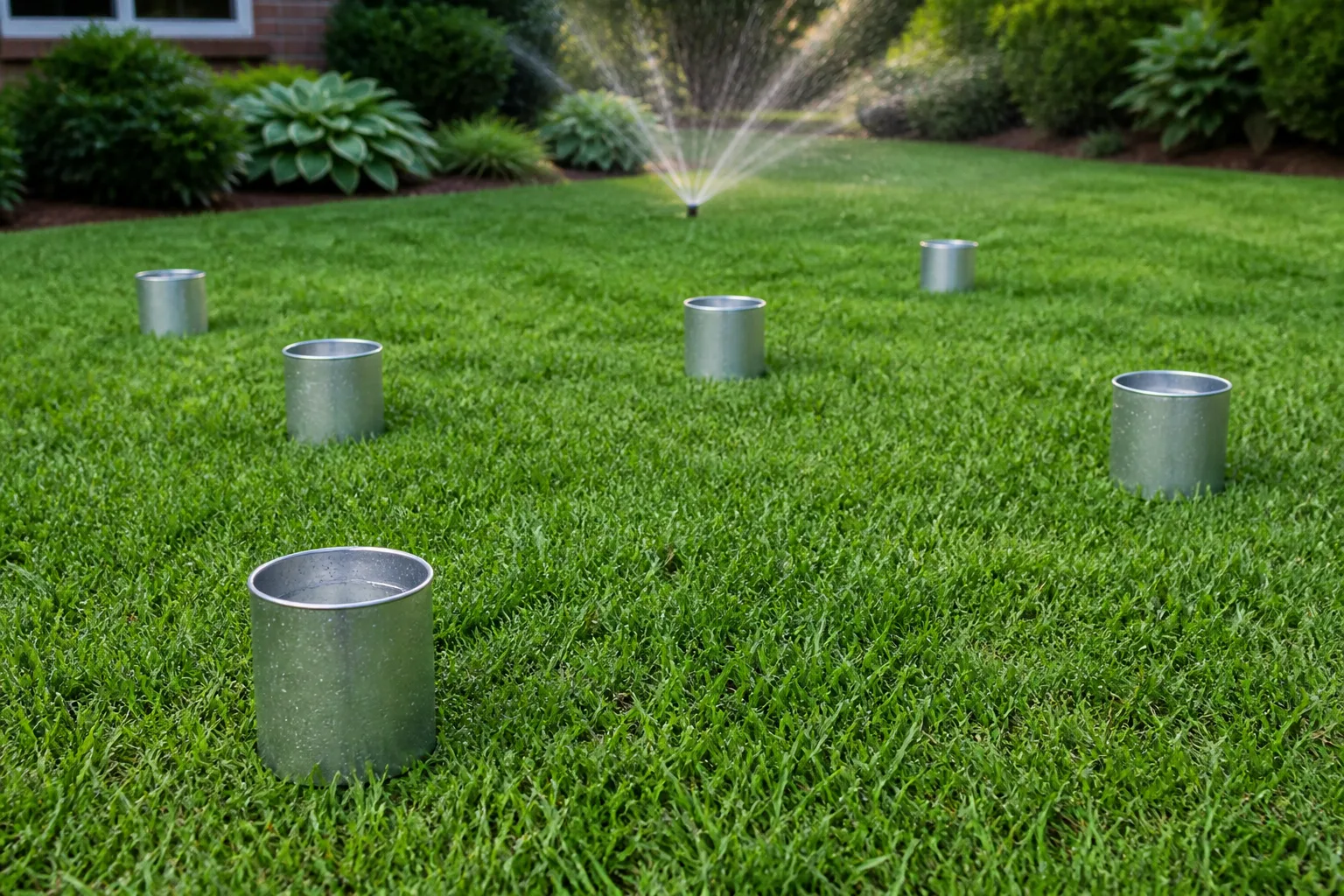
Where soil drains freely and water stays in the affected turf, apply irrigation slowly enough for it to soak in. If it begins to pond or run off, stop and let the water infiltrate before another short cycle. A rain gauge or straight-sided container can show how much water your sprinkler is delivering, but there is no single depth or daily schedule that is right for every lawn, soil, fertilizer, and climate.
If the product was applied within the last few hours and you know the rate was excessive, prompt, controlled irrigation is more useful than waiting for the grass to turn brown. If the damage is already visible, water may help the living plants, but it cannot revive dead crowns. When a very large amount was applied, the ground is poorly drained, or the lawn is close to water, get local advice before adding substantial irrigation.
Penn State Extension’s watershed guidance explains why the balance matters: overfertilizing can waste product and pollute waterways, and fertilizer should not be applied near water or before heavy rain. Treat runoff prevention as part of lawn recovery. If rainfall is expected, the soil is already wet, or the patch drains toward a storm sewer, do not turn the repair into a pollution problem.
Mow gently while the grass recovers
There is no need to stop mowing for a fixed number of days or let grass become excessively tall. Wait until the turf is dry enough to cut cleanly, then mow at the height recommended for your grass type and remove no more than about one-third of the blade at once. Avoid scalping, sharp turns over damaged turf, and heavy traffic while the roots are stressed.
Grass that is growing rapidly after a nitrogen dose may need mowing sooner than usual, but that fast flush does not mean it has recovered. Keep the mower blade sharp and leave clippings only when they are short enough to disperse instead of forming dense clumps over the burn. Penn State Extension’s seasonal lawn guidance emphasizes mowing according to active growth and keeping clippings when mowing frequency is appropriate.
How to tell whether the lawn is recovering
The first good sign is that the damage stops expanding. Over the next few mowings, look for fresh green leaves at the crown, firm rooted turf, or new shoots at the edge of a patch. Old brown tips do not turn green again, so judge progress by new growth rather than by whether every damaged blade changes color.
Recovery speed depends on the grass species, how much root and crown tissue survived, soil moisture, temperature, and the season. Warm-season grass recovering from a summer burn will behave differently from cool-season turf entering heat or dormancy. Give actively growing grass a reasonable observation period, checking the same marked spots weekly rather than watering harder each day because the lawn still looks brown.
If symptoms continue to worsen despite stopping fertilizer and watering carefully, reconsider the diagnosis. Soil that stays wet can suffocate roots; drought can persist under a wet-looking surface; and insects or disease may be active at the same time. Take photographs and a small turf sample to a local extension diagnostic service before applying more chemicals.
When to reseed or replace dead turf
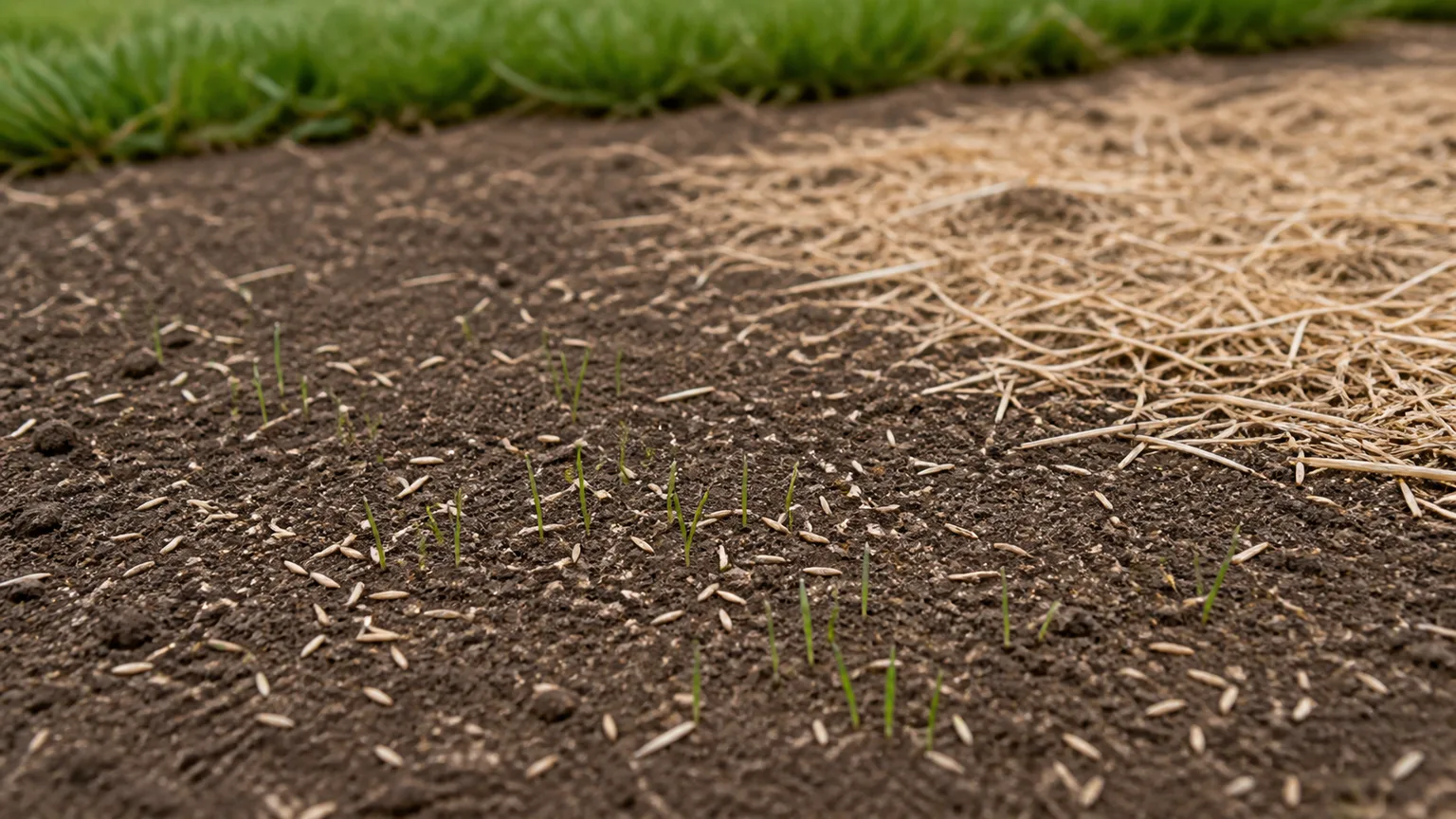
Grass that has lost its crowns will not grow back from the dead blades. Once the area has stabilized and you have removed dead material, repair small bare patches by matching the seed to your lawn’s species, sun, traffic, and regional climate. Larger or heavily used areas may be easier to replace with sod, but sod still needs good soil contact and careful establishment watering.
Do not add starter fertilizer automatically to a burned patch. First identify the product and approximate rate already applied; then use a soil test or local extension guidance to decide whether the soil needs a nutrient amendment. A standard soil test is useful for pH and for phosphorus and potassium recommendations, but Penn State Extension notes that nitrogen need is not determined by soil testing alone. If salt buildup is suspected, ask the lab whether it can test electrical conductivity rather than assuming a routine lawn test measures it.
When reseeding, loosen only the surface needed for seed-to-soil contact, remove dead thatch and remaining granules, and water gently enough to keep seedbed moisture without washing seed away. BBC Gardeners’ World’s grass-seed guide recommends preparing and raking the soil, choosing spring or autumn conditions, and avoiding sowing ahead of heavy rain. Use the rate on the grass-seed label; do not mix fertilizer into the repair unless the label and a soil-based recommendation support it.
Match repair timing to your grass and weather
Grass species change the best time to feed and repair. Cool-season grasses often establish best in cooler late-summer or early-fall conditions in many U.S. regions, while warm-season grasses need active warm-season growth to spread and fill. Local climate and regional recommendations take precedence over a calendar date copied from another state or country.
The N.C. Cooperative Extension guidance illustrates why one schedule cannot fit every lawn: it advises low nitrogen and only one June feeding for centipedegrass, while its recommendations for bermudagrass, St. Augustinegrass, and zoysiagrass differ. After a burn, wait until the turf is actively growing and site conditions are suitable before seeding or resodding; consult your state extension service if timing is uncertain.
What not to do after over-fertilizing
Avoid trying to neutralize fertilizer with lime, gypsum, vinegar, soap, or a homemade “detox” mixture. These products can alter soil conditions without removing the nutrient load, and they may create a second problem. Use lime only when a soil test recommends it; Penn State Extension likewise ties liming to soil-test results.
Do not aerate or dig through the lawn immediately just to make the fertilizer disappear. Poking holes does not remove nutrients, and aggressive disturbance can injure crowns that are still alive. Wait until recovery or renovation is appropriate, and address compaction separately when turf is growing and the soil is moist enough for the grass to recover from aeration.
Do not make a blanket application of fungicide, insecticide, herbicide, or more nitrogen just because the lawn looks stressed. Each treatment has its own label, timing, and site restrictions. Correct the fertilizer mistake, monitor the affected area, and treat another problem only after you have identified it.
Check the fertilizer rate and soil before feeding again
Keep the fertilizer package until you can compare its analysis and application instructions with what actually happened. The first number in an N-P-K analysis is the percentage of nitrogen by weight; a 25-0-5 product contains 25 percent nitrogen. The rate printed on the bag depends on the product and target area, so a spreader setting from a different brand or analysis is not interchangeable.
Use a soil test to check soil pH and whether phosphorus or potassium is needed, and use local extension recommendations for your grass and region. Penn State Extension notes that soil tests determine phosphate and potash needs, while nitrogen requirements are based on other recommendations and should be applied according to the product label. The test is a planning tool, not a way to erase an overapplication that already happened.
Calculate the nitrogen you actually applied
To estimate an application, multiply the pounds of fertilizer used by the nitrogen percentage written as a decimal, then divide by the lawn area and multiply by 1,000. For example, 6 pounds of a 25-0-5 fertilizer contains 1.5 pounds of nitrogen; spread over 3,000 square feet, that equals 0.5 pound of nitrogen per 1,000 square feet.
This calculation helps spot a doubled rate, a small lawn treated with product intended for a larger area, or overlapping passes. It does not tell you whether that rate is right for your grass, season, soil, or state law. Penn State’s turf-fertilizer calculation guide shows the same basic conversion; use the product label and local extension recommendation to determine an appropriate amount.
Prevent another fertilizer burn
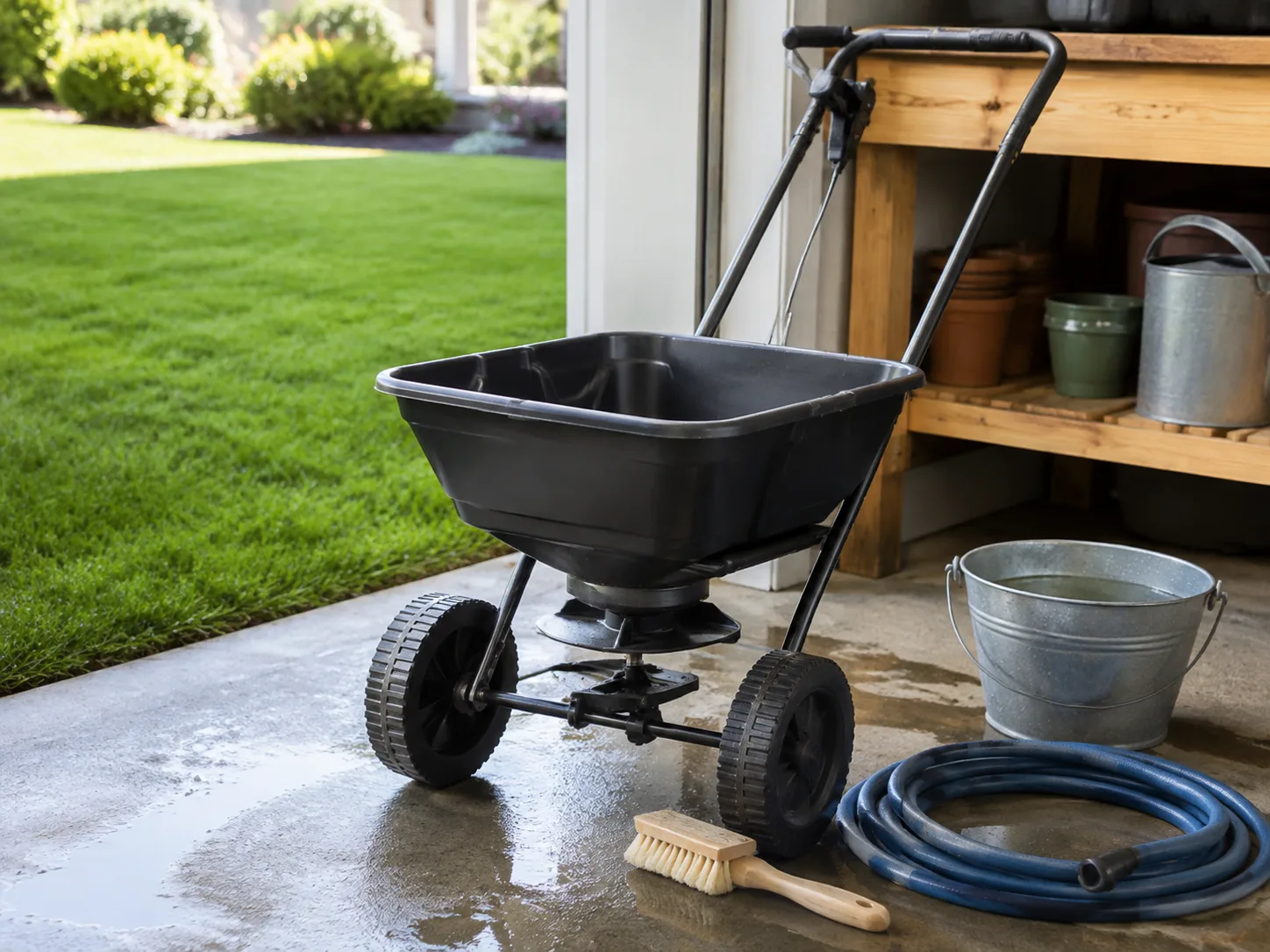
Measure the area rather than guessing from the bag’s coverage claim. Mark the lawn into manageable sections, use the spreader setting listed for the exact product, walk at a steady pace, and shut the hopper before stopping or turning. Clean spills from hard surfaces promptly, and do not apply just before heavy rain or onto frozen, saturated, or snow-covered ground.
Follow the grass-type calendar
Identify whether your lawn is cool-season or warm-season, and learn which species are present before setting a fertilizer calendar. A shade lawn, a recently seeded area, a lawn that receives regular clippings, and a high-use turf area may not need the same nitrogen input. The N.C. Cooperative Extension schedule for warm-season grasses shows that even within one region, centipedegrass needs much less nitrogen than several other common lawn grasses.
Choose a product based on a soil test and your local recommendation instead of assuming every lawn needs a high-nitrogen blend. Slow-release nitrogen may reduce the rate at which nutrients become available, but it can still be overapplied. Do not stack a routine fertilizer with weed-and-feed or a starter fertilizer unless you have checked the amount of nitrogen in each product and the label allows the combination.
Calibrate the spreader and measure the lawn
Before a full application, test the spreader over a measured area using the product’s directions. Apply in straight, consistent passes and use the overlap pattern specified by the spreader manufacturer. Keep a simple log of product, analysis, amount used, date, square footage, grass type, and weather so a future application does not unknowingly repeat the same dose.
Grass clippings can return some nutrients to the lawn when they are finely cut and dispersed, so fertilizer planning should account for regular mulching. Penn State Extension also recommends sweeping granules from pavement and using slow-release sources as part of watershed-friendly lawn care. Where local rules set fertilizer limits or buffer distances, follow those rules; requirements vary by jurisdiction.
Conclusion
To fix an over-fertilized lawn, stop applying nutrients, remove any concentrated dry spill you can safely collect, and water only when the soil can absorb it without runoff. Check the pattern and timing, then watch for new growth at the crowns instead of expecting scorched blades to turn green again.
Living turf may recover with time and careful mowing; grass with dead crowns needs reseeding or sod once the timing is right for the species. Before feeding again, calculate what you applied, read the exact product label, and use local soil-test and extension recommendations. A measured application protects both the lawn and the water that drains from your yard.



