How to Grow and Care for Euphorbia Plants
Grow euphorbia successfully indoors or outside with clear guidance on choosing a type, drainage, dry-down, seasonal care, pruning, and propagation.
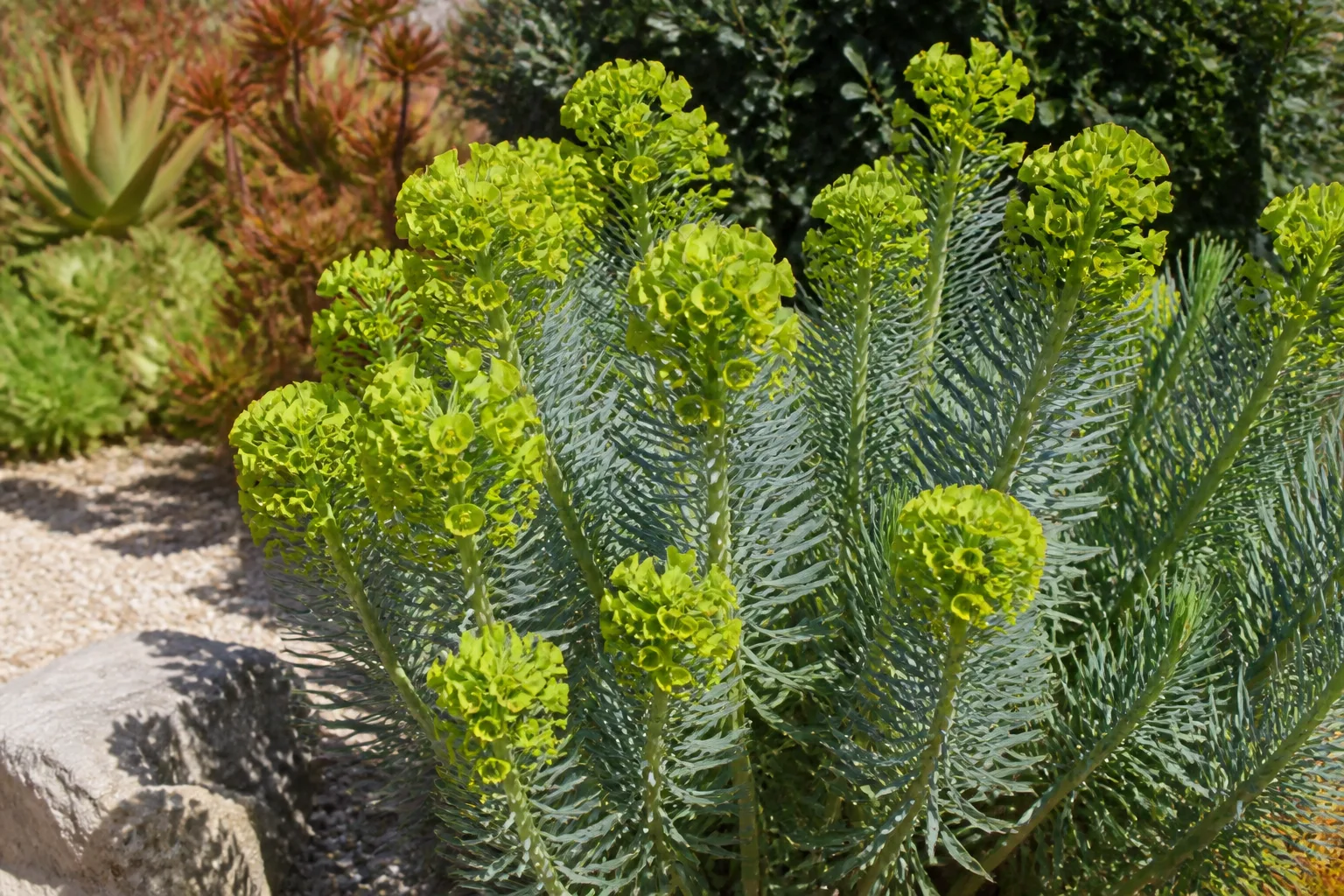
Euphorbia is a genus, not a single care profile. It includes low mounding border perennials, woody shrubs, annuals, and cactus-like succulents, so the right routine starts with identifying the plant’s growth form. The safest broad rule is strong light, fast drainage, and watering based on root-zone dryness—not a calendar—but the exceptions matter. A moisture-loving bog spurge and a dry-loving African milk tree should not be planted or watered alike.
North Carolina State Extension records more than 2,000 Euphorbia species and describes the genus as spanning annuals, biennial plants, herbaceous perennials, shrubs, trees, houseplants, and succulents. Most produce a milky latex when cut, and the genus has a distinctive flower structure called a cyathium: the tiny true flowers are surrounded by showy bracts that create the colorful display. That range explains why a nursery label is more useful than a generic “Euphorbia” care schedule.
Use this guide as a framework, then adjust it to the exact species or cultivar, your climate, and whether the plant is in the ground or a pot. If you are growing a familiar indoor form, our African milk tree profile and crown of thorns care guide go deeper into those two very different succulent euphorbias.
| Care decision | Reliable starting point | Change the plan when |
|---|---|---|
| Light | Bright light to full sun, depending on type | Leaves scorch after a sudden move, or stems stretch in shade |
| Soil | Airy, free-draining soil with no standing water | The mix stays wet for many days or the bed puddles after rain |
| Water | Soak, drain, then wait for the appropriate dry-down | The plant is newly planted, very young, dormant, or a moisture-loving species |
| Fertilizer | Light feeding only during active growth | The plant is dim, cold, freshly repotted, or showing root damage |
| Pruning | Follow evergreen, deciduous, biennial, or succulent habit | You cannot identify the plant or safely contain the sap |
| Safety | Gloves, long sleeves, and eye protection for cuts | Sap reaches skin, eyes, mouth, pets, or children |
Identify Your Euphorbia Before You Change Its Care
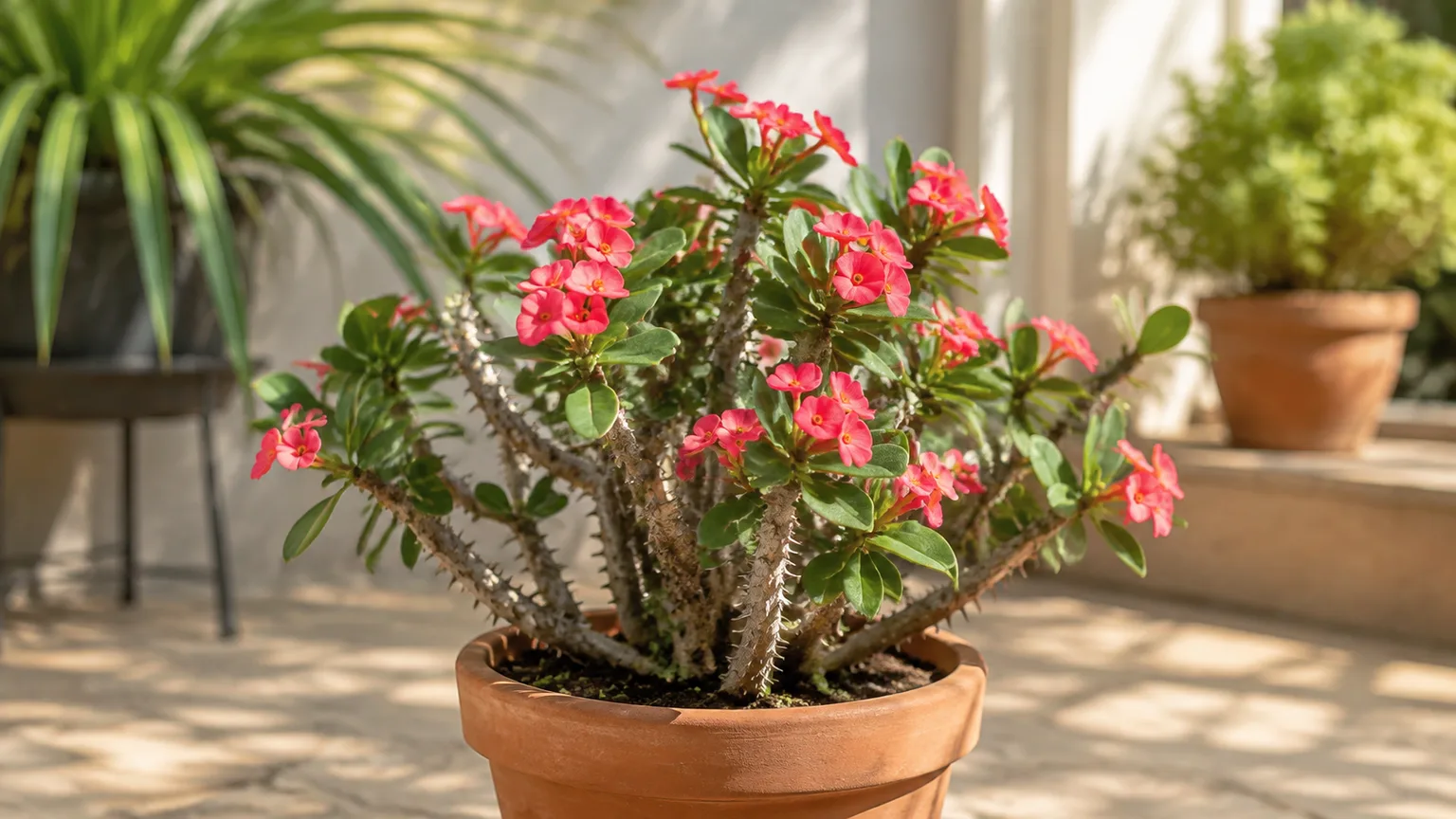
Look at the whole plant before changing one variable. A branching, ridged stem with small leaves and spines is likely a succulent euphorbia such as E. trigona; a leafy mound with chartreuse bracts may be a hardy border perennial such as cushion spurge; a fine-textured annual in a container may have completely different seasonal expectations. The plant’s label, botanical name, mature size, and hardiness information should settle the question when appearance is ambiguous.
The word “flower” can also be misleading. Euphorbia’s colorful parts are often bracts around a cyathium rather than petals, and flowering time ranges from late winter through summer depending on species. You may therefore be looking at an attractive plant that is behaving normally even if its flowers do not resemble daisies, roses, or other familiar garden blooms.
Garden forms: leafy perennials and shrubs
Garden euphorbias include clumping herbaceous plants that die back, evergreen or semi-evergreen shrubs, and spreading forms that can travel by rhizomes or self-sown seed. The RHS growing guide for garden euphorbias separates plants by conditions rather than pretending every species wants a hot, dry border: some suit ordinary free-draining soil, some need sandy soil and winter shelter, and others tolerate damp or shady positions.
For example, Euphorbia palustris is associated with moist or shady conditions, while E. rigida and E. characias relatives are better candidates for sunny, sharply drained sites. This distinction is a powerful planting decision. If your soil is heavy and wet, choosing a species adapted to that site is usually more successful than forcing a dry-border euphorbia to survive in a raised mound.
Succulent forms: spiny or water-storing plants
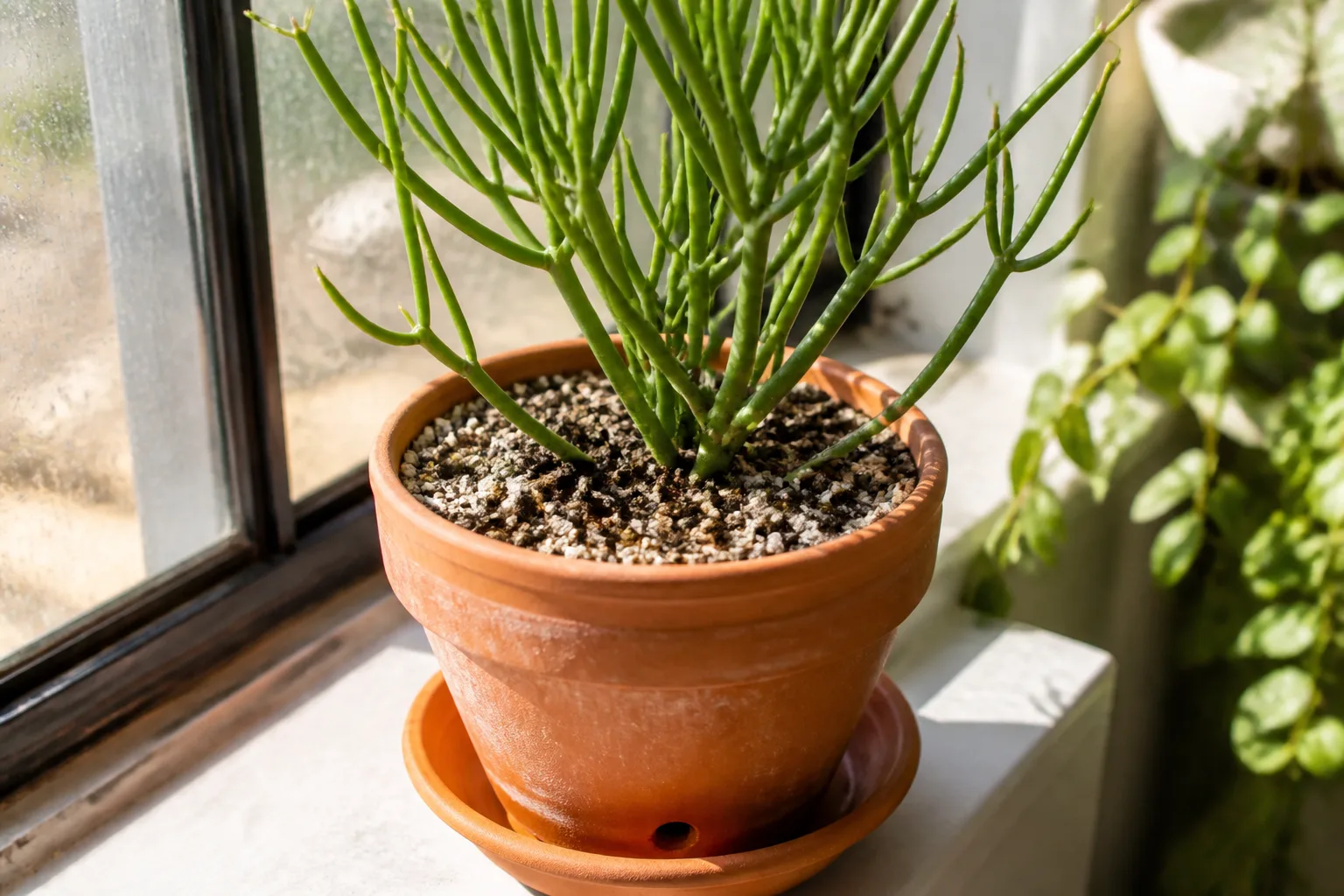
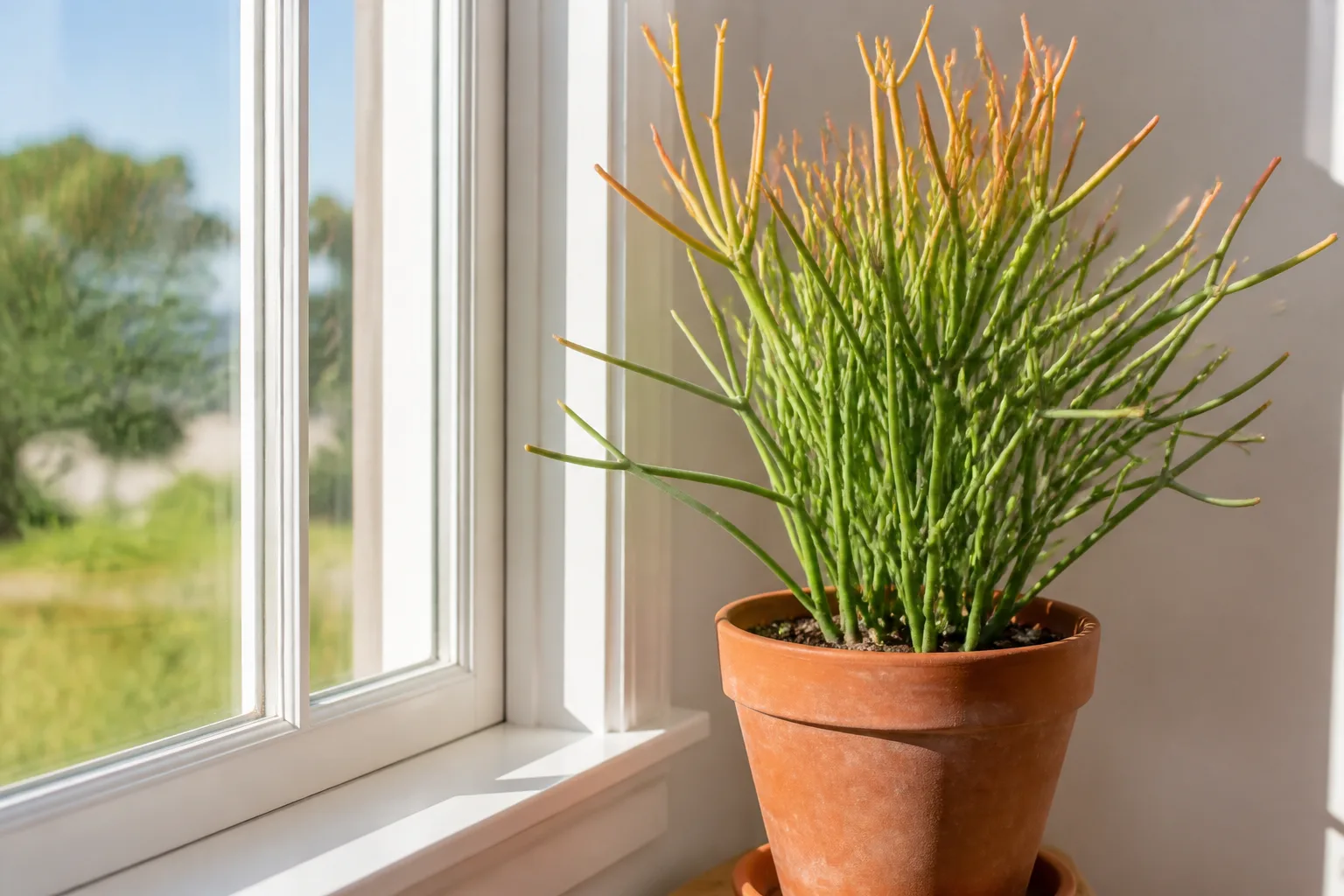
Succulent euphorbias store water in thick stems or leaves and often resemble cacti, but they are not true cacti. Crown of thorns (Euphorbia milii), African milk tree (E. trigona), pencil tree (E. tirucalli), and baseball euphorbia (E. obesa) all demonstrate why “succulent Euphorbia” is still a broad group. Their cold tolerance, leaf retention, mature size, and light needs vary, so identify the plant before leaving it outside or increasing water.
These forms usually prefer a gritty mix and a pronounced dry period between thorough waterings. That does not mean they benefit from months of extreme drought in every home. Bright, warm plants in small pots use water faster than dim, cool plants in large containers; judge moisture in the root zone and inspect the stem before you drink from the watering can.
Choose the Right Site Before Planting
Choose the site by matching three things: light, drainage, and eventual size. Euphorbias can make excellent rock-garden, drought-tolerant, border, pollinator, and container plants, but the wrong species in the wrong microclimate is not low maintenance. A small plant can become a top-heavy shrub, while a rhizomatous groundcover can cross the space you intended to leave for its neighbors.
For an outdoor plant, watch the area after a hard rain. If water remains around the crown or the bed stays sticky and airless, move the plant to a mound, raised bed, slope, or a better-drained location. Do not solve standing water with a shallow layer of gravel placed in the planting hole; change the site or its structure so excess water can actually leave the root zone.
For containers, choose a stable pot with a real drainage hole and enough weight for the mature plant. Put thorny forms away from paths, doorways, and places where pets or children brush against foliage. In cold climates, a container is often the best compromise for tender euphorbias because you can move it under cover before frost instead of gambling on a plant that has no cold margin.
Plant Euphorbia in Fast-Draining Soil
The best Euphorbia soil is not simply “sandy.” It is a mix that wets evenly, drains excess water, and leaves air around the roots afterward. Dense garden clay and a large decorative pot can keep a small root ball wet long after the surface looks dry. That is why soil and pot size need to be planned together.
Build a mix and container that dry predictably
For a succulent or indoor euphorbia, begin with a commercial cactus-and-succulent mix. If it feels peat-heavy or stays wet, blend in mineral material such as perlite, pumice, or coarse grit until the pot dries at a reasonable pace. The goal is not a magic ratio; it is a root ball that drains when watered and does not remain cold and saturated for a week.
The RHS notes that container-grown garden euphorbias can be grown in a free-draining compost amended with grit, while Better Homes & Gardens likewise recommends a quick-draining cactus-and-succulent mix and a terracotta or clay pot for water-sensitive plants. Terracotta can help moisture escape through the pot walls, but it is not a substitute for an open drainage hole. A well-drained plastic pot is safer than a porous pot sitting in a permanently wet cachepot.
Use a container only slightly larger than the root ball. An oversized pot is not a gift of growing room; it is a larger reservoir of wet soil. When repotting, remove loose, sour-smelling, or obviously rotted mix, keep firm roots, and reset the plant at the same depth. Our succulent repotting guide covers the general inspection and container choices in more detail.
Water Deeply, Then Let the Root Zone Dry
Water Euphorbia thoroughly enough to moisten the root ball, then let excess water run out of the drainage hole. Empty the saucer or cachepot after drainage finishes. Repeatedly adding a small splash to the surface can leave the lower roots wet while the top looks dry, which is one reason calendar watering produces confusing symptoms.
The next watering depends on the type and the conditions. For a succulent euphorbia, wait until the mix has dried through most of the root zone; the top inch alone is not always enough evidence in a deep pot. For a young plant with a small root system, do not let it stay completely dry for so long that fine roots die back. For established garden euphorbias, water new plants during dry spells as they establish, then let the species and the site dictate the routine. The RHS recommends particular attention to watering during the first two growing seasons for plants in the ground, while container plants need monitoring through spring and autumn.
Check below the surface with a wooden skewer, your finger at the drainage hole, or a moisture meter used alongside pot weight. A pot that feels light and has dry mix deep down is ready for a thorough drink; a heavy pot with cool, damp mix is not. In winter, reduce frequency as light and growth slow. Do not water a soft-stemmed plant simply because its leaves have dropped: softness is a reason to inspect for rot first.
Match Light to the Species
Many Euphorbias prefer full sun or very bright light, but the genus also includes plants that tolerate partial shade and species adapted to damp or woodland conditions. The RHS plant guide describes Euphorbia as a group useful in both gardens and houses, with sun-loving, shade-tolerant, indoor, and greenhouse categories. Use the exact species to choose the final spot.
Indoors, place a succulent euphorbia near the brightest safe window you have, or supplement a distant window with a grow light. Pale, thin, leaning, or widely spaced growth usually means the plant is spending more energy reaching for light than building a compact form. Increasing fertilizer will not repair that problem. Improve light first, then allow the plant time to produce stronger new growth.
Acclimate an indoor plant before putting it into strong outdoor sun. Start in bright shade or gentle morning sun, then increase direct exposure over roughly one to two weeks. Sudden noon sun can bleach or scorch tissue that was grown under glass or low indoor light. Rotate a window plant occasionally so it does not develop a permanent lean, but do not rotate a plant instead of giving it enough light.
Manage Temperature, Humidity, and Airflow
Cold tolerance is one of the biggest differences between Euphorbia species. Some hardy garden perennials return after winter, while tropical and succulent forms can be damaged by frost or a cold, wet root ball. Read the plant label and use your local climate as a guide; if you do not know the species, treat a tender-looking succulent as frost-sensitive and move a container before the first cold night rather than after damage appears.
Indoor euphorbias generally cope with ordinary household humidity. Misting is not a cure for dry soil, and a pebble tray is not a substitute for bright light or drainage. Good airflow is more useful, especially where dense foliage, wet weather, or crowded pots keep stems and leaves damp. Keep the plant away from cold drafts, and do not place a recently watered succulent against a cold window.
When a patio plant comes indoors, inspect stems, leaf axils, and the pot rim for mealybugs or other hitchhikers. Give it the brightest available position, but expect the pot to dry more slowly indoors than it did in outdoor sun and wind. The schedule must change with the environment.
Feed Sparingly During Active Growth
Euphorbias rarely need heavy feeding. In good garden soil, an established border plant may need no routine fertilizer beyond an appropriate mulch. The RHS warns that overly rich soil or excess feeding can produce lush, leggy growth, which is a poor trade for a plant valued for strong form and colorful bracts.
For a container plant, feed lightly during active growth with a balanced or succulent fertilizer diluted according to its label. A spring application and, for a vigorous container plant, a second application later in the growing season are usually more sensible than frequent high-dose feeding. Water the soil first if it is bone dry, and never use fertilizer to compensate for weak light, root rot, or cold stress.
Skip feeding after repotting until the plant shows active new growth, and pause during a dim winter rest. If leaf color or growth is disappointing, check light and root health before changing the fertilizer. Roots cannot use a nutrient surplus when they lack oxygen or energy.
Prune and Deadhead Without Getting Burned
Pruning depends on whether the plant is evergreen, deciduous, biennial, herbaceous, or succulent. Evergreen shrub-like forms often need only spent flower stems and occasional removal of dead or awkward growth. Herbaceous perennials can be cut back after the aboveground stems die down, while a biennial may flower once, set seed, and then finish its life cycle. The RHS guide recommends deadheading, thinning spent stalks, or cutting down in autumn according to the plant’s habit.
Before cutting, put on waterproof gloves, long sleeves, and eye protection. Keep pets and children away, cover nearby surfaces, and use a clean, sharp blade. Fresh cuts can release latex that irritates skin and eyes; do not touch your face, phone, or door handles with sap-contaminated gloves. Rinse and clean tools after the work, and bag or contain cut debris where animals cannot chew it.
If sap reaches your skin, wash promptly with soap and water. If it reaches an eye, begin flushing with clean, comfortable-temperature water and seek urgent medical assessment, especially for pain, redness, blurred vision, or light sensitivity. Published clinical reports describe Euphorbia sap exposure ranging from surface inflammation to severe keratitis and uveitis; the PubMed case series and a PMC case report emphasize that eye protection is warranted even though some reported patients recovered with treatment. Do not experiment with home remedies in the eye.
Propagate Euphorbia by the Method That Fits
Choose propagation by growth form rather than by the genus name. Stem cuttings suit many shrubby and succulent euphorbias, division suits clumping herbaceous types, and seed is useful for some annuals or species plants but unreliable for many hybrids. The Gardener’s Path guide notes that Euphorbia seed can be short-lived and difficult to germinate, while cuttings reproduce the parent more faithfully.
Stem cuttings for succulent and shrubby types
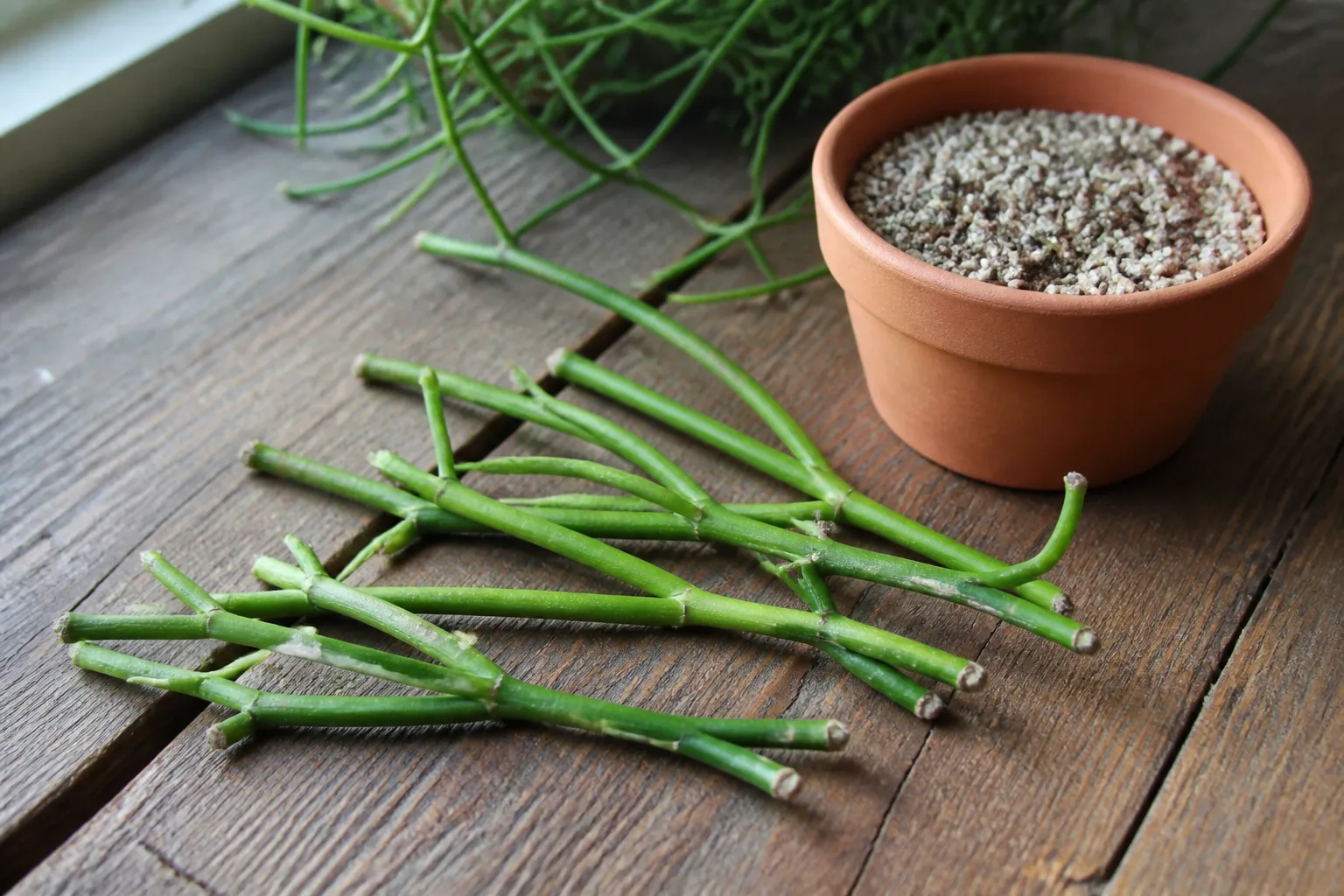
Take cuttings during warm, bright active growth from a firm, healthy, pest-free plant. Prepare gloves, eye protection, a clean blade, paper towels, a small pot, and dry gritty mix before you cut. For a branching type, cut a side shoot at a natural joint; for a solitary succulent, take a manageable top section only if you can safely handle the plant.
Contain the milky sap, then let the cut end dry until it forms a callus. The waiting time varies with stem thickness, temperature, and humidity; a thick cutting may need several days. Plant the callused end shallowly in fast-draining mix, use support if it wobbles, and keep it warm in bright shade. Do not place an uncallused cutting into saturated soil, and do not tug at it every day to look for roots.
Resume cautious moisture only after the wound has sealed and the mix is dry. New roots can take several weeks, sometimes longer in a cool home. A gentle resistance, new growth, or a firming cutting is better evidence of progress than a calendar. For more general technique and aftercare, see our guide to propagating succulents.
Division and seed for clumping or annual types
Divide a clumping herbaceous euphorbia in spring as it begins growth or at the timing recommended for that species. Lift the clump carefully, separate sections that have roots and viable shoots, and replant them at the original depth. Water them in once, then keep the new divisions evenly established without leaving the soil saturated.
For seed, use fresh seed from a reputable source when possible and check whether the plant is a species or a hybrid. Cultivars may not come true from seed, and some capsules eject seed widely as they ripen. Sow according to the species instructions, provide warmth and light appropriate for germination, and keep the medium lightly moist rather than wet. If a vigorous species is known to spread locally, remove seed capsules before they mature and check local guidance before planting it.
Troubleshoot the Problems That Look Like Care Mistakes
Start every diagnosis with four observations: Is the soil wet or dry below the surface? Is the stem firm or soft? Has light changed? Is the problem on new growth or old growth? That sequence is more useful than matching one symptom to one cause. Yellow leaves can follow aging, low light, drought, cold, or root trouble; a soft base sharply raises the urgency of a root inspection.
Soft stems, yellow leaves, and root rot
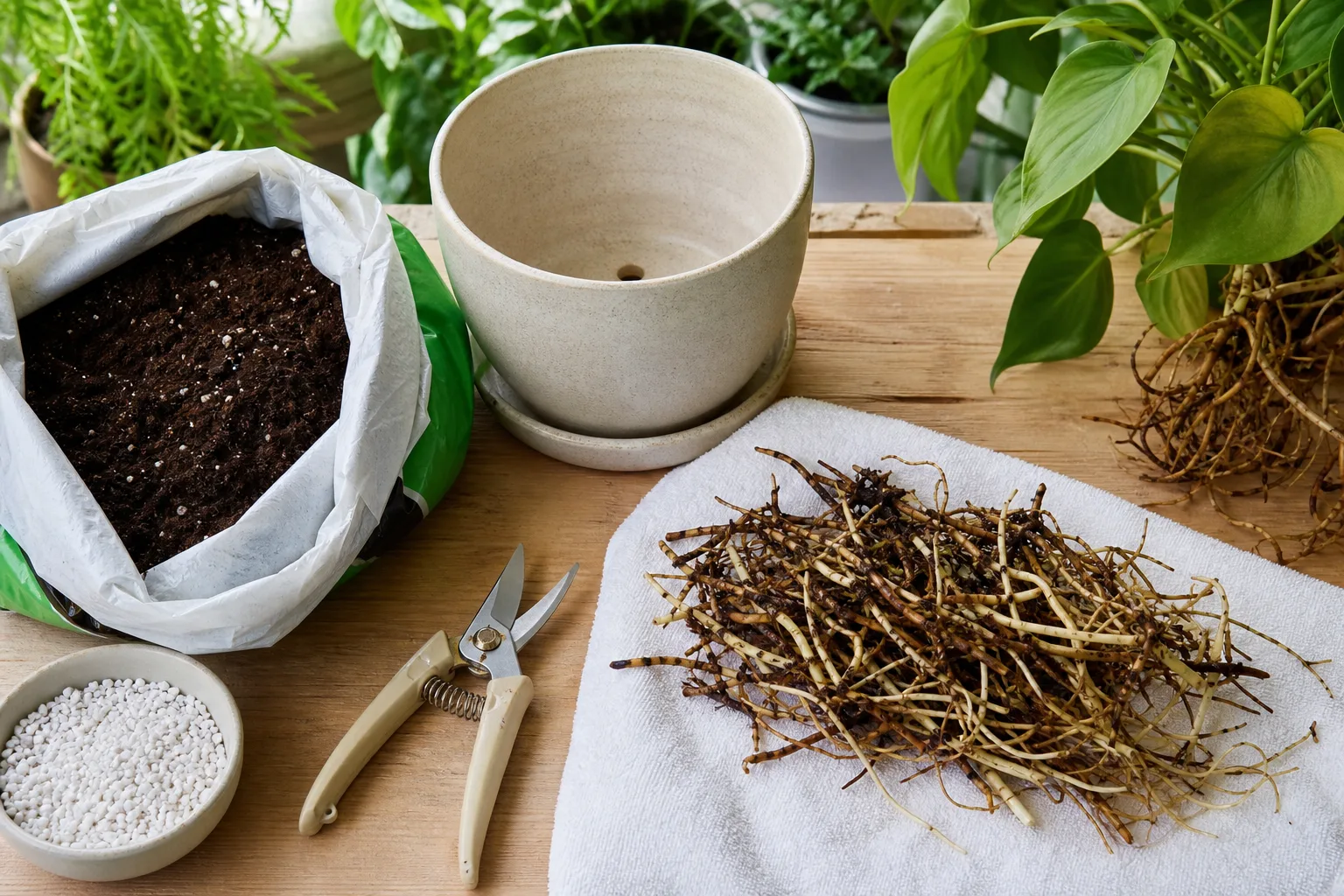
Soft, dark, translucent, or collapsing stems—especially at the soil line—usually point to rot or cold damage rather than thirst. Stop watering and slide the plant from its pot. Healthy roots are firm; rotten roots are often brown or black, soft, and easily damaged. Remove clearly rotted tissue with a clean blade, discard saturated mix, and repot only firm tissue into a clean draining pot and fresh, airy medium.
If rot has reached the main stem, salvage may be possible only by preserving firm sections as cuttings, and the sap hazard becomes part of that decision. Do not repeatedly spray fungicide while leaving the pot waterlogged; a chemical cannot restore dead roots or create drainage. A root-rot houseplant guide can help with the inspection sequence, but the same rule applies here: correct the wet root environment before asking the plant to grow.
Yellowing without softness requires a broader check. Feel the soil, look for a recent move into shade, assess winter temperature, and inspect roots if the pot remains wet. If the mix is bone dry and the plant is wrinkled but firm, water thoroughly once and monitor recovery. If it is wet and the stem is soft, more water is the wrong first action.
Sparse growth, mildew, and pests
Thin, stretched growth usually means inadequate light, not inadequate fertilizer. Move the plant gradually toward brighter light and wait for new growth to reveal whether the change worked. A leggy stem can be pruned later, but cutting it before fixing the light simply produces another cycle of weak growth.
Powdery mildew is more likely where foliage is crowded, air is stagnant, and leaves stay damp. Aphids may distort new shoots, while mealybugs can hide in joints and leaf axils on indoor plants. The RHS lists powdery mildew, aphids, root rots, and occasional rust among Euphorbia problems; inspect early, isolate affected container plants, improve airflow, and remove visible pests. If you use an insecticidal or disease-control product, follow its label for the exact plant, application, protective equipment, and local restrictions rather than improvising a concentration.
Some euphorbias spread aggressively through rhizomes or self-sown seedlings. If a clump is moving beyond its intended area, dig out excess growth while the soil is workable and remove seed capsules before they ripen. Check local invasive-plant or noxious-weed guidance before planting a species such as leafy spurge or a rhizomatous groundcover; “easy to grow” is not the same as “appropriate for every garden.”
Conclusion
Successful Euphorbia care begins with refusing to flatten a huge genus into one recipe. Identify the species or cultivar, then match its light, drainage, hardiness, watering rhythm, and pruning habit to the place where it will grow. Dry-loving succulent forms need an airy pot and a genuine dry-down; hardy border forms may prefer ordinary soil, seasonal cutback, or even more moisture than their cactus-like relatives.
The routine is simple once those decisions are correct: give enough light, let excess water escape, water according to the root zone, feed lightly during active growth, and handle every cut as a latex-exposure event. With the right match—and gloves and eye protection whenever you prune or propagate—Euphorbia can be a durable, architectural plant for a sunny windowsill, a dry border, a rock garden, or a carefully chosen container.