How to Grow and Care for African Milk Tree
Learn African milk tree care with clear light, watering, soil, temperature, pruning, propagation, pet-safety, and root-rot guidance for indoor plants.
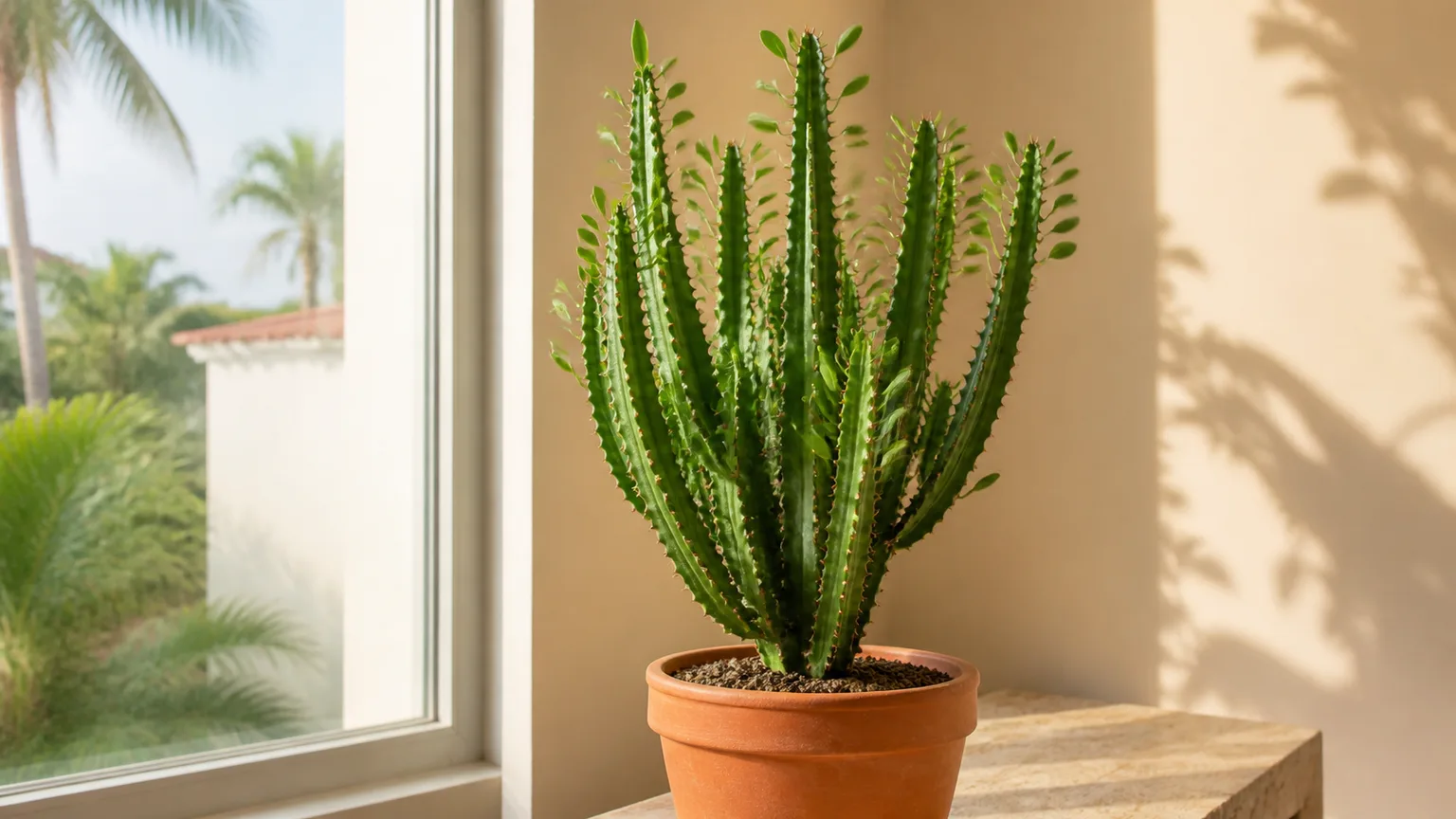
African milk tree (Euphorbia trigona) is an upright, branching succulent that looks like a cactus but belongs to the spurge family, Euphorbiaceae. Its triangular, ridged stems store water, its short-lived leaves appear along the ridges, and its candelabra shape can become a striking indoor specimen when it gets enough light and a pot that will not tip.
The plant is forgiving about missed waterings but unforgiving about a pot that stays wet. The reliable routine is simple: give it strong light, use a quick-draining mix, water only after the root zone dries, keep it warm, and wear protection whenever a stem may break. Kew’s Plants of the World Online lists the accepted species as native from Gabon to Malawi in a seasonally dry tropical biome, while the Missouri Botanical Garden describes it as a branching succulent that can be grown indoors or outdoors in frost-free climates.
African Milk Tree Care at a Glance
Use this table as a starting point, then adjust for the light, temperature, pot size, and soil in your home. A plant in a dim room or oversized pot may need water far less often than the same species growing in bright sun.
| Care factor | Practical target | What signals a change |
|---|---|---|
| Light | Bright indirect light indoors; some direct sun after acclimation | Leaning or stretched growth means the light is too weak; bleached patches suggest too much sun too fast |
| Water | Soak thoroughly when the mix is dry through the root zone, then drain | Soft stems and sour, wet soil point to excess moisture; persistent shriveling points to drought or root damage |
| Soil | Fast-draining cactus or succulent mix amended with perlite, pumice, or coarse grit | A mix that stays damp for many days is too dense or the pot is too large |
| Pot | Drainage hole plus a heavy base; only slightly larger than the root ball | Repeated tipping means stability is part of the care problem |
| Temperature | Warm room; protect from frost and cold drafts | Cold, wet soil is especially dangerous because roots use water slowly |
| Humidity | Average indoor humidity is adequate; airflow matters more than misting | Stagnant, humid air around wet stems increases rot risk |
| Feeding | Half-strength succulent or balanced fertilizer during active growth | Skip feeding while the plant is cold, dim, recently repotted, or sick |
| Pet and child safety | Keep out of reach; treat all cut sap as irritating and harmful if eaten | Gloves and eye protection are needed for pruning or propagation |
The most important first action for a new plant is not repotting or fertilizing. Place it in the brightest safe location you have, inspect the stem and soil for damage or pests, and learn how fast that particular pot dries before setting a routine.
Start With Safety and Site
African milk tree is an excellent example of why a plant can be easy to grow and still require deliberate handling. The stems have short spines, and damaged tissue releases a milky latex that can irritate skin, eyes, and the mouth. North Carolina Extension’s plant profile lists it as poisonous and recommends keeping it away from children and pets; the National Capital Poison Center advises covering skin and using eye protection when working closely with euphorbias.
Choose a place where the plant cannot be brushed by a walkway, knocked over by a pet, or reached by a child. A bright window with a little clearance around the pot is safer than a narrow shelf at shoulder height, especially as the plant grows taller and its branches extend.
Is African Milk Tree a Cactus?
No. It is a succulent euphorb, not a true cactus. The cactus-like silhouette comes from water-storing stems and spines, but the triangular ridges, small leaves, and milky latex are useful identification clues that point to Euphorbia trigona.
That distinction changes how you handle it. Do not assume a cactus tool, bare-hand pruning habit, or a bright outdoor placement is automatically appropriate; use the plant’s latex safety requirements and its response to light and temperature as your guide.
Indoor Versus Outdoor Growing
Indoors, grow African milk tree as a bright-light specimen and expect slower drying in winter or in rooms with weak sun. Outdoors, it performs best in warm, frost-free climates with sharply draining soil, but a container is the safer choice in places where cold weather arrives seasonally. The Missouri Botanical Garden places outdoor hardiness around USDA Zones 10–11 and specifically notes that frost is not tolerated.
If you move a potted plant outside, start it in bright shade or filtered light for several days. Increase sun gradually over one to two weeks, watching for pale tan or bleached areas on the south- or west-facing side. Move it back before cold nights rather than waiting for the first frost warning; a warm, dry indoor location is easier to manage than a plant recovering from cold tissue damage.
Give It Bright Light, Then Acclimate to Sun
African milk tree needs more light than its reputation as a low-maintenance houseplant suggests. A bright south-, east-, or west-facing window can work, and a grow light is useful when the plant sits far from the glass. University of Minnesota Extension’s succulent guidance emphasizes abundant light, while RHS guidance for indoor euphorbias allows full sun to partial shade when the plant is grown in a suitable, sheltered setting.
Weak light produces a predictable chain of problems: new stems become thinner, growth leans toward the window, leaves drop sooner, and the soil stays wet longer because the plant is using less water. Fertilizer cannot correct stretched growth. Improve the light first, rotate the pot a quarter turn every week or two, and prune only after the plant has enough energy to replace the growth you remove.
Direct sun is a capacity the plant can develop, not a switch to flip on the day you bring it home. Nursery plants and indoor specimens can scorch when moved straight into intense midday sun, so use a sheer curtain, morning sun, or a shaded outdoor position during the transition.
Build a Fast-Draining, Stable Root Environment
The root environment has two jobs: let excess water escape quickly and keep a tall plant upright. African milk tree is much easier to manage when the container is heavy enough to resist tipping and the soil has enough large pores that roots receive air after watering.
Choose the Mix and Container Together
Start with a commercial cactus or succulent mix, then add perlite, pumice, or coarse horticultural grit if the mix feels dense or remains wet. The exact ratio matters less than the result: after watering, water should move through the drainage hole, and the mix should dry at a reasonable pace rather than forming a damp, compact plug. University of Minnesota Extension recommends well-drained, sandy conditions and warns that excess water trapped in a pot can lead to rot.
Use a pot with an open drainage hole and choose a diameter only modestly larger than the root ball. An oversized pot holds more wet mix than a small root system can use, which is one of the fastest ways to create root trouble. Terracotta can help a pot dry more evenly, but a heavy glazed pot also works if the drainage is good; stability matters more than the material’s label.
Do not create a drainage layer of gravel at the bottom of a pot as a substitute for a drainage hole. It takes up root space and can leave the soil above it perched in a wetter zone. Put the plant in a properly draining container, use an appropriate mix throughout, and empty any outer cachepot after watering.
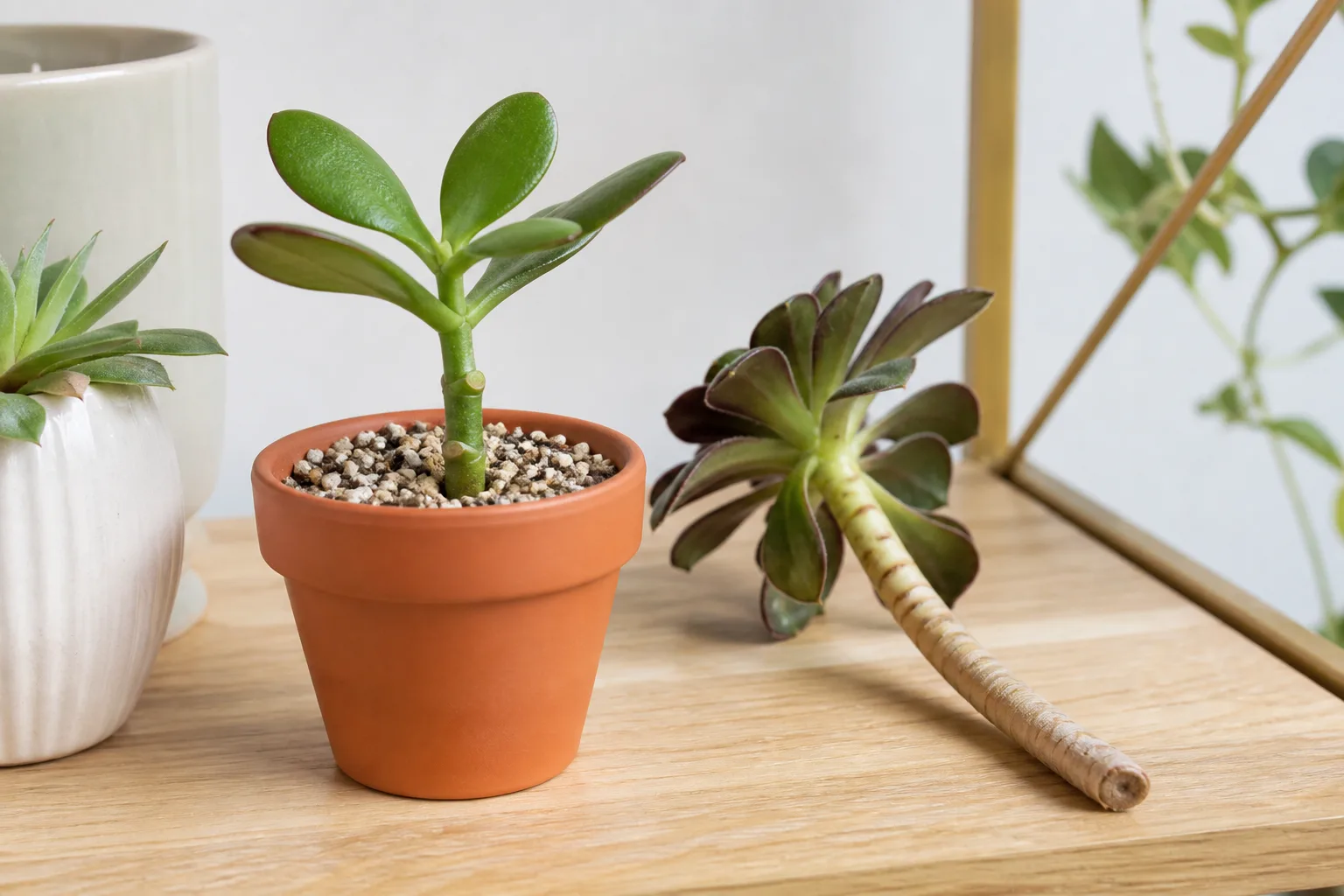
Water by Dry-Down, Not by Calendar
Water African milk tree thoroughly, then wait until the mix has dried through most or all of the root zone before watering again. When the time comes, pour slowly until water exits the drainage hole, let the pot finish draining, and empty the saucer or cachepot. Repeated sips that wet only the surface encourage an uneven root zone and make it hard to tell how much moisture remains below.
Use a wooden skewer, a moisture meter checked against the pot’s weight, and your finger at the drainage hole or lower mix to judge dryness. The top inch can feel dry while the lower part is still wet in a large container, so a calendar such as “once a week” is only a rough possibility, not a rule. Bright light, warm temperatures, a small terracotta pot, and outdoor airflow shorten the interval; dim light, cool temperatures, a large pot, and dense soil lengthen it.
In winter, reduce watering because growth and evaporation slow. Do not force a completely shriveled plant to stay dry for months, but do wait for a clear dry-down and water sparingly enough that the soil does not remain cold and wet. Missouri Botanical Garden summarizes the outdoor pattern well: water consistently during summer while allowing soil to dry, then decrease watering in winter.
The key diagnostic is the stem, not the number of days since the last drink. A firm, slightly flexible stem can be normal; a base that feels soft, translucent, or collapses is not proof of thirst and should trigger a root and soil inspection before you add more water.
Manage Temperature, Humidity, and Seasonal Change
Keep African milk tree warm and protect it from frost, cold drafts, and a cold window pressed against the stem. North Carolina Extension gives a preferred warm range of about 65–85°F and recommends bringing outdoor plants inside before temperatures drop below 45°F; a cautious indoor threshold is higher when the plant is also wet or exposed to a draft.
Average indoor humidity is normally enough. This is a dry-growing succulent, so misting, pebble trays, and a humidifier are rarely the answer to leaf drop. Fresh air movement and a dry surface after watering are more useful than adding moisture around the plant.
When bringing a patio plant indoors, inspect every ridge and leaf axil for mealybugs, let the pot drain completely, and place it away from other houseplants for a short observation period. The sudden change to lower light means the plant will use water more slowly, so keep checking the soil rather than carrying the outdoor watering schedule inside.
Fertilize Only During Active Growth
Feed in spring and summer when the plant is producing new stems or leaves. A balanced liquid houseplant fertilizer or a succulent fertilizer diluted to half the label rate once a month is enough for most container plants; fertilizing more often does not compensate for weak light or poor drainage.
Water the soil first if it is bone dry, then apply the diluted feed to already moist roots. Skip fertilizer in cold or dim winter conditions, for several weeks after repotting, and whenever the plant is soft, recently sunburned, or infested. Salt buildup and fertilizer burn are harder to reverse in a plant that is already struggling to move water.
Prune for Balance and Handle Sap Safely
Pruning is useful when the plant has become too tall, leans from one-sided light, or has a branch that is likely to break. It also gives you a way to shape the candelabra form, but cutting the tips before correcting weak light can leave you with repeated thin growth and a plant that still leans.
Wear thick waterproof gloves, long sleeves, and eye protection. Keep children and pets out of the work area, cover nearby surfaces, use a sharp clean blade, and cut away from your face. Let the cut surface stop bleeding and dry; do not handle fresh cuttings casually or leave sap-soaked towels where an animal can chew them.
If latex reaches skin, wash the area promptly with soap and water. If it reaches an eye, rinse with comfortable-temperature water for 15–20 minutes without using soap and seek medical advice for pain, redness, blurred vision, or any change in sight. The poison center’s spurge-sap first-aid guidance treats eye exposure as an urgent decontamination problem, and published case reports document serious corneal inflammation after Euphorbia trigona sap entered the eye.
Cut a branch at a joint or branching point rather than taking random bites from the main stem. Keep the remaining plant balanced, and support a tall specimen with a heavy container rather than burying the stem deeply or packing wet soil around it.
Propagate African Milk Tree From Stem Cuttings
Stem cuttings are the practical propagation method for African milk tree. The parent plant can branch below a cut, and a healthy offshoot can become a new plant, but success depends more on keeping the wound dry long enough to callus than on adding rooting products.
The Safe Cutting Sequence
- Choose the right moment. Work during warm, bright active growth, and select a firm, pest-free branch. Avoid taking cuttings from a plant that is already soft, cold-stressed, or recovering from root rot.
- Prepare protection first. Wear gloves, sleeves, and eye protection; use a sharp sterilized blade, paper towels, a clean pot, and a dry gritty mix. Have a safe place ready for the cutting before you make the cut.
- Cut and contain the latex. Remove an arm or branch with one clean cut. Blot or rinse the cut end carefully if needed, keeping the sap away from your skin, eyes, tools, and household surfaces.
- Let the wound callus. Leave the cutting upright or on its side in a warm, dry, bright-shade location for several days, until the cut end looks sealed rather than wet. The exact time varies with stem thickness, temperature, and humidity; a thick piece may need longer.
- Plant shallowly. Set the callused end about an inch into a fast-draining mix and use a few stones or a temporary support to keep the cutting upright. Do not bury a large length of stem or trap it in heavy, wet soil.
- Delay heavy watering. Keep the pot warm and bright but out of harsh direct sun. Add only cautious moisture once the cutting has had time to settle, then wait for the mix to dry rather than treating it like a leafy cutting.
- Check for rooting patiently. Rooting can take several weeks and may take around two months. A gentle resistance after several weeks, new leaves, or swelling at the growing tip is more useful than digging up the cutting to check every few days.
The University of Washington’s Miller Library guidance and Gardeners’ World’s species guide both emphasize allowing cut surfaces to dry before planting. Avoid water propagation: a fresh euphorbia cutting sitting in water is more likely to stay wet at the wound than to gain an advantage.
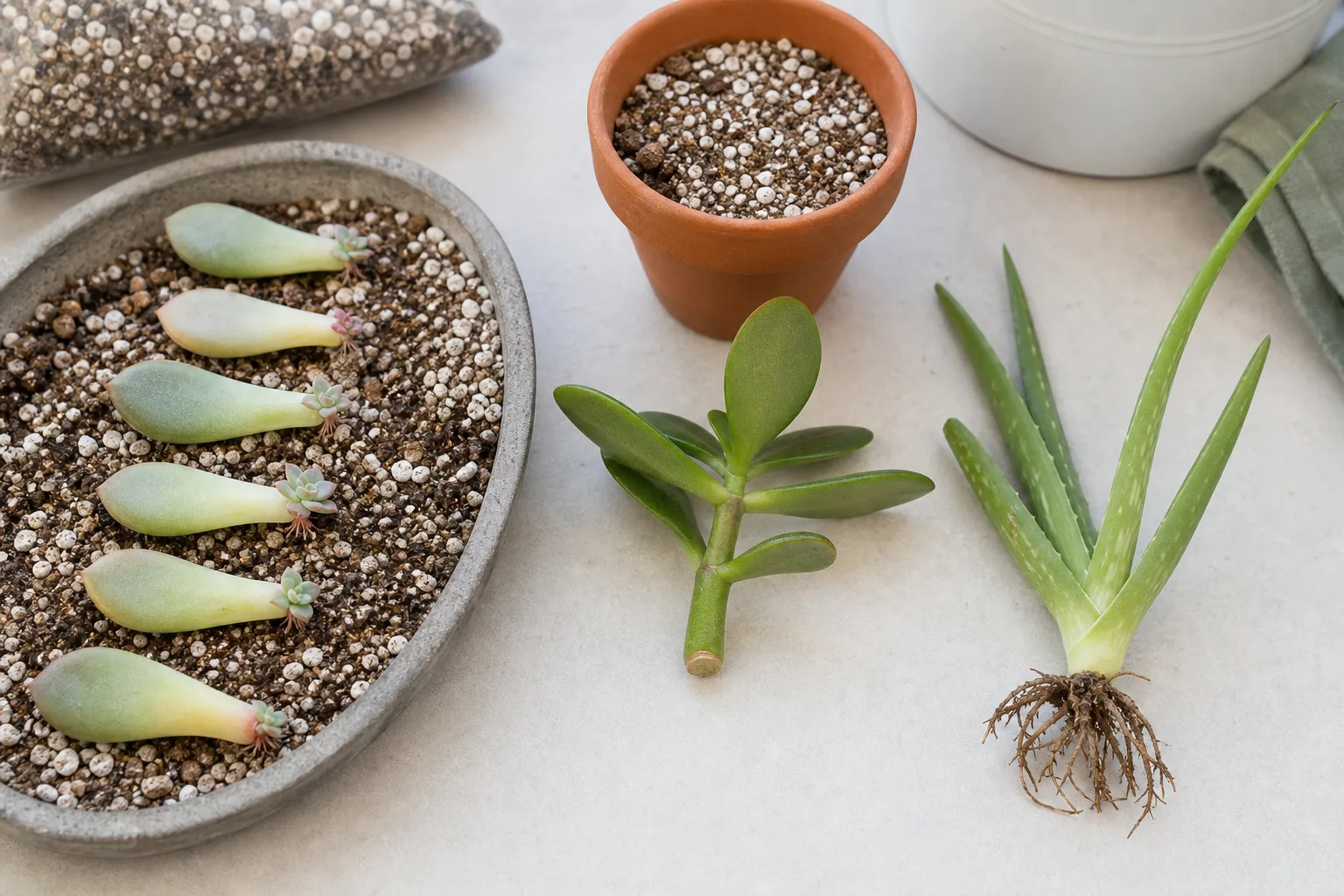
Repot and Overwinter Without Stressing the Plant
Repot in spring or early summer when the plant is actively growing, when roots circle the container, when water runs straight through a severely compacted mix, or when the plant has become unstable. A healthy African milk tree does not need annual repotting simply because a calendar says so. A stable pot with fresh, airy soil is more valuable than a large decorative container.
Use gloves and eye protection, tip the plant carefully, and support the stems rather than pulling on the branches. Move up only one pot size, keep the stem at the same soil line, and avoid packing mix tightly around the base. If roots were disturbed, let the plant settle for several days before a full watering so damaged tissue is not held wet.
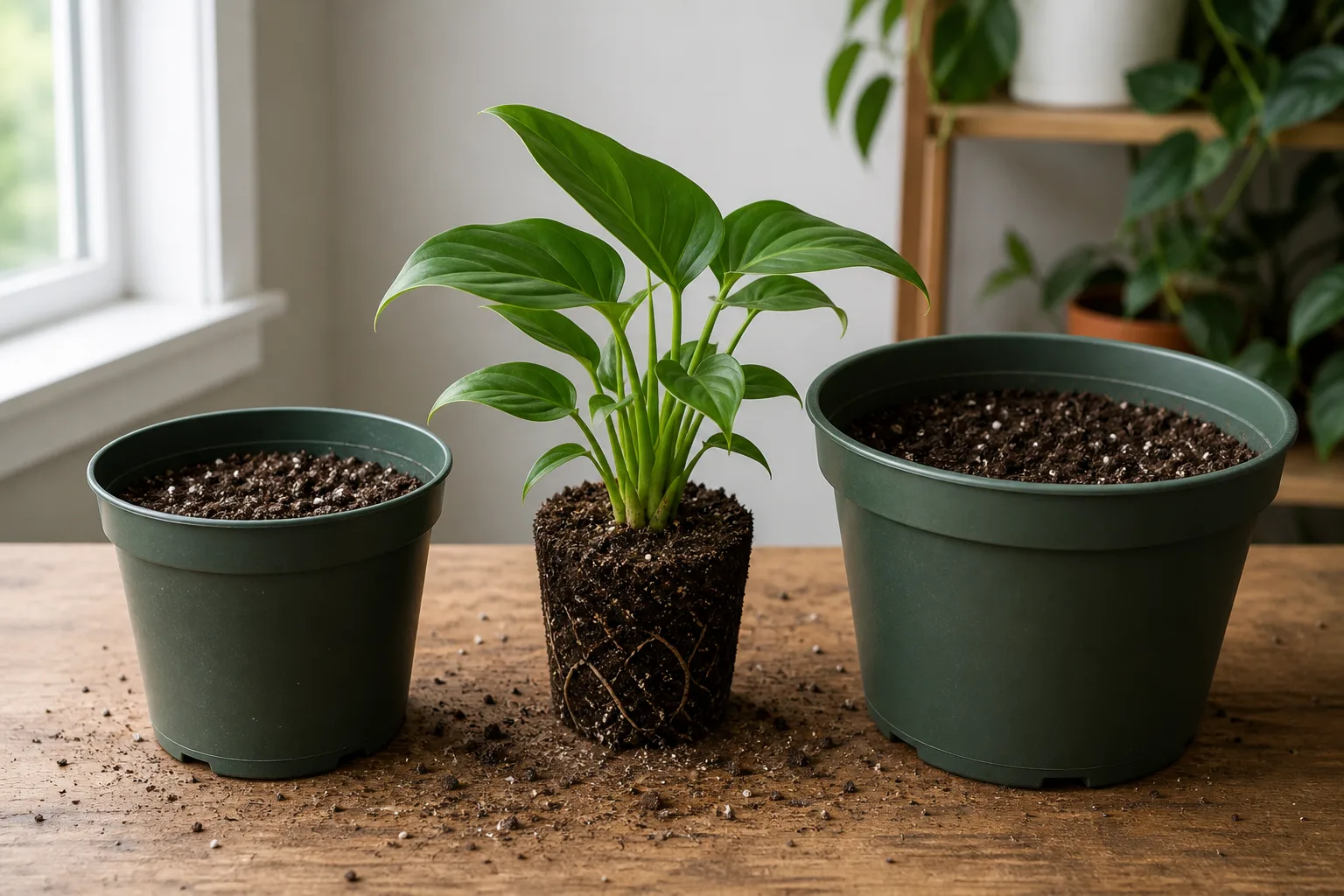
For winter, bring container plants indoors before cold nights. Give them the brightest available light, keep them away from heaters and drafty doors, and reduce watering as the mix dries more slowly. Outdoor planting is appropriate only where the site is truly frost-free, warm, and sharply drained; a warm zone label does not protect a plant from a cold, waterlogged microclimate.
Troubleshoot Leaf Drop, Leaning, Pests, and Rot
African milk tree leaves are short-lived and may drop as older tissue ages or seasons change. A few lower leaves falling while the stems remain firm is different from widespread drop accompanied by a soft base, sour soil, sudden discoloration, or a collapse of new growth.
| Symptom | Most likely first check | Safer first response |
|---|---|---|
| Thin, leaning new stems | Light direction and intensity | Move brighter, rotate gradually, and support the pot before pruning |
| Leaves dropping in a dim room | Low light or slow drying, not automatically thirst | Check the root zone; improve light and wait for the right dry-down |
| Yellowing with wet soil | Overwatering, dense mix, or oversized pot | Stop watering, confirm drainage, and inspect roots if the soil stays wet |
| Soft or dark stem base | Rot or cold wet stress | Isolate, unpot, and inspect; do not add water to “perk it up” |
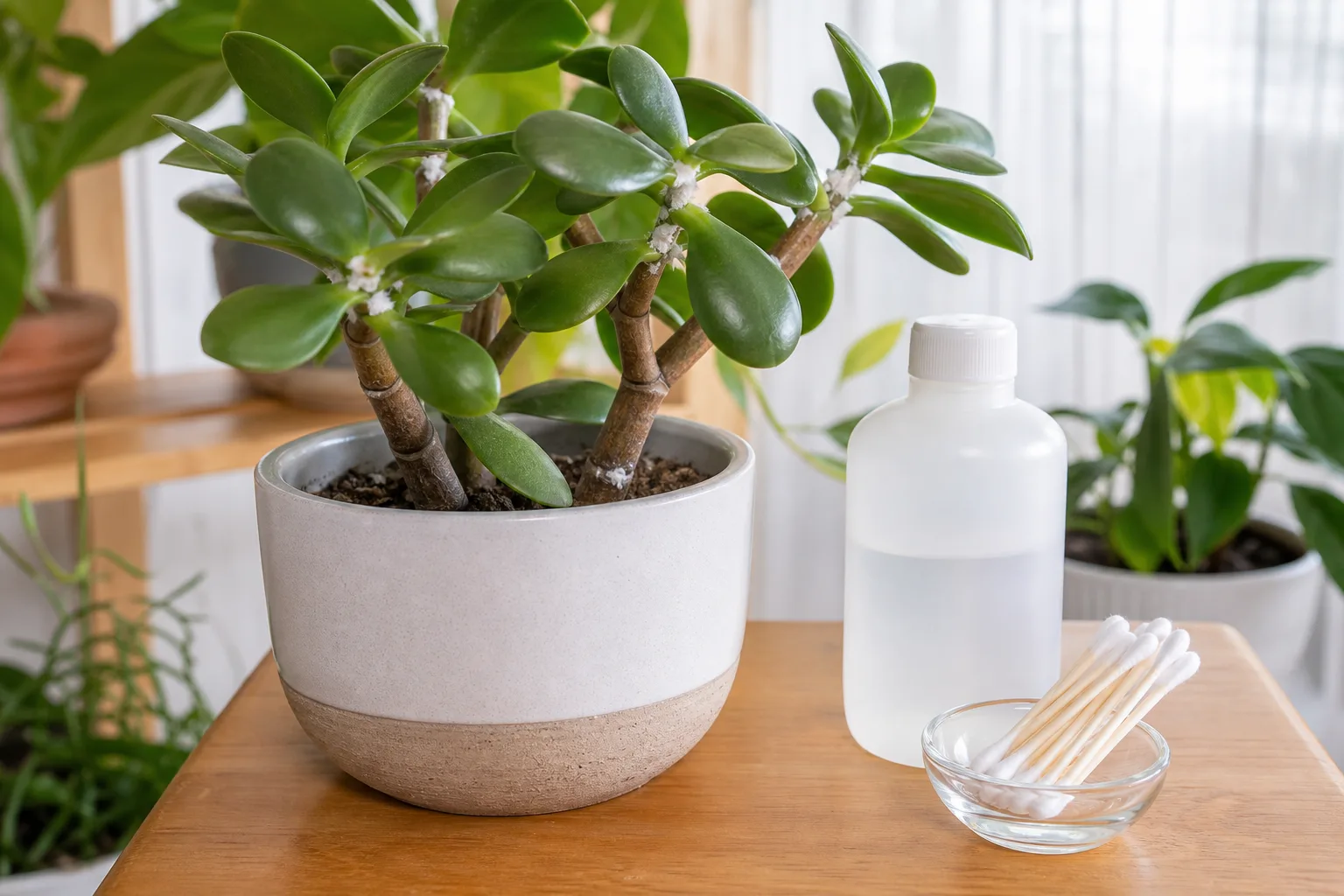
| White cottony clusters | Mealybugs in ridges or leaf axils | Isolate and remove visible insects, then repeat inspections |
| Tan patches after a move outside | Sun scorch from abrupt exposure | Return to bright shade and re-acclimate more slowly |
Mealybugs and Root Problems
Mealybugs hide where the ridges meet, around leaf bases, and in sheltered joints. Isolate the plant, remove visible insects with a cotton swab lightly moistened with rubbing alcohol, and check again over the next several weeks. Test alcohol on a small area first, avoid soaking the whole stem, and keep the plant out of direct hot sun until the treated area is dry.
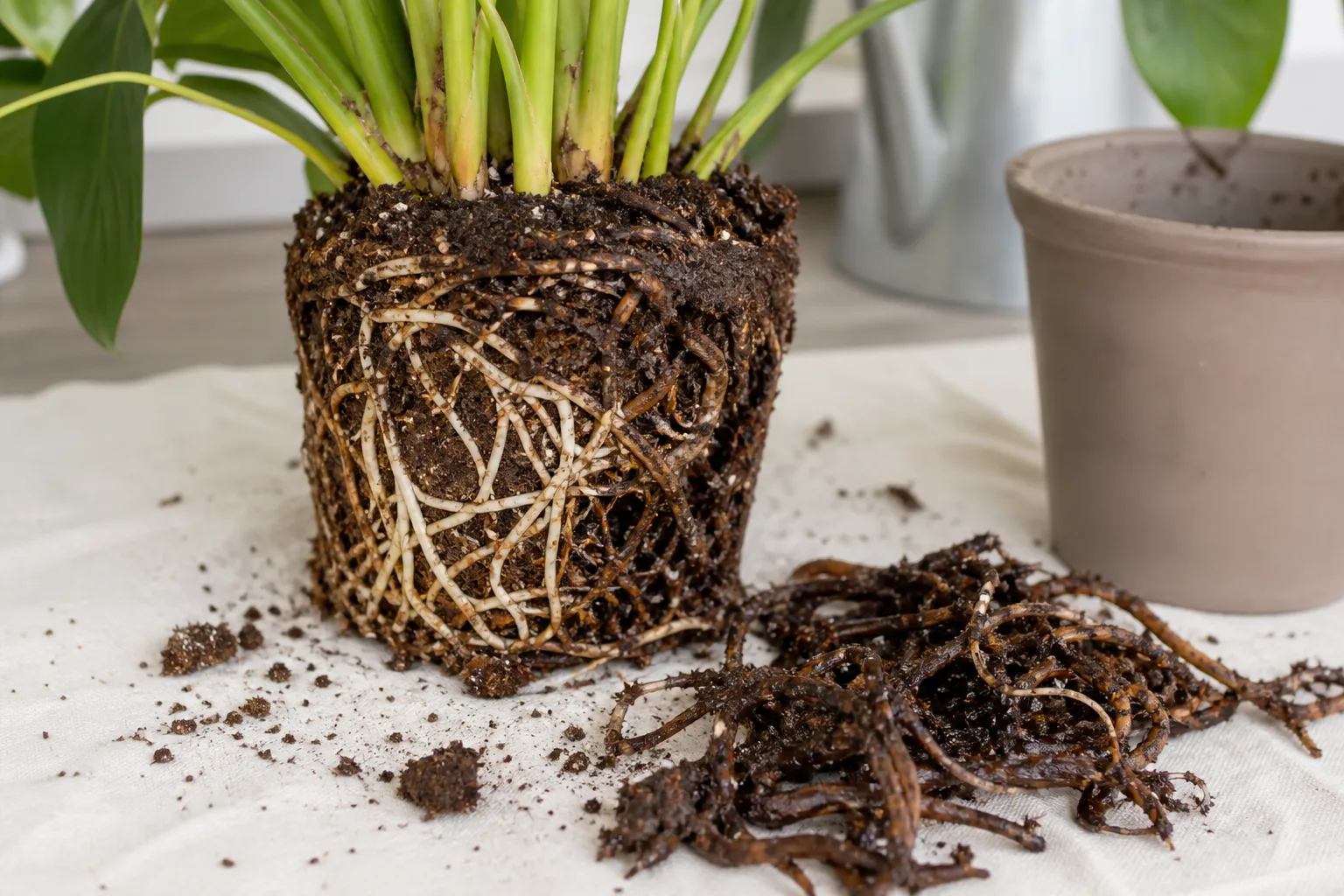
Root rot is an environment problem before it is a treatment problem. If the base is soft, unpot the plant and look for brown or black mushy roots, a sour smell, and soil that refuses to dry. Trim only clearly rotten tissue with a clean blade, allow fresh wounds to dry, and repot into a clean container and dry, sharply draining mix; if rot has climbed into the main stem, take healthy cuttings only if you can do so safely.
Do not diagnose every leaf drop as underwatering. Compare the symptom with the soil and stem: a firm, dry plant in strong growth may need water, while a yellowing or soft plant in wet soil needs a root check and more air, not another drink.
Green and Red Forms Have the Same Core Care
The ordinary green form and the red-toned form often sold as Euphorbia trigona f. rubra or ‘Royal Red’ share the same basic routine. The red form shows deeper maroon or reddish color in stems and leaves, and bright light usually helps it hold that color; it still needs acclimation, fast drainage, and sap precautions.
Color is not a health score by itself. A green plant can be perfectly healthy in bright filtered light, while a red plant can fade or stretch in weak light. Judge both forms by firm stems, balanced growth, appropriate dry-down, and clean new growth rather than by color alone.
Conclusion
Successful African milk tree care comes down to matching moisture to light. Give Euphorbia trigona a bright, warm position, let the mix dry before you soak it, use a pot that drains and stays upright, and move outdoor plants before cold weather arrives.
Treat pruning and propagation as safety work, not casual grooming: gloves and eye protection are part of the tool kit, and a callused cutting is safer than a fresh one in wet soil. If the plant starts to lean, drop leaves, or soften, inspect light, temperature, soil, and roots in that order before changing the watering routine.