7 Plant Trends for 2026 That Are Worth Growing
Explore 7 plant trends for 2026, from black-eyed Susans to oakleaf hydrangeas. Compare sun, moisture, spread, wildlife value, and first-year care.

The most useful 2026 plant trends are not about buying the newest color before it sells out. They point toward gardens that can handle hotter summers, support more life, look good outside the peak bloom window, and ask for less weekly intervention once established. That is why the plants getting attention now include sturdy perennials, grasses with winter structure, old-fashioned shrubs, and ground-covering plants that make bare soil harder to maintain.
Current trend coverage from Gardening Know How and House Beautiful points in the same broad direction: naturalistic planting, heat- and drought-aware choices, nostalgic garden plants, and interest that lasts beyond one flush of flowers. Those are useful signals, but a trend cannot tell you whether your border is sunny, waterlogged, too small, or regularly visited by deer.
The seven picks below are therefore organized as decisions, not predictions alone. For each one, you will see where it earns its space, what it needs in the first year, and the catch that a glossy nursery tag may not emphasize.
What a 2026 Plant Trend Actually Tells You
A trend is a clue about what gardeners value, not a universal recommendation. When a plant appears on several 2026 lists, it usually reflects a combination of visual appeal and a real garden problem: less water, less pruning, more pollinator activity, or a longer season of interest. That makes the trend worth examining, but not worth obeying blindly.
The strongest picks in this list do at least two jobs. Black-eyed Susan gives bold color and late-season seed for wildlife. A good ornamental grass adds movement while flowers are between shows. Oakleaf hydrangea contributes summer flowers, large leaves, fall color, and winter stems. This layered usefulness is more durable than a plant being fashionable for one season.
There is also a difference between low maintenance and no maintenance. A plant can be drought-tolerant after its roots are established and still need regular watering during its first hot summer. A shrub rose can be more disease-resistant than an old hybrid tea and still need pruning, watering, and a site with moving air. “Easy-care” describes a better fit and a lower workload—not a plant that can be abandoned.
Start With Your Yard, Not the Nursery Display
Before buying, write down four facts about the planting spot: direct-sun hours, drainage, mature width available, and how often you are realistically willing to water during the first season. Six or more hours of direct sun opens the door to yarrow, black-eyed Susan, red hot poker, creeping thyme, and many ornamental grasses; partial shade shifts the shortlist toward oakleaf hydrangea and shade-tolerant ground covers.
Drainage deserves equal weight. Dig a hole about the depth of a nursery pot, fill it with water, and watch what happens after the first fill drains. If the hole stays saturated for a long time, do not “fix” a moisture problem by placing a drought plant there and promising to water less. Raise the bed, redirect runoff, or choose a plant that actually tolerates periodic moisture.
Finally, measure the bed before you fall in love with a plant’s current pot size. A switchgrass or oakleaf hydrangea that looks modest at the garden center can occupy several feet of width within a few seasons. Match the mature dimensions on the tag to the space, then leave room for air circulation and access to the soil surface.
1. Black-Eyed Susan (Rudbeckia hirta)
Black-eyed Susan remains a smart trend pick because it delivers the visual language people want from a modern naturalistic border: saturated yellow, a clear dark center, sturdy stems, and flowers that read from across the yard. The NC State Extension Plant Toolbox profile for Rudbeckia hirta lists full sun or partial shade, a range of soil textures, good drainage, low maintenance, and a broad hardiness range from zones 3a through 8b.
Do not assume every black-eyed Susan behaves like a permanent clump. Rudbeckia hirta is commonly described as a biennial or short-lived perennial, and it often renews itself from seed. That is a benefit in a loose cottage or pollinator border, but it can look untidy in a precise foundation bed. Let a few seed heads mature if you want goldfinches and volunteer seedlings; deadhead the rest when you want a cleaner edge or more flowers.
The shopping decision is the name on the label. “Black-eyed Susan” can refer to different Rudbeckia species and cultivars with different height, flower size, and longevity. Choose a compact cultivar for the front or middle of a border, and choose the species or a taller selection when you want a more naturalized drift. If you need a plant that returns as a reliably long-lived clump, compare it with perennial Rudbeckia fulgida cultivars rather than expecting R. hirta to perform identically.
Plant it where the soil drains well and the foliage receives morning sun. Water regularly while new roots explore the bed, then pull back gradually; established plants handle ordinary dry spells better than a fresh transplant. Avoid feeding heavily, because soft, leafy growth can make stems less self-supporting and can shift the plant away from the lean, durable look that makes it useful.
2. Ornamental Grasses, Especially Clumping Native Types
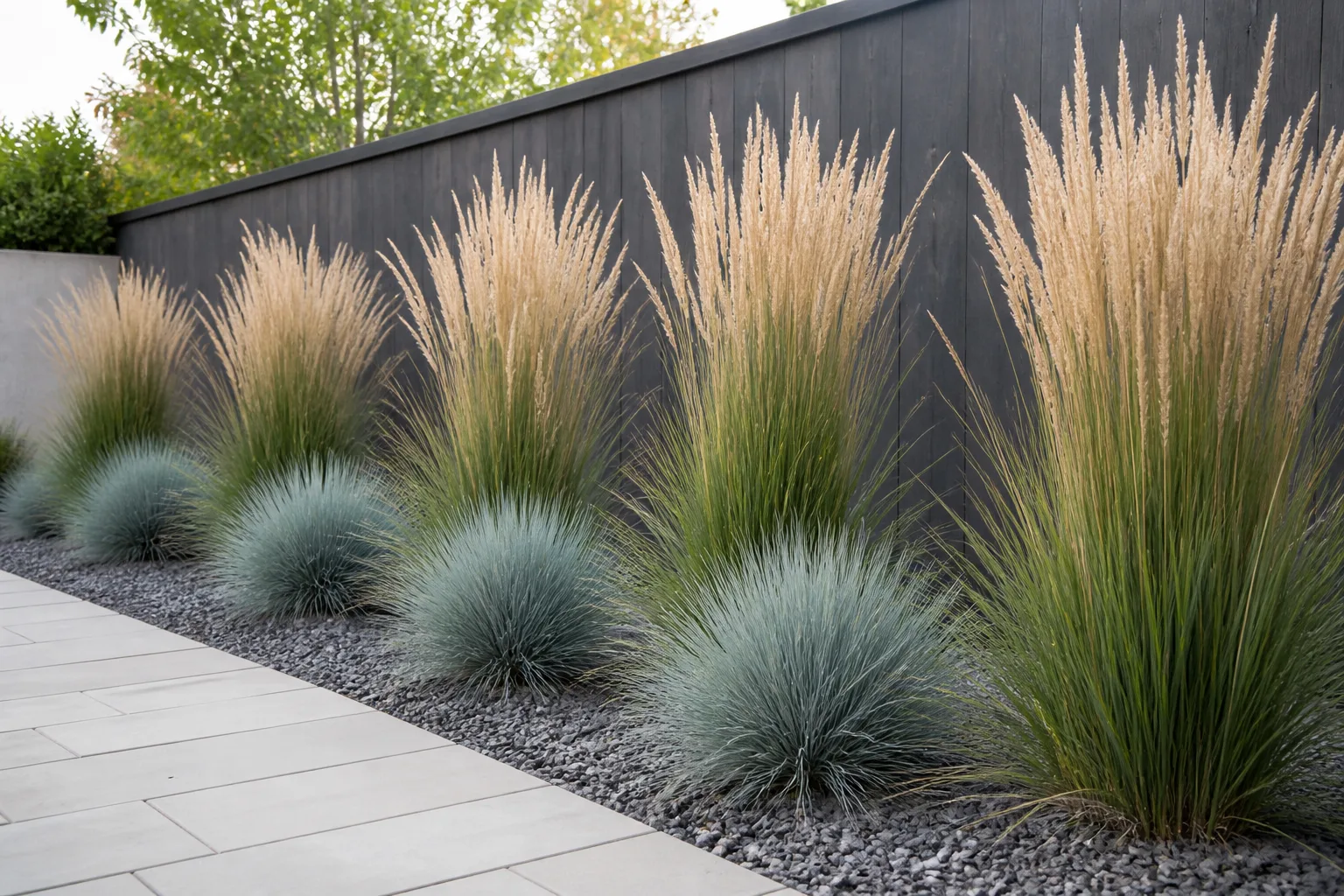
Ornamental grasses are trending because they supply what a flower-only bed cannot: motion in wind, texture when blooms pause, seed heads in fall, and structure after frost. The mistake is treating “ornamental grass” as one care category. Some stay in a tidy clump, some spread by rhizomes, some self-seed, and some need more moisture than their feathery leaves suggest.
For a dependable full-sun starting point, look at switchgrass (Panicum virgatum) or little bluestem. NC State’s switchgrass profile describes a North American native perennial with low maintenance, clumping habit, full-sun performance, and tolerance of soils that range from occasionally dry to occasionally wet. Its listed height can range from about 3 to 7 feet, so cultivar choice matters as much as species choice.
Use a narrow, upright cultivar such as ‘Northwind’ beside a fence or in the back of a border, and use a shorter selection where a walkway needs a clear sight line. Little bluestem is often the better fit for a smaller hot bed because its clumps occupy less visual and physical space and turn coppery in fall. In both cases, leave the stems standing through winter unless they block a path or create a specific safety problem, then cut them back before new growth starts.
The red flag is a grass that spreads beyond the space you can maintain. River oats can be excellent in a woodland edge but can colonize a small bed; large rhizomatous grasses can turn a narrow strip into a yearly containment job. Ask the nursery whether the plant is clump-forming, whether it spreads by rhizomes, and whether the cultivar is known to self-seed locally. A plant that is easy in a meadow may be the wrong plant beside a small patio.
Grass is also a design decision. Repeat one species in a group of three or five rather than sprinkling isolated specimens through every gap. That repetition makes the border look intentional, while the seed heads give birds and winter viewers something to notice after the flowers have finished.
3. Easy-Care Shrub Roses
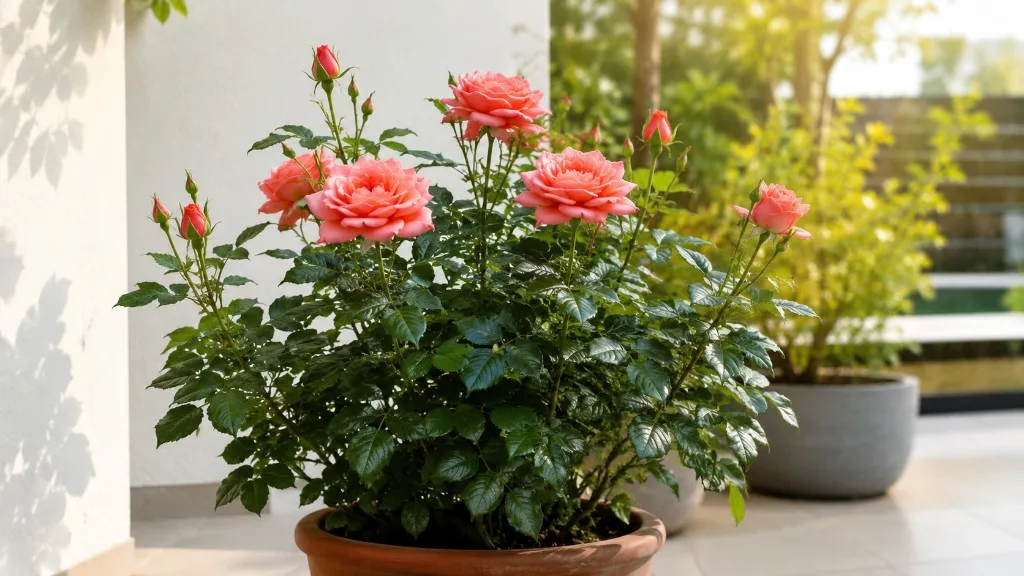
Shrub roses fit the renewed interest in old-fashioned garden character, but newer gardeners want the rose shape without an all-summer rescue operation. A well-chosen shrub rose, including familiar examples such as Iceberg, can provide repeat flowers, a fuller habit, and less fuss than a demanding hybrid tea when it is planted in full sun with good airflow.
“Disease-resistant” should be read as a comparison, not a guarantee. The American Rose Society’s guide to choosing a rose is a useful reminder to choose for the plant’s intended use, climate, and space rather than buying by flower color alone. Local humidity, irrigation that wets foliage, crowding, and cultivar-specific performance all change how much attention a rose needs.
Give a shrub rose at least six hours of sun and enough room that mature stems are not pressed against a wall or packed into a hedge. Water slowly at the soil line during the establishment season, mulch the root zone without piling mulch against the canes, and remove visibly diseased leaves rather than waiting for the whole plant to decline. A simple morning inspection catches problems earlier than a calendar-based spray routine.
Prune lightly to remove dead, damaged, or crossing wood and to shape the shrub. Do not turn an easy-care rose into a high-maintenance project by shearing it repeatedly for a perfectly geometric outline. If you want the most relaxed result, choose a cultivar whose mature size suits the border and allow a natural arching habit.
Roses are the right 2026 choice for a gardener who wants fragrance or cutting flowers and is willing to do short, regular checks. They are a poor choice for a dark, damp corner or a narrow foundation strip where airflow and access are limited. The point of the shrub-rose trend is fewer preventable problems, not the end of rose care.
4. Red Hot Poker (Kniphofia)
Red hot poker earns attention the instant its torch-like flowers rise above strap-shaped foliage. The red-to-yellow flower spikes bring strong vertical color to a hot border, and the plant’s architectural shape gives a sunny bed something to look at even before the rest of the perennials peak.
The practical catch is that this is not a universally effortless plant. NC State’s profile for Kniphofia uvaria lists full sun, good drainage, medium maintenance, and a preference for moist but well-drained soil. That combination is important: red hot poker can cope with heat, but a new plant still needs water while it roots, and winter-wet soil can be more damaging than a summer dry spell.
Choose a position where water does not collect around the crown. On heavy clay, a raised or gently mounded planting area can be safer than amending the entire bed with large amounts of compost that hold moisture. Space it so the coarse basal foliage has room to expand, and combine it with finer-textured grasses or small flowers that soften the strong vertical form.
Remove spent flower spikes for a tidy appearance, but wait until spring to clean up foliage that still looks healthy. In colder areas, the foliage can help protect the crown through winter; in milder gardens, it may remain partly evergreen. The exact winter behavior depends on climate, cultivar, and drainage, so watch the plant rather than following a rigid universal cutback date.
Red hot poker is a particularly good choice for a sunny border that needs a focal accent and has soil that drains promptly. It is not the plant to use as a substitute for irrigation in a new bed, and it is not the best fit for a low, damp depression simply because the flower color is appealing.
5. Verbena bonariensis
Verbena bonariensis brings the airy cottage-garden effect that many gardeners want without forming a visual wall. Its tall, wiry stems carry small purple flower clusters above the main planting, so you can see through it to the plants behind. That transparency makes it useful in the middle of a border rather than only at the back.
The RHS guidance for Verbena bonariensis describes it as a tall, upright perennial with branched clusters of small lilac-purple flowers, and RHS growing advice places it in full sun and well-drained soil. Those requirements explain why it looks magical in a sunny, open bed and disappointing when crowded into heavy shade or wet soil.
Its main maintenance question is not pruning but seed. In a mild climate or an open bed, it may self-sow and appear in places you did not plan. That is part of its charm in a relaxed planting, yet it can become visual clutter in a small formal border. Remove spent flower heads before seed matures if you want to keep the plant in its assigned zone; leave some if you want a drifting, naturalized effect.
Treat the plant’s winter survival honestly. It may return from the crown in climates where winters are mild enough, while colder gardeners may grow it as a short-lived perennial or rely on new seedlings. Do not promise a fixed return date or hardiness result without considering local conditions. A packet of seed is often the most economical way to keep the look going, and the RHS notes that seeds are sown in spring.
Use Verbena bonariensis to punctuate a border, not to fill every empty spot. Pair it with yarrow, ornamental grass, or a rounded shrub so its thin stems have a solid visual base. The effect is more cottage than chaotic when you repeat the plant selectively and keep a defined edge around the bed.
6. Yarrow (Achillea millefolium)
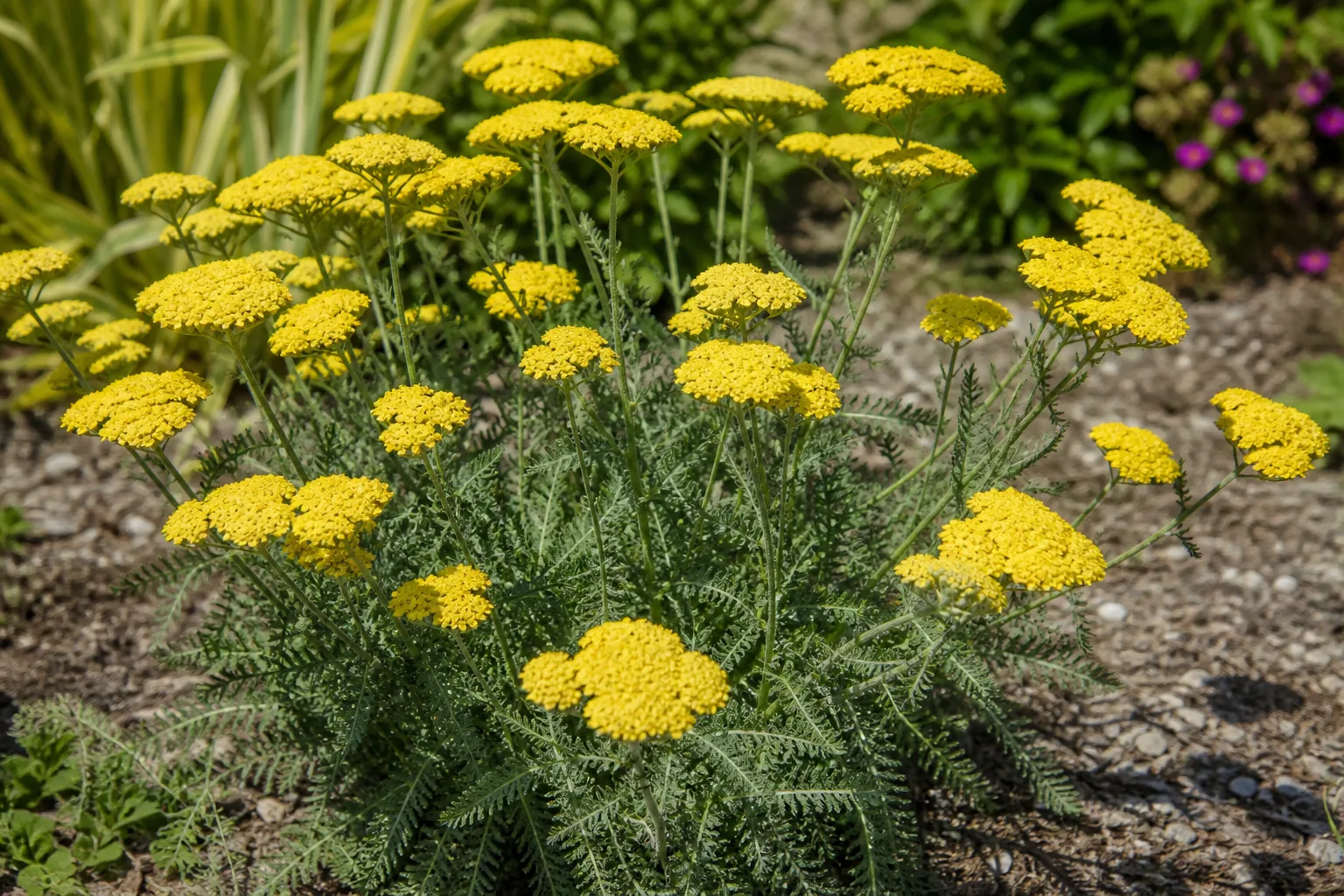
Yarrow is the workhorse on this list for dry, sunny soil. Its flat flower clusters sit above ferny foliage, giving designers a horizontal shape that balances vertical grasses and upright verbena. It is available in warm yellow, pink, red, salmon, and white tones, so it can slide into a bold color scheme or a quieter prairie-style planting.
The NC State Extension profile for Achillea millefolium lists full sun, good drainage, low maintenance, drought and heat tolerance, and attraction for butterflies, bees, and other insects. It also states the part many short trend lists omit: yarrow can spread aggressively and is susceptible to root rot in soils that stay too wet.
That spread is manageable when you design for it. Plant yarrow where a widening clump will not swallow a walkway, edge it with a physical border, and divide crowded plants when the center becomes congested. Deadhead if you want more controlled flowering and fewer seedlings; leave selected seed heads if you value winter texture and bird activity more than a perfectly clipped outline.
Avoid overwatering and overfertilizing. Rich, damp soil can produce taller, floppier stems and make the plant less drought-wise than its reputation suggests. If the bed is heavy clay, improve the planting position and drainage instead of trying to correct every season with more fertilizer.
Yarrow is a strong bridge plant between a formal border and a naturalistic one. Repeat one color in a small drift, combine it with switchgrass or little bluestem for movement, and keep taller plants behind it so the flower plates remain visible. It earns its place in a 2026 garden because it is both visually legible and functionally tough when the site is right.
7. Oakleaf Hydrangea (Hydrangea quercifolia)
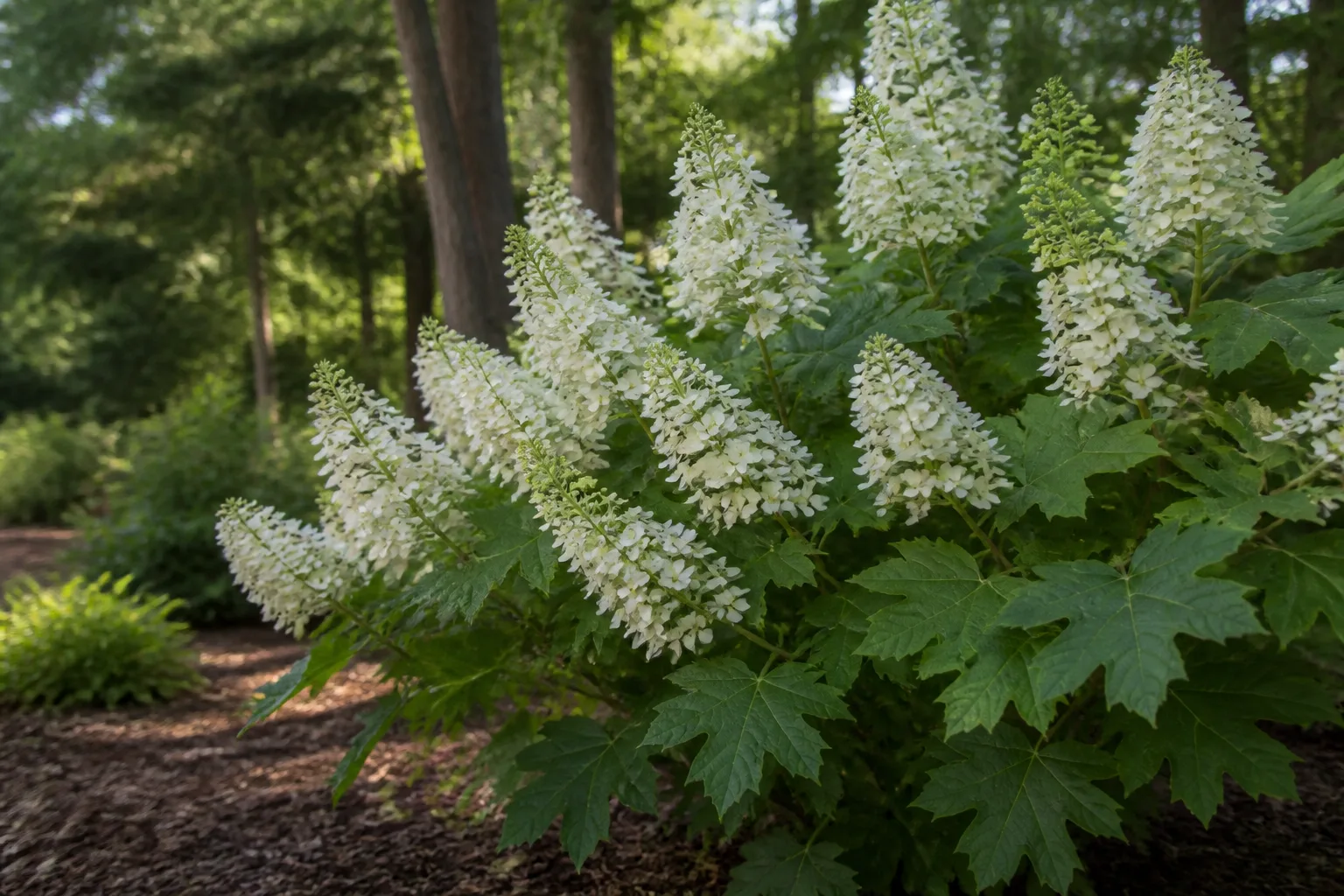
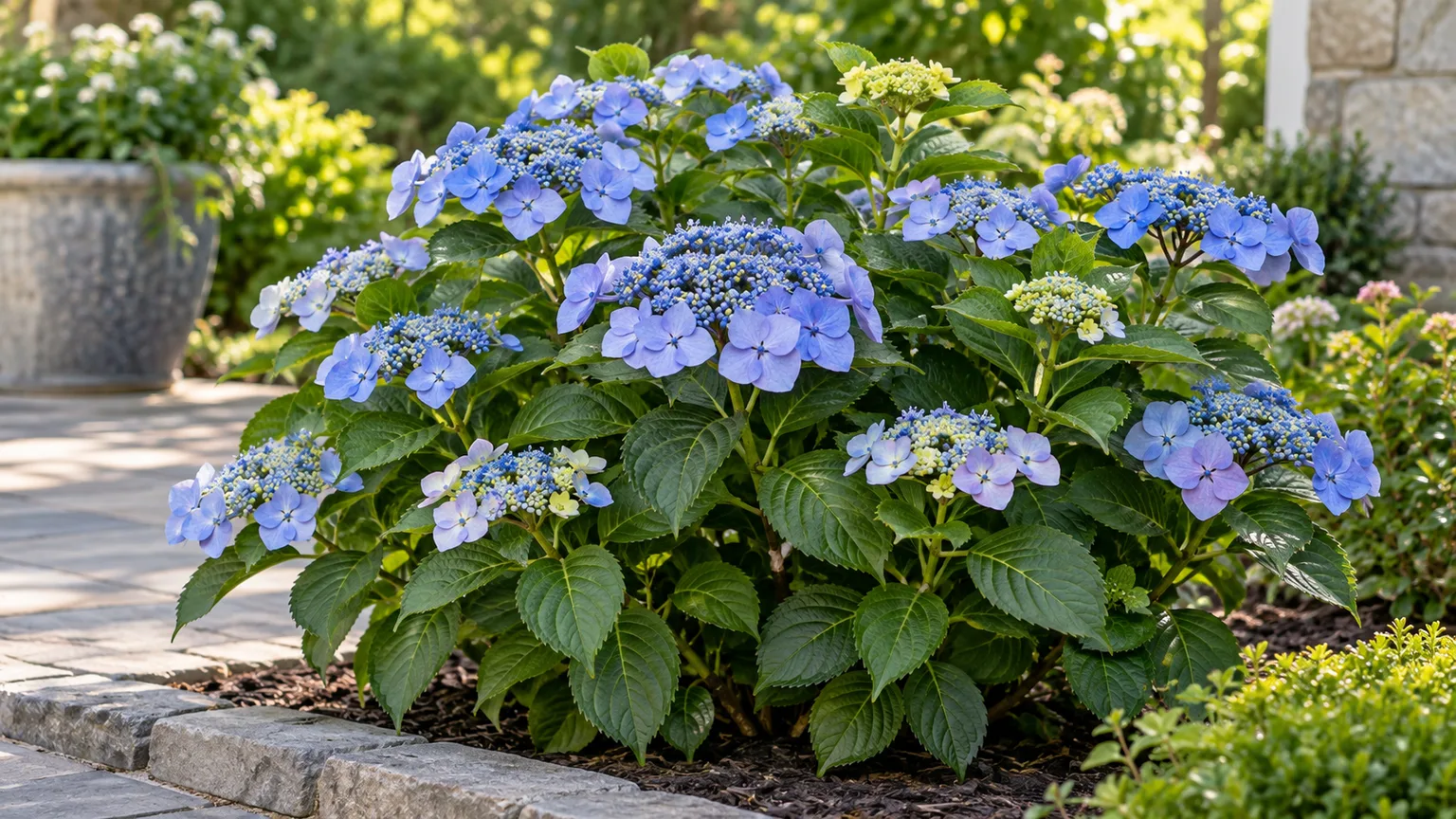
Oakleaf hydrangea is the shrub on this list most likely to make a garden look finished in more than one season. Its large oak-shaped leaves create presence before flowering, the panicles carry summer interest, the foliage can turn burgundy or crimson in fall, and the dried flower heads and branching provide structure after frost.
This is also the plant that most clearly proves why “drought-tolerant” needs a qualifier. NC State’s oakleaf hydrangea profile identifies it as a Southeastern U.S. native with low maintenance, full sun to partial shade, good drainage, moist to occasionally dry soil, and a mature size that can reach roughly 4 to 8 feet tall and 4 to 10 feet wide. It can become more resilient after establishment, but a new shrub still needs consistent root-zone moisture during heat and drought.
Give it morning sun and afternoon protection in very hot climates, or full sun where soil moisture is dependable and the plant does not bake beside reflective pavement. Keep the soil evenly moist but never chronically waterlogged, and mulch broadly over the root zone while leaving the crown and stems uncovered. A deep, infrequent soak is more useful than daily sprinkling at the surface.
Pruning timing is the non-negotiable detail. Oakleaf hydrangea flowers on older wood, so prune just after flowering if the shrub needs shaping or size control. A late-winter haircut can remove the stems carrying this year’s flowers. Missouri Botanical Garden’s hydrangea guidance is useful for the broader lesson that hydrangea choice should follow local winter conditions and the species’ behavior, not just bloom color.
Buy oakleaf hydrangea only after measuring the space. Compact cultivars make the trend workable for smaller yards, while straight species can become a broad anchor shrub. If you want a shrub that combines nostalgic flowers with fall and winter interest, it is one of the most complete choices here—but it is not a small foundation plant.
Use Ground Covers to Complete the Look
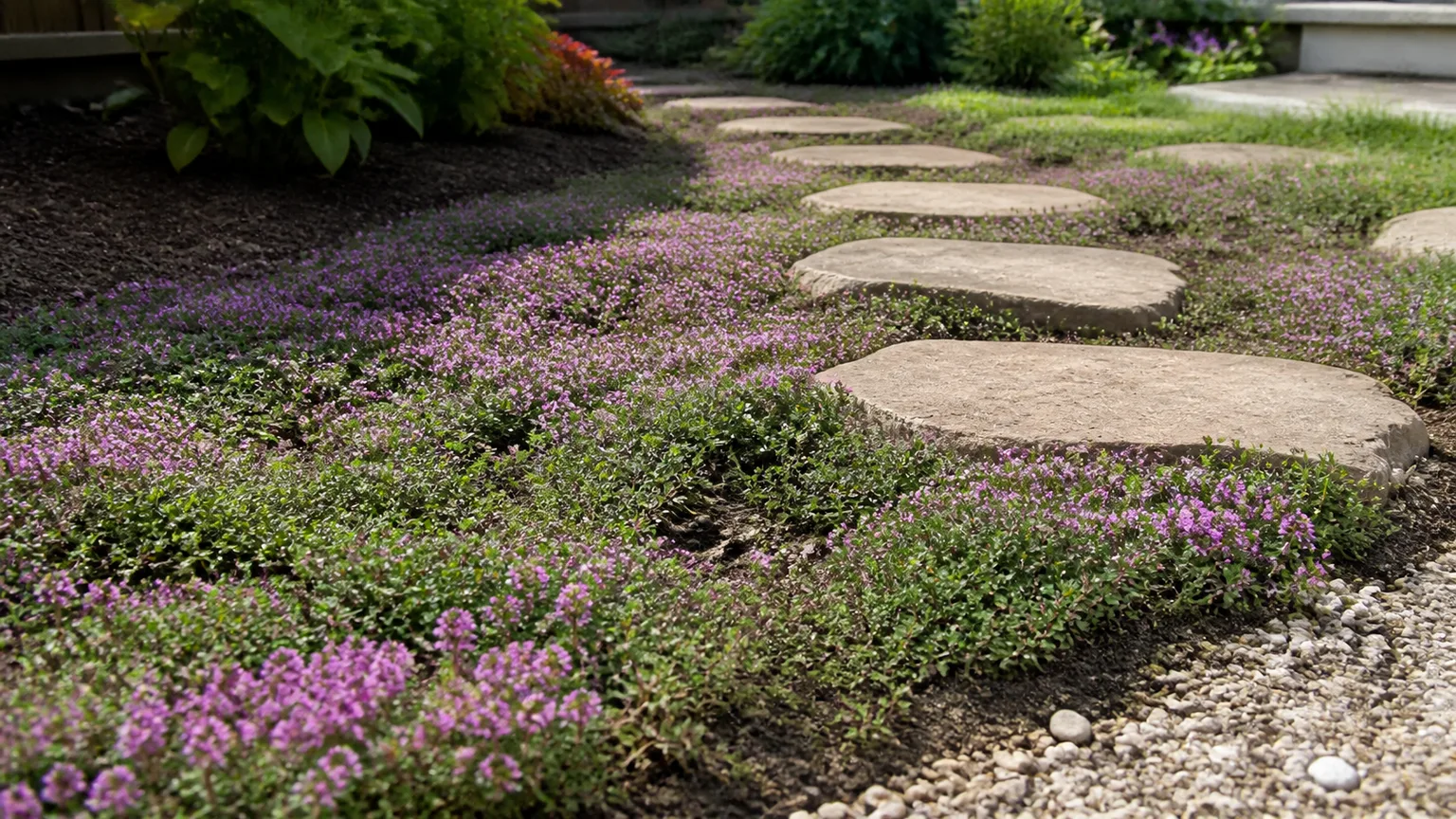
The missing layer in many new gardens is not another flowering perennial; it is a plant that covers the soil between larger plants. Ground covers make a border look settled, reduce exposed soil where weeds can germinate, and help the planting read as a designed community instead of a row of isolated purchases. They also make maintenance more predictable because the soil surface is not constantly being replanted.
For dry, sunny, well-drained areas, creeping thyme is worth considering. NC State’s profile for Thymus serpyllum lists it as a low-growing, spreading ground cover that prefers full sun, dry to very dry soil, and good drainage, with drought resistance and pollinator value. It is especially useful between stepping stones or along a sunny edge, but it should not be marketed as a completely weed-free replacement for a lawn.
Mondo grass is a different job. It is better suited to partial shade and a tidy evergreen carpet, so do not swap it into the same dry, baking position where creeping thyme belongs. Check the exact species, cultivar, mature width, and local recommendations before planting large quantities of any ground cover; “ground cover” describes a role, not a guarantee that the plant will stay inside an invisible line.
Use ground covers as a supporting layer, not as an excuse to crowd the main plants. Leave enough room around crowns for air and around shrub stems for inspection. A two-inch organic mulch layer can bridge the first season while the ground cover spreads, and the RHS guidance on mulching explains why mulch helps conserve moisture and suppress weeds when applied to already-moist soil.
Build a 2026 Border With a Simple Three-Layer Formula
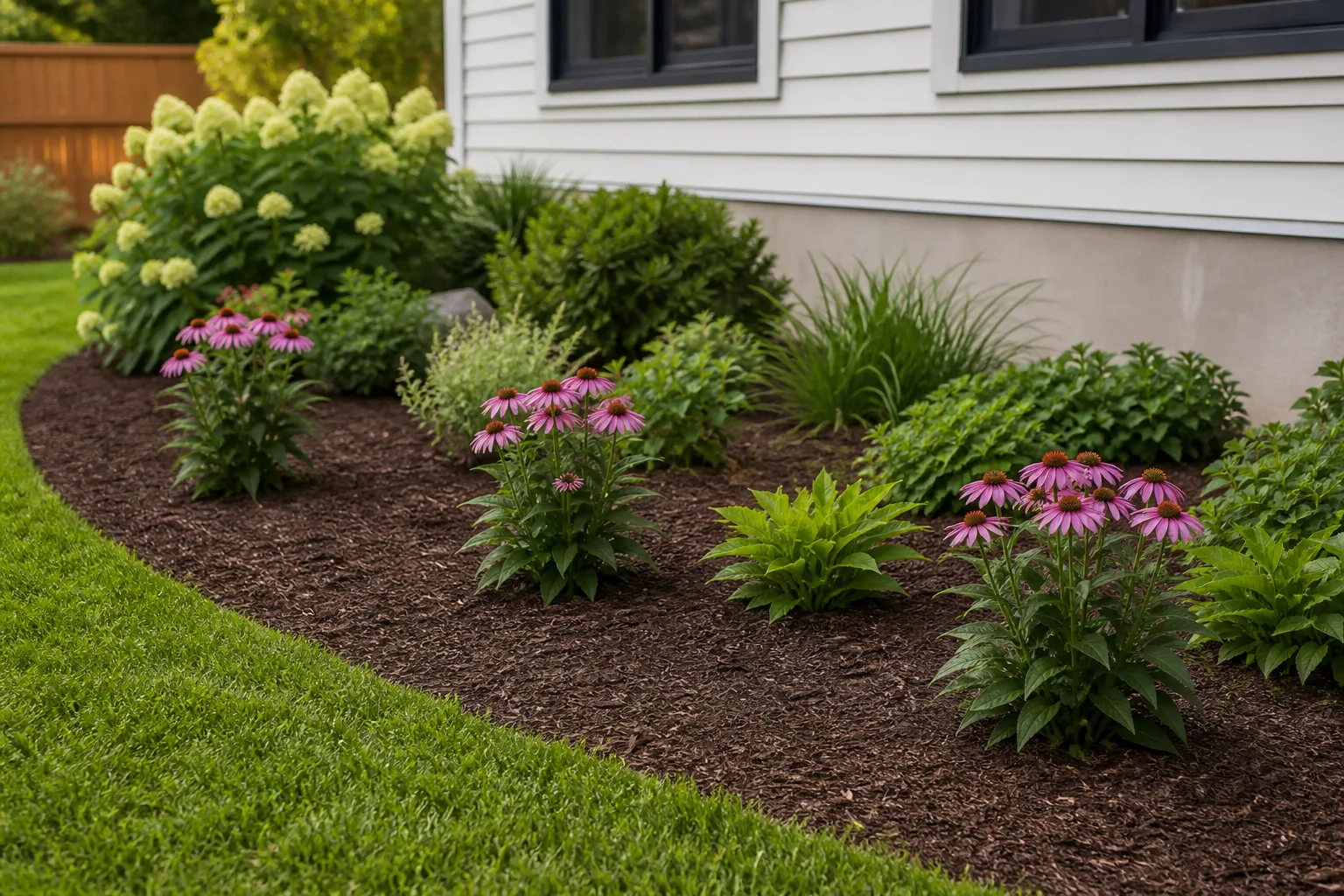
A modern naturalistic border looks relaxed because it is layered, not because it is random. Start with one structural plant that holds the composition together: oakleaf hydrangea for a shrub anchor, switchgrass for a sunny vertical screen, or a shrub rose where flowers and fragrance are central. Then choose two or three repeatable perennials that bloom at different times or provide different shapes.
For a sunny, reasonably dry bed, a workable combination might be switchgrass, yarrow, and black-eyed Susan, with creeping thyme at the edge. The grass supplies height and winter seed heads, yarrow provides flat flower plates and drought tolerance, black-eyed Susan supplies bold color, and thyme closes the bare-soil gaps. This is a more useful design than buying one of every plant on the trend list.
For a sunny border with more dependable moisture, use oakleaf hydrangea as the broad anchor, red hot poker for vertical color, Verbena bonariensis for see-through height, and a compact shrub rose where you can reach it easily. Keep the palette disciplined: one dominant flower color, one supporting color, and enough green or grass texture that the bed can rest between bloom flushes.
Repeat plants in groups, then leave deliberate breathing room. A little empty soil during the first year is cheaper than removing crowded plants in the third. If a design only looks complete when every inch is filled on planting day, it is probably overplanted.
Shop the Label, Not the Trend
At the nursery, read the back of the tag before you read the flower description. Confirm mature height and width, direct-sun requirement, hardiness range, moisture preference, bloom timing, and whether the plant spreads by seed or underground stems. If any of those fields are missing, look up the botanical name before buying several plants.
Native is another label that needs precision. A species can be native to one region and non-native to another, while a named cultivar may offer a different shape or wildlife value than the straight species. Choose regional native plants when habitat support is your priority, and do not describe every heat-tolerant or pollinator-friendly plant as native simply because it performs well in a garden.
Ask for the smallest practical size when the plant establishes quickly, and ask whether the cultivar has been tested in your local climate. A large, root-bound shrub can take more time to recover than a smaller plant with a healthy root system. Inspect stems, leaves, and the underside of foliage; skip plants with persistent wilt, circling roots, or signs of active pests.
Avoid buying a whole flat of one trend before testing the site. Plant one or two specimens, observe sun and moisture through the season, and expand the group after you know the bed can support them. Trends move on, but an unsuitable plant keeps sending you maintenance bills in time, water, and replacement cost.
Plan for First-Year Establishment
The first growing season is when “low maintenance” plants need the most attention. New roots occupy the original root ball and a small surrounding zone, so even a drought-tolerant perennial can wilt during a heat wave. Water slowly and deeply enough to moisten the root zone, then check the soil a few inches down before watering again rather than following a fixed daily schedule.
Water more often in the first weeks after planting, in sandy soil, and during hot, windy weather. Reduce frequency as roots expand and new growth stays firm, but do not stop watering just because the plant’s label says drought-tolerant. Shrubs such as oakleaf hydrangea and roses may need supplemental water longer than small perennials, and container-grown plants dry faster than the same species in the ground.
Mulch after the soil is moist, keeping it a few inches away from stems and crowns. Two to three inches is generally enough to slow evaporation and soften temperature swings; a deep mulch mound can trap moisture against bark or crown tissue and create a different problem. Keep the bed edged, remove weeds while they are small, and use a soil test before adding fertilizer.
Do not schedule every plant for the same cleanup. Leave grass seed heads and selected perennial stems for winter structure, prune roses for health and shape, remove verbena seed heads if self-sowing is unwanted, and wait to prune oakleaf hydrangea until after flowering. The lowest-work garden is usually the one where each plant receives the task it actually needs.
Conclusion
The best plant trends for 2026 are really a shift in how gardeners choose. Instead of chasing a perfect flower bed that demands constant correction, more people are looking for plants that perform in heat, support wildlife, add texture, and stay useful after the first bloom fades.
Start with your site, then choose the trend that fits it. Black-eyed Susan and yarrow suit sunny, durable borders; switchgrass brings movement and winter structure; shrub roses add romance when airflow is good; red hot poker supplies a focal accent; Verbena bonariensis creates airy cottage height; and oakleaf hydrangea anchors a larger bed with multi-season interest. Add the right ground cover, give every new planting a real establishment season, and the result will feel current because it works—not because it was fashionable for one spring.