Why You Shouldn't Squish Ants—and What to Do Instead
Why shouldn't you squish ants? Learn what trails and alarm chemicals do, then use bait, cleaning, sealing, and safer control steps that work.
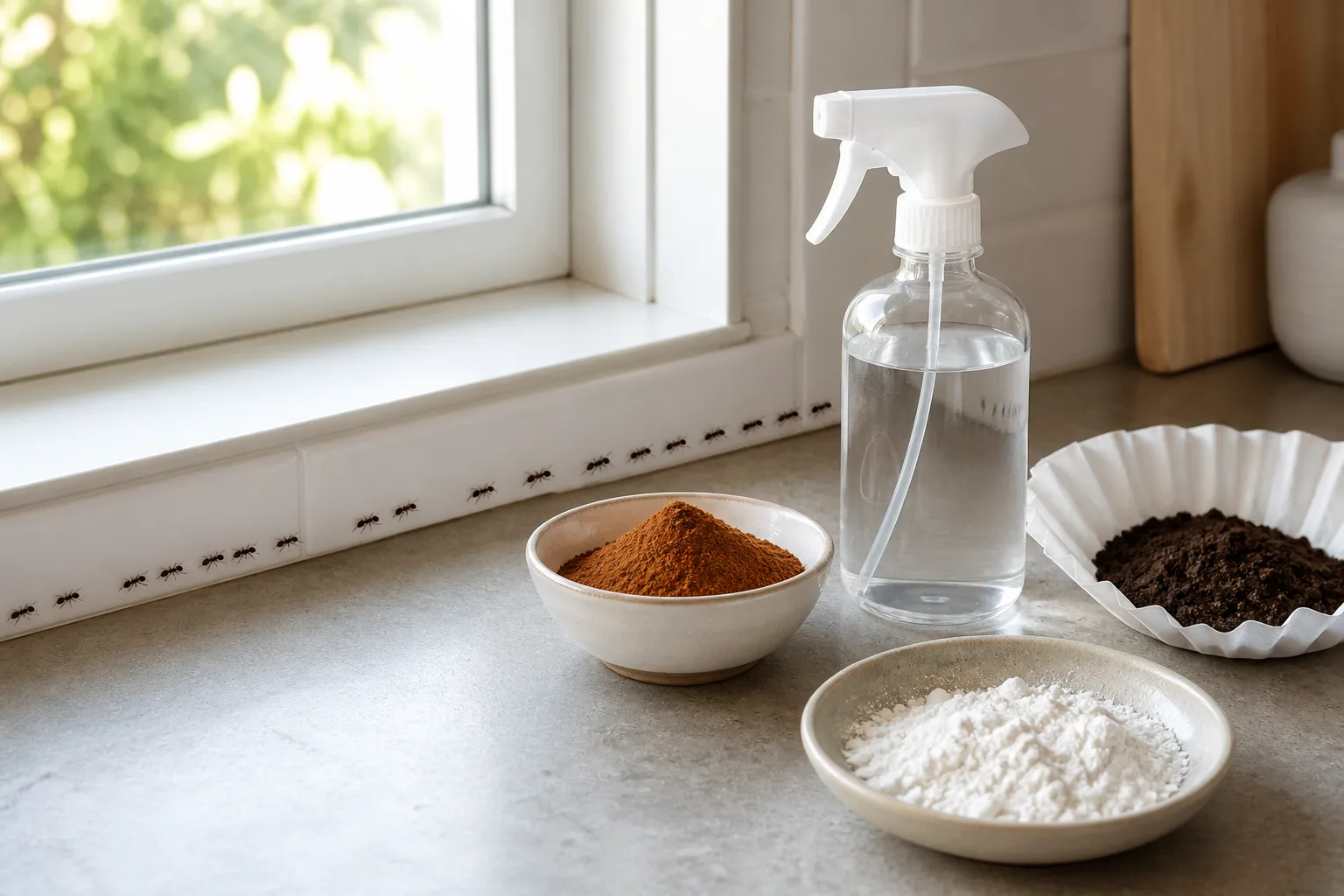
If you see one ant on the counter, squishing it is not a disaster. It is simply an incomplete response. The worker may be part of a trail, and crushing ants can add alarm chemicals to an already active chemical communication system. More importantly, killing the ant you can see does nothing to the nest, queen, brood, or entry point behind it.
The better rule is simple: interrupt the trail only when you are ready to clean it, and keep foragers alive when you are trying to bait the colony. For a single stray ant, wipe it up and investigate. For a repeated line, use the line as a map to food, water, shelter, and the route into your home.
The short answer: one ant is not the whole problem
The claim that every squished ant summons a crowd is too absolute. Ant species use different chemical signals, and an injured ant can trigger alarm or defensive behavior rather than a neat march toward the body. A trail is usually driven by a separate recruitment signal: workers reinforce a route that leads to food, water, or a nest site.
The practical reason pest professionals discourage reflexive squishing is not that one dead ant magically creates an infestation. It is that a counter full of dead foragers, contact spray, and wiped-out bait trails leaves the colony untouched. You lose the chance to watch where the ants are going, identify what they prefer to eat, and deliver a slow-acting bait to workers that can carry it home.
If there is only one ant and no repeat activity, remove it and clean the spot. If the same place produces ants again within hours or you see a line, switch from “kill the bug” to find the system.
What a lone ant is telling you
Scout, trail, colony: three clues that change your response
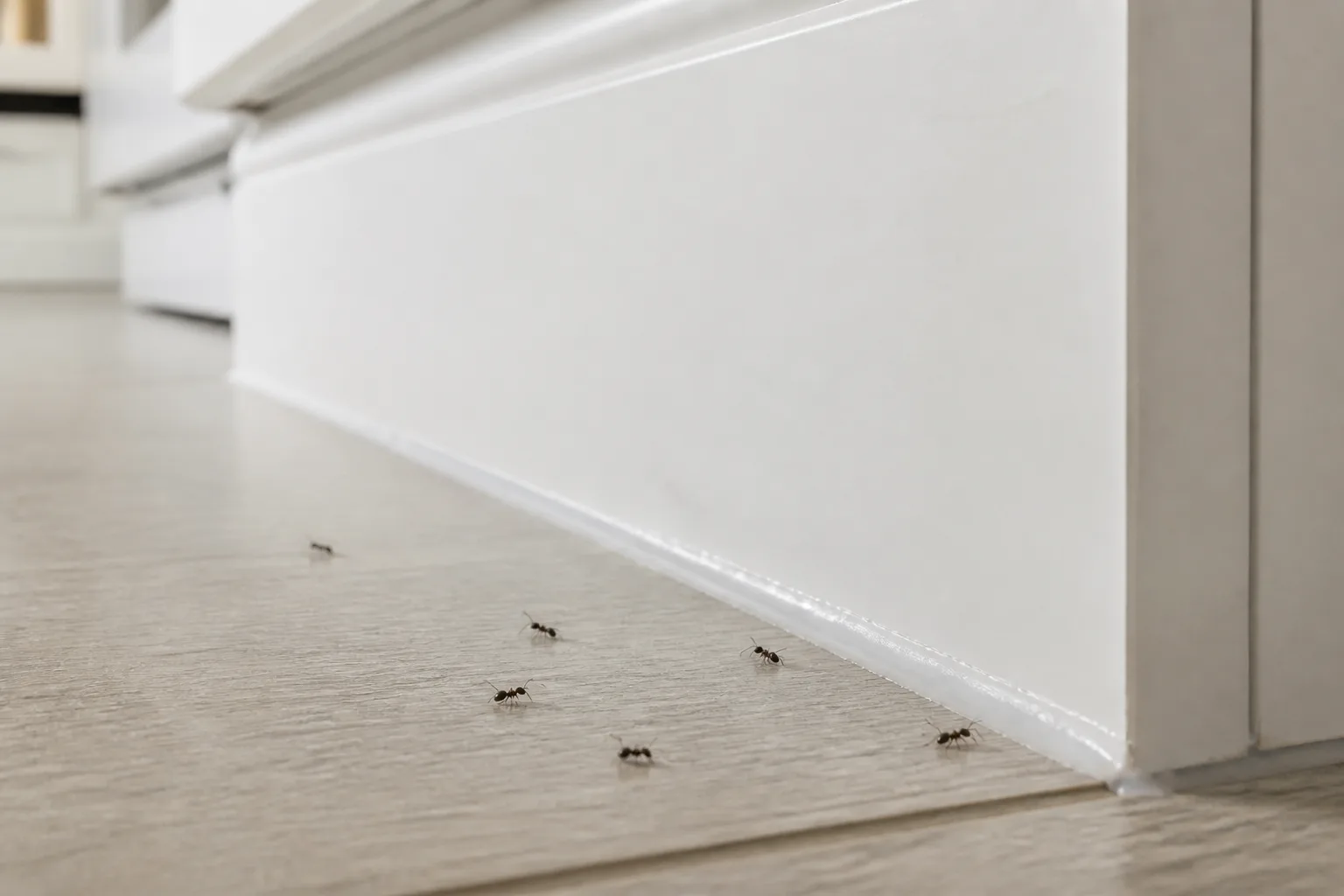
A lone ant may be a scout searching randomly, a worker that has wandered from an outdoor nest, or the first visible member of a route that other workers will soon reinforce. You cannot identify which one it is from the ant alone. The useful clue is what happens next: does activity disappear after cleaning, or does the same route reappear?
Watch without disturbing the area for a few minutes. Note whether ants travel along a baseboard, pipe, window frame, countertop edge, or electrical line. Check nearby sinks, pet-food bowls, recycling, fruit, pantry shelves, plant saucers, and damp spots. UC IPM explains that household ants commonly enter for food, water, warmth, shelter, or refuge from weather, so the first ant is often a search result rather than proof that the nest is inside your wall (UC Integrated Pest Management).
Why ant species matters more than most quick fixes
“Tiny black ants” is not a useful diagnosis. Argentine ants may prefer sweet liquid bait; some thief and Pharaoh ants favor protein or greasy foods; pavement ants can take sweets, protein, or grease. Carpenter ants are larger and associated with damp or damaged wood, while fire ants are an outdoor stinging hazard rather than a routine kitchen-pest problem. Bait preferences also change with species and season.
You do not need to name every ant before you take safe first steps. But species clues matter before you choose a bait, treat a wall void, disturb a nest, or assume the ants are harmless. Photograph one without crushing it, compare the body size and color with a local extension or IPM identification key, and ask your county extension office when the identification changes the treatment.
Why squishing can backfire—and what it cannot do
Trail and alarm chemicals are not the same signal
Ants navigate a chemical world. Foraging workers can leave or reinforce trail pheromones that help nestmates reach a resource, while alarm pheromones can trigger agitation, approach, defense, or retreat. Rockefeller University’s summary of research on clonal raider ants describes alarm pheromones as danger signals that can prompt strong colony responses, and it also emphasizes that ants use many different chemical signals for different jobs (Rockefeller University).
That distinction matters because a crushed ant is not a reliable “come here” lure. Depending on the species and the chemical involved, the result may be alarm, avoidance, investigation, or no meaningful response at all. The visible trail is more actionable: it tells you that workers are repeatedly using a route and that the colony may be reachable through food-based bait.
The smell left behind also is not the only problem. A quick wipe may remove a surface trail for a while, but it cannot block a crack, dry a leak, or remove a nest under a slab. The colony can simply establish another route if its food and water source remain available.
The practical takeaway for a single ant versus a trail
For one ant, use a damp paper towel or vacuum, then wipe the surface with soapy water. For a trail, do not immediately coat the entire route with repellent spray. First decide whether you are trying to erase the route or use the route to bait the colony.
Erasing the route is reasonable when there are only a few scouts and you can remove the attractant. Baiting is usually the better move when ants return, travel in a line, or emerge from a gap. Do not clean directly over a bait station while workers are feeding; you want the bait to remain the easiest food source on the route.
The five-minute response that protects your next move
Remove food and moisture, then clean the trail
Start with the smallest useful cleanup. Put away sugar, honey, fruit, bread, pet food, and open packages. Rinse sticky recycling, wipe grease from the backsplash, empty food waste, and dry the area under sinks. Fix or report a dripping faucet, damp pipe, condensation line, or leaking plant saucer. A pristine kitchen can still have an ant resource in a microscopic syrup film or a damp crack.
Then vacuum the visible ants or wipe them with soapy water. UC IPM recommends vacuuming or sponging trails with soapy water because cleaning removes the scent route without leaving the residual pesticide that an indoor spray can leave behind. Clean the sill, baseboard, counter edge, and the place where ants disappear—not just the open section of floor.
There is one important timing rule: clean before baiting, not after baiting. If you have already placed a bait station and ants are feeding, leave the station in place and remove competing food around it. If you clean away the active trail or spray the workers, you may prevent the bait from reaching the colony.
Trace the route and close the entry after activity drops
Follow the line in both directions. Indoors, inspect where pipes, wires, cabinets, windows, baseboards, and flooring meet. Outdoors, look below siding, around foundation cracks, under stones or boards, beside irrigation, and near plants with aphids, scale, or mealybugs producing honeydew.
Do not seal the busiest gap while ants are still pouring through it unless the opening is creating an urgent safety problem. Sealing an active route can divert ants into a wall, another room, or a different crack. Once baiting has reduced activity—or once you have confirmed the ants were only scouts—clean the area, allow it to dry, and caulk the gap with a material suitable for that surface. Recheck the route for several days because ants often test a second entry.
Use bait to reach the colony
Ant bait works because a worker is allowed to live long enough to carry a food-based toxicant back to the nest. UC IPM describes workers transferring bait to other workers, larvae, and queens; that colony-level chain is why a slow-acting bait can outperform a fast contact spray for a persistent indoor trail (UC IPM ant-bait guidance).
Think of bait as a delivery system, not a trap that must kill the first ant instantly. It is normal to see activity continue, or even increase around the station, during the first stage. That can mean the ants have accepted the food. The goal is a gradual reduction in foraging, not an instant empty counter.
Match the bait to what the ants are eating
Offer the product that fits the ants’ current preference and the label’s intended use. Sweet liquid baits are often attractive to sugar-feeding ants; protein or grease-based products may work better for species seeking those foods. If a labeled station is ignored, do not keep adding more of the same formulation. Move it closer to the route, remove competing food, or try a different labeled bait type.
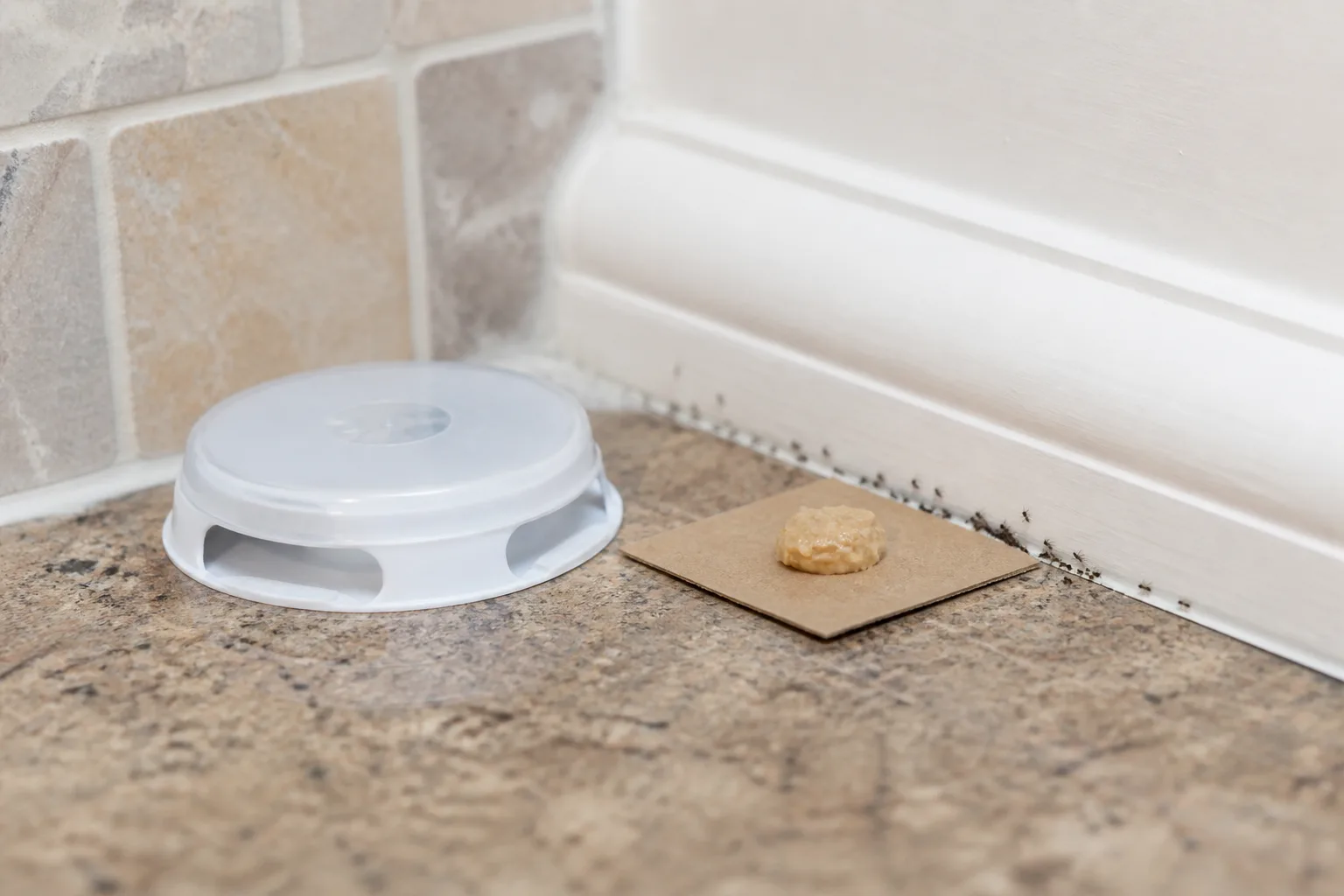
Use a ready-made, enclosed bait station when possible. It is easier to keep the material contained and easier to place away from children, pets, food, and plant-contact surfaces. Gels can be useful in cracks and crevices when the product label allows that use, but a gel is not safer simply because it is applied in a small dot. Treat every active ingredient as a pesticide and follow the label.
Avoid mixing homemade borax or boric-acid recipes by guesswork. Concentration affects palatability, speed, effectiveness, and exposure risk. A bait that kills workers too quickly may fail to reach the colony, while an accessible sweet mixture can be attractive to a child, dog, cat, or wildlife.
Protect the baiting window from sprays and contamination
Place the station beside the trail or entry route, not in the middle of a food-preparation surface. Keep it shaded and dry if the label calls for those conditions. Do not spray insecticide, vinegar, essential oils, or strong cleaners over the route while ants are feeding. Do not put crumbs, jam, or extra sugar beside the station to “help” the bait; competing food can make the product less attractive.
Check the station on the label’s schedule. Replace bait that has dried out, spoiled, or been consumed. If there is no activity after a reasonable observation period, move the station a short distance rather than scattering stations everywhere. If ants avoid multiple correctly placed stations, the formulation may not match the species, the route may be inactive, or another food source may be more appealing.
Expect several days before you see fewer ants, and sometimes longer for a large or difficult colony. UC IPM notes that results vary with species, bait material, competing food, weather, and placement; it also cautions that colony control is not immediate. Do not declare the bait a failure because ants are still visible the next morning.
When sprays and “natural” fixes fall short
Contact sprays, vinegar, cloves, cinnamon, citrus peels, and essential oils can make an area smell different or kill exposed insects, but they rarely remove a hidden colony. A repellent can also split a trail or push ants deeper into a wall. That may look like success for an hour while making the nest harder to locate and bait.
Indoor sprays are especially easy to overuse. UC IPM says sprays usually provide temporary control because they kill foragers rather than queens and brood, and it recommends baits, exclusion, and sanitation as the foundation for most household ant management. If you need a spray for a specific labeled use, apply it only where the label permits and never combine it with an active bait route.
Diatomaceous earth is a dry barrier, not a colony cure
Diatomaceous earth can kill ants that cross a dry, undisturbed deposit by abrading and drying the insect’s outer body. Fine Gardening describes it as a useful powder for exposed routes and notes that it can take days or weeks, rather than acting as an instant colony solution (Fine Gardening on diatomaceous earth).
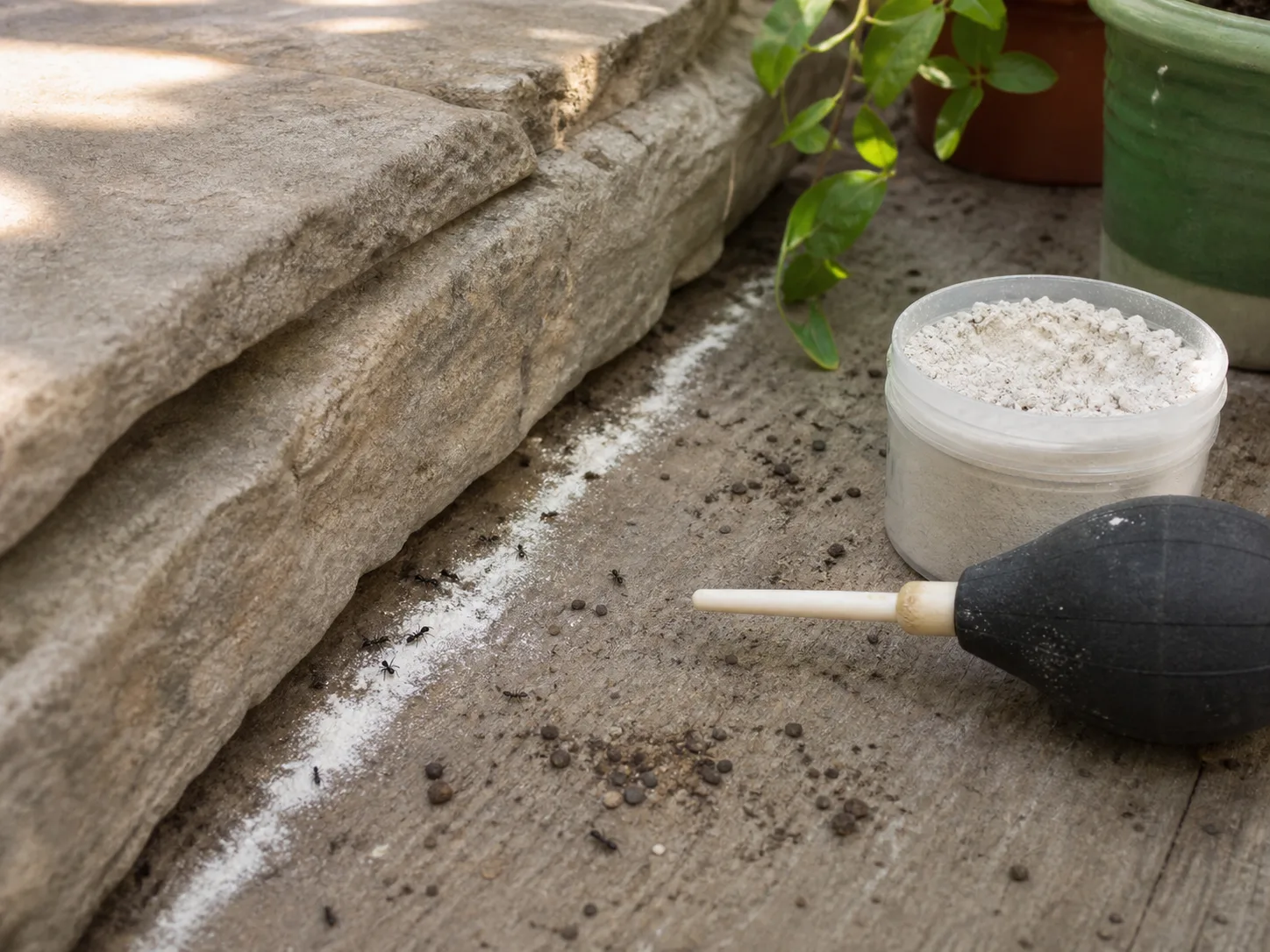
Use the limitation as part of the decision. Diatomaceous earth does not reach a nest hidden under a slab, inside a wall, or beneath a pot. It stops working as a dry dust when it gets wet, and a thick indoor layer can become an inhalation and cleanup problem. Choose a product labeled for the intended site, avoid creating airborne dust, keep people and pets away during application, and follow the label’s protective instructions. Never assume “food grade” means “safe to breathe” or suitable for every pest-control use.
Do not dust an ant trail that you are actively trying to bait. A barrier that kills or repels workers can block the delivery route. Use one strategy at a time: bait the colony, or exclude and clean a minor route; do not sabotage both with a blanket of powder.
Safety, potted plants, and professional help
Read the full label before using any bait, gel, spray, dust, or outdoor product. The National Pesticide Information Center advises removing pets, toys, bedding, food, and water bowls from treated areas, keeping animals away for the label’s specified interval or until sprays are dry—whichever is longer—and securing baits where pets cannot reach them (National Pesticide Information Center). The same logic applies to toddlers and anyone who may touch a station, lick a treated surface, or carry dust into their mouth.
Never use an outdoor product indoors unless the label expressly allows it. Do not increase the concentration, place bait on a countertop used for food, or transfer pesticide to an unmarked container. If a person or animal may have swallowed a product or shows concerning symptoms, contact a medical professional, veterinarian, or poison-control service promptly and have the product label available.
Ants can also live in the root zone of a potted plant or use a plant as a bridge to a window. If ants are repeatedly emerging from a pot, isolate the plant from the kitchen, inspect the saucer and soil surface, and move it outdoors before choosing a plant-safe treatment. UC IPM specifically lists potted plants as possible indoor nesting sites; do not pour household ant bait or insecticide into potting mix unless the product is labeled for that plant and use.
Escalate when ants keep returning after a careful bait-and-exclusion cycle, appear from multiple wall voids, are associated with damp or damaged structural wood, or are large, winged, or stinging. Carpenter ants do not eat wood like termites, but a nest in chronically wet or decayed wood deserves an inspection. Fire ants and other stinging ants call for regional identification and safer outdoor handling, not a barefoot experiment with boiling water or unprotected dust.
Prevent another indoor trail
Prevention is a short list of boring actions that work because they remove what the colony is looking for. Store sugar, syrup, honey, cereal, pet food, and ripe fruit in sealed containers. Rinse recycling, empty food waste regularly, wipe under appliances, and clean sticky drawer edges. Repair leaks and keep plant saucers from holding standing water.
Outside, reduce conditions that funnel ants toward the foundation. Keep mulch, boards, and damp debris from touching the structure, trim vegetation that creates a bridge, and inspect irrigation near walls. Check plants for aphids, soft scale, mealybugs, or whiteflies because ants may be collecting honeydew rather than feeding on the plant itself. Treat the sap-feeding pest if it is damaging the plant; killing every ant in the garden can remove scavengers and predators without addressing the food source.
That outdoor distinction matters. Fine Gardening notes that many ants aerate soil, recycle dead insects, disperse seeds, and protect some plants from herbivores (Fine Gardening on ants in the garden). If ants are not entering the house, damaging a structure, tending a plant pest, or stinging people, tolerance may be the best control. The goal is a dry, sealed, unattractive home—not an ant-free ecosystem.
Conclusion
You should not squish ants because it is a poor control strategy, not because every crushed ant will summon an army. A single ant may be a harmless scout. A repeated trail is useful evidence that workers have found food, moisture, shelter, or a route into your home.
Use that evidence in the right order: remove competing attractants, clean the trail if you are not baiting, place a labeled bait station when colony control is needed, leave workers alone long enough to carry the bait home, then seal the entry after activity declines. Keep pesticides contained and inaccessible, inspect potted plants and damp wood, and call a professional when the species, structure, or safety risk exceeds a simple indoor trail.