Natural Mole Repellents: What Works and What Does Not
Castor oil, sonic spikes, and coffee grounds rarely clear moles. Learn which natural repellents fail, when trapping works, and how to shrink mole habitat without wrecking your soil.
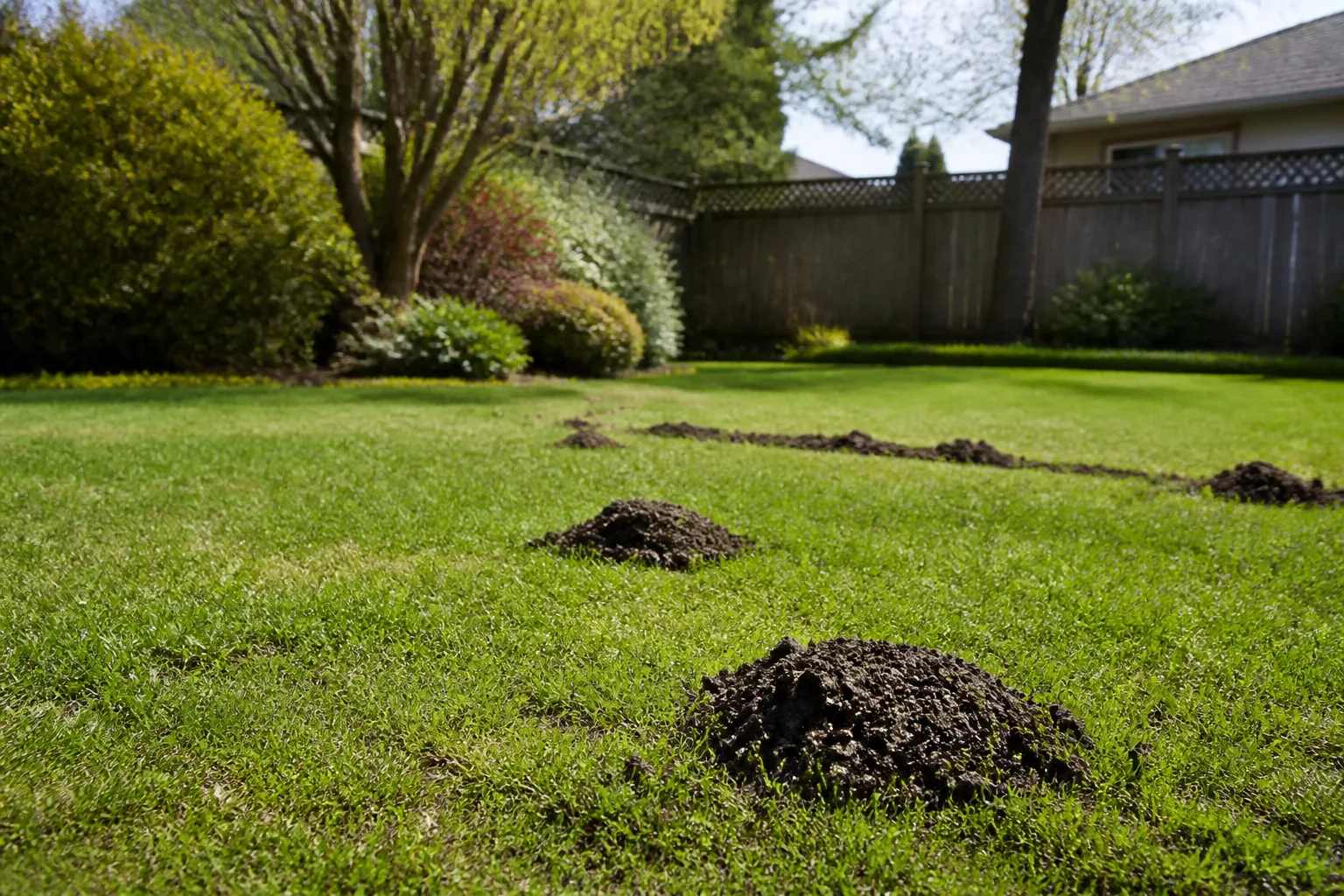
If molehills are popping up across your lawn, it is tempting to pour castor oil, stick sonic spikes in the turf, or scatter coffee grounds down every tunnel you can find. Those fixes feel humane, “natural,” and faster than learning trap mechanics.
Most of them disappoint—and some create new problems. Wildlife specialists and cooperative extension offices consistently report that registered chemical repellents for moles are essentially unavailable, while trapping active runways remains the most reliable control when damage truly outweighs the ecological benefits moles provide (Penn State Extension).
This guide walks through what “natural” mole repellents are supposed to do, why tunnel biology defeats most of them, and how to use trapping and habitat adjustments when you decide moles have to go.
Why Homeowners Reach for Natural Mole Repellents First
Moles are invisible. You see pushed-up soil and soft spots, not the animal. That mismatch pushes people toward products that promise hands-off results: hose-on castor mixtures, solar sonic stakes, or pantry ingredients dumped into holes.
The appeal is understandable. Trapping looks intimidating. Poisons feel risky around pets and kids. Repellents market themselves as a middle path.
The trouble is that moles are insectivores with enormous daily food needs. They patrol extensive tunnel networks hunting grubs, beetle larvae, and earthworms. A smell that irritates one short segment of tunnel is easy to bypass—and moles routinely abandon old runs for fresh hunting lanes. Natural repellents often target odor or vibration, not the food supply and travel patterns that keep moles in your yard.
What Moles Actually Are—and Why That Matters for Control
Moles are not rodents. They belong to the insectivore group and are related to shrews. Their diet is overwhelmingly soil invertebrates—especially white grubs and earthworms—and they may eat 70 to 100 percent of their body weight each day to fuel constant digging (Penn State Extension).
That biology explains two control facts:
- Grain-based poison baits that mimic peanut or grain foods often fail because moles are not looking for seeds—they want live prey in the soil profile.
- Food-reduction strategies (grubicides, milky spore, nematodes) can encourage moles to leave only if your lawn was a grub buffet and neighboring properties are not equally attractive.
Moles do not hibernate in most regions. They stay active year-round, with bursts of surface tunneling when soil is moist and prey is near the surface—often the same periods when homeowners notice new hills.
Population context matters, too. Three to five moles per acre is already considered a high density in many areas. One visibly busy yard might be one animal working a large home range, not an invasion of dozens.
How Mole Tunnel Systems Defeat Smell-and-Vibration Hacks
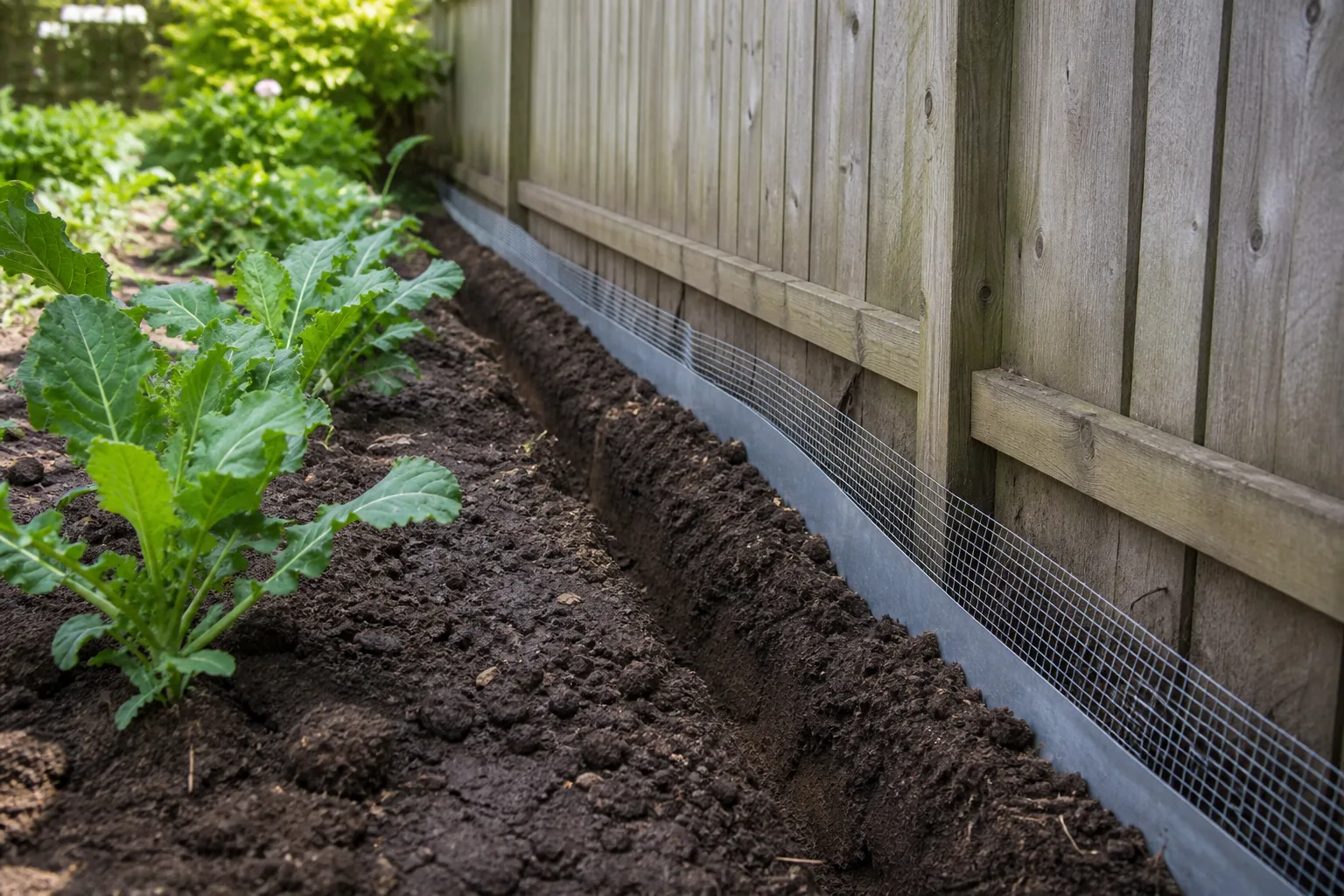
Picture a mole runway as a highway system with main lines and service roads. Surface ridges you see are often feeding tunnels; deeper permanent lines follow fence lines, foundations, or wooded edges.
When you pour a strong scent into one opening:
- The odor travels only a short distance through soil—faster in sand, weaker in clay and organic matter.
- The mole can seal or bypass that section and open a new push-up a few feet away.
- Abandoned tunnels you treat may already be empty, so it looks like the “remedy worked” when the animal simply moved.
Ultrasonic and vibration stakes face the same geometry problem: intermittent noise at a point source does not blanket the foraging zone. University wildlife specialists note a lack of empirical evidence that these devices provide reliable, repeatable mole removal—while still costing money and installation time.
That does not mean every natural product is harmful; many are simply low reward for high effort.
Castor Oil and Commercial “Natural” Mole Sprays

Castor-oil-based lawn treatments are among the most common “natural” mole products. The theory: castor oil irritates earthworms and grubs, shrinking the food supply or making soil unpleasant.
Reality check from extension sources:
- No chemical repellents are currently registered for mole use in the way homeowners expect. EPA registration for the product Mole-Med was canceled in 2005, which matters because registration is the legal and evidence bar for pesticidal claims (Penn State Extension).
- Even when castor oil shows short-term disturbance in small areas, treating an entire lawn is expensive, labor-intensive, requires frequent reapplication, and may disrupt soil organisms you want for healthy turf.
If you try castor oil, treat it as a temporary experiment on a defined bed edge, not a lawn-wide program. Measure results with the active-tunnel test (below). If new hills appear outside the treated patch within a week, you have your answer.
Ultrasonic and Vibration Spike Devices
Solar-powered spikes that buzz, vibrate, or emit sound are heavily marketed as humane deterrents. They are easy to install and feel proactive.
Extension and wildlife specialists consistently report no strong empirical support that moles abandon territories because of these devices. At best, an animal might avoid the immediate radius around a stake; at worst, you add plastic obstructions to mowing while tunnels continue elsewhere.
If you already own spikes, run a simple test: map mole activity, install devices, mash tunnels, and recheck after 48–72 hours. Compare to an untreated zone of similar soil and shade. Most homeowners see continued fresh mounds in both areas.
Mole Plant, Castor Bean, and Marigold Border Claims
Garden folklore promotes mole plant (Euphorbia lathyris) and castor bean (Ricinus communis) as living repellents. Marigold borders are sometimes suggested for garden beds.
Penn State Extension is blunt: effectiveness is doubtful, and both mole plant and castor bean are poisonous to people and pets. Castor bean can also escape cultivation and become a weed problem.
Planting toxic ornamentals to chase a beneficial soil insectivore is a poor trade. If the goal is a safer garden edge, use physical barriers on high-value beds and trap along exterior runways instead.
DIY Tunnel Remedies: Coffee Grounds, Gum, Hair, and Mothballs
Social media fills mole tunnels with coffee grounds, chewing gum, human hair, soap shavings, or mothballs. The stories assume moles will eat, choke on, or flee from these materials.
Problems stack quickly:
- Moles do not eat gum or hair; they insect-hunt. Blocking one tunnel triggers digging around the obstruction.
- Strong-smelling pantry items share the limited-radius odor issue in burrows.
- Mothballs and other off-label pesticides are illegal for burrow use in many jurisdictions and can contaminate soil and groundwater.
If a hack sounds like it works overnight, check whether the tunnels you treated were active or already abandoned. The foot-test below separates real runs from ghost hills.
Reducing Mole Food: Grubs, Nematodes, and Milky Spore Trade-offs
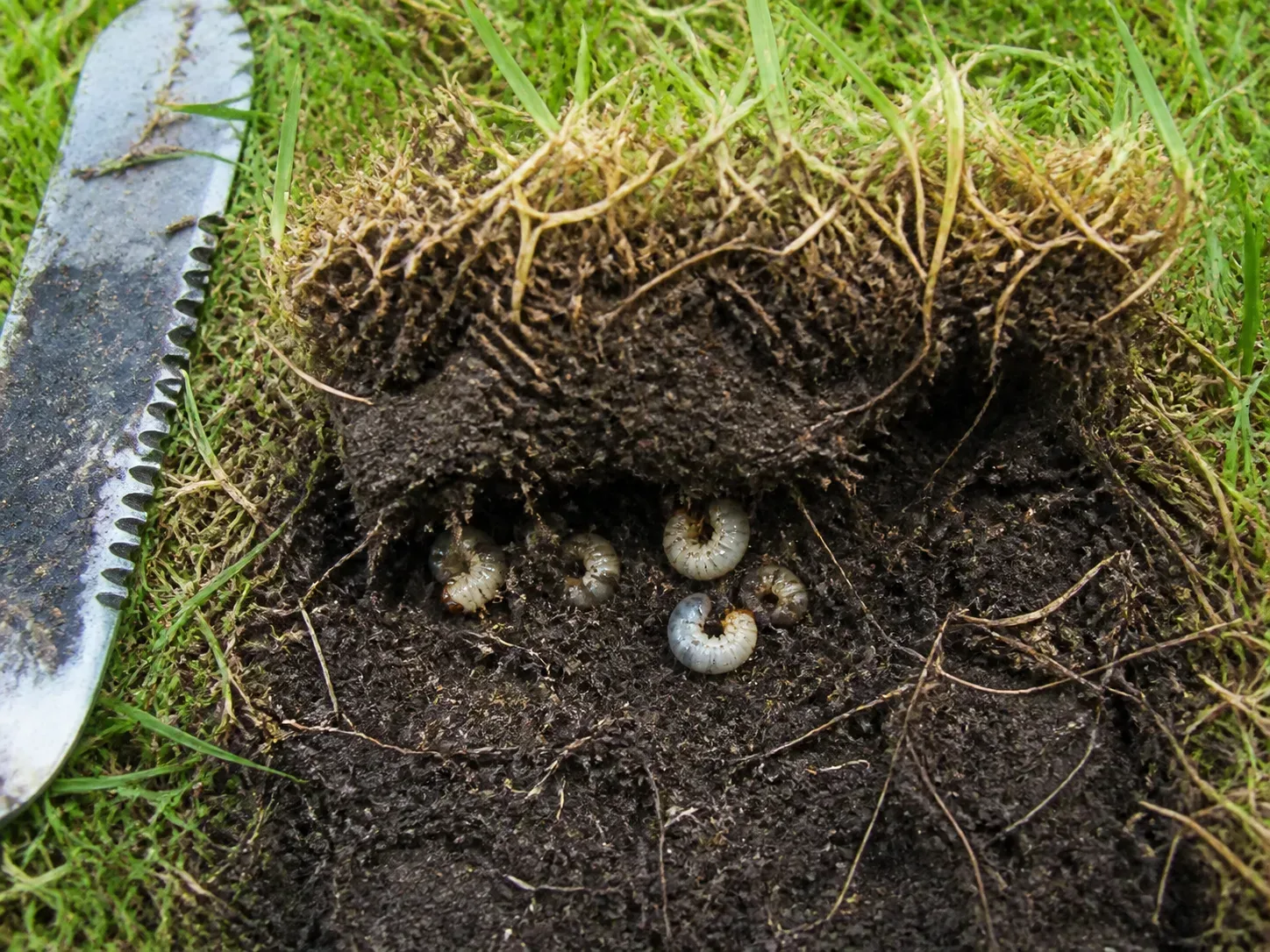
Because moles follow food, reducing white grubs can make your lawn less attractive—in theory.
Options extension offices discuss include:
- Curative grub insecticides applied when grubs are feeding (timing varies by beetle species and region—confirm with your local extension office before buying).
- Beneficial nematodes that attack grub larvae in moist, warm soil.
- Milky spore disease for Japanese beetle grubs—a long-term biological approach that may take several years to build in the soil and works best on a neighborhood scale (Penn State Extension).
Trade-offs are real. Earthworms remain mole food even if grubs decline. Broad insecticides can harm pollinators and soil food webs if misapplied. A grub-focused program is a years-long habitat shift, not a weekend repellent substitute.
Use food reduction when you already planned grub management for turf health—not solely as a mole quick fix.
Soil Compaction and Moisture Tweaks—Effort vs Payoff
Moles prefer loose, moist, worm-rich soil—exactly what good lawn renovation creates. Some guides suggest compacting soil or drying turf to make tunneling harder.
Extension specialists note that compaction requires heavy equipment and sustained effort, can damage soil structure and roots, and still may not evict a motivated mole with food nearby. Reducing over-irrigation can help slightly in chronically soggy lawns, but it is a supporting tactic, not a standalone solution.
Trapping: The Method Extension Offices Still Recommend
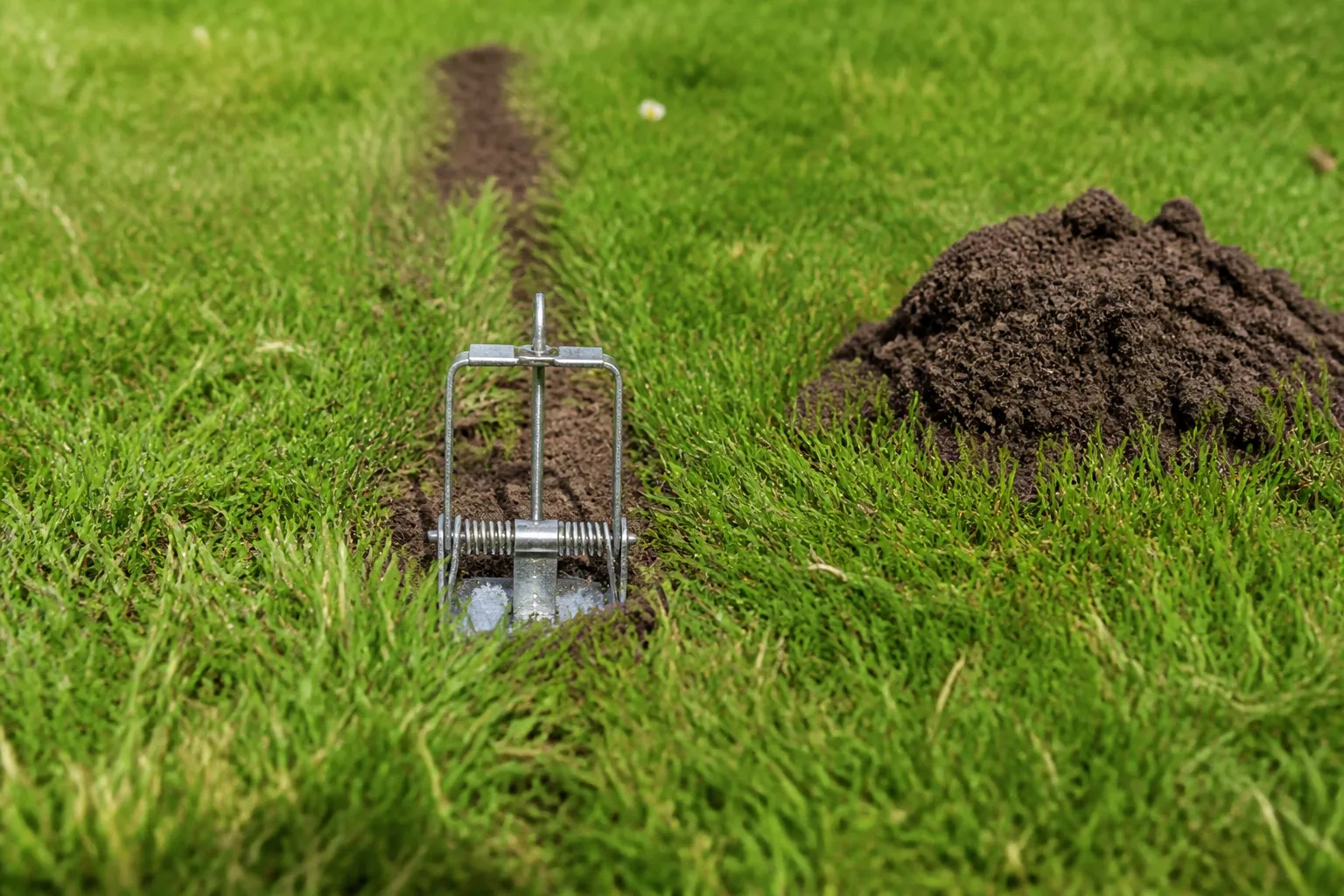
When mole damage exceeds your tolerance—golf-green aesthetics, tripping hazards on play lawns, or smearing fresh seedbeds—trapping is the most successful and practical method cited by Penn State Extension and university wildlife programs.
Common trap styles:
| Trap type | How it works | Homeowner notes |
|---|---|---|
| Harpoon (impaling) | Spikes driven through roof of surface tunnel | Often easiest to set without deep digging |
| Scissor-jaw | Jaws close across runway | Requires careful alignment and jaw path in clay soil |
| Choker loop | Loop tightens around body in tunnel | Needs precise tunnel direction and packed trigger bed |
Each design kills quickly when triggered—more humane than poison baits moles may never eat. Modern traps are safe when handled with basic caution; read the manufacturer instructions before setting.
Poison grain baits with zinc phosphide frequently underperform trapping because moles ignore the carrier food.
How to Identify an Active Surface Runway
Setting traps on abandoned tunnels wastes time and teaches you trapping “does not work.”
Active tunnel test:
- Choose straight surface ridges (not branching mounds near a nest chamber).
- Step on tunnels to mash them flat in several places across the yard.
- Wait 24 hours (same day if soil is wet and moles are very active).
- Reopened, raised sections are active; untouched mashed areas are inactive.
Focus trap effort on the longest active straight segments—main travel lanes, not exploratory dead ends.
Setting Harpoon, Scissor-Jaw, and Choker Loop Traps
General principles from extension trapping guides:
Harpoon traps: Set over a depressed portion of an active runway. Pack soil firmly under the trigger pan. Release safety and allow spikes to seat into the ground so they penetrate when sprung.
Scissor-jaw traps: Excavate a slot across the tunnel, repack with fine soil, straddle the runway, and align jaws with travel direction. In heavy clay, cut a clearance path so jaws snap shut without dragging.
Choker loops: Dig across the tunnel, place the loop in the path, block light with packed soil under the trigger, and cover with loose soil to exclude daylight.
If a trap does not fire within 48 hours, move it. Causes include disturbed runway, wrong tunnel choice, or trap alignment. Persistence and relocation beat buying more repellent stakes.
Always follow state wildlife regulations for mole species classified as nongame mammals. Trapping is widely allowed for damage control, but transport and release rules vary.
Live-Trapping and Local Wildlife Rules
Live traps for moles are rarely practical for homeowners: moles stress quickly, require immediate relocation to suitable habitat, and many states restrict moving wildlife because of disease and property conflicts.
Before attempting live capture, call your state wildlife agency or extension office for legal methods. In most damage situations, lethal traps set correctly on active tunnels are the realistic tool.
When Tolerating Moles Is the Smarter Landscape Choice
Not every molehill is a crisis. Moles aerate soil, mix organic matter downward, and consume grub pests that damage turf. Extension educators often ask: Is this animal out of place, or is the lawn in prime mole habitat?
Consider tolerance when:
- Hills appear in low-traffic lawn edges you rarely mow tight.
- You are transitioning lawn to meadow or native beds where tunneling is neutral.
- Grub pressure is high and you prefer biological control over insecticides.
Take action when hills threaten player safety, destroy newly seeded areas, or sit in high-visibility formal turf you maintain daily.
Building a Realistic Mole Control Plan by Yard Zone
| Zone | Goal | Tools that actually match |
|---|---|---|
| Play lawn | Flat, safe surface | Trapping on active runs; quick knockdown |
| Garden beds | Protect roots and bulbs | Trap perimeter runways; avoid toxic “repellent” plants |
| Woodland edge | Habitat | Tolerance; monitor only |
| New seeding | Prevent smearing | Trap before seeding; do not rely on castor oil alone |
| Neighborhood grub issue | Long-term food reduction | Coordinated milky spore or timed grubicide + extension guidance |
Sequence that plan:
- Decide tolerate vs control by zone.
- Run the active tunnel test.
- Set traps on the busiest straight runs.
- If grubs are documented high, add a timed food-reduction program—not random spraying.
- Skip unregistered “repellent” products that promise lawn-wide results without evidence.
Re-evaluate after two weeks. If trapping fails despite good runway selection, consider hiring a licensed wildlife or pest professional experienced with mole runways—not a franchise selling monthly sonic stake renewals.
Conclusion
Natural mole repellents—castor oil drenches, sonic spikes, coffee grounds, and toxic “repellent” plants—mostly fail because moles navigate extensive tunnel networks focused on live prey, not because homeowners “didn’t try hard enough.” Extension sources emphasize that registered mole repellents are not available, while trapping active surface runways works when you commit to identifying live tunnels and adjusting trap placement.
Use food-reduction and moisture management as slow, soil-aware habitat changes, not magic substitutes for traps. And when mole activity sits where no one walks, letting a solitary insectivore aerate the lawn may cost less than fighting biology. When hills cross your real tolerance line, put time into harpoon or scissor traps on fresh runs—not into repurchasing natural sprays that evaporate with the next rain.



