How to Get Rid of Cluster Flies at Home
Learn how to get rid of cluster flies with four practical methods: vacuuming, traps, sealing entry points, and safer pesticide decisions for next season.
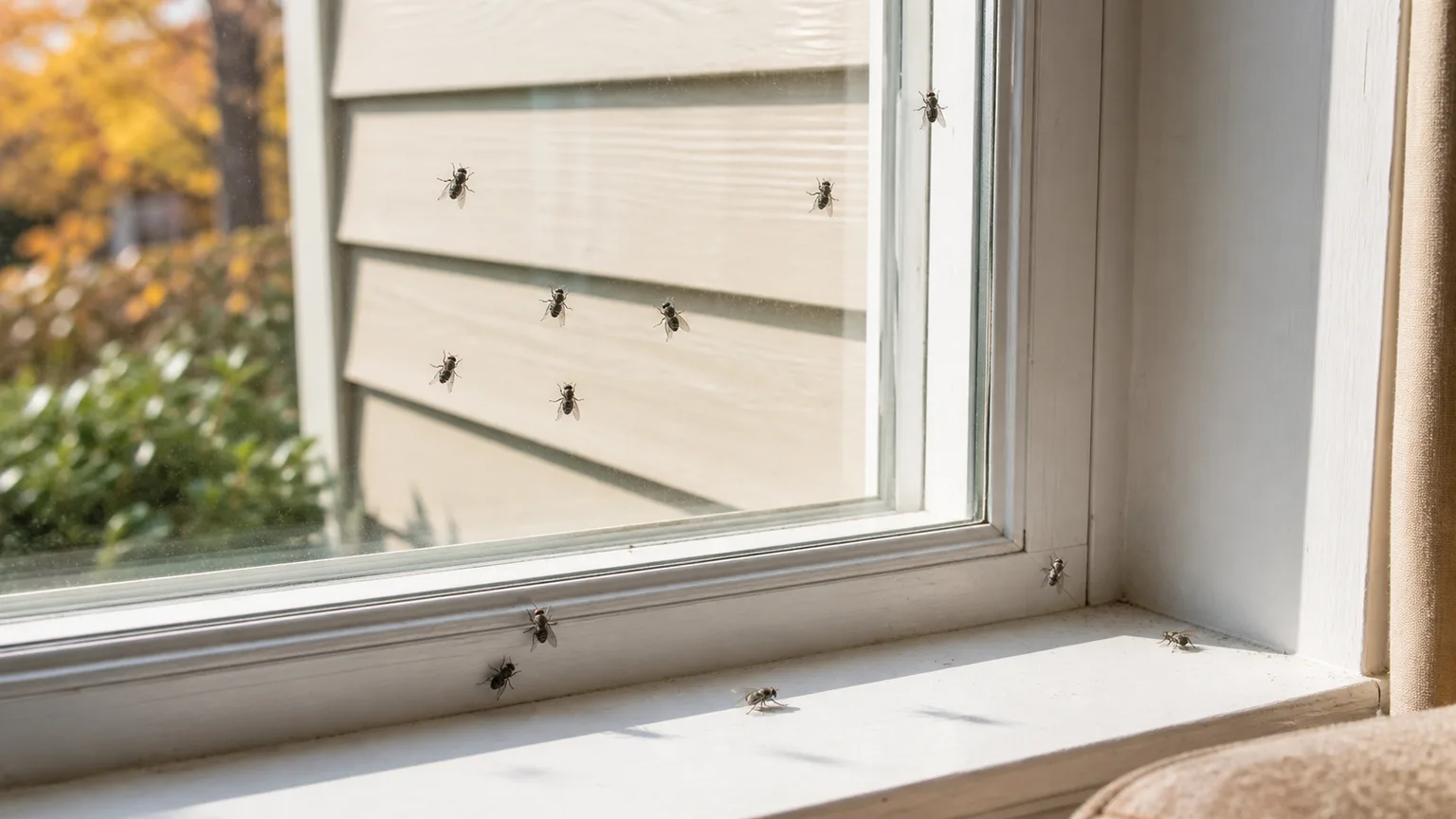
Cluster flies are usually a seasonal home-invasion nuisance, not a sign that your kitchen is dirty. They spend the warm months outdoors, then shelter in wall voids, attics, window frames, and other protected spaces as temperatures fall. On a sunny winter or spring day, warmth wakes them up and they drift toward windows or lights, which makes it look as if a new infestation appeared overnight.
The practical answer is a sequence: remove the adults you can see, contain the ones that keep emerging, seal the routes they use, and reserve pesticide treatment for a clearly identified, persistent problem. The Penn State Extension guide to cluster flies and University of Minnesota Extension’s identification guide agree on the most reassuring part: cluster flies do not reproduce indoors, do not damage the structure, and are not known for biting people.
Start by Confirming They Are Cluster Flies
Before you set traps or spray anything, identify the fly. A true cluster fly is generally 3/8 to 1/2 inch long, dull gray to gray-black, and marked by short yellowish hairs on the thorax. It moves sluggishly, often rests with its wings overlapped, and tends to collect at sunny windows, upper walls, attics, or other quiet parts of the home. The University of Connecticut’s cluster-fly fact sheet describes the same pattern: large numbers can rest together in secluded places and become active again when temperatures rise.
That identification step matters because not every large fly in a house has the same source. A fast, ordinary-looking house fly around food or garbage suggests a sanitation and exclusion problem of a different kind. A metallic blue or green fly, a strong odor, or a sudden concentration near a dead animal points away from a simple cluster-fly overwintering event. If the insects do not match the description, pause before treating the room and get a local identification from a cooperative extension office or pest professional.
Cluster Flies vs. House Flies and Other Indoor Flies
| Feature | Cluster fly | House fly |
|---|---|---|
| Typical size | About 3/8 to 1/2 inch | Usually smaller, about 1/4 inch |
| Color and texture | Dull gray, mottled, sometimes slightly fuzzy from golden hairs | Gray with a more familiar smooth appearance and dark markings |
| Movement | Slow, clumsy, and easy to capture | Faster and more evasive |
| Resting posture | Wings commonly overlap over the back | Wings are more often held apart |
| Why it is indoors | Seeking a protected place to overwinter | Usually following food, waste, moisture, or an opening |
| Reproduction indoors | No | Depends on species and available breeding material |
If several of these clues line up, treat the problem as an overwintering pest issue rather than trying to make the home smell unattractive to flies. Fragrance sprays and random kitchen remedies do not close a wall gap or remove a cluster hiding above a ceiling.
Why They Appear in Fall, Winter, and Spring
Cluster flies are associated with a temperature-and-light cycle. In the fall, adults search for cracks and protected cavities where they can wait out cold weather. UConn notes that this search often begins when outdoor temperatures drop through the mid-50s Fahrenheit. Once sheltered, the flies are quiet until heat from the home or a warm, sunny day wakes them up.
The insects you see in January or early spring are therefore often not a fresh indoor generation. They are adults leaving a wall void or attic and moving toward light, sometimes unsuccessfully trying to get back outside. Outdoors, the female lays eggs in soil and the larvae develop in earthworms; that life cycle is why a house full of flies does not automatically mean flies are breeding in the walls. The UConn fact sheet reports a development cycle of roughly 27 to 39 days, depending on temperature, but the important household decision is simpler: do not search your pantry for the breeding site until you have ruled out another fly.
How Cluster Flies Get Into a House
Cluster flies can use very small openings, but the most useful inspection clue is not a random crack—it is where the flies gather outside before they appear inside. On a cool autumn afternoon, watch the sun-warmed side of the building, especially upper windows, siding, roof edges, and the area below eaves. Penn State Extension identifies cracks around windows, doors, siding, utility pipes, chimneys, fascia, and other openings as important exclusion points.
Inside, look for flies emerging from the edges of window trim, baseboards, attic doors, ceiling fixtures, exhaust fans, and electrical penetrations. Do not pull apart a wall just because you saw a few flies. Start with accessible seams and the matching exterior location. This inside-outside pairing helps you spend caulk and repair time where it can actually reduce the next wave.
Method 1: Vacuum or Swat the Flies You Can See
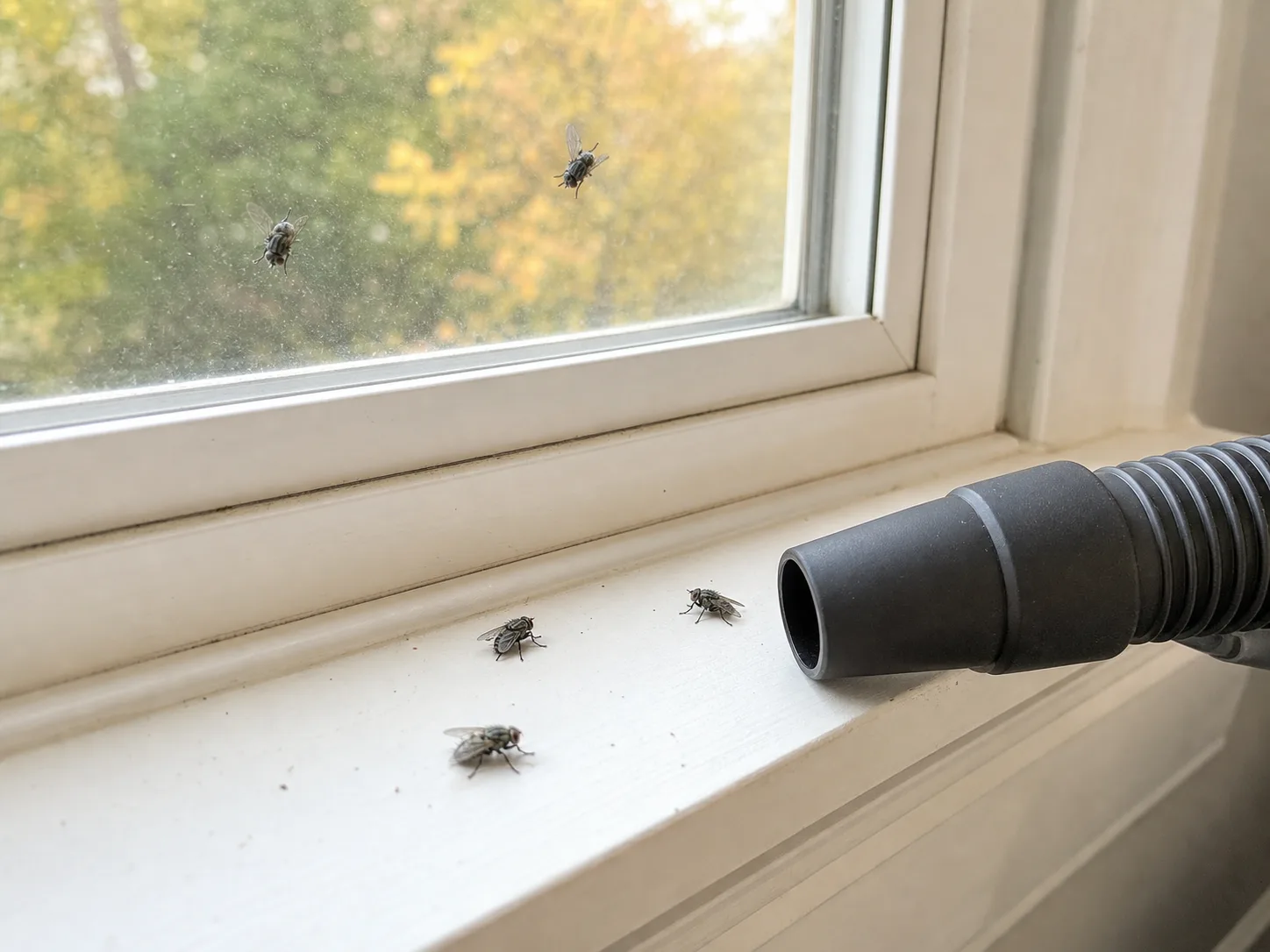
For a small or moderate number of visible flies, vacuuming is usually the fastest first move. Use a hose attachment around windowsills, ceiling corners, trim, attic access panels, and light fixtures. A swatter also works because cluster flies are slow, but it can leave a dark or greasy mark when a fly is crushed against a light wall or window.
This method removes active adults without filling the room with pesticide. It will not empty a wall void, so do not judge it by whether one afternoon of vacuuming prevents every future fly. Judge it by whether the number of visible adults drops and whether you can then find the opening they are using.
Make Removal Cleaner and More Effective
Work from the room’s upper edges toward the windowsill so flies do not simply scatter into another corner. Vacuum the loose bodies and specks from the sill, trim, and floor, then empty a bagless canister or remove the disposable bag outdoors. If you use a bagless vacuum, wipe the canister according to its care instructions; leaving a warm collection of dead insects indoors is an avoidable source of odor and can attract scavenging insects.
The Family Handyman guide to cluster flies also recommends a hose attachment for a few visible flies. If the same window fills again within hours, stop treating each fly as a separate problem and move to Method 3: repeated emergence is evidence of an entry or exit route nearby.
Method 2: Use Sticky Traps as a Containment Tool
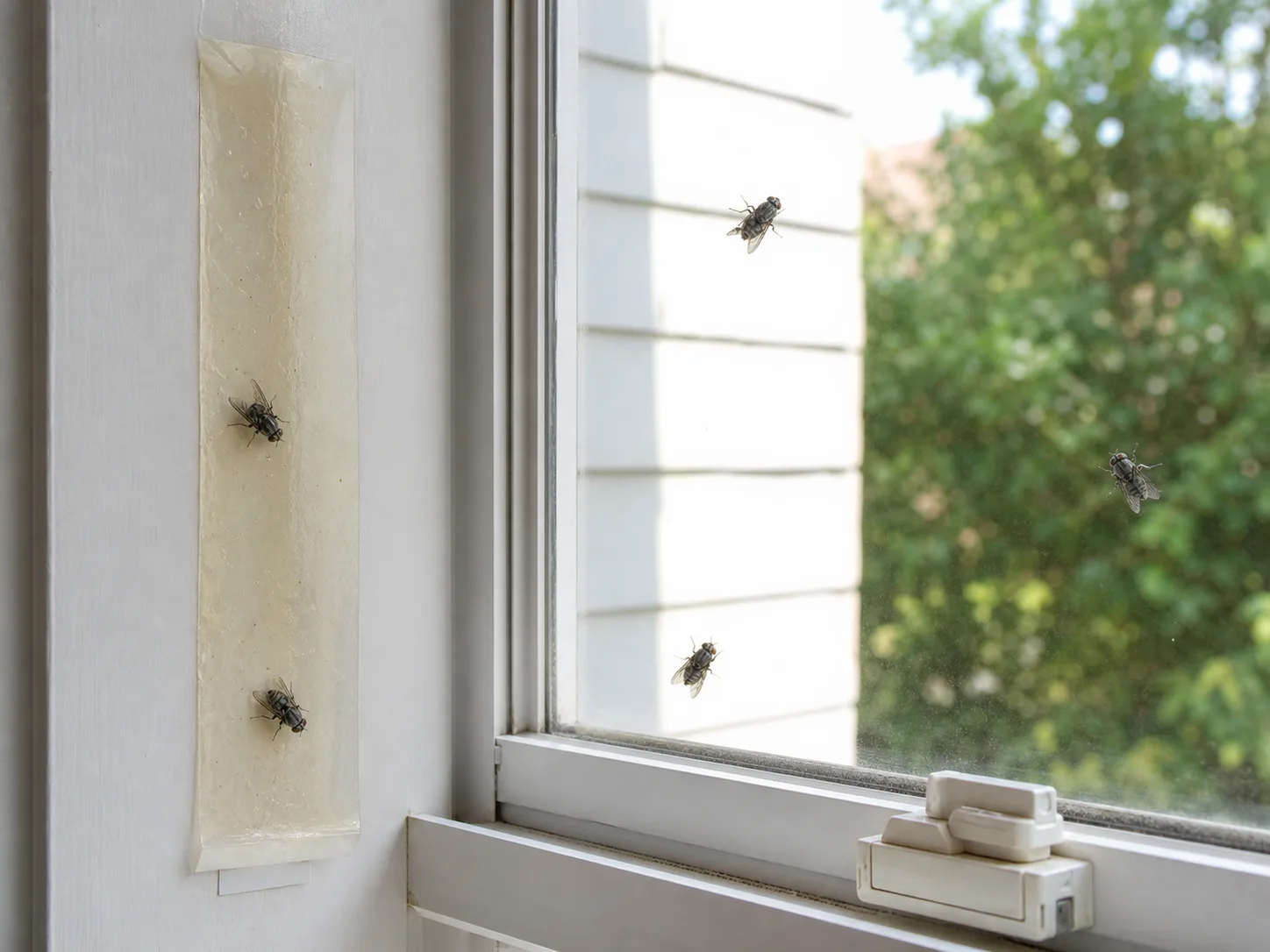
Sticky fly strips or flat glue traps can help when flies repeatedly land on windows, upper walls, or other predictable surfaces. They are most useful as a containment tool while you inspect and seal the structure. They are not a reliable substitute for exclusion because they catch adults after they have already entered and may not intercept flies still hidden in a cavity.
A sweetened-water jar trap is sometimes suggested for flies, but cluster flies are not coming indoors to feed on a kitchen spill. Their indoor behavior is driven mainly by shelter and warmth, so baited traps may be less consistent than sticky traps placed on the fly route. If you try one, use a stable container, keep it away from children and pets, and replace the liquid daily. Family Handyman gives the same daily-change advice for a perforated-lid jar trap; treat that setup as an experiment, not proof that all flies in the house share the same biology.
Place Traps Where Flies Gather
Put traps near the brightest gathering point without blocking a door, window, or heating vent. A trap beside the windowsill where flies already land is more informative than one hidden across the room. Place it where children and pets cannot brush against it, and check it every day so you can see whether activity is concentrated in one room or spread across a side of the house.
Do not hang sticky strips over food-preparation surfaces or use them as a reason to leave windows open without screens. If a trap is catching flies but the room still gains more each warm day, keep the trap in place for short-term relief and prioritize sealing the building.
Method 3: Seal Entry and Exit Gaps
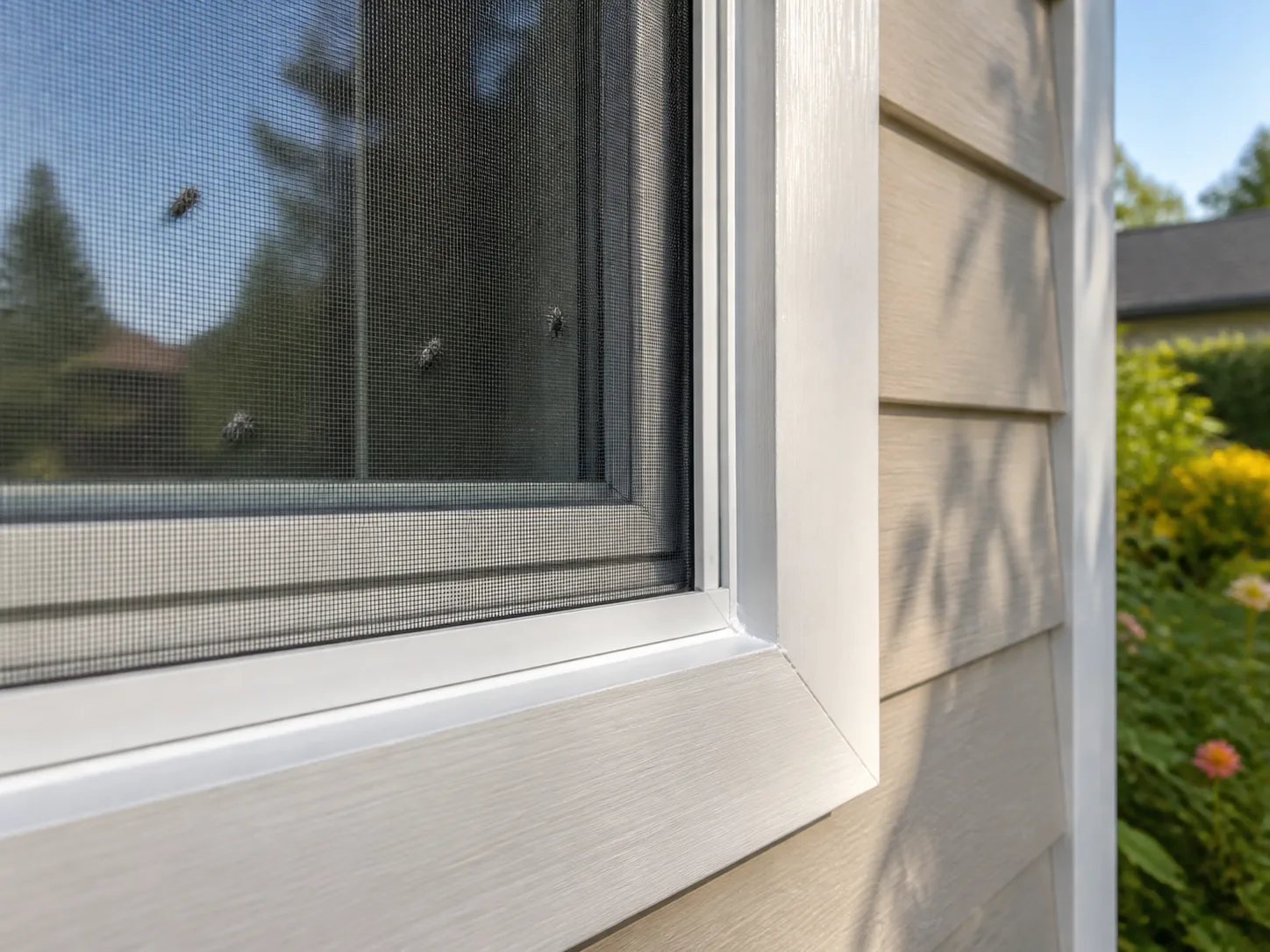
Exclusion is the most durable cluster-fly control. Repair or replace damaged window and door screens, weatherstrip loose doors and windows, and caulk accessible gaps in trim and siding. Use a sealant appropriate for the surface and follow its cure instructions; the goal is a continuous seal, not a smear that leaves a tunnel behind it.
The timing matters. Sealing after flies have already entered can reduce the number crawling into living rooms, but it cannot remove adults already resting in a wall or attic. The best prevention work happens before the fall congregation, when you can inspect the exterior in daylight and close routes before the next seasonal movement.
Prioritize the Warm, Sunny Side of the Home
Begin on the side that receives strong afternoon sun, then work around the rest of the building. Inspect these high-payoff locations:
- Window frames, sills, pulleys, and screens
- Door frames, thresholds, and worn weatherstripping
- Siding joints, fascia, soffits, and roofline gaps
- Openings around utility pipes, cables, vents, and outdoor fixtures
- Gaps behind or beside chimneys
- Foundation cracks and seams near sill plates
- Attic access doors, baseboards, and trim where flies emerge indoors
Do not seal an active vent, drain, weep hole, or electrical component without understanding its purpose. For roof, chimney, siding, or electrical openings that are difficult to reach safely, hire the appropriate trade or a pest professional rather than creating a moisture or fire problem in the name of pest control.
Method 4: Use Pesticides Only for the Right Situation
Pesticides are a backup for a persistent, high-volume problem—not the default answer to a few flies on a window. If you use a household product for visible adults, choose one whose label specifically allows the intended indoor site and target pest, apply only as directed, ventilate as the label requires, and keep people, pets, and food away from treated surfaces. Never combine products or improvise a stronger mixture.
For a severe recurring infestation, a licensed pest-control operator may evaluate a properly timed exterior treatment before adult flies congregate. Penn State Extension explains that exterior treatments can offer relief where complete sealing is difficult, but sunlight reduces residual performance. That makes timing and coverage more important than buying a stronger-looking product off the shelf.
Why Attic Fogging and Wall-Void Sprays Often Fail
Do not fog an attic or inject a spray into wall voids simply because the flies are emerging there. Penn State warns that these treatments may kill many hidden flies without stopping more from emerging, and dead insects can become food for carpet beetles or other scavengers that damage stored natural-fiber goods. A spray directed into a crack also may kill a few adults without closing the route behind them.
This is the key pesticide decision: if the treatment cannot reach the full hiding area and does not solve the opening, it is unlikely to be a long-term fix. Let a professional assess the building if the flies are numerous, the entry route is inaccessible, or anyone in the home could be exposed during treatment.
A Seasonal Prevention Calendar
Cluster-fly prevention works best as a short maintenance routine rather than an emergency project. In late summer, walk the exterior in daylight and repair screens, weatherstripping, and obvious cracks. Before cool weather becomes consistent, finish caulking and arrange professional work for high or inaccessible areas.
Finish Exclusion Before Fall Congregation
When autumn days first turn cool, watch the sunny exterior for clustering and note the exact elevations where adults land. Inside, keep a vacuum accessible and use a small number of traps only where flies are active. On warm winter days, remove emerging adults and recheck the nearest trim or opening; do not mistake a new warm-day emergence for proof that your earlier cleaning failed.
The Cottage Life practical guide summarizes the low-risk prevention basics well: weatherstrip doors and windows, keep screens fitted, and fill gaps with caulk. Those repairs are more useful when paired with a specific inspection route and completed before the flies choose the building for shelter.
Why Lawn Treatments and Earthworm Removal Do Not Solve the Problem
It is tempting to treat the lawn because cluster-fly larvae develop in earthworms in soil. That is usually the wrong lever. UConn Extension notes that efforts to reduce earthworm populations are generally unsuccessful and that treating lawns or gardens is ineffective because adult flies do not remain on treated areas long enough to contact enough insecticide.
Removing earthworms would also damage soil ecology without addressing adults arriving from neighboring areas. Focus on the structure: prevent access in late summer, remove visible adults indoors, and investigate another fly species if the biology does not fit. A lawn pesticide is not a substitute for repairing a screen or sealing a utility penetration.
When to Call a Pest Professional
Call for an inspection when hundreds or thousands of flies appear, the insects return through inaccessible wall or roof spaces, the infestation continues after careful exclusion, or you cannot confidently identify the fly. Professional help is also sensible if ladder work, roofing, chimney access, or electrical penetrations are involved.
Ask what the inspection found before agreeing to treatment. A useful plan should identify likely entry points, explain whether the proposed work is exterior or interior, state what the product label permits, and address cleanup of dead insects. Be wary of a plan that starts with a whole-house fog or a blanket lawn application without connecting the treatment to the fly’s life cycle and hiding place.
What to Clean After the Flies Are Gone
Vacuum window tracks, sills, trim, attic thresholds, and floor edges where bodies and droppings collect. Wipe washable surfaces with the cleaner appropriate for the material, test first on painted trim or delicate finishes, and avoid soaking gaps that could hold moisture. Cluster flies do not damage the structure, but their dark spots and carcasses can make an otherwise sound room look neglected.
If you found a large accumulation in an attic or wall void, do not reach into insulation or use a fogger to avoid cleanup. Have the area assessed, especially if stored woolens, feathers, leather, or other natural materials are nearby. Removing dead insects matters because scavenging beetles can create a second nuisance even after the flies are gone.
Common Mistakes That Keep Cluster Flies Coming Back
The first mistake is treating every fly as a house fly and setting bait in the kitchen without checking windows, attic access, and sun-facing walls. The second is killing visible adults while leaving a cracked screen or unsealed siding joint untouched. Vacuuming is useful, but it is only the removal step.
Another common mistake is sealing only the inside of one room. If the exterior route remains open, adults can continue to enter the building and then emerge through a different baseboard or light fixture. Inspect the matching outside elevation and repair the screen or joint that connects the two observations.
Finally, avoid the urge to escalate to a stronger treatment just because the flies reappear on a warm day. Warmth can activate adults already sheltered for months. Track the volume, inspect the route, and use pesticide only when the identification, label, site, and risk all line up.
Conclusion
The quickest relief comes from vacuuming or swatting the slow adults gathered at windows and upper walls. Sticky traps can contain a repeat landing spot, but sealing the building before fall is what reduces the next invasion. Cluster flies do not breed in your walls, so the winning strategy is not to poison the lawn or fog every cavity—it is to identify the fly, close the routes, and escalate to a qualified professional when the scale or access makes the job unsafe.