When to Start Strawberry Seeds Indoors
Cold-stratify strawberry seeds 3–4 weeks in late winter, then sow 10–12 weeks before your last frost. Alpine timing, sowing steps, and first-year harvest expectations.
You bought a packet of tiny alpine strawberry seed in January, sowed it on schedule, and watched a tray of damp soil do absolutely nothing for a month. The missing step is almost always cold stratification—a late-winter chill in the refrigerator that mimics the winter strawberry seed would experience outdoors before spring sprouting. Without it, many seeds sit dormant. With it, germination rates jump from frustrating to workable.
When to start strawberry seeds is really two dates on the same calendar: begin stratification 14 to 16 weeks before your average last spring frost, then sow indoors 10 to 12 weeks before that frost once the chill period ends. Alpine and open-pollinated woodland types (Fragaria vesca) are the varieties worth starting from seed; standard hybrid garden strawberries are easier from bare-root crowns or runners. This guide walks through seed selection, fridge protocols, sowing technique, and what fruit to realistically expect in year one.
For broader seed-starting setup, pair this with our guides on how to start seeds indoors, soaking vs. stratifying seed, and counting back from your last frost.
Why Starting Strawberries From Seed Is Worth the Patience
Growing strawberries from seed is slower than buying dormant crowns, but it opens varieties you rarely find at garden centers: red, yellow, and white alpine types, old-fashioned woodland selections, and fragrant heirlooms like ‘Alexandria’ that produce intensely flavored small berries. Seed is inexpensive per plant if you are willing to babysit trays for a few months.
The trade-off is time and temperament. Strawberry seed is small, light-dependent, and slow to germinate—often 14 to 28 days at around 65°F (18°C), with some batches stretching past a month. Seedlings stay delicate longer than tomato starts. Most plants will not deliver a full harvest until year two, though fast alpine cultivars can give you a modest summer or fall crop in year one if your season is long enough.
That patience pays off when you want unusual flavors, container-sized clumping plants that do not run, or a dozen plants for the cost of one nursery pot. Just know going in: this is a late-winter project, not a “sow with your peppers in March” crop unless you already stratified in December or January.
Which Strawberry Seeds Actually Work—and Which Will Disappoint You
Not every strawberry seed packet deserves bench space. The biology of modern garden strawberries (Fragaria × ananassa) makes seed saving from supermarket fruit unreliable. Seed-starting success starts with buying the right genetics.
Open-Pollinated Alpine and Woodland Types
Alpine strawberries (Fragaria vesca) and woodland types are the sweet spot for seed growers. They are open-pollinated, breed reasonably true from seed, grow in compact clumps instead of aggressive runners, and fit pots, edging, and partial shade where big June-bearing hybrids struggle. Flavor is concentrated—small berries, big perfume.
The RHS notes that alpine strawberries can be grown from seed sown indoors in spring or autumn, though most North American gardeners stratify in late winter and sow for spring transplant. Germination can be slow and patchy even with good technique, so sow more seed than you need and plan to cull weak seedlings.
Hybrid Garden Strawberries and Grocery-Store Fruit
Hybrid garden strawberries—the large-fruited types sold as bare-root plants—do not breed true from seed. Each seedling is a genetic lottery. You might get a decent plant; you might get small, bland fruit or poor vigor. Saving seed from store-bought berries is even less predictable because those fruits are hybrids and often picked before full seed maturity.
If you want classic June-bearing or everbearing beds, buy certified plants or rooted runners from a reputable nursery. Use seed for alpines, heirlooms, and experimental breeding—not for replacing a row of ‘Seascape’ or ‘Chandler.‘
Seed Freshness and Quick Viability Checks
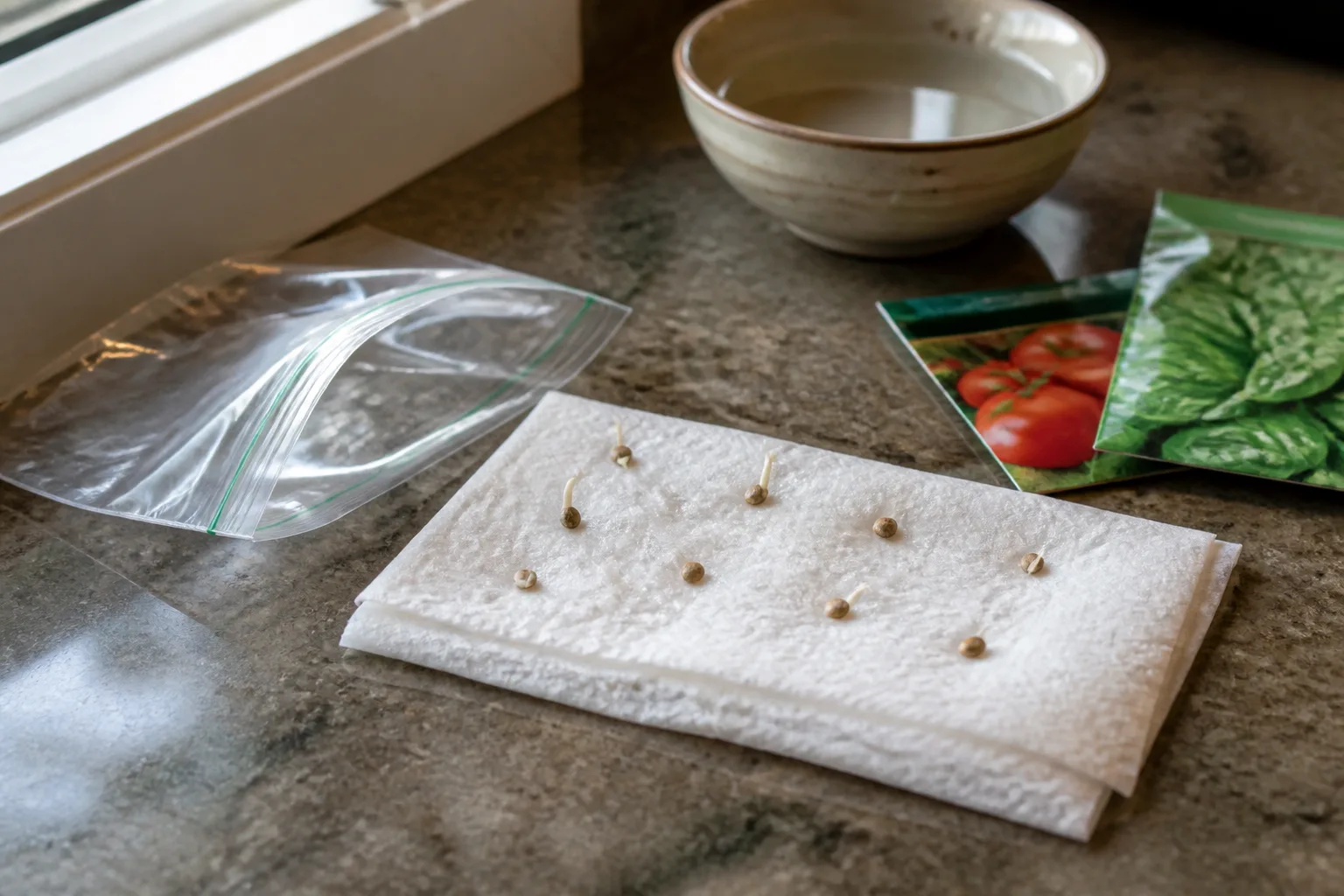
Strawberry seed can remain viable up to about five years in cool, dry storage, but germination is strongest in seed less than two years old. Before stratifying an old packet, run a quick test: place 10 seeds on a damp coffee filter inside a labeled bag at room temperature after stratification, or check the packet date and order fresh stock if germination failed last season.
Store unused seed in an airtight container with a silica packet in the refrigerator—not the freezer, which can damage moisture-sensitive seed. Our winter seed storage guide covers humidity and temperature basics that apply here too.
Cold Stratification: The Late-Winter Step That Unlocks Germination
Do strawberry seeds need cold stratification? For most alpine and heirloom types, yes. A 3- to 4-week cold period at refrigerator temperatures breaks physiological dormancy so seed can respond to warmth and light when you sow. Skip this step and many seeds never wake up—or sprout weeks late in scattered fits.
This is the late-winter task the title promises: not sowing yet, but prechilling so sowing in 10 to 12 weeks actually works.
What Stratification Does to Dormant Strawberry Seed
In nature, ripe strawberry fruit drops seed onto soil in summer or fall. Winter cold and moisture chemically unlock the embryo. Indoors, your refrigerator substitutes for winter. Planet Natural describes stratification as simulating cold, moist conditions so seed that evolved in temperate climates germinates when warmth returns—not in a warm seedling room where it would rot waiting.
Strawberry seed is not alone; delphinium, echinacea, and many perennials need similar treatment. The difference is scale: strawberry seed is dust-fine, so moisture control during stratification matters more than with pea-sized seed.
Two Fridge Methods: Dry Packet Chill vs. Damp Mix
Both approaches work. Pick based on how organized you are about checking moisture.
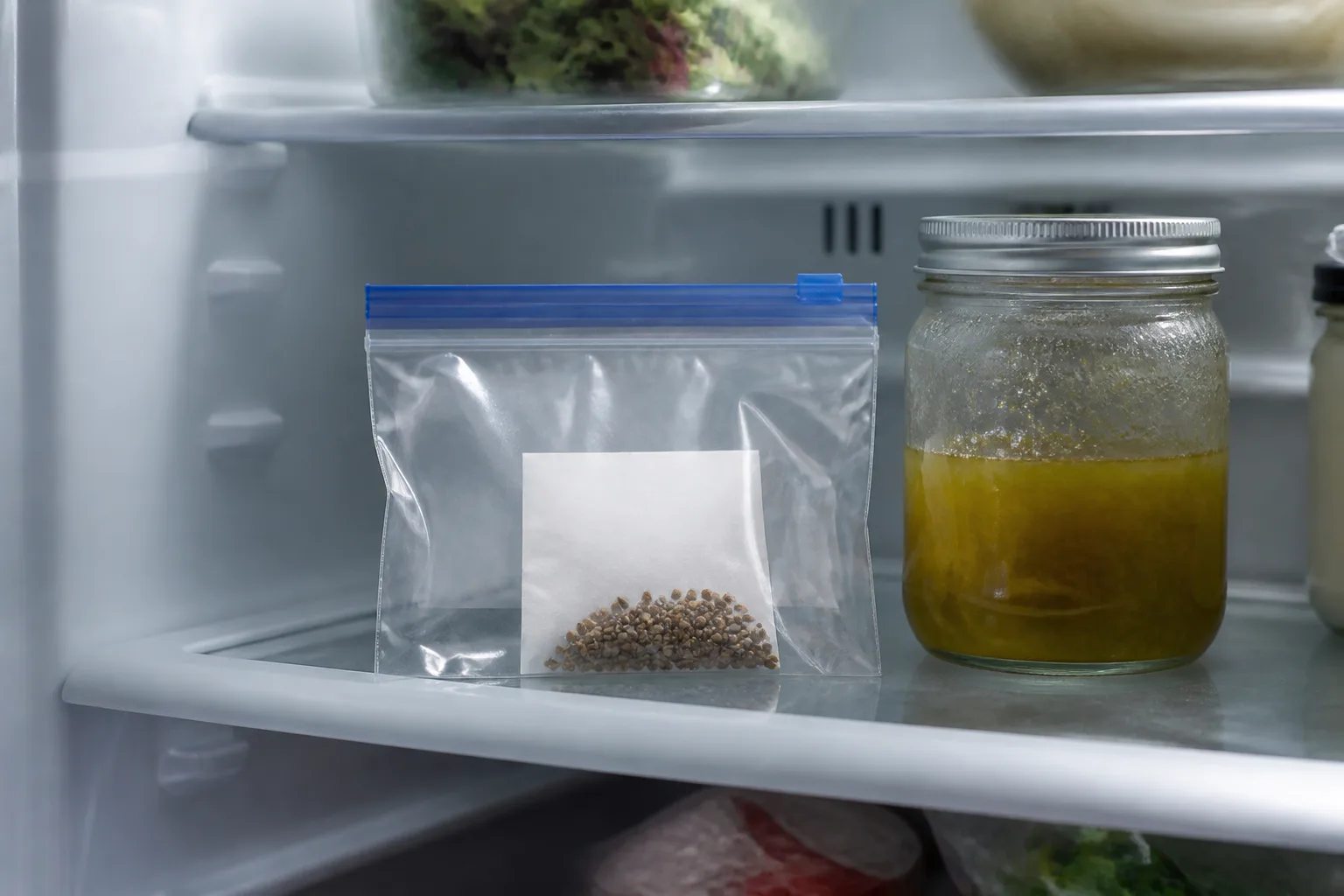
Method 1 — Dry packet in the fridge (simplest): Place the unopened or resealed seed packet inside a zip-top bag or jar with a tight lid. Put it in the refrigerator for 3 to 4 weeks at roughly 34–40°F (1–4°C). After removing, let the sealed packet come to room temperature for 24 hours before opening—reduces condensation shock on tiny seed. This mirrors common grower practice for alpine strawberry and is low-risk if the packet stays dry.
Method 2 — Damp medium stratification (higher germination, more monitoring): Following the fridge protocol described by Birds & Blooms for stratification-dependent seed, mix seed into slightly moist perlite, vermiculite, or seed-starting mix at roughly a 1:3 seed-to-medium ratio in a labeled bag or container. Refrigerate 3 to 6 weeks, checking weekly so the mix stays damp but never soggy. Sow directly or carefully spread the mix on your tray surface.
If you are unsure whether your variety requires chilling, stratify anyway—a cold period within this range does not harm viable strawberry seed and only helps dormant lots. Mark your calendar on the day you start; forgetting a packet behind the yogurt for two months can reduce viability.
Your Strawberry Seed Calendar: Count Back From Last Frost
Everything hinges on your average last spring frost date. If you do not know it, look it up by ZIP in our USDA zone and frost-date guide or use your local extension office map.
| Milestone | Weeks before last frost | What you do |
|---|---|---|
| Start stratification | 14–16 weeks | Packet or damp mix into fridge |
| End stratification / sow indoors | 10–12 weeks | Surface-sow on seed-starting mix under lights |
| Pot up individually | 6–8 weeks | Move to 4-inch pots when several true leaves |
| Begin hardening off | 1–2 weeks | After frost danger, acclimate outdoors |
| Transplant outside | 0 weeks | When nights stay above ~40°F and seedlings are 3+ inches |
Worked example — Zone 6, last frost ~April 20:
- Stratify: late December through mid-January (packet in fridge by ~Jan 6 for 4 weeks)
- Sow indoors: ~Feb 10 (10 weeks before frost)
- Harden off / plant out: late April to early May
Northern Zone 3–4 gardeners may stratify in November–December and sow in late February or March. Zone 8–9 can stratify in January and sow in February for earlier outdoor planting. Alpine types tolerate light shade; in hot-summer regions, plan afternoon shade for young plants.
This timeline aligns with early spring garden chores season—stratification is the quiet indoor job you finish while outdoor soil is still frozen.
How to Sow Strawberry Seeds After Stratification
After prechilling, treat strawberry seed like the tiny light-lover it is. Heavy-handed sowing is the fastest way to bury seed too deep and get zero sprouts.
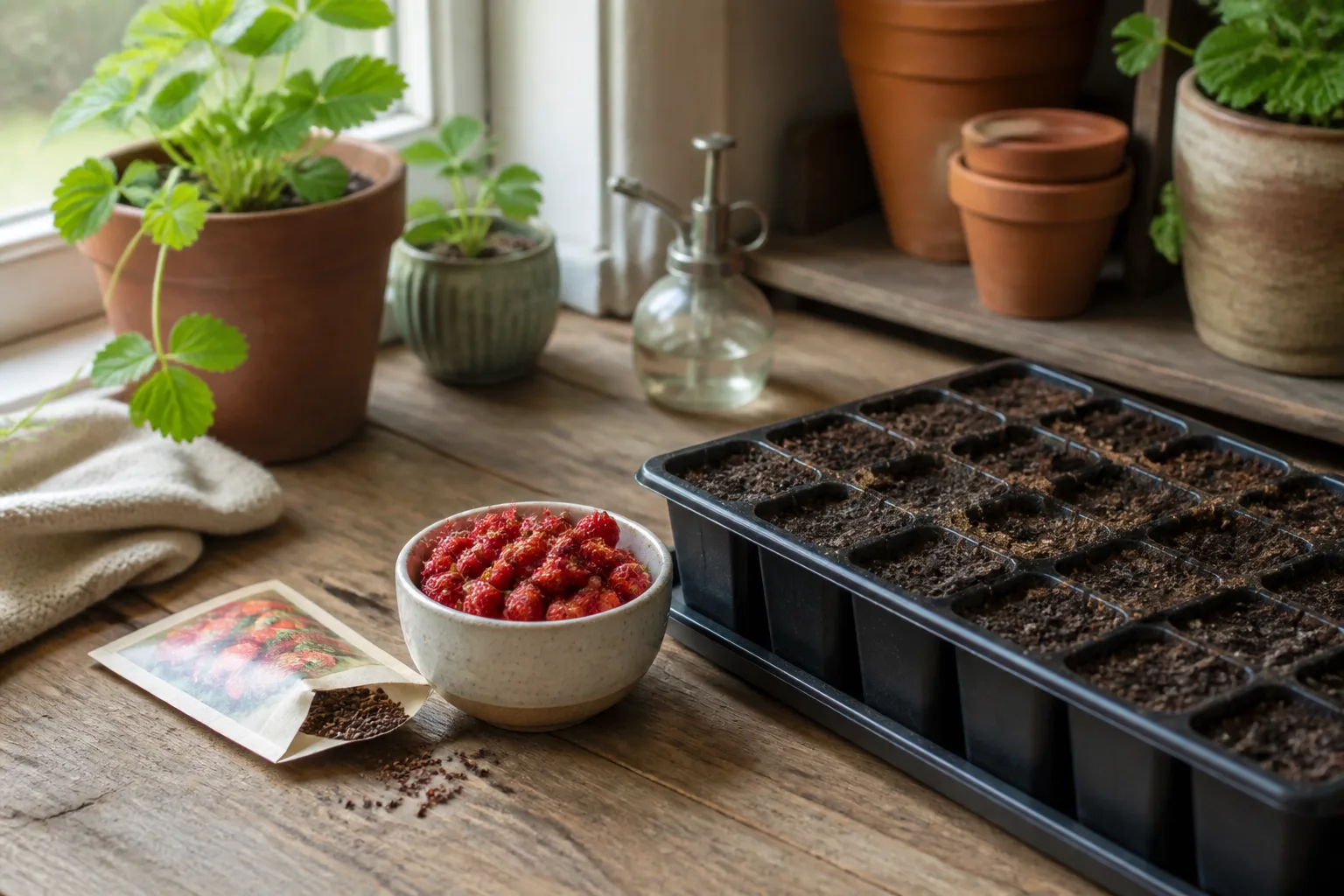
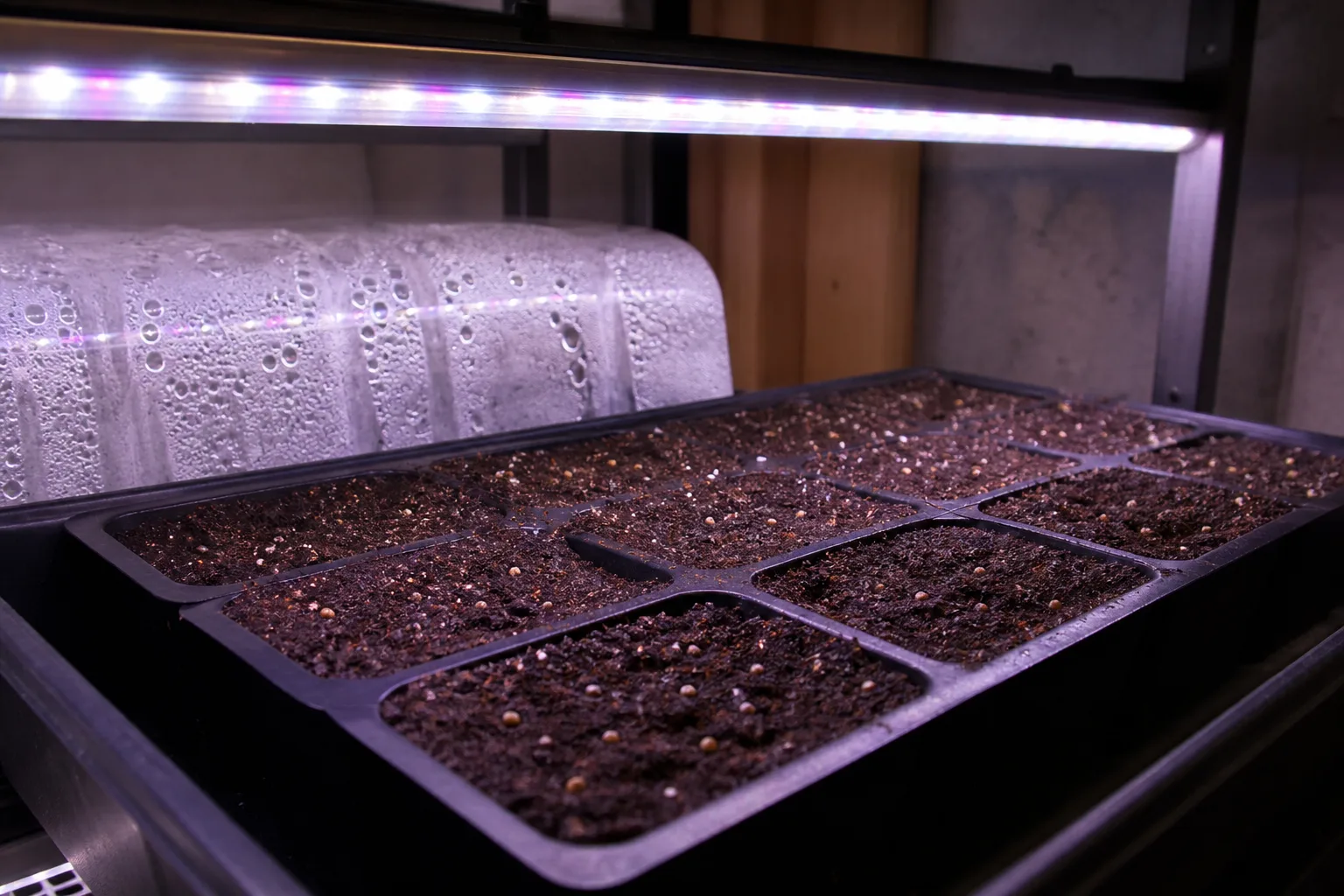
Fill clean seed trays or shallow flats with pre-moistened, fine seed-starting mix—peat-free formulations work if they are sifted and free of large bark chunks. Scatter 3 to 4 seeds per cell or broadcast thinly in a flat. Press seed gently onto the surface with a flat board or your palm; do not cover with mix, because strawberry seed needs light to germinate. A dusting of horticultural sand or vermiculite can anchor seed without blocking light if your setup is breezy.
Mist until the surface glistens, then cover the tray with a clear dome or plastic wrap until sprouts appear. Bottom-water from a larger tray when the top lightens in color—mist-only watering keeps surface seed from washing into cracks.
Light, Temperature, and the Barely Moist Rule
Germination temperature around 65°F (18°C) is the sweet spot cited by the RHS for alpine strawberry seed. A heat mat set to 65–70°F can help in a cool basement, but overheating dry surface seed is worse than slightly cool air—keep the surface consistently moist, never waterlogged.
Expect sprouts in 14 to 28 days; some varieties take up to 5 weeks. If nothing emerges by week 5 at proper temperature and moisture, review stratification length and seed age before re-sowing.
Light comes immediately at emergence. Window sills rarely deliver enough intensity. Suspend fluorescent or LED grow lights 4 to 6 inches above seedlings and run them 14–16 hours daily. Leggy, pale seedlings are a light problem, not a fertilizer problem. For general light setup, see how to start seeds indoors.
Thinning, Potting Up, and Grow-Light Height
When seedlings show two sets of true leaves, thin to one strong plant per cell by snipping extras at soil level—pulling disturbs roots on neighbors. Feed every two weeks with half-strength liquid fertilizer once the first true leaves expand; salt buildup on such small root zones burns quickly.
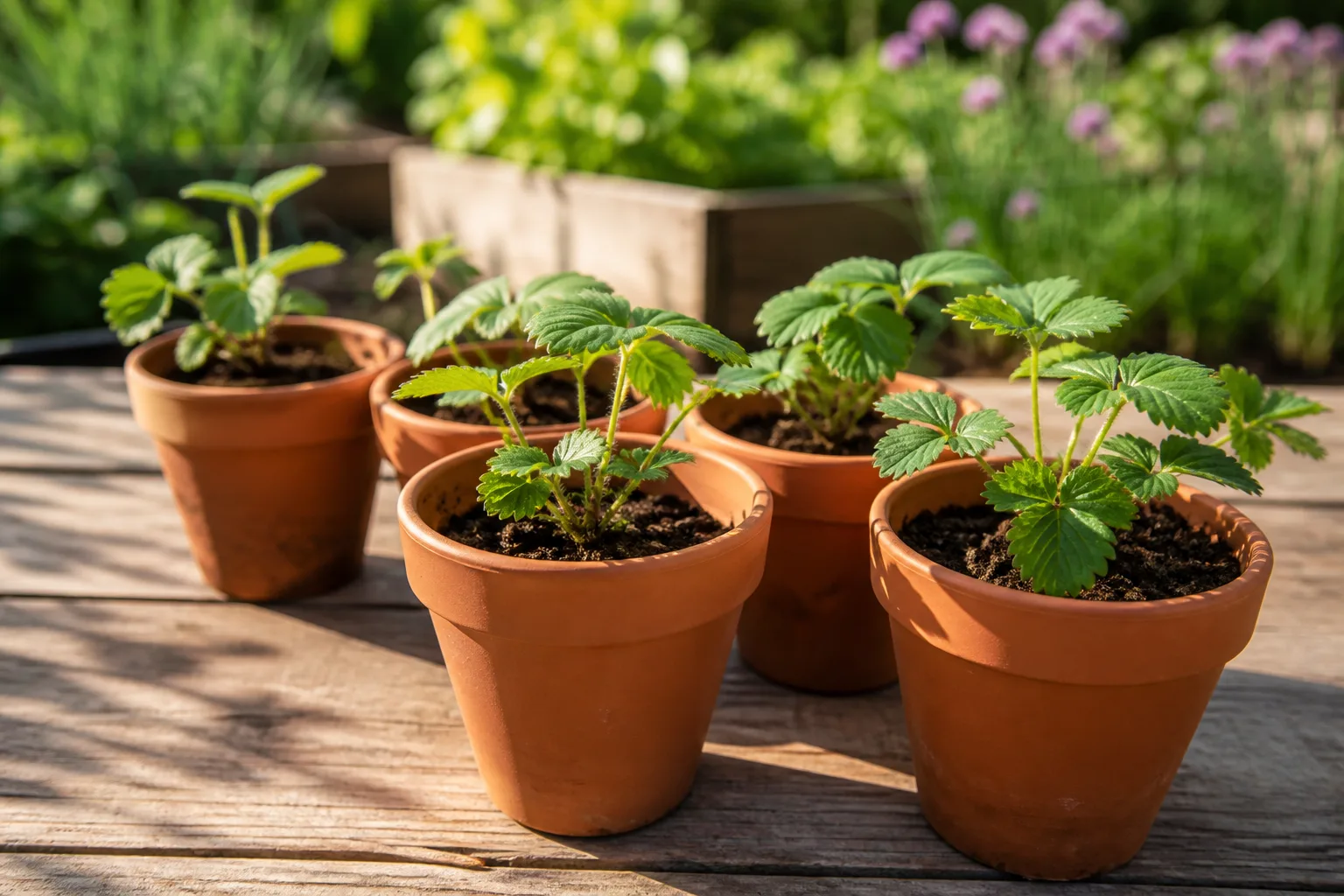
After several true leaves develop, transplant each seedling into a 4-inch pot with standard potting mix. Bury the stem only to the original soil line—unlike tomatoes, strawberries do not benefit from deep burial. Keep lights within 4 to 6 inches of the top leaves as plants grow, raising the fixture every few days.
When to Transplant and How to Harden Off Delicate Seedlings
Move seedlings outside only after all danger of frost and when plants are at least 3 inches tall with a healthy root ball. Young strawberry seedlings are more frost-sensitive than mature crowns—a late cold snap can wipe a tray you nursed for months.
Harden off over 7 to 14 days: place pots in shade for a few hours on day one, increase outdoor time and light exposure daily, and bring plants in if nights drop below 40°F (4°C). Wind and sun dry small pots fast; check moisture twice on hardening days.
Transplant into the garden, raised beds, or containers with rich, well-drained soil. Space alpine types 6 to 8 inches apart in clumps; they will fill in without runners. Morning sun with afternoon shade suits hot climates and container culture on patios. Our spring seedling transplant guide covers the same acclimation principles for other crops.
Post-Transplant Care for First-Year Strawberry Plants
Established culture is straightforward; the hard part was the seedling phase.
Sun, Water, Mulch, and Pest Protection
Strawberries want at least 6 hours of direct sun daily—more is better in cool climates, less midday intensity in desert heat. Consistent moisture during flowering and fruiting prevents small, leathery berries. Drip irrigation or soaker hoses beat overhead sprinkling, which wets foliage and spreads leaf diseases.
Mulch with straw, pine needles, or shredded leaves to keep fruit clean and soil evenly moist. Penn State Extension emphasizes weed control and moisture for productive beds; young seedlings cannot outcompete aggressive weeds.
Birds, chipmunks, and slugs discover ripe fruit fast. Netting or row cover after flowering, plus iron phosphate bait for slugs in wet springs, saves more berries than any fertilizer upgrade. Alpine fruit is small—harvest daily when color fully develops and flavor is sweet, not tart-only.
Feed in spring with a balanced slow-release fertilizer (such as 10-10-10) at label rates for edible crops, then a light autumn application if plants are perennial in your zone. Avoid heavy nitrogen late in the season, which pushes leaves over flower buds.
What to Expect for Fruit in Year One vs. Year Two
Manage expectations so you do not abandon good plants too early. Most strawberry seedlings focus on roots and crowns in year one. A full, heavy harvest typically arrives in year two when plants have built energy reserves.
Fast-maturing alpines like ‘Alexandria’ can produce some fruit the first summer or fall if sown early, grown under strong light, and transplanted into a long season. Treat any year-one berries as a bonus, not the benchmark. Remove flowers on weak year-one plants if you prefer maximum crown size for year two—optional, not mandatory for home gardeners.
The Old Farmer’s Almanac strawberry guide notes that strawberries are perennial in many zones; alpine clumps can be divided or allowed to self-sow if you leave a few berries on the plant. Hybrid rows are usually renewed on a three-year cycle from crowns, not seed—another reason seed growers gravitate toward alpines.
Common Strawberry Seed-Starting Mistakes
Skipping stratification tops the list. If zero sprouts after a month at warm temperatures, restart with a fresh packet and a verified 4-week fridge chill.
Covering seed with soil blocks light and mimics the most common sowing error. Press in, mist, and stop.
Overwatering during germination causes green algae, fungus gnats, and damping-off. Surface should be moist like a wrung sponge, not shiny with standing water.
Starting too early without enough light produces tall, floppy seedlings that collapse at transplant. Delay sowing rather than grow weak plants in a north window.
Using hybrid seed expecting supermarket fruit wastes a season. Buy named alpine or heirloom varieties from seed houses that list germination requirements.
Planting outside before hardening off sunburns leaves and stalls growth for weeks. Treat strawberries like other tender transplants.
If germination is patchy, do not discard the tray at week 3—some seed wakes late. Keep moisture and light steady through week 5 before calling the batch done.
Conclusion
When to start strawberry seeds is a two-step calendar anchored to your last frost: stratify 14 to 16 weeks before, sow 10 to 12 weeks before, then pot up, harden off, and transplant after frost when seedlings stand 3 inches tall. The late-winter refrigerator step is not optional for most alpine and heirloom seed—it is the difference between a empty tray and workable germination.
Choose open-pollinated alpine seed, keep sowing on the surface under strong light at ~65°F, and treat year one as establishment with full harvest in year two for most plants. Get the chill, the light, and the moisture right, and you will grow flavors and colors no grocery clamshell offers—worth every week of patience.