How to Prevent Ground Moles With Vinegar Naturally
Vinegar is a cheap, humane mole deterrent when used early. See the 1:3 mix pros use, where to spray (and avoid), grub control, barriers, and when trapping beats smell remedies.
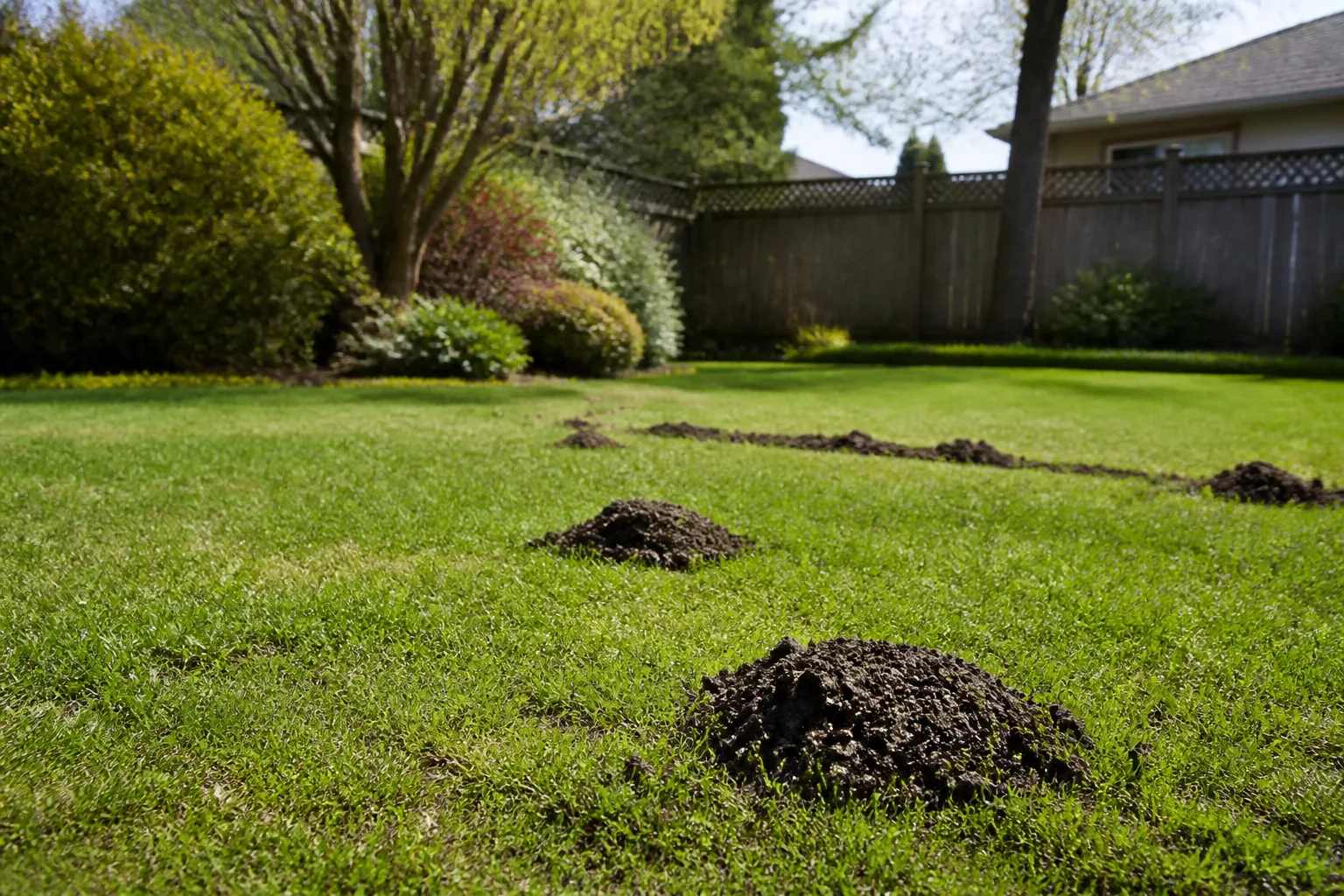
Diluted white vinegar can discourage ground moles from settling in your yard—but only if you use it early, apply it in the right places, and pair it with methods that address why moles showed up in the first place. Vinegar is not a registered mole repellent, and no pantry staple will evict a mole that already has an active tunnel network and a full menu of grubs and earthworms below your turf. Used correctly, though, vinegar is one of the cheapest humane nudges you can try before traps, barriers, or a wildlife pro enter the picture.
Here is the full protocol: what vinegar actually does underground, how to mix and spray it without burning your lawn, when pest experts say you have already missed the window, and the extension-backed companion steps that make any smell deterrent more likely to work.
What Vinegar Can—and Cannot—Do for Mole Problems
Vinegar repels moles through odor, not poison. Household white vinegar is roughly 5% acetic acid. Moles live in sealed tunnel systems and hunt by touch and smell far more than by sight. A sharp, unfamiliar scent along a fence line or at a fresh molehill can signal “this edge of the property is unpleasant” and push a mole toward softer ground next door—for a few days until rain and soil bacteria dilute the smell.
That is a different job than killing moles or collapsing their tunnels. Vinegar does not fumigate burrows the way a professional rodenticide might, and moles do not eat bait soaked in vinegar the way they might ignore grain-based toxicants anyway (Penn State Extension). Penn State Extension is explicit: there are no chemical repellents currently registered for use on moles; registration for a castor-oil product called Mole-Med was canceled in 2005. Electronic, magnetic, and vibration gadgets promoted online have not been proven effective in extension testing either.
So vinegar sits in the same category as castor oil granules, marigold borders, and other home remedies—possibly helpful, never guaranteed, and best treated as a low-cost experiment rather than a lawn-care plan.
Why Smell Remedies Lose to an Easy Food Supply
Moles are insectivores, not rodents. They eat grubs, beetle larvae, earthworms, and other soil invertebrates—often 70 to 100 percent of their body weight in a single day because tunneling burns enormous energy (Penn State Extension). Three to five moles per acre already counts as a high population in most neighborhoods. They prefer loose, moist soil rich in grubs and worms, which is exactly what a well-watered suburban lawn often provides.
A hungry mole will tolerate a bad smell more easily than it will tolerate missing dinner. Wildlife operators routinely describe the pattern homeowners see with vinegar: a few quiet days after spraying, then fresh ridges as the animal pushes through untreated soil or reopens a path once the scent fades—especially after rain. If your yard is a grub buffet, odor alone is a weak argument.
The honest framing: vinegar is a perimeter and prevention tool, not an eviction notice for an entrenched colony.
Identify the Culprit Before You Treat: Moles, Voles, and Shrews
Spraying vinegar at vole runways or shrew paths wastes time and vinegar. Each animal leaves a different signature, and only one of them is a mole.
Ground moles are burrowing mammals about six to eight inches long with tiny eyes, velvety fur, and powerful forelimbs built for digging. You will almost never see the animal itself. Voles (meadow mice) are mouse-sized with prominent orange front teeth for gnawing; they clip grass at the base to form above-ground runways and eat seeds, roots, and tubers. Shrews are even smaller—three to four inches—with pointed snouts; they may use mole tunnels but do not build the classic cone-shaped molehills (Penn State Extension).
Plant damage blamed on moles is often indirect. Voles, mice, and shrews travel through mole runways to reach bulbs and roots. Moles may disrupt roots while tunneling underneath, but they rarely eat ornamental plants or vegetables (Penn State Extension).
Mole Tunnels, Molehills, and the Damage You See on Turf
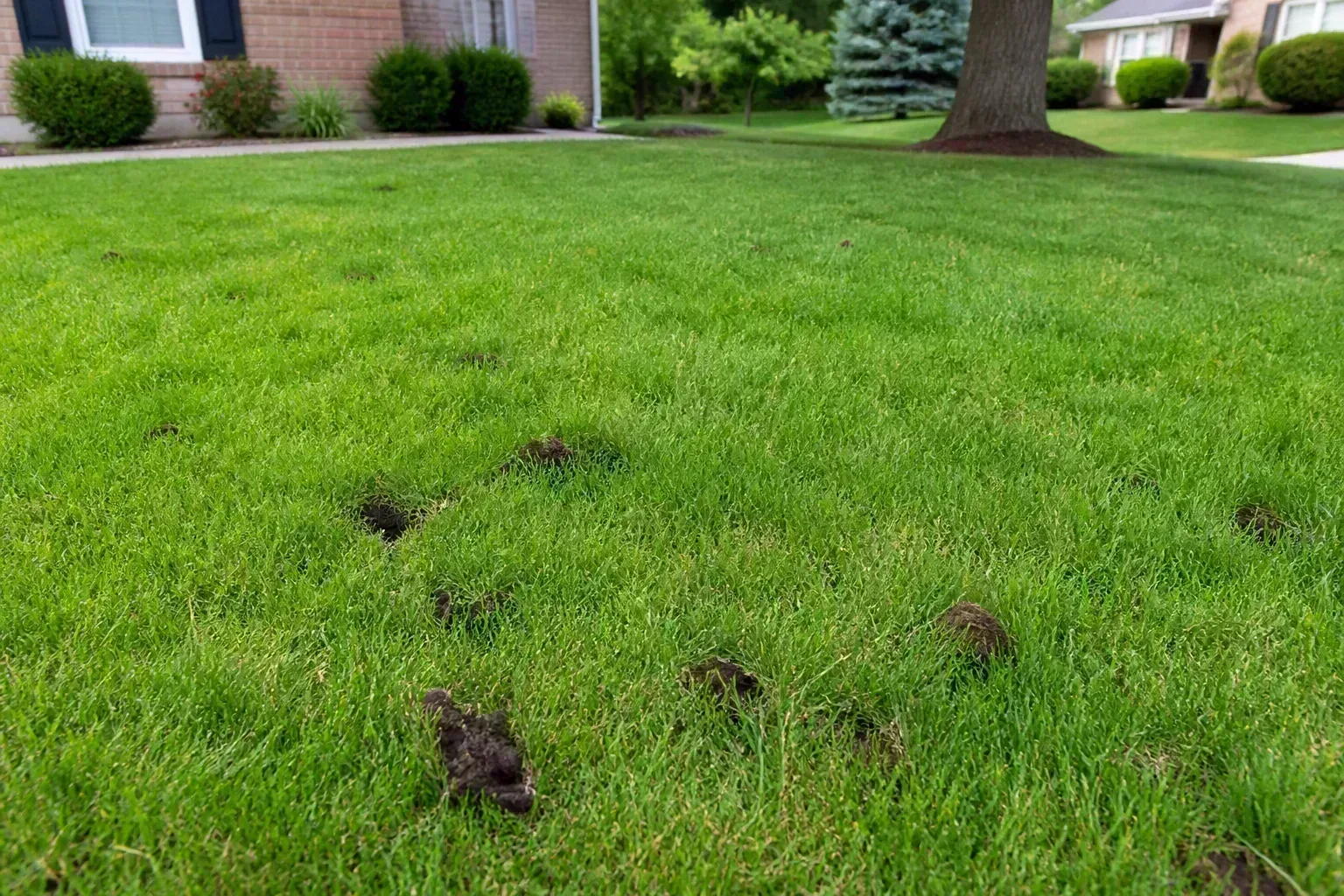
Two tunnel types matter for control decisions:
- Deep runways (12–18 inches down) connect the den to hunting grounds. The only surface clue is often a molehill: a circular mound of soil with a plug in the center, sometimes showing concentric “ripple” marks from each shovelful of dirt pushed up.
- Shallow hunting tunnels (1¼–1½ inches diameter) create raised ridges you can feel when you walk the lawn. Moles may use these once or revisit them irregularly; many collapse after heavy rain (Penn State Extension).
The cosmetic damage homeowners hate—soft spots that make mowing miserable, brown traces where grass roots were disturbed, and volcano-shaped piles in the middle of a pristine lawn—comes from this shallow network. NC State Extension notes moles also play a beneficial role: they aerate soil, move humus deeper, and consume white grubs that damage turf (NC State Extension). Many turf managers tolerate a low mole population until damage crosses a line. Your vinegar plan should start before that line.
Quick Signs Moles Are Active Right Now
Before you mix a spray bottle, confirm fresh activity:
- New molehills with moist, dark soil and no weathered crust
- Raised ridges that reappear after you flatten them overnight
- Spongy turf along a straight runway path
- No tooth marks or clipped grass at the surface (that points to voles)
Mark suspicious spots, wait 24 hours, and recheck. Active zones are where vinegar—or a trap—has any chance of mattering.
When Vinegar Is Worth Trying—and When to Skip It
Pest and wildlife pros converge on one timing rule: vinegar works best before you have a full-blown mole problem, or immediately after you remove a single mole and want to discourage newcomers from colonizing abandoned tunnels.
Once multiple ridges crisscross the lawn and molehills appear weekly, smell remedies struggle. Moles dig exploratory tunnels, abandon many of them, and keep hunting until they find food. Missing even a small untreated strip lets them settle “quite nicely,” as lawn specialists often put it. At that stage, trapping active tunnels is the most successful and practical control method extension services recommend (Penn State Extension; NC State Extension).
Use this decision shortcut:
| Your situation | Vinegar role |
|---|---|
| No tunnels yet; neighbor’s yard has moles | Spray fence lines and shed bases every few days in spring/fall |
| One fresh molehill; first sighting of the season | Spray hill and 10-foot perimeter; add grub reduction |
| Multiple active ridges across the lawn | Vinegar as adjunct only; prioritize trapping |
| Vegetable or flower beds you cannot spray | Install L-shaped barriers instead |
If you are reading this after weeks of damage, skip straight to companion methods and trapping. Vinegar can still line property edges, but it will not reverse an established network.
How to Mix and Apply a Vinegar Mole Deterrent

The vinegar method is simple on purpose. You need white vinegar, water, and a way to apply liquid along hard edges—not across your entire lawn.
The 1:3 Vinegar-to-Water Ratio That Works on Fences and Molehills
The mix most pest pros and lawn specialists reference for perimeter deterrents is one part white vinegar to three parts water. That is strong enough to register on a mole’s sensitive nose without pouring straight acid into soil.
Basic spray bottle batch (about 1 quart):
- Add 1 cup white vinegar to a clean spray bottle.
- Add 3 cups water.
- Swirl gently—no need to shake aggressively.
For longer fence lines, mix the same ratio in a 1-gallon pump sprayer (4 cups vinegar + 12 cups water). Label the sprayer “yard only” so it never returns to indoor cleaning duty.
Apple cider vinegar works on the same principle; some gardeners prefer it because the smell lingers slightly longer. Either way, you are relying on volatile acid odor, not a secret ingredient moles cannot detect in white vinegar.
Where to Spray—and Where to Keep Vinegar Away
Application targets edges and entry points, not the whole turf carpet:
- Along the bottom of fences, walls, and shed skids where moles often travel into a yard.
- Around fresh molehills—spray the mound surface and a few feet of adjacent soil, not deep into the plug hole.
- Property lines where tunnels appear to enter from a neighbor’s lawn.
- Raised ridges in straight sections only if you are sure they are active—avoid soaking long grass panels.
Do not spray:
- Large patches of lawn grass you want to keep green. Repeated acetic acid applications can burn blades and shift soil pH, stressing turf already damaged by tunneling.
- Landscape beds, vegetable gardens, or young ornamentals. Vinegar is a contact desiccant on tender leaves.
- Inside tunnel openings in quantities that flood burrows. You risk killing beneficial earthworms and soil microbes without reliably reaching the mole.
Think of vinegar as painting a smelly stripe along the borders moles cross—not drowning the hunting grounds they came for.
Reapplication Schedule Through Spring and Fall Mole Season
Moles stay active year-round but tunnel hardest when soil is soft and moist—typically spring and fall. Match your vinegar schedule to that reality:
- During peak mole season: reapply every three to four days along fence lines and any new molehills.
- After heavy rain: treat again within 24 hours. Rain washes surface scent away and re-softens soil moles love.
- Dry summer weeks: stretch to once a week on borders only if you see no new ridges.
- Winter: most homeowners pause unless fresh hills appear during mild spells.
Keep a simple log on your phone: date, locations sprayed, and whether new ridges showed up within 48 hours. If hills keep appearing in the same zone after three reapplication cycles, the mole is ignoring the smell—move to trapping or professional help.
Three Companion Methods That Make Vinegar More Effective
Vinegar handles the “stay away from this edge” conversation. These methods handle why the mole wanted in.
Cut the Buffet With Thoughtful Grub and Insect Management
Moles follow food. A serious mole population often signals abundant grubs, beetle larvae, and earthworms in the top few inches of soil (Penn State Extension). Reducing white grubs can encourage moles to range elsewhere—but extension services warn this is neither instant nor without trade-offs.
Lower-risk grub steps:
- Avoid overwatering. Moist soil attracts both earthworms and grubs; it also makes tunneling easier.
- Consider milky spore disease for certain white grub species. It can take several years to build up in soil and works best when neighbors coordinate treatments (Penn State Extension).
- Targeted grub insecticides applied per label timing—often late summer for many beetle larvae—if your lawn has confirmed grub damage (NC State Extension).
Caution extension sources stress: broad lawn insecticides that wipe out earthworms and grubs may increase digging temporarily as moles search harder before leaving—and they harm ground-feeding birds and other wildlife (Penn State Extension). Neem oil and diatomaceous earth are sometimes suggested in garden blogs for grub reduction; treat them as adjuncts in planted areas, not a whole-lawn fumigation strategy.
Pair modest grub reduction with vinegar on borders. You are making the yard less convenient, not sterile.
Install L-Shaped Barriers Along Fences and Garden Beds
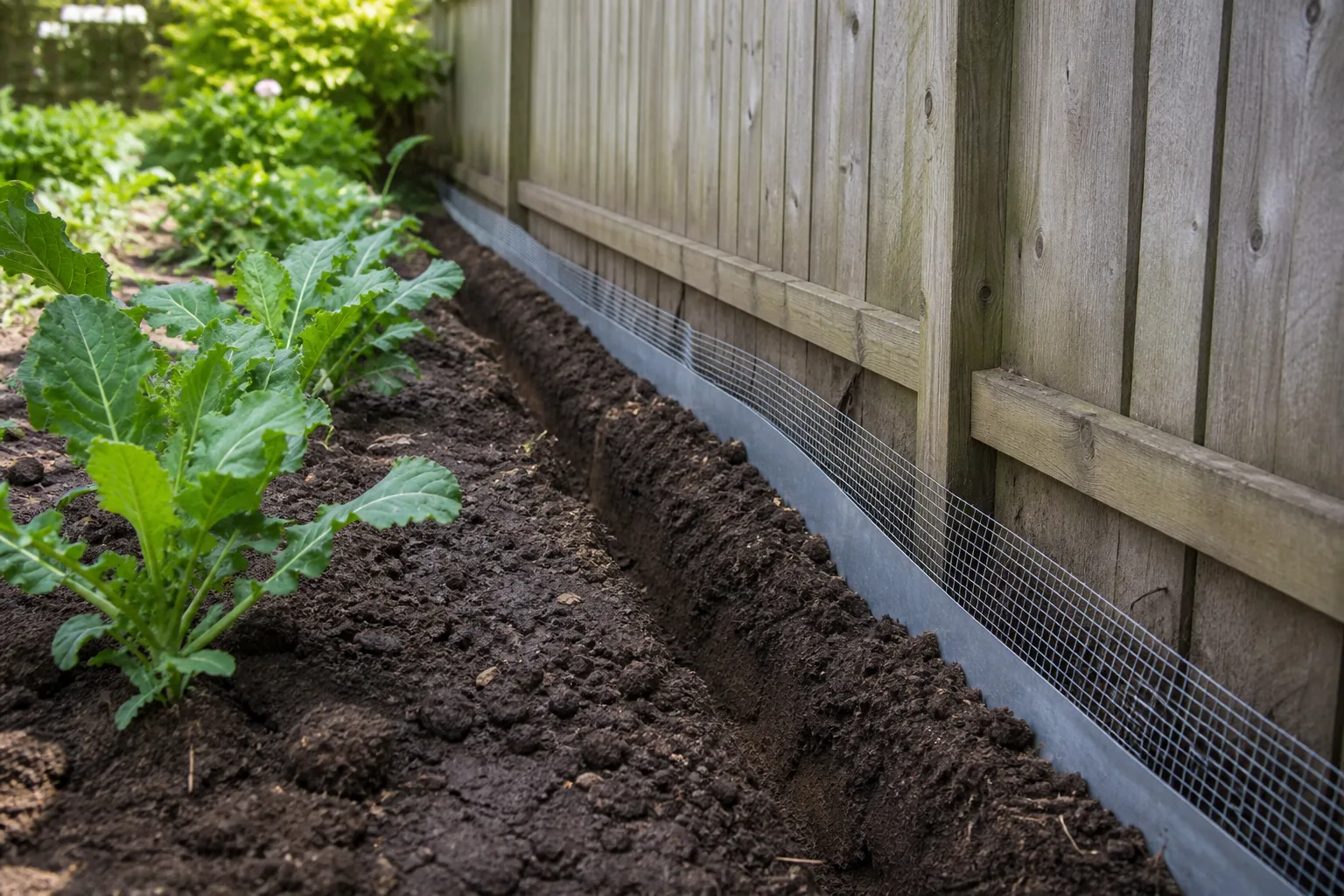
For small zones you must protect—seed beds, raised borders, home gardens—physical exclusion beats smell. Penn State Extension describes an L-shaped fence:
- Use 24-inch-wide sheet metal or hardware cloth.
- Bend it lengthwise into a 90-degree L with two 12-inch legs.
- Dig a trench 12 inches deep and 12 inches wide.
- Bury the fence so the bottom of the L faces outward from the protected area, preventing moles from tunneling underneath (Penn State Extension).
This is labor-intensive for an entire suburban lot but practical along a vegetable garden back edge or a narrow bed where vinegar would kill plants anyway. Combine buried barriers on beds with vinegar on open fence lines for a layered defense.
When Vinegar Is Not Enough: Trapping and Professional Help
NC State Extension is blunt: there are no shortcuts or magic wands in mole control; trapping is the most successful and practical method when damage is ongoing (NC State Extension). Vinegar does not remove a mole that has already claimed your hunting tunnels.
Finding Active Tunnels Before You Set a Trap
Traps only work on runways moles use regularly. The standard field test:
- Flatten a short section of a surface runway with your foot, or remove a 1-inch plug of tunnel roof.
- Mark the spot.
- Return 24 hours later. If the tunnel is raised again or the roof repaired, it is active (Penn State Extension).
Set harpoon, scissor-jaw, or choker-loop traps on that straight, active section per manufacturer instructions—not on random ridges that may already be abandoned. If a trap fails for two days, the mole changed routes; relocate.
Live-trapping moles is difficult and often impractical because release sites and transport laws vary. Most homeowners who need fast relief use lethal traps designed for subterranean runways. If that is not something you want to handle, wildlife control specialists who focus on rodents and moles can assess tunnel maps and food pressure faster than a spray bottle trial.
Safety for Pets, Plants, and Soil
Diluted vinegar is less hazardous than many lawn chemicals, but it is not harmless.
Pets: Dogs and cats may lick treated fence lines or walk through wet spray, then groom themselves. Keep pets off treated areas until dry. Do not soak pet play zones or kennel borders with vinegar. If a pet drinks pooled vinegar solution, contact your veterinarian—acetic acid irritates the mouth and stomach.
Plants: As noted, vinegar damages grass and tender leaves on contact. Spray hardscape edges and molehill soil, not foliage. If overspray hits ornamentals, rinse leaves with plain water within a few minutes.
Soil life: Heavy vinegar use shifts soil pH locally and can stress earthworms—the very organisms moles eat, but also partners in healthy soil. Use the minimum volume that covers borders; do not pour gallons into tunnel openings hoping to “acidify” the whole yard. Claims that vinegar permanently changes soil pH enough to repel moles are overstated; moles tolerate a range of conditions, and rain resets chemistry quickly.
Store mixed solution labeled and out of reach of children. Never combine vinegar with bleach or hydrogen peroxide cleaners in the same bottle.
Conclusion
Vinegar is the pantry staple worth reaching for when you want a humane, low-cost first step against ground moles—not when you need a guaranteed cure. Mix one part white vinegar with three parts water, spray fence lines, shed bases, and fresh molehills, reapply every few days through spring and fall, and keep the solution off the grass and garden beds you are trying to protect. Understand that moles follow grubs and worms, that Penn State Extension confirms no registered chemical repellents for moles, and that smell fades fast when food is abundant.
If ridges keep spreading after a disciplined vinegar and grub-reduction trial, shift to active-tunnel trapping or call a pro—that is what extension services recommend when damage is real. Used early and paired with barriers and smarter lawn moisture, vinegar gives you a fair shot at keeping moles on the other side of the fence before the tunnels—and the molehills—take over your weekend.



