How to Keep Unwanted Pests Out of Your Compost
Rats, flies, or larvae in compost? Identify the likely cause, close entry points, choose safer scraps, and fix moisture or odor without harming decomposers.
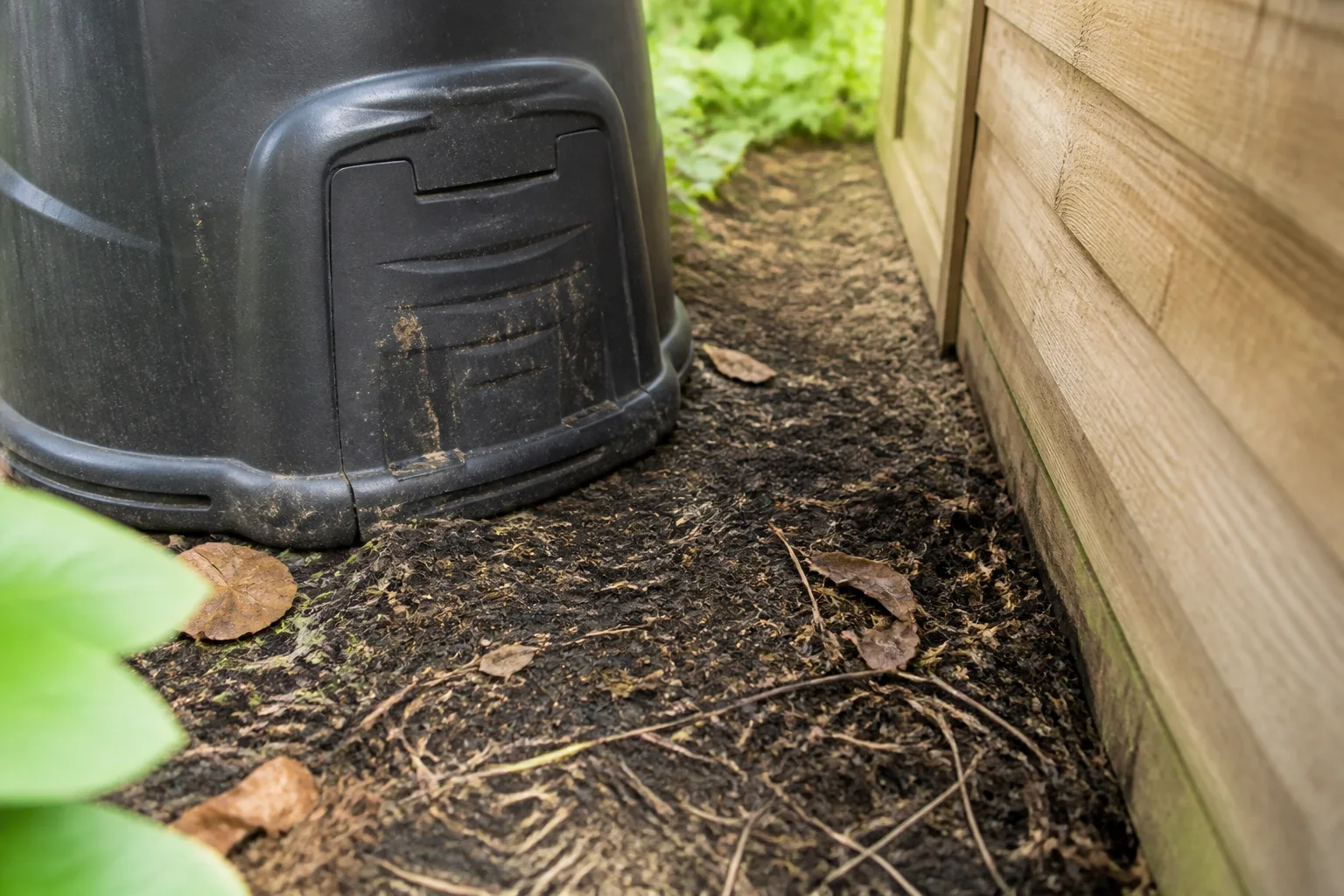
Compost can draw visitors when it offers two things at once: accessible food and a quiet, sheltered place to nest. To keep rats and other scavengers out, remove the most tempting scraps, bury and cover the plant-based material you do compost, and close gaps at the bin’s lid, sides, and base. If the “pests” are flies or larvae, first decide whether they signal exposed food or are simply part of decomposition; the fix is different.
Start with the least disruptive change: stop adding cooked leftovers and animal products, then secure the bin and cover every fresh food addition. Cornell’s composting guidance allows fruit and vegetable scraps when they are buried in other ingredients and broken down promptly, while Washington State University Extension recommends a fastened lid, regular turning, and a strong wire-mesh barrier where rats enter. An open yard-waste pile can remain useful; it just should not be the place where exposed kitchen scraps sit.
First, identify what is visiting the compost
“Pests in compost” can mean a rat tunneling under a bin, fruit flies hovering over a wet food layer, or harmless decomposers that happen to look unpleasant. Watch where activity begins before you treat the whole pile. Check the lid, the bin’s lower edge, nearby ground, and the material you added most recently; that quick inspection points to whether you have an access problem, a food problem, or normal compost life.
Rodents and other scavengers
Rats and mice visit for food, warmth, and cover. Fruit and vegetable scraps can be enough to attract them when they remain exposed, but meat, greasy food, dairy, cooked leftovers, and a sheltered, undisturbed pile can make the site even more rewarding. Raccoons, opossums, skunks, and squirrels may also investigate food waste, depending on what lives nearby; Hoosier Gardener’s compost-pest overview describes several of these scavengers around household piles. The risk is not simply “compost smells”: a sheltered bin beside a fence, shed, or dense groundcover can offer both an easy route and a protected place to linger.
Look for a pattern rather than one ambiguous hole. Fresh soil piled against the bin, repeated digging at the same edge, gnawing on plastic, a shifted lid, or scraps pulled onto the ground point toward a visitor trying to reach the contents. WSU Extension notes that a pile is difficult to make completely rat-proof, so think in terms of reducing access and reward rather than guaranteeing zero wildlife encounters. If you see droppings or a nest, keep children and pets away from that area and avoid reaching into a dark bin or burrow blindly.
Flies, ants, and normal decomposers
Fruit flies and houseflies often gather where soft food is uncovered or a kitchen caddy is left open. Ants may arrive at a dry, undisturbed pocket or spilled food, but their presence does not by itself mean the compost is dangerous. A small number of flies at the opening can be an annoyance; clouds of them, a foul smell, or fresh scraps visible on the surface are stronger signs that the pile needs a management change.
Earthworms, springtails, sowbugs, and many beetles help break down organic matter. Dark, segmented black soldier fly larvae can also appear in warm food-rich material; their presence is not automatically evidence that a compost pile has failed. Compost Revolution’s troubleshooting guide separates these larvae from typical fly maggots and treats them as decomposers, while Cornell advises burying food in an indoor worm bin rather than leaving it on top. If you are not sure what you are seeing, correct exposed food and moisture first instead of dusting the pile with an insecticide.
The fastest response when pests are already there
If you have just found a rat or repeated digging, do not keep feeding the same setup and hope a scent will solve it. Pause kitchen scraps for now, close the lid, and remove scraps that have spilled outside. Put new plant scraps in a sealed container or freezer until you have a secure place for them; freezing is simply a temporary holding method, not pest control by itself.
Next, inspect all four sides, the lid seam, corners, ventilation openings, and the ground underneath. A plastic bin with a wide gap at its rim, an unlatched lid, or an open slat is an access route even if the front looks solid. If you can close the gap with a rodent-resistant screen without stopping air from moving through the pile, make that repair before resuming food additions. A tumbler can help contain food scraps, but it still needs a sound lid and no open path at its frame or base.
When the enclosure cannot be secured quickly, separate the jobs: keep leaves, grass, and other yard material in an open pile, and send food scraps to a lidded, pest-resistant bin, a municipal organics program, or another system that accepts them. Do not use an open pile for food scraps simply because you buried them once; rain, turning, or an animal can uncover them. Once the access route is closed and the bin has no fresh food exposed, restart with small additions and check for signs of renewed digging.
Choose compost inputs that lower pest pressure
For a backyard pile, the safest starting rule is simple: plant material is the default; animal products and prepared leftovers belong elsewhere. Cornell’s FAQ says fruit and vegetable scraps can be composted when they are buried in the other ingredients and broken down quickly. That qualification matters. Scraps are not instantly invisible just because they are technically compostable; the pile needs enough browns and active decomposition to cover and process them.
Bury plant scraps and cover them with browns
Add fruit and vegetable trimmings in a pocket near the center of the bin, then cover them on every side with existing compost, dry leaves, straw, or shredded plain cardboard. The goal is to remove exposed food and its scent trail, not to make a particular number of inches of soil. If the pile is nearly full or too dry to fold over easily, keep scraps in a sealed container until there is room to cover them properly.
Chop large pieces so they blend into the active material sooner, but do not leave chopped food in an open bowl on top. Keep a small stash of dry browns—leaves in a lidded bag, shredded cardboard, or untreated straw—next to the bin. Then each kitchen addition gets covered immediately instead of waiting for the next yard cleanup. A full-size layer of browns is also useful if you have to empty a caddy of several days’ worth of scraps at once.
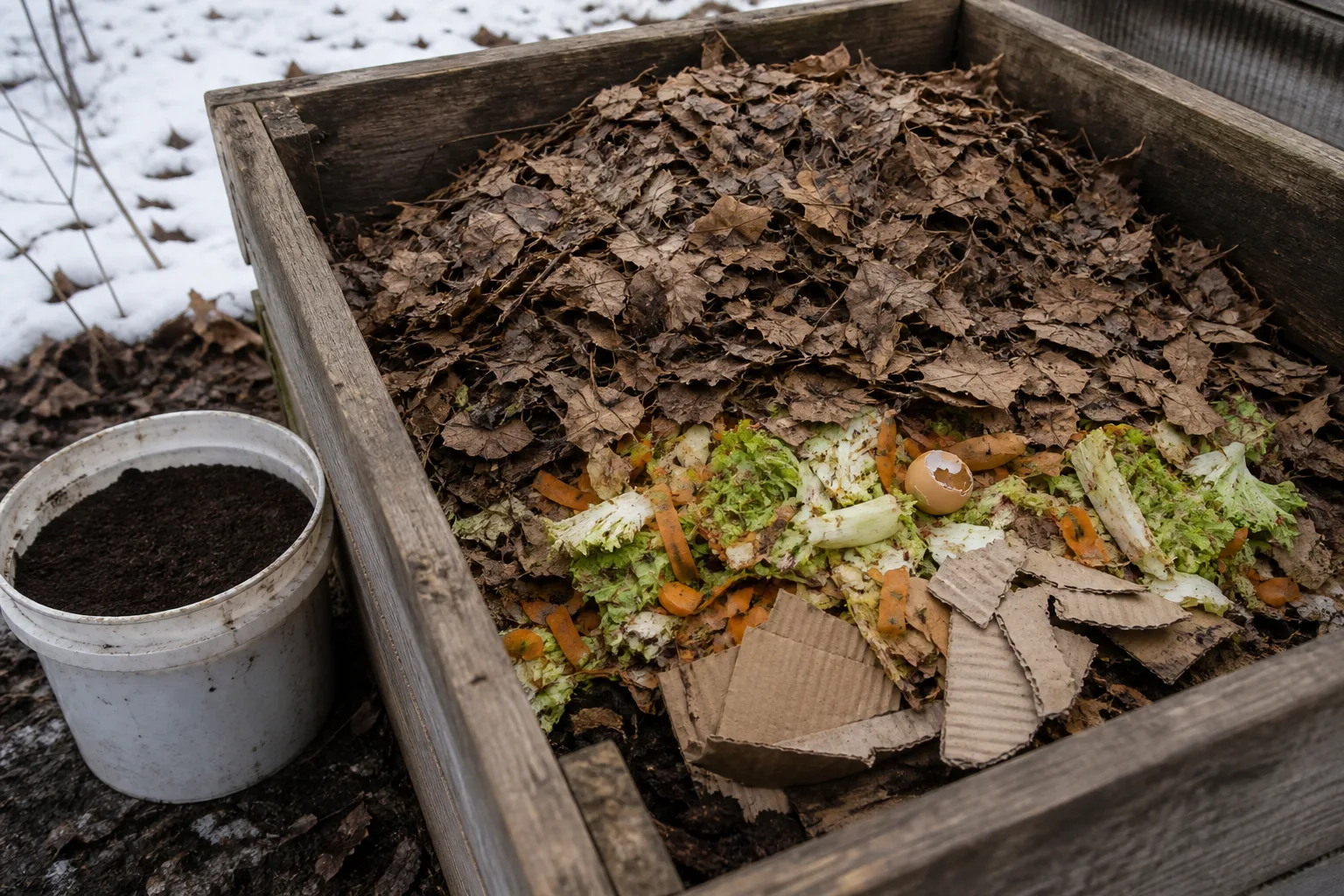
Cornell’s advice is a helpful corrective to the overly broad idea that all fruit waste must stay out of a rat-prone yard: buried fruit and vegetable scraps can be used in a managed pile. But if you have persistent rodents or cannot keep scraps covered, switch to yard-only compost until the barrier is fixed. One good week of careful layering will not compensate for a bin with a tunnel under its base.
Keep high-attraction or risky items out
For a standard backyard pile, exclude meat, fish, bones, dairy, fats, grease, and cooked meals. They can smell as they break down and are attractive to scavengers; in a small, cool pile, they also tend to decompose less predictably than leaves and vegetable scraps. Cooked starches such as bread, rice, and pasta are better kept out of an open home heap for the same practical reason: they can be easy, concentrated food for wildlife. The English Garden’s composting coverage makes the same distinction for meat, fats, and cooked material, and GrowVeg specifically cautions against cooked food, fish, and strong-smelling scraps.
Do not add dog or cat feces or litter from their boxes to a home garden pile. Cornell’s composting FAQ notes that these wastes may contain parasites or disease organisms harmful to people. Some municipal or commercial facilities accept a wider range of organics because they use a controlled process; follow that program’s instructions rather than assuming a backyard bin is equivalent. Herbivore bedding and manure can be compostable, but bedding contaminated with cat or dog waste is a different matter.
Eggshells are a case where gardener experience varies. A clean, dry shell is not the same food as an egg with white or yolk stuck to it, but residual food can make the shell more attractive than a completely clean mineral fragment. Rinse shells if you use them, crush them, and bury them instead of leaving a half shell on top. If activity reliably follows eggshell additions in your yard, skip them or use a local food-scrap collection program while you resolve the intrusion.
| Material | Backyard pest-conscious choice | Why |
|---|---|---|
| Fruit and vegetable scraps | Add in a covered pocket; keep dry browns nearby | Plant scraps can work when they are not exposed and the pile is active |
| Leaves, straw, untreated plant trimmings | Use freely as cover and structure | Dry browns hide new additions and help balance wet scraps |
| Meat, fish, bones, dairy, grease, cooked leftovers | Keep out of an ordinary outdoor bin | Concentrated smells and food reward scavengers |
| Dog or cat waste and litter | Do not add to home compost | Cornell flags possible human-harmful parasites and disease organisms |
| Eggshells | Rinse, crush, and bury; omit if they trigger visits | Food residue, not the clean shell alone, may be the attractant |
Build or adapt a rodent-resistant bin
A bin’s job is to make compost manageable, but a rodent-resistant bin must also close its access routes. A lid alone is not enough if an animal can dig below the walls, squeeze through wide ventilation gaps, or chew through weak plastic. If you already have a plastic composter or slatted wooden bay, you can often adapt it instead of replacing it: use a strong mesh at the base and at openings, secure every seam, and keep the lid from lifting.
Close entry routes without blocking airflow
Start at ground level. WSU Extension recommends strong wire mesh with openings around ¼ inch beneath a bin rats are burrowing under, and suggests reinforcing chewed plastic on the sides and top as well. Galvanized welded hardware cloth is more appropriate for a persistent rodent problem than flimsy chicken wire, which can bend and leave openings. Secure mesh tightly to the base and overlap the edges so there is no unprotected strip where soil meets the wall. GrowVeg likewise recommends a solid-sided bin and a heavy welded mesh base rather than relying on thin wire.
Work upward from there. Close large gaps in slatted sides with mesh that still lets air circulate; do not wrap the entire pile in an airtight sheet or landscape fabric. Compost needs oxygen and drainage, and blocking vents can create the sour, wet conditions you are trying to avoid. Fasten the lid with a simple latch or clip, then check that it meets the rim evenly all the way around. A loose corner is a route even when the lid appears closed from the front.
If you are building a bin, choose a design with a secure lid, access panels that latch, and ventilation openings small enough to screen. If you use a tumbler, inspect the opening door and the gap where the drum meets its support frame. A tumbler that is difficult to turn or that leaves an open bottom gap may not solve the problem. Consider the real trade-off: a sealed, heavy container can be harder to aerate and empty, while a light, open-sided heap is easier to manage but gives wildlife easier access.
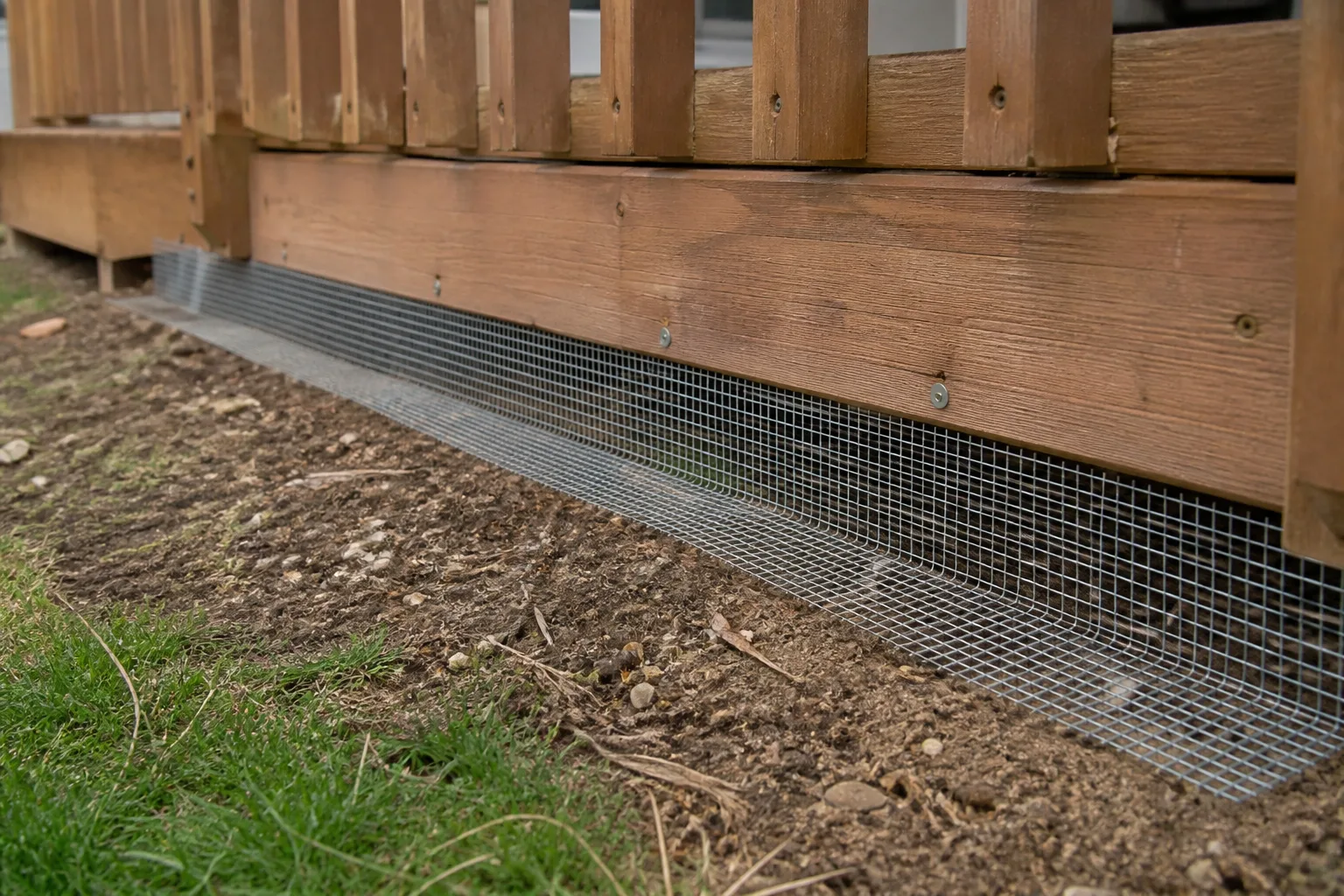
The base is the part gardeners most often miss. If a bin sits on soil, attach mesh so it lies flat under the footprint and extends beyond the sides, then pin or secure the overhang so it cannot be pushed aside. If the bin already has large openings beneath it, a mesh base can retain drainage while denying a direct burrowing route. Check local composting guidance if you are considering a solid slab; the pile still needs a way to drain and breathe.
Manage moisture, aeration, and disturbance
A pest-resistant bin still needs the right compost conditions. The material should feel like a wrung-out sponge: damp through the pile, not dripping wet or bone dry. WSU Extension recommends keeping the pile moist and regularly turned because a dry, undisturbed heap can become a sheltered nesting spot. That does not mean watering every few days on a schedule; check the material first, then add water only when it is dry and rain has not reached the covered pile.
A soggy pile needs dry browns and air, not more water or a blanket of landscape fabric. Mix in dry leaves, shredded cardboard, or small twigs, then loosen compacted pockets so air can move through. If water pools at the base, improve drainage or move the bin away from a runoff path before adding more scraps. A foul or ammonia-like odor is a useful diagnostic clue: food may be rotting in an oxygen-poor pocket or too much nitrogen-rich green material may be concentrated in one place.
Turn the pile enough to mix fresh additions into the center and disrupt a quiet surface layer. A kitchen composter does not require a strict calendar to deter rats, but leaving the same food pocket untouched for months gives animals time to discover it. For a small enclosed bin, use a hand fork to fold over the new pocket; for a large heap, turn more broadly when the material is workable. Keep the lid closed between additions and avoid storing unused scraps in an open bucket beside the bin.
Handle fruit flies, larvae, and other compost insects
If small flies rise when you open the bin, look for exposed fruit, a spill around the rim, or a damp kitchen container where scraps wait before transfer. Bury the exposed layer, cover it with dry browns, and clean food residue from the lid and rim. Cornell’s guidance for composters and worm bins is to keep food under a layer of brown material or bedding rather than on the surface. A bottle of vinegar may trap adult fruit flies nearby, but it does not remove the breeding material; use it only as a secondary step after fixing the source.
Do not treat every pale larva as a maggot infestation. Fly larvae are common in moist organic material, and black soldier fly larvae can be useful decomposers in an outdoor pile. Compost Revolution notes that soldier fly larvae may be larger and darker than common maggots and can disappear as conditions or food supply change. The distinction is not always easy to make at a glance, so use the rest of the evidence: a strong fly cloud, exposed kitchen scraps, and a sour smell call for cleanup and cover; a few large segmented larvae in an otherwise balanced pile may need no treatment.
If you want fewer larvae, remove the conditions that keep attracting adult flies. Cover the food layer, add dry leaves or shredded cardboard, reduce excessive moisture, and keep the bin closed. Avoid spraying the pile or sprinkling an insecticide dust over active compost; those approaches can affect organisms doing the decomposition and do not fix a gap that lets rodents enter. If the flies are actually breeding in an indoor caddy or drain, clean that separate source as well rather than treating the garden bin as the only cause.
Are diatomaceous earth, cayenne, or peppermint reliable?
A smell or powder may sound easier than repairing the bin, but it does not remove the food source or close a rat’s route underneath. Peppermint, cedar, eucalyptus, cayenne, and similar deterrents are especially unreliable as the only outdoor measure because rain, air movement, fresh compost, and time change what a visitor encounters. If an animal is already feeding, focus on the access point and the kind of food that is available rather than repeating a stronger scent.
Diatomaceous earth is also a poor first response for a compost pile. It cannot exclude rodents, it is diluted or moved as the pile is turned or wetted, and broad application can reach non-target insects. The useful target is the food surface and the bin’s openings, not every insect in the compost. If a pesticide is ever considered for a separate pest problem, follow its label and local rules; do not assume a product suitable for a house or garden bed is suitable for compost.
Landscape fabric is not a substitute for hardware cloth at a rodent entry point. Rats can chew or push aside lightweight fabric, and wrapping a bin can restrict airflow or trap excess moisture. Use strong, well-fastened metal mesh where you need a barrier, while leaving ventilation and drainage routes open. Then manage the pile so it is neither an exposed buffet nor a dry, untouched nesting pocket.
Troubleshoot by symptom: odor, digging, flies, or ants
Use the pattern at the bin to select the first fix. One isolated ant or one small fly does not call for a rebuild, while fresh burrows, gnawing, or repeated lid displacement suggest an access problem. The table below separates those cases so you can correct the cause instead of applying one treatment to every visitor.
| What you notice | Likely issue | First response |
|---|---|---|
| Scraps visible on top, flies at the opening | Food is exposed | Bury the layer, cover it with browns, and clean spills from the rim |
| Sour odor, wet clumps, or leachate | Too much moisture or too little air | Add dry browns, loosen compacted areas, and correct runoff |
| Repeated digging at the same edge | Entry beneath the bin | Pause scraps, inspect the base, and secure strong mesh underneath |
| Chewed plastic or a shifted lid | Side or top gap | Screen openings, reinforce weak spots, and fasten the lid |
| A few larvae, worms, or sowbugs in balanced compost | Normal decomposer activity may be present | Check for exposed food or bad odor; leave beneficial organisms alone if neither is present |
| Ants in a dry pocket | A dry, undisturbed area or nearby food spill | Moisten only if dry, turn the pocket, and clean around the bin |
Sour or soggy compost
Do not add more water or food to a sour pile. Pull out any visible meat, cooked leftovers, or other items that do not belong in an ordinary backyard bin, then fold in enough dry, bulky browns to open the wet material. Leave the lid off briefly while you mix if the weather is dry, then replace it so animals cannot get to the new surface layer.
If odor returns within a few days, inspect the ground and the underside of the lid for runoff, blocked drainage, or a large clump of wet grass or fruit. Thin a dense pile and add dry leaves or small twigs to restore air spaces. Cornell recommends bulking agents such as wood chips and mixing the material to reaerate a system that has become anaerobic. Lime is not a universal odor cure and is unnecessary in most piles; fix air and moisture first.
Fresh digging or repeated visits
Treat repeated digging as a physical access problem, even if you have removed obvious scraps. Empty the area around the bin of fallen fruit, spilled birdseed, open trash, and pet food that is left outside. Then secure the base and lid before you resume food scraps. If the animal has made a nest inside, do not reach in with bare hands or shake the bin while it is occupied; keep people and pets away and follow local wildlife or pest-control guidance for safe removal.
A single visit does not prove that you need to abandon composting. A week of no fresh digging after you remove attractants and close gaps is a useful sign that the change helped, but keep checking the base and lid after rain, turning, or a new food addition. If rats remain active around the yard or enter the home, a compost tweak may not be enough; ask a local extension service or qualified pest professional about the wider problem.
Check the rest of the yard for food and shelter
A compost bin is only one part of the food landscape. Fallen fruit, unsecured garbage, pet food bowls, open chicken feed, and spilled birdseed can keep rodents in the area even after the compost is fixed. Clean up what is realistic, use lidded storage, and avoid placing the bin in a narrow, overgrown passage that gives an animal an easy concealed route to it.
You do not need to strip the garden of habitat. Leave pollinator beds and wildlife-friendly areas where you want them, but put food scraps in a more secure container and keep the immediate compost area visible enough to inspect. A modest gap from sheds, dense brush, and fences can make it easier to spot fresh burrows and harder for a rodent to approach unseen. Balance access with the practical requirements of composting: a workable location, convenient water, and enough room to turn or empty the bin.
If your yard has recurring rat activity, ask whether an open compost heap is still the right system for kitchen scraps. Keep the heap for leaves and non-food yard waste, then use a latched tumbler, a sturdy rodent-resistant bin, or a curbside program for food. That division preserves composting without asking an open pile to do a job it cannot reliably do.
Conclusion: make the pile less rewarding
To keep pests out of compost, match the repair to the visitor. For rats and mice, stop offering exposed or high-attraction food, close gaps at the base and lid, and use strong mesh where an animal can dig or chew through. For flies, cover scraps with browns, clean the rim and caddy, and correct wet or airless pockets. For worms, springtails, sowbugs, and occasional soldier fly larvae, check the conditions before deciding that anything needs to be eliminated.
No outdoor compost bin is guaranteed to be wildlife-proof, and the occasional insect is part of decomposition. A reliable routine is still straightforward: keep animal products and pet waste out of a backyard pile, bury and cover plant scraps, maintain damp but aerated material, and inspect the enclosure after each disturbance. If a bin cannot be secured, send kitchen scraps to a closed system or local program and keep the open pile for yard waste.



