Why Is My Grass Turning Yellow? 8 Reasons and Fixes
Why is my grass turning yellow? Check first for drought, excess water, fertilizer burn, mowing stress, compaction, pet urine, or disease before choosing a fix.
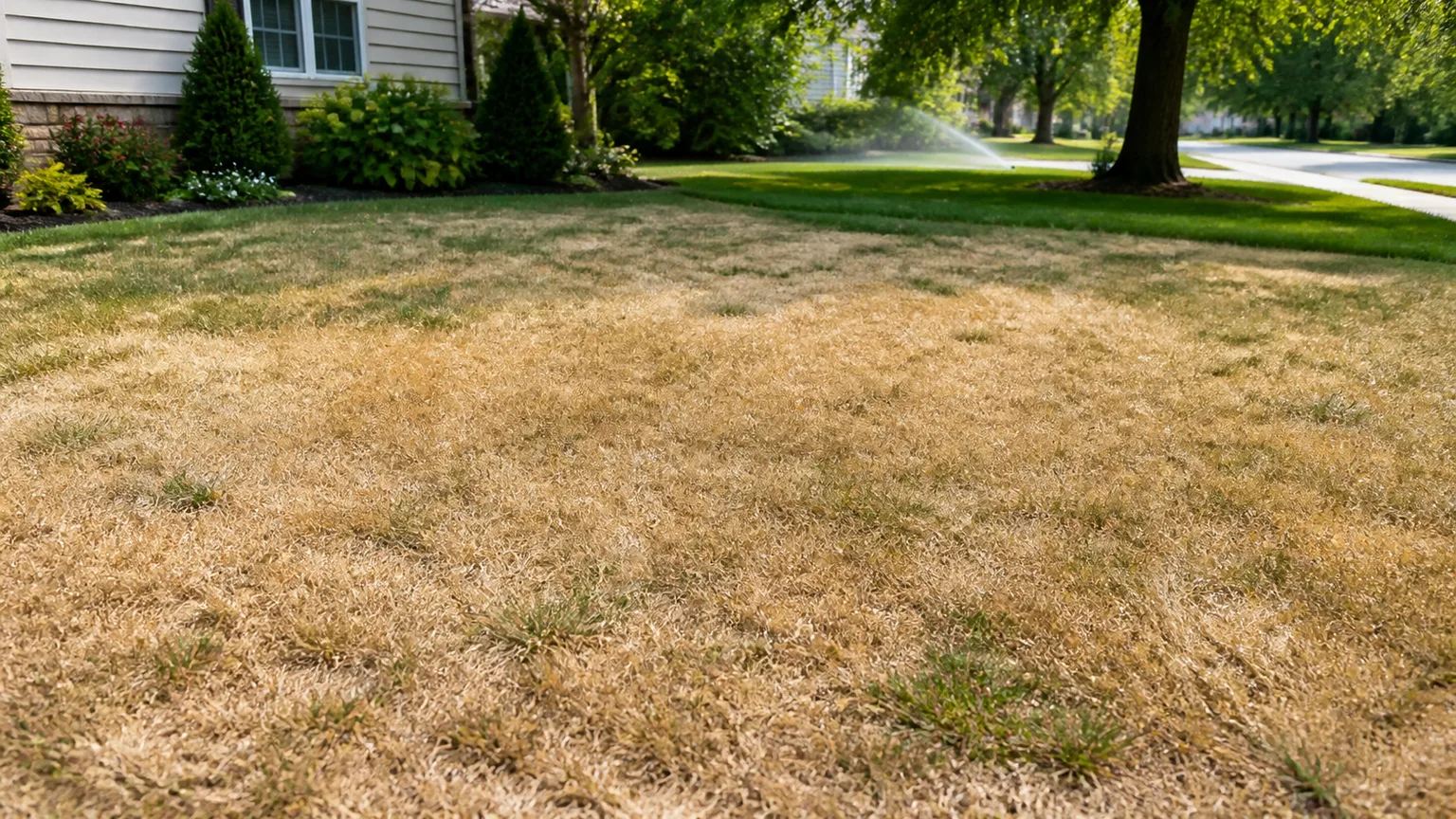
Grass can turn yellow when its roots cannot take up enough water or nutrients, when blades are cut or chemically injured, or when heat and the season slow growth. A yellow lawn may also be entering normal dormancy. The color alone does not tell you which one it is, so look at the pattern, timing, soil, and recent care before you water, fertilize, or spray.
A fast diagnosis saves the lawn from the common second mistake: treating a symptom with the wrong input. Extra water can worsen saturated soil, fertilizer can compound salt injury, and a fungicide will not solve a dry patch or insect damage. Start with the clues below, then change one likely cause at a time.
Start with the pattern—not a product
Color is only one part of the evidence. A lawn-wide fade after hot, dry weather points you in a different direction from stripes that appear after spreading fertilizer or small circles that keep widening. The University of Maryland Extension’s home-lawn diagnostic guide emphasizes that symptoms can overlap and that not every problem calls for treatment.
A practical overview from Gardening Know How also includes grass type, seasonal change, and routine maintenance among common look-alike causes. That is why one color symptom should not trigger one automatic treatment.
What the pattern can tell you
| What you see | First possibilities to check | Start here |
|---|---|---|
| Most of the lawn fades at once during hot or cold weather | Dormancy, drought, or a seasonal growth pause | Identify the grass type and compare the weather with its active season |
| Bands, tire tracks, or a sharp spill-shaped patch | Fertilizer, herbicide, or other chemical injury | Review recent applications and the path of the spreader or sprayer |
| A small round patch with a darker green edge | Dog urine or a concentrated fertilizer spot | Check for pet use and a recent granular product application |
| Yellowing in low places, beside a downspout, or where water stands | Poor drainage, overwatering, or disease pressure | Feel the soil several inches down and check how long it stays wet |
| Dry patches persist despite watering or rain | Uneven sprinkler coverage, runoff, or water-repellent soil | Compare catch cups and check whether water enters the soil |
| Tips turn pale or tan right after mowing | Scalping, a low mower setting, or dull blades | Inspect the cut ends and mower height |
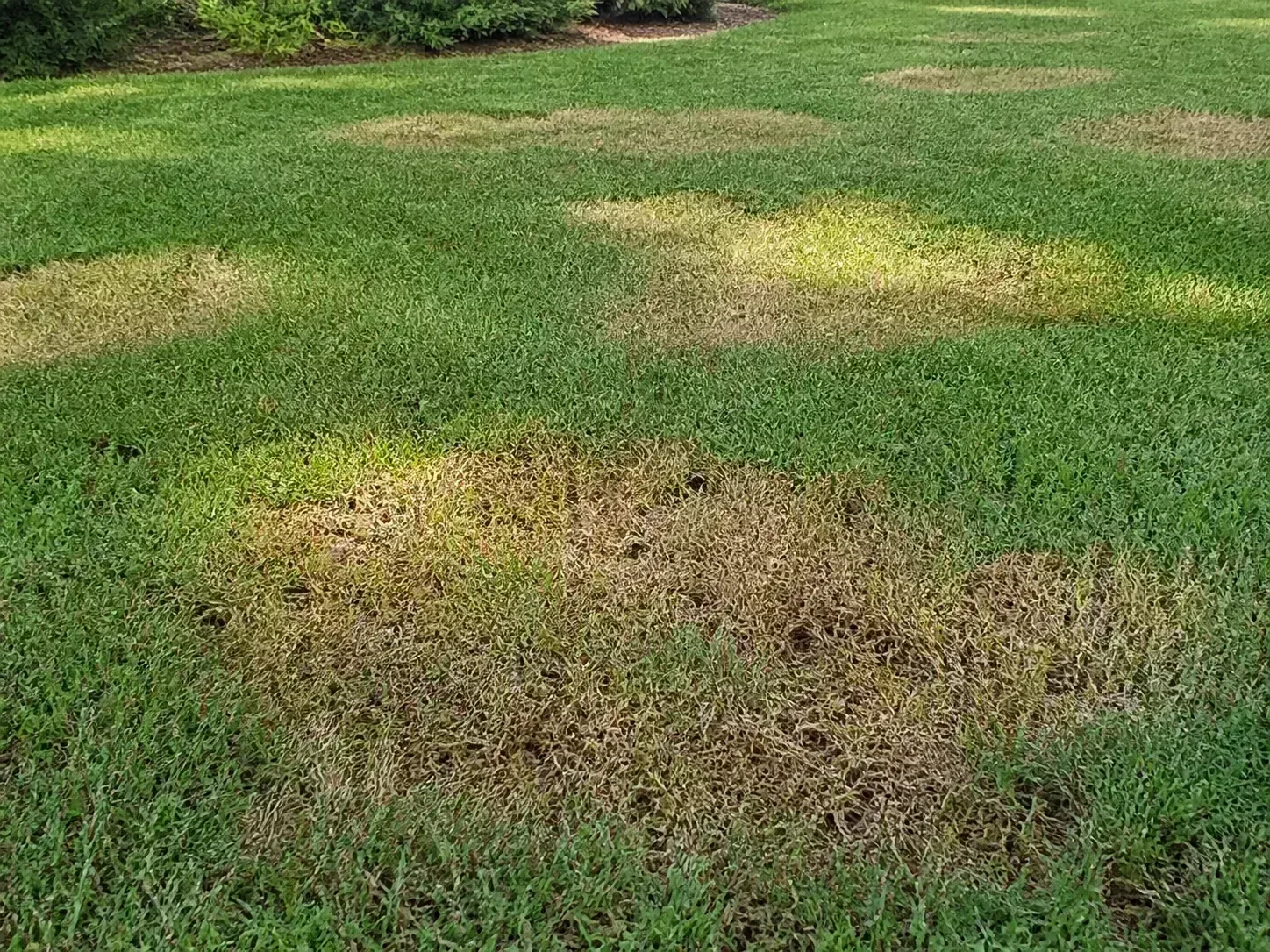
| A patch expands, blades show lesions, or turf lifts easily | Disease or root-feeding insects | Inspect the living edge and roots; get a local diagnosis before treatment |
Treat these as leads rather than diagnoses. One cause can create a second one: drought-stressed grass is more vulnerable to some pests, while saturated turf can develop disease and shallow roots. Keep a short note of weather, mowing, irrigation, fertilizer, and weed-control applications; timing often narrows the possibilities faster than a close-up photo by itself.
Four checks before you water or feed
First, step back and note whether the yellowing is broad, in lines, or confined to a few spots. Then part the blades and inspect the crown—the pale, firm base where leaves meet the roots. A living crown is a better sign than green color alone; dead leaf tips can remain yellow even while new shoots are starting below them.
Next, probe the soil at the edge and center of the patch. A long screwdriver or soil probe that enters easily in the green area but stops in the yellow area suggests a difference in moisture or compaction, although dry soil can be hard too. Finally, recall the last fertilizer, herbicide, de-icer, mower, or irrigation change. Those four checks help you choose which of the eight causes to investigate instead of guessing from a single blade.
1. Drought stress or normal dormancy
Grass does not stay actively green through every season. Cool-season grasses such as Kentucky bluegrass, tall fescue, fine fescue, and perennial ryegrass grow best in cooler weather; in hot, dry weather, many slow down or go dormant. Warm-season grasses such as bermudagrass, zoysiagrass, and St. Augustinegrass have the opposite seasonal rhythm and may lose color as temperatures cool. The mix in a lawn matters, so a uniform color change that follows a seasonal shift may be normal rather than a spreading disease.
Drought stress often begins as a dull blue-green or gray-green cast, then progresses to yellow or straw color. Footprints may remain visible because the blades no longer spring upright. Minnesota Extension notes that Kentucky bluegrass can enter drought dormancy after about a week without water under its regional conditions; that timing is an example, not a universal schedule for every soil or climate. Established roots and crowns can survive dormancy, while top growth temporarily browns.
Choose whether you will irrigate consistently enough to keep the turf actively growing or accept seasonal dormancy. Repeatedly letting a lawn turn brown, watering just enough to green it, then letting it dry again can stress cool-season turf. If you allow an established lawn to go dormant, mow less and keep traffic off it; if you irrigate, adjust for rainfall, soil type, grass species, shade, and local water rules. The University of Minnesota’s drought guidance and University of Illinois watering guidance both explain why dormancy can be a reasonable water-saving choice for established cool-season lawns.
Do not fertilize dormant turf to force a green response. Fertilizer cannot replace missing water or make a dormant plant grow through unfavorable temperatures, and new top growth can increase stress. Resume normal feeding only when the correct grass is actively growing and local recommendations call for it.
2. Too much water, or water that never reaches the roots
Underwatering and overwatering can both yellow grass, but they leave different soil clues. If the root zone is dusty or dry, the grass may be thirsty; if it is cool, soft, and saturated several inches below the surface, the roots may lack oxygen. A lawn can also look parched while the soil is wet in one section and dry in another because sprinkler heads overlap unevenly, water runs off a slope, or a thatch layer blocks infiltration.
For actively growing turf, about an inch of total water per week—including rain—is a familiar starting point in many U.S. extension recommendations, not a prescription for every lawn. Soil texture, temperature, wind, shade, species, rooting depth, and rainfall all change the amount needed. Maryland Extension recommends checking whether water has reached roughly 4 to 6 inches into the soil after irrigation; Illinois Extension advises watering thoroughly and infrequently rather than repeatedly wetting only the surface.
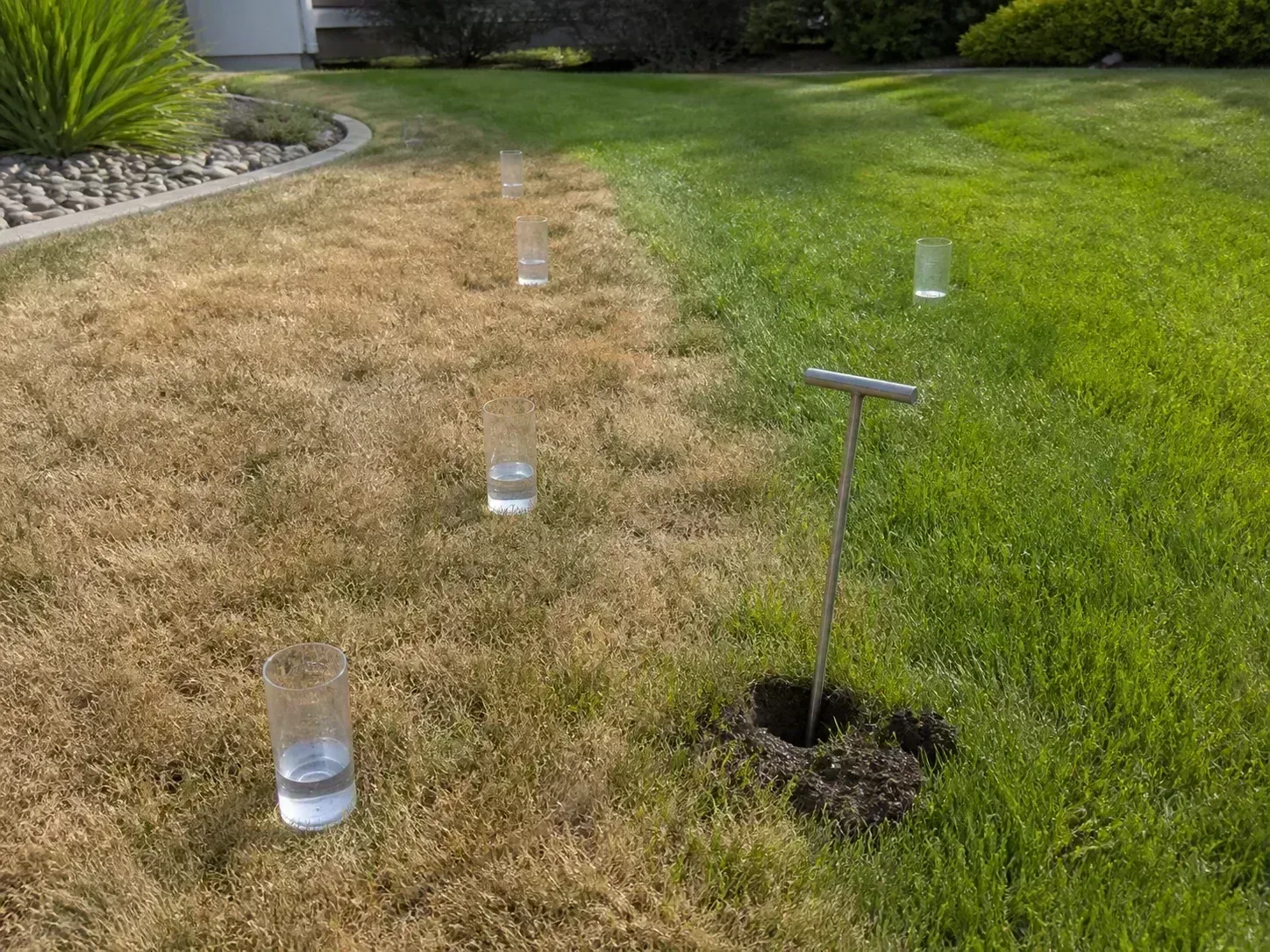
Test your sprinkler instead of relying on minutes. Set several straight-sided cups across the affected zone, run the sprinkler for a measured time, and compare how much water each collected. If some are nearly dry while others are full, correct the nozzle, head direction, overlap, or zone before increasing the whole system’s schedule. When water begins to run off, pause and let it soak in, then return for another shorter cycle.
If soil stays wet for days, pause automatic watering and look for a broken sprinkler, low spot, downspout discharge, compacted soil, or a drainage problem. If water beads or runs off dry patches instead of soaking in, the site may have a water-repellent “dry patch.” The Royal Horticultural Society’s dry-patch guide explains that affected soil can remain bone-dry even after rain, so simply watering longer may send water elsewhere. Correct the delivery and drainage problem before deciding the grass needs fertilizer.
New seed, sod, or plugs are an exception to established-lawn watering: they need more frequent, gentle moisture while roots establish. Do not use an established lawn’s schedule for a new installation, or the reverse.
3. Fertilizer burn or a chemical spill
A fertilizer injury often follows the way the product was applied. Yellow or brown stripes can line up with spreader passes; a concentrated patch may appear where fertilizer spilled, overlapped, or washed off a sidewalk. Soluble fertilizer salts draw water from root tissue, so the grass can look drought-stressed even when you have watered. Herbicide drift, fuel, cleaning products, de-icer, pool water, or another chemical can also cause sharply localized injury.
Think back to what happened in the days or weeks before the color changed. Affected patches that match an application pattern are a stronger clue than a vague recollection that the lawn “might need food.” The University of Maryland Extension’s fertilizer-injury guidance recommends measuring lawn area and calibrating the spreader to prevent uneven or excessive rates. A product’s label remains the authority for its site, rate, watering directions, and precautions.
If you have confirmed that excess soluble fertilizer reached a well-drained patch, Maryland Extension describes repeated one-inch water applications as a way to leach excess salts. That is not a blanket instruction to flood a lawn: do not create runoff, violate a water restriction, or saturate already-wet soil. If the product was an herbicide, cleaner, fuel, or an unknown chemical, do not assume irrigation will reverse the injury; follow its label and ask your local extension office what information they need to identify the damage.
Avoid the “green it up” reflex. More fertilizer, lime, iron, or weed-and-feed can add stress and make the pattern harder to interpret. Keep the package or take a photo of the product label, mark the affected area, and wait for new growth before reseeding a small dead patch.
4. A real nutrient shortage or a pH problem
A genuine nitrogen shortage can make an entire lawn look pale and grow slowly, with fewer clippings at mowing. But yellow is not proof of low nitrogen. Iron availability, soil pH, root stress, cold soil, poor drainage, drought, and shade can all affect color. Localized pale stripes down individual leaves may suggest a micronutrient or root-uptake issue rather than a lawn-wide need for a general fertilizer.
A fertilizer bag cannot tell you what your soil lacks. If yellowing is gradual, widespread, and not explained by weather, water, mowing, or a recent product application, collect a representative soil sample and use a lab that provides lawn recommendations. Soil tests are especially useful for pH and phosphorus or potassium; nitrogen changes quickly in soil and is often managed using locally calibrated turf schedules. The University of Illinois fertilizer guidance explains why the product, rate, season, and grass type matter, and why excess nitrogen can increase disease and insect pressure.
Do not scatter a high-nitrogen product over the lawn because the color looks pale. If the problem is iron availability or stressed roots, more nitrogen can push weak growth without fixing the cause. If a test confirms a need, use a rate and timing recommended for the grass type and region, then water according to the product label and soil conditions.
5. Mowing too short or cutting with a dull blade
Yellow tips that show up soon after a mow point toward the mower. A dull or nicked blade tears rather than cleanly cuts the leaves, leaving frayed ends that dry pale or tan. If the whole lawn suddenly looks lighter after a low cut, the mower may have removed too much green leaf tissue at once or scalped high spots.
Raise the deck and mow only when the grass is dry enough to cut cleanly. As a general rule, avoid removing more than one-third of the leaf blade in a single mowing; if the lawn is overgrown, bring it down over several cuts rather than scalping it once. The ideal height varies by species and local conditions, so use a regional turf recommendation instead of treating a two- or three-inch setting as universal. Maryland Extension’s home-lawn diagnostic guide connects shredded tips with mower injury and identifies short mowing as a stressor.
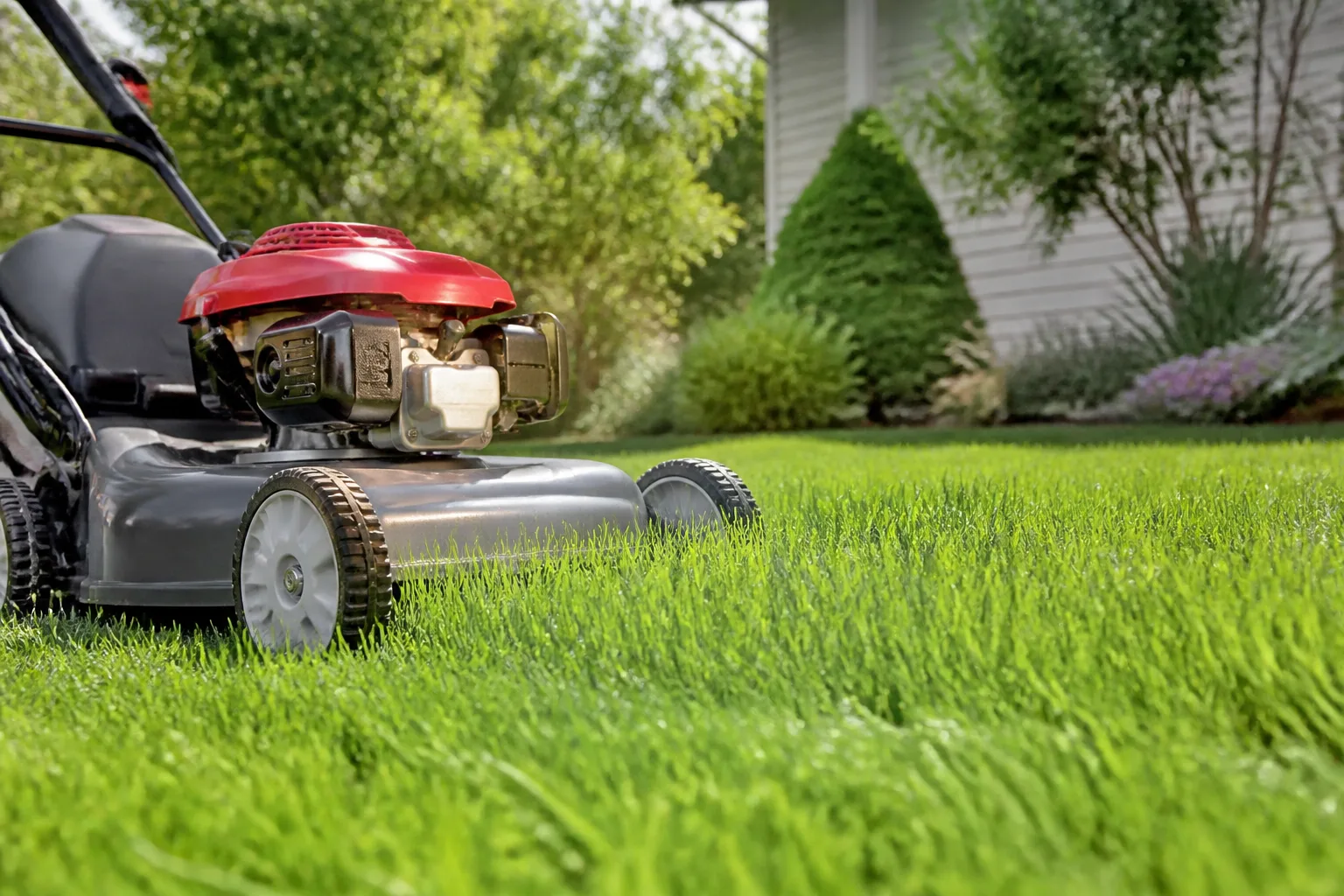
Keep the blade sharp and change the mowing direction from time to time to reduce rutting. Avoid mowing during peak heat or when turf is in deep drought dormancy; the reduced leaf area and wheel traffic make recovery harder. A higher, clean cut can also help the lawn shade its own soil and keep weeds from taking advantage of thin areas.
6. Compacted soil, a thick thatch layer, or repeated traffic
Compaction is likely when yellowing lines up with a gate, walkway, play area, parking strip, or the route a mower follows. Repeated pressure squeezes air spaces from the soil, restricts root growth, and slows water movement. The grass can become shallow-rooted, so it dries quickly in sun yet puddles after a heavy shower.
Thatch is a dense layer of stems, roots, and other undecomposed plant material between the green blades and soil. A thin layer is normal, but a thick mat can hold water above the root zone and shelter pests. Do not confuse thatch with ordinary short grass clippings: clippings break down relatively quickly when the lawn is mowed regularly. Illinois Extension notes that excessive thatch can create poor root conditions and is often associated with overwatering, excess nitrogen, or compacted soil.
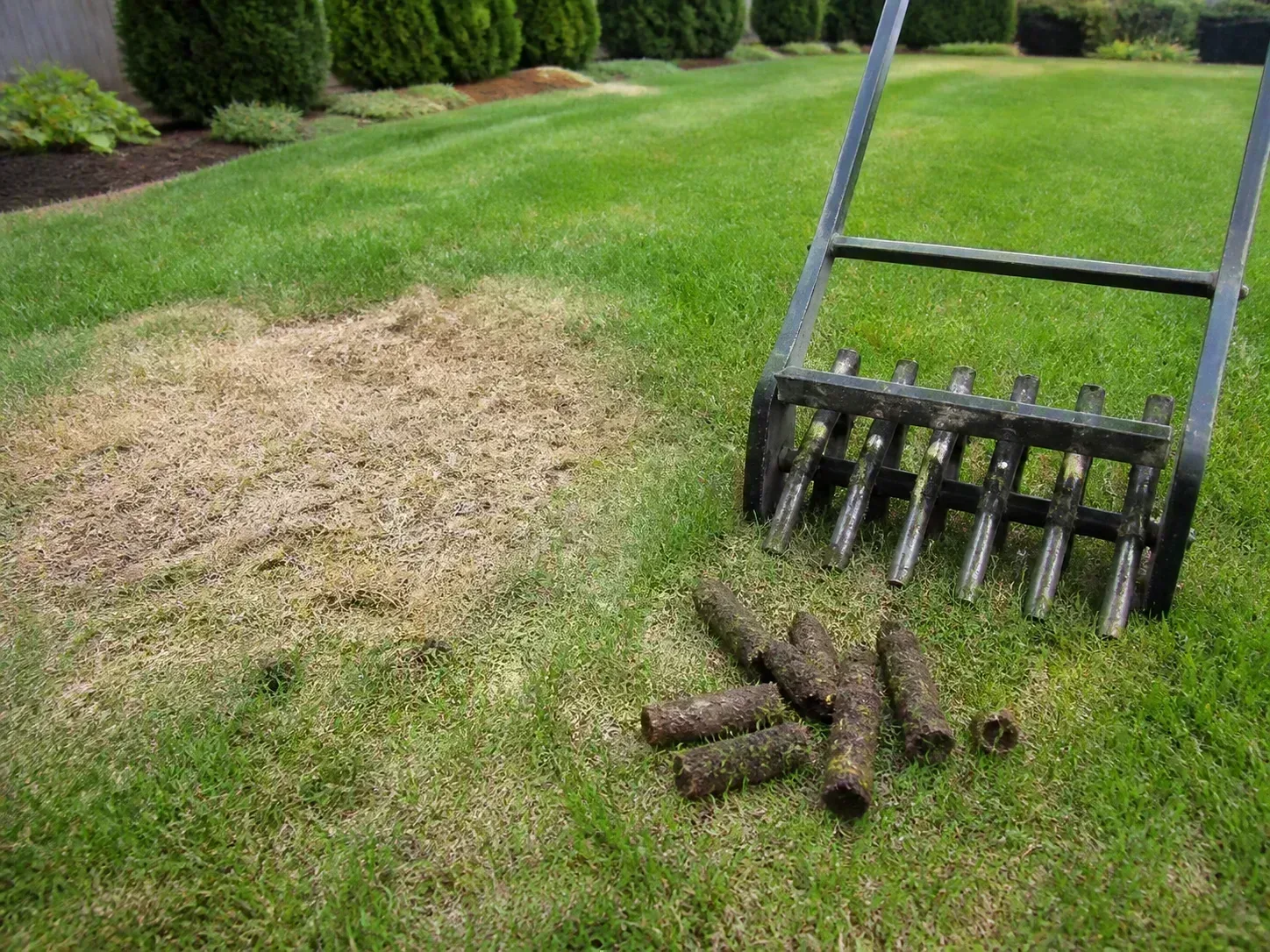
For compacted established turf, use a core aerator that removes soil plugs; spiked shoes or solid-tine tools can press soil tighter around the holes. Aerate only when the lawn is growing vigorously and soil is moist enough to pull clean cores, not wet enough to smear. Maryland Extension recommends fall for cool-season lawns and early summer for warm-season turf in its region, but your own local calendar may differ. Its lawn-aeration guidance also advises against aerating dormant grass.
If the soil is too wet, first fix drainage and reduce traffic. If the site is heavily shaded or stays wet because of its grade, aeration alone will not turn it into a suitable lawn. Re-route foot traffic, adjust irrigation, correct a drainage problem where practical, or consider a groundcover suited to the conditions.
7. Dog urine
Dog-urine injury often appears as scattered small circles: the center is yellow or straw-colored while the outer edge may be darker green. A concentrated dose can injure the grass; a smaller amount can act like fertilizer. That combination explains why the border may grow faster even when the center has been damaged. The Penn State Extension guide to dogs and lawns notes that a concentrated nitrogen application in one spot can create the same kind of burn as excess fertilizer.
If you see the dog urinate, rinse that spot promptly with water to dilute it. A designated toilet area, more frequent walks, or training can reduce repeated hits to the same patch. Do not restrict a dog’s normal access to drinking water, and do not treat a circle as proof of urine if there is no pet history; fertilizer spills, disease, and other chemical exposures can look similar.
If the grass in the center has died, watering after the event will not bring that tissue back. Wait until the cause has stopped and the season is right for your grass, loosen only the surface if needed, and patch with a compatible seed or sod. Adding a handful of fertilizer to the spot is a poor shortcut because the soil may already have more nitrogen and salts than the grass can use.
8. Disease, root-feeding insects, or competing weeds
A disease becomes more plausible when patches keep spreading, leaf blades have distinct lesions or colored spores, or the lawn stays wet for long periods. Rust can leave orange powder on the blades; some fungal diseases make circular or irregular patches; others cause scattered leaf lesions without a neat circle. Several non-disease problems create similar shapes, so do not diagnose by outline alone. The University of Maryland’s lawn-disease guide shows how symptoms differ by grass type, season, blade, and whole-lawn pattern.
Root-feeding insects can leave grass yellow, thin, or loose because damaged roots cannot supply the blades. Look for turf that lifts unusually easily and inspect the soil beneath it for white, C-shaped grubs. A few insects are not necessarily the cause; the number and species matter, and treatment timing differs. Avoid applying a preventive pesticide just because birds or animals visited the lawn, since they may be feeding on harmless insects or earthworms.
Weeds and different grass species can also make a lawn look uneven. A patch of clover, nutsedge, or coarse grass may be a visible sign that the preferred turf has thinned from shade, wet soil, compaction, or a poor species match. Remove or manage the weed only after identifying it and checking that the product is safe for the desirable turf; blanket weed-and-feed treatment on stressed grass can add another problem.
If a disease or insect problem is plausible, photograph both the whole area and a close view of leaf blades and roots, and note the turf species if known. A local extension or turf diagnostic service can use those details to guide a sample. Fungicides and insecticides are not interchangeable “lawn medicines,” and neither can revive turf already killed by drought, chemicals, or severe root damage.
Can yellow grass turn green again?
Often, yes—if the crown and roots are still alive and the stress ends. A dormant lawn can send up new green growth when favorable moisture and temperatures return. Grass that was briefly under-watered, cut too short, or mildly nutrient-stressed may also recover as it grows, though damaged leaf tips themselves will not turn green again; fresh blades replace them.
To check a suspicious patch, tug gently at several tufts. Firm resistance and intact roots suggest the turf is still anchored; grass that lifts like a loose carpet with few roots may have serious root damage or grub feeding. Look at the crown close to the soil line: firm tissue and emerging shoots are encouraging, while mushy or dried-out crowns with no green growth are a poor sign. Repeat the check after the likely cause has been corrected rather than pulling up large areas on the first day.
The RHS guide to drought care describes how established lawn roots may remain alive while top growth browns and later returns with rain. It also notes that lawns in poor condition or under prolonged severe drought may recover only partly. If the patch has become bare, has dead crowns, or stays weak after suitable growing weather returns, plan a repair rather than expecting every yellow blade to reverse color.
A calm repair plan: change the cause, then measure recovery
Use a short sequence so you can see whether your change worked:
- Photograph and mark the edge. A phone photo and a few discreet markers show whether the patch is spreading or just looks worse from a different angle.
- Check the root zone. Compare moisture in the yellow area and healthy turf. Check several points rather than one spot, and note whether water soaks in or runs off.
- Review recent care. Record fertilizer and pesticide products, mowing height, sprinkler changes, pet visits, and rainfall. Look for a pattern that matches the injury.
- Make one correction. Adjust irrigation, pause fertilizer, raise the mower, or keep traffic off. Do not combine three new treatments and then guess which one helped.
- Watch for new growth. Allow an appropriate growth cycle for the grass and season. If the problem continues to expand, use a local diagnostic service instead of escalating to a second product.
For fertilizer injury, follow the product label and extension guidance before leaching salts. For a wet area, stop needless irrigation and correct the water source. For a verified disease or insect, identify the organism and use management that targets it. This order prevents a temporary color symptom from becoming a second injury caused by an unnecessary lawn treatment.
When to patch, overseed, or replace the turf
Repair bare soil after the cause is controlled and during the season when your grass establishes well. In many cool-season regions, early fall offers favorable soil warmth and less heat stress; warm-season lawns often need a different window. Use a seed or sod type compatible with the existing lawn and site. Keep fresh seed evenly moist until it is established, then gradually shift toward deeper, less frequent watering.
Do not overseed a lawn that is still dormant and expect seed to fill in immediately. Nor should you seed a patch while a disease, grub population, fertilizer spill, or drainage problem is still active. A small dead spot can be patched; a large area that repeatedly fails may need a new grass species, corrected grade, reduced shade, or a different groundcover.
Close the loop on weeds and site mismatch
Yellow grass sometimes invites a broad-spectrum response: fertilize, spray weeds, dethatch, and reseed in the same weekend. That can damage thin turf and obscure the original cause. Instead, use the next few weeks to ask why grass is losing space. Is the area too shady for the current grass? Does a tree compete for water? Does a slope lose irrigation? Are people walking the same route across wet soil?
Weeds can be a symptom of open ground as well as a competitor. If a lawn remains sparse because it gets too little light, fixing weeds will not solve the underlying site mismatch. Choose grasses suited to your region and sunlight, improve soil and irrigation where practical, and decide whether the area genuinely needs to remain turf. Tolerating some low-growing plants may be more resilient and less work than trying to force dense grass into an unsuitable spot.
When a local diagnosis is worth the wait
Get help when yellowing expands quickly, the turf lifts easily, you see insects or distinctive leaf lesions, there was a fertilizer or herbicide spill, or a low spot stays wet despite turning irrigation off. A local university extension office, turf diagnostic lab, or qualified turf professional can account for the grass species, regional disease pressure, product rules, and weather conditions that generic advice cannot see.
Bring one wide photo showing how the patch sits in the yard and close photos of blades, crowns, and roots. Include the grass type if known, recent rain and irrigation, mowing height, dates and labels for products, and whether pets use the spot. Do not mail a lawn sample until the lab explains how to collect and package it; a fresh sample from the boundary between healthy and affected turf is often more informative than a bag of dead leaves.
Conclusion
When grass turns yellow, first decide whether the change is broad and seasonal or localized and tied to an application, water pattern, mow, pet, pest, or disease. Check the soil and crown before adding water or nutrients; the fix depends on whether roots are dry, saturated, injured, or simply resting.
Many yellow lawns recover when the cause is corrected and the grass is given the right growing conditions. Some patches have lost their crowns and need repair, while recurring failures can signal a poor site fit. A few careful checks will tell you which situation you have—and help you avoid making yellow grass worse with the wrong quick fix.



