When to Harvest Bell Peppers: 3 Signs to Watch For
Learn when to harvest bell peppers by checking size, firmness, and variety-specific color. See how green versus ripe picks affect flavor, yield, and storage.
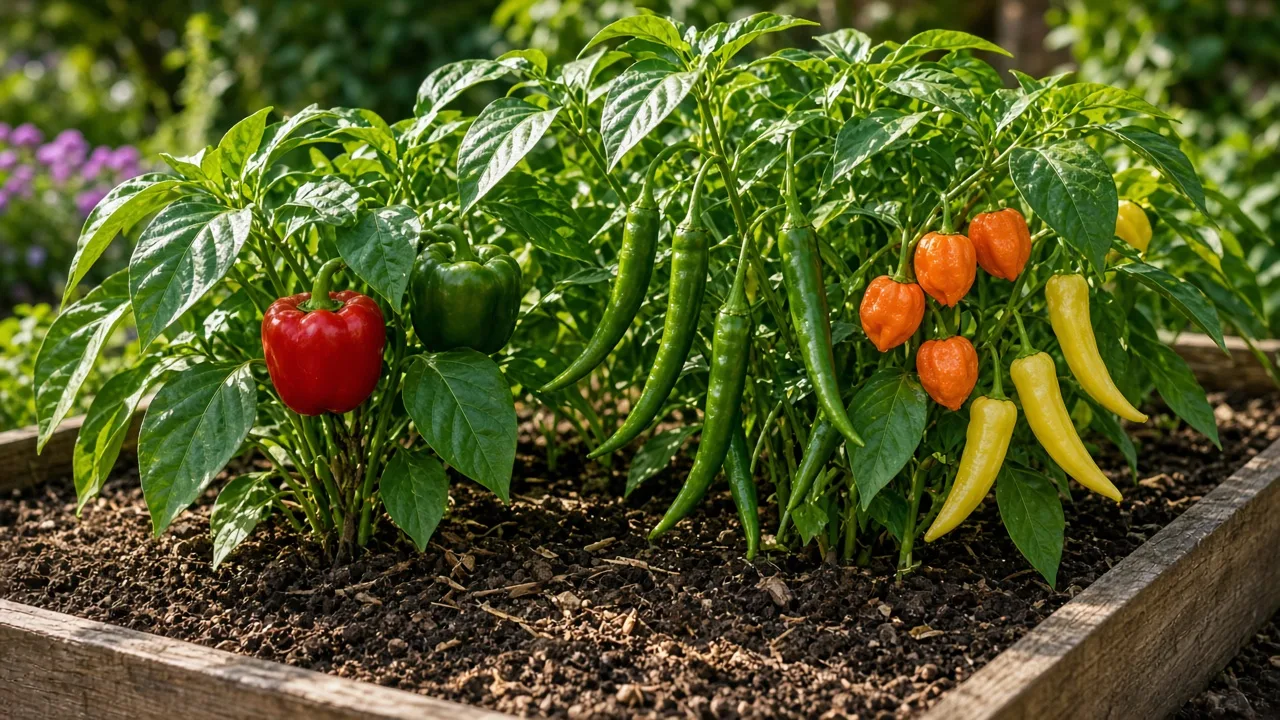
A bell pepper does not have one universal “ripe” color. Many can be picked at the full-size green stage, while others taste sweeter after they change to the red, yellow, orange, or other color listed for that variety. The right time depends on what you want from the fruit and how long your plant has before cold weather arrives.
Use three cues together: the pepper has reached the size expected for its variety, the fruit feels firm and looks glossy, and its color is appropriate for the stage you want to eat. If those cues line up, you can harvest it. If the fruit is still small and dull, give it more time unless frost, damage, or a shortening season changes the decision.
The quick answer: pick by size, feel, and the color you want
Check the seed packet or plant label first. Many standard bell peppers reach roughly 3 to 4 inches across or long, but compact, mini, and oversized cultivars differ; the expected size for your variety matters more than a generic measurement. A mature-green pepper is harvestable when it has filled out to that size and its walls feel firm, even if the skin is still green.
If you prefer the sweeter flavor of a fully colored pepper, wait for the variety’s final color to spread across the fruit while it remains attached. Red is common, but not universal: some bells mature yellow, orange, purple, brown, or another shade. The University of Georgia Cooperative Extension’s home-garden pepper guide notes that full-size, firm bell peppers can be harvested green and become redder and sweeter if left on the plant.
Three signs a bell pepper is ready
The best readiness check combines a ruler’s worth of observation with a gentle touch; no single cue tells the whole story. A calendar can tell you when to start looking, but the fruit itself decides whether today is harvest day.
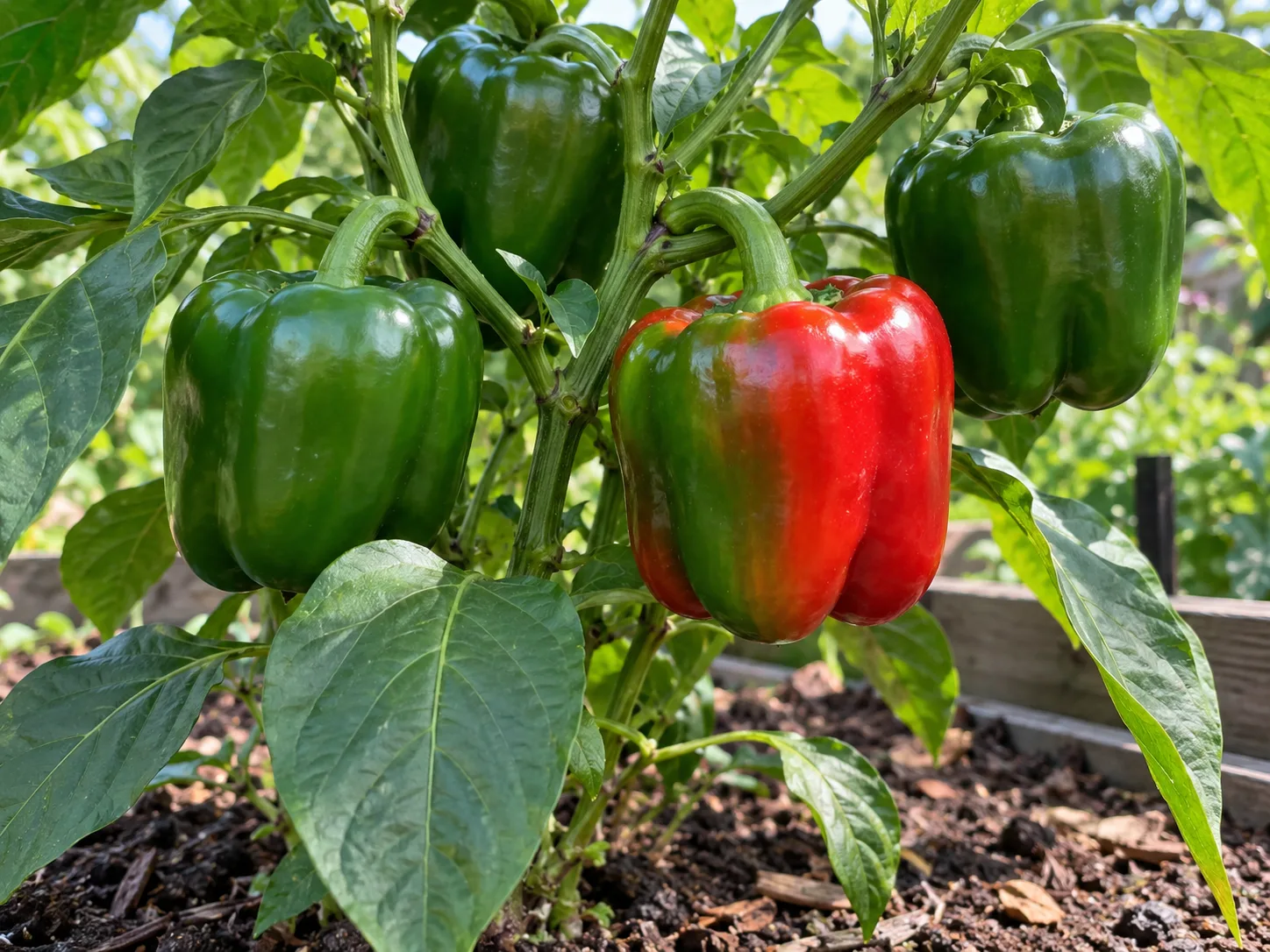
It has reached the variety’s mature size
A pepper that has reached its mature size looks filled out rather than narrow, pinched, or still rapidly expanding. Standard bell varieties often land near the familiar 3- to 4-inch range, but check the variety description if your fruit is unusually small or large. Snack-size bells and compact cultivars are ready at smaller dimensions, while some blocky varieties need more room to fill their shoulders.
Do not leave a fruit on the plant simply because it has not reached the size of a grocery-store pepper. If the seed packet describes a smaller fruit, waiting for an arbitrary larger size can leave it overripe or expose it to cold. Conversely, a small, thin-walled pepper on a large-fruited variety may still be developing, even if its skin has begun to shine.
It feels firm and looks glossy
A mature pepper feels solid and taut when you support it in your hand. Its skin usually has a light, even sheen, and the fruit holds its shape instead of yielding, wrinkling, or feeling soft. You do not need to squeeze hard: a gentle check is enough, and pressing with a thumbnail can bruise the skin.
Gloss is a clue, not a guarantee. Rain, dust, or a naturally matte cultivar can make the surface harder to judge, so combine the skin’s appearance with size and firmness. A soft spot, shriveling, a split, or a sunken patch means the fruit needs attention; it does not become more valuable by staying on the branch.
Its color matches the variety and harvest stage
Color is useful only after you know what color the variety is supposed to become. Green is a legitimate harvest stage for many bell peppers, not proof that the fruit is unfinished. A full-size, firm green pepper can be picked and eaten; it will generally be less sweet than the same variety left to develop its final color.
For a colored harvest, look for the cultivar’s expected hue to cover most of the fruit and for the skin to remain firm and glossy. A pepper may begin coloring in one area before the rest catches up, so do not mistake the first streak for a fully colored fruit. If you are unsure, compare two peppers on the same plant or check the variety’s description instead of relying on a rule about which end changes color first.
Green or fully colored: which stage should you harvest?
You can pick at either stage. The choice is a practical trade-off: green fruit gives you an earlier crop and frees the plant sooner, while fruit left to mature on the plant develops its final color and a sweeter flavor. The Royal Horticultural Society advises harvesting sweet peppers when they are swollen and glossy, and notes that fruits become sweeter as they ripen.
Pick mature-green fruit for an earlier, crisp harvest
Choose green peppers when they are full size and firm if you want a brisk, less-sweet flavor or if you need to use fruit before a weather deadline. This is also a sensible choice when several green peppers are already crowding a plant and younger fruits are still forming. A mature-green fruit can be a finished harvest for eating, even though it has not reached its later color.
Do not confuse “green and mature” with “small and unfinished.” If the fruit is still narrow, the walls are not filled out, or it is well short of the size described for the cultivar, leaving it on the plant usually gives it a better chance to develop. If you pick one too early, it will not continue growing after removal; use it in a dish where a smaller pepper is still useful rather than expecting it to enlarge on the counter.
Leave fruit on the plant for its final color and sweeter flavor
If sweetness and color matter more than picking early, let a firm, healthy pepper remain attached until it reaches its mature hue. University of Georgia Cooperative Extension notes that green bell peppers left on the plant can turn red and taste sweeter; the RHS likewise describes increasing sweetness as peppers ripen. That change takes time, and the plant must keep supporting the fruit while it develops.
There is a yield trade-off. A fully colored pepper can be worth waiting for, but the RHS notes that leaving fruit to ripen fully can hinder further fruit development. A useful compromise is to let a few of the best-placed fruits color fully while harvesting other full-size peppers green; your taste preference and the number of developing fruits can guide the balance.
Will bell peppers ripen after picking?
A pepper can sometimes continue changing color after it is cut, especially if it had already started to turn. Horticulturist Stephen Albert’s Harvest to Table guide to harvesting and storing peppers says color-changing peppers may continue ripening at room temperature for several days. That can help if frost is near, but it is a fallback rather than a reason to pick every pepper green.
A mature-green fruit may stay green on the counter, and no detached pepper can grow larger after harvest. If you want its fullest color and sweetness, keep a healthy, full-size fruit on the plant as long as weather allows. If you need to bring it indoors, set it in a cool, dry spot out of direct sun, check it daily, and use it promptly if it begins to soften.
Use days to maturity as a starting point, not a deadline
Seed catalogs and labels often give an estimated number of days to maturity, but read how the supplier counts those days. For peppers, the figure commonly starts at transplanting rather than the date you sowed seed indoors. University of Georgia Cooperative Extension gives a general harvest range of about 70 to 85 days after setting out a transplant; that is a planning window, not a promise that every fruit will be ready on the same day.
Use the estimate to decide when to inspect plants more closely, then switch to fruit-level cues. Variety, transplant size, warm-season length, light, and growing conditions affect how quickly fruit fills out and changes color. A plant that looks late on the calendar may simply need more warm growing time; a plant with full-size, firm fruit may be ready even if the estimate is not exact.
Peppers on one plant also mature at different times. Start checking as the earliest fruit approaches its expected size, then revisit the plant every few days during the main harvest period. This staggered approach is more reliable than waiting for the whole plant to look ripe at once.
How to harvest peppers without snapping stems
Pepper branches can be brittle, especially when several heavy fruits hang from one joint. Cutting the stem protects the plant and avoids tearing a strip of bark or breaking off a branch that may still carry flowers and smaller peppers. UGA Extension specifically recommends cutting rather than pulling peppers from the plant.
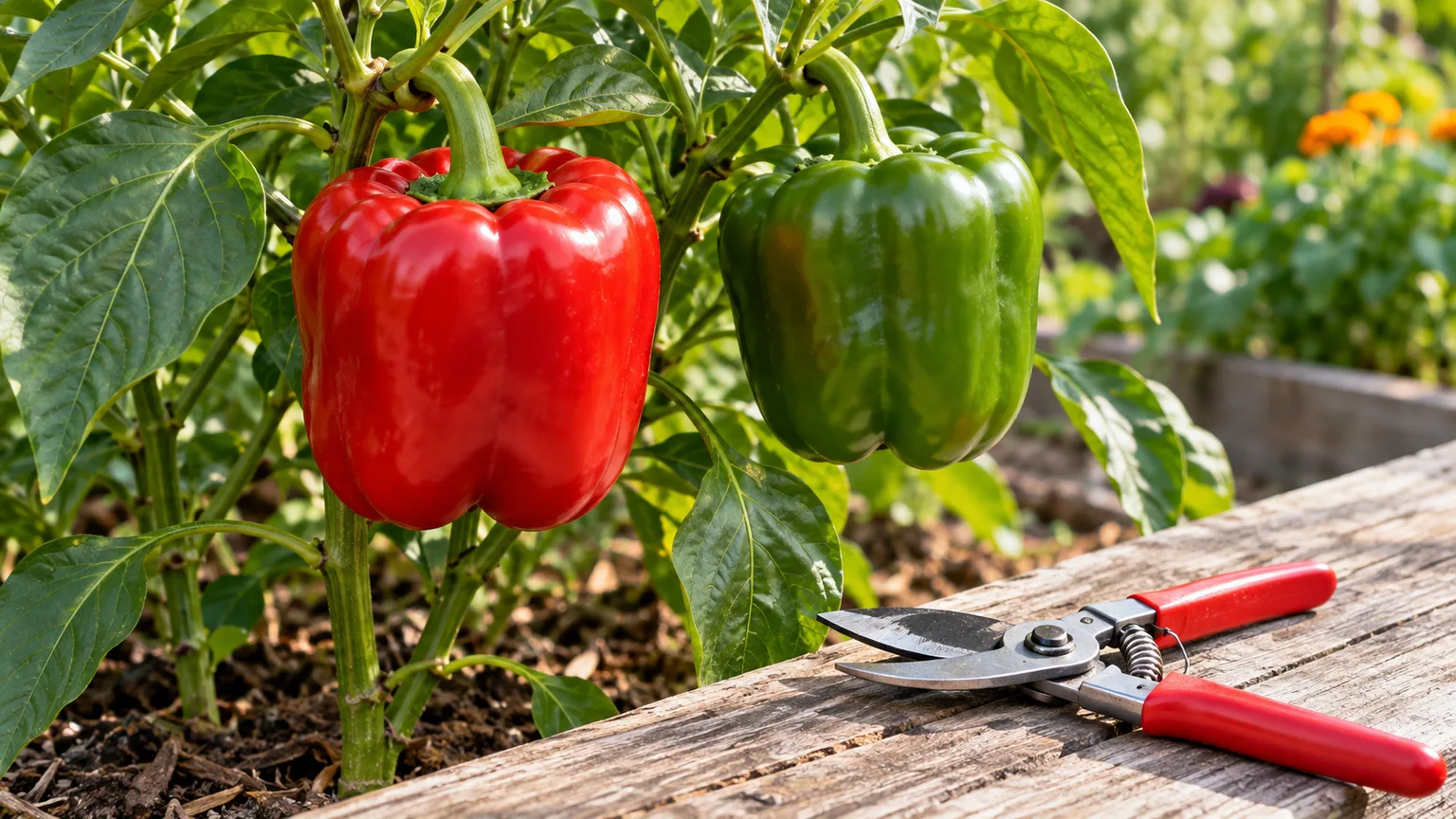
Use clean, sharp scissors, garden snips, or bypass pruners. On a dry morning after dew has lifted—or later when the foliage is dry—support the fruit with one hand and hold the stem or branch steady with the other. Clip the stem just above the pepper’s cap, leaving a short stem attached rather than cutting into the fruit.
If the fruit is wedged among leaves, move the foliage aside first; do not twist the pepper until the stem snaps. Set harvested fruit in a shallow basket instead of dropping it into a deep bucket, where other peppers can bruise the lower layer.
Keep the tool clean between plants if you are cutting visibly diseased tissue, and remove a fallen or stemless pepper from the harvest basket so it can be used first. When you finish, check the branch for additional mature fruit and make sure none is hidden behind leaves.
What to do with damaged fruit or an approaching frost
Pick a pepper earlier if the fruit is cracking, being chewed, or developing a soft, spreading spot. A small, firm blemish is a reason to inspect and use the fruit promptly, not a reason to leave it exposed while the rest of the plant is harvested. Fruit that is mushy, wet, or visibly rotting should not be stored with sound peppers.
Cold changes the end-of-season calculation. Peppers are warm-season plants and do not tolerate frost, so harvest firm, full-size peppers before a forecast frost reaches the plant. Those peppers can still be useful green even if they have not reached their final color. Small fruits can also be picked, but they may be less developed and should not be expected to color or sweeten like fruit that finished on the plant.
If the weather is merely cooling but frost is not imminent, keep the plant in a warm, sunny spot and continue checking for color. For potted peppers, moving the container to a sheltered location may buy additional ripening time, provided the plant still gets suitable light. Do not risk losing a ready crop to frost in pursuit of a perfect red color; pick the sound full-size fruit before the plant is damaged.
Store fresh peppers and freeze a surplus
For short-term use, bring peppers out of direct sun and cool them soon after harvest. Brush away loose soil, keep the fruit dry, and refrigerate it in the crisper drawer in a breathable or loosely closed produce bag.
Wash peppers just before cooking so stored fruit does not sit damp. Check the bag periodically and remove any fruit that softens, leaks, or begins to spoil.
Commercial storage recommendations assume temperature and humidity control that most home refrigerators do not provide. Penn State Extension’s pepper-production guidance says peppers can retain quality for about 14 to 21 days at 47 to 55°F and 90 to 95 percent relative humidity, while UGA Extension gives roughly two to three weeks at 45°F and 80 to 90 percent humidity.
A household fridge is often colder and drier than those conditions, so treat those spans as controlled-storage benchmarks rather than a guarantee for every home harvest. Use fresh peppers promptly and judge each fruit by its condition.
If you have more than you can use fresh, freezing is an easy way to preserve the crop for cooked dishes. Wash and dry the peppers, remove the stems, seeds, and inner ribs, then cut them into strips or pieces. Spread the pieces in a single layer on a tray until frozen, then pack them into freezer bags or containers.
The UGA guide recommends this tray-first approach; it keeps pieces from freezing into one solid clump. Frozen pepper softens after thawing, so plan to use it in soups, sautés, casseroles, and other cooked meals rather than expecting a fresh, crisp salad texture.
Why regular picking helps manage the crop
A plant with a mix of flowers, small fruit, and full-size peppers asks you to make a choice each time you visit: harvest the fruit that is ready, or reserve a few for color. Regular picking keeps mature fruit from occupying the plant for longer than needed and lets you notice new growth, damage, or weather risk sooner. The RHS recommends harvesting sweet peppers regularly to encourage further fruiting.
That does not mean removing every pepper as soon as it turns green. If you want red, orange, or yellow fruit, leave a selection attached and let it reach that stage. Think of the plant as a sequence of small harvest decisions rather than a single harvest date: take the full-size peppers that fit today’s needs, keep the healthiest fruit for color, and inspect again in a few days.
Conclusion
Harvest a bell pepper when it reaches the size expected for its variety, feels firm, and has the color stage you want. Full-size green fruit is ready to eat; leaving selected peppers attached for their final color can bring sweeter flavor, but it takes time and may slow the next fruit. Use days to maturity as a reminder to start checking, not as a substitute for looking at the plant.
When you pick, support the branch and cut the stem instead of pulling. Harvest sound fruit before frost, cool it promptly, and freeze the surplus if the refrigerator cannot keep pace. Those simple decisions let you enjoy peppers at the stage you prefer without sacrificing the rest of the plant’s crop.



