Capsicum Care Guide for Sweet Bell Peppers
Capsicum annuum
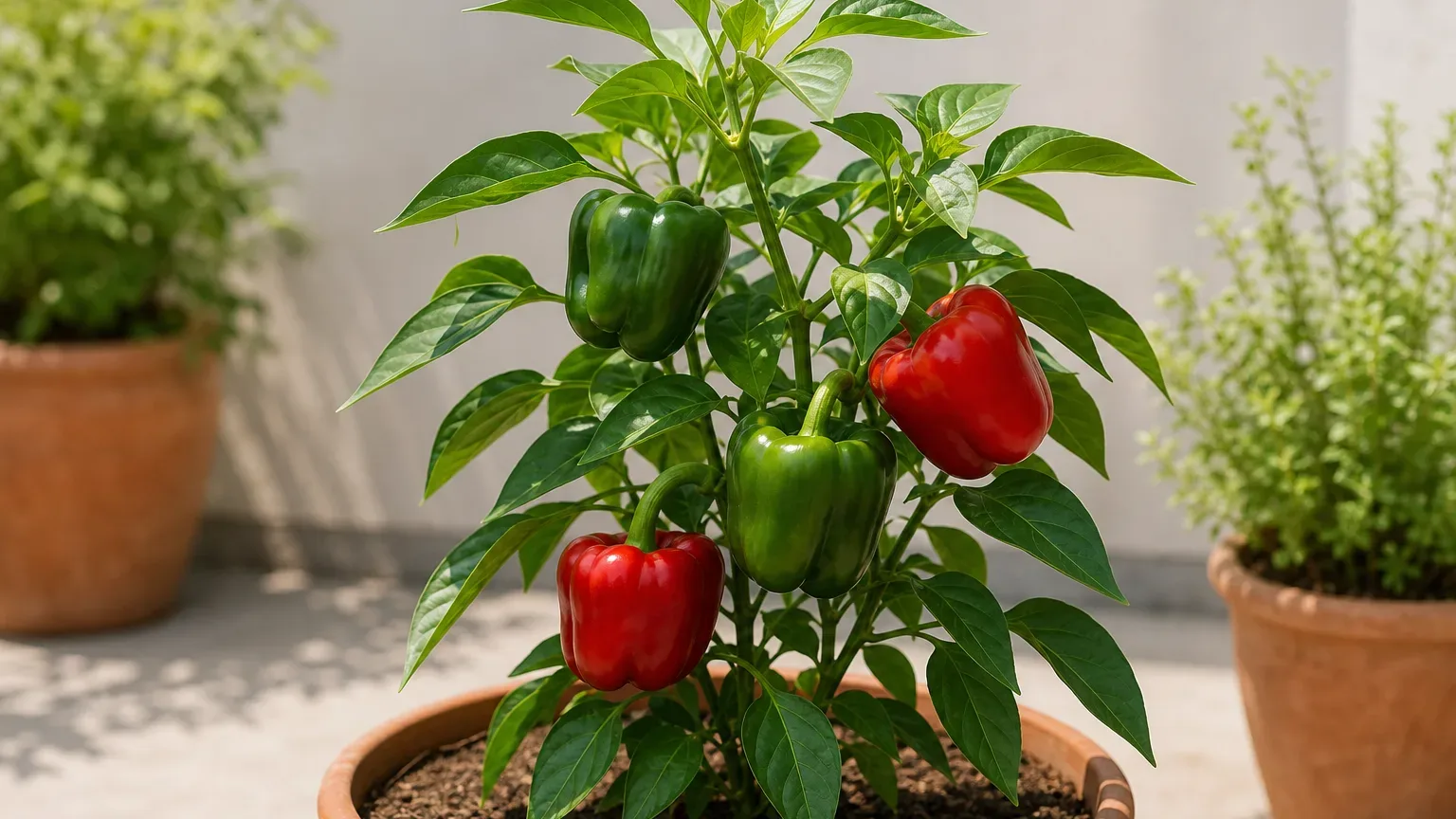
Grow sweet bell pepper or Shimla Mirch in full sun, warm well-drained soil, and steady moisture, with support for its heavy fruit.
Capsicum Care Guide for Sweet Bell Peppers
Start with wateringThe most common care mistake for CapsicumWatering guide → →Capsicum care essentials
Light
Water
Keep the root zone evenly moist while flowering and fruiting, without leaving it saturated. Water deeply when the upper 2–3 cm begins to dry.
Soil
Fertile, moisture-retentive but well-drained loam or container mix. Sweet peppers perform well in slightly acidic soil around pH 5.8–6.8.
Humidity
Temperature
Fertilizer
About Capsicum
Capsicum is native to Tropical Americas; the sweet bell pepper group is associated with southern Brazil and Bolivia, typically reaches 45 cm to 1.5 m tall and 30–90 cm wide, depending on cultivar and support indoors, with moderate in sustained warm weather growth. Capsicum has a upright growth habit and part of the Solanaceae family. It is also known as Sweet Bell Pepper, Bell Pepper, Sweet Pepper, and Shimla Mirch.
| Detail | Information |
|---|---|
| Also known as | Sweet Bell Pepper, Bell Pepper, Sweet Pepper, Shimla Mirch |
| Native region | Tropical Americas; the sweet bell pepper group is associated with southern Brazil and Bolivia |
| Mature size | 45 cm to 1.5 m tall and 30–90 cm wide, depending on cultivar and support |
| Growth rate | Moderate in sustained warm weather |
| Growth habit | Upright |
| Scientific name | Capsicum annuum |
| Family | Solanaceae |
Capsicum Care Guide for Sweet Bell Peppers
On LeafyPixels, capsicum means sweet bell pepper or Shimla Mirch: a non-pungent Capsicum annuum crop selected for thick, usually blocky fruit. That boundary matters. The same species also includes many hot chillies, so a label that says only “Capsicum annuum” does not tell you whether the fruit will be sweet or pungent.
Grow sweet capsicum as a sun-loving, warm-season food crop, not as a low-light ornamental. Its central care problem is balance: the roots need steady access to moisture and nutrients, but they also need drainage and air; flowers need warmth, but stressful heat or cold can interrupt fruit set.
Capsicum care at a glance
Give capsicum full sun, warm conditions, fertile free-draining soil, even root-zone moisture, and early support. The RHS describes sweet peppers as tender plants that need abundant sun and consistent warmth to crop well. On an Indian terrace or balcony, that usually means the sunniest practical position during a mild-to-warm growing window, with some relief from an exposed wall that turns extreme afternoon heat into flower-dropping stress.
Water deeply when the upper 2–3 cm of mix begins to dry, then let surplus water leave the pot. Feed modestly during establishment and follow a crop-appropriate feeding plan as flowering and fruiting begin. Install a short stake or cage while the plant is young, because branches become easier to break once several heavy peppers are attached.
What plant this capsicum guide covers
Sweet bell pepper belongs to the nightshade family, Solanaceae. The NC State sweet-pepper profile describes the Grossum Group as bell, sweet, green, or red peppers and identifies the plant as an upright, bushy tropical perennial commonly grown as an annual vegetable.
Fruit shape and final colour depend on cultivar. A pepper may be harvestable while green, then mature to red, yellow, orange, purple, brown, or another labelled colour. Buy seed or a transplant described as bell, sweet, blocky, or by a named sweet-pepper cultivar if Shimla Mirch is your goal.
Sweet bell pepper versus hot chilli
Sweet capsicum and hot chilli can share the name Capsicum annuum, but they are not interchangeable in the kitchen or on this page. RHS notes the species’ broad variation in fruit form, colour, size, and capsaicin production. Sweet bell cultivars are selected for large, thick-walled fruit without chilli heat; chilli cultivars may have thinner, narrower, pungent fruit.
Care fundamentals overlap, but cultivar size, days to maturity, heat tolerance, and fruit load can differ. Check the packet rather than assuming a nursery’s generic “capsicum” tag means bell pepper. If it names jalapeño, cayenne, bird’s eye, serrano, or another chilli type, use cultivar-specific chilli guidance.
How capsicum grows
Capsicum forms a branching, upright plant with white flowers followed by hollow, many-seeded fruit. Depending on cultivar and conditions, a sweet pepper may stay around 45 cm or grow well above 1 m. Compact patio cultivars are usually easier to manage in containers; taller plants need more root room and support.
Although botanically capable of perennial growth in frost-free warmth, sweet pepper is normally managed as a seasonal crop. The University of Illinois calls pepper a tender, warm-season vegetable, while NC State identifies sweet bell pepper as a tropical perennial usually grown annually. Keeping an old plant alive is possible in benign conditions, but replacing it after its productive season is often simpler than carrying forward pests, crowded roots, and declining yield.
Light and temperature
Choose a position with at least six hours of direct sun and open air movement. Weak light produces stretched growth and fewer useful flowers, while crowding leaves damp for longer after rain. For window direction, shade decisions, and seedlings under lamps, use the focused Capsicum light guide.
Warmth is essential, but “warm” does not mean unlimited heat. Illinois Extension reports slow growth, yellowing, and flower drop when conditions are too cool, and pepper flowers can also fail during hot extremes. In India, choose the growing window by local nights and daytime exposure: avoid chilling transplants, but do not expect reliable fruit set from a pot baking against reflective concrete through a severe heatwave.
Harden nursery-raised or indoor-grown seedlings before placing them in strong outdoor sun. Utah State University recommends gradual conditioning before transplanting so young peppers adjust to changing light and temperature. Increase outdoor exposure over roughly a week rather than moving soft growth directly into a full day of harsh sun.
Watering without drought or saturation
Capsicum roots perform best with consistent moisture plus drainage. Check below the surface rather than watering on fixed weekdays. If the upper 2–3 cm feels dry and the container is noticeably lighter, water the whole root ball until excess drains; if the mix still feels cool and moist, wait and check again.
Demand rises during hot wind, flowering, and fruit expansion, so containers may need daily checking without necessarily needing daily watering. Mulch helps garden beds lose water more slowly. The Utah State pepper guide recommends deep irrigation and notes that mulches conserve water, a useful principle where Indian sun creates abrupt wet-to-dry swings.
Repeated drought can wilt foliage, drop flowers, and stall fruit, but continuously saturated mix excludes air and raises root-disease risk. The complete Capsicum watering guide explains dry-depth checks, seasonal adjustments, and how to tell drought stress from wet-root wilt.
Soil, drainage, and container choice
Use fertile loam in beds or a quality potting mix in containers, with enough mineral structure to drain after a thorough watering. Penn State advises disease management through good air movement and soils with good water infiltration. Dense field soil packed into a pot often drains too slowly and compacts around the roots, so amend a container mix with mature compost and perlite, pumice, or another coarse drainage component.
A slightly acidic root zone around pH 5.8–6.8 is a practical target. More important than chasing a decimal is avoiding a pot with no drainage hole, stale water in a saucer, or a tiny root volume that dries to dust each afternoon. Choose one roomy container per plant and see the Capsicum soil guide for mix proportions, pH interpretation, and drainage diagnosis.
Move a hardened seedling into its final large pot before roots become tightly circled. A small seedling in an enormous wet pot is also risky, so match the step-up to the root ball and local drying rate. The Capsicum repotting guide covers pot sizing and post-transplant care.
Feeding capsicum through the crop
Start with fertile soil and mature compost rather than trying to rescue poor structure with concentrated fertilizer. Too much nitrogen can drive soft leafy growth at the expense of a balanced crop, while a heavily fruiting container eventually exhausts its limited nutrient reserve.
Use a labelled vegetable fertilizer at the recommended dilution and adjust to plant response, container size, and whether the mix already contains slow-release feed. The Capsicum fertilizer guide gives stage-specific timing, while the plant’s leaf colour, growth, flowering, and salt crust on the mix provide better feedback than a rigid weekly ritual.
Flowers, pollination, and fruit set
Capsicum flowers are self-fertile, and ordinary air movement or visits from insects can move pollen. Outdoors, you usually do not need to hand-pollinate every flower. In a screened balcony with little air movement, lightly tapping the support at midday can help release pollen without damaging the blossom.
Fruit set is an outcome of the whole growing system. Adequate light, moderate warmth, steady moisture, and balanced nutrition matter more than any “flower booster.” A plant that is still small should build roots and branches before carrying a large crop.
Why capsicum flowers drop
Flower drop is often a stress response rather than proof that the plant is sterile. Likely triggers include cool nights, very hot days, repeated drying, saturated roots, weak light, or excessive nitrogen-driven leafy growth. The Penn State Master Gardener pepper guide emphasizes full sun and warm weather and distinguishes sweet bell types from pungent peppers.
Correct the growing condition you can observe. Shade a heat-reflective wall rather than the entire plant, restore even moisture rather than flooding dry soil every day, and stop adding fertilizer if growth is lush but flowers keep falling. New flowers can set once conditions moderate.
Supporting and harvesting the fruit
Install a stake or compact cage at transplanting so later work does not spear a full root ball. Tie stems loosely with soft material and add support beneath fruiting branches rather than forcing a brittle branch upright after it bends.
Harvest green peppers when they are full-sized, firm, and glossy, or leave them to develop the mature cultivar colour. Illinois Extension explains that coloured sweet bell varieties are part of the broad pepper range, while Penn State documents mature colours including red, yellow, orange, purple, and brown. Cut the stem with clean pruners; pulling or twisting can split a loaded branch.
Pests and diseases to watch
Inspect leaf undersides and new growth for aphids, mites, whiteflies, and chewing damage. Look also for leaf spots, dark stem tissue, sudden wilt despite moist soil, or fruit lesions. The Capsicum annuum profile from NC State lists multiple pepper diseases, reinforcing the value of clean transplants, airflow, crop hygiene, and avoiding splash or saturation.
Do not spray simply because an insect is present. Identify the pest, remove badly affected material, and choose the least disruptive control suitable for an edible crop. Follow the product label’s crop approval, dose, and harvest interval.
Capsicum and pet safety
Ripe sweet bell pepper is food for people, but that fact does not establish the whole plant as safe for every pet. The horticultural references used here do not provide a species-specific veterinary classification covering sweet-pepper leaves, stems, unripe fruit, and treated potting soil across cats, dogs, birds, grazing animals, and reptiles.
Keep pets from routinely chewing the plant or digging in treated soil. If an animal eats a meaningful amount and then shows digestive or behavioural changes, contact a veterinarian with the plant label and any pesticide or fertilizer packaging; do not improvise home treatment.
Common capsicum care mistakes
The first mistake is growing the wrong crop: a generic species label may conceal a hot chilli cultivar. The next is treating a fruiting vegetable like a decorative indoor plant, where weak window light cannot replace outdoor sun. Other frequent errors are transplanting without hardening, using dense soil in a pot, alternating bone-dry mix with flooding, overfeeding nitrogen, and waiting until fruit-heavy branches bend before adding support.
Another mistake is diagnosing by one symptom. Yellow leaves can follow cold, wet roots, nutrient imbalance, or normal ageing; flower drop can follow both drought and temperature stress. Check light, recent weather, root-zone moisture, and feeding history together before changing care.
When to use this page vs other Capsicum guides
Use this overview to identify sweet bell capsicum and understand the full crop cycle. Use the light guide to choose exposure or correct stretching and scorch; the watering guide for moisture checks and wilt; and the soil guide for mix, pH, drainage, or compaction.
For narrower tasks, use the fertilizer page before changing feed, the repotting page before moving a seedling, and the propagation page for sowing and raising new plants. This division keeps a single symptom from turning into several simultaneous, unnecessary care changes.
Related Capsicum guides
- Capsicum fertilizer guide — feeding from establishment through fruiting.
- Capsicum repotting guide — final-pot timing, root checks, and transplant aftercare.
- Capsicum propagation guide — seed starting, warmth, and seedling care.
- Capsicum pruning guide — when to remove damaged growth and when not to cut a productive plant.
Conclusion
Successful capsicum care starts by confirming that the plant is sweet bell pepper or Shimla Mirch, not simply assuming every Capsicum annuum is the same crop. Then give it full sun, warm but not punishing conditions, fertile free-draining soil, even moisture, measured feeding, and support before fruit becomes heavy.
Watch the plant and its root zone rather than following a universal calendar. If flowers fall or growth stalls, check temperature, light, moisture, and recent feeding in that order; correcting the real stress gives the next flush of flowers a better chance to become firm, full-sized sweet peppers.
How to care for Capsicum?
When should you water Capsicum?
Keep the root zone evenly moist while flowering and fruiting, without leaving it saturated. Water deeply when the upper 2–3 cm begins to dry.
- Feel below the surface and lift the pot - Keep the root zone evenly moist while flowering and fruiting, without leaving it saturated.
- water deeply when the mix feels dry and the pot is light - Water deeply when the upper 2–3 cm begins to dry.
- Drain excess water - Water deeply when the upper 2–3 cm begins to dry.
What soil works best for Capsicum?
Fertile, moisture-retentive but well-drained loam or container mix. Sweet peppers perform well in slightly acidic soil around pH 5.8–6.8.
- 50% high-quality potting mix or loam - Fertile, moisture-retentive but well-drained loam or container mix.
- 30% mature compost
- 20% perlite, pumice, or coarse sand - Fertile, moisture-retentive but well-drained loam or container mix.
Grower notes for Capsicum
Grow the sweet bell type, not hot green chilli
This page covers sweet bell pepper, commonly called Shimla Mirch: cultivars of Capsicum annuum selected for thick, blocky, non-pungent fruit. It is not a care profile for Indian hot green chilli. Both can share the same species name, so use the seed packet or cultivar label to confirm that it says bell, sweet, blocky, or a named sweet-pepper cultivar.
Give it full sun and warm soil
Provide at least 6 hours of direct sun and good airflow. Penn State advises waiting until soil at transplant depth reaches about 16°C; growth is impaired by cold conditions. Bell peppers also shed flowers during stressful extremes, including drought, cool weather, very high heat, and low humidity, so a bright but heat-managed position is valuable in peak Indian summer.
Keep moisture steady during fruiting
Water deeply, then wait until the upper 2–3 cm begins to dry rather than giving frequent shallow sips. Consistent moisture matters most from flowering through fruit expansion: drought can trigger flower drop, while saturated soil encourages root and crown disease. Mulch beds to slow moisture swings, and never leave a container standing in runoff.
Choose a roomy pot and support early
Use one plant per large container with drainage holes, and move the seedling into it before roots become tightly circled. Bell pepper stems and branches can be brittle when carrying full-size fruit, so install a short stake or cage at transplanting. Compact patio cultivars are the easiest choice where balcony space is limited.
Read fruit colour as ripeness
Most bell peppers begin green and can be harvested when full-sized and firm. Depending on the cultivar, fruit left on the plant may mature to red, yellow, orange, purple, brown, or another colour and usually becomes sweeter. Cut peppers with clean pruners instead of pulling them, which can snap a loaded branch.
Treat pet safety as unverified
The ripe bell pepper is a familiar edible crop for people, but that does not verify the whole Capsicum annuum plant as safe for every pet. The authoritative horticultural sources used here do not provide a species-specific pet-toxicity classification. Prevent chewing of leaves, stems, unripe fruit, and treated soil, and ask a veterinarian about any concerning ingestion.
Are capsicum plants safe for pets?
Ripe sweet bell pepper is edible for people, but pet safety for the leaves, stems, and unripe fruit is not verified. Keep the whole plant out of routine chewing reach.
No species-specific veterinary classification for the whole Capsicum annuum sweet bell pepper plant was verified in this research. Human edibility of ripe fruit does not establish pet safety for foliage or other plant parts; prevent access and seek veterinary advice if symptoms follow ingestion.
Watering Capsicum
For Capsicum, feel below the surface and lift the pot; water deeply when the mix feels dry and the pot is light and water check containers daily in hot weather; water when the upper 2–3 cm is dry. Increase checks during hot, windy weather and fruit development; reduce during cool or rainy periods.
| Detail | Information |
|---|---|
| How often | Check containers daily in hot weather; water when the upper 2–3 cm is dry |
| How to check | Feel below the surface and lift the pot; water deeply when the mix feels dry and the pot is light |
| Seasonal changes | Increase checks during hot, windy weather and fruit development; reduce during cool or rainy periods |
Signs of overwatering
- persistently wet or sour-smelling mix
- yellowing lower leaves
- soft, darkened stem base or roots
Signs of underwatering
- wilt that persists after the hottest part of the day
- dry mix pulling from the container edge
- flower drop or small, stalled fruit
Soil & potting for Capsicum
Use a mix of 50% high-quality potting mix or loam, 30% mature compost, 20% perlite, pumice, or coarse sand for Capsicum. Good drainage with steady moisture; avoid standing water and repeated drought. Target soil pH around 5.8–6.8. Repot move seedlings into their final large container after hardening; plants are usually replaced after the crop, ideally in warm season, once the soil is above 16°C and nights are reliably mild.
| Detail | Information |
|---|---|
| Recommended mix | 50% high-quality potting mix or loam, 30% mature compost, 20% perlite, pumice, or coarse sand |
| Drainage | Good drainage with steady moisture; avoid standing water and repeated drought |
| Soil pH | 5.8–6.8 |
| Repotting frequency | Move seedlings into their final large container after hardening; plants are usually replaced after the crop |
| Best season to repot | Warm season, once the soil is above 16°C and nights are reliably mild |
Signs it needs repotting
- seedling roots circle the nursery cell
- the plant wilts very quickly after watering
- growth stalls in a container that dries within a day
Humidity & temperature for Capsicum
Fertilizer & pruning for Capsicum
Common problems on Capsicum
Yellow Leaves
MediumLikely cause: Common on this plant type; confirm with recent watering, light, and root checks.
Quick fix: Inspect the plant and correct the most likely care stressor before stacking treatments.
Full fix guide →Brown Tips
MediumLikely cause: Common on this plant type; confirm with recent watering, light, and root checks.
Quick fix: Inspect the plant and correct the most likely care stressor before stacking treatments.
Full fix guide →Root Rot
MediumLikely cause: Common on this plant type; confirm with recent watering, light, and root checks.
Quick fix: Inspect the plant and correct the most likely care stressor before stacking treatments.
Full fix guide →Overwatering
MediumLikely cause: Common on this plant type; confirm with recent watering, light, and root checks.
Quick fix: Inspect the plant and correct the most likely care stressor before stacking treatments.
Full fix guide →Underwatering
MediumLikely cause: Common on this plant type; confirm with recent watering, light, and root checks.
Quick fix: Inspect the plant and correct the most likely care stressor before stacking treatments.
Full fix guide →Spider Mites
MediumLikely cause: Common on this plant type; confirm with recent watering, light, and root checks.
Quick fix: Inspect the plant and correct the most likely care stressor before stacking treatments.
Full fix guide →Mealybugs
MediumLikely cause: Common on this plant type; confirm with recent watering, light, and root checks.
Quick fix: Inspect the plant and correct the most likely care stressor before stacking treatments.
Full fix guide →Aphids
MediumLikely cause: Common on this plant type; confirm with recent watering, light, and root checks.
Quick fix: Inspect the plant and correct the most likely care stressor before stacking treatments.
Full fix guide →Leggy Growth
MediumLikely cause: Common on this plant type; confirm with recent watering, light, and root checks.
Quick fix: Inspect the plant and correct the most likely care stressor before stacking treatments.
Full fix guide →Slow Growth
MediumLikely cause: Common on this plant type; confirm with recent watering, light, and root checks.
Quick fix: Inspect the plant and correct the most likely care stressor before stacking treatments.
Full fix guide →Wilting
MediumLikely cause: Common on this plant type; confirm with recent watering, light, and root checks.
Quick fix: Inspect the plant and correct the most likely care stressor before stacking treatments.
Full fix guide →Drooping Leaves
MediumLikely cause: Common on this plant type; confirm with recent watering, light, and root checks.
Quick fix: Inspect the plant and correct the most likely care stressor before stacking treatments.
Full fix guide →Low Humidity
MediumLikely cause: Common on this plant type; confirm with recent watering, light, and root checks.
Quick fix: Inspect the plant and correct the most likely care stressor before stacking treatments.
Full fix guide →Not Enough Light
MediumLikely cause: Common on this plant type; confirm with recent watering, light, and root checks.
Quick fix: Inspect the plant and correct the most likely care stressor before stacking treatments.
Full fix guide →Fungus Gnats
MediumLikely cause: Common on this plant type; confirm with recent watering, light, and root checks.
Quick fix: Inspect the plant and correct the most likely care stressor before stacking treatments.
Full fix guide →Mold on Soil
MediumLikely cause: Common on this plant type; confirm with recent watering, light, and root checks.
Quick fix: Inspect the plant and correct the most likely care stressor before stacking treatments.
Full fix guide →