27 Types of Peppers You Can Grow in Your Garden
Compare 27 pepper varieties by heat, flavor, and growing difficulty—with Scoville ranges, harvest timing, and variety picks for short and long seasons.
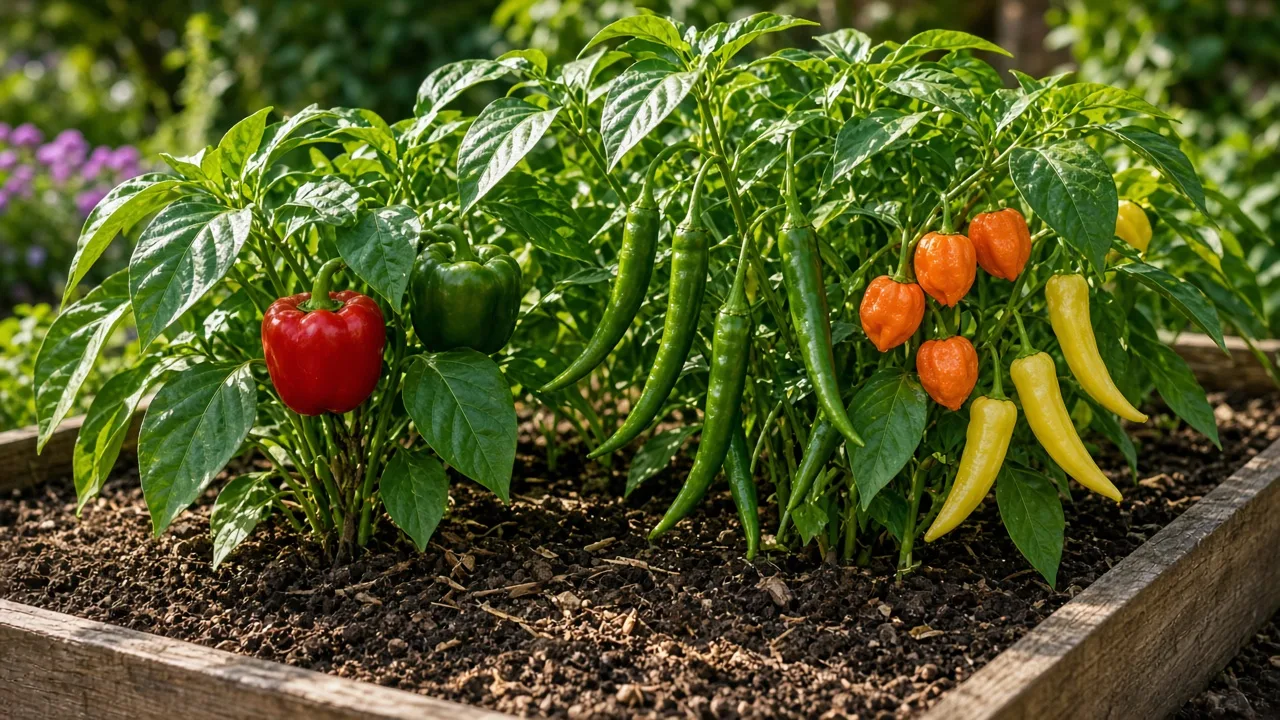
Peppers look simple on a seed rack—small envelopes, big promises—but the gap between sweet bell and habanero is enormous in heat, harvest time, and the patience your climate demands. The twenty-seven varieties below cover the range most home gardeners actually encounter: mild frying peppers, stuffing chiles, salsa workhorses, sauce chilies, and a few showy ornamentals that still belong in the kitchen if you read the label.
Use this page as a shopping shortlist, not a mandate to grow all twenty-seven at once. Two or three well-chosen types usually outperform a crowded bed of mismatched maturities.
How to Choose Pepper Varieties for Your Garden
Start with three filters: how you cook, how hot you want the fruit, and how many warm days you have between transplant and first frost. Peppers are frost-tender warm-season plants in the nightshade family, closely related to tomatoes and eggplant. Most garden favorites belong to Capsicum annuum, but the hottest types often come from Capsicum chinense and need a longer, steadier run of heat.
Match heat level to how you actually cook
Scoville heat units (SHU) estimate capsaicin concentration—the compound that triggers burning sensation. They are useful for comparing varieties, not for predicting exactly how a single fruit will taste on your plate. Stress, maturity, and seed-company genetics all shift heat within the published range.
If you pickle, stuff, or roast, prioritize thick-walled, mild to medium fruit: bells, poblanos, Anaheims, and Carmen types. For fresh salsa and everyday heat, jalapeño, serrano, and Fresno classes are the practical core. For hot sauce, drying, and spice blends, move into cayenne, Thai chili, habanero, and Scotch bonnet territory—but only if everyone in the household agrees on the heat level.
Match days to maturity to your frost window
Count backward from your average first frost: days to maturity on the packet + two to three weeks of slack for slow autumn ripening. UConn’s pepper factsheet notes that pepper seeds are typically started indoors 8–10 weeks before transplant, and soil should reach about 65°F before seedlings go outside. Direct-sown seed will not germinate in soil below about 55°F.
Short-season gardeners should lean on fast types—pepperoncini (55–75 days), serrano (57–77 days), shishito (60–80 days), and early bells—while treating rocoto (100–130 days) and many habaneros (80–100+ days) as projects for containers you can move under cover in fall.
Understanding the Scoville Scale
The Scoville scale ranks peppers by capsaicinoid content. Modern labs use chromatography, but the name honors the original tasting-based method. For gardeners, the scale is a relative map, not a guarantee.
What Scoville heat units measure
0 SHU means no detectable capsaicin—true sweet bells. 100–8,000 SHU covers most “everyday” kitchen peppers: pepperoncini, poblanos, jalapeños. 10,000–100,000 SHU enters serious heat: serranos, cayennes, many Thai types. 100,000 SHU and above is habanero territory and beyond.
Capsaicin is thought to deter mammal browsing while leaving bird-dispersed seeds intact—a reason stressed plants sometimes produce hotter fruit. That is one reason two jalapeños from the same plant can feel different on the tongue.
Sweet and Mild Peppers Worth Planting
These are the best entry points if you are new to peppers or cooking for mixed spice tolerances. All listed here are generally beginner-friendly if you provide full sun, warm soil, and steady moisture.
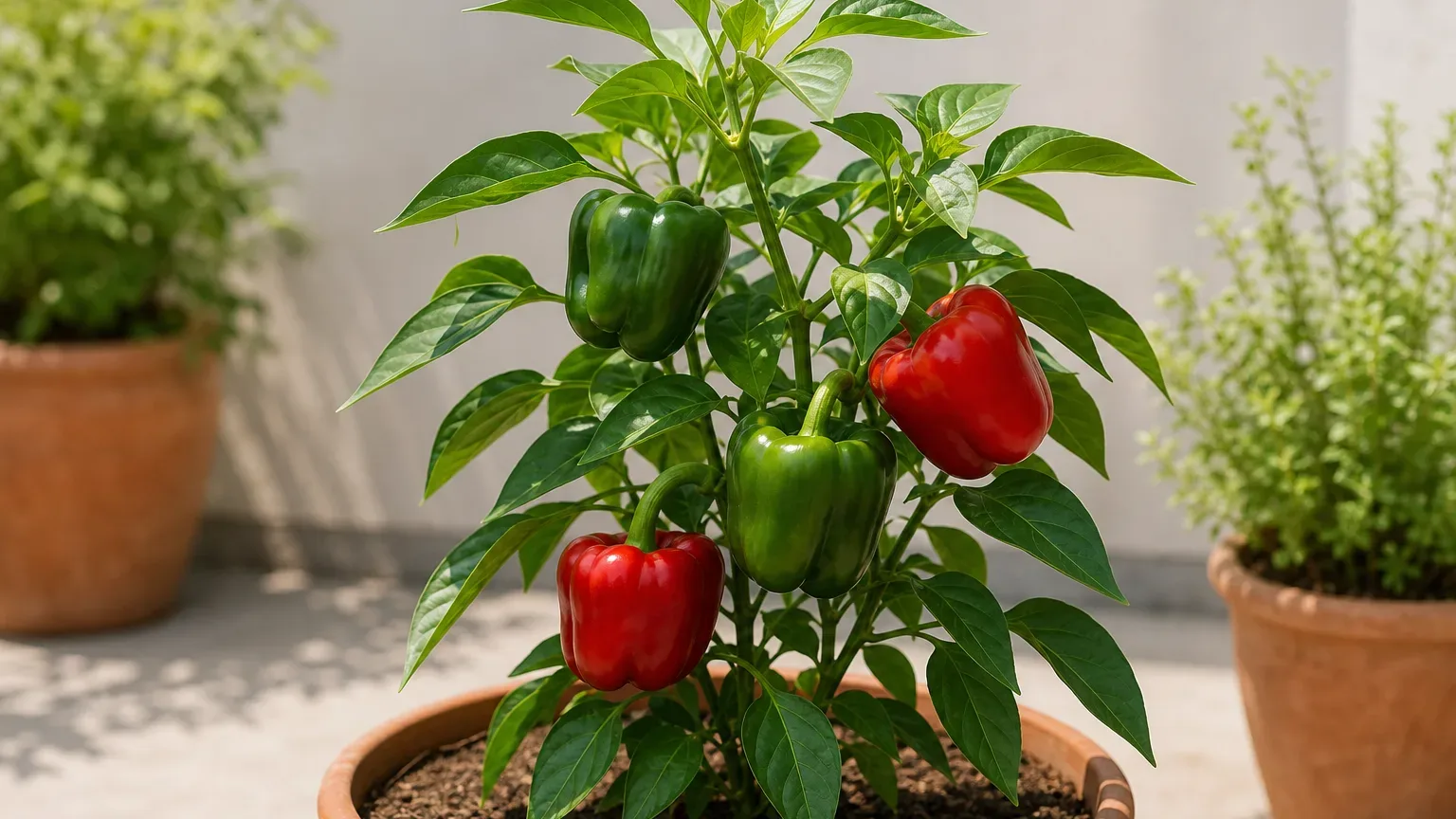
Bell pepper and other zero-heat staples
Bell pepper (Capsicum annuum) — 0 SHU, 60–80 days. The default sweet pepper: blocky, thick-walled, and available in green, red, yellow, orange, and purple cultivars. Green bells are immature fruit; red and other colors are fully ripe and usually sweeter. Bells need consistent warmth; blossom drop is common when nights dip below about 60°F or soar above 75°F, or when days exceed 90°F during fruit set, as UConn Extension summarizes.
Pimiento (C. annuum) — 100–500 SHU, ~75 days. Heart-shaped, sweet, and familiar from jarred pimentos. Harvest when fruits exceed about three inches and feel firm to keep the plant producing.
Piquillo (C. annuum) — 500–1,000 SHU, 60–90 days. Spanish heirloom with a beak-like tip; sweet, barely spicy, excellent roasted for antipasti.
Trinidad Perfume (C. chinense) — 0–500 SHU, 80–85 days. Fruity, aromatic, and related to super-hots but with little heat—an interesting “flavor without fire” choice if you have a long season.
Medusa (C. annuum) — 1–1,000 SHU, 65–100 days. Upright clusters of colorful fruit on compact plants. Edible and mild, but verify heat on the first ripe pepper because ornamental lines vary.
Banana, Carmen, pepperoncini, and frying peppers
Banana pepper (C. annuum) — 0–500 SHU, 60–80 days. Mild, pale yellow fruit ideal for pickling. Pick yellow fruit promptly to encourage more set; leave fruit three extra weeks for red, sweeter peppers.
Carmen (C. annuum ‘Friggitello’) — 0 SHU, 60–80 days. Italian frying pepper with excellent sweet flavor when red. Green fruit is usable at about six inches; allow roughly twenty more days for full red ripeness.
Sweet Italian / pepperoncini (C. annuum) — 100–500 SHU, 55–75 days. One of the fastest mature peppers, valuable in short seasons. Mild heat; classic for pickling and frying.
Cubanelle (C. annuum) — 100–1,000 SHU, 64–84 days. Sweet frying pepper with a hint of warmth. Harvest pale green for frying; wait for red for raw eating.
Shishito (C. annuum var. grossum) — 50–200 SHU, 60–80 days. Small, wrinkled Japanese frying pepper—mostly mild with an occasional spicy surprise. Pick green for blistering in a hot pan.
Chupetinha / biquinho (C. chinense) — 500–1,000 SHU, 72–100 days. Teardrop-shaped Brazilian pepper; prolific and pickle-friendly when fully red or yellow.
Medium-Heat Peppers for Everyday Cooking
This band—roughly 1,000–10,000 SHU for most entries—powers everyday Mexican, Southwestern, and Mediterranean cooking. Plants are still mostly C. annuum and respond well to standard pepper culture.
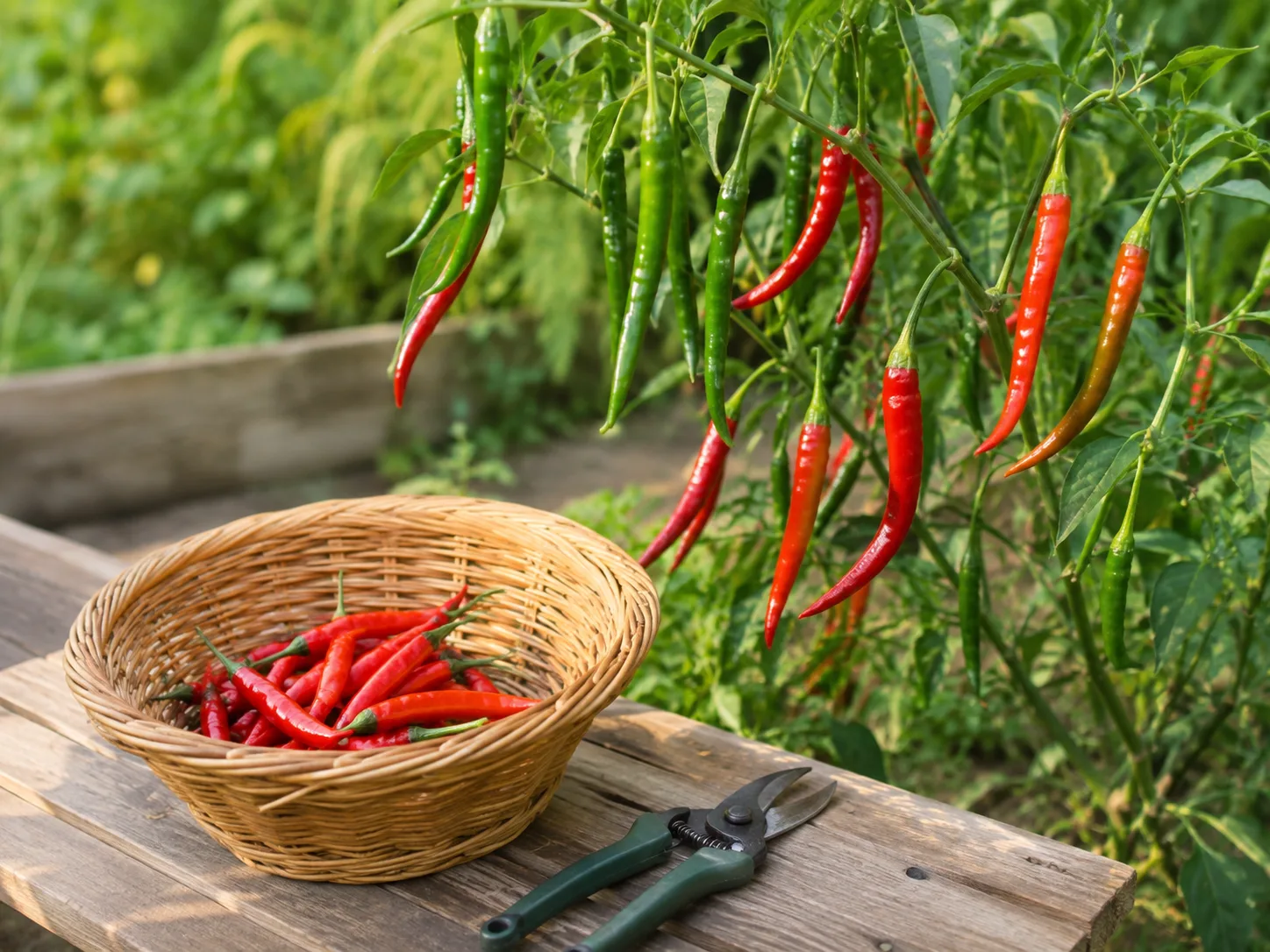
Poblano, Anaheim, Hatch, and Mexican dried types
Poblano (C. annuum) — 1,000–1,500 SHU, 65–80 days. The classic stuffing pepper with earthy flavor and sturdy walls. Fresh fruit is poblano; dried fruit from the same cultivar is ancho. Excellent for chiles rellenos and rajas.
Anaheim (C. annuum ‘Anaheim’) — 50–2,500 SHU, 65–85 days. Long, mild to medium fruit for roasting and stuffing. Heat varies by strain and growing conditions—taste a test pepper before scaling a recipe.
Chilaca / pasilla (C. annuum) — 1,000–2,500 SHU, ~85 days. Fresh chilaca; dried fruit is pasilla, valued for mole and smoky sauces. Long, curved pods with floral sweetness when fresh.
Hatch chile (C. annuum, regional group) — 1,000–8,000 SHU, 85–115 days. “Hatch” describes several New Mexico cultivars from the Hatch Valley—not a single seed name. Roast green fruit at mature size; let fruit turn red for deeper flavor and drying.
Guajillo (C. annuum) — 2,500–5,000 SHU, 65–85 days. Tangy, smoky when dried; allow fruit to turn fully red on the plant before harvesting for drying.
Jalapeño, serrano, Fresno, and cherry peppers
Jalapeño (C. annuum) — 2,500–8,000 SHU, 80–100 days. The home-garden standard for salsa and poppers. Harvest green at full size or wait for red for sweeter heat. Corking—light stretch marks on the skin—is normal and not a defect.
Fresno (C. annuum) — 2,500–10,000 SHU, 60–100 days. Similar look to jalapeño but fruitier and often hotter when red. Strong choice for fresh salsa and fermented hot sauce.
Cherry pepper (C. annuum) — 2,500–5,000 SHU, 60–85 days. Round, compact plants with mildly hot fruit perfect for stuffing and pickling. Pick fully red fruit to keep production going.
Bishop’s Crown (C. annuum) — 5,000–30,000 SHU, 85–105 days. Caribbean type with distinctive lobed shape; fruity sweetness with real bite—hotter than jalapeño. Can be slower and more finicky than annuum blockbusters; treat as intermediate difficulty.
Hot Peppers for Sauce Makers and Spice Lovers
These varieties reward warm nights, patient ripening, and respect for capsaicin. Wear gloves when processing large harvests, keep hands away from eyes, and label plants clearly if children help in the garden.
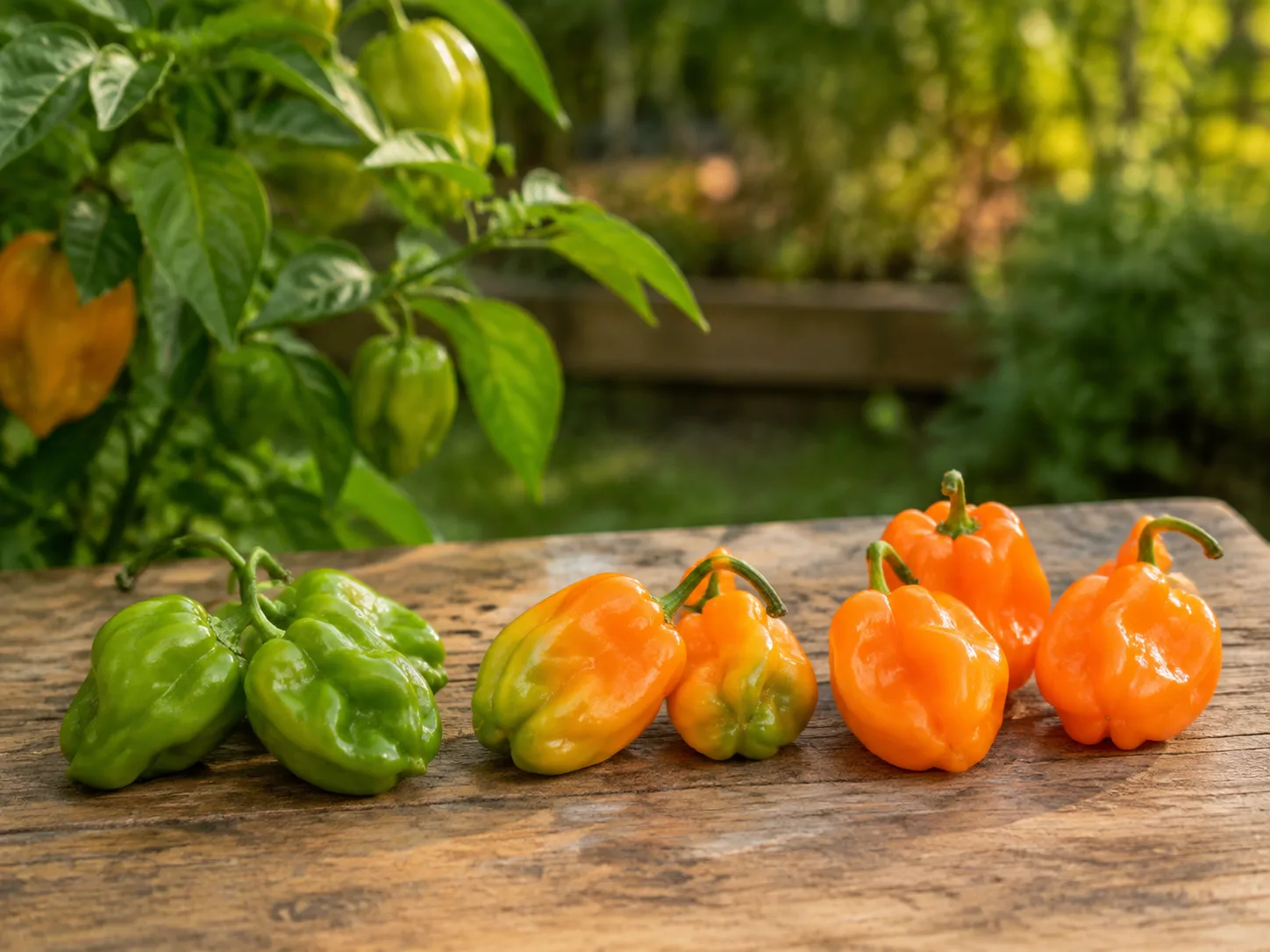
Habanero, Scotch bonnet, Thai chili, and rocoto
Habanero (C. chinense) — 100,000–350,000 SHU, 80–100 days. Intensely fruity citrus heat. Hybrids often mature faster than landrace types. Harvest fully colored orange or red fruit; green habaneros are underripe for most recipes.
Scotch bonnet (C. chinense) — 100,000–350,000 SHU, 90–110 days. Jamaican staple with a lobed “bonnet” shape and similar heat to habanero but distinct flavor. Needs a long warm season to ripen fully.
Thai chili (C. annuum) — 50,000–100,000 SHU, 75–95 days. Small, thin-walled bird’s-eye types for stir-fries, nam prik, and drying. Check the packet—“Thai chili” covers a wide Scoville spread.
Rocoto / locoto (C. pubescens) — 30,000–100,000 SHU, 100–130 days. Apple-shaped fruit with black seeds and hairy leaves—distinct among garden peppers. Fruity and searing; thrives where nights stay mild but demands the longest season on this list.
Cayenne, piri piri, bishop’s crown, and ornamental types
Cayenne (C. annuum) — 30,000–50,000 SHU, 70–100 days. Slim red pods for drying, flakes, and vinegar sauces. Productive in warm summers; see our cayenne growing guide for harvest and container details.
Piri piri (C. frutescens) — 50,000–175,000 SHU, 75–80 days. Small, upright fruit on vigorous plants—African and Portuguese sauce pepper. Do not confuse with Bishop’s Crown, which is sometimes called peri peri in error.
Serrano (C. annuum) — 10,000–23,000 SHU, 57–77 days. Thinner and sharper than jalapeño; the workhorse fresh chili in much of Mexico. Pick green for bright heat or red for fuller flavor.
The twenty-seventh slot belongs to Hungarian wax and similar wax-type hot peppers often sold alongside banana peppers—5,000–15,000 SHU, 58–85 days, yellow fruit ripening red and gaining heat. They are excellent pickled but easy to misidentify as mild if you only read color.
Capsicum Species Every Gardener Should Know
Species explains why some peppers germinate quickly and others sulk, and why a habanero needs a different calendar than a bell.
Capsicum annuum includes bells, jalapeños, poblanos, cayennes, serranos, and most frying peppers. It dominates seed racks because it adapts to varied climates and generally germinates and crops reliably.
Capsicum chinense powers habaneros, Scotch bonnets, Trinidad types, and many super-hots. Seeds often need warmer germination temperatures (around 85–90°F) and longer seasons; plants may produce fewer fruit in cool summers.
Capsicum pubescens (rocoto) has hairy leaves and black seeds, tolerates cooler highland nights better than habaneros, but still needs a long calendar to ripen.
Capsicum frutescens (tabasco, piri piri) produces small upright fruit on bushy plants; heat is concentrated and harvest windows are narrow.
Knowing the species prevents the classic mistake: treating a chinense like an annuum and wondering why seedlings take three weeks to emerge.
How to Grow Peppers Successfully
Peppers want what tomatoes want—full sun, fertile well-drained soil, and warm roots—but they are less forgiving of cold and wet feet. The RHS pepper guide emphasizes sowing indoors in warmth and avoiding cold nights for outdoor plants; in cooler regions, cloches, black plastic mulch, or containers you can move matter more than exotic fertilizer.
Site peppers in deeply worked soil with pH roughly 6.0–6.8, per UConn guidance. Rotate away from recent tomato, potato, eggplant, or tobacco plantings for three to four years when disease has been an issue. Raised beds help where spring soil stays soggy.
Starting seeds indoors
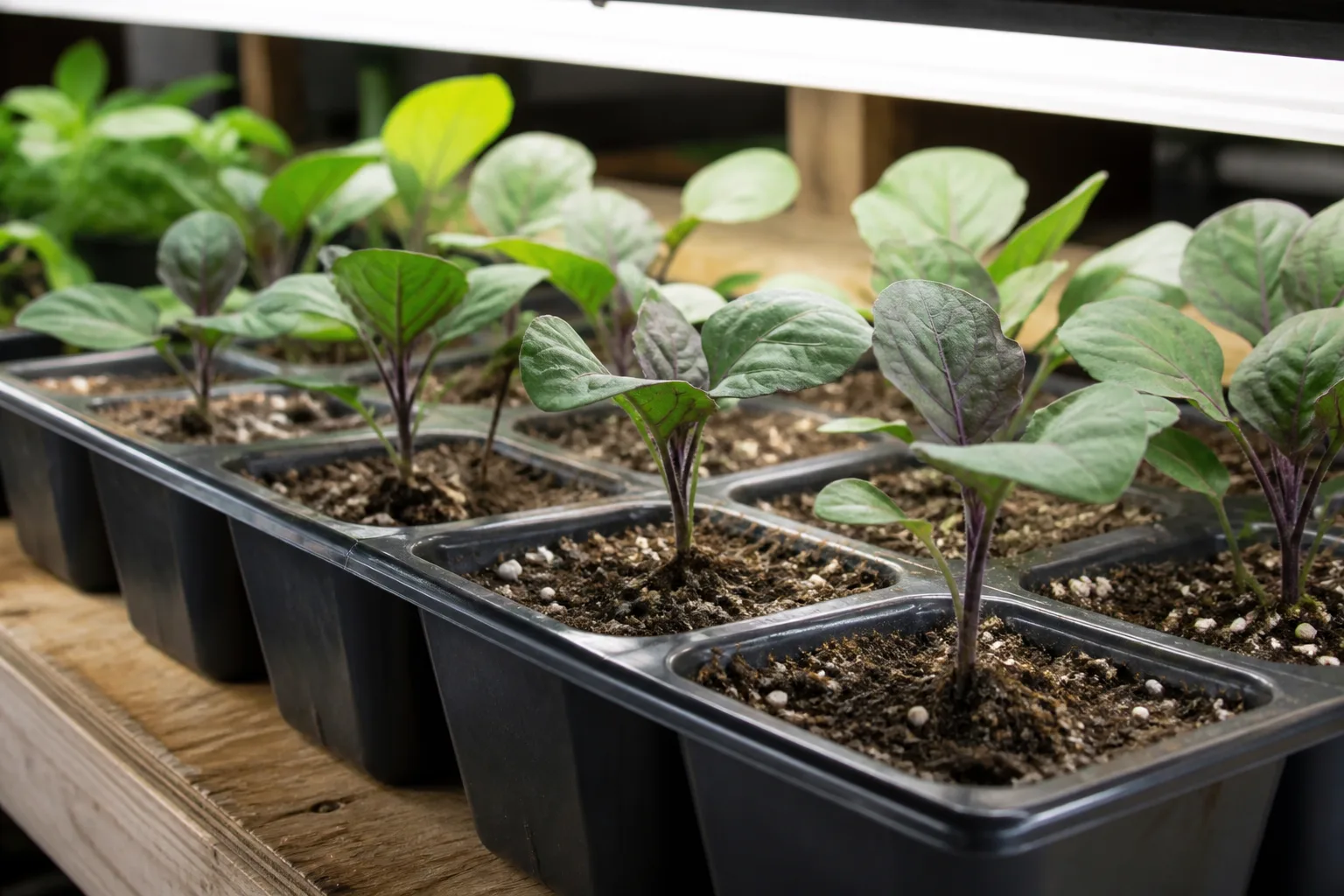
Sow indoors 8–10 weeks before transplant, using fresh seed-starting mix that drains well. Peppers germinate fastest with bottom heat: 85–90°F is ideal for many hot types, while bells tolerate slightly lower warmth. The hotter the pepper, generally the slower and pickier the germination—patience beats oversowing into cold, wet mix.
Do not overwater. A dome helps until emergence; then strong light and a gentle fan reduce leggy growth. UConn’s seed-starting guidance applies the same logic: warmth first, then light intensity.
Transplanting, staking, and harvest timing
Transplant when soil reaches 65°F and nights stay above about 60°F for reliable fruit set. Row covers can boost early growth but should come off once flowers open—trapped heat can drop blossoms. Stake tall types before fruit loads bend stems; keep fruit off damp soil to reduce rot.
Water deeply—about 1–2 inches per week depending on weather—and mulch after soil warms to conserve moisture. High nitrogen pushes leaves at the expense of fruit; a 1-2-2 balance supports flowering once plants are established.
Harvest strategy varies by type. Green bells and jalapeños are immature but perfectly usable. Habaneros, Scotch bonnets, and dried-chile types usually need full color for best flavor. Regular picking encourages more fruit; cut with clean pruners rather than tearing stems.
Watch for aphids, flea beetles, stink bugs, and bacterial spot. Sanitation—removing diseased leaves and rotating beds—matters as much as spray choice.
Conclusion
You do not need twenty-seven pepper plants to have a great pepper year. Pick one sweet type, one medium chile that matches your cooking, and one stretch goal if your season allows. Read the packet’s days-to-maturity honestly, start seeds on heat, and transplant only into warm soil.
The varieties above span from zero-heat bells to six-figure-Scoville habaneros, across four Capsicum species and every common kitchen job—stuffing, frying, pickling, roasting, salsa, and sauce. Match heat to your household, match maturity to your frost calendar, and harvest often. That is how a small pepper patch outproduces a random assortment bought on impulse.



