10 Types of Rubber Plants for Your Home
Compare 10 Ficus elastica rubber plant types—Robusta, Tineke, Burgundy, Ruby, and more—with light needs, size, and pet-safety notes.
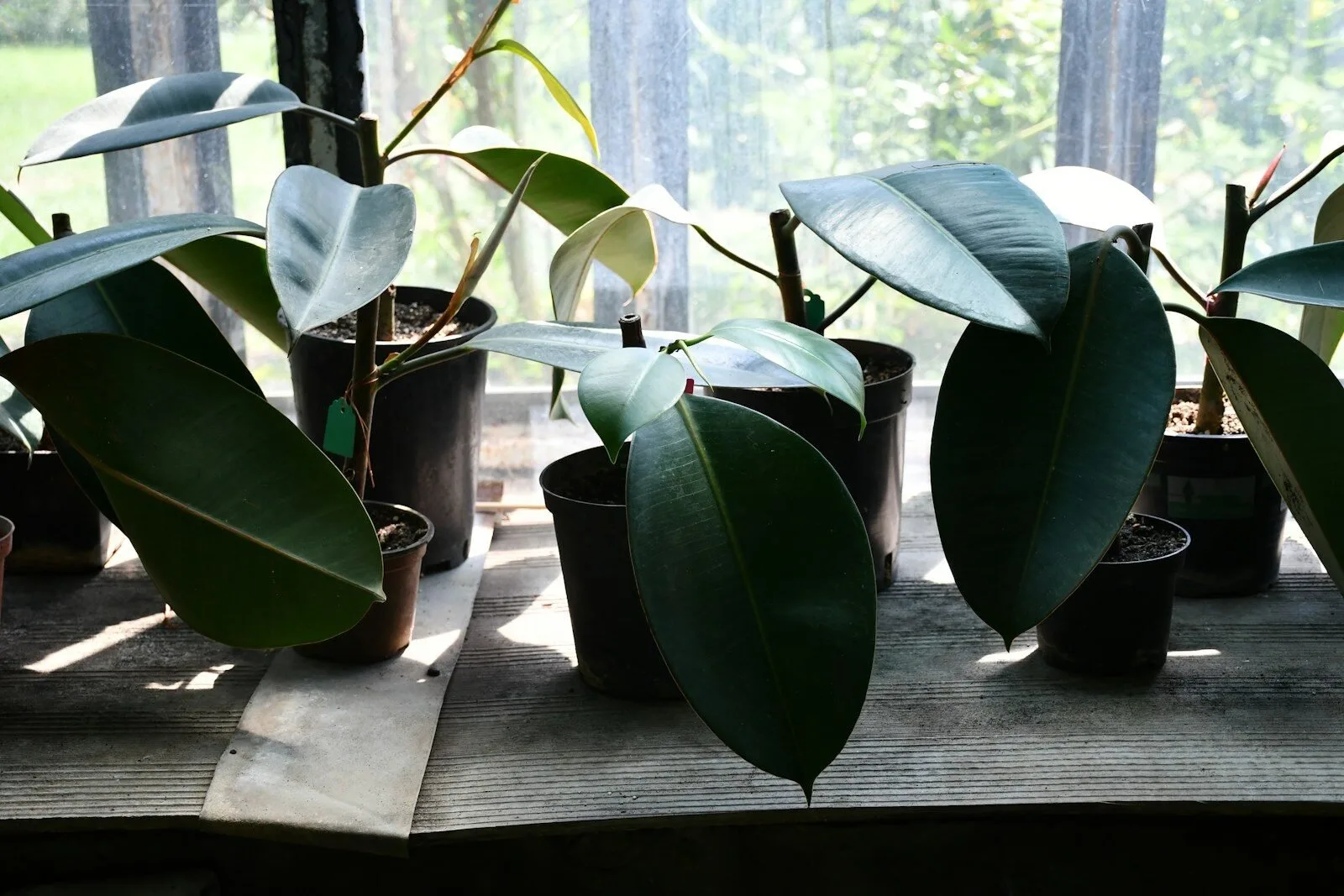
Walk into any plant shop and you will see rubber plants labeled Robusta, Burgundy, Tineke, Ruby, and half a dozen other names—often on plants that look nearly identical at six inches tall. They are all cultivars of Ficus elastica, the Indian rubber plant, but they are not interchangeable. Light tolerance, mature size, leaf color stability, and even how dramatic the plant looks in a corner change with the cultivar.
This guide compares ten rubber plant types you are most likely to find for home growing, groups them by how much light they really need, and flags the label mix-ups that send beginners home with the wrong plant for their window.
What Counts as a Rubber Plant—and What Does Not
Rubber plant and rubber tree both refer to Ficus elastica, a broadleaf evergreen in the mulberry family (Moraceae) native from the eastern Himalayas through Malaysia, according to the RHS plant profile. In the wild it can become a large tree; indoors, most cultivars are kept between about two and ten feet with pruning and pot size.
The glossy, leathery leaves and milky white sap are the giveaways. NC State Extension notes that the species name elastica refers to latex that was once used in rubber production—though your houseplant is ornamental, not a crop.
Baby Rubber Plant vs. Ficus elastica
Do not confuse rubber plant with baby rubber plant. Baby rubber plant is Peperomia obtusifolia, a completely different genus with thicker, smaller succulent-like leaves and very different care. Nurseries sometimes group them because of the shared common name. If you want a tall indoor tree with dinner-plate leaves, you want Ficus elastica. For a compact tabletop plant, see the baby rubber plant hub.
Pet safety: The ASPCA lists rubber plant (Ficus elastica) as toxic to cats and dogs. Ingestion can cause oral irritation, drooling, vomiting, and diarrhea. Keep plants out of reach and call the ASPCA Poison Control Center at (888) 426-4435 if a pet eats foliage. This applies to every cultivar below—variegation does not change toxicity.
How to Choose a Rubber Plant Cultivar Before You Buy
Start with your brightest usable window, not the photo on the tag. Rubber plants tolerate a range of indoor conditions, but cultivars divide cleanly into three light tiers.
Solid Green, Dark, or Variegated: Light Tiers
Tier 1 — forgiving solid green (Robusta, Decora, Melany): Tolerate medium bright indirect light. A few feet back from an east window or several feet inside a south or west window usually works. They grow slower in medium light but rarely bleach or lose pattern.
Tier 2 — dark-leaf drama (Burgundy, Abidjan, Yellow Gem): Need bright indirect light to keep deep color and compact internodes. Burgundy leaves read nearly black when well lit; in dim corners they green up and stretch.
Tier 3 — variegated and pink-flushed (Tineke, Ruby, Red Ruby, Tricolor, Belize, Doescheri): Need the brightest spot you can offer without hot afternoon sun on the glass. Variegated sections contain less chlorophyll, so the plant compensates with more light—or it reverts to green, fades pink, or drops leaves.
Tree Form vs. Compact Bush
Most rubber plants are sold as single-stem tree forms—one trunk with a leafy crown. Melany and young Sophia plants are often grown as multi-stem bushes that read denser and shorter. If you need a floor plant for an eight-foot ceiling, tree-form Robusta or Tineke make sense. For a shelf or side table, look at Melany or a young plant you can keep pruned.
Quick Comparison: 10 Rubber Plant Types at a Glance
| Cultivar | Leaf look | Light tier | Typical indoor height | Best for |
|---|---|---|---|---|
| Robusta | Deep glossy green | Tier 1 | 6–8 ft | Beginners, low-fuss green |
| Decora | Very thick dark green | Tier 1 | 5–7 ft | Bold foliage, bright rooms |
| Burgundy | Near-black green, red flush | Tier 2 | 5–6 ft | Moody corners with good light |
| Abidjan | Leathery dark red-green | Tier 2 | 5–6 ft | Dark leaves, slightly warmer tone than Burgundy |
| Tineke | Green, cream, pale yellow variegation | Tier 3 | 6–10 ft | Bright rooms, designer variegation |
| Ruby / Red Ruby | Green with pink-red edges | Tier 3 | 5–8 ft | Statement color in bright light |
| Tricolor / Belize | Cream, pink, green mix | Tier 3 | 4–8 ft | Color collectors, brightest windows |
| Doescheri | Gray-green splotches, pink midrib | Tier 3 | 6–10 ft | Patterned-leaf fans |
| Melany | Small bronze-green leaves, dense | Tier 1 | 3–5 ft | Compact spaces, table height |
| Yellow Gem | Golden-chartreuse green | Tier 2 | 4–6 ft | Brightening a well-lit room |
Heights assume floor pots, moderate fertilizing, and no aggressive ceiling pruning. All types slow down in winter and when root-bound.
1. Robusta — The Classic Deep-Green Standard
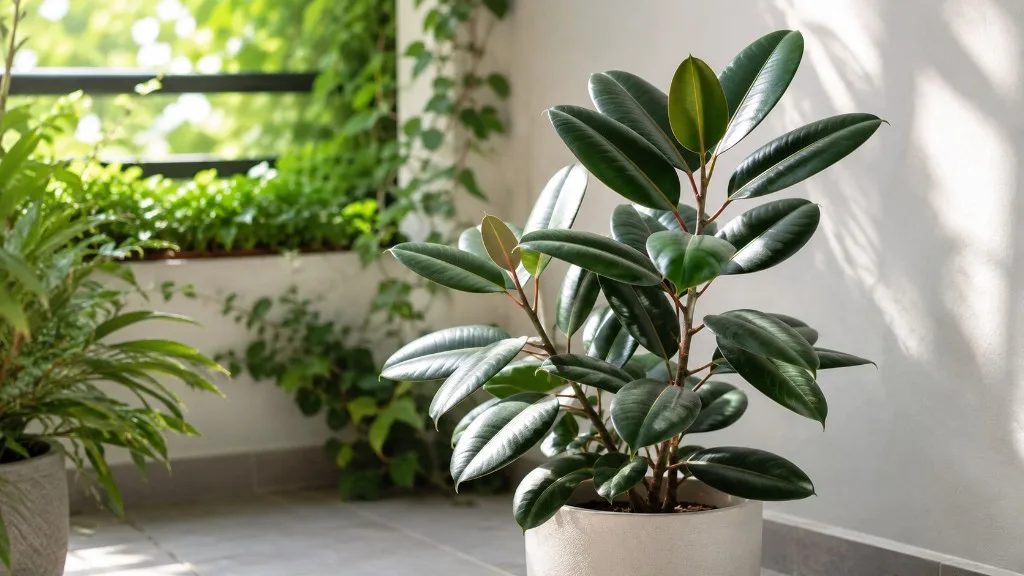
Ficus elastica ‘Robusta’ is the cultivar you will see most often—deep green, waxy, elliptical leaves on an upright trunk. NC State Extension calls it the most common type in the trade, typically reaching about eight feet indoors with good care.
Robusta is the default recommendation when someone asks for an easy rubber plant. It tolerates medium bright light better than variegated siblings, handles the occasional missed watering more gracefully than pink cultivars, and fits the mental picture of a classic rubber tree in a living-room corner. Pair it with the rubber plant care hub for watering and soil detail.
Buy Robusta if: you want a straightforward green tree and your brightest window is shared with other plants.
2. Decora — Thick, Oversized Leaves
‘Decora’ is sometimes described as a Robusta look-alike, but the leaves tell the story. They are larger, thicker, and darker green, with a heavier rubbery texture. In a bright room Decora looks sculptural—almost like cardboard cutouts with gloss.
Decora shares Tier 1 light needs with Robusta but rewards brighter placement with bigger leaves. It is a strong pick for a sunnier living room where you want presence without variegation maintenance.
Buy Decora if: you love oversized foliage and have bright indirect light to justify the leaf size.
3. Burgundy — Near-Black Foliage
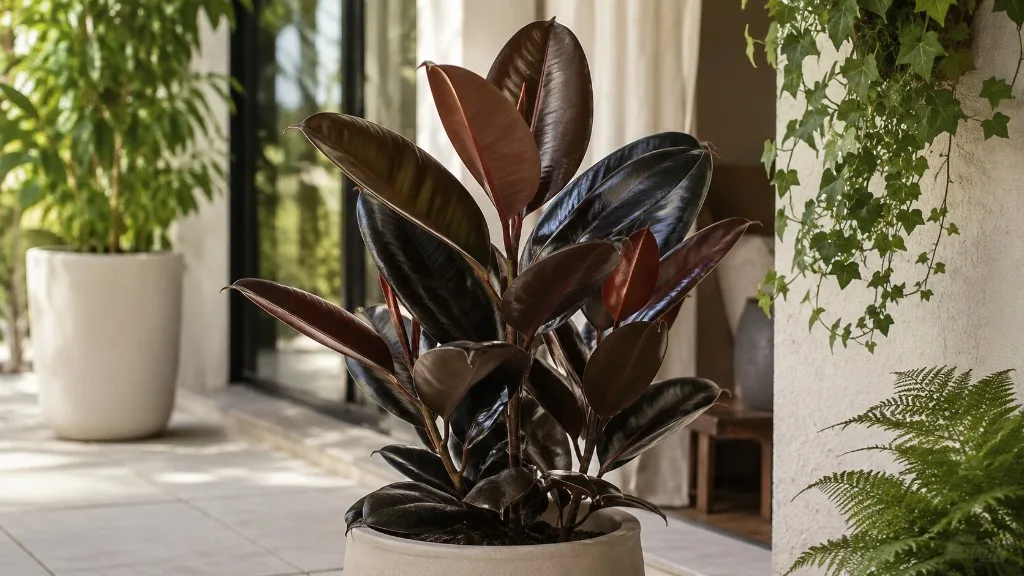
‘Burgundy’—sometimes sold as Black Prince—has leaves so dark they read burgundy or near-black, especially on the undersides where NC State Extension notes a reddish cast. New leaves emerge with a red sheath before hardening off.
Burgundy is not a low-light plant despite the dark color. Deep pigment still needs bright indirect light; otherwise leaves lighten toward forest green and stems elongate. It pairs well with modern interiors and is a good match for the dedicated Ficus Burgundy hub if you want cultivar-specific troubleshooting.
Buy Burgundy if: you want a dramatic dark tree and can place it within a few feet of a bright window.
4. Abidjan — Leathery Dark Leaves With Red Undertones
‘Abidjan’ (often spelled Abdijan in botanical listings) sits beside Burgundy on the nursery bench: thick, leathery leaves with deep red-burgundy undertones. The difference is subtle in young plants—both are Tier 2 dark cultivars—but Abidjan leaves are often described as even thicker and more textured.
If your shop labels a dark rubber plant “Abidjan” or “Burgundy” interchangeably, check leaf thickness and whether new growth emerges especially red. Either works for a moody corner with bright light.
Buy Abidjan if: you like Burgundy’s vibe but find a specimen with heavier, more textured leaves.
5. Tineke — Cream-and-Green Variegation
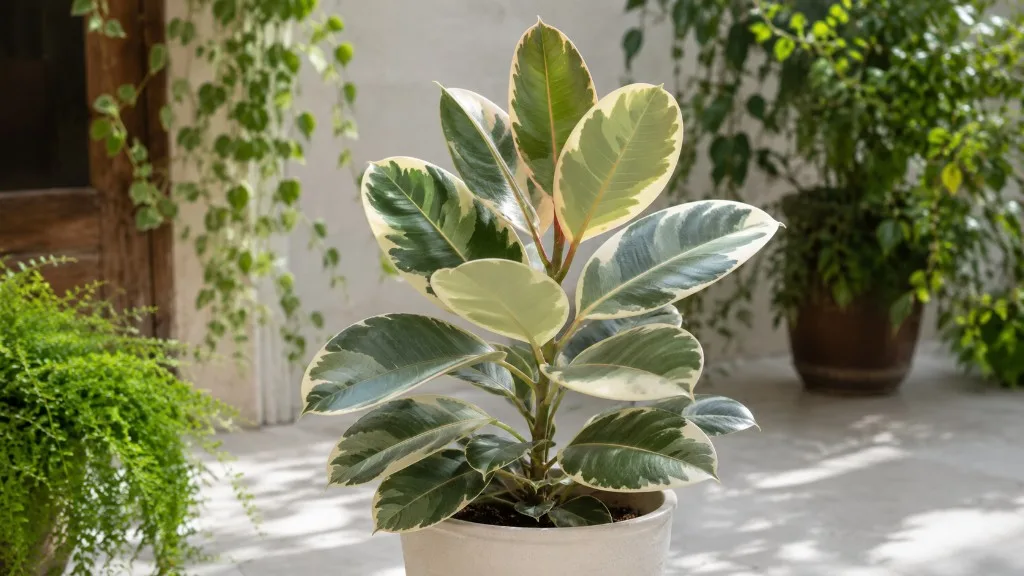
‘Tineke’ is the variegated rubber plant that took over design feeds—green centers with cream to pale yellow margins, sometimes flushed pink on new growth. NC State lists it among variegated forms with cream or pale yellow patterning and notes it can reach 13 feet in ideal conditions, though most homes cap it lower.
Tineke is Tier 3: place it at your brightest filtered window. Rotate the pot monthly so variegation stays balanced. If margins shrink and leaves turn mostly green, the plant is telling you it needs more light—or you are over-fertilizing nitrogen, which pushes green growth. See the Ficus Tineke hub for cultivar-specific light and watering.
Buy Tineke if: you have a bright east or west window and want designer variegation without pink stress.
6. Ruby and Red Ruby — Pink-Flushed Variegates
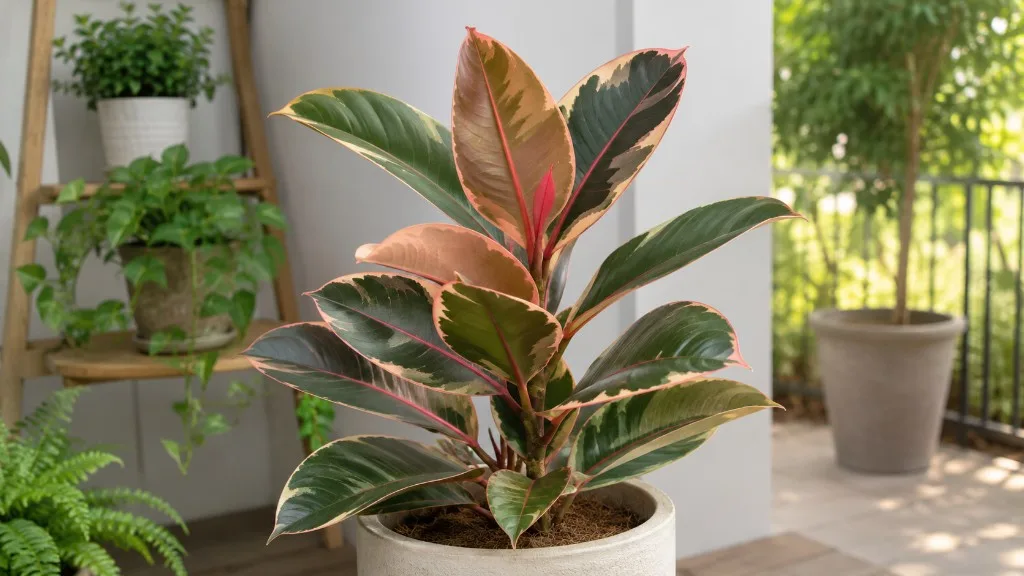
‘Ruby’ and ‘Red Ruby’ are the pinkest rubber plants in common trade. Leaves combine green centers with pink, red, or cream margins; petioles and midribs run reddish pink. New leaves often emerge more red before maturing.
This is where the Burgundy vs. Ruby confusion peaks. Burgundy is a mostly solid dark cultivar for Tier 2 light. Ruby is a variegated Tier 3 plant that needs more light, not less—pink sections bleach in harsh direct sun but disappear in shade. The Ficus elastica Ruby hub covers the cultivar in depth.
Buy Ruby if: you have a very bright filtered window and accept that pink fades when light is wrong.
7. Tricolor and Belize — Cream, Pink, and Green Blends
‘Tricolor’ leaves mix cream, pink, and green on the same blade—new growth can look almost red before expanding. ‘Belize’ is a related trade name NC State groups with glossy green leaves highlighted in cream, pink, and red, typically reaching four to ten feet.
Both are collector cultivars with the same Tier 3 demands as Tineke and Ruby. They are stunning when stable and frustrating when reverting. Avoid drafty heat vents; ficus species drop leaves when moved or chilled.
Buy Tricolor or Belize if: you want maximum color variation and already succeed with other bright-light tropicals.
8. Doescheri — Mottled Gray-and-Cream Pattern
‘Doescheri’ trades the bold margins of Tineke for irregular gray-green splotches on a cream background, with pink midribs and petioles. It is one of the older variegated clones and can become a large indoor tree—NC State lists heights up to about 13 feet in favorable conditions.
Doescheri is less common in big-box stores but appears at specialty nurseries. Treat it like Tier 3 variegation: bright light, careful watering, and patience when it sulks after shipping.
Buy Doescheri if: you like painterly patterning more than clean marginal variegation.
9. Melany — Compact, Dense Growth
‘Melany’ breaks the tall-tree script. Leaves are smaller and bronze-green, and plants are often grown multi-stemmed and bushy rather than as a single lollipop trunk. NC State notes smaller versions are available—useful for desks and side tables.
Melany still wants bright indirect light but fits tighter spaces than Robusta. It is a strong “rubber plant personality” without committing to an eight-foot tree.
Buy Melany if: you want rubber-plant gloss in a compact, dense form.
10. Yellow Gem — Chartreuse Brightness
‘Yellow Gem’ pushes foliage toward golden-chartreuse green—a brighter, almost lime read compared with the forest green of Robusta. It lights up a well-lit room but is not a true low-light plant; chartreuse leaves need photosynthesis headroom from bright indirect sun.
Yellow Gem pairs well with darker furniture and reads more contemporary than classic Robusta. Watch for sun scorch if afternoon rays hit leaves directly.
Buy Yellow Gem if: you want a lighter, energetic green and have the brightness to support it.
Cultivars Worth Knowing Beyond the Top 10
Nurseries rotate stock. You may also see ‘Variegata’ (white or yellow leaf margins on light green), ‘Sophia’ (a dwarf green-and-lime form often staying under two feet), or ‘Triangularis’ (triangular green-and-cream leaves). Sophia suits shelves; Triangularis is a niche collector plant with the same bright-light rules as other variegates.
None of these change the core care equation: well-draining soil, water when the top inch or two dries, temperatures above about 55°F, and minimal moving once the plant acclimates—NC State and Clemson both note that Ficus elastica resents drafts and relocation.
Care Basics Every Rubber Plant Type Shares
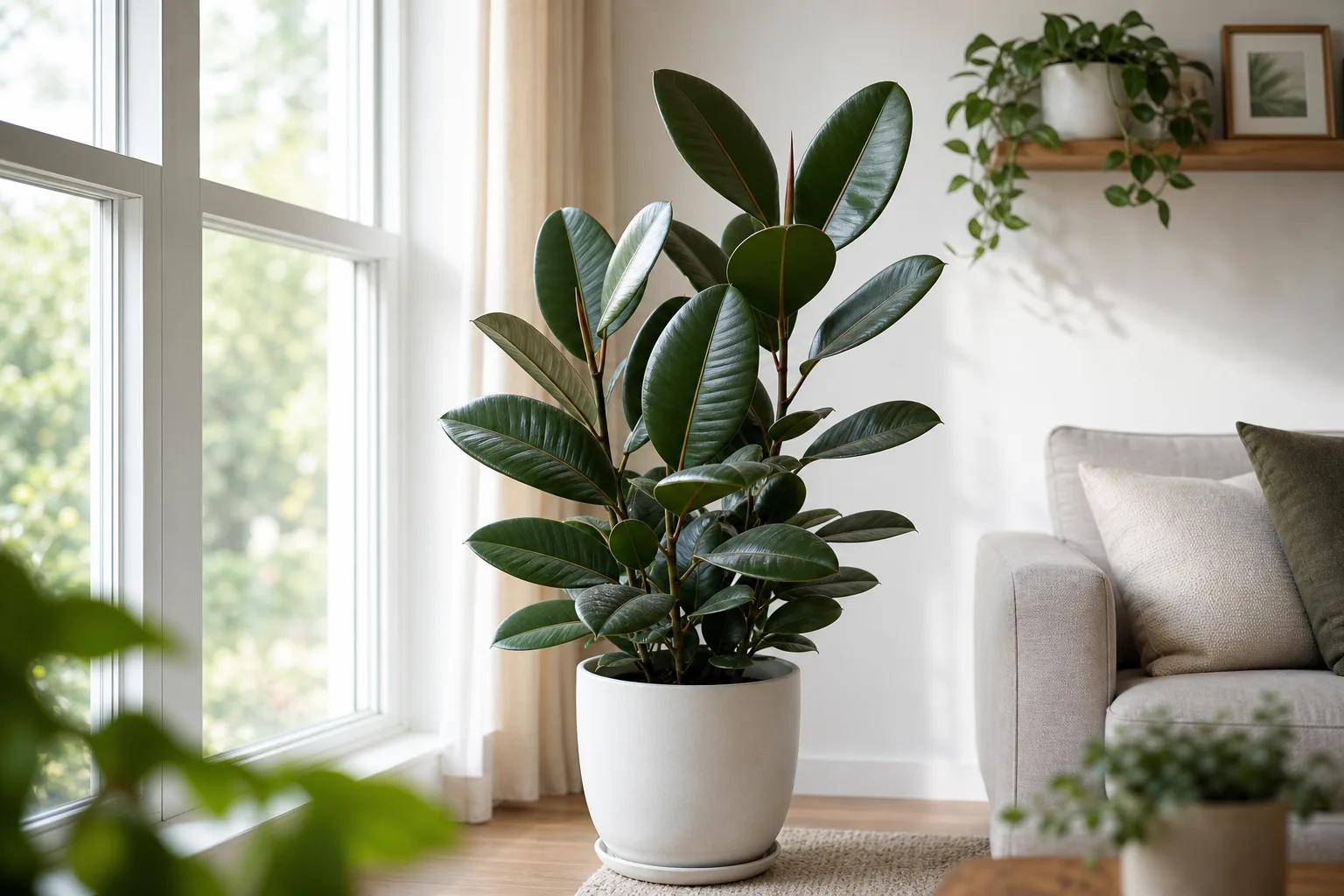
Cultivar names change leaf color; care skeleton stays the same.
Light: Bright indirect is the baseline. Clemson HGIC recommends bright light near a window with protection from hot afternoon sun. Solid green types tolerate a step back from the glass; variegated and pink types want the closest bright spot you have.
Water: Let the top one to two inches of soil dry between waterings. Saturated soil causes leaf drop across all cultivars—often before you see yellowing. Reduce frequency in winter when growth slows.
Soil and pots: Use a chunky, well-draining houseplant mix in a pot with drainage holes. Rubber plants become heavy top-heavy trees; a wide base prevents tipping.
Humidity: Moderate room humidity (roughly 40–50%) is fine. Brown leaf edges often trace to low humidity, underwatering, or mineral buildup from hard tap water—not the cultivar name on the tag.
Fertilizer: Feed monthly during spring and summer with a balanced houseplant fertilizer at label strength. Skip or halve in winter.
Pruning: Pinch or cut stems above a leaf node to encourage branching on tree forms. Wipe sap off blades; latex can irritate skin.
Cleaning: Dust blocks light on those broad leaves. Wipe with a damp cloth every few weeks.
For symptom-level help—leaf drop, brown tips, pests—use the rubber plant hub and the rubber plant care guide.
Common Cultivar Mistakes and How to Avoid Them
Buying variegation for a dim room. Tineke, Ruby, and Tricolor will lose their selling point without Tier 3 light. Start with Robusta or Melany if your only window is across a dark living room.
Expecting Burgundy to stay black in shade. Dark cultivars need bright light to hold color. A greening Burgundy usually needs a brighter position, not more fertilizer.
Confusing Ruby with Burgundy at the nursery. Read the leaf margin: solid dark = Burgundy; pink or cream edges = Ruby. Light requirements differ.
Moving the plant weekly. Ficus species drop leaves after repotting, relocating, or cold drafts. Pick a spot and let it settle for several weeks.
Ignoring sap and pets. Latex sap irritates skin and mucous membranes. Toxicity to cats and dogs is a hard no for pet-heavy homes unless the plant lives in a closed room.
Chasing the tenth cultivar before mastering one. Robusta or Decora teaches you the watering rhythm; upgrade to Ruby or Tineke once you know your brightest window is truly bright.
Conclusion
Rubber plants look interchangeable in six-inch pots and diverge sharply once they grow. Robusta and Decora are the forgiving green standards for most homes. Burgundy and Abidjan deliver dark drama when you have bright light. Tineke, Ruby, Tricolor, and Doescheri reward bright windows with color—but punish dim corners with reversion and leaf drop. Melany and Yellow Gem fill compact or chartreuse niches without changing the underlying Ficus elastica care rules.
Match the cultivar to your light tier first, form second, and leaf color third. Get that order right and any of these ten rubber plant types can become a long-lived indoor tree—often well over a decade with stable care.



